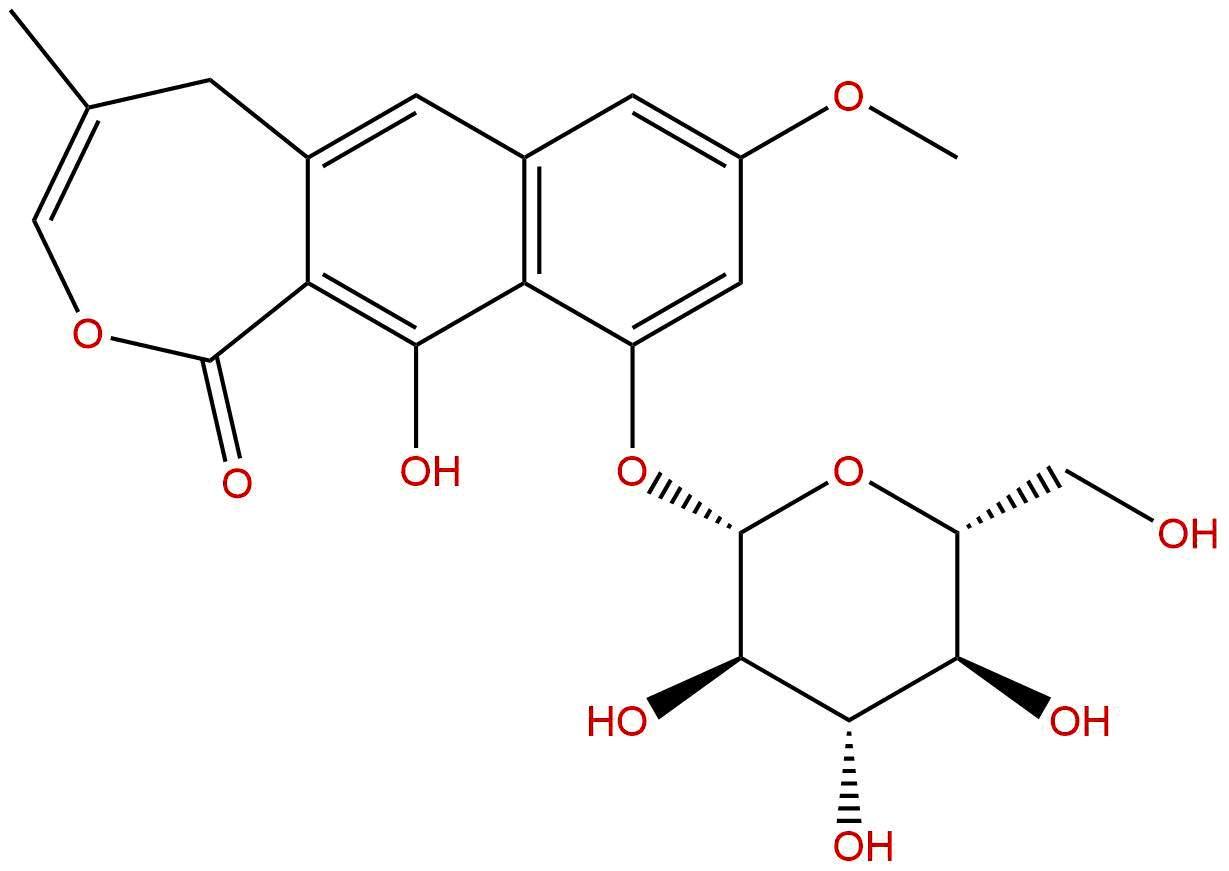
Storage conditions:Short-term storage at 2~8℃, long-term storage at -20 ~ -80℃
155.1400
1.1246
1.0287
2.7589
.6755
.2730
Low
82.0075
4.3767
No
No
No
No
Yes
No
0.9
Yes
No
Yes
No
Natural products, as an important source of drug discovery, play an irreplaceable role in the long history of human struggle against diseases. Isolating and identifying active ingredients from traditional herbs, and elucidating their pharmacological mechanisms, is an important paradigm in modern medicinal chemistry and pharmacology research. Rhubarb (Rheum palmatum L. and related species), as a traditional Chinese medicine, has long been known for its laxative, heat clearing, detoxifying, and blood activating effects. Modern research has revealed that rhubarb is rich in various chemical components such as anthraquinones, anthraquinones, stilbene glycosides, and tannins. Among them, anthraquinone components (such as emodin, rhein, emodin, etc.) are considered the main material basis for its laxative activity. However, the chemical composition of rhubarb is complex. In addition to the main components mentioned above, there are also many trace components with low content but novel structure and unique activity, and Rheumone B is one of them.
Rheumone B (CAS number: 2095596-67-9) is a relatively newly discovered natural product, whose structural characteristics differ from known anthraquinone compounds in rhubarb, and belongs to a class of compounds with unique skeletons. Existing studies have shown that Rheumone B exhibits significant antioxidant activity, providing preliminary scientific evidence for its potential applications in oxidative stress-related diseases such as inflammation, aging, cardiovascular disease, and certain metabolic disorders. More notably, despite its novel structure, preliminary activity screening and network pharmacology analysis suggest that Rheumone B may be associated with the classic laxative effect of traditional rhubarb. Its target proteins may involve key proteins involved in intestinal water and electrolyte transport and intestinal motility regulation, such as sodium glucose cotransporter 1 (SLC5A1), cystic fibrosis transmembrane conductance regulator (CFTR), aquaporin 3 (AQP3), inward rectifying potassium channel 13 (KCNJ13), sodium potassium chloride cotransporter 2 (SLC12A2), high conductance calcium activated potassium channel alpha subunit (KCNMA1), and sodium channel epithelial subunit beta (SCNN1B).
This article aims to provide a systematic professional review of Rheumone B, an emerging natural product. We will start with its chemical structure and physicochemical properties, explore its plant origin and extraction methods, focus on reviewing its reported and potential pharmacological activities, deeply analyze its mechanism of action and molecular targets, and evaluate its pharmacokinetic characteristics and development prospects based on its pharmacological parameters. Finally, we will look forward to its clinical application potential. Through the organization of this article, it is expected to provide comprehensive references for the further in-depth research and development of Rheumone B.
The chemical structure of Rheumone B is the basis for its biological activity. According to existing literature reports, Rheumone B belongs to a class of compounds with novel skeletons isolated from Rheum plants. Its core structure may contain a polycyclic system, which differs significantly from the classical anthraquinone (such as emodin) or anthrone (such as emodin anthrone) parent nucleus. This structural uniqueness may stem from its unique biosynthetic pathway or secondary metabolites formed during the extraction and separation process. Accurate structural analysis typically relies on high-resolution mass spectrometry (HR-ESI-MS) and one-dimensional/two-dimensional nuclear magnetic resonance spectroscopy (1D/2D NMR) techniques, including hydrogen spectroscopy (¹ H NMR), carbon spectroscopy (¹ ³ C NMR), heteronuclear single quantum correlation spectroscopy (HSQC), heteronuclear multi bond correlation spectroscopy (HMBC), and nuclear Euboehmian effect spectroscopy (NOESY), to determine its planar structure and relative configuration. The determination of absolute configuration may require the use of circular dichroism (CD) or X-ray single crystal diffraction techniques.
From the perspective of physical and chemical properties, the molecular weight of Rheumone B is 448.4240 Da, which belongs to the category of small molecule compounds and meets the basic requirement of molecular weight (<500 Da) in Lipinski's Rule of Five for oral drugs. The LogP of its lipid water partition coefficient is 1.1246, indicating that the compound has moderate lipophilicity. LogP values between 0-3 are generally considered to have good oral absorption and membrane permeability potential. The value of 1.1246 suggests that Rheumone B is neither difficult to dissolve in aqueous media due to its strong lipophilicity nor difficult to penetrate biofilms due to its strong hydrophilicity. The topological polar surface area (TPSA) is 155.1400 Å ². TPSA is an important parameter for predicting drug oral absorption and blood-brain barrier penetration ability. Generally speaking, compounds with TPSA less than 140 Å ² are more easily absorbed by the intestine, while compounds with TPSA less than 60-70 Å ² are more likely to penetrate the blood-brain barrier. The TPSA of Rheumone B is 155.14 Å ², significantly higher than the threshold of 140 Å ², indicating that its oral absorption may be limited to some extent, but more importantly, it strongly suggests that the compound has a low ability to penetrate the blood-brain barrier. This characteristic is an ideal property for drugs aimed at acting on the peripheral system (such as the intestine), as it can minimize central nervous system related side effects to the greatest extent possible. The water solubility parameter is 2.7589 (usually measured in logS, which is the logarithm of molar solubility), indicating that it has a certain degree of water solubility, but not excellent. Overall, the physicochemical properties of Rheumone B exhibit certain drug like properties, particularly its low blood-brain barrier penetration, making it a potential candidate molecule for the development of peripheral targeted drugs.
The plant sources of Rheumone B are currently mainly concentrated in the Rheum genus of the Polygonaceae family. There are about 60 species of Rheum plants worldwide, mainly distributed in the high-altitude mountainous areas of temperate and subtropical Asia. Among them, China has the most abundant species and is the origin and main production area of various medicinal Rheum (such as Rheum palmatum, Rheum tanguticum, and Rheum officinale). As a trace component in rhubarb, the content of Rheumone B is usually much lower than that of major anthraquinone components such as emodin and rhein. Therefore, its discovery and separation are highly dependent on the advancement of modern chromatographic technology.
The extraction of Rheumone B usually follows the classic process of natural product chemistry. Firstly, the dried rhubarb medicinal herbs (usually roots and rhizomes) are crushed and subjected to crude extraction using solvent extraction method. Common solvents include methanol, ethanol, or a certain proportion of methanol/water, ethanol/water mixed solvents. Due to the polarity of Rheumone B (LogP 1.1246), solvents with moderate polarity such as methanol or 70% -95% ethanol aqueous solution can usually achieve good extraction efficiency. The extraction method can be cold soaking, percolation, or heating reflux, among which the heating reflux method has higher efficiency, but attention should be paid to controlling the temperature to avoid degradation of thermosensitive components. After filtration and vacuum concentration of the extract, the total extract is obtained.
The chemical composition of the total extract is extremely complex, including a large amount of anthraquinone glycosides, free anthraquinone, tannins, stilbene glycosides, polysaccharides, etc. Therefore, subsequent separation and purification are key steps. The liquid-liquid extraction method is usually used for preliminary separation, such as sequentially using solvents of different polarities such as petroleum ether, ethyl acetate, n-butanol, etc. to extract the water suspension of the total extract, and enriching Rheumone B into specific polar segments (such as ethyl acetate layer or n-butanol layer). Subsequently, various modern chromatographic techniques are required for precise separation. Column chromatography (CC) is the most commonly used means, including silica gel column chromatography, ODS (octadecylsilane bonded silica gel) reverse phase column chromatography, Sephadex LH-20 gel column chromatography, etc. Silica gel column chromatography is suitable for the separation of moderately polar compounds, while ODS reverse phase column chromatography is more effective for the separation of compounds with higher polarity. Sephadex LH-20 gel column chromatography is mainly used to separate according to molecular size, and is often used to remove pigments and carry out final purification. During the separation process, thin-layer chromatography (TLC) is usually used for monitoring, and purity analysis is performed through high-performance liquid chromatography (HPLC) or ultra high performance liquid chromatography (UPLC). Ultimately, the pure product of Rheumone B can be obtained through preparative HPLC. Given its low content in plants, it often requires a large amount of starting medicinal materials and multiple repeated chromatographic separation steps to obtain pure products at the milligram or even microgram level, which is also one of the main bottlenecks restricting its in-depth research.
The pharmacological activity research of Rheumone B is currently in its infancy, and the core activity reported is its antioxidant effect. In addition, based on the traditional efficacy of its source plant rhubarb and preliminary network pharmacology predictions, its potential laxative activity has also attracted the attention of researchers.
1. Antioxidant activity
This is currently the most clear and direct pharmacological activity of Rheumone B. Oxidative stress is a state in which the body produces excessive amounts of free radicals such as reactive oxygen species (ROS) and reactive nitrogen species (RNS) when subjected to harmful stimuli, exceeding the clearance capacity of the antioxidant defense system, leading to cell and tissue damage. It is closely related to the occurrence and development of many diseases, including inflammation, atherosclerosis, diabetes, neurodegenerative diseases and aging process. The antioxidant activity of Rheumone B may be achieved through multiple pathways: it can directly scavenge free radicals, such as DPPH (1,1-diphenyl-2-trinitrophenylhydrazine) free radical, ABTS (2,2 '- diazene-bis-3-ethylbenzothiazoline-6-sulfonic acid) free radical, superoxide anion free radical, and hydroxyl free radical; Transition metal ions such as Fe ² ⁺ and Cu ² ⁺ can also be chelated to inhibit pathways that generate free radicals, such as the Fenton reaction; In addition, it may also upregulate the expression of antioxidant enzymes such as superoxide dismutase (SOD), catalase (CAT), and glutathione peroxidase (GSH Px) by activating the intracellular antioxidant defense system, such as the nuclear factor E2 related factor 2 (Nrf2) signaling pathway. The functional groups such as phenolic hydroxyl groups in its molecular structure are key pharmacophores that exert antioxidant activity. The specific antioxidant activity intensity is usually quantified by indicators such as IC ₅₀ value (half inhibitory concentration) or ORAC (oxygen free radical absorption capacity) value. Compared to classic antioxidants such as vitamin C or vitamin E, the activity of Rheumone B may be comparable or more distinctive, depending on its specific chemical environment and testing system.
2. Potential diarrhea activity
As a classic laxative, the mechanism of action of rhubarb mainly involves stimulating colonic peristalsis and inhibiting intestinal water and electrolyte absorption. The traditional view holds that the binding anthraquinone glycosides (such as emodin -8-O - β - D-glucoside) in rhubarb are the main components of diarrhea. They are metabolized by the gut microbiota into free anthraquinones (such as emodin), which stimulate the intestinal wall nerve plexus, increase intestinal smooth muscle contraction, and inhibit Na ⁺/K ⁺ - ATPase, thereby reducing water absorption and leading to diarrhea. However, the structure of Rheumone B is different from typical anthraquinones, and there is currently a lack of direct in vivo or in vitro experimental evidence to determine whether it has direct laxative activity. The association between it and diarrhea mainly stems from network pharmacology prediction. Research has shown that Rheumone B may potentially interact with multiple target proteins related to intestinal water and electrolyte transport and intestinal motility, including SLC5A1, CFTR, AQP3, KCNJ13, SLC12A2, KCNMA1, and SCNN1B. The roles of these targets in the laxative effect of rhubarb deserve further exploration:
- SLC5A1 Responsible for the coordinated transport of glucose and Na ⁺ in the intestine, changes in their activity can affect intestinal osmotic pressure.
- CFTR It is a chloride ion channel, and its abnormal function (such as cystic fibrosis) can lead to serious intestinal problems. In the intestine, CFTR mediated Cl ⁻ secretion is one of the main driving forces for water secretion into the intestinal lumen.
- AQP3 It is a water channel protein responsible for the transmembrane transport of water, and its expression and activity directly affect the balance of intestinal water absorption and secretion.
- KCNJ13 and KCNMA1 Potassium ion channels are involved in regulating the membrane potential and ion balance of intestinal epithelial cells, indirectly affecting Cl ⁻ secretion and Na ⁺ absorption.
- SLC12A2 Na ⁺ - K ⁺ -2Cl ⁻ cotransporter protein is the main pathway for Cl ⁻ to enter intestinal epithelial cells, and its activity is a prerequisite for CFTR mediated Cl ⁻ secretion.
- SCNN1B ENaC is the beta subunit of the epithelial sodium channel (ENaC), which is the main channel for intestinal Na ⁺ absorption and its activity is regulated by various hormones and signaling pathways.
Therefore, Rheumone B may exert a mild or unique laxative effect by simultaneously acting on multiple targets, finely regulating the water and electrolyte balance of the intestine in a way different from traditional anthraquinone laxatives. This multi-target mode of action may also mean that it has lower irritability or fewer side effects. However, these predictions urgently need to be validated through molecular biology experiments (such as target binding experiments, cell function experiments) and animal models (such as constipation model mice).
The mechanism of action of Rheumone B mainly revolves around its antioxidant activity and potential laxative activity, presenting a multi-target and multi pathway characteristic.
1. Mechanism of antioxidant action
The antioxidant mechanism of Rheumone B may involve both direct and indirect pathways.
- Directly eliminate free radicals The phenolic hydroxyl group in its molecular structure is a good donor of hydrogen atoms, which can react with lipid peroxidation radicals (ROO •), hydroxyl radicals (• OH), superoxide anions (O ₂⁻ •), etc., reducing them to stable molecules and interrupting the chain reaction of free radicals. This process is stoichiometric, meaning that one Rheumone B molecule can scavenge multiple free radicals.
- Chelate transition metal ions The hydroxyl or carbonyl groups in the structure of Rheumone B can chelate transition metal ions such as Fe ² ⁺ and Cu ² ⁺. These metal ions are catalysts for Fenton and Haber Weiss reactions, capable of catalyzing the production of highly active • OH. By chelating these metal ions, Rheumone B can inhibit the generation of • OH from the source.
- Activate Nrf2/ARE signaling pathway This is the core of indirect antioxidant activity. Nrf2 is a key transcription factor that regulates the expression of intracellular antioxidant and detoxification genes. Under normal physiological conditions, Nrf2 binds to Kelch like ECH associated protein 1 (Keap1), is anchored in the cytoplasm, and is in an inhibited state. When cells are stimulated by oxidative stress or electrophilic agents (including certain natural antioxidants), the conformation of Keap1 changes, leading to the release and translocation of Nrf2 into the nucleus. In the nucleus, Nrf2 binds to antioxidant response elements (ARE) and initiates the transcription of a series of downstream protective genes, including genes encoding SOD, CAT, GSH Px, glutathione S-transferase (GST), quinone oxidoreductase 1 (NQO1), and heme oxygenase-1 (HO-1). Rheumone B may activate the Nrf2 pathway by interacting with cysteine residues in Keap1, thereby persistently enhancing the overall antioxidant capacity of cells.
2. Potential mechanism of diarrhea and molecular targets
As mentioned earlier, the diarrhea mechanism of Rheumone B is not yet clear, but based on network pharmacology predictions, it may regulate intestinal water and electrolyte transport by acting on the following key target proteins:
- Inhibit Na ⁺ and glucose absorption By inhibiting the activity of SLC5A1, the synergistic absorption of Na ⁺ and glucose in the intestine is reduced, leading to an increase in intestinal osmotic pressure and water retention, resulting in osmotic diarrhea.
- Promote Cl ⁻ secretion By activating CFTR chloride ion channels, the secretion of Cl ⁻ into the intestinal lumen is increased. The secretion of Cl ⁻ drives Na ⁺ and water to enter the intestinal lumen through cellular pathways, forming a large amount of fluid. This is the basis for the action of stimulant laxatives (such as ricinoleic acid) and certain secretagogue laxatives (such as rubiprorelin). Rheumone B may provide more Cl ⁻ substrates for CFTR by upregulating the expression or activity of SLC12A2, thereby synergistically enhancing Cl ⁻ secretion.
- Regulating aquaporins By downregulating the expression or inhibiting the function of AQP3, the absorption of intestinal lumen water by intestinal epithelial cells is reduced, thereby increasing fecal water content.
- Adjusting ion channels By acting on potassium ion channels such as KCNJ13 and KCNMA1, the membrane potential of intestinal epithelial cells is altered. The change in membrane potential will affect the electrochemical gradient driving Cl ⁻ secretion and Na ⁺ absorption. For example, activating the K ⁺ channel in the outer basement membrane can maintain a negative potential within the cell, providing sustained driving force for the secretion of Cl ⁻ in the apical membrane. Inhibition of SCNN1B will reduce the reabsorption of Na ⁺ and also help maintain fluid in the intestinal lumen.
In summary, Rheumone B may efficiently increase intestinal fluid content and exert a laxative effect through a "multi pronged" strategy that simultaneously inhibits absorption (SLC5A1, AQP3, SCNN1B) and promotes secretion (CFTR, SLC12A2, KCNJ13, KCNMA1). This multi-target mode of action may make its diarrhea more gentle, long-lasting, and less tolerant.
Drug efficacy evaluation is a key bridge connecting active compounds with clinical candidate drugs. Based on the provided parameters, we can conduct a preliminary evaluation of the pharmacological properties of Rheumone B.
1. Analysis of drug properties
- Molecular weight (448.42 Da)Meets Lipinski's five rules (<500 Da), indicating good membrane permeability potential.
- LogP (1.1246)Within the ideal range (0-3), it balances water solubility and fat solubility, which is beneficial for oral absorption and in vivo distribution.
- TPSA (155.14 Ų)This is a major challenge for its medicinal properties. High TPSA usually indicates poor intestinal permeability, which may lead to low oral bioavailability. However, high TPSA also brings the advantage of low blood-brain barrier penetration, which is beneficial for drugs targeting the periphery (such as the intestine).
- Water solubility (2.7589): Belongs to a moderate level. Although LogP is low, TPSA is high, indicating that the molecule contains more polar groups, which contributes to its water solubility. The logS value of 2.7589 (approximately 0.57 mg/mL) is within an acceptable range, but further improvement in solubility and dissolution rate may be required through formulation techniques such as solid dispersions and nanocrystals to ensure sufficient oral absorption.
- HERG inhibition (No)This is a very positive signal. Inhibition of hERG potassium channels is one of the main causes of drug-induced cardiac toxicity (QT interval prolongation). Rheumone B has no hERG inhibitory activity, greatly reducing its cardiac safety risk.
- Ames test (0.9)Ames test is used to detect the mutagenicity of compounds. Usually, a positive Ames test (usually>1 or 2) indicates a potential risk of cancer. The Ames test result of Rheumone B is 0.9, which is at the negative or weakly positive boundary, indicating a low risk of mutagenicity and good genetic toxicity safety.
2. Prediction of pharmacokinetic characteristics
Based on its physicochemical properties, we can reasonably speculate on the pharmacokinetic characteristics of Rheumone B:
- absorb Oral absorption may be its main route of administration, but high TPSA limits its passive diffusion through intestinal epithelial cells. Its absorption may be partially dependent on active transport mediated by transporters or cellular bypass pathways. Oral bioavailability may not be high and needs to be improved through formulation methods or prodrug strategies.
- distribution Due to its low blood-brain barrier penetration, Rheumone B is mainly distributed in peripheral tissues, especially in the intestine, liver, and kidneys. Its distribution volume may be moderate.
- Metabolism Rheumone B contains multiple phenolic hydroxyl groups and is a good substrate for phase II metabolic enzymes such as UDP glucuronosyltransferases UGTs and sulfotransferases SULTs. After oral administration, it may undergo first pass metabolism in the intestine and liver, resulting in glucuronidation or sulfation binding reactions, generating more polar metabolites that are quickly excreted from the body. This may be another reason for its low oral bioavailability.
- excretion Metabolites and small amounts of prototype drugs may be mainly excreted through bile and urine. Due to its moderate molecular weight and high polarity, bile excretion may be an important pathway leading to the entry of drugs into the enterohepatic circulation.
3. Challenges and optimization strategies for drug development
The main challenge for the pharmacological development of Rheumone B lies in its potential Low oral bioavailability This is mainly attributed to its high TPSA and possible first pass metabolism. Future optimization strategies include:
- Prodrug design Esterification or etherification modification of phenolic hydroxyl groups can reduce TPSA and polarity, improve lipid solubility and membrane permeability. The prodrug releases the active parent drug after enzymatic hydrolysis in the body.
- Formulation technology Using delivery systems such as liposomes, nanoparticles, and solid dispersions to improve solubility and dissolution rate, and possibly bypass the liver's first pass effect through lymphatic absorption pathways.
- Structural modification Simplify or modify the molecule while maintaining the core pharmacophore to reduce TPSA and improve metabolic stability.
Although the research on Rheumone B is still in its early stages, its unique chemical structure and preliminary pharmacological activity have shown promising prospects for its clinical applications in multiple fields.
1. As a new type of laxative or functional constipation treatment drug
This is the most direct and distinctive potential application direction of Rheumone B. Long term use of traditional anthraquinone laxatives (such as preparations containing rhubarb and senna leaves) may lead to side effects such as colonic melanosis, drug dependence, and electrolyte imbalance. Rheumone B, as a structurally novel compound, has the potential mechanism of regulating intestinal water and electrolyte balance through multiple targets (SLC5A1, CFTR, AQP3, etc.), which may provide a milder and safer laxative regimen than traditional stimulant laxatives. It may have both the characteristics of a penetrative laxative and a secretagogue laxative, effectively increasing fecal water content, promoting bowel movements, and reducing excessive stimulation of intestinal nerves. If its laxative activity is confirmed, Rheumone B is expected to be developed as a novel candidate drug for the treatment of functional constipation, especially chronic transit constipation.
2. As an antioxidant for oxidative stress-related diseases
The clear antioxidant activity of Rheumone B is another important basis for its application. Oxidative stress is a common pathophysiological mechanism in many chronic diseases. Therefore, Rheumone B may be used as an adjuvant therapy for:
- Inflammatory bowel disease (IBD)Such as ulcerative colitis and Crohn's disease. Excessive oxidative stress in the intestinal tract is a key factor in IBD mucosal damage. The antioxidant and potential intestinal targeting properties of Rheumone B make it highly suitable for alleviating intestinal inflammation and oxidative damage in IBD.
- Metabolic diseases Such as non-alcoholic fatty liver disease (NAFLD) and type 2 diabetes. Oxidative stress is closely related to insulin resistance and hepatic steatosis. Rheumone B may exert a protective effect by improving oxidative stress status throughout the body or liver.
- cardiovascular disease The occurrence and development of atherosclerosis cannot be separated from the participation of oxidized low density lipoprotein (ox LDL). The antioxidant activity of Rheumone B may contribute to the inhibition of ox LDL formation and endothelial damage.
- anti-aging Rheumone B may have the potential to delay cellular aging and prolong lifespan by scavenging free radicals.
3. Future research directions
In order to turn the above prospects into reality, a large amount of in-depth research work needs to be carried out in the future:
- Confirm diarrhea activity This is currently the most urgent task. It is necessary to establish an in vivo animal model (such as a mouse constipation model induced by loperamide) and observe the effects of Rheumone B on defecation frequency, fecal characteristics, intestinal propulsion rate, and intestinal water and electrolyte content through oral administration. At the same time, it is necessary to use in vitro cell models (such as human colon cancer cell lines Caco-2 or T84) to directly determine their effects on Cl ⁻ secretion and Na ⁺ absorption through short-circuit current (Isc) technology, and validate their targets using gene knockout or specific inhibitors.
- In depth mechanism research Verify the direct binding of Rheumone B to target proteins such as SLC5A1, CFTR, AQP3 using techniques such as molecular docking, surface plasmon resonance (SPR), or biological layer interference (BLI). By using Western blot, qPCR and other methods, investigate its effects on target protein expression and signaling pathways (such as Nrf2, cAMP/PKA, Ca ² ⁺ signaling).
- Pharmacokinetic and Toxicological Studies Conduct systematic pharmacokinetic studies in vivo to clarify its absorption, distribution, metabolism, and excretion characteristics. Conduct toxicological evaluations on acute toxicity, subchronic toxicity, and reproductive toxicity to comprehensively assess their safety.
- Study on Structure Activity Relationship Synthesize a series of derivatives of Rheumone B, compare their antioxidant and laxative activities, identify key pharmacophores, and search for candidate molecules with stronger activity and better drug properties.
Rheumone B, as a structurally novel natural product isolated from traditional Chinese medicine rhubarb, has both clear antioxidant activity and potential laxative effects predicted based on network pharmacology to regulate intestinal water and electrolyte transport. Its unique physicochemical properties, especially its low blood-brain barrier penetration and lack of hERG inhibitory activity, provide a good starting point for its development as a safe, peripheral (especially intestinal) targeted drug. Although research on it is currently insufficient, especially in terms of its laxative effect, there is a lack of direct experimental evidence, the existing information is sufficient to outline a highly valuable natural product profile for research. The future research focus should be on confirming its laxative activity, elucidating its multi-target mechanism of action, and conducting systematic pharmacological optimization based on this. We have reason to believe that with further research, Rheumone B has the potential to evolve from a trace component in a laboratory to a lead compound or candidate drug for treating functional constipation, inflammatory bowel disease, and other oxidative stress-related diseases, adding new vitality to the modern medical treasure trove. The exploration of Rheumone B is not only a process of discovering a new drug, but also a modern interpretation and sublimation of the scientific connotation of traditional Chinese medicine.
Batch can search by a CAS number,one per line