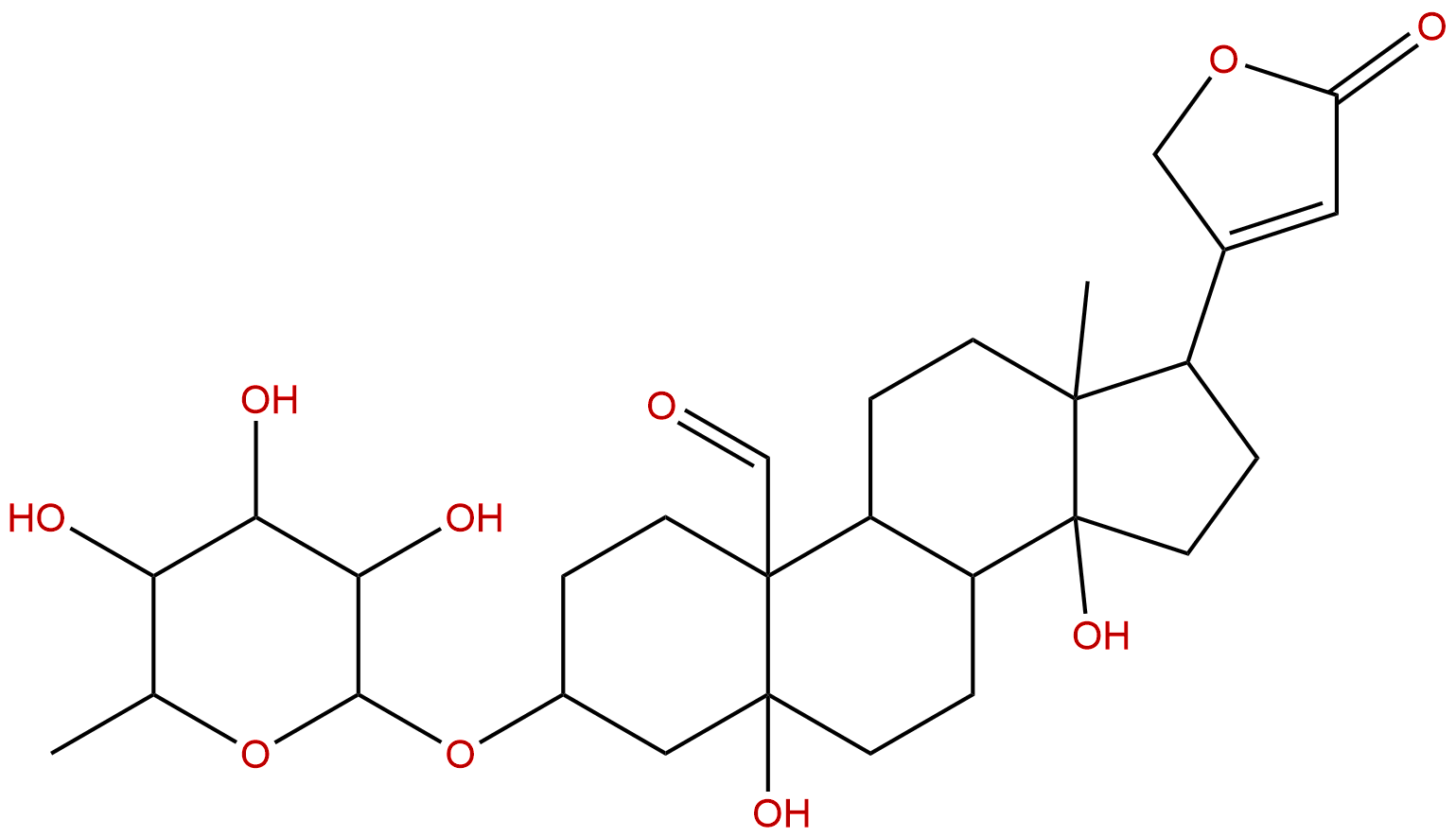


Synonym name: Convallaton; Convallopan; Convalpur; Convapur; Corglykon; Korglykon; Corglycone; Convallatoxoside
Catalogue No.: BP0389
Cas No.: 508-75-8
Formula: C29H42O10
Mol Weight: 550.645
Botanical Source: Convallaria majalis, Antiaris toxicaria and other plants
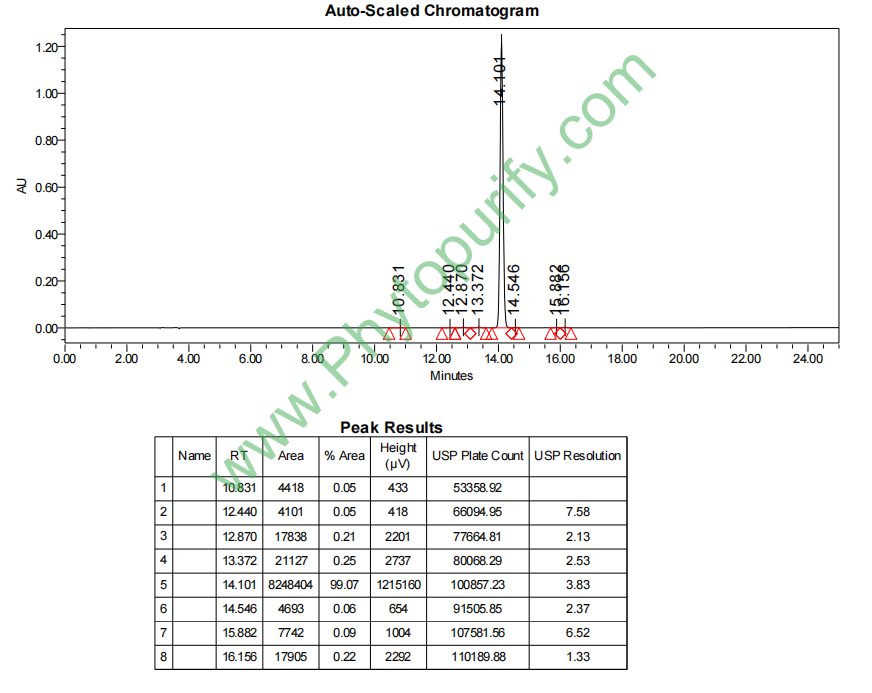
Purity: 95%~99%
Analysis Method: HPLC-DAD or/and HPLC-ELSD
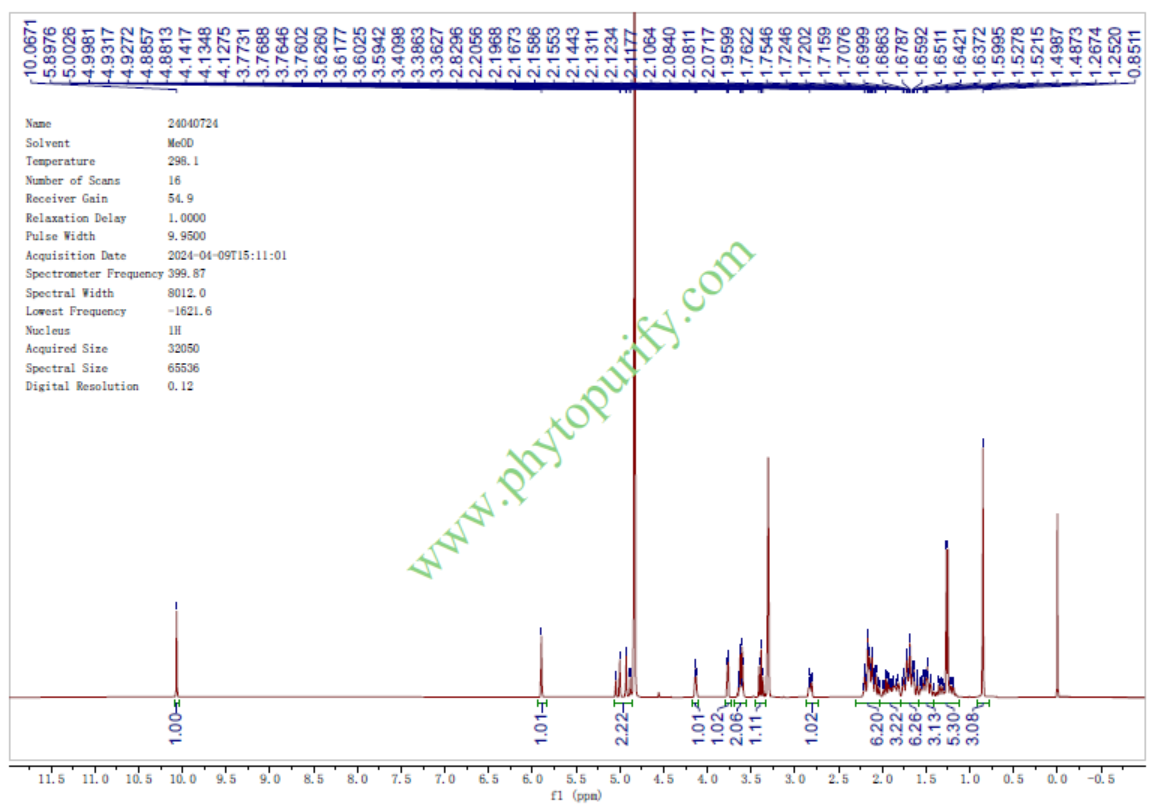
Identification Method: Mass, NMR
Packing: Brown vial or HDPE plastic bottle
Can be supplied from milligrams to grams.
For Reference Standard and R&D, Not for Human Use Directly.
Inquire for bulk scale.
HPLC of Convallatoxin
HNMR of Convallatoxin
Storage conditions:Short-term storage at 2~8℃, long-term storage at -20 ~ -80℃
189.6900
.1900
No
No
No
Yes
Unknown
No
Unknown
Convallatoxin (CAS number: 508-75-8) is a typical natural product of cardiac glycosides, originally isolated from the plant Adonis amurensis Regel et Radde. As an important member of the cardiac glycoside family, Linglan toxin glycoside has attracted widespread attention in the research of cardiovascular and inflammatory diseases in recent years due to its unique pharmacological activity and complex molecular mechanism. Linglan toxin glycoside not only exhibits significant cardiotonic effects, but also demonstrates anti-inflammatory and anti proliferative potential by activating peroxisome proliferator activated receptor gamma (PPAR gamma) and inhibiting the nuclear factor kappa B (NF - κ B) signaling pathway. In addition, as a substrate of P-glycoprotein (P-gp), the transport process of Linglan toxin glycoside is closely related to the Val982 amino acid residue. This discovery provides a new perspective for the study of its pharmacokinetic behavior and multidrug resistance mechanism. More importantly, Linglan toxin glycoside can enhance ligand induced μ - opioid receptor (MOR) endocytosis, demonstrating its potential application value in the field of neural regulation.
This article provides a systematic review of the chemical structure and physicochemical properties, plant sources, and extraction methods of Linglan toxin glycosides. It delves into their pharmacological activity and mechanism of action, evaluates their pharmacological properties and pharmacokinetic characteristics, and explores their prospects and challenges in clinical applications. The aim is to provide theoretical support and research directions for further drug development of this natural product.
The chemical formula of Linglan toxin glycoside is C29H42O11, with a molecular weight of 566.64 Da. Its structure belongs to the typical cardiac glycoside class, consisting of a steroid core structure connected to the glycoside moiety. The steroid core of Linglan toxin glycoside has a typical cardiac steroid skeleton, and the glycoside part is composed of multiple hydroxyl and sugar units, endowing it with high polarity and complex stereochemical characteristics.
In terms of physicochemical properties, the LogP value of Linglan toxin glycoside is 0.19, indicating its strong hydrophilicity and good water solubility. However, due to its large polar surface area (TPSA of 189.69 Å ²) and up to 10 hydrogen bond receptors, its ability to pass through the blood-brain barrier is limited (BBB permeability is unknown). The characteristics of polarity and molecular weight suggest that the absorption and distribution of iridoid glycosides in vivo may be limited to some extent.
The cardiotoxicity and hERG channel inhibitory activity of Linglan toxin glycoside have been reported, indicating that its drug safety needs to be carefully evaluated. The data on hepatotoxicity and mutagenicity (Ames test) are not yet clear, and further toxicological studies are needed.
Linglan toxin glycoside mainly comes from Adonis amurensis Regel et Radde, a plant in the Ranunculaceae family. This plant is widely distributed in Northeast Asia, especially in Northeast China, the Far East of Russia, and northern Japan. Adonis amurensis, as a traditional herb, has been used in history to treat symptoms such as heart disease and edema. Its pharmacological active ingredient, iridoid glycosides, occupies an important position.
The extraction of Linglan toxin glycosides usually adopts multi-step solvent extraction and separation purification techniques. Common extraction processes include:
In recent years, supercritical fluid extraction (SFE) and membrane separation techniques have also been introduced into the extraction process of iridoid glycosides to improve extraction efficiency and purity, reduce the use of organic solvents, and comply with green chemistry principles.
Linglan toxin glycoside, as a cardiac glycoside compound, was first studied for its pharmacological activity of enhancing myocardial contractility. By inhibiting the Na ⁺/K ⁺ - ATPase on the myocardial cell membrane, Linglan toxin glycoside can increase the intracellular sodium ion concentration, thereby affecting the calcium ion exchange mechanism, increasing the intracellular calcium ion level of myocardial cells, enhancing myocardial contractility, and improving the cardiac function of heart failure patients.
In addition to its cardiotonic effect, the potential of Linglan toxin glycosides in inflammatory diseases is gradually being revealed. Research has shown that Linglan toxin glycoside can activate PPAR γ, promote the expression of anti-inflammatory genes, while inhibiting the NF - κ B signaling pathway and reducing the release of pro-inflammatory factors, thus exhibiting significant anti-inflammatory effects in inflammatory models such as colitis. In addition, Linglan toxin glycoside also has anti-tumor proliferation activity, which may exert its effect by regulating cell cycle related proteins and apoptosis signaling pathways.
Linglan toxin glycoside, as a substrate of P-glycoprotein (P-gp), has been shown to play a crucial role in the transport process mediated by P-gp through translational dynamics studies. This discovery is of great significance for understanding the drug tolerance and multidrug resistance mechanism of Linglan toxin glycoside.
In the field of neuropharmacology, it has been found that iridoid glycosides can enhance ligand induced μ - opioid receptor (MOR) endocytosis, exhibiting high efficacy and efficacy, suggesting their potential application value in regulating opioid receptor function and related pain management.
The multi-target mechanism of action of Linglan toxin glycoside enables it to exhibit complex and multidimensional pharmacological effects in various disease models. The main mechanisms of action include:
Na ⁺/K ⁺ - ATPase inhibition
As a typical cardiac glycoside, Linglan toxin glycoside inhibits its activity by binding to the Na ⁺/K ⁺ - ATPase alpha subunit, leading to intracellular sodium ion accumulation and indirectly promoting calcium ion influx, enhancing myocardial contractility. This mechanism is the basis for its treatment of heart failure.
PPAR γ activation
Linglan toxin glycoside can act as an agonist of PPAR γ, promoting its transcriptional activity, regulating lipid metabolism and inflammatory response. In inflammatory diseases such as colitis, activation of PPAR γ helps to suppress the expression of pro-inflammatory cytokines and alleviate tissue damage.
Inhibition of NF - κ B signaling pathway
Linglan toxin glycoside exerts anti-inflammatory effects by inhibiting the nuclear translocation of NF - κ B and reducing the expression of inflammatory mediators such as TNF - α and IL-6. This mechanism is crucial for its anti-inflammatory and anti proliferative activity.
P-glycoprotein (P-gp) mediated transport
Linglan toxin glycoside is a substrate of P-gp, which is transported by recognizing the key amino acid Val982 in its molecular structure, affecting its distribution and excretion in vivo. This mechanism is associated with the pharmacokinetics and multidrug resistance of Linglan toxin glycosides.
Enhanced phagocytosis of μ - opioid receptor (MOR)
Linglan toxin glycoside can enhance ligand induced MOR endocytosis, regulate receptor endocytosis and recycling processes, and may affect the efficacy and tolerance of opioid drugs.
In addition, Linglan toxin glycoside also involves multiple targets related to heart failure, such as AMPK (PRKAA1), EHMT2, APP, PTPN1, MAOA, ESR2, ABCB1, ALOX15, ABCG2, and FEN1. The regulation of these targets collectively participates in its cardiovascular protection and anti-inflammatory and anti proliferative effects.
The pharmacological evaluation of Linglan toxin glycoside shows that it has certain potential for drug development, but there are also significant challenges. Its high molecular weight (566.64 Da) and high polarity (TPSA 189.69 Å ²) limit its oral bioavailability and tissue penetration, especially its difficulty in crossing the blood-brain barrier, limiting its application in central nervous system diseases.
The LogP value of Linglan toxin glycoside is 0.19, indicating its strong hydrophilicity, which facilitates dissolution in plasma, but may affect passive diffusion of cell membranes. Its characteristic as a substrate for P-glycoprotein suggests that it has a strong efflux effect in the intestine and liver, which may lead to first pass effects of drugs and insufficient in vivo exposure.
In terms of safety, Linglan toxin glycoside exhibits cardiotoxicity and hERG channel inhibitory activity, suggesting that it may cause adverse reactions such as arrhythmia. Therefore, it is necessary to focus on cardiac safety assessment during drug development. The data on liver toxicity and mutagenicity are not sufficient and further systematic research is needed.
Pharmacokinetic studies are still in the preliminary stage, and the absorption, distribution, metabolism, and excretion (ADME) characteristics of iridoid glycosides need to be further clarified through in vivo and in vitro models, especially their bioavailability and metabolic pathways under different administration routes.
Linglan toxin glycoside, as a natural cardiac glycoside with multiple biological activities, has broad clinical application prospects. Its potential in the treatment of heart failure is based on its classic Na ⁺/K ⁺ - ATPase inhibition mechanism, which can effectively enhance myocardial contractility and improve cardiac function. Compared with traditional cardiac glycosides, the additional effects of Linglan toxin glycosides in anti-inflammatory and anti proliferative aspects provide new possibilities for their application in complex pathological states such as chronic heart failure and myocarditis.
In the application of inflammatory diseases such as colitis, iridoid glycosides have shown good anti-inflammatory effects by regulating the PPAR γ and NF - κ B signaling pathways, and are expected to develop into new anti-inflammatory drugs or adjuvant therapies in the future.
In addition, the discovery of iridoid glycosides in the field of neural regulation, especially their regulatory effect on the phagocytosis of μ - opioid receptors, provides new ideas for pain management and opioid tolerance research, which may promote their clinical application in neurological diseases.
However, the cardiotoxicity and hERG inhibition of Linglan toxin glycosides are the main obstacles to their clinical development, and their toxic side effects need to be reduced through structural modification, dosage form optimization, or combination therapy strategies. Meanwhile, comprehensive pharmacokinetic and toxicological data are crucial for clinical translation.
Future research should focus on:
Linglan toxin glycoside, as a natural cardiac glycoside with multiple pharmacological activities, has shown broad research and application prospects in the fields of cardiovascular disease, inflammatory disease, and neural regulation due to its unique chemical structure and complex molecular mechanism of action. Although there are certain limitations to its pharmacological properties, especially in terms of cardiac toxicity and pharmacokinetic characteristics, which still need to be optimized, with the development of modern drug design and pharmacological techniques, Linglan toxin glycoside and its derivatives are expected to become an important source of innovative drugs in the future.
The in-depth basic research and preclinical evaluation of the system will provide a solid foundation for the drug development of Linglan toxin glycoside, promote its transformation from traditional natural products to modern clinical drugs, and benefit patients.
