
| Catalog No | Package | Original Price | Price | Inventory | Quantity | Operating |
|---|---|---|---|---|---|---|
| BP0444-20mg | 20mg | $30.00 | Sign in |
|


Synonym name:
Catalogue No.: BP0444
Cas No.: 485-35-8
Formula: C11H14N2O
Mol Weight: 190.246
Botanical Source: Alkaloid from Cytisus laburnum, many other Cytisus spp., Baptisia, Genista, Laburnum, Sophora, Thermopsis, Ammodendron, Anagyris and Euchresta spp. (Leguminosae)
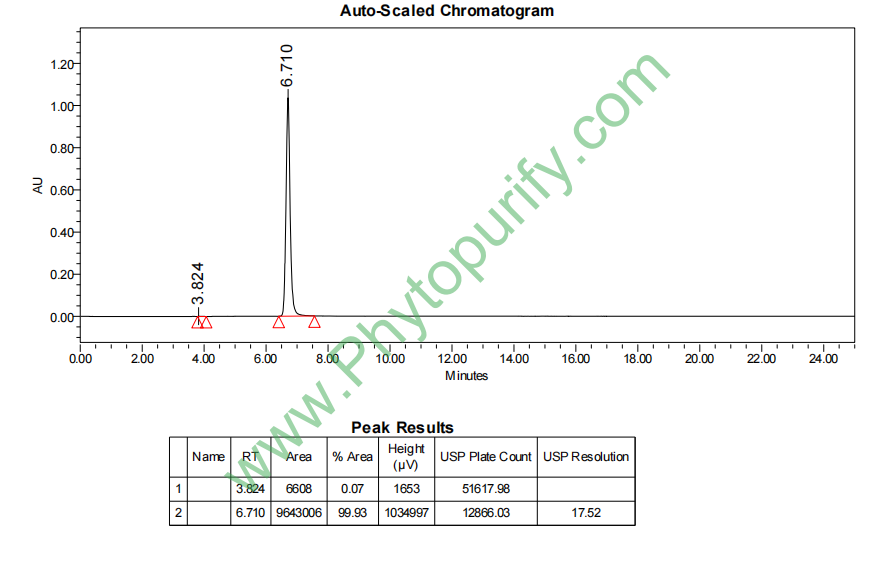
Purity: 95%~99%
Analysis Method: HPLC-DAD or/and HPLC-ELSD
Identification Method: Mass, NMR
Packing: Brown vial or HDPE plastic bottle
Can be supplied from milligrams to grams.
For Reference Standard and R&D, Not for Human Use Directly.
Inquire for bulk scale.
HPLC of Cytisine
Storage conditions:Short-term storage at 2~8℃, long-term storage at -20 ~ -80℃
34.0300
-.0139
-1.3692
64.9026
2.1238
7.5540
High
19.0619
4.0458
Yes
Yes
No
No
Yes
Yes
0.0
Yes
No
Yes
Yes
Cytisine, also known as indigo alkaloid, is a natural alkaloid with a long history and modern value. Its CAS number is 485-35-8, mainly derived from leguminous plants such as Cytisus laburnum L. As early as the 1860s, its crude extract had been used for respiratory stimulation, and its modern pharmacological value stems from the revelation of the unique mode of action of nicotinic acetylcholine receptors (nAChRs). As a highly selective partial agonist of the α 4 β 2 nAChR subtype, genistein can mimic the partial effects of nicotine to alleviate withdrawal symptoms, while avoiding nicotine dependence and severe side effects due to its low intrinsic activity. This characteristic lays the core theoretical foundation for its use as a smoking cessation adjuvant. Since the 1960s, quinine preparations such as Tabex have been used ®) Widely used in clinical smoking cessation in Central and Eastern European countries. In recent years, with the increasing global efforts to control smoking and the growing demand for new smoking cessation therapies, genistein has once again become a hot topic in international pharmacology and clinical medicine research. This article aims to systematically review the chemical characteristics, plant sources, pharmacological activities, mechanisms of action, medicinal properties, and clinical applications of genistein, in order to provide comprehensive academic references for the in-depth research and development of this natural product.
The chemical name of goldfinch alkaloid is (1R, 5S) -1,2,3,4,5,6-hexahydro-8H-1,5-methylpyrido [1,2-a] [1,5] diazoaryloctan-8-one, with a molecular formula of C11H14N2O and a molecular weight of 190.2460. Its structure belongs to the quinolone alkaloid class, consisting of a tricyclic system containing a bridged nitrogen-containing bicyclic skeleton. This structure is the key pharmacophore for its interaction with nAChRs. Its structure is similar to nicotine and another smoking cessation drug Varenicline, both simulating the pyridine or pyridine like ring of acetylcholine. However, the rigid tricyclic structure of genistein gives it unique receptor binding properties.
In terms of physicochemical properties, the lipid water partition coefficient (LogP) of genistein is approximately -0.0139, indicating its hydrophilicity. Its topological polar surface area (TPSA) is 34.0300 Å ², which is relatively small. Good water solubility, approximately 64.9026 mg/L. These parameters indicate that it has good solubility and certain membrane permeability. The key is that its blood-brain barrier (BBB) penetration is predicted to be "high", which is crucial for it as a central nervous system targeted drug, enabling it to effectively act on nAChRs in the brain. In addition, preliminary pharmacological risk assessment showed that the hERG inhibition risk was "no", and the Ames test result was 0.0 (negative), indicating a low potential risk of arrhythmia and genetic toxicity, and good safety characteristics.
Plantagenine mainly exists in various plants of Fabaceae, among which the main commercial source is the seeds of Cytisus laburnum L., also known as poisonous beans, with a content of up to 1.5% -3%. In addition, plants such as Sophora flavescens Ait. roots and seeds, as well as Thermopsis lanceolata R. Br., also contain significant amounts of genistein. These plants have diverse traditional uses, but due to the toxicity of their alkaloid components, caution should be exercised when using them.
The extraction and separation of genistein usually follow the general extraction process of alkaloids. Classic methods include: first, drying and crushing plant materials (usually seeds), and then percolating or leaching them with dilute acid (such as hydrochloric acid or sulfuric acid) aqueous solution or alcohol acid mixture to dissolve alkaloids into salts. The acid extract is alkalized (such as ammonia water, sodium hydroxide) to alkalinity, allowing the free precipitation of quercetin, and then extracted with organic solvents (such as chloroform, dichloromethane, or ethyl acetate). The crude extract can be further purified by silica gel column chromatography, high-performance liquid chromatography (HPLC), or crystallization method. Modern technology tends to use green and efficient techniques such as macroporous adsorption resin and supercritical fluid extraction to improve yield and purity. The extraction process needs to be strictly controlled, as other structurally similar toxic alkaloids (such as N-methylquercetin) often coexist in plants, ensuring the purity and consistency of the final product.
The pharmacological activity of genistein is extensive, and its core function stems from the regulation of nAChRs.
Smoking cessation related activities This is the most famous and thoroughly validated activity of genistein. As a partial agonist of α 4 β 2 nAChR, it competitively binds to nicotine in its presence, weakening the full agonist effect of nicotine; During nicotine deficiency, moderate receptor activation is provided to alleviate nicotine cravings and withdrawal symptoms such as irritability, anxiety, and lack of concentration. Numerous clinical studies, such as multiple randomized controlled trials and meta-analyses, have confirmed that compared to placebo, genistein can significantly improve the long-term success rate of smoking cessation, with efficacy comparable to or better than nicotine replacement therapy, and high cost-effectiveness.
Nervous system activity:
Other potential activities Early studies also reported its weak analgesic, respiratory excitatory (high doses can first excite and then inhibit respiration), and antiarrhythmic effects, but these are not its main research directions.
The mechanism of action of genistein mainly revolves around its selective effect on the nAChRs family and its cross dialogue with multiple neurotransmitter systems.
Core target: Nicotinic acetylcholine receptors (nAChRs)NAChRs are ligand gated ion channels widely distributed in the central and peripheral nervous systems.
Association of related disease targets:
Jinquehua alkaloid exhibits ideal medicinal properties. As mentioned earlier, it has a small molecular weight, moderate hydrophilicity, high BBB penetration, and a good preliminary safety warning (no hERG inhibition or mutagenicity).
In terms of pharmacokinetics, absorption is rapid and complete after oral administration, with a peak time (Tmax) of approximately 1-3 hours. Due to its hydrophilicity, its distribution volume in the body is limited, mainly distributed in organs with abundant blood flow. It has limited metabolism in the liver and is mainly excreted in urine through the kidneys as a prototype. Its elimination half-life (t1/2) is relatively short, about 4-5 hours. This requires multiple daily doses (usually 6 times a day, gradually decreasing), which is a limitation of the current formulation plan. Its absolute bioavailability is relatively high. A low protein binding rate means a high proportion of free drugs in the blood, which is beneficial for exerting drug efficacy. At present, improving its pharmacokinetic properties (such as developing sustained-release formulations to prolong the duration of action and reduce the number of doses taken) is an important direction for formulation research and development.
The clinical application prospects of genistein are broad, but it also faces challenges.
Deepening and expanding the field of smoking cessation:
Exploration of new indications:
Formulation innovation Develop daily oral sustained-release tablets, transdermal patches, or other novel drug delivery systems to optimize dosing regimens and improve patient compliance.
Security monitoring Although the overall tolerability is good, with common side effects such as mild gastrointestinal discomfort and sleep disorders, the safety of long-term use in a wider population still needs to be continuously monitored.
As a natural alkaloid derived from plants, genistein has become an effective smoking cessation drug with historical verification and modern scientific basis, thanks to its unique partial excitatory effect on α 4 β 2 nAChR. Its clear molecular targets, excellent drug properties, and cost advantages over nicotine replacement therapy and varenicline make it an important player in the global tobacco control industry. Beyond smoking cessation, its effects on other nAChR subtypes have opened up new windows for its application in the field of neurological and psychiatric disorders. Future research should strive to promote global regulatory approval through high-quality clinical studies, improve its pharmacokinetic shortcomings using formulation technology, and explore its therapeutic potential in a wider range of disease areas. The success story of goldenrod alkaloids is a model of natural products continuously revitalizing in modern drug discovery, reflecting the perfect transformation from traditional medicinal plants to modern therapies based on clear mechanisms of action.
