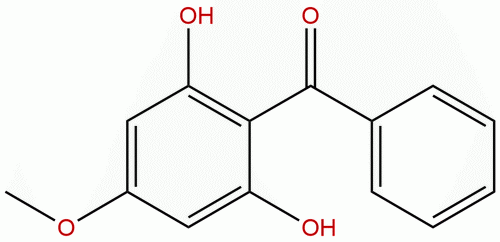


Product name: Cotoin
Synonym name: Cotoin
Catalogue No.: SBP02033
Cas No.: 479-21-0
Formula: C14H12O4
Mol Weight: 244.246
Botanical Source:
Physical Description:
Type of Compound: Xanthones
Purity: 95%~99%
Analysis Method: HPLC-DAD or/and HPLC-ELSD
Identification Method: Mass, NMR
Packing: Brown vial or HDPE plastic bottle
The product could be supplied from milligrams to grams
Inquire for bulk scale.
For Reference Standard and R&D, Not for Human Use Directly.
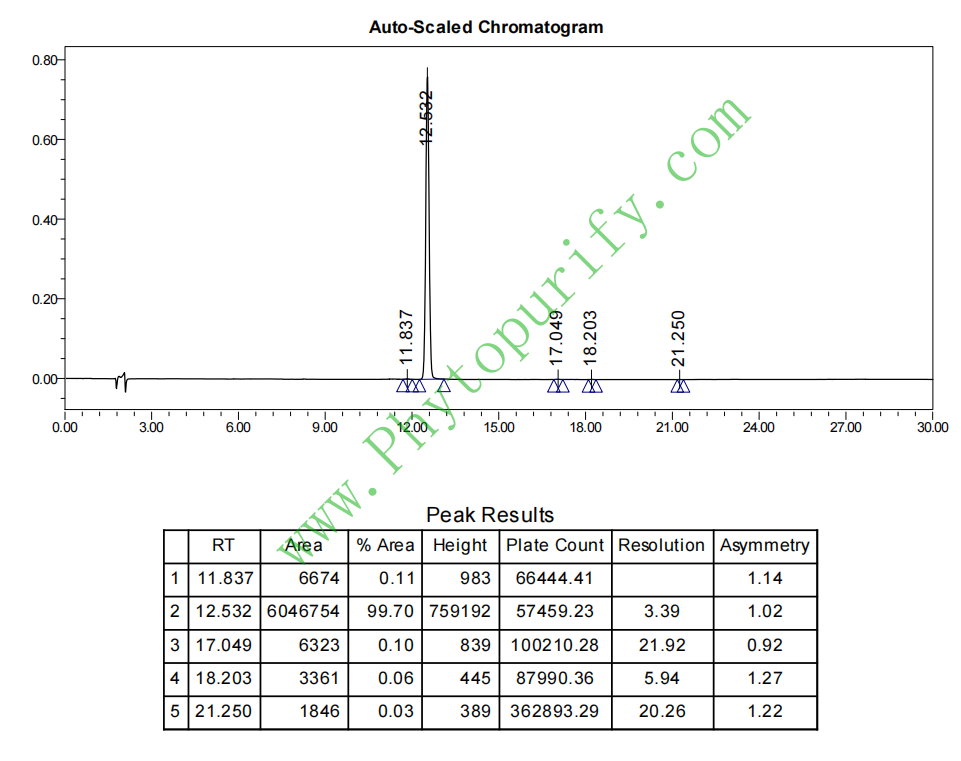
HPLC of Cotoin
Storage conditions:Short-term storage at 2~8℃, long-term storage at -20 ~ -80℃
66.7600
2.9454
2.8392
.1327
7.6635
15.6063
Low
91.8109
1.8680
Yes
No
Yes
No
Yes
Yes
0.6
No
No
Yes
No
Natural products, as an important source of drug discovery, play an irreplaceable role in the long history of human fight against diseases. From ancient plant medicine to modern target based drug screening, the diverse secondary metabolites in nature continue to provide unique chemical entities and lead compounds for the development of innovative drugs. Among the numerous natural products with biological activity, those from the genus Tenghuang(Garcinia)Plant compounds have attracted much attention due to their novel structures and significant pharmacological activities. Plants of the genus Tenghuang, such as Garcinia virgata The stem bark, fruit, and resin of a plant belonging to the Theaceae family, distributed in Southeast Asia, are commonly used in traditional medicine to treat inflammation, infections, and digestive system diseases.
Cotoin, as a type of Garcinia virgata The representative natural product isolated from stem bark, commonly known as 2 ', 4' - dihydroxy-6 '- methoxychalcone, belongs to the chalcone compound family. Chalcone is a key precursor in the biosynthesis pathway of flavonoids, characterized by two aromatic rings connected by an α, β - unsaturated ketone bridge (i.e. chalcone skeleton). This unique structure endows Kotoyin and its analogues with a wide range of biological activities, particularly their potential in anti-inflammatory, antioxidant, and anti-tumor fields, making them one of the hot molecules in natural product pharmacology research.
In recent years, with the deepening understanding of the pathogenesis of inflammation related diseases such as chronic inflammation, autoimmune diseases, neurodegenerative diseases, and cancer, the search for efficient and low toxicity new anti-inflammatory drugs has become an urgent need. Kotoyin has demonstrated the potential for further development as an anti-inflammatory lead compound due to its clear chemical structure, significant biological activity, and initially revealed molecular mechanisms. This article provides a systematic review of the chemical structure and physicochemical properties, plant sources and extraction methods, pharmacological activity, mechanism of action, pharmacological evaluation, and clinical application prospects of coumarin, aiming to provide comprehensive scientific basis for the subsequent research and development of this natural product.
The chemical structure of Cotoin belongs to a typical chalcone compound. Its core skeleton is 1,3-diphenyl-2-propen-1-one. Specifically, its structural features include two hydroxyl groups (- OH) and one methoxy group (- OCH ∝) on the A ring (the benzene ring connected to the carbonyl group), and an unsubstituted benzene ring on the B ring (the benzene ring connected to the double bond of the olefin). According to existing literature, the precise structure of Kotoyne has been identified as 2 ', 4' - dihydroxy-6 '- methoxychalcone. Its molecular formula is C ₁₆ H ₁₄ O ₄, and its molecular weight is 244.2460 g/mol.
From the perspective of physical and chemical properties, the lipid water partition coefficient (LogP) of Kotoyne is 2.9454, indicating its moderate lipophilicity, which facilitates its penetration of cell membranes and interaction with membrane proteins or intracellular targets. Its topological polar surface area (TPSA) is 66.7600 Å ², which is at a moderate level, indicating that it may have some oral absorption potential, but may also be affected by intestinal transporters. In terms of water solubility, the LogS of Ketone is 0.1327, which is a low water solubility compound, which to some extent limits its bioavailability and is one of the main challenges faced by oral administration. In addition, its blood-brain barrier (BBB) penetration ability has been evaluated as "low", which means that the application of cotropin in the treatment of central nervous system diseases may be limited, but it also reduces the risk of central nervous system related toxic side effects. In the early safety assessment, the hERG inhibition test result was' no ', indicating a low risk of inducing QT interval prolongation in the heart; The Ames test result is 0.6 (usually considered negative if it is less than 0.5, and suspicious positive if it is 0.5-0.8), indicating that it may have a weak genetic toxicity risk, which needs to be further confirmed in subsequent studies.
The phenolic hydroxyl (- OH) and α, β - unsaturated ketone structures in the molecule of Kotoyne are the key pharmacophores for its biological activity. Phenolic hydroxyl endows it with excellent antioxidant capacity, which can directly scavenge free radicals or chelate metal ions. The α, β - unsaturated ketone structure is a classic Michael addition receptor that can covalently or reversibly bind to biomolecules such as cysteine thiols in proteins, thereby regulating various signaling pathways. This structural characteristic enables it to exhibit multi-target and multi pathway effects in fields such as anti-inflammatory and anti-tumor.
Kotoyin mainly comes from the genus Tenghuang(Garcinia)Plants, especially Garcinia virgata。G. virgata It is an evergreen tree mainly distributed in tropical rainforest areas of Southeast Asia, such as Indonesia, Malaysia, the Philippines, and other places. Its stem bark, root bark, and resin have a long history of application in folk medicine, often used to treat diarrhea, dysentery, fever, and skin infections. Except for G. virgata Kotoyin has also been reported to exist in other species of the genus Tenghuang, such as Garcinia mangostana The skin and Garcinia cowa In the branches and leaves, but the content is usually low.
The traditional extraction method mainly relies on organic solvent extraction. Due to its moderate polarity, commonly used extraction solvents include methanol, ethanol, ethyl acetate, and acetone. The typical extraction process is as follows: first, dry the G. virgata Crush the stem bark and extract it by soaking or percolating with methanol or ethanol at room temperature or heating conditions to obtain the crude extract. Subsequently, the crude extract was suspended in water and subjected to liquid-liquid extraction with petroleum ether, ethyl acetate, and n-butanol in sequence to enrich components of different polarities. Kotoyin is usually enriched in the ethyl acetate extraction layer. Finally, by repeated silica gel column chromatography, Sephadex LH-20 gel column chromatography and preparative high performance liquid chromatography (Prep HPLC), the high-purity Cotoine monomer can be isolated and purified from the ethyl acetate extract.
In recent years, in order to improve extraction efficiency and purity, some modern extraction techniques have also been applied to the preparation of coumarin, such as ultrasound assisted extraction (UAE) and microwave-assisted extraction (MAE). These techniques shorten extraction time and increase yield by disrupting plant cell walls, accelerating solvent penetration. In addition, high-speed counter current chromatography (HSCCC), as a liquid-liquid distribution chromatography technique, has been successfully used for the efficient separation of coumarin from crude extracts of the genus Tenghuang due to its advantages such as no solid stationary phase, high sample recovery rate, and large separation capacity. In terms of structural identification, nuclear magnetic resonance spectroscopy (NMR, including ¹ H-NMR, ¹ ³ C-NMR, DEPT, HSQC, HMBC, etc.) and high-resolution mass spectrometry (HR-ESI-MS) are commonly used for confirmation. By comparing with literature data, the chemical structure is ultimately determined.
The pharmacological activity research of Ketone mainly focuses on its anti-inflammatory effect, while also involving antioxidant, anti-tumor, and antibacterial activities.
1. Anti inflammatory activity
Inflammation is a defensive response of the body to injury and infection, but excessive or sustained inflammation can lead to various diseases. Kotoyin exhibits significant anti-inflammatory activity in various in vitro and in vivo inflammatory models.
2. Antioxidant activity
The phenolic hydroxyl group in Kotoyin molecules endows it with excellent free radical scavenging ability. In vitro antioxidant experiments such as DPPH, ABTS, and FRAP, Ketone exhibited concentration dependent antioxidant activity. Its antioxidant capacity may be closely related to its anti-inflammatory mechanism, as oxidative stress is one of the important driving factors of inflammatory response. By clearing reactive oxygen species (ROS), cotropin can indirectly exert anti-inflammatory effects by inhibiting the activation of redox sensitive transcription factors such as NF - κ B.
3. Antitumor activity
Chalcone compounds generally exhibit anti-tumor activity. Preliminary research shows that Cotoine has certain cytotoxicity to some cancer cell lines (such as human hepatoma cell HepG2, human breast cancer cell MCF-7, etc.), and its IC ≮ ₀ value is usually in the micromolar level. Its anti-tumor mechanism may be related to inducing cell apoptosis, blocking the cell cycle, and inhibiting tumor cell migration and invasion. For example, cotropin may exert anti-tumor effects by activating the cell apoptosis pathway mediated by CASP1 (cysteine aspartic protease 1) or by inhibiting the STAT3 signaling pathway.
4. Other activities
In addition to the aforementioned activities, Curcumin has also been reported to have antibacterial (especially against certain Gram positive bacteria), antiviral, and neuroprotective activities. For example, its regulatory effect on transient receptor potential (TRP) channels such as TRPV1 and TRPA1 may be related to its analgesic and anti itch activities. In addition, inhibition of IKBKB (I κ B kinase β) is a key link in its regulation of the NF - κ B pathway.
The pharmacological activity of Ketone, especially its anti-inflammatory effect, is achieved through the synergistic regulation of multiple targets and pathways. Based on existing research, its core molecular mechanisms can be summarized as follows:
1. Inhibit the NF - κ B signaling pathway
NF - κ B is the core transcription factor of inflammatory response. In the resting state, NF - κ B binds to the inhibitory protein I κ B α and exists in an inactive form in the cytoplasm. When stimulated by LPS, TNF - α, etc., I κ B kinase (IKK, encoded by genes such as IKBKB) is activated, phosphorylating I κ B α, leading to its ubiquitination degradation, thereby releasing NF - κ B (mainly p65/RELA subunit) into the nucleus, initiating the transcription of downstream inflammatory genes (such as TNF - α, IL-6, iNOS, COX-2, etc.). Research has shown that cotropin can inhibit the activity of IKK (target: IKBKB), prevent the phosphorylation and degradation of I κ B α, and thus block the nuclear translocation and transcriptional activity of NF - κ B. This is one of the core mechanisms by which it exerts anti-inflammatory effects.
2. Regulating the STAT3 signaling pathway
STAT3 (Signal Transduction and Transcription Activation Factor 3) is another transcription factor that plays a critical role in inflammation and tumors. After binding to cytokines such as IL-6 and their receptors, JAK kinase is activated, which phosphorylates STAT3 to form dimers and integrate into the nucleus, regulating the expression of target genes. Kotoyin has been shown to inhibit the phosphorylation level of STAT3 (target: STAT3), thereby suppressing its transcriptional activity. This helps explain its role in inhibiting IL-6 mediated inflammatory responses and anti-tumor effects.
3. Regulating NLRP3 inflammasome and CASP1
Inflammatory bodies are intracellular multiprotein complexes that are important components of the innate immune system. The NLRP3 inflammasome is the most extensively studied, which recruits and activates CASP1 (cysteine aspartate protease 1) upon activation. Activated CASP1 cleaves pro-IL-1 β and pro-IL-18, producing mature IL-1 β and IL-18, and may induce cell pyroptosis. Ketone may exert anti-inflammatory effects by inhibiting the assembly of NLRP3 inflammasomes or directly suppressing the activity of CASP1 (target: CASP1), thereby reducing the maturation and secretion of IL-1 β.
4. Adjust TRP channel
TRPV1 and TRPA1 are non selective cation channels expressed on sensory neurons and are key molecules for sensing pain, heat, cold, and chemical stimuli. They also participate in neurogenic inflammation. Kotoyin has been reported to regulate the activity of these channels (targets: TRPV1, TRPA1), possibly by antagonizing or desensitizing them, inhibiting calcium influx and neuropeptide release caused by agonists such as capsaicin and mustard oil, thereby producing analgesic and anti-inflammatory effects.
5. Directly inhibit pro-inflammatory enzyme activity
Kotoyin can also directly inhibit the activity of some key pro-inflammatory enzymes. For example, it can inhibit the activity of iNOS (NOS2 encoded) and reduce the excessive production of NO; It can also inhibit the activity of COX-1 (encoded by PTGS1) and COX-2, and reduce the synthesis of prostaglandins. This direct action on enzyme proteins is another pathway for them to rapidly exert anti-inflammatory effects.
6. Targeting TNF - α
TNF - α is one of the earliest released and most potent cytokines in inflammatory response. Kotoyin not only inhibits the transcription of TNF - α genes (via the NF - κ B pathway), but may also directly bind to TNF - α proteins, blocking their interaction with receptors and thereby inhibiting downstream signaling mediated by TNF - α.
In summary, Ketone forms a complex and multi-layered anti-inflammatory network by simultaneously acting on multiple key targets such as IKBKB, STAT3, CASP1, TRPV1, TRPA1, RELA, PTGS1, TNF, NOS2, etc. This multi-target mode of action is its unique advantage over single target synthetic drugs, but it also increases the complexity of studying its mechanism of action.
To push Kotogen from a natural product active molecule to a clinical candidate drug, a systematic evaluation of its pharmacological properties is required, including pharmacokinetic (ADME) characteristics and preliminary safety assessment.
1. Analysis of pharmacological parameters
According to the provided pharmacological parameters, Ketone exhibits some favorable and unfavorable characteristics:
* Molecular weight (244.2 Da)Compliant with Lipinski's Rule of Five (molecular weight<500), it is beneficial for oral absorption.
* LogP(2.95)Moderate, balancing water solubility and lipid solubility, beneficial for transmembrane transport.
* TPSA(66.8 Ų)Less than 140 Å ² indicates good oral absorption and membrane permeability potential.
* Water solubility (0.13)Low, this is its main bottleneck for drug development. Low water solubility can lead to poor oral bioavailability, affecting the efficacy of the drug in vivo. It is necessary to improve its dissolution and solubility through formulation techniques such as nanocrystals, liposomes, cyclodextrin inclusion complexes, solid dispersions, etc.
* Blood brain barrier penetration (low)Not beneficial for treating central nervous system diseases, but for treating peripheral inflammatory diseases, this can avoid central side effects.
* HERG inhibition (No)This is an important safety advantage that reduces the risk of cardiac toxicity.
* Ames test (0.6)The result is suspected positive, indicating a possible risk of genetic toxicity. This needs to be confirmed and evaluated in more comprehensive genetic toxicity tests, such as in vivo micronucleus tests and chromosome aberration tests. If genetic toxicity is confirmed, it will seriously hinder its development as an oral medication.
2. Pharmacokinetic characteristics
At present, there are few detailed research reports on the pharmacokinetics of Ketone in vivo. Based on its physicochemical properties, its pharmacokinetic characteristics can be inferred as follows:
* absorb Oral absorption may be poor, mainly due to its low water solubility. Its LogP is moderate, indicating that passive diffusion may not be the main obstacle, but dissolution rate may be the limiting step. The first pass effect in the intestine may also be significant.
* distribution Due to its moderate lipophilicity, its distribution volume may be relatively large. The plasma protein binding rate is still unclear.
* Metabolism Chalcone compounds undergo phase II metabolism in the body, such as glucuronidation and sulfation, to form more water-soluble complexes that are easily excreted from urine and bile. In addition, its alpha, beta unsaturated ketone structure may also be metabolized by reductases. CYP450 enzyme mediated phase I oxidative metabolism may also occur.
* excretion The main excretion pathways may be bile and urine.
3. Safety evaluation
In addition to the risk of genetic toxicity, it is also necessary to evaluate the acute toxicity, subchronic toxicity, and target organ toxicity of cotropin. Preliminary cytotoxicity studies have shown that its toxicity to normal cells is relatively low, demonstrating a certain degree of selectivity. However, safety data for long-term medication is still missing. Given its multi-target effects, potential off target effects (such as non-specific inhibition of certain kinases or receptors) also require attention.
Ketone, as a natural chalcone with multi-target anti-inflammatory activity, has shown potential application prospects in the treatment of various inflammation related diseases.
1. Chronic inflammatory diseases
Given its inhibitory effect on NF - κ B, STAT3, and NLRP3 inflammasomes, cotropin is expected to be used for the treatment of chronic inflammatory diseases such as rheumatoid arthritis, inflammatory bowel disease (such as Crohn's disease, ulcerative colitis), and psoriasis. Its multi-target nature may give it an advantage over single target drugs in controlling complex inflammatory networks and may reduce the development of drug resistance.
2. Acute inflammation and pain
Its regulatory effects on TRPV1 and TRPA1 channels, as well as its inhibition of COX and iNOS, make it potential for development as a topical analgesic and anti-inflammatory drug for the treatment of arthritis pain, muscle strains, skin inflammation, etc. Low BBB penetration also makes it an ideal candidate for peripheral analgesics.
3. Cancer adjuvant therapy
The anti-tumor activity of cotropin, especially its inhibition of the STAT3 signaling pathway, suggests that it may be used as a chemotherapy sensitizer in combination with conventional chemotherapy drugs to improve efficacy and reduce side effects. For example, Cotoine may have application value in tumors with excessive STAT3 activation (such as liver cancer, breast cancer, multiple myeloma).
4. Metabolic disorders
Chronic low-grade inflammation is an important feature of metabolic diseases such as obesity, type 2 diabetes and atherosclerosis. The anti-inflammatory effect of Cotoine may help to improve insulin resistance, reduce adipose tissue inflammation and delay the progression of atherosclerosis.
Future research directions:
Despite its broad prospects, the clinical translation of Kotoyne still faces many challenges, and future research should focus on the following aspects:
Kotoyin, as a representative chalcone natural product derived from the genus Tenghuang, exhibits multi-target and multi pathway anti-inflammatory activity due to its unique chemical structure. It forms a complex regulatory network by simultaneously acting on multiple targets closely related to inflammation and immunity, such as IKBKB, STAT3, CASP1, TRPV1, RELA, PTGS1, TNF, TRPA1, NOS2, etc. It has shown potential in inhibiting the production of inflammatory mediators, regulating immune cell function, and relieving pain. However, its low water solubility and potential genetic toxicity risk are the main obstacles to its clinical translation.
Future research needs to combine multidisciplinary approaches such as natural product chemistry, pharmacology, medicinal chemistry, and pharmacy. Based on a deep understanding of their mechanisms of action, the focus should be on addressing their drug defects and conducting rigorous safety evaluations. Through rational structural optimization and formulation development, cotropin and its derivatives are expected to become new candidate drugs for the treatment of chronic inflammation, autoimmune diseases, and even cancer. The in-depth study of cotropin not only helps to reveal the complex mechanisms of natural products in inflammation regulation, but also provides valuable experience and examples for discovering and developing innovative drugs from traditional medicinal plants.
