Introduction/Overview
Flavonoids are a class of secondary metabolites widely present in the plant kingdom, known for their diverse chemical structures and extensive biological activities, and have attracted much attention in the fields of drug discovery and nutrition. 6-Hydroxyflavone (CAS number: 6665-83-4), as a representative molecule with a single hydroxyl modification on the flavonoid core, has become a hot topic in natural product pharmacology research in recent years due to its multiple pharmacological activities. Compared with many polyhydroxyflavonoids, 6-hydroxyflavonoids have a relatively simple chemical structure, but their unique hydroxyl substitution positions endow them with special physicochemical properties and biological activity spectra. Research has shown that 6-hydroxyflavonoids not only possess classic anti-inflammatory and antioxidant properties, but also show significant regulatory potential in the nervous and psychiatric systems, bone metabolism, glucose metabolism, and tumor prevention and treatment. Especially its anti anxiety effect exerted through gamma aminobutyric acid type A (GABAA) receptors, as well as its ability to promote osteogenic differentiation by activating key signaling pathways, provide promising prospects for its translation into clinical therapeutic drugs. This article aims to systematically review the chemical properties, plant sources, pharmacological activities, molecular mechanisms of action, pharmacological parameters, and clinical application potential of 6-hydroxyflavonoids, in order to provide comprehensive scientific references for the in-depth research and development of this compound.
Chemical structure and physicochemical properties
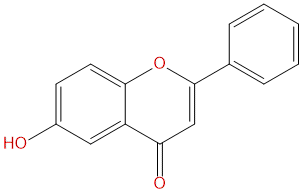
The chemical name of 6-hydroxyflavone is 6-hydroxy-2-phenyl-4H-1-benzopyran-4-one, with a molecular formula of C15H10O3 and a molecular weight of 238.2420 g/mol. Its basic skeleton is flavonoids (2-phenylchromenone), characterized by a hydroxyl group (- OH) attached to the 6th carbon atom of the A ring, which is a key structural feature that distinguishes it from other flavonoid homologs.
The physicochemical properties of this compound are closely related to its structure. Its calculated lipid water partition coefficient (LogP) is 2.8323, indicating that it has moderate lipophilicity, which is beneficial for its penetration of cell membranes, but may also affect its water solubility. Its topological polar surface area (TPSA) is 50.4400 Å ², which is relatively small and further supports its good membrane permeability. The experimental data shows that its water solubility is relatively low, about 0.0101 mg/mL, which may be a factor to consider in the development of its oral dosage form. It is worth noting that based on its physicochemical properties, 6-hydroxyflavone has a high blood-brain barrier permeability, which provides an important material basis for its direct action on the central nervous system (such as exerting anti anxiety activity). In addition, preliminary safety screening of the drug showed a result of 0.6 in the Ames test (usually considered to have potential mutagenic risk if>1.0), indicating a low risk of genetic toxicity; At the same time, it does not inhibit hERG potassium channels, indicating that its potential risk of inducing QT interval prolongation in the heart is relatively small. These characteristics lay a good safety foundation for its further development.
Plant sources and extraction methods
6-Hydroxyflavonoids are not widely present in high concentrations in plants, but rather serve as metabolic precursors or secondary components of specific flavonoids, distributed in various plant families and genera. According to literature reports, it can be detected in some plants of the Asteraceae, Leguminosae, and Lamiaceae families. For example, in some cases Ai genus Artemisia plants Licorice genus The presence of 6-hydroxyflavone has been identified in extracts from plants such as Glycyrhiza and some medicinal herbs. It usually coexists with other flavonoids such as apigenin, luteolin, etc.
The extraction of 6-hydroxyflavonoids from plant materials often uses classic natural product extraction and separation techniques. Firstly, organic solvents such as methanol, ethanol, or acetone are used to extract or reflux the dried and crushed plant tissues to obtain crude total flavonoids extract. Subsequently, it was purified through a series of chromatographic separation technologies, including silica gel column chromatography, polyamide column chromatography, Sephadex LH-20 column chromatography, and high performance liquid chromatography (HPLC). Due to the low content in plants and the difficulty in separating structurally similar compounds, the separation and purification process requires precise chromatographic optimization and structural identification (such as nuclear magnetic resonance NMR, mass spectrometry MS) confirmation. In addition, chemical synthesis is also an important way to obtain high-purity 6-hydroxyflavonoids. Through the classic Baker Venkataraman reaction or other flavonoid synthesis methods, this compound can be efficiently and massively prepared to meet the needs of pharmacological research and development.
Pharmacological activity research
Numerous in vitro and in vivo pharmacological studies have revealed the multifaceted biological activities of 6-hydroxyflavonoids, making them a promising lead compound with multi-target therapeutic potential.
-
Anti inflammatory and antioxidant activity 6-Hydroxyflavone can significantly inhibit the excessive production of nitric oxide (NO) in macrophages induced by lipopolysaccharide (LPS). NO is a key mediator in the inflammatory response, and its excessive production is associated with various chronic inflammatory diseases. This inhibitory effect suggests that 6-hydroxyflavone has a clear anti-inflammatory effect. Flavonoids typically have the ability to scavenge free radicals, and the phenolic hydroxyl structure of 6-hydroxyflavonoids also endows them with certain antioxidant potential, which helps alleviate tissue damage related to oxidative stress.
-
Neuropsychiatric system activity - anti anxiety effect This is one of the most highly anticipated activities of 6-hydroxyflavonoids. Research has shown that it can positively conformationally regulate the function of GABAA receptors by binding to the benzodiazepine (BZD) site, enhancing gamma aminobutyric acid (GABA) - induced chloride ion influx and producing central inhibitory effects. Of particular note, it exhibits a clear preference for GABAA receptor subtypes containing alpha 2- and alpha 3 subunits. This subtype selectivity is very important because the alpha 1 subtype is mainly associated with side effects such as sedation and drowsiness, while the alpha 2/alpha 3 subtype is more associated with therapeutic effects such as anti anxiety and anticonvulsant. Therefore, 6-hydroxyflavone may become a novel anti anxiety candidate drug with fewer side effects.
-
Promoting osteogenic differentiation and bone protective effects In research models of bone metabolism diseases such as osteoporosis, 6-hydroxyflavonoids have shown the ability to promote osteoblast differentiation. It can activate key signaling pathways within osteoblasts, such as protein kinase B (AKT), extracellular signal regulated kinase 1/2 (ERK1/2), and c-Jun N-terminal kinase (JNK), thereby upregulating the expression of osteogenic related genes (such as Runx2, Osterix) and promoting bone matrix mineralization. This provides experimental evidence for its use in the prevention and treatment of osteoporosis.
-
Anti advanced glycation end products (AGEs) formation The occurrence of diabetes and its complications is closely related to the non enzymatic glycosylation of proteins (forming AGEs). 6-Hydroxyflavone has been proven to effectively inhibit the glycosylation process of bovine hemoglobin (BHb). The accumulation of AGEs can disrupt protein function and activate their receptors (RAGE), leading to inflammation and oxidative stress. This activity suggests that 6-hydroxyflavone may have value in preventing or delaying complications of diabetes, such as kidney disease and vascular disease.
-
Renal protective effect In animal models of acute kidney injury induced by drugs (such as cisplatin) or chemicals, 6-hydroxyflavonoids exhibit renal protective effects. The mechanism may be related to its anti-inflammatory and antioxidant properties, by reducing the inflammatory response and oxidative damage of renal tubular epithelial cells, thereby improving renal function indicators and alleviating histopathological changes.
-
Antitumor potential Although not detailed in the provided compound description, it can be inferred from its association with multiple tumor related targets (such as MCL1, BCL2, STAT3, etc.) that 6-hydroxyflavonoids have received attention in tumor research. Flavonoids generally have anti-tumor activities such as regulating cell cycle, inducing apoptosis, and inhibiting invasion and metastasis. 6-Hydroxyflavone may play a role in inhibiting tumor cell proliferation, survival, and metastasis by affecting these key targets, and further experimental verification is needed.
Mechanism of action and molecular targets
The multiple pharmacological activities of 6-hydroxyflavone stem from its interactions with various biomolecules, and its mechanism of action involves multiple signaling pathways and molecular targets.
-
GABAA receptor (BZD site)This is the core target for its anti anxiety effect. 6-Hydroxyflavone, as a positive allosteric regulator of GABAA receptors, selectively binds to the BZD site on the α 2/α 3 subtype, enhancing the effect of GABA, the main inhibitory neurotransmitter, thereby reducing neuronal excitability and producing anti anxiety effects.
-
Mitogen activated protein kinase (MAPK) and AKT pathway In osteogenic differentiation, 6-hydroxyflavonoids activate the ERK1/2, JNK (all belonging to the MAPK family), and AKT (PKB) pathways. The ERK pathway is typically associated with cell proliferation and differentiation; The JNK pathway is involved in stress response and cell differentiation; AKT is a key regulatory factor for cell survival and metabolism. The synergistic activation of these pathways collectively drives the activation and expression of osteogenic specific transcription factors, promoting osteoblast maturation.
-
Inflammation related signaling pathways Its anti-inflammatory effect is related to the inhibition of the activity of inflammatory transcription factors such as nuclear factor kappa B (NF - κ B) and activator protein-1 (AP-1). LPS triggers downstream signals through Toll like receptor 4 (TLR4), leading to the expression of inducible nitric oxide synthase (iNOS) and extensive production of NO. 6-Hydroxyflavone may inhibit the expression of iNOS and reduce NO production by intervening in this signaling cascade reaction.
-
Anti glycosylation mechanism The mechanism by which it inhibits protein glycosylation may involve multiple aspects: firstly, its phenolic hydroxyl group can directly capture reactive carbonyl compounds (such as methylglyoxal), blocking their reaction with protein amino groups; The second possibility is to reduce oxidative stress-induced glycation acceleration through antioxidant effects.
-
Potential anti-tumor target network According to the associated information, 6-hydroxyflavonoids may act on a complex network of anti-tumor targets:
- Apoptosis regulatory targets Inhibiting anti apoptotic protein B cell lymphoma 2 (BCL2) and myeloid leukemia sequence 1 (MCL1), or inhibiting signal transduction and transcription activator 3 (STAT3), thereby promoting tumor cell apoptosis.
- Cell cycle and DNA metabolism targets Inhibiting topoisomerase I (TOP1) and topoisomerase II alpha (TOP2A) can interfere with DNA replication and repair.
- Invasion and metastasis related targets Inhibiting matrix metalloproteinase-2 (MMP2), reducing extracellular matrix degradation and tumor invasion ability.
- Hormones and metabolic related targets If acting on estrogen receptor alpha (ESR1) or aromatase (CYP19A1), it may affect the growth of hormone dependent tumors.
- Hypoxia and survival signals Inhibiting hypoxia inducible factor-1 alpha (HIF1A) disrupts tumor adaptation and survival in hypoxic environments.
Evaluation of drug properties and pharmacokinetics
Based on calculations and preliminary experimental data, 6-hydroxyflavone exhibits certain "drug like" characteristics, but its comprehensive pharmacokinetic properties still need to be further explored.
Pharmaceutical advantages:
1. Moderate molecular weight(238 Da), Complies with Lipinski's "Five Rules" for the molecular weight requirements of oral medications.
2. Moderate lipophilicity(LogP~2.83) is beneficial for its penetration through biological membranes, including the blood-brain barrier (predicted to be highly permeable), which is crucial for the activity of the central nervous system.
3. Preliminary safety is good A negative Ames test indicates a low risk of genetic toxicity; The absence of hERG inhibition suggests good potential for cardiac safety.
Potential challenges and unknowns:
1. Poor water solubility This is its main physicochemical defect, which may lead to low oral absorption rate and poor bioavailability. Solubilization techniques may be required in formulation development, such as the production of cyclodextrin inclusion complexes, nanocrystals, or solid dispersions.
2. Metabolic stability and pharmacokinetic parameters unknown Currently, there is very limited publicly available data on the systematic pharmacokinetic studies of 6-hydroxyflavonoids, including absorption, distribution, metabolism, excretion, and ADME. Flavonoids typically undergo extensive II binding metabolism (such as glucuronidation and sulfation) in the body, which may result in their rapid clearance and short half-life. Its phase I metabolism (catalyzed by cytochrome P450 enzyme system) in the liver is also unclear.
3. Plasma protein binding rate Not specified, this may affect its free drug concentration and efficacy.
4. In vivo activity verification Most of the activities are based on cell and animal models, and their oral efficacy in higher-level animal models and human transformation efficiency needs to be confirmed.
Future drug development work needs to focus on improving its solubility and bioavailability, and systematically conduct preclinical pharmacokinetic and toxicological studies to clarify its safety window and dosing regimen.
Clinical application prospects and prospects
The multi-target and multi activity characteristics of 6-hydroxyflavone bring broad application prospects in multiple therapeutic fields, but also face challenges.
Potential application directions:
1. Neurological disorders As a subtype selective GABAA receptor modulator, the development of new anti anxiety drugs is its most direct prospect. Compared to traditional benzodiazepines such as diazepam, theoretically it has fewer side effects mediated by the alpha 1 subtype, such as sedation, muscle relaxation, and cognitive impairment. In addition, its selectivity towards the α 2/α 3 subtypes also suggests its potential use in anticonvulsants and muscle relaxation (α 2).
2. Orthopedic Diseases Regarding osteoporosis, especially postmenopausal osteoporosis and senile osteoporosis, the activity of 6-hydroxyflavone in promoting osteogenic differentiation makes it a promising new bone formation promoting therapeutic agent or in combination with existing anti bone resorption drugs.
3. Complications of metabolic diseases It inhibits protein glycosylation and renal protection, suggesting that it may be used as an auxiliary drug to prevent or delay chronic complications such as diabetes nephropathy and diabetes angiopathy.
4. Inflammatory related diseases Based on its anti-inflammatory properties, it may have an improving effect on chronic inflammatory diseases such as rheumatoid arthritis and inflammatory bowel disease.
5. Tumor adjuvant therapy or chemoprevention As a multi-target natural product, it may be used as an adjuvant therapy for tumors, enhancing chemotherapy sensitivity or reducing side effects, or as a chemopreventive agent for high-risk populations.
Challenges faced and future research directions:
1. Deep analysis of the mechanism of action In particular, the specific pathways and key targets of its anti-tumor activity need to be experimentally confirmed. The overall effect of it in complex biological networks needs to be integrated and analyzed using systems pharmacology methods.
2. structural optimization Using it as a lead compound for structural modification, aiming to improve water solubility, metabolic stability, target selectivity, and efficacy. For example, improving solubility by introducing hydrophilic groups or preparing prodrugs; Exploring the selectivity of binding to different subtypes of GABAA receptors by modifying hydroxyl groups.
3. Formulation development Develop new drug delivery systems (such as nano formulations and transdermal drug delivery systems) to improve their delivery efficiency and bioavailability, taking into account their low water solubility.
4. Preclinical and clinical research After completing the preclinical pharmacological, pharmacokinetic, and toxicological evaluations of the system, it is advanced to the clinical trial stage to verify its safety, efficacy, and optimal dosing regimen in humans.
5. Interdisciplinary research Combining computational chemistry, structural biology, network pharmacology, and modern analytical techniques, comprehensively elucidate the essence of its "multi-component multi-target multi pathway" action.
Conclusion
6-Hydroxyflavone, as a relatively simple natural flavonoid compound, exhibits rich biological activities beyond its structural complexity due to its unique hydroxyl substitution mode. From regulating GABAA receptors in the central nervous system to activating key kinase pathways in osteoblasts, from inhibiting inflammatory mediators to intervening in protein glycosylation processes, its multifaceted pharmacological effects reveal the enormous potential of natural products in treating complex diseases. Although there are still challenges in drug formulation, especially in terms of water solubility and systemic pharmacokinetic properties, its good blood-brain barrier permeability, preliminary safety, and clear target of action have laid a solid foundation for subsequent development. With further elucidation of its molecular mechanism, rational drug design based on structure and application of advanced preparation technology, 6-hydroxyflavone is expected to gradually develop from a promising natural lead compound into a new drug candidate for the treatment of anxiety, osteoporosis, diabetes complications and even cancer, contributing its unique value to human health. Future research requires interdisciplinary collaboration to drive it from the laboratory to clinical practice, ultimately realizing its therapeutic potential.