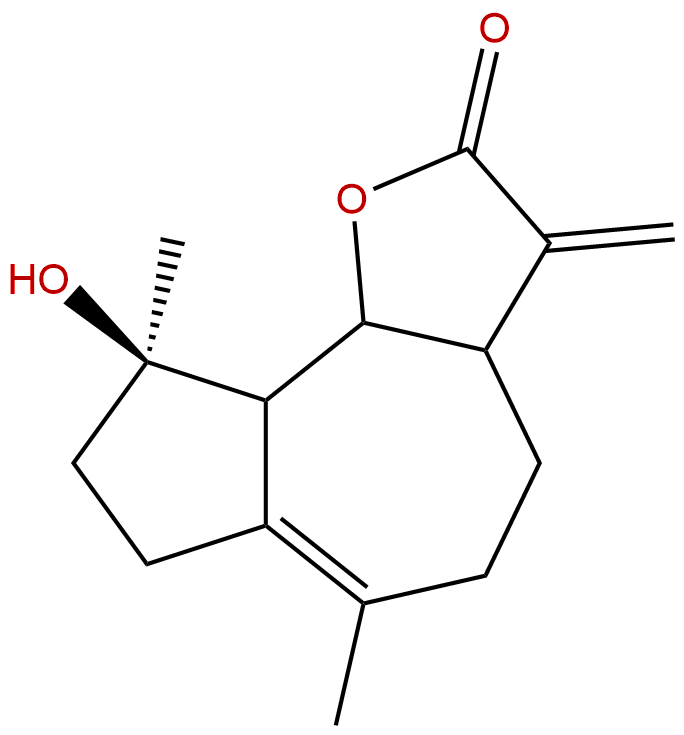


Product name: Micheliolide
Synonym name: MCL
Catalogue No.: BP3259
Cas No.: 68370-47-8
Formula: C15H20O3
Mol Weight: 248.322
Botanical Source:
Physical Description:
Type of Compound: Alkaloids
Purity: 95%~99%
Analysis Method: HPLC-DAD or/and HPLC-ELSD
Identification Method: Mass, NMR
Packing: Brown vial or HDPE plastic bottle
The product could be supplied from milligrams to grams. Inquire for bulk scale.
We provide solution to improve the water-solubility of compounds, thereby facilitating the variety of activity tests and clinic uses.
For Reference Standard and R&D, Not for Human Use Directly.
Micheliolide (MCL) is a guaiacan-type sesquiterpene lactone from natural plants, which is distributed in the root bark of the magnolia family and the root bark of Michelia Formosa. Modern pharmacological studies have shown that Micheliolide has multiple pharmacological effects such as anti-inflammatory, anti-tumor, immune regulation and neuroprotection.
Micheliolide has potential anti-inflammatory biological activity and can be used to treat enteritis, rheumatoid arthritis and other inflammatory diseases. Studies have shown that mimetic lactone can reduce the expression level of inflammatory cytokines by regulating several related signaling pathways such as nuclear factor κB, phosphatidylinositol-3-hydroxykinase/protein kinase B.
Micheliolide can play an antitumor role by inhibiting tumor cell proliferation, regulating tumor cell apoptosis, inducing tumor cell autophagy, inhibiting tumor cell invasion and metastasis. Michelolactone can inhibit tumor cells by activating pyruvate kinase M2.
Micheliolide can improve neuroinflammatory response by reducing the accumulation of Aβ and inhibiting the activation of microglia, and can play A role in the treatment of neurodegenerative diseases by regulating the IκBα/NF-κB, Akt, JNK, MAPK, ERK1/2 pathways and enhancing the activity of Nrf2. Modern studies have shown that miolactone can significantly reduce the number of Aβ plaques, plaque area and microglia in the hippocampal dentate gyrus, CA1 and cortical regions, and inhibit the abnormal activation and aggregation of microglia in transgenic Alzheimer's disease (AD) model mice. At the same time, it can also reduce the number of glial fibrillary acidic protein astrocytes, inhibit the activation of astrocytes, and significantly improve the cognitive impairment of transgenic AD model mice. In addition, neuroinflammation involving microglia is believed to induce brain damage in various neurodegenerative diseases, and inhibiting the overactivation of microglia is beneficial for the treatment of neurodegenerative diseases.
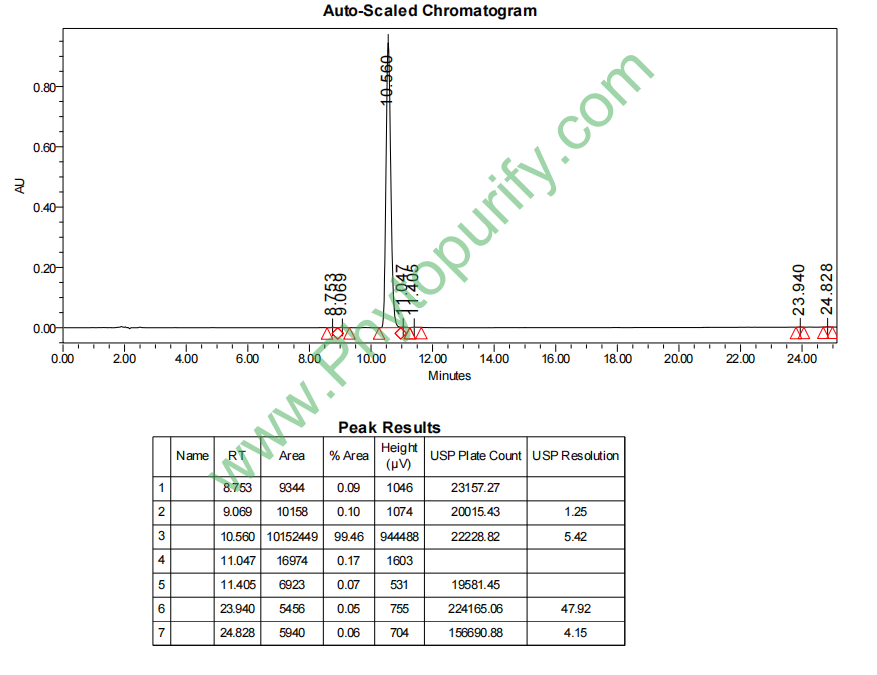
HPLC of Micheliolide
Storage conditions:Short-term storage at 2~8℃, long-term storage at -20 ~ -80℃
46.5300
1.7334
1.7334
.7315
4.4548
7.3634
High
58.4820
4.4712
No
No
No
No
Yes
No
0.0
Yes
No
Yes
Yes
Natural products have always been an important treasure trove for innovative drug discovery, among which sesquiterpene lactones have attracted much attention due to their unique chemical structures and extensive biological activities. Wuxinshi lactone, also known as Micheliolide (MCL), CAS number 68370-47-8, is a guaiaceae type sesquiterpene lactone isolated from plants in the Magnoliaceae family. Since its discovery, research has revealed that it not only has significant anti-inflammatory activity, but also exhibits strong anti proliferative and pro apoptotic effects in various malignant tumors, especially leukemia, making it a hot molecule in the fields of natural product pharmacology and tumor treatment research. Its mechanism of action involves the regulation of multiple key signaling pathways such as nuclear factor kappa B (NF - κ B), signal transduction and transcription activator 3 (STAT3), Notch1, and can affect the balance of B-cell lymphoma 2 (BCL2) family proteins. In addition, its good pharmacokinetic parameters, such as high blood-brain barrier permeability and low potential toxicity risk, have laid a solid foundation for its further clinical translation. This article aims to provide a systematic review of the chemical properties, plant sources, pharmacological activities, molecular mechanisms of action, medicinal properties, and clinical application prospects of Ulmus chinensis lactone, in order to provide comprehensive academic references for the in-depth research and development of this compound.
The molecular formula of wuxinshi lactone is C15H20O3, with a molecular weight of 248.3220. Its core structure is the classic guaiacol skeleton, which contains a seven membered lactone ring (α, β - unsaturated γ - lactone) and an extra cyclic methylene group. This α, β - unsaturated lactone structure is the key pharmacophore for its biological activity, which can act as an electrophilic group to undergo Michael addition reactions with biomolecules (such as thiol groups in proteins), thereby covalently modifying the target and affecting its function.
From the analysis of physical and chemical properties, the lipid water partition coefficient (LogP) of quercetin is 1.7334, indicating its moderate lipophilicity, which is beneficial for transmembrane transport and cellular uptake. Its topological polar surface area (TPSA) is 46.5300 Å ², which is relatively small, consistent with its good membrane permeability. The calculated water solubility is about 0.7315 mg/mL, which belongs to the category of slightly soluble to poorly soluble. This suggests that solubilization strategies may need to be considered in formulation development. It is particularly noteworthy that the predictive model shows high blood-brain barrier permeability, which provides unique advantages for its application in central nervous system related diseases such as glioma and neuroinflammation. The preliminary safety screening showed no significant hERG potassium channel inhibitory activity (low risk of arrhythmia), and the Ames test predicted a negative result (no mutagenicity), which supports its relatively good safety.
Ulva lactone is mainly derived from the Magnoliaceae genus of the Magnoliaceae family(Michelia)Plants. The initial separation report came from Taiwan Michelia compressa(Black Heartstone) and Michelia champaca(Huang Lan). In addition, in plants of the same family, such as Magnolia grandiflora The compound or its derivatives have also been found in lotus and magnolia.
Its extraction and separation usually use organic solvent extraction combined with chromatographic separation technology. The classic process is as follows: after crushing the dried bark, branches, leaves, or flowers of plants, they are extracted or refluxed using polar organic solvents such as methanol, ethanol, or acetone. Combine the extracts and concentrate under reduced pressure to obtain a crude extract. Subsequently, gradient extraction was performed using solvents such as petroleum ether, ethyl acetate, and n-butanol, resulting in the enrichment of quercetin in the ethyl acetate fraction. Further purification is often carried out using silica gel column chromatography, with gradient elution using different ratios of petroleum ether ethyl acetate or chloroform methanol mixed solvents. Collect the fractions containing the target compound through thin layer chromatography (TLC) or high-performance liquid chromatography (HPLC) monitoring. Finally, high-purity quercetin monomers can be obtained through methods such as preparative HPLC or recrystallization. In recent years, modern separation techniques such as high-speed countercurrent chromatography have also been applied to improve separation efficiency and yield.
Ulva lactone exhibits diverse and powerful pharmacological activities, mainly focused on anti-inflammatory and anti-tumor fields.
1. Anti inflammatory activity
One of its most significant characteristics is the anti-inflammatory effect of resveratrol. MCL exhibits strong inhibitory effects in various acute and chronic inflammation models.
* Renal inflammation In the high glucose stimulated mouse renal tubular cell model, MCL can significantly inhibit the activation of NF - κ B, prevent the degradation of its inhibitory protein I κ B α, and then down regulate the expression of monocyte chemoattractant protein-1 (MCP-1), transforming growth factor - β 1 (TGF - β 1), and fibronectin (FN), suggesting its potential value in metabolic inflammatory diseases such as diabetes nephropathy.
* Systemic inflammation In the macrophage inflammation model induced by lipopolysaccharide (LPS), MCL not only inhibits the NF - κ B pathway, but also blocks the activation of the survival promoting and inflammatory signaling axis of phosphatidylinositol 3-kinase/protein kinase B/ribosomal protein S6 kinase (PI3K/Akt/p70S6K), thereby reducing the production of pro-inflammatory factors such as tumor necrosis factor - α (TNF - α) and interleukin-6 (IL-6).
* Intestinal inflammation and carcinogenesis In the colitis and colitis related cancer model induced by dextran sulfate sodium (DSS), MCL treatment can effectively alleviate intestinal inflammatory damage, reduce disease activity index, and inhibit inflammation driven tumor occurrence and development.
* arthritis In animal models of rheumatoid arthritis, MCL also showed anti-inflammatory effects in relieving joint swelling and reducing bone destruction.
2. Antitumor activity
The anti-cancer activity of Ulva lactide, especially in hematological tumors, has been extensively studied.
* leukemia MCL has significant inhibitory effects on proliferation and induces apoptosis in various leukemia cell lines, such as acute myeloid leukemia (AML) and acute lymphocytic leukemia (ALL). It also exhibits activity against drug-resistant leukemia cells, partially due to the inhibition of P-glycoprotein (encoded by ABCB1 gene) mediated multidrug resistance.
* solid tumor Research also shows that MCL can inhibit the growth of breast cancer, lung cancer, colon cancer, glioma and other solid tumor cells. Its anti-tumor effect has the characteristics of multi-target and multi pathway.
3. Other activities
In addition, the study suggests that MCL may have neuroprotective and anti fibrotic activities, and its potential as an activator of nuclear factor E2 related factor 2 (NRF2) has also received attention, which may be related to its antioxidant stress response.
The pharmacological effects of Ulva lactiflora stem from its precise regulation of multiple key signaling nodes and target proteins within cells, and its core mechanism can be attributed to "multi-target intervention".
1. Inhibition of NF - κ B pathway
NF - κ B is a core transcription factor in inflammation and tumorigenesis. MCL stabilizes I κ B α and prevents NF - κ B nuclear translocation through direct or indirect effects, thereby globally downregulating the expression of a series of pro-inflammatory, pro survival, and pro proliferative genes (such as MCP-1, TGF - β 1, BCL2, MCL1). This is the fundamental mechanism by which it exerts anti-inflammatory effects and induces tumor cell apoptosis.
2. Regulation of STAT3 pathway
STAT3 is another important oncogenic signaling pathway. In leukemia and other cells, MCL can inhibit the phosphorylation (activation) of STAT3, thereby affecting the expression of downstream target genes, inhibiting cell proliferation, and promoting apoptosis.
3. Impact on Notch1 signal
Notch1 signaling is often abnormally activated in hematological tumors such as T-cell acute lymphoblastic leukemia (T-ALL). MCL has been shown to downregulate the expression of Notch1 and its downstream target gene Hes1, thereby inhibiting Notch1 driven leukemia.
4. Regulation of BCL2 family proteins
MCL can downregulate the expression of anti apoptotic proteins MCL1 and BCL2, and may also affect pro apoptotic proteins, tilting the balance of mitochondrial apoptosis pathway towards cell death. It is worth noting that MCL itself can serve as a prodrug, which is metabolized by carboxylesterase in the body to dimethylaminomyricetin (DMAMCL), which can consume MCL1 protein more persistently and specifically.
5. Activation of AMPK
Adenosine activated protein kinase (AMPK) is a key regulator of cellular energy metabolism and growth. MCL can activate AMPK, which may lead to the inhibition of downstream mammalian pathways such as rapamycin target protein (mTOR), thereby inhibiting protein synthesis and cell growth, and potentially enhancing its anti leukemia effect.
6. Effects on other targets
* Protein kinase C alpha (PKC alpha)MCL may affect downstream cell proliferation and differentiation signals by inhibiting PKC α activity.
* Isocitrate dehydrogenase 1 (IDH1)In leukemia cells carrying IDH1 mutations, MCL may interfere with the function of mutated IDH1, affecting the production of 2-hydroxyglutarate (2-HG) and thus exerting therapeutic effects.
* Microtubule associated protein Tau (MAPT)This association suggests that MCL may have research value in neurodegenerative diseases.
* NRF2 pathway MCL may enhance the antioxidant defense ability of cells by activating NRF2, which has dual significance in inflammation and chemotherapy protection.
Based on calculations and preliminary experimental data, wuxinshi lactone exhibits attractive medicinal properties.
* Absorption and distribution Moderate LogP values and small TPSA indicate good oral absorption potential and cell membrane permeability. The most prominent feature is its predictive ability High blood-brain barrier permeability This provides a key advantage for treating brain tumors and neuroinflammatory diseases.
* Metabolism and excretion MCL is mainly metabolized by carboxylesterase in the body to its active metabolite DMAMCL. DMAMCL has a longer half-life and stronger targeting ability, especially towards MCL1 protein. At present, detailed pharmacokinetic parameters of MCL and its metabolites in the human body, such as absolute bioavailability, major metabolic enzymes, and excretion pathways, still need to be further elucidated through systematic preclinical and clinical studies.
* safety Preliminary computer predictions indicate that MCL has no risk of hERG inhibition (low risk of cardiac toxicity), and Ames test predicts a negative result (low risk of genetic toxicity), providing early support for its safety. However, a comprehensive toxicological evaluation, including acute toxicity, long-term toxicity, reproductive toxicity, etc., is a necessary step to promote its clinical translation.
The clinical application prospects of quercetin and its derivatives, especially DMAMCL, are broad, but they also face challenges.
1. Prospects
* Blood tumor treatment Given its effective inhibition of multiple leukemia signaling pathways (NF - κ B, STAT3, Notch1, MCL1), MCL/DMAMCL is most promising for use in acute leukemia, especially in patients who are resistant to existing therapies or have relapsed. Its combination with conventional chemotherapy drugs such as cytarabine and daunorubicin has shown synergistic effects and is a highly promising combination therapy strategy.
* Inflammatory diseases For chronic inflammatory diseases such as rheumatoid arthritis and inflammatory bowel disease, the powerful anti-inflammatory effect of MCL provides a new treatment option. Its potential in metabolic inflammation such as diabetes nephropathy is also worth exploring.
* brain disease With its excellent BBB penetration ability, MCL has unique advantages in the treatment of central nervous system diseases such as glioblastoma, Alzheimer's disease (related to neuroinflammation and Tau protein), and multiple sclerosis.
* Chemical prevention Its inhibitory effect in colitis related cancer models suggests that it may serve as a chemopreventive agent for preventing inflammation driven carcinogenesis in high-risk populations.
2. Challenges and Prospects
* Water solubility and formulation development MCL has poor water solubility and requires the development of suitable drug delivery systems, such as nanoparticles, liposomes, cyclodextrin inclusion complexes, or prodrug strategies, to improve its bioavailability and targeting.
* Deep exploration of the mechanism of action Although multiple targets have been identified, the most direct molecular target (possibly through covalent binding) still needs further identification. Systematic chemical biology probes, such as MCL based affinity probes, will help discover new targets of action.
* Systematic pharmacokinetics and toxicology research It is urgent to conduct standardized preclinical pharmacokinetic and GLP toxicology studies to clarify the in vivo ADME process and safety window, providing a basis for clinical trial design.
* clinical translation The ultimate goal is to promote high-quality clinical trials. Priority should be given to designing phase I/II clinical trials for relapsed/refractory leukemia and actively exploring their efficacy in solid tumors and inflammatory diseases.
As a natural sesquiterpene lactone derived from traditional medicinal plants, Wuxinshi lactone (including laughing lactone) has demonstrated excellent multi-target pharmacological activity in anti-inflammatory and anti-tumor fields, especially in leukemia treatment, due to its unique chemical structure. Its mechanism of action involves the regulation of multiple key signaling pathways such as NF - κ B, STAT3, Notch1, AMPK, and can accurately affect apoptosis regulatory proteins such as MCL1. Good calculation of drug parameters, especially excellent blood-brain barrier penetration ability, has added significant advantages to its clinical development. Although there are still challenges in terms of solubility, precise target identification, and systematic preclinical evaluation, with the deepening of research on its derivative DMAMCL and the application of new drug delivery technologies, there is great hope for the development of urolactone from the laboratory to clinical practice, providing a new treatment option with Chinese original characteristics for cancer and inflammatory disease patients. Future research should focus on mechanism deepening, formulation optimization, and clinical translation, fully unleashing the therapeutic potential of this natural molecule.
