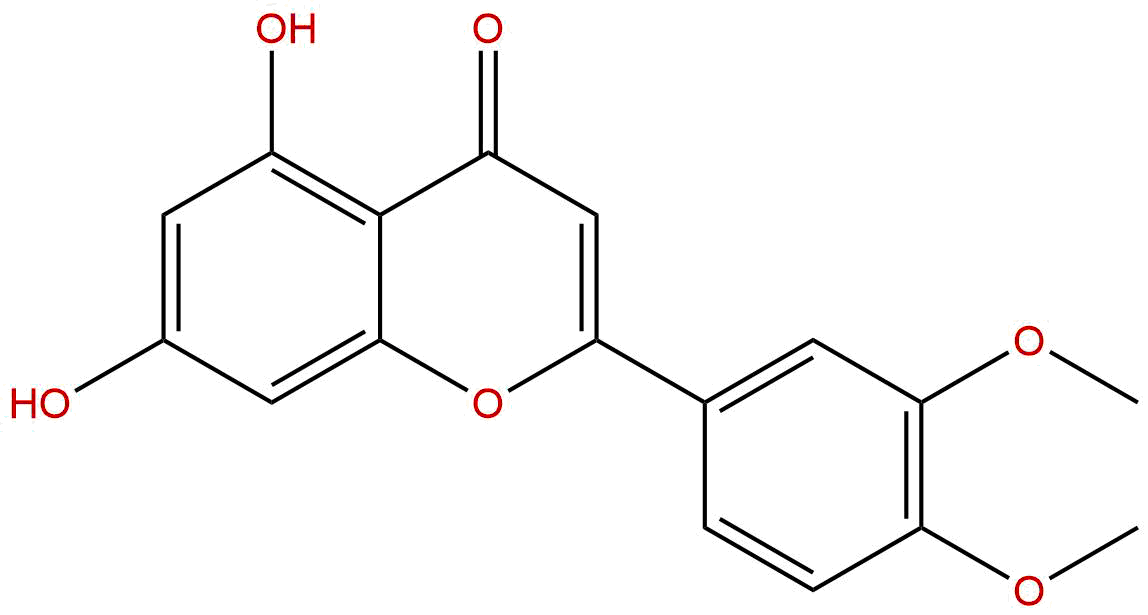
Product name: 4'-Methylchrysoeriol
Synonym name: Luteolin 3',4'-dimethyl ether; 3',4'-Dimethoxyluteolin; 3'-O-Methyldiosmetin
Catalogue No.: BP2327
Cas No.: 4712-12-3
Formula: C17H14O6
Mol Weight: 314.293
Botanical Source:
Type of Compound: Flavonoids
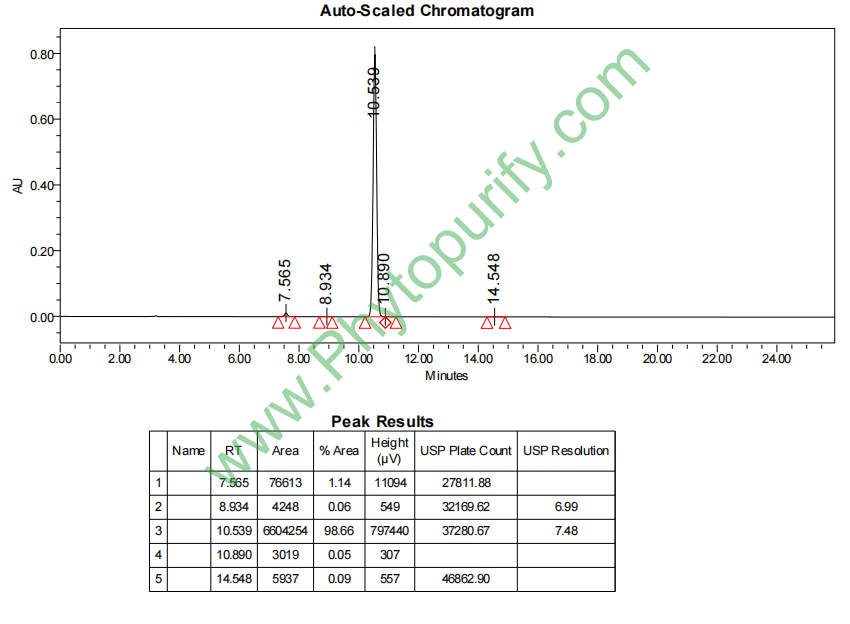
Purity: 95%~99%
Analysis Method: HPLC-DAD or/and HPLC-ELSD
Identification Method: Mass, NMR
Packing: Brown vial or HDPE plastic bottle
Storage: Store in a well closed container, protected from air and light. Put into refrigerate or freeze for long term storage.
Whenever possible, you should prepare and use solutions on the same day. However, if you need to make up stock solutions in advance, we recommend that you store the solution as aliquots in tightly sealed vials at -20℃. Generally, these will be useable for up to two weeks.
The product could be supplied from milligrams to grams
Inquire for bulk scale.
For Reference Standard and R&D, Not for Human Use Directly.
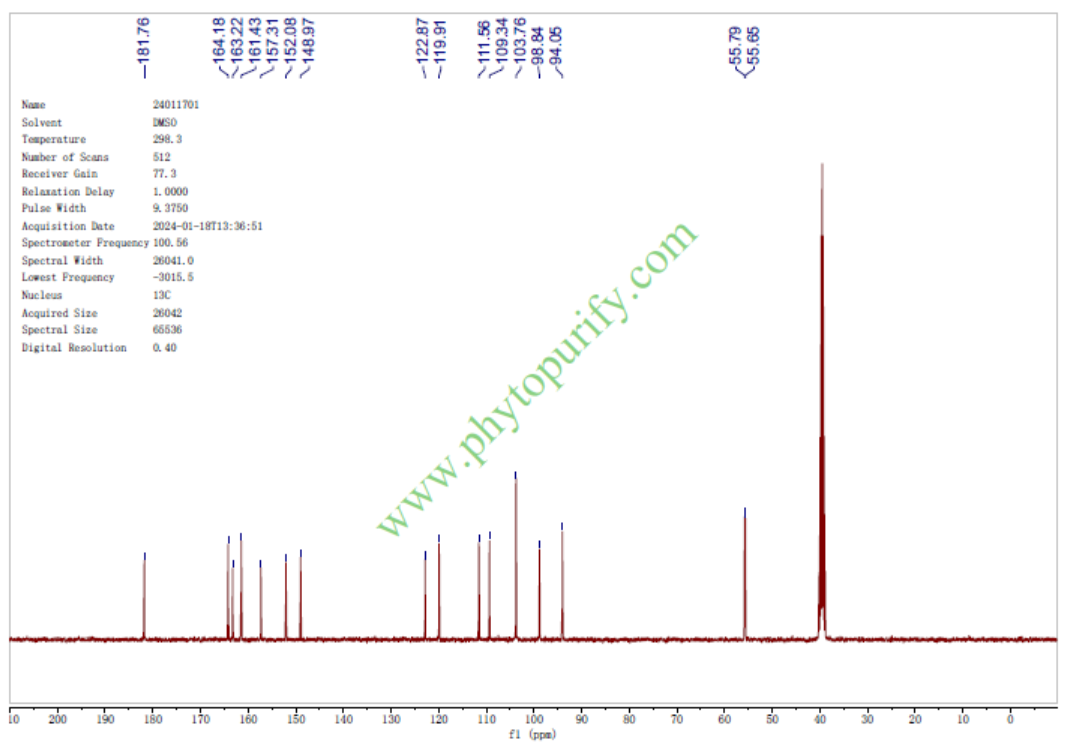
NMR of 4'-Methylchrysoeriol
HPLC of 4'-Methylchrysoeriol
Storage conditions:Short-term storage at 2~8℃, long-term storage at -20 ~ -80℃
89.1300
2.5463
2.2658
.0422
2.6452
36.9314
Low
91.9841
2.2132
Yes
No
Yes
No
Yes
No
0.6
No
No
Yes
No
Natural products, as an important source of drug discovery, play an irreplaceable role in the long history of human fight against diseases. Flavonoids, as one of the most widely distributed polyphenolic secondary metabolites in nature, have attracted much attention due to their structural diversity and extensive biological activity. Among numerous flavonoids, Chrysoeriol (5,7,4 '- trihydroxy-3' - methoxyflavone) and its methylated derivatives constitute a subclass with unique pharmacological characteristics. 4 '- Methylchrysoeriol (CAS number: 4712-12-3), as a methylation product of chrysotoxol on the 4' hydroxyl group, its chemical structure determines its physicochemical properties and biological activity spectrum that are different from the parent compound.
In recent years, with the deepening of research on the structural modification and structure-activity relationship of natural products, 4 '- methyl aureoxacin has gradually emerged from numerous flavonoids. Research has shown that this compound not only retains the inherent antioxidant and anti-inflammatory activities of the flavonoid parent nucleus, but also demonstrates superiority in specific disease models due to its unique methylation modification. For example, its potential in anti-tumor, neuroprotective, and metabolic regulation has attracted the attention of international peers. However, compared to more mature flavonoids such as quercetin and luteolin, there is still a relative lack of systematic reviews on 4 '- methylquercetin. This article aims to comprehensively review the complete knowledge chain of this compound from chemical basis to pharmacological mechanism, and then to drug efficacy evaluation, in order to provide detailed references for subsequent basic research and drug development.
The chemical essence of 4 '- methylquercetin belongs to flavonoids, and its core skeleton is 2-phenylchromen-4-one. Specifically, its structural features include a hydroxyl group (- OH) at positions 5 and 7 of the A ring, a methoxy group (- OCH ∝) at position 3 'of the B ring, and methylation of the hydroxyl group at position 4' to form a 4 '- methoxy substitution. This structure forms a sharp contrast in substitution mode with coumarin (4 ′ - OH) and luteolin (3 ′, 4 ′ - diOH). From the perspective of systematic nomenclature, its IUPAC name is 5,7-dihydroxy-2- (4-methoxy-3-methoxyphenyl) chromogen ketone, or more accurately expressed as 5,7-dihydroxy-2- (3,4-dimethoxyphenyl) -4Hchromene-4-one.
In terms of physical and chemical properties, the molecular formula of 4 '- methylaureosin is C ₁₇ H ₁₄ O ₆, with a molecular weight of 314.2930 g/mol. Its lipid water partition coefficient (LogP) is 2.5463, indicating that the compound has a moderate degree of lipophilicity, which is beneficial for its transmembrane transport to some extent, but may also affect its solubility in aqueous environments. In fact, its low water solubility parameter (0.0422 mg/mL) suggests that the compound has limited solubility in water, which poses a challenge for the development of its oral formulations. The polar surface area (TPSA) is 89.1300 Å ², which is lower than the commonly recognized threshold for good oral absorption (approximately 140 Å ²), indicating a certain potential for oral absorption, but may be limited by water solubility. It is worth noting that the predictive model shows low blood-brain barrier permeability, which limits its direct application in central nervous system diseases, but may also imply a lower risk of central neurotoxicity. In addition, the predicted result of hERG inhibition is' no ', indicating a lower risk of inducing QT interval prolongation in the heart; The Ames test result is 0.6, indicating that it may have a slight genetic toxicity risk and requires attention in practical applications.
4 '- Methylaureosin is not widely present in nature, and its distribution has obvious species specificity. It is currently known that it mainly exists in certain specific medicinal plants and spice plants. For example, in the family Lamiaceae plant rosemary(Rosmarinus officinalis)And thyme(Thymus vulgaris)Among them, the compound was detected as a minor flavonoid component. In addition, in Asteraceae plants such as Artemisia argyi(Artemisia argyi)And some Salvia species(Salvia It has also been found in plants. It is worth noting that this compound is also present in trace amounts in the peel of citrus fruits such as lemons and oranges, but the content is usually lower than its main flavonoid glycoside. This distribution pattern suggests that 4 '- methyl aureoxystrobin may be a defensive secondary metabolite produced by plants under specific environmental stresses, such as UV irradiation and pathogen infection.
For the extraction of this compound, classical solvent extraction methods combined with modern separation techniques are currently mainly used. Due to its good solubility in moderately polar organic solvents such as methanol, ethanol, and ethyl acetate, 4 '- methyl aureosin is commonly used as an extractant in methanol or ethanol water mixed solvents. To improve extraction efficiency, ultrasound assisted extraction or heating reflux extraction are often used. For example, a study on flavonoids in rosemary showed that using 70% ethanol and ultrasonic extraction at 50 ° C for 30 minutes can achieve a higher extraction rate of 4 '- methyl aureosin. After vacuum concentration of the extract, liquid-liquid extraction (such as extraction with petroleum ether, ethyl acetate, and n-butanol in sequence) is usually used for preliminary purification. The ethyl acetate extract is rich in flavonoids of moderate polarity.
Further separation and purification rely on column chromatography technology. Silica gel column chromatography is a commonly used preliminary separation method, which uses chloroform methanol or petroleum ether acetone systems for gradient elution. For flavonoids with similar structures, polyamide column chromatography exhibits better separation efficiency due to its specific adsorption of phenolic hydroxyl groups. In recent years, high-speed countercurrent chromatography and preparative high-performance liquid chromatography have also been applied to the high-purity preparation of this compound. In terms of structural identification, the characteristic absorption bands of flavonoids in ultraviolet spectroscopy (UV) (band I: 300-380 nm, band II: 240-280 nm) can provide preliminary information; Nuclear magnetic resonance hydrogen and carbon spectra (¹ H-NMR, ¹ ³ C-NMR) can clearly distinguish the substitution positions of methoxy and hydroxyl groups, especially the proton signal of the 4 'methoxy group (δ 3.8-4.0 ppm), which is a key feature that distinguishes it from resveratrol.
In recent years, significant progress has been made in the pharmacological activity research of 4 '- methyl aureoxacin, which covers multiple fields of action such as anti-inflammatory, antioxidant, anti-tumor, neuroprotective, and metabolic regulation.
Anti inflammatory and antioxidant activity As a flavonoid compound, 4 '- methylquercetin exhibits typical anti-inflammatory and antioxidant abilities. In vitro cell models, this compound can significantly inhibit the production of nitric oxide (NO) and prostaglandin E ₂ (PGE ₂) in macrophages (such as RAW264.7 cells) stimulated by lipopolysaccharide (LPS), and its mechanism is related to the downregulation of inducible nitric oxide synthase (iNOS) and cyclooxygenase-2 (COX-2) expression. At the same time, its antioxidant activity is reflected in its ability to scavenge 1,1-diphenyl-2-trinitrophenylhydrazine (DPPH) free radicals and 2,2 '- diazo-bis-3-ethylbenzothiazoline-6-sulfonic acid (ABTS) cationic free radicals. Its half maximal inhibitory concentration (IC ₅₀) is usually below 100 μ M, demonstrating strong free radical scavenging potential. This antioxidant activity may be related to the 5,7-dihydroxy structure of the A ring in its molecule, which can effectively chelate transition metal ions (such as Fe ² ⁺, Cu ² ⁺), thereby inhibiting the hydroxyl radicals generated by the Fenton reaction.
Antitumor activity The anti-tumor activity of 4 '- methylaureoxacin is currently one of the research hotspots. Several studies have shown that the compound has cytotoxicity to a variety of cancer cell lines, including human breast cancer cells (MCF-7, MDA-MB-231), human liver cancer cells (HepG2), human colon cancer cells (HT-29), and human lung cancer cells (A549). Its mechanism of action involves multiple levels: firstly, it can induce cell cycle arrest, usually blocking cells in the G ₂/M phase, which is related to upregulation of p21 and p53 protein expression and downregulation of cyclin dependent kinases (CDK1, Cyclin B1); Secondly, it can induce cell apoptosis through the mitochondrial pathway (endogenous pathway), manifested as a decrease in mitochondrial membrane potential, release of cytochrome c, and activation of caspase-9 and caspase-3. It is worth noting that 4 '- methylcurcumin has relatively low toxicity to normal cells and exhibits a certain degree of selectivity. For example, at the same concentration, its inhibition rate on the proliferation of normal liver cells (L-02) is significantly lower than that on liver cancer cells (HepG2), providing important evidence for its use as an anti-tumor candidate drug.
Neuroprotective activity Although the blood-brain barrier permeability prediction of 4 '- methylcurcumin is low, there are still studies reporting its neuroprotective potential. In the glutamate induced neuronal damage model, this compound can significantly reduce neuronal apoptosis rate, and its mechanism may be related to the inhibition of oxidative stress and calcium overload. In addition, in an in vitro model of Alzheimer's disease (AD), 4 '- methylcurcumin has been shown to inhibit the aggregation of β - amyloid protein (A β) and reduce A β - induced neurotoxicity. These findings suggest that although its ability to directly cross the blood-brain barrier is limited, it may exert its effects by regulating peripheral inflammatory responses or metabolites, or in certain pathological states (such as blood-brain barrier damage), it may be able to enter the central nervous system.
Metabolic regulatory activity In recent years, the role of 4 '- methylaureoxin in metabolic diseases has also received attention. Research has found that this compound can activate AMP activated protein kinase (AMPK), thereby promoting glucose uptake and fatty acid oxidation, and improving insulin resistance. In the 3T3-L1 preadipocyte model, it can inhibit adipocyte differentiation and reduce lipid accumulation, and its mechanism is related to downregulating the expression of peroxisome proliferator activated receptor gamma (PPAR gamma) and CCAAT/enhancer binding protein alpha (C/EBP alpha). These findings suggest that it may have potential value in the treatment of type 2 diabetes and obesity.
The pharmacological activity of 4 '- methylaureoxin is derived from its interactions with various molecular targets. A deep understanding of its mechanism of action is crucial for optimizing its efficacy and reducing toxic side effects.
Signal pathway regulation One of the core mechanisms of action of this compound is the inhibition of the nuclear factor kappa B (NF - κ B) signaling pathway. In the resting state, NF - κ B binds to the inhibitory protein I κ B in the cytoplasm. When stimulated by inflammation (such as TNF - α, LPS), I κ B kinase (IKK) is activated, leading to phosphorylation and degradation of I κ B, and the released NF - κ B enters the nucleus to initiate transcription of inflammatory genes. 4 '- Methylaureosin can inhibit the activity of IKK, thereby blocking the degradation of I κ B and ultimately inhibiting the nuclear translocation and transcriptional activity of NF - κ B. In addition, it can inhibit the mitogen activated protein kinase (MAPK) pathway, including phosphorylation of p38, JNK, and ERK, thereby reducing the production of inflammatory mediators.
Epigenetic regulation In recent years, research has revealed the role of 4 '- methylaureoxin at the epigenetic level. As a methylated flavonoid, it may regulate gene expression by affecting the activity of DNA methyltransferase (DNMT) or histone deacetylase (HDAC). Preliminary studies have shown that the compound can inhibit the activity of DNMT1, thereby reversing the promoter methylation status of certain tumor suppressor genes (such as p16, RASSF1A) and restoring their expression. This discovery provides a new perspective for using it as an epigenetic regulator in cancer treatment.
Target protein interaction In addition to the signaling pathway, 4 '- methylcurcumin can also directly bind to certain proteins. For example, it can bind to topoisomerase II and inhibit its activity, which may be another mechanism of its anti-tumor activity. In addition, molecular docking studies have shown that the compound can bind to the active site of COX-2, forming hydrogen bonds and π - π stacking interactions, thereby competitively inhibiting the binding of arachidonic acid. In terms of antioxidant activity, it can directly react with free radicals or upregulate the expression of downstream antioxidant enzymes such as heme oxygenase-1 and quinone oxidoreductase 1 by activating the nuclear factor E2 related factor 2 (Nrf2) pathway.
Structure performance relationship analysis The unique activity of 4 '- methylaureoxin is closely related to its structure. Compared with resveratrol, methylation of the 4 'hydroxyl group increases the lipophilicity of the molecule, which may enhance its binding ability to cell membranes or certain hydrophobic protein pockets. However, the 4 'hydroxyl group is also an important hydrogen bond donor, and its methylation may weaken certain hydrogen bond interactions with the target. Therefore, 4 '- methyl aureoxacin may exhibit different selectivity in activity compared to aureoxacin. For example, in some anti-inflammatory models, the activity of 4 '- methyl resveratrol may be weaker than resveratrol, but it may exhibit stronger efficacy in anti-tumor or metabolic regulation. The difference in structure-activity relationship (SAR) provides important clues for designing flavonoid derivatives with specific selectivity.
A comprehensive evaluation of the pharmacological properties of 4 '- methylaureoxystrobin is necessary to push it from laboratory research to clinical application. Based on existing data, this compound exhibits certain potential for drug development, but also faces several challenges.
Physical and chemical properties and drug like properties According to Lipinski's "Five Rules", the molecular weight (314.29<500), LogP (2.55<5), number of hydrogen bond donors (2 phenolic hydroxyl groups<5), and number of hydrogen bond acceptors (6 oxygen atoms<10) of 4 '- methyl aureoxacin all meet the requirements, indicating its good oral drug properties. However, its extremely low water solubility (0.0422 mg/mL) is a significant shortcoming. Low water solubility not only affects oral absorption, but may also lead to low bioavailability in the body. In addition, the TPSA is 89.13 Å ², which is lower than 140 Å ² but higher than 60 Å ², indicating that it may not be a substrate for P-glycoprotein (P-gp), but may have certain intestinal permeability limitations.
Pharmacokinetic characteristics At present, there is relatively limited data on the in vivo pharmacokinetics of 4 '- methylquercetin, but reference can be made to the metabolic patterns of its parent compound quercetin and similar flavonoids. After oral administration, the compound may be hydrolyzed by β - glucosidase in the intestine (if present in glycoside form) or undergo phase II metabolism in the liver, mainly undergoing glucuronidation and sulfation binding reactions. These binding products typically have increased water solubility but decreased activity and may be excreted through bile or urine. Its methylation structure may make it resistant to the metabolism of catechol-O-methyltransferase (COMT), thereby prolonging its half-life in vivo. However, low water solubility may result in lower oral bioavailability, and formulation techniques such as solid dispersions, liposomes, and nanoemulsions may be needed to improve their dissolution and absorption.
Toxicity evaluation Preliminary toxicity predictions indicate that 4 '- methylaureoxin has no hERG inhibitory effect and a low risk of cardiac toxicity. But the Ames test result was 0.6, indicating that it may have weak mutagenicity. This result needs to be taken seriously, as flavonoids may be metabolized into active intermediates with quinone structures in the body, which may undergo addition reactions with DNA. Therefore, a more comprehensive genetic toxicity evaluation (such as in vivo micronucleus test, comet assay) and long-term toxicity test are needed to clarify its safety window. In addition, its potential inhibitory or inducing effects on the CYP450 enzyme system also need to be evaluated to predict its possible drug drug interactions.
Based on existing research, 4 '- methylaureoxacin has shown potential application value in multiple disease fields, but its clinical translation still faces many challenges.
Anti tumor application Given its induction of apoptosis, inhibition of proliferation, and anti angiogenic effects, 4 '- methylaureosin is expected to be developed as an adjuvant chemotherapy drug. Especially its selective toxicity to normal cells may reduce the side effects of traditional chemotherapy drugs in combination therapy. In the future, it is necessary to conduct research on in vivo xenograft tumor models to verify their anti-tumor activity and explore their synergistic effects with first-line chemotherapy drugs such as cisplatin and paclitaxel.
Anti inflammatory and immune regulation In chronic inflammatory diseases such as rheumatoid arthritis and inflammatory bowel disease, 4 '- methylcurcumin may exert therapeutic effects by inhibiting the NF - κ B and MAPK pathways. In addition, its regulatory effect on macrophage polarization (promoting M2 anti-inflammatory macrophage transformation) is also worthy of further investigation.
Metabolic diseases: In type 2 diabetes and obesity, this compound shows the potential to improve insulin resistance and reduce lipid accumulation by activating AMPK and inhibiting adipocyte differentiation. In the future, it is necessary to establish a high-fat diet induced obese mouse model to evaluate the effects of long-term administration on body weight, blood glucose, and blood lipids.
Neurodegenerative diseases Although the blood-brain barrier has low permeability, its concentration in the brain may be increased through intranasal administration or pre designed drug strategies. In addition, its anti A β aggregation and antioxidant activity make it potentially valuable for the prevention or early intervention of Alzheimer's disease.
Challenges and Future Directions The main challenges currently faced include: ① poor water solubility leading to low bioavailability; ② The metabolism in the body is unclear, and the active metabolites need to be identified; ③ Lack of systematic in vivo pharmacological and toxicological data; ④ The content of natural sources is low, and the chemical or biological synthesis pathways need to be optimized. Future research directions should focus on: ① developing novel drug delivery systems (such as phospholipid complexes, polymer micelles) to improve bioavailability; ② Using metabolomics techniques to elucidate its metabolic pathways in vivo; ③ Synthesize prodrugs by structural modification (such as introducing phosphate groups and amino acid groups) to improve water solubility; ④ Using gene editing techniques such as CRISPR-Cas9, a microbial cell factory is constructed to achieve efficient biosynthesis.
As a natural flavonoid compound with a unique methylation structure, 4 '- methylaureosin has shown great potential as a lead compound or candidate drug due to its various pharmacological activities such as anti-inflammatory, antioxidant, anti-tumor, neuroprotective, and metabolic regulation. Its advantages of moderate molecular weight, good lipid solubility, and low risk of cardiac toxicity have laid the foundation for subsequent development. However, its low water solubility and potential genetic toxicity risks, as well as the lack of pharmacokinetic data in vivo, constitute the main bottlenecks for its clinical translation.
From natural product chemistry to pharmacology, and then to the evaluation of drug properties, our understanding of 4 '- methylquercetin is gradually deepening. Future research requires interdisciplinary integration, combining medicinal chemistry, pharmacy, pharmacokinetics, and toxicology to systematically address issues related to solubility, stability, and targeting. At the same time, utilizing modern molecular biology techniques to deeply explore its targets and signal networks will provide scientific basis for the application of this compound in the era of precision medicine. Despite the numerous challenges ahead, the value of 4 '- methylcurcumin, as a precious molecule endowed by nature, in the field of human health deserves continuous exploration and anticipation.