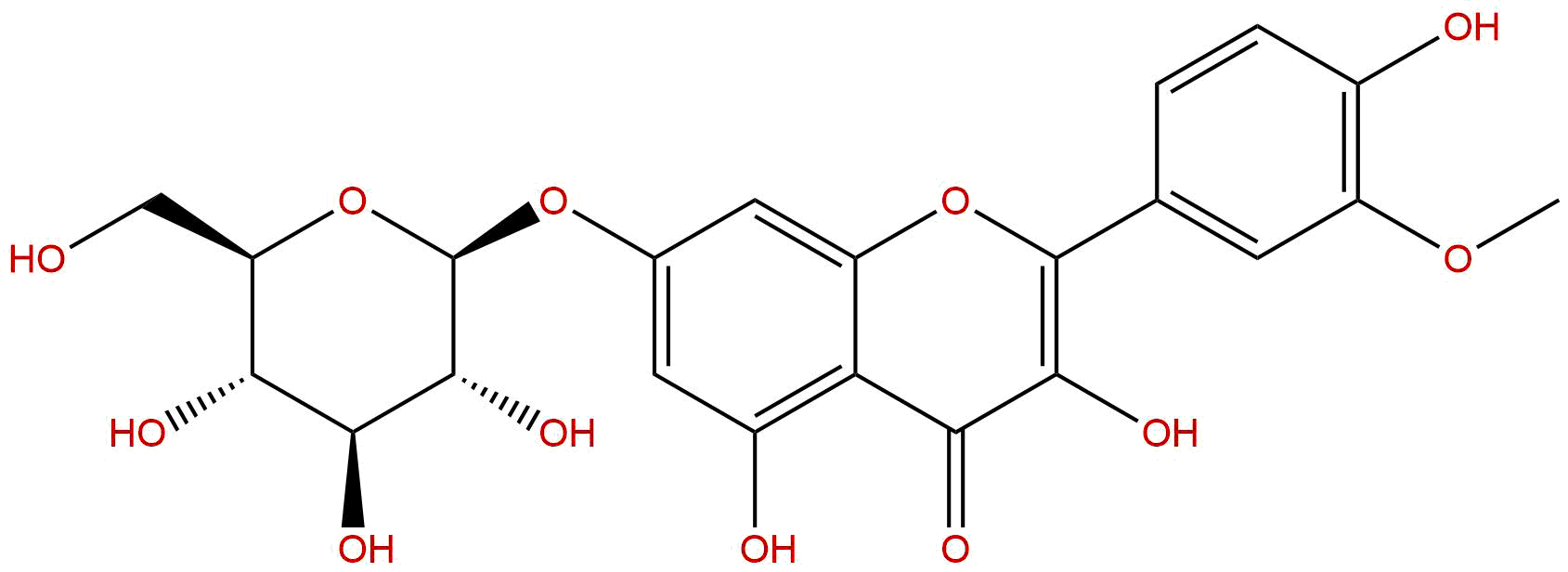


Product name: Isorhamnetin 7-O-glucoside
Synonym name: Brassicin; Isorhamnetin 7-O-β-D-glucopyranoside; Isorhamnetin 7-glucoside
Catalogue No.: BP4883
Cas No.: 6743-96-0
Formula: C22H22O12
Mol Weight: 478.406
Botanical Source:
Type of Compound: Flavonoids
Purity: 95%~99%
Analysis Method: HPLC-DAD or/and HPLC-ELSD
Identification Method: Mass, NMR
Packing: Brown vial or HDPE plastic bottle
Storage: Store in a well closed container, protected from air and light. Put into refrigerate or freeze for long term storage.
Whenever possible, you should prepare and use solutions on the same day. However, if you need to make up stock solutions in advance, we recommend that you store the solution as aliquots in tightly sealed vials at -20℃. Generally, these will be useable for up to two weeks.
The product could be supplied from milligrams to grams
Inquire for bulk scale.
For Reference Standard and R&D, Not for Human Use Directly.
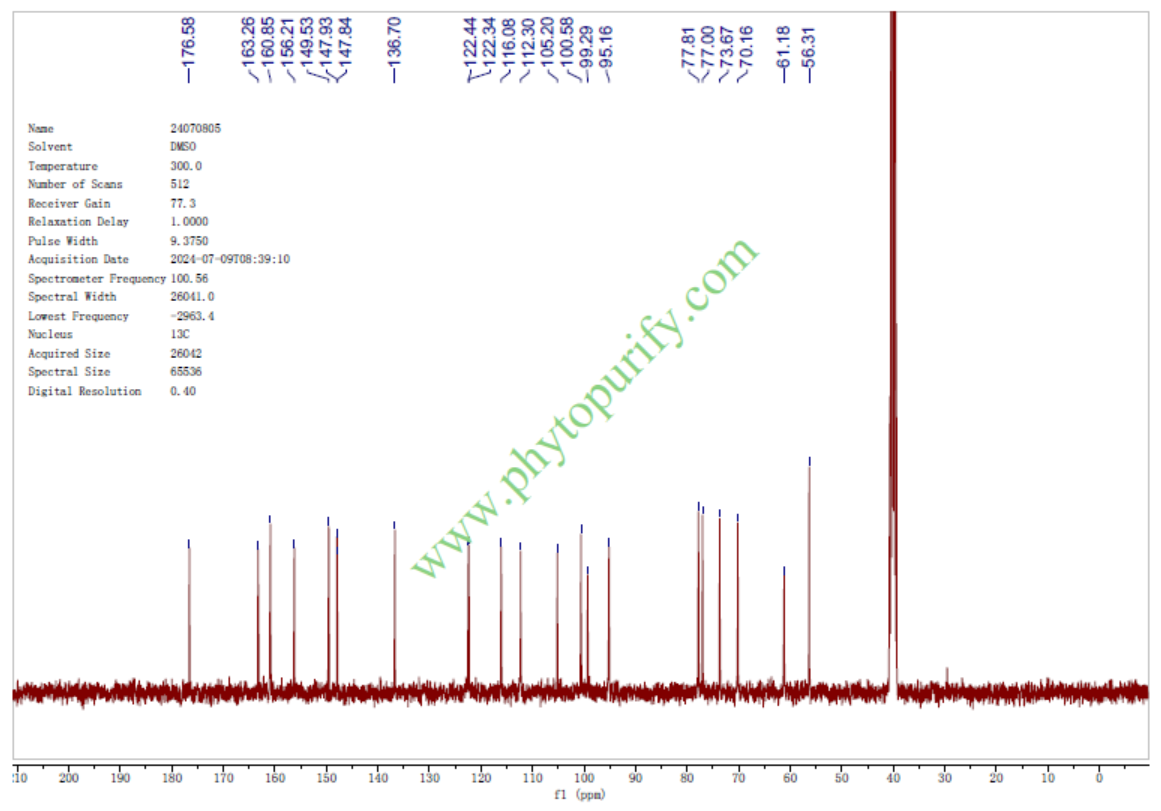
NMR of Isorhamnetin 7-O-β-D-glucopyranoside
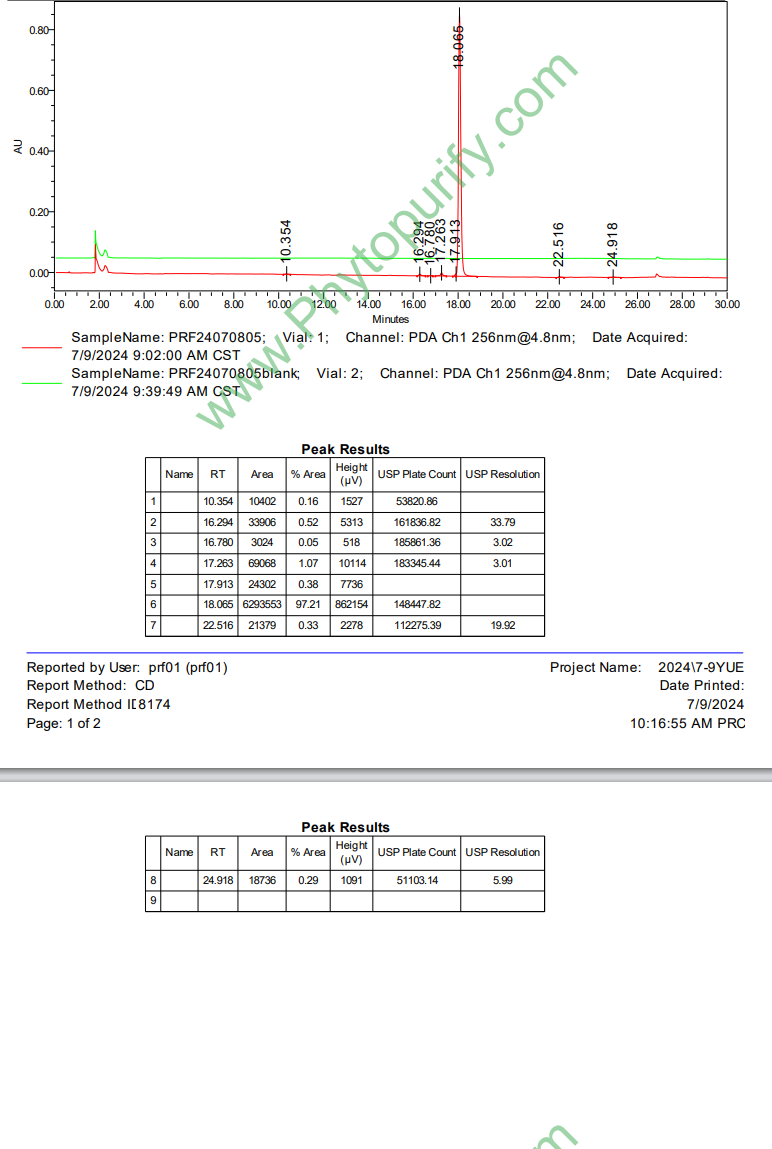
HPLC of Isorhamnetin 7-O-β-D-glucopyranoside
Storage conditions:Short-term storage at 2~8℃, long-term storage at -20 ~ -80℃
199.5100
.1325
-.0119
1.6243
.6108
.1069
Low
81.5476
3.9651
Yes
No
Yes
No
Yes
No
0.6
Yes
No
Yes
No
Natural products have always been an important source of drug discovery and development, particularly demonstrating unique advantages in the fields of anti-tumor, anti-inflammatory, and antioxidant effects. Flavonoids, as an important component of plant secondary metabolites, have attracted much attention due to their wide range of biological activities and relatively low toxicity. Isorhamnetin-7-O-glucoside (I7G) is a typical flavonol glycoside compound. Its parent nucleus structure is isorhamnetin-7-O-glucoside (3 '- methoxy-3,4', 5,7-tetrahydroxyflavone), and a glucose group is attached to the hydroxyl group at position 7. This compound was first derived from the traditional medicinal and edible plant seabuckthorn(Hippophae rhamnoides L. It was isolated and identified, and subsequently discovered in various medicinal plants. Sea buckthorn, as a plant rich in various bioactive ingredients, is commonly used in folk medicine to treat cardiovascular diseases, digestive system diseases, and skin injuries. In recent years, with the in-depth study of the chemical composition and pharmacological activity of seabuckthorn, I7G has gradually become one of the research hotspots in the field of natural product pharmacology. Especially its unique mechanism of inhibiting skin cancer by directly suppressing the MEK1 and PI3K signaling pathways provides important lead compounds for the development of novel targeted anticancer drugs. This article will provide a systematic review of the research progress on isorhamnetin-7-O-glucoside from the aspects of chemical structure, plant origin, pharmacological activity, mechanism of action, medicinal properties, and clinical application prospects.
The chemical structure of isorhamnetin-7-O-glucoside belongs to the flavonol glycoside class, and its aglycone is isorhamnetin, which is a 3 '- methoxylated derivative of quercetin. Specifically, the parent nucleus structure of isorhamnetin is 2-phenylchromenone, with one hydroxyl group at each of the C3, C5, and C4 'positions and one methoxy group at the C3' position. In I7G, the glucose group is connected to the C7 hydroxyl group of the mother nucleus through a β - glycosidic bond, forming 7-O - β - D-glucopyranoside. The molecular formula of this compound is C ₂ ₂ H ₂ ₂ O ₁ ₂, with a molecular weight of 478.4060 Da. From the structural characteristics, I7G has a typical polyphenolic hydroxyl structure of flavonoids, which endows it with strong antioxidant activity and metal ion chelating ability. Meanwhile, C7 glycosylation modification increases the water solubility of the molecule, but may also affect its interaction mode with biological targets.
In terms of physicochemical properties, the lipid water partition coefficient (LogP) of I7G is 0.1325, indicating that the compound has relatively low fat solubility and tends to be distributed in aqueous environments. Its topological polar surface area (TPSA) is as high as 199.5100 Å ², much higher than the recommended upper limit of 140 Å ² for oral drugs, which is closely related to the presence of multiple hydroxyl and glycosyl structures in its molecule. High TPSA values typically indicate poor membrane permeability, which to some extent limits the oral bioavailability of I7G. The water solubility parameter is 1.6243 mg/mL, indicating that the compound has a certain solubility in water, but not very soluble. It is worth noting that the blood-brain barrier penetration ability of I7G was evaluated as "low", which is consistent with its high polarity surface area and low fat solubility, suggesting that the application of this compound in the treatment of central nervous system diseases may be limited. In addition, the predicted result of hERG inhibition is' no ', indicating a low risk of cardiac toxicity; The predicted value of Ames test is 0.6, indicating that its genetic toxicity risk is at a moderate level and further experimental verification is needed. These physicochemical property parameters provide important reference for subsequent drug design and formulation development.
Isorhamnetin-7-O-glucoside was originally derived from seabuckthorn(Hippophae rhamnoides L. Sea buckthorn is a shrub or small tree belonging to the family Elapidae and the genus Hippophae, widely distributed in temperate regions of Eurasia. Sea buckthorn fruit is rich in various vitamins, flavonoids, organic acids, and fatty acids, and is used in traditional medicine to treat cough, digestive system diseases, skin injuries, and cardiovascular diseases. In addition to seabuckthorn, I7G is also present in various other plants, including ginkgo biloba(Ginkgo biloba)Scutellaria baicalensis(Scutellaria baicalensis)Chrysanthemums(Chrysanthemum morifolium)Cornus officinalis(Cornus officinalis)And in some ferns and algae. The content of I7G varies greatly among different plant sources, with relatively high levels in seabuckthorn fruits and leaves, which are the main natural sources for obtaining this compound.
In terms of extraction methods, I7G is usually extracted using solvent extraction, with ethanol or methanol as the extraction solvent, combined with heating reflux or ultrasound assisted extraction to improve efficiency. Due to I7G being a moderately polar compound, the commonly used extraction solvent is a 50% -80% ethanol aqueous solution. Ultrasonic assisted extraction method is widely used for laboratory scale I7G extraction due to its advantages of simple operation, high extraction efficiency, and short time. In recent years, new technologies such as microwave-assisted extraction and pressurized solvent extraction have also been applied to the extraction of I7G, further improving the extraction efficiency and purity. The crude extract after extraction usually needs to be separated and purified by column chromatography, and commonly used stationary phases include silica gel, polyamide, macroporous adsorption resin, and Sephadex LH-20. Among them, polyamide column chromatography has good selective adsorption ability for flavonoids and is commonly used for the preliminary separation of I7G. High performance liquid chromatography (HPLC) and high-speed countercurrent chromatography (HSCCC) are used for further purification and preparation. It is worth noting that I7G is sensitive to light and heat during the extraction and purification process, so it should be avoided from light and the temperature should be controlled as much as possible during the operation to prevent compound degradation.
In recent years, significant progress has been made in the pharmacological activity research of isorhamnetin-7-O-glucoside, whose biological activities cover multiple aspects such as anti-tumor, antioxidant, anti-inflammatory, cardiovascular protection, and neuroprotection.
The most notable discovery of I7G in terms of anti-tumor activity is its inhibitory effect on skin cancer. Research has shown that I7G can significantly inhibit the proliferation of human squamous cell carcinoma (SCC) cell lines such as A431 and HaCaT, and induce cell apoptosis. In addition, I7G also exhibits certain cytotoxic effects on melanoma cells. In vivo experiments, I7G can inhibit the occurrence and development of mouse skin papillomas, reducing tumor volume and quantity. In addition to skin cancer, I7G has also shown potential inhibitory effects on other types of cancer. For example, studies have reported that I7G can inhibit the proliferation of human breast cancer cells (MCF-7) and induce G2/M cell cycle arrest; It also exhibits certain anti proliferative activity against liver cancer cells (HepG2) and colon cancer cells (HT-29). These results suggest that I7G may be a broad-spectrum anti-tumor candidate compound.
In terms of antioxidant activity, I7G, as a flavonol glycoside compound, has strong free radical scavenging ability. The multiple phenolic hydroxyl groups in its molecule can provide hydrogen atoms, effectively neutralizing reactive oxygen species (ROS) and reactive nitrogen species (RNS) free radicals. The DPPH radical scavenging experiment and ABTS cation radical scavenging experiment both confirmed that I7G has significant antioxidant activity, which is comparable or slightly better than the positive control vitamin C. In addition, I7G can enhance the activity of endogenous antioxidant enzymes in cells, such as superoxide dismutase (SOD) and glutathione peroxidase (GPx), and reduce the level of lipid peroxidation product malondialdehyde (MDA). These antioxidant properties may be closely related to their anti-inflammatory and cardiovascular protective effects.
In terms of anti-inflammatory activity, I7G can inhibit the production of nitric oxide (NO) and prostaglandin E2 (PGE2) in macrophages induced by lipopolysaccharide (LPS), and downregulate the expression of inducible nitric oxide synthase (iNOS) and cyclooxygenase-2 (COX-2). In addition, I7G can also inhibit the release of pro-inflammatory cytokines such as tumor necrosis factor - α (TNF - α), interleukin-6 (IL-6), and interleukin-1 β (IL-1 β). These anti-inflammatory effects may be achieved by inhibiting the nuclear factor kappa B (NF - κ B) and mitogen activated protein kinase (MAPK) signaling pathways.
In terms of cardiovascular protection, I7G can inhibit the oxidative modification of low-density lipoprotein (LDL), reduce the formation of foam cells, and thus play an anti atherosclerosis role. In addition, I7G can improve endothelial function, promote vasodilation, inhibit platelet aggregation, and have a protective effect against myocardial ischemia-reperfusion injury. In terms of neuroprotection, I7G can alleviate the neurotoxicity induced by β - amyloid protein (A β), inhibit neuronal apoptosis, and improve cognitive function, indicating its potential application value in the treatment of Alzheimer's disease.
The pharmacological activity of isorhamnetin-7-O-glucoside is closely related to its regulation of multiple molecular targets. Among them, the most noteworthy is its unique mechanism of inhibiting skin cancer by directly suppressing MEK1 and PI3K.
MEK1 (mitogen activated protein kinase 1) is a key kinase in the RAS-RAF-MEK-ERK signaling pathway, which plays an important role in cell proliferation, differentiation, and survival. In various cancers, this pathway is often abnormally activated due to RAS or BRAF mutations. Research has shown that I7G can directly bind to MEK1, inhibit its kinase activity, and thus block downstream ERK phosphorylation. Molecular docking and dynamic simulation studies have shown that the isorhamnetin core of I7G can embed into the ATP binding pocket of MEK1, forming hydrogen bonds and hydrophobic interactions with key amino acid residues, while the 7-glucose group enhances the binding stability with the protein. This mechanism of directly inhibiting MEK1 is similar to marketed MEK inhibitors such as trametinib, but the chemical structure of I7G is different and may have different selectivity and safety characteristics.
PI3K (phosphatidylinositol 3-kinase) is the core kinase of the PI3K AKT mTOR signaling pathway, which plays a critical role in cell growth, metabolism, and survival. Abnormal activation of PI3K is common in various cancers. Research has found that I7G can also directly bind to PI3K, inhibit its kinase activity, and thereby reduce the phosphorylation level of AKT. Similar to MEK1, I7G exerts inhibitory effects by occupying the ATP binding site of PI3K. It is worth noting that I7G simultaneously inhibits two key kinases, MEK1 and PI3K, which means it can simultaneously block two important pro cancer signaling pathways, RAS-RAF-MEK-ERK and PI3K AKT mTOR. This dual target inhibition strategy theoretically can more effectively inhibit tumor growth and may reduce the risk of drug resistance caused by single target inhibition.
In addition to MEK1 and PI3K, I7G also interacts with multiple other molecular targets. For example, I7G can inhibit the activation of NF - κ B and reduce the transcription of pro-inflammatory cytokines; Can activate the Nrf2/ARE pathway and enhance the expression of antioxidant enzymes; Can inhibit the activity of COX-2 and iNOS, reduce the production of inflammatory mediators; It can also regulate the expression of apoptosis related proteins (such as Bax, Bcl-2, caspase-3) and induce tumor cell apoptosis. In addition, I7G also exhibits certain inhibitory activity against certain protein tyrosine kinases (such as EGFR and VEGFR), but its selectivity is not as high as that of MEK1 and PI3K. The multi-target characteristics of I7G make it a natural product with "multi pharmacological" features, which may bring broader therapeutic potential but also increase the risk of off target effects.
From a molecular mechanism perspective, glycosylation modification of I7G has a significant impact on its biological activity. Compared with glycoside isorhamnetin, the water solubility of I7G is significantly improved, which may be beneficial for its distribution and metabolism in vivo. However, glycosylation may also reduce its binding affinity to certain targets, as glycosylation may create steric hindrance. Therefore, there may be differences in pharmacological activity and target selectivity between I7G and isorhamnetin, which require further comparative studies.
The evaluation of drug properties is a crucial step in determining whether natural products can enter the clinical development stage. Based on the existing physicochemical properties and preliminary pharmacokinetic data, the pharmacological properties of I7G present certain advantages and challenges.
From Lipinski's Rule of Five, the molecular weight of I7G (478.4 Da) is slightly higher than the threshold of 500 Da, the LogP (0.13) is much lower than 5, the number of hydrogen bond donors (8 hydroxyl groups) exceeds 5, and the number of hydrogen bond acceptors (12 oxygen atoms) exceeds 10. Therefore, I7G violates three of the five rules for generic drugs, indicating that its oral bioavailability may be poor. The high TPSA value (199.5 Å ²) further supports this judgment. However, the five rules for generic drugs mainly apply to traditional oral small molecule drugs, and are not fully applicable to natural products and certain special types of drugs (such as drugs targeting specific transporters). In fact, many successful natural medicines, such as paclitaxel and rapamycin, also violate the five rules of generic drugs. Therefore, the pharmacological properties of I7G need to be evaluated in conjunction with specific administration routes and dosage form designs.
In terms of pharmacokinetics, there is currently insufficient research on the in vivo absorption, distribution, metabolism, and excretion (ADME) of I7G. Previous studies have shown that after oral administration of I7G, its absorption may mainly occur in the small intestine, but the absorption rate is relatively low. This is consistent with its high polarity and low fat solubility. In the intestine, I7G may be metabolized by gut microbiota, with glycosidic bonds hydrolyzed to release the glycoside isorhamnetin, which may be further metabolized into phenolic acids. Therefore, after oral administration of I7G, the detected metabolites in the blood may be its metabolites rather than the prototype drug. This "prodrug" pattern is more common in flavonoid glycosides, where the glycoside itself may only be in a transport form, and the true active ingredient may be its aglycone or metabolite. However, for the mechanism of I7G directly inhibiting MEK1 and PI3K, if the prototype drug cannot effectively reach the target tissue, its efficacy may be limited.
In terms of distribution, the blood-brain barrier penetration ability of I7G is relatively low, which limits its application in the treatment of central nervous system diseases. But its distribution in skin tissue may be good, which is consistent with its anti skin cancer activity. In terms of metabolism, I7G mainly undergoes phase II metabolic reactions in the liver and intestines, including glucuronidation, sulfation, and methylation. These metabolic reactions typically lead to decreased activity and accelerated excretion. In terms of excretion, I7G and its metabolites are mainly excreted through bile and urine.
In terms of safety, preliminary toxicity assessment shows that the hERG inhibition risk of I7G is low, indicating its low cardiac toxicity. The predicted value of Ames test is 0.6, indicating that its genetic toxicity risk is at a moderate level and further in vitro and in vivo experiments are needed for verification. In addition, acute toxicity studies of I7G have shown a high safety window in mice, but long-term toxicity data is still lacking. Overall, the main challenges facing the pharmacological properties of I7G are low oral bioavailability and metabolic instability. Future research directions may include developing novel drug delivery systems (such as liposomes, nanoparticles, phospholipid complexes) to enhance its bioavailability, or improving its pharmacokinetic properties through structural modifications (such as prodrug design, glycosylation modification).
As a natural flavonoid glycoside with a unique mechanism of action, isorhamnetin-7-O-glucoside has shown broad prospects in clinical applications, especially in the field of skin cancer treatment.
In the treatment of skin cancer, I7G provides a new strategy for treating skin squamous cell carcinoma and melanoma by directly inhibiting the dual target mechanism of MEK1 and PI3K. Compared with existing MEK inhibitors (such as trametinib) and PI3K inhibitors (such as aprilase), I7G, as a natural product, may have better safety and tolerability. In addition, the dual target inhibition properties of I7G may help overcome drug resistance caused by single target inhibition. Considering that the incidence rate of skin cancer is increasing year by year, and the limitations of existing treatment methods (such as surgical trauma, chemotherapy resistance, targeted treatment side effects, etc.), I7G is expected to be developed as a new type of local or systemic anti skin cancer drug. In particular, the development of its topical preparations (such as gel and cream) may provide a non-invasive treatment option for skin cancer patients.
In terms of anti-inflammatory and antioxidant properties, the activity of I7G makes it potentially valuable for the treatment of inflammatory skin diseases (such as psoriasis, atopic dermatitis) and photoaging. It can inhibit the NF - κ B and MAPK pathways, reduce the production of inflammatory mediators, and enhance the antioxidant defense system. These characteristics are of great significance for improving skin inflammation and delaying skin aging. In addition, the cardiovascular protective effect of I7G also indicates its potential application in cardiovascular diseases such as atherosclerosis and hypertension, but the problem of low oral bioavailability needs to be solved.
In terms of formulation development, future research should focus on the development of new drug delivery systems to address the challenge of low oral bioavailability of I7G. Liposomes, nanoparticles, phospholipid complexes, self microemulsifying drug delivery systems, etc. can all be used to enhance the solubility and oral absorption of I7G. In addition, transdermal drug delivery systems such as microneedles and iontophoresis are also effective ways to improve the local bioavailability of I7G. For intravenous administration, I7G has relatively good water solubility and can be developed as a freeze-dried powder injection for injection.
In terms of structural modification, modifying the sugar moiety of I7G (such as introducing acetyl or phosphate groups) or replacing it with other sugar moieties (such as lactose or xylose) may alter its pharmacokinetic properties and target selectivity. In addition, coupling I7G with known anticancer drugs such as cisplatin and paclitaxel to develop antibody drug conjugates (ADCs) or polymer drug conjugates is also a direction worth exploring.
In future research directions, the following aspects deserve special attention: firstly, to thoroughly elucidate the binding mode of I7G with MEK1 and PI3K, and to analyze the complex structure through X-ray crystallography or cryo electron microscopy techniques, providing a basis for structure based drug design; Secondly, conduct systematic in vivo pharmacological and pharmacokinetic studies, particularly evaluating the bioavailability and tissue distribution of I7G under different administration routes; Thirdly, conduct long-term toxicity and reproductive toxicity studies to comprehensively evaluate their safety; Fourthly, explore the combination therapy strategy of I7G with other anticancer drugs (such as immune checkpoint inhibitors and chemotherapy drugs) in order to achieve synergistic and attenuated effects; Fifth, utilizing omics techniques such as transcriptomics and proteomics to reveal the multi-target network of I7G, providing a theoretical basis for its precise therapeutic applications.
As a flavonol glycoside isolated from natural plants such as sea buckthorn, isorhamnetin-7-O-glucoside has become a research hotspot in the field of natural product pharmacology due to its unique chemical structure and extensive pharmacological activity. Its mechanism of inhibiting skin cancer through direct inhibition of MEK1 and PI3K dual targets provides an important lead compound for the development of novel targeted anticancer drugs. At the same time, the activities of I7G in antioxidant, anti-inflammatory, cardiovascular protection, and neuroprotection have also shown multifaceted therapeutic potential. However, the pharmacological properties of I7G face challenges such as low oral bioavailability and metabolic instability, which need to be overcome through the design of novel drug delivery systems and structural modifications. In the future, with the in-depth elucidation of the mechanism of action of I7G, optimization of pharmacokinetic properties, and improvement of safety evaluation, this natural compound is expected to achieve clinical translation in the treatment of skin cancer and other related diseases, contributing to human health. The path of natural product drug development is full of challenges, but it is precisely these structurally diverse and uniquely mechanistic compounds that provide a constant source of inspiration and candidate molecules for modern drug discovery.
