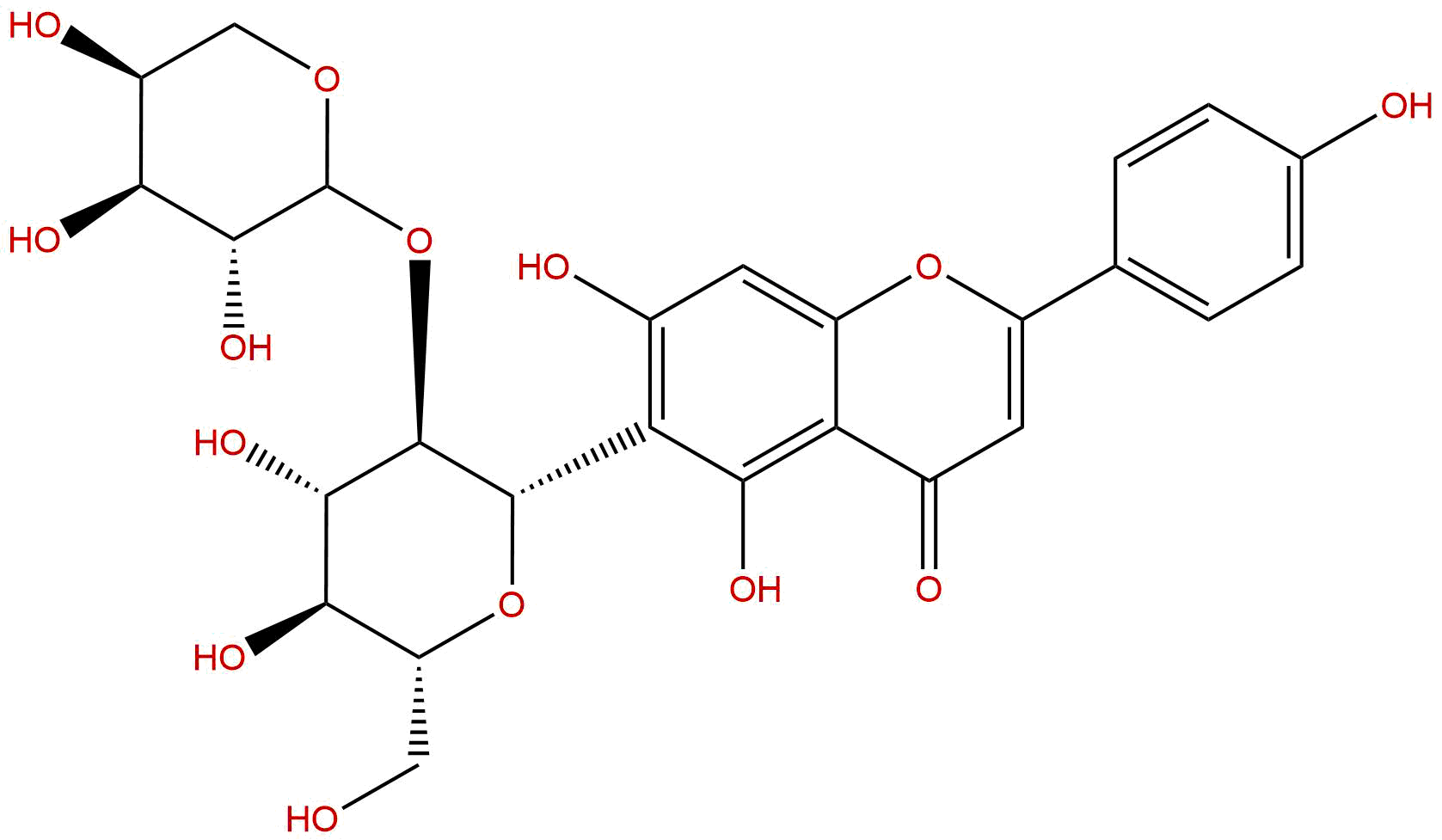


Product name: Isovitexin 2''-Oarabinoside
Synonym name:
Catalogue No.: BP2258
Cas No.: 53382-71-1
Formula: C26H28O14
Mol Weight: 564.496
Botanical Source:
Type of Compound: Flavonoids
Purity: 95%~99%
Analysis Method: HPLC-DAD or/and HPLC-ELSD
Identification Method: Mass, NMR
Packing: Brown vial or HDPE plastic bottle
Storage: Store in a well closed container, protected from air and light. Put into refrigerate or freeze for long term storage.
Whenever possible, you should prepare and use solutions on the same day. However, if you need to make up stock solutions in advance, we recommend that you store the solution as aliquots in tightly sealed vials at -20℃. Generally, these will be useable for up to two weeks.
The product could be supplied from milligrams to grams
Inquire for bulk scale.
For Reference Standard and R&D, Not for Human Use Directly.
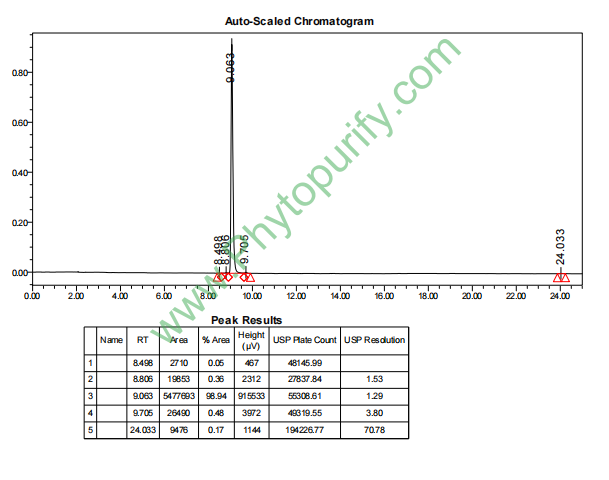
HPLC of Isovitexin 2''-Oarabinoside
Storage conditions:Short-term storage at 2~8℃, long-term storage at -20 ~ -80℃
239.9700
-.6091
-.7201
1.7200
.5025
.0939
Low
79.2018
4.6799
Yes
No
No
No
Yes
No
0.6
Yes
No
Yes
No
Natural products, as an important source of drug discovery, play an irreplaceable role in human health maintenance and disease treatment. Flavonoids, as one of the most widely distributed and structurally diverse secondary metabolites in nature, have attracted much attention due to their rich biological activity and low toxicity. Among numerous flavonoids, Isovitexin (also known as apidin-6-C-glucoside) and its glycosylated derivatives have become a hot topic in natural product chemistry and pharmacology research in recent years due to their unique C-glycosidic bond structure and significant pharmacological activity. Isovitexin-2 '' - O-arabinoside (IV-2 '' - O-Ara), as an important derivative of isovitexin, has an arabinose group attached to the 2 '' position of the glucose group in its structure. This structural modification endows it with unique physicochemical properties and biological activity.
IV-2 '' - O-Ara (CAS number: 53382-71-1) is a naturally occurring flavonoid carbon glycoside, originally derived from the genus Passionfruit(Passiflora Isolation and identification of spp. from plants, followed by their use in cannabis(Cannabis sativa)It has also been found in palm plants. This compound belongs to the derivative of apigenin, with a parent nucleus structure of 5,7,4 '- trihydroxyflavone. It is connected to a glucose group at the C-6 position through a carbon carbon bond, and the 2' 'hydroxyl group of the glucose group is connected to an arabinose group through an O-glycosidic bond. This complex glycosylation pattern is relatively rare in flavonoids and is a key structural feature that distinguishes it from other isovitexin derivatives.
In recent years, with the deepening of research on IV-2 '' - O-Ara, its various pharmacological activities have gradually been revealed. Research has shown that this compound has significant antioxidant and anti-inflammatory activities, and its mechanism of action is closely related to inhibiting the phosphorylation of JNK1/2 (c-Jun N-terminal kinase 1/2) and blocking the activation of the NF - κ B signaling pathway. These findings suggest that IV-2 '' - O-Ara has potential therapeutic value in pathological processes such as inflammation related diseases, oxidative stress damage, and skin photoaging. Especially skin photoaging, as a series of degenerative changes in skin structure and function caused by ultraviolet (UV) radiation, its pathogenesis involves multiple links such as oxidative stress, inflammatory response, upregulation of matrix metalloproteinases (MMPs) expression, and collagen degradation. The multi-target nature of IV-2 '' - O-Ara makes it a candidate natural compound for intervening in skin photoaging.
This article will provide a systematic review of the research progress of IV-2 '' - O-Ara from the aspects of chemical structure and physicochemical properties, plant sources and extraction methods, pharmacological activity, mechanism of action and molecular targets, drug evaluation and pharmacokinetics, as well as clinical application prospects, in order to provide reference for the in-depth research and development of this compound.
The chemical name of IV-2 '' - O-Ara is 5,7,4 '- trihydroxyflavone-6-C - β - D-glucosyl-2' '- O - α - L-arabinoside, with a molecular formula of C ₂ ₆ H ₂ ₈ O ₁ ₄ and a molecular weight of 564.4960 g/mol. Its structure consists of three parts: the flavonoid core (apigenin skeleton), the β - D-glucosyl group connected at the C-6 position, and the α - L-arabinose group connected at the 2 '' position of the glucosyl group.
The flavonoid core is a typical 2-phenylchromenone structure, with hydroxyl substituents at the 5th and 7th positions of the A ring and the 4 'position of the B ring. These phenolic hydroxyl groups are key structural units for compounds to exhibit antioxidant activity. Unlike common O-glycosides, the glucose group of IV-2 '' - O-Ara is connected to the flavonoid nucleus through a C-C bond (between C-6 and the C-1 'of glucose), forming a C-glycosidic bond. The C-glycosidic bond has strong stability against acid hydrolysis and enzymatic hydrolysis, which enables the compound to maintain structural integrity in the digestive tract and is beneficial for improving its oral bioavailability. The 2 '' hydroxyl group of the glucose group is connected to the arabinose group through an O-glycosidic bond, forming a disaccharide side chain. The arabinose group is an alpha-L-pyranose arabinose configuration, and the presence of this terminal sugar group significantly increases the polarity and water solubility of the molecule.
The drug properties parameters obtained based on computational chemistry methods show that the lipid water partition coefficient (LogP) of IV-2 '' - O-Ara is -0.6091, indicating that the compound has strong hydrophilicity and is widely distributed in the aqueous phase. Its topological polar surface area (TPSA) is as high as 239.9700 Å ², far exceeding the recommended upper limit of 140 Å ² for oral drugs, mainly due to the numerous hydroxyl and sugar structural units in the molecule. The water solubility parameter is 1.7200, indicating good solubility in water, which is beneficial for formulation development and in vivo absorption.
IV-2 '' - O-Ara is a pale yellow to yellow amorphous powder that produces characteristic fluorescence under ultraviolet light. This property can be used for thin layer chromatography and high-performance liquid chromatography detection. This compound has good solubility in polar organic solvents such as methanol, ethanol, and dimethyl sulfoxide, but low solubility in medium polar solvents such as ethyl acetate and chloroform. It is almost insoluble in non-polar solvents such as n-hexane and petroleum ether. Its UV absorption spectrum exhibits typical characteristics of flavonoids, with two main absorption peaks in the range of 240-280 nm (band II, A-ring benzoyl system) and 300-380 nm (band I, B-ring cinnamoyl system), and the maximum absorption wavelength is usually around 270 nm and 335 nm.
It is worth noting that the blood-brain barrier penetration ability of IV-2 '' - O-Ara was evaluated as' low ', which is closely related to its high polarity and high molecular weight. Low blood-brain barrier permeability means that the distribution of this compound in the central nervous system is limited, which may limit its application in the treatment of neurodegenerative diseases and reduce the risk of central nervous system toxicity. In addition, the evaluation result of hERG (human ether - à - go related gene) potassium channel inhibition was "no", indicating that the compound has a low risk of causing QT interval prolongation in the heart, which is an important safety advantage as a candidate drug. The Ames test result is 0.6, indicating a low risk of genetic toxicity, but further in vivo experiments are still needed for verification.
IV-2 '' - O-Ara was initially isolated from plants of the Passiflora genus, with Passifloraceae being one of the main sources of this compound. There are over 500 species of the genus Passionflower worldwide, mainly distributed in tropical and subtropical regions, many of which are used as traditional herbs. For example, purple fruit passion fruit(Passiflora edulis)The fruit and leaves, pink passion fruit(Passiflora incarnata)The aboveground part and the large fruit passion fruit(Passiflora quadrangularis)All of them have been reported to contain IV-2 '' - O-Ara. Plants of the passion flower genus are commonly used in traditional medicine to treat anxiety, insomnia, inflammation, and pain, and their pharmacological activity is closely related to the flavonoids they contain.
Cannabis(Cannabis sativa L. It is another important source of IV-2 '' - O-Ara. Cannabis plants contain abundant flavonoids, including apigenin, luteolin, and their glycoside derivatives. Research has shown that both the inflorescence and leaves of cannabis contain IV-2 '' - O-Ara, and its content varies depending on the variety, growth conditions, and harvesting time. With the renewed recognition of the medicinal value of cannabis and the advancement of cannabis legalization worldwide, the development and utilization of IV-2 '' - O-Ara, a source of cannabis, have received increasing attention.
In addition, Arecaceae plants, especially date palms(Phoenix dactylifera)And oil palm(Elaeis guineensis)It has also been reported to contain IV-2 '' - O-Ara. Palm plants are widely planted in tropical regions, and their fruits and leaves are potential resources for obtaining this compound. Other plants that may contain IV-2 '' - O-Ara include certain species of Fabaceae and Asteraceae, but the levels are usually lower.
The extraction of IV-2 '' - O-Ara is usually carried out using solvent extraction method, taking advantage of the good solubility of the compound in polar solvents. Common extraction solvents include methanol, ethanol, acetone water mixed solvents, and hot water. Considering food safety and environmental requirements, ethanol water mixed solvents (usually 50% -80% ethanol) are the most commonly used extraction medium. Extraction methods can include cold soaking, hot reflux, ultrasound assisted extraction, or microwave-assisted extraction. Ultrasound assisted extraction is widely used in laboratory research due to its advantages of easy operation, high extraction efficiency, and low solvent dosage. The extraction temperature is generally controlled at 40-60 ° C, and excessively high temperatures may cause glycosidic bond breakage or flavonoid nucleation oxidation.
After filtration and vacuum concentration of the extract, liquid-liquid extraction is usually required to remove lipid soluble impurities. Common extraction solvents include petroleum ether, chloroform, ethyl acetate, and n-butanol. IV-2 '' - O-Ara is mainly enriched in the n-butanol extraction phase due to its strong polarity. After concentration, n-butanol extract can be separated and purified by column chromatography technology.
Common column chromatography packing materials include macroporous adsorption resins (such as D101, AB-8), polyamide, silica gel, and Sephadex LH-20. Macroporous adsorption resin column chromatography is suitable for preliminary separation and can effectively remove water-soluble impurities such as sugars and proteins. Polyamide column chromatography has good selectivity for flavonoids. By utilizing the hydrogen bonding adsorption between the phenolic hydroxyl group of flavonoid mother nucleus and the polyamide amide group, separation can be achieved through gradient elution with different concentrations of ethanol aqueous solution. Sephadex LH-20 gel column chromatography is used for separation according to molecular size and adsorption, and is often used for the final refining step.
High performance preparative HPLC is an effective method for obtaining high-purity IV-2 '' - O-Ara. Usually, a reverse phase C18 chromatography column is used, with acetonitrile water or methanol water system as the mobile phase, and a small amount of formic acid or acetic acid is added to improve the peak shape. By optimizing the gradient elution program, efficient separation and purification of IV-2 '' - O-Ara can be achieved, with a product purity of over 98%.
Oxidative stress is a common pathological basis for the occurrence and development of various diseases. As a flavonoid compound, IV-2 '' - O-Ara's antioxidant activity is one of its most fundamental and important pharmacological activities. Research has shown that IV-2 '' - O-Ara can effectively scavenge various free radicals, including 1,1-diphenyl-2-trinitrophenylhydrazine (DPPH) free radical, 2,2 '- bis (3-ethylbenzothiazoline-6-sulfonic acid) diammonium salt (ABTS) free radical, and superoxide anion free radical. Its antioxidant mechanism is mainly attributed to the phenolic hydroxyl groups on the flavonoid core, especially the 4 '- hydroxyl group on the B ring and the 5,7-hydroxyl group on the A ring. These phenolic hydroxyl groups can provide hydrogen atoms or electrons to free radicals, thereby terminating the free radical chain reaction.
At the cellular level, IV-2 '' - O-Ara can significantly reduce intracellular reactive oxygen species (ROS) levels induced by hydrogen peroxide (H ₂ O ₂), ultraviolet (UV), or lipopolysaccharide (LPS). Further research has found that the compound can upregulate the expression and activity of antioxidant enzymes, including superoxide dismutase (SOD), catalase (CAT), and glutathione peroxidase (GPx). This effect is closely related to the activation of the nuclear factor E2 related factor 2 (NFE2L2, also known as Nrf2) signaling pathway. Nrf2 is a key transcription factor in the cellular antioxidant defense system. IV-2 '' - O-Ara can promote the dissociation and translocation of Nrf2 from Keap1 protein into the nucleus, where it binds to antioxidant response elements (ARE) and initiates the transcription of downstream antioxidant enzyme genes.
Inflammation is a protective response of the body to injury and infection, but excessive or sustained inflammation can lead to tissue damage and disease. IV-2 '' - O-Ara exhibits significant anti-inflammatory activity in various inflammatory models. In the LPS stimulated macrophage model, IV-2 '' - O-Ara can dose dependently inhibit the production of pro-inflammatory cytokines, including tumor necrosis factor - α (TNF - α), interleukin-1 β (IL-1 β), and interleukin-6 (IL-6). Meanwhile, the compound can also inhibit the expression of inducible nitric oxide synthase (iNOS) and cyclooxygenase-2 (PTGS2, also known as COX-2), reducing the production of nitric oxide (NO) and prostaglandin E ₂ (PGE ₂).
In the in vivo inflammation model, IV-2 '' - O-Ara also showed good anti-inflammatory effects. For example, in the carrageenan induced rat paw swelling model, oral or local administration of IV-2 '' - O-Ara can significantly reduce the degree of swelling, and its effect is comparable to the positive control drug indomethacin. In the xylene induced mouse ear swelling model, the compound also exhibited significant anti-inflammatory activity. These in vivo experimental results further confirm the anti-inflammatory potential of IV-2 '' - O-Ara.
Skin photoaging is a phenomenon of premature aging of the skin caused by long-term exposure to ultraviolet radiation. Its clinical features include rough skin, sagging, wrinkle formation, abnormal pigmentation, and capillary dilation. IV-2 '' - O-Ara exhibits multi-target protective effects against skin photoaging.
Firstly, IV-2 '' - O-Ara can inhibit UV induced skin pigmentation. Tyrosinase (TYR) is a key rate limiting enzyme in melanin synthesis, and its increased activity and expression levels are the main cause of skin pigmentation. Research has shown that IV-2 '' - O-Ara can inhibit the activity and protein expression of TYR, reducing the production of melanin. This effect may be related to its antioxidant activity and regulatory mechanism of inhibiting TYR gene transcription.
Secondly, IV-2 '' - O-Ara can inhibit UV induced degradation of skin collagen. Matrix metalloproteinases (MMPs), especially MMP1 (interstitial collagenase) and MMP9 (gelatinase B), are the main enzymes that degrade the extracellular matrix (ECM) of skin cells. Ultraviolet irradiation can induce upregulation of MMP1 and MMP9 expression in skin fibroblasts and keratinocytes, leading to degradation of collagen and elastin fibers and the formation of wrinkles. IV-2 '' - O-Ara can significantly inhibit the expression and activity of MMP1 and MMP9 induced by ultraviolet radiation, protecting the integrity of the skin ECM.
In addition, IV-2 '' - O-Ara can also inhibit UV induced skin inflammation and oxidative stress damage. Ultraviolet radiation can activate inflammatory signaling pathways in skin cells, promote the release of pro-inflammatory cytokines, and generate a large amount of ROS, further exacerbating skin damage. IV-2 '' - O-Ara can alleviate skin erythema, edema, and cell apoptosis caused by ultraviolet radiation and maintain skin barrier function through its anti-inflammatory and antioxidant activities.
C-Jun N-terminal kinase (JNK) is an important member of the mitogen activated protein kinase (MAPK) family, playing a crucial role in cellular stress response, inflammation, and apoptosis. JNK1 and JNK2 (encoded by MAPK8 and MAPK9 genes, respectively) are the main subtypes of JNK, and their abnormal activation is associated with various diseases, including inflammatory diseases, neurodegenerative diseases, and skin photoaging.
Research has shown that the action of IV-2 '' - O-Ara is similar to that of JNK1/2 inhibitors, and can effectively inhibit the phosphorylation activation of JNK1/2. IV-2 '' - O-Ara can dose dependently reduce the level of phosphorylated JNK (p-JNK) in skin fibroblasts and keratinocytes exposed to ultraviolet radiation, without affecting the expression of total JNK. The inhibition of JNK further blocks the phosphorylation and activation of its downstream transcription factor c-Jun (encoded by the JUN gene). C-Jun is the core component of the activator protein-1 (AP-1) transcription complex, and the activation of AP-1 can induce the transcription of target genes such as MMP1, MMP9, and COX-2. Therefore, IV-2 '' - O-Ara exerts anti photoaging and anti-inflammatory effects by inhibiting the JNK1/2-c-Jun/AP-1 signaling axis, downregulating the expression of MMPs and COX-2.
Nuclear factor kappa B (NF - κ B) is a central transcription factor that regulates inflammatory response, immune response, and cell survival. In the resting state, NF - κ B (usually a p50/p65 heterodimer encoded by the RELA gene) binds to the inhibitory protein I κ B α and exists in an inactive form in the cytoplasm. When cells are stimulated by ultraviolet radiation, LPS, or pro-inflammatory cytokines, I κ B kinase (IKK) is activated, phosphorylating I κ B alpha and causing its ubiquitination degradation. The released NF - κ B is translocated into the nucleus, initiating transcription of target genes.
IV-2 '' - O-Ara can effectively inhibit the activation of NF - κ B. Research has found that this compound can inhibit the phosphorylation and degradation of I κ B α, and prevent the nuclear translocation of NF - κ B. Meanwhile, IV-2 '' - O-Ara can directly inhibit the transcriptional activity of p65 subunit and reduce its binding to DNA. Inhibition of NF - κ B leads to downregulation of downstream target genes, including pro-inflammatory cytokines (TNF - α, IL-1 β, IL-6), inflammatory enzymes (iNOS, COX-2), and adhesion molecules. It is worth noting that IV-2 '' - O-Ara may have a synergistic effect on the inhibition of NF - κ B and JNK1/2, as these two signaling pathways have a cross-talk in inflammation and stress response.
Nuclear factor E2 related factor 2 (NFE2L2, also known as Nrf2) is the main regulator of cellular antioxidant defense. Under normal physiological conditions, Nrf2 binds to Keap1 protein and is rapidly degraded through the ubiquitin proteasome pathway. When cells are exposed to oxidative stress or electrophilic agents, the cysteine residue of Keap1 is modified, leading to the release and stabilization of Nrf2, which then translocates into the nucleus and forms heterodimers with small Maf proteins, binding to antioxidant response elements (ARE) and initiating the transcription of downstream antioxidant enzyme genes.
IV-2 '' - O-Ara can activate the Nrf2 signaling pathway and upregulate the expression of a series of antioxidant enzymes, including heme oxygenase-1 (HO-1), quinone oxidoreductase 1 (NQO1), glutathione S-transferase (GST), as well as SOD, CAT, and GPx. This effect helps to enhance the antioxidant capacity of cells and alleviate oxidative damage caused by ultraviolet radiation or inflammation. The activation of Nrf2 is closely related to its anti-inflammatory effect, as the products of HO-1, carbon monoxide (CO) and bilirubin, have anti-inflammatory activity, and Nrf2 itself can also exert anti-inflammatory effects by inhibiting the transcription of pro-inflammatory cytokine genes.
The pharmacological effects of IV-2 '' - O-Ara are not mediated by a single target, but are achieved through network regulation of multiple targets and pathways. In the skin photoaging model, the compound simultaneously acts on multiple targets such as TYR, MMP1, MMP9, NFE2L2, RELA, MAPK8, PPARG, JUN, PTGS2, and NFKB1. These targets involve multiple biological processes such as melanin synthesis (TYR), ECM degradation (MMP1, MMP9), antioxidant defense (NFE2L2), inflammatory signaling (RELA, NFKB1, PTGS2), MAPK signaling (MAPK8, JUN), and lipid metabolism and inflammation regulation (PPARG).
This multi-target mode of action enables IV-2 '' - O-Ara to simultaneously intervene in multiple pathological processes of skin photoaging, including oxidative stress, inflammatory response, pigmentation, and collagen degradation, thereby exerting a comprehensive protective effect. Compared with single target synthetic drugs, multi-target natural compounds have the advantages of mild action, minimal side effects, and less susceptibility to drug resistance, and have unique application value in the prevention and treatment of chronic complex diseases.
The pharmacokinetic parameters obtained based on computational drug chemistry methods provide important references for the early evaluation of IV-2 '' - O-Ara. The molecular weight of this compound is 564.4960 g/mol, slightly higher than the upper limit of 500 Da recommended by Lipinski's "Five Rules", which may have some impact on its oral absorption. However, flavonoid carbon glycosides often have absorption mechanisms different from traditional small molecule drugs, including the possibility of absorption through glucose transporters or paracellular pathways, so a slightly higher molecular weight does not necessarily mean poor oral bioavailability.
The LogP value is -0.6091, indicating that the compound has strong hydrophilicity and poor lipid solubility. High hydrophilicity is beneficial for dissolution and formulation development in aqueous media, but may limit its passive diffusion through biofilms. The TPSA is as high as 239.9700 Å ², far higher than the recommended 140 Å ² for oral medications, indicating a high possibility of interaction between this compound and efflux transporters such as P-glycoprotein (P-gp), which may affect its oral absorption and brain distribution.
The water solubility parameter is 1.7200, indicating that the compound has good solubility in water, which is beneficial for the development of oral formulations and in vivo absorption. The assessment of blood-brain barrier penetration ability is' low ', consistent with high TPSA and molecular weight, indicating limited distribution of the compound in the central nervous system. The hERG inhibition assessment is' no ', indicating a low risk of cardiac toxicity. The Ames test result is 0.6, indicating a low risk of genetic toxicity, but further in vivo experiments are needed for validation.
Overall, the pharmacological parameters of IV-2 '' - O-Ara exhibit characteristics of high polarity, low fat solubility, low blood-brain barrier penetration, and low risk of cardiac toxicity, making it suitable for development as an oral or local drug, especially in the treatment of skin related diseases.
At present, there are few systematic studies on the pharmacokinetics of IV-2 '' - O-Ara, but based on its structural characteristics and research on similar compounds, its possible pharmacokinetic behavior can be inferred.
In terms of absorption, the C-glycosidic bond of IV-2 '' - O-Ara gives it strong resistance to acid hydrolysis and enzymatic hydrolysis in the digestive tract, which is beneficial for maintaining structural integrity. However, its high polarity and large molecular weight may limit its passive diffusion through intestinal epithelial cells. Studies have shown that flavonoid carbon glycosides may be absorbed through glucose transporters (such as SGLT1) or paracellular pathways. In addition, gut microbiota may metabolize IV-2 '' - O-Ara, converting it into isovitexin or smaller metabolites that may have better absorption properties.
In terms of distribution, IV-2 '' - O-Ara is widely distributed in the body, but due to its high polarity and low fat solubility, it is mainly distributed in extracellular fluid and blood. The binding rate of flavonoids to plasma proteins is not yet clear, but flavonoids typically have a higher binding rate to albumin. Low blood-brain barrier penetration means that the concentration of the compound in the central nervous system is low, which may limit its application in the treatment of neurological diseases, but reduces the risk of central nervous system toxicity.
Metabolism: The metabolism of IV-2 '' - O-Ara mainly occurs in the liver and intestines. Possible metabolic pathways include hydrolysis of glucose and arabinose groups to produce isovitexin or simpler aglycones; Hydroxylation, methylation, or sulfation/glucuronidation binding reactions of flavonoid parent nuclei. These metabolites may have different biological activities and pharmacokinetic properties.
In terms of excretion, IV-2 '' - O-Ara and its metabolites are mainly excreted through urine and bile. Due to its large molecular weight and high polarity, bile excretion may be its main clearance pathway. The enterohepatic circulation may prolong its duration of action in the body.
Based on existing research, IV-2 '' - O-Ara has shown good safety. The Ames test result is 0.6, indicating a low risk of mutagenicity. The hERG inhibition assessment is negative, indicating a low risk of cardiac toxicity. In cytotoxicity experiments, IV-2 '' - O-Ara showed no significant toxic effect on normal cells at lower concentrations (usually below 50 μ M). However, there is still a lack of systematic data on the toxicological studies of this compound, including acute toxicity, chronic toxicity, reproductive toxicity, and carcinogenicity, and further research is needed.
The multi-target anti photoaging mechanism based on IV-2 '' - O-Ara has broad application prospects in the prevention and treatment of skin photoaging. This compound can simultaneously inhibit TYR activity (reduce pigmentation), suppress MMP1 and MMP9 expression (protect collagen), activate the Nrf2 pathway (enhance antioxidant defense), and inhibit NF - κ B and JNK signaling (alleviate inflammatory response), thereby comprehensively combating skin damage caused by ultraviolet radiation.
In terms of preparation development, IV-2 '' - O-Ara can be developed as external preparations, such as cream, gel, essence or facial mask. Its good water solubility is beneficial for the development of water-based matrix formulations, while its low blood-brain barrier penetration reduces the risk of entering the central nervous system after transdermal absorption. In addition, the compound can be compounded with sunscreen agents, antioxidants (such as vitamin C, vitamin E) or other active ingredients to develop sun protection or anti-aging products with multiple effects.
The anti-inflammatory activity of IV-2 '' - O-Ara makes it potentially valuable for the treatment of various inflammatory diseases. For example, in skin inflammatory diseases such as atopic dermatitis and psoriasis, this compound can alleviate skin inflammation by inhibiting the NF - κ B and JNK signaling pathways. Oral administration of IV-2 '' - O-Ara may exert systemic anti-inflammatory effects in systemic inflammatory diseases such as arthritis and colitis. However, its oral bioavailability needs further optimization, and its oral absorption can be improved through technologies such as nano formulations, liposomes, or phospholipid complexes.
PPARG (peroxisome proliferator activated receptor gamma) is one of the potential targets of IV-2 '' - O-Ara. PPARG is a key transcription factor that regulates lipid metabolism, insulin sensitivity, and inflammatory response, and is the target of thiazolidinedione hypoglycemic drugs. IV-2 '' - O-Ara may play a role in the treatment of metabolic diseases such as type 2 diabetes, obesity and nonalcoholic fatty liver disease by regulating PPARG activity. However, research in this direction is still in its early stages and requires more experimental evidence to support it.
Although IV-2 '' - O-Ara exhibits various pharmacological activities and promising application prospects, there are still some shortcomings and challenges in current research. Firstly, the pharmacokinetic research on this compound is not yet sufficient, especially the key parameters such as oral absorption, metabolic pathways, and bioavailability need to be systematically elucidated. Secondly, its in vivo pharmacological research mainly focuses on animal models, with a lack of clinical trial data, and its safety and efficacy in vivo need to be verified. Thirdly, research on the mechanism of action of this compound has mostly focused on the signaling pathway level, and the molecular target proteins it directly acts on have not been clearly identified, which limits a deeper understanding of its mechanism of action.
Future research directions should include: 1) identifying the direct target proteins of IV-2 '' - O-Ara using techniques such as drug affinity reaction target stability (DARTS), cell thermal transition analysis (CETSA), or affinity chromatography; 2) Conduct systematic pharmacokinetic studies to elucidate their absorption, distribution, metabolism, and excretion characteristics; 3) Develop new drug delivery systems to improve their oral bioavailability and targeting; 4) Conduct preclinical toxicology evaluation to provide safety data for clinical trials; 5) Explore its therapeutic potential in more disease models, such as neuroinflammation, cardiovascular disease, and tumors.
As a natural flavonoid carbon glycoside, isovitexin 2 '' - O-arabinoside (IV-2 '' - O-Ara) has attracted widespread attention from researchers due to its unique chemical structure and multi-target pharmacological activity. This compound is derived from common medicinal plants such as passion fruit, hemp, and palm, and has significant antioxidant, anti-inflammatory, and anti skin photoaging activities. Its mechanism of action involves inhibiting the JNK1/2 and NF - κ B signaling pathways, activating the Nrf2/ARE antioxidant pathway, and regulating multiple targets such as TYR, MMP1, MMP9, PPARG, reflecting the multi-target and multi pathway nature of natural products.
The drug evaluation shows that IV-2 '' - O-Ara has high polarity, low fat solubility, low blood-brain barrier penetration, and low risk of cardiac toxicity, making it suitable for development as an external or oral formulation. It has potential application value in the prevention and treatment of skin photoaging, inflammatory diseases, and metabolic diseases. However, further research is needed on the pharmacokinetic characteristics, direct target proteins, and safety and efficacy in humans of this compound.
With the development of natural product chemistry, pharmacology, and pharmaceutical formulation, IV-2 '' - O-Ara is expected to become a lead compound for the development of new anti photoaging, anti-inflammatory, and antioxidant drugs. In depth research and development of this natural product resource not only helps to clarify the material basis and mechanism of action of traditional medicinal plants, but also provides new candidate molecules for modern drug discovery. I believe that in the near future, with the continuous deepening of research, the medicinal value of IV-2 '' - O-Ara will be more comprehensively recognized and developed.
