Introduction/Overview
Natural products have always been an important source of innovative drug discovery, among which flavonoids have attracted much attention due to their extensive biological activity and good safety. Licoflavonol (CAS number: 60197-60-6) is a small flavonoid compound isolated from plants of the licorice genus. Licorice, as one of the most widely used traditional Chinese medicines, is known as the "Ten Formulas and Nine Herbs". The systematic study of its pharmacological active ingredients has always been a focus of modern Chinese medicine research. Early research mainly focused on triterpenoid saponins such as glycyrrhetinic acid and glycyrrhetinic acid. However, in recent years, glycyrrhetinic flavonoids, represented by glycyrrhetinic flavonols, have gradually become a research hotspot due to their diverse and significant biological activities.
Licorice flavonols were initially identified for their inhibitory effect on the Salmonella type III secretion system (T3SS), demonstrating potential as a novel anti infective drug. However, further research has revealed that licorice flavonols exhibit excellent activities in multiple aspects such as anti-inflammatory, antioxidant, and neuroprotective effects. Especially in the field of anti-inflammatory, its role involves multi-target regulation of interleukin-6 (IL-6), signal transduction and transcription activator 3 (STAT3), key subunit of nuclear factor kappa B (NF - κ B) RELA, tumor necrosis factor - α (TNF - α), as well as various inflammation related enzymes (such as inducible nitric oxide synthase NOS2, cyclooxygenase-1 PTGS1) and ion channels (such as TRPV1, TRPA1), indicating its broad application prospects in the treatment of chronic inflammatory diseases. This article aims to provide a systematic review of the chemical properties, plant sources, pharmacological activities, molecular mechanisms of action, and pharmacological potential of licorice flavonols, in order to provide comprehensive scientific references for the in-depth research and development of this compound.
Chemical structure and physicochemical properties
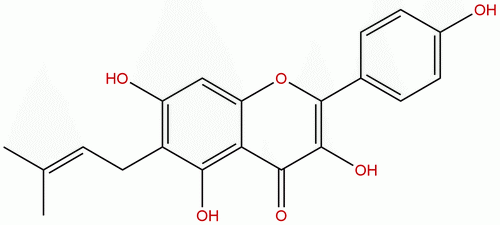
The chemical name of licorice flavonol is 3,5,7-trihydroxy-2- (4-hydroxyphenyl) -4H-1-benzopyran-4-one, which belongs to flavonol compounds. Its molecular formula is C18H14O7 and its molecular weight is 354.3580. Its core structure is the classic 2-phenylchromenone skeleton, with hydroxyl substitution at positions 5 and 7 of the A ring and 4 'of the B ring, and a hydroxyl group at position 3. This is a key feature that distinguishes flavonols from other flavonoids, such as flavonoids.
The presence of these hydroxyl groups has a decisive impact on their physicochemical properties and biological activity. Firstly, multiple phenolic hydroxyl groups endow it with strong antioxidant capacity, enabling it to scavenge free radicals through hydrogen atom transfer or single electron transfer mechanisms. Secondly, the distribution of hydroxyl groups also affects its lipophilicity. The calculated lipid water partition coefficient (LogP) is 3.3540, indicating that licorice flavonol has moderate to high lipophilicity, which is beneficial for its penetration of cell membranes but may also affect its water solubility. Its topological polar surface area (TPSA) is 111.1300 Å ², reflecting the surface area of polar atoms (mainly oxygen atoms) in the molecule. The water solubility data obtained from the experiment is 0.0613 mg/mL, which belongs to the category of slight solubility. This suggests that solubilization strategies may need to be considered in formulation development, such as making cyclodextrin inclusion complexes, nanocrystals, or prodrugs.
From the perspective of chemical stability, the flavonol skeleton is relatively stable under acidic conditions, but under alkaline conditions, especially under high temperature and light, its C ring is prone to ring opening degradation. In addition, its catechol structure (although the 5,7-dihydroxy arrangement of the A ring is atypical, it is an integral polyphenol system) gives it a certain metal chelating ability and may also undergo polymerization under strong oxidation conditions. Therefore, during the extraction, purification, and storage processes, attention should be paid to controlling pH, temperature, and avoiding light conditions.
Plant sources and extraction methods
Glycyrrhiza flavonols are mainly derived from various plants of the genus Glycyrrhiza in the legume family, among which Glycyrrhiza uralensis Fisch. and Glycyrrhiza glabra L. are the main sources. It usually exists in the form of free glycosides in plant bodies, but its content is relatively low, far lower than the main components such as glycyrrhetinic acid. Its content is influenced by various factors such as place of origin, harvest season, plant parts, and growth years, with roots and rhizomes being the main enriched parts.
The extraction of flavonols from licorice usually follows the general extraction process for flavonoids. Firstly, solvent extraction method is used. Due to its polarity and polyphenol properties, ethanol water mixed solvents (such as 70% -95% ethanol) are commonly used for reflux extraction or ultrasound assisted extraction. Methanol is also an effective extraction solvent, but for safety and environmental considerations, ethanol is more commonly used for large-scale preparation. In recent years, green extraction technologies such as supercritical CO2 extraction (often with modified agents such as ethanol) and pressurized liquid extraction have also been applied. These methods are highly efficient, require less solvent, and can better protect thermosensitive components.
The crude extract contains a large amount of sugars, proteins, tannins, and triterpenoids mainly composed of glycyrrhizic acid, therefore further separation and purification are required. The conventional enrichment strategy includes: utilizing the characteristic of flavonoids that can form complexes with metal ions (such as Al ³ ⁺) for precipitation and preliminary enrichment; Large pore adsorption resins (such as AB-8, D101, HP-20, etc.) are used for chromatographic separation, and gradient elution is performed using ethanol water solutions of different concentrations. Flavonoids are usually eluted in the high proportion ethanol range (such as 70% -95%). After obtaining the flavonoid enrichment site, it is necessary to use preparative chromatography techniques for monomer separation, such as silica gel column chromatography, polyamide column chromatography, as well as modern separation methods such as high performance liquid chromatography (HPLC) and high-speed countercurrent chromatography (HSCCC). HSCCC has shown unique advantages in separating natural product monomers such as glycyrrhizic flavonols due to its advantages of no need for solid carriers, high sample recovery rate, and large preparation volume. The isolated compounds need to be structurally confirmed by nuclear magnetic resonance (NMR), mass spectrometry (MS), and comparison with standard samples.
Pharmacological activity research
Numerous in vitro and in vivo pharmacological studies have shown that licorice flavonols have multiple biological activities, among which anti-inflammatory activity is the most prominent and widely studied.
1. Anti inflammatory activity:
Licorice flavonols have shown strong anti-inflammatory effects in various inflammatory models. In the RAW 264.7 macrophage inflammation model induced by lipopolysaccharide (LPS), it can dose dependently inhibit the excessive production of nitric oxide (NO) and prostaglandin E2 (PGE2), and its effect is related to the downregulation of protein and mRNA expression levels of inducible nitric oxide synthase (NOS2) and cyclooxygenase-2 (PTGS2/COX-2). In acute inflammation models such as carrageenan or LPS induced paw swelling in mice and xylene induced ear swelling in mice, oral administration of glycyrrhizic flavonol can significantly reduce tissue edema and inflammatory cell infiltration. In chronic inflammation models such as the Freund's complete adjuvant induced arthritis rat model, it not only improves joint swelling and pathological damage, but also reduces the levels of pro-inflammatory cytokines such as IL-6 and TNF - α in serum.
2. Antibacterial and antiviral activity:
Licorice flavonol was initially identified as a Salmonella T3SS inhibitor. T3SS is a key virulence factor for many Gram negative pathogens, known as a 'molecular injector', which can directly inject effector proteins into host cells and manipulate cellular functions. Licorice flavonol can specifically inhibit the secretion of structural proteins and effector protein transport of T3SS, thereby weakening the invasion and intracellular survival ability of Salmonella without affecting the normal growth of bacteria (with a high minimum inhibitory concentration (MIC) value). This "anti virulence" strategy is different from traditional antibiotics, as it is less likely to cause bacteria to develop resistance, providing new ideas for anti infection treatment.
3. Antioxidant and neuroprotective activities:
With its polyphenolic structure, licorice flavonol has significant ability to scavenge DPPH, ABTS free radicals, and superoxide anions. In the oxidative stress/excitotoxic injury model induced by hydrogen peroxide or glutamate in PC12 cells or primary neurons, pretreatment with glycyrrhizic flavonol can improve cell survival rate, reduce lactate dehydrogenase leakage and intracellular reactive oxygen species accumulation. Its neuroprotective effect is related to activating the Nrf2/ARE antioxidant signaling pathway and upregulating the expression of antioxidant enzymes such as heme oxygenase-1 (HO-1).
4. Other activities:
Preliminary studies also suggest that licorice flavonols may have anti anxiety, analgesic effects (possibly related to regulating TRP channels), and potential anti-tumor adjuvant activities (by inhibiting inflammation related pathways such as STAT3). These activities are mostly interrelated with their core anti-inflammatory and antioxidant mechanisms.
Mechanism of action and molecular targets
The anti-inflammatory and other pharmacological effects of licorice flavonol are not achieved through a single target, but through a complex network, and its multi-target characteristics are the basis for its comprehensive therapeutic effect. Existing research has revealed that it acts on multiple key inflammatory signaling nodes and functional proteins:
1. Regulating the NF - κ B signaling pathway:
NF - κ B is the core transcription factor of inflammatory response. Licorice flavonol can inhibit the activation of LPS induced I κ B kinase (IKBKB), prevent the phosphorylation and degradation of I κ B α, and thus inhibit the nuclear translocation of NF - κ B p65 subunit (RELA). In the nucleus, it can also inhibit the DNA binding activity of p65, ultimately leading to a decrease in the expression of downstream inflammatory genes such as TNF - α, IL-6, NOS2, COX-2, etc.
2. Inhibition of STAT3 signaling pathway:
STAT3 is another important pro-inflammatory and pro survival signaling pathway. After binding to cytokines such as IL-6 and their receptors, JAK is activated, leading to phosphorylation and dimerization of STAT3 and its incorporation into the transcription of nuclear initiating genes. Licorice flavonol can inhibit the phosphorylation activation of STAT3, thereby blocking its mediated inflammation and cellular malignant transformation signals.
3. Regulating inflammasome activity:
The activation of inflammasomes such as NLRP3 leads to the cleavage and activation of caspase-1 (CASP1), which in turn promotes the maturation and secretion of IL-1 β and IL-18. Research has shown that licorice flavonols can inhibit the assembly and activation of NLRP3 inflammasomes, reduce the activation of caspase-1, and alleviate inflammasome driven inflammatory responses, which is of great significance in diseases such as gout and metabolic inflammation.
4. Affects pain perception related ion channels:
Transient receptor potential vanillic acid subtype 1 (TRPV1) and transient receptor potential anchor protein subtype 1 (TRPA1) are key sensors mediating inflammatory pain and neurogenic inflammation. Licorice flavonols have been shown to antagonize the activity of TRPV1 and TRPA1 channels, inhibit calcium influx induced by agonists such as capsaicin or mustard oil, providing a molecular explanation for their analgesic and anti neuroinflammatory effects.
5. Inhibit inflammation related enzymes:
In addition to downregulating the expression of NOS2 and COX-2, licorice flavonol can also directly or indirectly inhibit the activity of these enzymes. It may also have a certain regulatory effect on COX-1 (PTGS1). In addition, its antioxidant activity itself can reduce various inflammatory signaling pathways activated by reactive oxygen species (ROS).
In summary, licorice flavonols form a synergistic anti-inflammatory network by simultaneously acting on multiple targets such as transcription factors (RELA, STAT3), kinases (IKBKB), proteases (CASP1), ion channels (TRPV1, TRPA1), and inflammatory mediators (TNF, IL-6), which may be one of the reasons for their high efficacy and low toxicity.
Evaluation of drug properties and pharmacokinetics
Based on its physicochemical parameters and preliminary biological data, a preliminary evaluation of the pharmacological properties of licorice flavonol is conducted
Prediction and challenges of pharmacokinetics (ADME):
* Absorption: The moderate LogP value (3.35) and moderate TPSA (111 Å ²) comply with Lipinski's five rules (molecular weight<500, LogP<5, hydrogen bond donor=4, hydrogen bond acceptor=7), indicating good oral absorption potential. But its low water solubility (0.06 mg/mL) may be the main factor limiting its oral bioavailability, which may lead to limited absorption due to dissolution rate.
* Distribution: It is predicted that its blood-brain barrier (BBB) penetration is low, mainly due to its high polar surface area and the presence of multiple phenolic hydroxyl groups in the molecule, making it difficult to passively diffuse through the BBB. This is a challenge for treating central nervous system inflammatory diseases, but can reduce central side effects for peripheral system diseases.
* Metabolism: As a flavonol compound, it is likely to undergo extensive phase II metabolism in the body, such as glucuronidation and sulfation, especially in the intestine and liver. The exposure level of its glycoside form (i.e. glycyrrhetinic flavonol itself) in the blood may be low, and the activity of its metabolites deserves attention.
* Excretion: It is expected that its metabolites will mainly be excreted through urine and bile.
Preliminary safety evaluation:
* HERG inhibition: The predicted data shows that it has no hERG potassium channel inhibitory effect, indicating a low risk of causing QT interval prolongation in the heart, which is an important cardiac safety advantage.
* Genetic toxicity: The Ames test data (0.6) is negative, indicating that under the conditions of this experiment, there is no direct mutagenicity and the preliminary genetic toxicity risk is controllable.
* In vitro cytotoxicity: In most pharmacological activity studies, its toxicity to normal cells is low at effective concentrations, showing a good therapeutic window.
Current pharmacokinetic studies:
At present, there are few reports on the pharmacokinetics of licorice flavonol system. Limited animal experiments (in rats) have shown that after oral administration, the prototype drug has a lower concentration in plasma, a faster peak time, and a shorter half-life, which is consistent with its significant first pass effect and rapid metabolism characteristics. Improving its bioavailability is the key to future development, and possible strategies include preparing nano formulations (such as nanosuspensions, liposomes), phospholipid complexes, or developing their prodrugs (such as esterifying some hydroxyl groups to enhance lipid solubility and membrane permeability, and hydrolyzing them into active forms in vivo).
Clinical application prospects and prospects
The multi-target anti-inflammatory properties of licorice flavonol provide potential application value in the treatment of various inflammatory diseases.
Potential indications:
1. Chronic inflammatory diseases: Such as rheumatoid arthritis, inflammatory bowel disease (Crohn's disease, ulcerative colitis). Its inhibitory effect on IL-6/STAT3, NF - κ B pathway, and inflammasome precisely targets the core pathological processes of these diseases.
2. Pain management: Especially inflammatory pain and neuropathic pain. Its antagonistic effect on the TRPV1/TRPA1 channel, as well as its upstream anti-inflammatory effect, make it a potential candidate molecule for novel analgesics or in combination with existing analgesics to enhance efficacy and reduce side effects.
3. Infection adjuvant therapy: As a T3SS inhibitor for pathogenic bacteria such as Salmonella, when used in combination with traditional antibiotics, it can reduce antibiotic dosage, shorten treatment duration, and may delay the development of drug resistance. This strategy of 'disarm the pathogen' has broad prospects in dealing with drug-resistant bacterial infections.
4. Metabolic inflammation: Such as non-alcoholic steatohepatitis (NASH), atherosclerosis. These diseases are closely related to low-grade chronic inflammation, and the antioxidant and anti-inflammatory effects of licorice flavonol may help improve the disease progression.
5. skin disease: Topical treatment for skin inflammatory diseases such as atopic dermatitis and psoriasis. Its good skin permeability and anti-inflammatory activity are worth exploring.
Future research directions and challenges:
1. In depth mechanism research: It is necessary to more accurately elucidate its direct interactions with various targets (such as confirming direct binding to targets through techniques such as surface plasmon resonance and co crystallization), and to use systems biology methods to draw a genome-wide effect map.
2. Pharmacokinetic optimization: This is one of the biggest bottlenecks for its clinical application. It is necessary to conduct systematic pharmaceutical research and develop delivery systems that can significantly improve their solubility, stability, and oral bioavailability.
3. Pre clinical comprehensive evaluation: It is necessary to confirm the efficacy in animal models that are closer to human diseases, such as humanized mouse models and organoid models, and complete standardized GLP toxicology studies to comprehensively evaluate their long-term safety.
4. Structural modification and development of analogues: Using it as the parent nucleus, reasonable chemical modifications are carried out to improve its pharmacokinetic properties (such as increasing BBB penetration), enhance selectivity or efficacy towards specific targets, and thus obtain candidate drugs with greater development potential.
5. Exploring combination therapy: Studying its synergistic effects with existing anti-inflammatory drugs, antibiotics, or anticancer drugs may lead to the discovery of new treatment combinations that reduce the dosage and toxicity of existing drugs.
Conclusion
Licorice flavonols, as a representative flavonol compound in licorice, have shown significant potential for drug development due to their multi-target and multi pathway anti-inflammatory mechanisms, as well as good preliminary safety characteristics. From inhibiting bacterial virulence to regulating the complex inflammatory network of the host, its biological activity spectrum reveals the unique value of natural products in combating infections and chronic diseases. Although it faces challenges in drug development, especially in terms of oral bioavailability, this is precisely the area that modern pharmacy and medicinal chemistry can focus on addressing. With a more detailed analysis of its molecular mechanism of action, the development of novel delivery systems, and deeper preclinical research, glycyrrhizic flavonol is expected to evolve from a promising lead compound into a new therapeutic drug for treating inflammatory diseases, pain, and even drug-resistant bacterial infections, providing another successful example for the development of modern innovative drugs derived from traditional Chinese medicine.