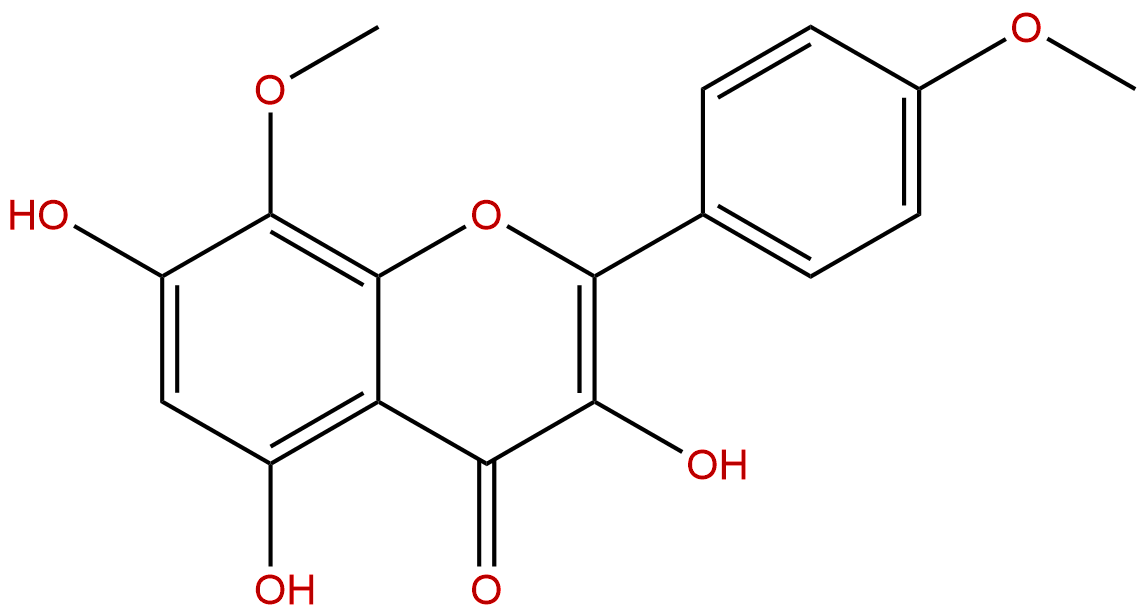


Product name: Prudomestin
Synonym name:
Catalogue No.: SBP00240
Cas No.: 3443-28-5
Formula: C17H14O7
Mol Weight: 330.292
Botanical Source:
Physical Description: Yellow cryst.
Type of Compound: Flavonoids
Purity: 95%~99%
Analysis Method: HPLC-DAD or/and HPLC-ELSD
Identification Method: Mass, NMR
Packing: Brown vial or HDPE plastic bottle
The product could be supplied from milligrams to grams. Inquire for bulk scale.
We provide solution to improve the water-solubility of compounds, thereby facilitating the variety of activity tests and clinic uses.
For Reference Standard and R&D, Not for Human Use Directly.
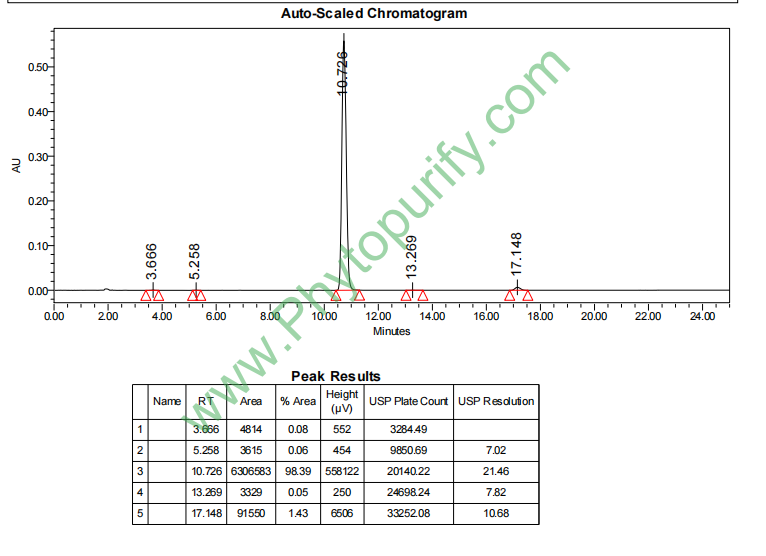
HPLC of Prudomestin
Storage conditions:Short-term storage at 2~8℃, long-term storage at -20 ~ -80℃
109.3600
2.2266
1.9523
.0835
3.7266
17.1418
Low
88.9185
2.4415
Yes
No
Yes
No
Yes
No
0.6
Yes
No
Yes
No
Natural products, as important sources of drug lead compounds, play an indispensable role in the history of human health maintenance and disease treatment. Isolating and identifying small molecules with significant biological activity from traditional herbs, and elucidating their mechanisms of action, has always been one of the core strategies for modern drug discovery. Among numerous natural products with biological activity, flavonoids have attracted much attention due to their extensive pharmacological activities, such as antioxidant, anti-inflammatory, anti-tumor, cardiovascular protection, etc. Flavonoids are secondary metabolites of plants, and their basic structure is 2-phenylchromenone. Depending on their degree of oxidation, substituent type, and connection mode, they can be further subdivided into various subclasses such as flavonoids, flavonols, dihydroflavones, and isoflavones.
Prudomestin, as a naturally occurring flavonoid compound, is named after its original plant source - European plum(Prunus domestica)The core material. This compound belongs to methylated flavonols, and its unique chemical structure endows it with a series of remarkable biological activities. Early research revealed that resveratrol has strong xanthine oxidase (XO) inhibitory activity, with a half maximal inhibitory concentration (IC ₅₀) of approximately 6 µ M. This discovery suggests its potential application value in the treatment of hyperuricemia and related diseases, such as gout. Xanthine oxidase is a key enzyme in purine metabolism, catalyzing the oxidation of hypoxanthine and xanthine to uric acid. The excessive activity of this enzyme can lead to an increase in uric acid levels in the body, which in turn can cause hyperuricemia and potentially trigger diseases such as gouty arthritis and kidney stones. Therefore, finding efficient and low toxicity XO inhibitors is one of the important strategies for treating gout and hyperuricemia. The XO inhibitors widely used in clinical practice, such as allopurinol and febuxostat, although effective, are also accompanied by some adverse reactions, such as allopurinol hypersensitivity syndrome and the risk of cardiovascular events with febuxostat. This makes the search for new and safe XO inhibitors from natural products a research hotspot.
In addition to significant XO inhibitory activity, resveratrol has also been reported to have various pharmacological effects such as antioxidant, anti-inflammatory, and anti-tumor effects. Its antioxidant activity is particularly prominent, which is closely related to the phenolic hydroxyl structure shared by flavonoids. Oxidative stress is the common pathophysiological basis of many chronic diseases, including cardiovascular diseases, neurodegenerative diseases, diabetes and cancer. Therefore, the multiple pharmacological activities of resveratrol make it a highly valuable natural product molecule for research. This article aims to systematically review the research progress of salidroside, covering its chemical structure and physicochemical properties, plant sources and extraction methods, pharmacological activity, mechanism of action and molecular targets, pharmacological evaluation and pharmacokinetic characteristics, and prospects for its clinical application prospects, in order to provide comprehensive references for the in-depth research and development of this compound.
The chemical name of Prunomestin is 5,7-dihydroxy-3,4 '- dimethoxyflavone, and its chemical structure belongs to flavonols. The basic skeleton of flavonols is 3-hydroxyflavones, while resveratrol has two hydroxyl groups (- OH) at positions 5 and 7 of the A ring, and one methoxy group (- OCH ∝) at position 3 of the C ring and position 4 'of the B ring. This specific substitution pattern is a key characteristic that distinguishes it from other flavonoids and serves as the structural basis for its biological activity. Its molecular formula is C ₁₇ H ₁₄ O ₇, and its molecular weight is 330.2920 g/mol. According to CAS registration number 3443-28-5, relevant literature and data on this compound can be accurately retrieved.
In terms of physical and chemical properties, resveratrol exhibits typical flavonoid compound characteristics. Its oil-water partition coefficient (LogP) is 2.2266, indicating that the compound has a certain lipophilicity, which is beneficial for its penetration through biofilms, but may also affect its solubility in aqueous phase. In fact, its water solubility is only 0.0835 mg/mL, which is a difficult to dissolve compound, posing a challenge to the development and bioavailability of its oral formulations. The Topological Polar Surface Area (TPSA) is 109.3600 Å ², which reflects the total surface area of polar atoms (such as oxygen and nitrogen) and their connected hydrogen atoms in the molecule. Generally, molecules with a TPSA value less than 140 Å ² are considered to have good oral absorption potential, while the TPSA value of berberine within this range suggests that it may have some oral absorption capacity, but the actual absorption degree still needs to be comprehensively evaluated in conjunction with other factors. In addition, the molecule of yangli su contains multiple phenolic hydroxyl groups, which gives it a certain acidity and makes it easy to form salts under alkaline conditions, providing ideas for its formulation design. Its UV absorption spectral characteristics are similar to typical flavonols, with two main absorption peaks at 240-280 nm (band II, A-ring benzoyl system) and 300-380 nm (band I, B-ring cinnamoyl system), which can be used for its qualitative and quantitative analysis.
Yang Li Su was originally derived from the European plum plant in the Rosaceae family(Prunus domestica)Separated from the heartwood.Prunus domestica The common European plum or foreign plum is a widely cultivated fruit tree, whose fruit (plum) is rich in nutrients, while the heartwood is rich in various secondary metabolites. In addition to European plums, resveratrol is also present in other plants, such as some leguminous plants (e.g Dalbergia Genus) and Asteraceae plants (such as Baccharis It belongs to, but its content is usually low. Therefore, the heartwood of European plums remains the most important natural source in current research.
The extraction of resveratrol from plant materials usually involves classical natural product chemistry methods, including extraction, separation, and purification. Due to its moderate polarity as a flavonoid compound, commonly used extraction solvents include methanol, ethanol, acetone, or their aqueous solutions. Usually, dried and crushed plant heartwood powder is soaked or percolated with a certain concentration of ethanol (such as 70-95% ethanol) at room temperature or heating conditions, repeated several times to fully extract the target components. The crude extract is obtained by filtering and concentrating the extract under reduced pressure. Subsequently, the crude extract needs to be purified through a series of chromatographic separation techniques. Liquid liquid extraction (such as sequential extraction with petroleum ether, ethyl acetate, and n-butanol) is a commonly used method for preliminary separation, where the ethyl acetate extract is usually rich in moderately polar flavonoids. Further separation and purification mainly depend on column chromatography technology, such as silica gel column chromatography, polyamide column chromatography, Sephadex LH-20 column chromatography, etc. Silica gel column chromatography often uses mixed solvents such as chloroform methanol or petroleum ether acetone for gradient elution; Polyamide column chromatography utilizes its ability to form hydrogen bonds with phenolic hydroxyl groups of flavonoids for separation; Sephadex LH-20 column chromatography can separate molecules based on their size and is commonly used for the final step of purification. By repeated column chromatography separation combined with thin-layer chromatography (TLC) monitoring, high-purity berberine monomer can ultimately be obtained. Its structure can be confirmed by spectroscopic methods such as nuclear magnetic resonance spectroscopy (NMR) and mass spectrometry (MS). In recent years, efficient and rapid separation techniques such as high-speed countercurrent chromatography (HSCCC) have also been applied to the separation and purification of flavonoids, which is expected to improve the extraction efficiency and yield of resveratrol.
The pharmacological activity research of yanglisu mainly focuses on its inhibitory effect on xanthine oxidase and antioxidant activity. In recent years, its anti-inflammatory, anti-tumor and other activities have also been gradually revealed.
1. Xanthine oxidase (XO) inhibitory activity
This is the pharmacological activity of resveratrol that has received the most attention. Research has confirmed that resveratrol can effectively inhibit the activity of XO in a concentration dependent manner, with an IC ₅₀ value of approximately 6 µ M, showing slightly weaker but quite similar inhibitory efficacy than the commonly used XO inhibitor allopurinol (IC ₅₀ is approximately 2-5 µ M) in clinical practice. Unlike allopurinol as a competitive inhibitor of purine analogues, the inhibitory mechanism of berberine on XO may be more complex, including competitive inhibition and mixed inhibition. Molecular docking studies suggest that berberine can be embedded in the active center of XO, forming hydrogen bonds and hydrophobic interactions with amino acid residues (such as Glu802, Arg880, Asn768, etc.) around the molybdenum cofactor (Moco), thereby blocking the entry and catalytic process of the substrate (xanthine). This discovery provides important lead compounds for the development of novel XO inhibitors based on natural products.
2. Antioxidant activity
The 5,7-dihydroxy group in the molecular structure of yangli su endows it with strong free radical scavenging ability. Multiple in vitro experiments have shown that berberine can effectively scavenge 1,1-diphenyl-2-trinitrophenylhydrazine (DPPH) free radicals, 2,2 '- diazo-bis-3-ethylbenzothiazoline-6-sulfonic acid (ABTS) cationic free radicals, as well as superoxide anion free radicals (O ₂⁻ ·) and hydroxyl free radicals (· OH). Its antioxidant activity is even stronger than some classic antioxidants such as vitamin C and vitamin E. This antioxidant activity is not only reflected in direct free radical scavenging, but also in its ability to chelate transition metal ions (such as Fe ² ⁺, Cu ² ⁺), thereby inhibiting Fenton reaction mediated oxidative damage. In cell models, pretreatment with berberine can significantly reduce oxidative stress induced by hydrogen peroxide (H ₂ O ₂) or tert butyl hydroperoxide (t-BHP), decrease intracellular reactive oxygen species (ROS) levels, and inhibit the production of lipid peroxidation product malondialdehyde (MDA).
3. Anti inflammatory activity
Oxidative stress is closely related to inflammatory response. The antioxidant properties of resveratrol also lay the foundation for its anti-inflammatory activity. Research has shown that in a macrophage model stimulated by lipopolysaccharide (LPS), resveratrol can significantly inhibit the production of pro-inflammatory cytokines such as tumor necrosis factor - α (TNF - α), interleukin-6 (IL-6), and interleukin-1 β (IL-1 β). Meanwhile, it can also downregulate the expression of inducible nitric oxide synthase (iNOS) and cyclooxygenase-2 (COX-2), thereby reducing the release of inflammatory mediators such as nitric oxide (NO) and prostaglandin E ₂ (PGE ₂). These effects may be related to their inhibition of the activation of the nuclear factor kappa B (NF - κ B) signaling pathway.
4. Other activities
Preliminary studies also suggest that resveratrol may have anti-tumor activity. In vitro experiments on a variety of cancer cell lines (such as breast cancer, liver cancer, colon cancer cells), salicin shows certain cytotoxicity and can induce cell apoptosis and cycle arrest. The mechanism may involve the regulation of signaling pathways such as PI3K/Akt/mTOR and MAPK. In addition, there are reports that yangli su also has slight antibacterial and antiviral activity, but related research is not yet in-depth.
The pharmacological activity of yangli su is the result of the combined action of multiple targets and pathways. In addition to directly inhibiting XO, its antioxidant and anti-inflammatory effects mainly involve the regulation of key signaling molecules and transcription factors within cells.
1. Direct target: Xanthine oxidase (XO)
As mentioned earlier, berberine is an effective inhibitor of XO. The inhibitory mechanism may involve interactions with molybdenum cofactors and key amino acid residues in the enzyme active center. Blocking substrate binding through competitive or non competitive means to reduce uric acid production. This is the direct molecular basis for its treatment of hyperuricemia and gout.
2. Antioxidant related targets
The antioxidant effect of resveratrol is mainly achieved through the following pathways:
- Directly eliminate free radicals Its phenolic hydroxyl group can serve as a hydrogen atom donor, directly neutralizing free radicals.
- Chelation of metal ions By chelating transition metals such as Fe ² ⁺ and Cu ² ⁺ through their adjacent phenolic hydroxyl structures, the Fenton reaction is inhibited.
- Activate Nrf2/ARE pathway Nuclear factor E2 related factor 2 (NFE2L2/NRF2) is a key transcription factor in the cellular antioxidant defense system. Yangli Su may upregulate the expression of a series of antioxidant enzymes, including superoxide dismutase (SOD1, SOD2), catalase (CAT), glutathione peroxidase 1 (GPX1), heme oxygenase 1 (HMOX1), etc., by promoting the dissociation of Nrf2 and Keap1, which translocates into the nucleus and binds to antioxidant response elements (ARE). These enzymes form a strong defense line for cells to resist oxidative stress.
- Inhibition of oxidase activity In addition to clearing free radicals, resveratrol may also reduce the source of intracellular ROS by inhibiting enzymes that produce ROS, such as NADPH oxidase.
3. Anti inflammatory targets
- Inhibition of NF - κ B pathway NF - κ B is the core transcription factor of inflammatory response. Yangli Su may inhibit the activity of I κ B kinase (IKK), prevent the phosphorylation and degradation of I κ B α, and thus retain NF - κ B (p65/p50) complexes in the cytoplasm, preventing them from entering the nucleus to initiate the transcription of pro-inflammatory genes (such as TNF - α, IL-6, iNOS, COX-2, MMP1, MMP3).
- Regulating the MAPK pathway The mitogen activated protein kinase (MAPK) pathway, including ERK, JNK, and p38, plays an important role in inflammatory signaling. Yangli Su may downregulate inflammatory response by inhibiting the phosphorylation of these kinases.
- Inhibit TYR activity Tyrosinase (TYR) is a key enzyme in melanin synthesis and is also associated with inflammation and pigmentation. The inhibitory activity of yangli su on TYR may be synergistic with its antioxidant and anti-inflammatory effects, and has potential applications in skin protection.
In summary, yangli su forms a multi-target and multi-level network regulatory mechanism by directly inhibiting XO, activating the Nrf2 antioxidant pathway, and inhibiting the NF - κ B and MAPK inflammatory pathways, thereby exerting its comprehensive pharmacological effects.
To develop yangli su into a clinical drug, a comprehensive evaluation of its drug like and pharmacokinetic (ADME) properties is required.
1. Evaluation of drug properties
According to the Lipinski Five Rules, the molecular weight (330.29<500), LogP (2.23<5), number of hydrogen bond donors (2 phenolic hydroxyl groups<5), and number of hydrogen bond acceptors (7 oxygen atoms<10) of berberine all meet the requirements, indicating its good drug like properties. The TPSA value (109.36 Å ²) also suggests its potential for oral absorption. However, its poor water solubility (0.0835 mg/mL) is a major obstacle to its medicinal properties. In addition, the Ames test result was 0.6, indicating that it may have a slight genetic toxicity risk and further validation through in vitro and in vivo experiments is needed. The prediction result of hERG inhibition is' no ', indicating a low risk of causing QT interval prolongation in the heart, which is a favorable pharmacological feature.
2. Pharmacokinetic characteristics
At present, there are relatively few research reports on the pharmacokinetics of resveratrol in vivo. However, based on its physicochemical properties and the metabolic patterns of similar flavonoids, it can be inferred that its possible ADME characteristics are:
- absorb Due to its lipophilicity (LogP ≈ 2.2), resveratrol may be absorbed by the gastrointestinal tract through passive diffusion. But low water solubility will limit its dissolution rate, thereby affecting the degree and speed of absorption. Its oral bioavailability may be low, which is a common issue with flavonoids.
- distribution After absorption, resveratrol may be widely distributed in various tissues of the body. Its blood-brain barrier (BBB) penetration ability is predicted to be "low", indicating that its concentration in the central nervous system may not be high, which to some extent reduces the risk of central nervous system side effects, but also limits its application in brain diseases.
- Metabolism Yang Li Su mainly undergoes phase II metabolism in the liver, which involves binding with glucuronic acid, sulfuric acid, or methyl to generate corresponding complexes. These complexes have increased water solubility and are easily excreted from bile or urine. In addition, its methoxy group may undergo O-demethylation reaction under the action of cytochrome P450 enzyme (CYP450), generating more active metabolites (such as 5,7,3 ', 4' - tetrahydroxyflavonoids).
- excretion Yang Li Su and its metabolites are mainly excreted through bile and urine.
In order to improve the pharmacological properties of berberine, especially its water solubility and oral bioavailability, various formulation strategies can be adopted, such as preparing phospholipid complexes, cyclodextrin inclusion complexes, solid dispersions, nanoparticles or liposomes. In addition, synthesizing water-soluble prodrugs through structural modifications such as introducing phosphate groups, amino acids, or sugar groups is also an effective way to improve their bioavailability.
Based on the unique pharmacological activity spectrum of resveratrol, it has shown potential clinical application prospects in multiple disease fields.
1. Hyperuricemia and Gout
This is the most direct and clear potential application area of yangli su. Its strong XO inhibitory activity (IC ₅₀ ≈ 6 µ M) makes it a candidate molecule for developing novel, safe, and effective anti gout drugs. Compared with existing drugs, berberine, as a natural product, may have better safety. The future research focus should be on: verifying its uric acid lowering effect through in vivo animal models; Thoroughly elucidate the precise molecular mechanism of its inhibition of XO; Assess the safety of long-term medication; And solve the problem of poor water solubility through pharmaceutical methods, and develop formulations with high bioavailability for export.
2. Oxidative stress-related diseases
In view of its strong antioxidant and Nrf2 activation capabilities, salicin is expected to be used to prevent and treat a variety of chronic diseases related to oxidative stress, such as cardiovascular diseases (atherosclerosis, myocardial ischemia-reperfusion injury), neurodegenerative diseases (Alzheimer's disease, Parkinson's disease), diabetes and its complications, chronic kidney disease, non-alcoholic fatty liver disease, etc. Among these diseases, berberine can exert a multi-target protective effect by clearing ROS, upregulating antioxidant enzymes, and inhibiting inflammatory responses.
3. Inflammatory diseases
Its anti-inflammatory activity makes it potential for treating acute or chronic inflammatory diseases such as arthritis, colitis, dermatitis, etc. By inhibiting the NF - κ B and MAPK pathways and downregulating key inflammatory factors such as TNF - α and IL-6, resveratrol may provide a new option for the treatment of these diseases.
4. Skin protection
The inhibitory activity, antioxidant and anti-inflammatory effects of yangli su on TYR make it promising for application in the fields of cosmetics and dermatology. It can be used as an active ingredient in whitening agents (inhibiting melanin production), anti-aging agents (clearing free radicals, inhibiting matrix metalloproteinases such as MMP1/MMP3, protecting collagen), and anti-inflammatory agents (relieving skin inflammation).
Outlook and Challenges
Despite its broad prospects, the research on yanglisu is still in its early stages and faces many challenges from laboratory to clinical applications
- Pharmacokinetic optimization Low water solubility and potential low bioavailability are the primary issues to be addressed.
- In vivo efficacy verification Currently, most of the activity data comes from in vitro experiments, and more in vivo animal model studies are needed to confirm its efficacy.
- Toxicological assessment A systematic safety evaluation is required for acute and chronic toxicity, reproductive toxicity, genetic toxicity, etc., especially for potential risks indicated by Ames testing.
- Deepening the mechanism of action Although some targets and pathways have been identified, their precise molecular mechanisms, particularly the direct interactions with key proteins such as Nrf2 and NF - κ B, still require further investigation.
- Study on Structure Activity Relationship By synthesizing a series of derivatives and systematically studying the relationship between their chemical structure and activity, it can help discover lead compounds with stronger activity and better drug properties.
Yangli Su, a natural flavonoid compound discovered from European plum heartwood, has shown great potential as a multifunctional drug lead compound due to its significant xanthine oxidase inhibitory activity, strong antioxidant capacity, and multi-target anti-inflammatory effects. Its chemical structure is clear, and its physical and chemical properties comply with the basic rules of drug like properties. Preliminary pharmacological evaluation shows that it has a low risk of hERG inhibition and certain oral absorption potential. However, poor water solubility and potential genetic toxicity risks are key obstacles that need to be overcome during its development process.
At present, research on resveratrol is still mainly focused on in vitro activity exploration and preliminary mechanism elucidation. Future research should focus on: 1) developing efficient synthetic or biosynthetic methods to address the issue of limited natural sources; 2) Utilizing advanced formulation technology or prodrug strategies to significantly improve its water solubility and oral bioavailability; 3) Systematically evaluate its in vivo efficacy and safety in various animal models of diseases; 4) By utilizing chemical biology, structural biology, and other methods, we aim to uncover the molecular details of its interactions with key targets such as XO, Nrf2, and NF - κ B. With the continuous deepening of research, berberine is expected to gradually develop from a promising natural product molecule into a candidate drug for the treatment of hyperuricemia, gout, oxidative stress, and inflammation related diseases, contributing to human health.
