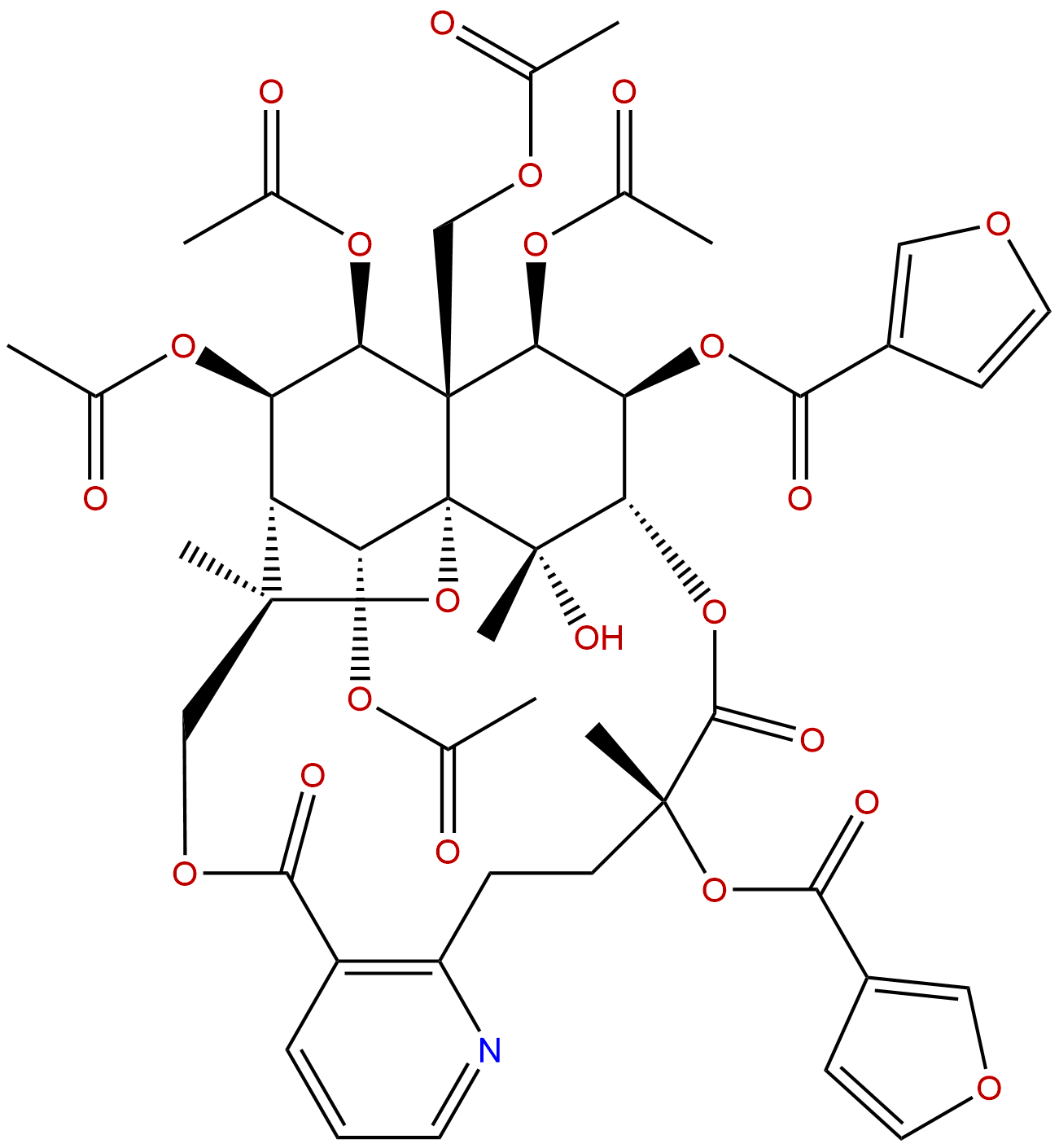
Introduction/Overview
Natural products have always been an important source of innovative drug discovery, and their structural diversity and wide range of biological activities provide unique molecular frameworks and lead compounds for the treatment of various diseases. As a class of structurally complex and biologically active natural products, sesquiterpene pyridine alkaloids have attracted particular attention from researchers in medicinal chemistry and pharmacology. Among them, Triptonine B (CAS number: 168009-85-6) has attracted much attention since its discovery due to its potent anti human immunodeficiency virus activity exhibited at extremely low concentrations. Early studies reported that its half effective concentration (EC50) of inhibiting HIV replication in H9 lymphocytes was less than 0.10 μ g/mL, suggesting its great value as a potential anti AIDS drug.
In recent years, with the deepening of research, the pharmacological activity spectrum of Triptonine B has been continuously expanded. In addition to its antiviral effect, it exhibits multi-target and multi pathway regulatory potential in the anti-inflammatory field, involving multiple key inflammatory mediators and signaling molecules such as interleukin-6 (IL-6), signal transduction and transcription activator 3 (STAT3), tumor necrosis factor (TNF), etc. This multi-target characteristic makes it have broad research prospects in the treatment of chronic inflammatory diseases, autoimmune diseases, and cancers closely related to inflammation. However, as a complex alkaloid with a molecular weight close to 1000, its pharmacological properties face many challenges, including solubility, membrane permeability, and pharmacokinetic properties.
This article aims to provide a systematic review of the existing research on Triptonine B, delving into its chemical nature, plant origin, pharmacological activity, molecular mechanism of action, pharmacological evaluation, and future application prospects from multiple dimensions, in order to provide comprehensive scientific references for the subsequent research and development of this compound.
Chemical structure and physicochemical properties
Triptonine B is a structurally complex sesquiterpene pyridine alkaloid. Its molecular formula is C54H58N2O14, with a molecular weight of 967.8830 Da, belonging to high molecular weight natural products. Its core structural feature is composed of a sesquiterpene unit connected to one or more pyridine alkaloid units through ester bonds, forming a highly oxidized rigid skeleton and containing multiple chiral centers. This complex hybrid structure is the material basis for its unique biological activity.
From the analysis of physicochemical parameters related to drug properties, Triptonine B exhibits typical natural macromolecular alkaloid characteristics. The calculated value of its lipid water partition coefficient (LogP) is 2.2125, indicating that the molecule has a certain degree of lipophilicity, but not extreme hydrophobicity. However, its topological polar surface area (TPSA) is as high as 305.33 Å ², mainly attributed to the abundant oxygen atoms (such as carbonyl and hydroxyl groups) and nitrogen atoms in the molecule. High TPSA is usually associated with poor cell membrane permeability. This characteristic is consistent with its extremely low water solubility (0.0049 mg/mL) data, indicating that it may have problems with poor oral absorption and low bioavailability. In addition, the predictive model shows that its ability to cross the blood-brain barrier is low, which limits its direct application in central nervous system related diseases, but may also reduce the potential risk of neurotoxicity.
Triptonine B showed certain advantages in early safety screening. The Ames test result was 0.0, indicating that no mutagenicity was observed under the experimental conditions, providing preliminary safety support for its further development. At the same time, it is predicted that it has no significant inhibitory effect on hERG potassium channels, reducing the potential risk of inducing QT interval prolongation and apical torsion type ventricular tachycardia, which is one of the important reasons for the failure of many drug development. However, these computer-based predictions still need to be confirmed through experiments.
Plant sources and extraction methods
Triptonine B is mainly isolated from plants of the genus Tripterygium. Tripterygium wilfordii Hook. f., as a traditional Chinese medicinal plant, has a long history in treating inflammatory diseases such as rheumatoid arthritis and nephritis. Its chemical composition is complex, including various types such as diterpenes, triterpenes, alkaloids, etc. Triptonine B is one of the many active alkaloids found in its root bark or stem leaves.
The extraction and separation process follows the conventional process of natural product chemistry, but it is quite challenging due to its low content and numerous structurally similar substances. The typical extraction process begins with the crushing of dried plant materials, followed by cold soaking or heating reflux extraction using polar solvents such as methanol, ethanol, or aqueous alcohols to maximize the extraction of various components, including alkaloids. After the crude extract is concentrated under reduced pressure, it is usually dissolved in acidic water (such as dilute hydrochloric acid) to convert alkaloids into salts and dissolve them in the aqueous phase, and preliminarily separated from non alkaloid components. After alkalization, the total alkaloid fraction is obtained by back extraction with organic solvents such as chloroform and ethyl acetate.
Further isolation and purification of total alkaloids are key to obtaining high-purity Triptonine B. The strategy of using multiple chromatographic techniques in combination is often employed. Firstly, silica gel column chromatography may be used to perform preliminary partitioning with different ratios of petroleum ether ethyl acetate or chloroform methanol gradient elution. The stream rich in the target compound was then refined by reversed phase silica gel (such as C18) column chromatography and Sephadex gel (LH-20) column chromatography. The final high-purity sample acquisition often relies on high-performance liquid chromatography, especially preparative reverse phase HPLC, to achieve baseline separation of Triptonine B and its structural analogues by optimizing the mobile phase (often methanol water or acetonitrile water systems, sometimes with the addition of small amounts of buffer salts or modifiers). The entire separation process requires real-time monitoring and identification using thin-layer chromatography (TLC) or liquid chromatography-mass spectrometry (LC-MS).
Pharmacological activity research
The pharmacological activity research of Triptonine B began with its excellent antiviral effect. In the field of AIDS research, it shows a strong inhibition of HIV-1 replication in H9 cell lines, with an EC50 value below 0.10 μ g/mL. This activity intensity ranks among the top natural products discovered at that time, arousing widespread interest in the research and development of anti HIV drugs. Its function is different from classical reverse transcriptase inhibitors or protease inhibitors. Preliminary studies suggest that it may interfere with early interactions between viruses and cells or post transcriptional events of viral genes, but the specific mechanism has been unclear for a long time.
In recent years, the focus of research has significantly expanded to its anti-inflammatory activity. Numerous in vitro and in vivo experiments have confirmed that Triptonine B exhibits good inhibitory effects on various acute and chronic inflammation models. In the lipopolysaccharide (LPS) - induced macrophage (such as RAW264.7 cells) inflammation model, Triptonine B can dose dependently inhibit the excessive production of nitric oxide (NO) and prostaglandin E2 (PGE2), which are key effector molecules in the inflammatory response. At the same time, it can significantly downregulate the mRNA expression and protein secretion of various pro-inflammatory cytokines (such as TNF - α, IL-6, IL-1 β).
In animal models, Triptonine B has shown clear anti-inflammatory effects in classic acute and chronic inflammation models such as carrageenan induced rat paw edema, acetic acid induced increased peritoneal capillary permeability in mice, and cotton ball induced rat granuloma. Especially in autoimmune disease models such as collagen induced arthritis (CIA) mouse models, Triptonine B administration can effectively reduce joint swelling, lower clinical scores of arthritis, and improve pathological damage to joint tissue, with effects comparable to certain clinical anti rheumatic drugs. These studies collectively establish Triptonine B's position as a potent, multi effect anti-inflammatory natural product.
Mechanism of action and molecular targets
The anti-inflammatory effect of Triptonine B is not achieved through a single pathway, but through multi node regulation of the inflammatory signaling network, which is consistent with its complex chemical structure and potential multi-target binding properties. Existing research has preliminarily revealed that its effects involve the following key targets and pathways:
-
Nuclear factor kappa B (NF - κ B) signaling pathway This pathway is the core regulator of inflammatory response. Triptonine B has been shown to inhibit LPS induced nuclear translocation of NF - κ B p65 subunit (RELA) and its binding activity to DNA. Its upstream action point may include inhibiting the activity of I κ B kinase (IKBKB), thereby preventing the phosphorylation and degradation of I κ B α, causing NF - κ B complexes to remain in the cytoplasm and unable to initiate transcription of downstream genes such as TNF - α, IL-6, IL-1 β, etc.
-
JAK/STAT signaling pathway The activation of STAT3, in particular, is crucial in chronic inflammation and cancer. Research has found that Triptonine B can inhibit the tyrosine phosphorylation of STAT3 induced by cytokines such as IL-6, block its dimerization and nuclear translocation, and thereby inhibit the expression of target genes regulated by STAT3 (such as Bcl-2, Cyclin D1). This may be one of the mechanisms underlying its anti-inflammatory and potential anti-tumor activity.
-
Inflammatory bodies and Caspase-1 The activation of inflammasomes (such as NLRP3) leads to the cleavage and activation of Caspase-1 (CASP1), which in turn promotes the maturation and secretion of IL-1 β and IL-18 precursors. Studies have shown that Triptonine B can inhibit the assembly or activity of NLRP3 inflammasome, reduce the activation level of Caspase-1, and thus reduce the release of mature IL-1 β, which is of great significance in the treatment of gout, type 2 diabetes and other diseases related to the over activation of inflammasome.
-
Inducible nitric oxide synthase (iNOS/NOS2) and cyclooxygenase-1 (COX-1/PTGS1)Triptonine B can downregulate the expression of iNOS and COX-2 induced by LPS, but there are also studies suggesting that it has a certain regulatory effect on constitutive expression of COX-1 (PTGS1), which is related to its anti-inflammatory activity and potential gastrointestinal side effect profile.
-
Ion channels (TRPV1, TRPA1)Transient receptor potential vanillic acid subtype 1 (TRPV1) and anchored protein subtype 1 (TRPA1) are key receptors that sense nociceptive stimuli (such as heat and chemicals) and mediate neurogenic inflammation. Preliminary pharmacological experiments suggest that Triptonine B may act as a regulator of these channels, inhibiting their excessive activation and thereby alleviating pain and neurogenic inflammatory responses.
In summary, Triptonine B exerts its powerful anti-inflammatory effect by synergistically acting on multiple key inflammatory signaling nodes such as NF - κ B, STAT3, and inflammasomes, and may affect pain perception channels. This multi-target mode of action may give it an advantage in dealing with complex inflammatory disease networks, but it also poses challenges for the confirmation and selective optimization of its mechanisms.
Evaluation of drug properties and pharmacokinetics
Although Triptonine B has excellent in vitro biological activity, its development as a drug candidate molecule faces significant bottlenecks in terms of drug potential, mainly due to its unfavorable physicochemical properties.
First,Solubility and permeability It is its primary obstacle. The extremely low water solubility (0.0049 mg/mL) and high TPSA severely limit its dissolution and transmembrane absorption in the gastrointestinal tract, indicating that oral bioavailability is likely to be extremely low. Although its LogP value shows a certain degree of lipophilicity, its high molecular weight (close to 1000 Da) violates multiple principles of the five rules of drug class, seriously affecting its cell membrane permeability. This explains why its blood-brain barrier permeability is predicted to be "low".
Secondly, regarding its pharmacokinetics The experimental data on the characteristics is currently very limited. Based on its structural characteristics, it can be inferred that if administered orally, absorption may be slow and incomplete; After entering the systemic circulation, due to its large molecular weight and certain lipophilicity, its distribution volume may be limited, mainly distributed in the blood and extracellular fluid, making it difficult to enter deep tissue layers; In terms of metabolism, as a complex alkaloid rich in ester bonds and hydroxyl groups, it is likely to be an important substrate for liver cytochrome P450 enzyme system and esterase, and may be widely metabolized to generate various metabolites. Its activity and toxicity need to be evaluated; Its excretion pathway may involve bile and kidneys.
In order to enhance its medicinal properties, a systematic approach must be taken Formulation and structural optimization Research. In terms of dosage forms, developing new drug delivery systems such as nanocrystals, liposomes, micelles, or solid dispersions is a feasible strategy to improve their solubility and oral bioavailability. In terms of structural optimization, it is crucial to simplify or modify the structure reasonably based on its pharmacophore analysis. The objectives include: reducing molecular weight while preserving the core active structure; By introducing or modifying certain functional groups, a better balance can be achieved between LogP and TPSA, improving solubility and permeability; Seal or modify easily metabolized sites (such as specific ester bonds) to improve metabolic stability. These tasks require close collaboration among multiple disciplines such as medicinal chemistry, pharmacy, and pharmacokinetics.
Clinical application prospects and prospects
The clinical application prospects of Triptonine B mainly revolve around its two core activities: anti HIV and anti-inflammatory/immunomodulatory.
In Anti HIV therapy In the field, although efficient antiretroviral therapy has greatly improved patient prognosis, problems such as drug resistance, long-term toxicity, and inability to eradicate the virus reservoir still exist. The unique mechanism of action (non classical target) of Triptonine B provides the possibility for it to be used as a novel anti HIV drug, especially for combination therapy or treatment of drug-resistant infections. However, the challenge of drug formulation is the primary obstacle, and it is necessary to clarify its specific antiviral targets to avoid potential toxicity.
The direction that is currently receiving more attention and has more practical significance is its Anti inflammatory and immune regulatory effects The multi-target intervention of Triptonine B in the inflammatory network has great potential in the treatment of autoimmune diseases such as rheumatoid arthritis, ankylosing spondylitis, and systemic lupus erythematosus. Its inhibition of inflammatory bodies and IL-1 β also points to new treatment strategies for inflammatory related diseases such as gout, atherosclerosis, Alzheimer's disease, etc. In addition, given the crucial role of targets such as STAT3 in the tumor microenvironment, Triptonine B is also worth exploring for its adjuvant application in cancer immunotherapy or as a chemotherapy sensitizer.
Future research should focus on the following key directions:
1. Mechanism deepening and target validation Using chemical biology methods such as affinity fishing and molecular probes to identify their direct target proteins and draw accurate molecular action maps.
2. Optimization of drug properties Conduct research on the structure activity property relationship of the system, and obtain optimized derivatives that retain activity and improve pharmacokinetic properties through rational design.
3. Preclinical development Conduct comprehensive pharmacological, pharmacokinetic, and toxicological evaluations of lead compounds, and establish appropriate clinical dosing regimens (such as local intra-articular injection formulations for arthritis that may avoid systemic exposure issues).
4. Combination therapy research Explore its synergistic effect with existing standard therapeutic drugs such as methotrexate and TNF inhibitors to reduce their respective doses, minimize side effects, and improve efficacy.
Conclusion
Triptonine B is a sesquiterpene pyridine alkaloid derived from traditional medicinal plants, and its research process reflects the classic path from traditional wisdom to modern scientific discovery. It was initially discovered as a potent natural product against HIV and gradually expanded into an important lead compound with multi-target anti-inflammatory activity. It demonstrates unique potential in addressing complex inflammatory diseases by regulating multiple key signaling pathways such as NF - κ B, STAT3, and inflammasomes.
However, its enormous molecular weight and unfavorable physicochemical properties constitute the main barriers to its conversion into drugs. This is both a challenge and provides innovative space for pharmaceutical chemistry and pharmacy. Future research needs to focus on solving the problem of drug formation based on a deep understanding of its precise molecular mechanism. Whether it is through advanced dosage form technology to "modify" its delivery method, or through rational structural modification to "reshape" its molecule itself, the ultimate goal is to transform its excellent in vitro biological activity into safe and effective in vivo therapeutic benefits.
The research of Triptonine B may not only lead to the birth of new drugs for major diseases such as AIDS and autoimmune diseases, but also provide a new chemical tool for understanding the regulation of inflammatory network through its multi target action mode. With the continuous deepening of interdisciplinary research, this unique natural molecule is expected to write a new chapter in the history of drug discovery.