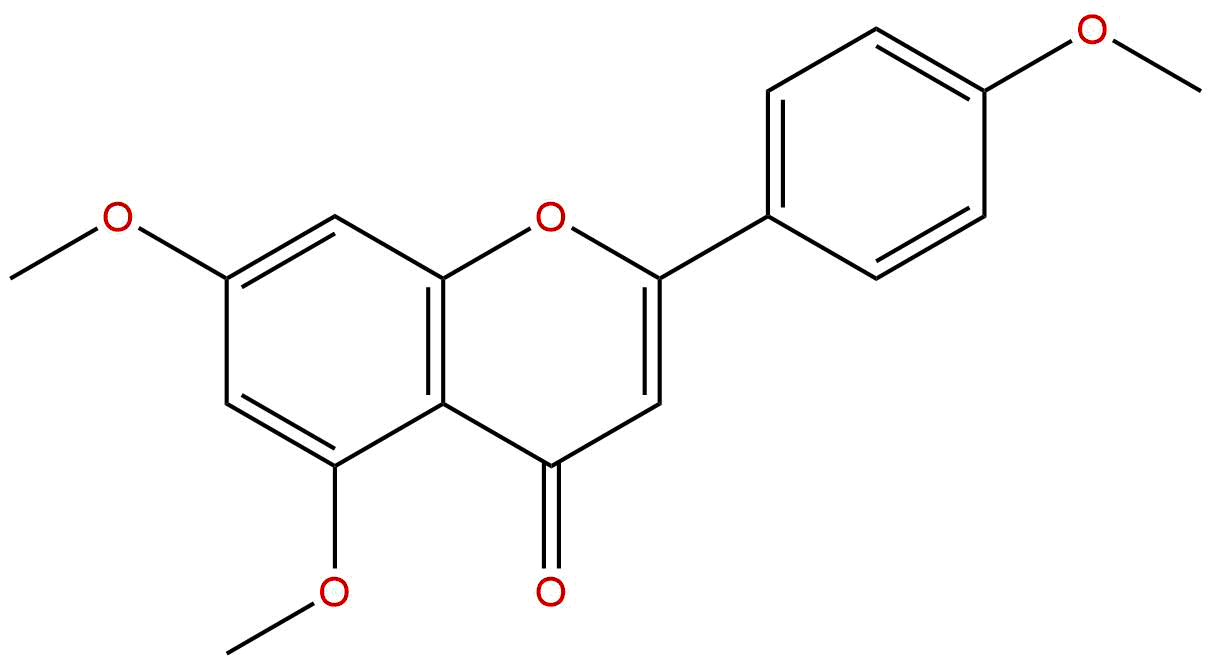


Product name: 4',5,7-Trimethoxyflavone
Synonym name: Apigenin-4',5,7-trimethyl ether
Catalogue No.: BP4183
Cas No.: 5631-70-9
Formula: C18H16O5
Mol Weight: 312.321
Botanical Source:
Physical Description:
Type of Compound: Flavonoids
Purity: 95%~99%
Analysis Method: HPLC-DAD or/and HPLC-ELSD
Identification Method: Mass, NMR
Packing: Brown vial or HDPE plastic bottle
Storage: Store in a well closed container, protected from air and light. Put into refrigerate or freeze for long term storage.
Whenever possible, you should prepare and use solutions on the same day. However, if you need to make up stock solutions in advance, we recommend that you store the solution as aliquots in tightly sealed vials at -20℃. Generally, these will be useable for up to two weeks.
The product could be supplied from milligrams to grams
Inquire for bulk scale.
For Reference Standard and R&D, Not for Human Use Directly.
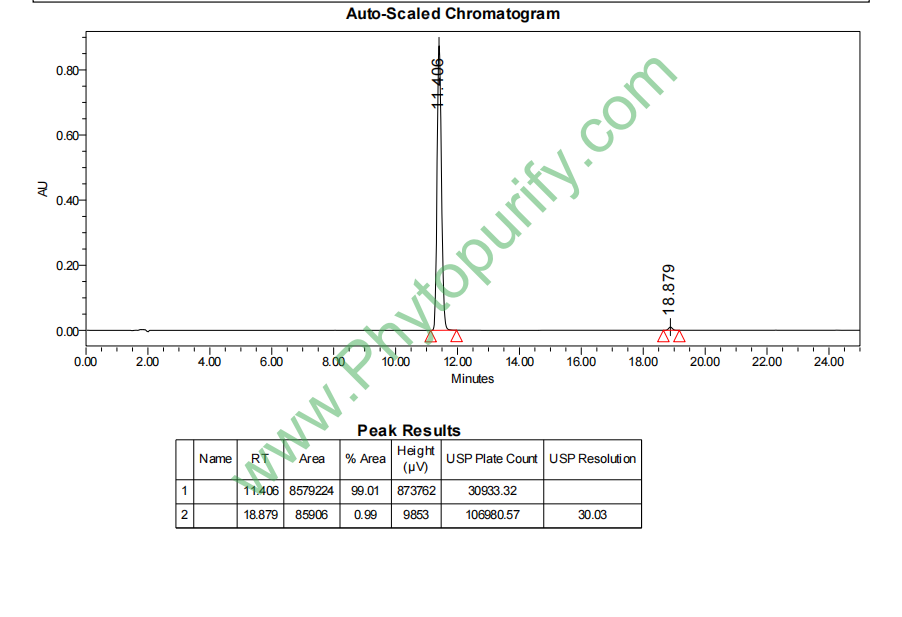
HPLC of 4',5,7-Trimethoxyflavone
Storage conditions:Short-term storage at 2~8℃, long-term storage at -20 ~ -80℃
57.9000
3.0945
3.0945
.0024
3.4833
30.8369
High
89.3450
2.0162
Yes
No
Yes
No
Yes
No
0.6
No
Yes
No
Yes
Celery extract trimethyl ether (4 ', 5,7-trimethoxyflavone, 4', 5,7-trimethoxyflavone, CAS number: 5631-70-9) is a typical methoxylated flavonoid compound that has received widespread attention in the field of natural product pharmacology in recent years due to its unique chemical structure and diverse biological activities. As a flavonoid ether naturally present in various plants, apigenin trimethyl ether not only exhibits good pharmacological activity, but also has ideal pharmacological parameters, making it a potential candidate molecule for drug development.
Flavonoids are an important component of plant secondary metabolites, widely distributed in vegetables, fruits, tea, and traditional Chinese medicine. They have various biological activities such as antioxidant, anti-inflammatory, anti-tumor, neuroprotective, etc. Celery extract trimethyl ether, as a derivative of flavonoids, significantly affects its physicochemical properties and biological activity through modification with methoxy groups, especially exhibiting advantages in lipid solubility and cell membrane permeability. This article aims to systematically review the chemical structure and physicochemical properties, plant sources and extraction methods, pharmacological activity and mechanism of action, pharmacological evaluation and pharmacokinetic characteristics of apigenin trimethyl ether, and explore its clinical application prospects, in order to provide theoretical basis and research direction for its subsequent development.
The chemical structure of apigenin trimethyl ether is based on the flavonoid skeleton, specifically a flavonoid substituted with 4 ', 5,7-trimethoxy. Its molecular formula is C18H16O5 and its molecular weight is 312.3210. The three methoxy groups (- OCH3) in the structure are located at positions 5 and 7 of the flavonoid A ring, as well as at position 4 'of the B ring. This substitution pattern endows it with unique physicochemical properties.
In terms of physical and chemical properties, apigenin trimethyl ether exhibits high lipid solubility with a LogP value of 3.0945, indicating its good lipid solubility and cell membrane penetration ability. The polar surface area (TPSA) is 57.9 Å ², and moderate polarity facilitates its absorption and distribution in living organisms. The water solubility is low, only 0.0024 mg/mL, indicating limited solubility in the aqueous phase, which may affect its oral bioavailability. It is worth noting that the compound has a high blood-brain barrier penetration ability, indicating its potential advantages in the treatment of central nervous system diseases.
In terms of safety, the hERG channel inhibition test result was negative, indicating a low risk of cardiac toxicity; The Ames mutagenicity test value is 0.6, indicating a low risk of genetic toxicity and meeting the safety requirements of the drug.
Celery extract trimethyl ether is mainly found in various medicinal and edible plants, especially in plants of the Apiaceae family such as celery (Apium graveolens), parsley (Petroselinum crispum), and some flavonoids rich traditional Chinese medicinal materials. Although its content is not as high as the main active ingredient, as a secondary metabolite, it has important biological functions.
The extraction method usually uses organic solvent extraction combined with chromatographic separation technology. Traditional extraction often uses methanol, ethanol, or ethyl acetate as solvents, and ultrasound assisted extraction or reflux extraction is used to improve extraction efficiency. Subsequently, purification and separation were carried out using methods such as silica gel column chromatography and high-performance liquid chromatography (HPLC). In recent years, supercritical CO2 extraction and microwave-assisted extraction techniques have also been applied to the extraction of flavonoids, significantly improving extraction efficiency and purity, and more in line with green chemistry principles.
During the extraction process, temperature, solvent polarity, and pH value have a significant impact on the stability and yield of apigenin trimethyl ether. To avoid demethylation of methoxy groups and degradation of flavonoid skeletons, the extraction conditions need to be strictly controlled. It is usually recommended to operate at low temperatures, avoid light, and in neutral to slightly acidic environments.
Celery extract trimethyl ether, as a multifunctional flavonoid compound, has shown rich pharmacological activities in various in vitro and in vivo models, covering anti-inflammatory, anti-tumor, neuroprotective, antioxidant, and antimicrobial aspects.
Many studies have shown that apigenin trimethyl ether has inhibitory effects on a variety of tumor cell lines, including breast cancer, lung cancer, colorectal cancer and prostate cancer. The mechanism mainly involves inducing tumor cell apoptosis, inhibiting cell proliferation, and blocking the tumor cell cycle. In vitro experiments showed that the compound significantly reduced the survival rate of tumor cells and had low toxicity to normal cells, demonstrating good selectivity.
Celery extract trimethyl ether can inhibit the release of inflammatory mediators such as tumor necrosis factor - α (TNF - α), interleukin-6 (IL-6), and nitric oxide (NO), reducing inflammatory response. Its anti-inflammatory effect is demonstrated in both acute and chronic inflammation models, indicating its potential application value in inflammatory diseases such as arthritis and inflammatory bowel disease.
Due to its excellent blood-brain barrier penetration, apigenin trimethyl ether has attracted much attention in the research of neurological diseases. Research has shown that this compound can alleviate oxidative stress, inhibit neuroinflammation, and promote the survival of nerve cells, and has a protective effect on neurodegenerative diseases such as Parkinson's disease and Alzheimer's disease.
As a flavonoid compound, apigenin trimethyl ether has significant free radical scavenging ability, which can reduce oxidative damage and maintain intracellular redox balance. Its antioxidant effect not only helps prevent and treat chronic diseases, but also provides a molecular basis for its anti-inflammatory and neuroprotective effects.
Preliminary studies have shown that apigenin trimethyl ether exhibits certain inhibitory effects on various bacteria and fungi, especially strong antibacterial activity against Gram positive bacteria, indicating its potential application in the field of anti infection.
The multi-target mechanism of action of apigenin trimethyl ether is the basis for its various pharmacological effects. By regulating multiple signaling pathways, this compound achieves comprehensive regulation of cellular function.
Inhibition of NF - κ B pathway Celery extract trimethyl ether can inhibit the activation of the nuclear factor kappa B (NF - κ B) signaling pathway, reduce the expression of inflammatory factors, and exert anti-inflammatory effects.
PI3K/Akt pathway regulation This compound promotes cell apoptosis and inhibits tumor cell proliferation by regulating the PI3K/Akt signaling pathway.
The impact of MAPK pathway Celery extract trimethyl ether regulates the activity of members of the mitogen activated protein kinase (MAPK) family, participating in cellular stress response and apoptosis process.
Antioxidant related pathways By activating the Nrf2/ARE signaling pathway, enhancing cellular antioxidant defense capabilities and reducing oxidative damage.
Cell cycle regulatory proteins Like Cyclin D1, CDK4/6, apigenin trimethyl ether blocks cell cycle progression by downregulating the expression of these proteins.
Apoptosis related proteins Regulating the expression of Bcl-2 family proteins and promoting cell apoptosis.
inflammatory mediators Inhibit the activity of enzymes such as iNOS and COX-2, and reduce the production of inflammatory mediators.
Neuroprotective targets Regulating the expression of nerve growth factor (NGF) and brain-derived neurotrophic factor (BDNF) to promote nerve repair.
Celery extract trimethyl ether exhibits ideal characteristics in the evaluation of medicinal properties. Its molecular weight is 312.3210, which conforms to Lipinski's rule, with a LogP of 3.0945, indicating moderate lipid solubility and facilitating cell membrane penetration. The TPSA is 57.9 Å ², indicating that its polarity is moderate and conducive to oral absorption. Low water solubility (0.0024 mg/mL) may limit its oral bioavailability, but it can be improved through formulation optimization.
The high permeability of the blood-brain barrier is its advantage in the treatment of central nervous system diseases. The hERG channel has no inhibitory effect and reduces the risk of cardiac toxicity. The Ames test results indicate that its genetic toxicity risk is low and its safety is good.
In terms of pharmacokinetics, although there is currently limited research on the in vivo metabolism and kinetics of apigenin trimethyl ether, existing data suggest that it is well absorbed orally and widely distributed in the body, especially at high concentrations in brain tissue. The metabolic pathways mainly involve liver oxidation and methyl transfer reactions, while excretion is mainly through bile and urine. In the future, further systematic research is needed on its pharmacokinetic parameters, including half-life, bioavailability, and the activity and toxicity of metabolites.
Celery extract trimethyl ether has shown broad clinical application potential due to its multi-target and multi mechanism pharmacological activities. Especially in the fields of anti-tumor, anti-inflammatory, and neuroprotection, it has significant development value.
In the field of anti-tumor treatment, apigenin trimethyl ether can be used as an adjuvant chemotherapy drug to enhance the efficacy of traditional drugs and reduce side effects. Its anti-inflammatory properties make it potential for the treatment of chronic inflammatory diseases, especially autoimmune diseases and inflammation related metabolic diseases.
Due to its excellent blood-brain barrier penetration, apigenin trimethyl ether has unique advantages in the treatment of neurodegenerative diseases such as Alzheimer's disease and Parkinson's disease. In the future, combining nanocarrier technology with targeted drug delivery strategies is expected to enhance its therapeutic efficacy and safety.
In addition, the antioxidant and antimicrobial activities of apigenin trimethyl ether provide a possibility for its application in the prevention of chronic and infectious diseases. With the continuous advancement of natural product drug research and development, the structural optimization, formulation development, and preclinical evaluation of apigenin trimethyl ether will become a research focus.
Future research should focus on:
Celery extract trimethyl ether, as a typical natural product of methoxyflavonoids, has shown broad research and application prospects in the field of natural product pharmacology due to its unique chemical structure and diverse biological activities. Its good pharmacological parameters and safety have laid a solid foundation for its drug development. In the future, through interdisciplinary cooperation and in-depth exploration of its mechanism of action and clinical application potential, it is expected to promote the transformation of apigenin trimethyl ether into a new type of drug, benefiting human health.
