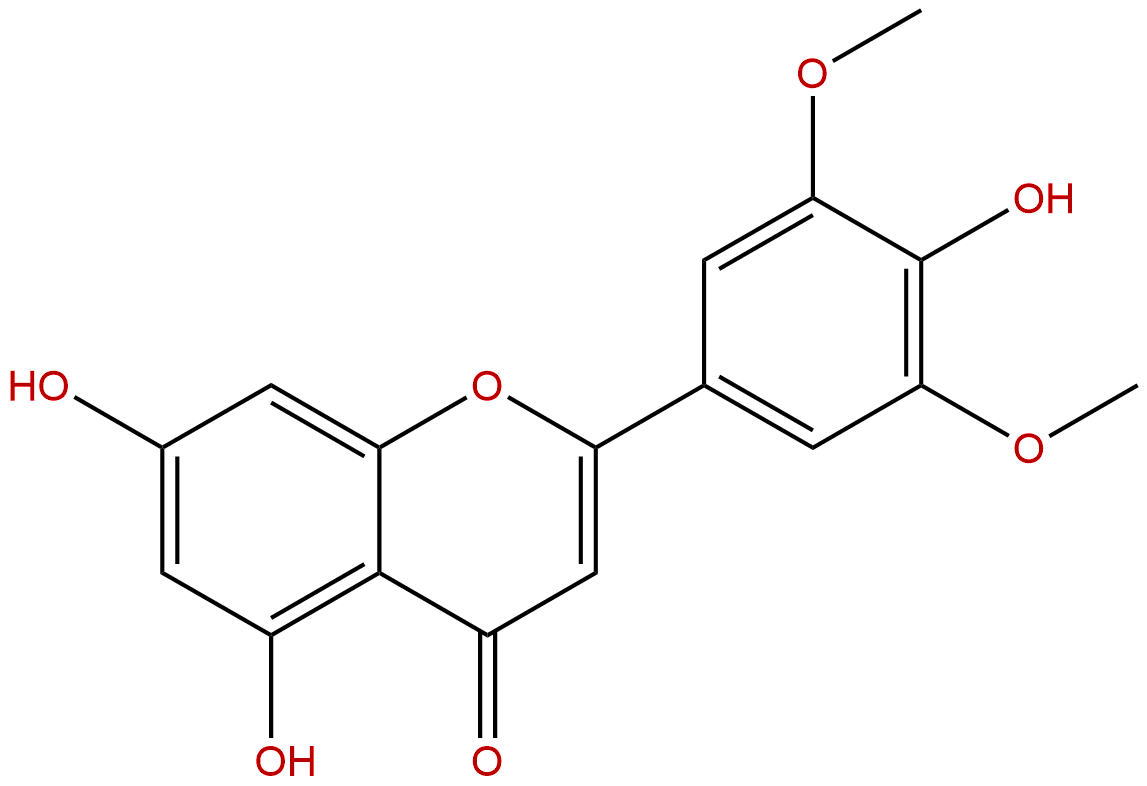


Product name: Tricin
Synonym name:
Catalogue No.: SBP01030
Cas No.: 520-32-1
Formula: C17H14O7
Mol Weight: 330.292
Botanical Source:
Physical Description: Yellow powder
Type of Compound: Flavonoids
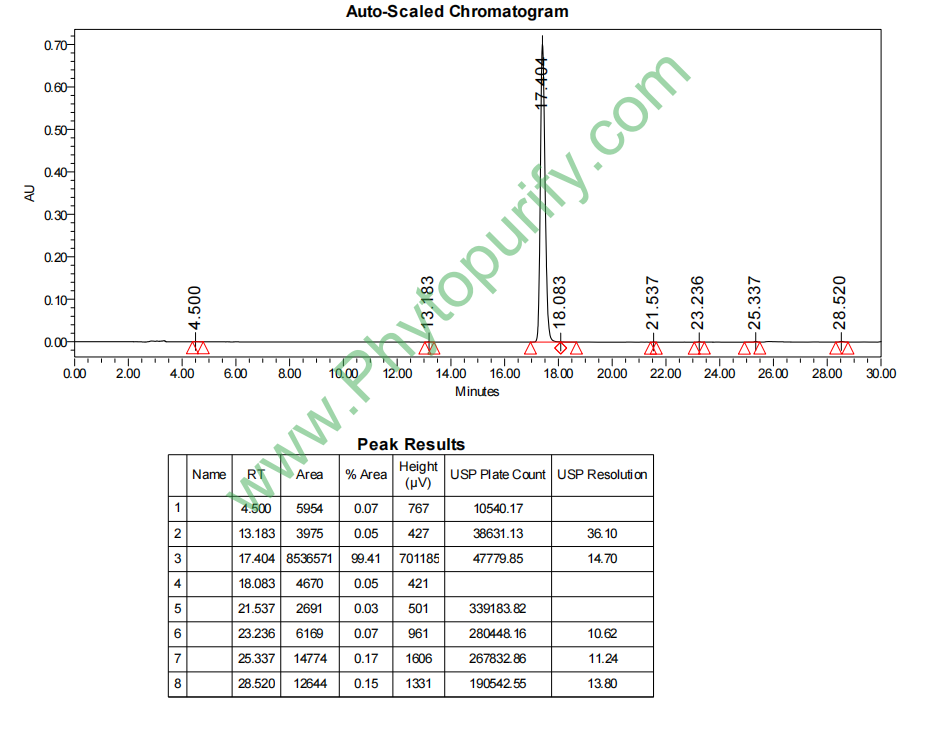
Purity: 95%~99%
Analysis Method: HPLC-DAD or/and HPLC-ELSD
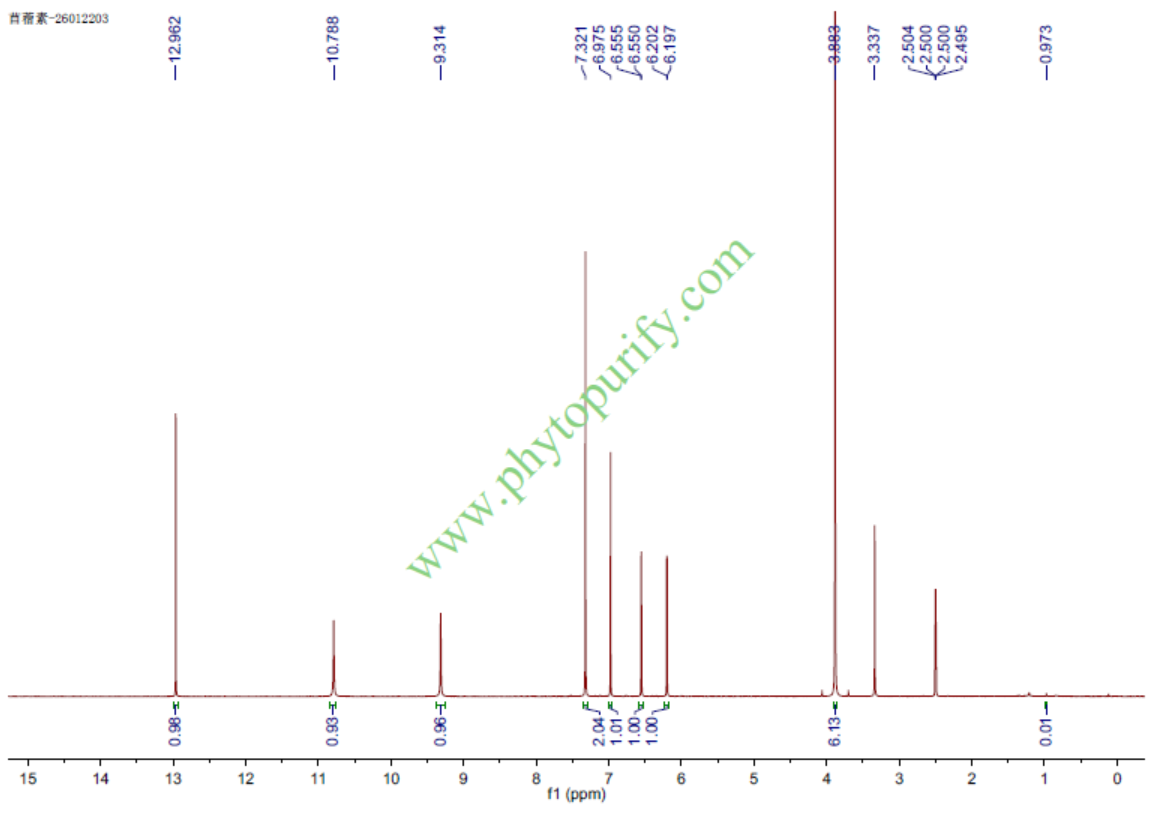
Identification Method: Mass, NMR
Packing: Brown vial or HDPE plastic bottle
The product could be supplied from milligrams to grams. Inquire for bulk scale.
We provide solution to improve the water-solubility of compounds, thereby facilitating the variety of activity tests and clinic uses.
For Reference Standard and R&D, Not for Human Use Directly.
HPLC of Tricin
HNMR of Tricin
Storage conditions:Short-term storage at 2~8℃, long-term storage at -20 ~ -80℃
109.3600
2.2259
1.8715
.0749
3.2877
25.6134
Low
89.3317
2.4305
Yes
No
Yes
No
Yes
No
0.6
Yes
No
Yes
No
Tricin, also known as 3 ', 5' - dimethoxy-4 ', 5,7-trihydroxyflavone, is a natural flavonoid compound widely found in grasses. Its CAS number is 520-32-1, molecular formula is C17H14O7, and molecular weight is 330.29 g/mol. Although its Chinese name is "alfalfa extract", its source is far beyond alfalfa, and it has been found in large quantities in wheat, rice (especially rice bran), barley, oats, and various medicinal plants. In recent years, with the rise of research on natural products, alfalfa extract has attracted much attention due to its diverse and significant biological activities. It has gradually evolved from an ordinary secondary metabolite of plants to a lead compound with important research value.
Initially, alfalfa extract was considered a dietary component due to its widespread presence in grains. Subsequent research gradually revealed its profound biomedical value. Existing research indicates that alfalfa extract can inhibit the replication of human cytomegalovirus (HCMV) by suppressing cyclin dependent kinase 9 (CDK9), demonstrating antiviral potential. Meanwhile, it can also inhibit the proliferation and invasion of C6 glioma cells by upregulating the expression of microRNA-7 targeted by focal adhesion kinase (FAK), indicating its potential for anti-tumor applications. In addition, alfalfa extract has been evaluated as a tyrosinase inhibitor and exerts anti-inflammatory effects by acting on the TLR4/NF - κ B/STAT signaling pathway. These findings collectively outline the basic profile of alfalfa extract as a multi-target, multifunctional natural active molecule, laying a solid scientific foundation for its application in drug development, functional foods, and health products.
Alfalfa extract belongs to the methoxy flavonoid subclass of flavonoids. The SMILES structural formula (COc1cc (- c2cc (=O) c3c (O) cc (O) cc3o2) cc (OC) c1O) clearly demonstrates its core structure: a classic flavonoid core (2-phenylchromenone), connected to a methoxy group (- OCH3) at the 3 'and 5' positions of the B ring, and a hydroxyl group (- OH) at the 5 'and 7' positions of the A ring and the 4 'position of the B ring. This specific substitution pattern of hydroxyl and methoxy groups is the decisive factor in their biological activity and physicochemical properties.
From the analysis of the provided pharmacological parameters, the molecular weight (MW) of alfalfa extract is 330.29, which meets the requirement that drug molecules are usually less than 500 Da. The logarithm of its lipid water partition coefficient (LogP) is 2.23, and the LogD is 1.87, indicating that the compound has moderate lipophilicity, neither too hydrophilic (difficult to penetrate cell membranes) nor too lipophilic (difficult to dissolve in aqueous body fluids), which is beneficial for its absorption and distribution in organisms. The topological polar surface area (TPSA) is 109.36 Å ², which is relatively high and mainly attributed to multiple hydroxyl and methoxy oxygen atoms in the molecule. This suggests that it has strong hydrogen bond donor and acceptor abilities, but may have some impact on passive transmembrane permeation.
The water solubility data shows 0.0749 (usually measured in mg/mL or mol/L, not specified here, but the value is relatively small), indicating that alfalfa extract has a low solubility in water, which is consistent with its LogP value. This is a common feature of many flavonoids and one of the challenges that need to be overcome in their formulation development. The permeability of Caco-2 cells is 25.6134 (unit not specified, usually on the order of 10 ⁻⁶ cm/s), combined with its Peff value (predicted effective permeability) of 3.2877, indicating moderate intestinal absorption potential.
According to database information, a clear plant source of alfalfa extract is mugwort leaf The Asteraceae plant Ai(Artemisia argyi)Dry leaves. Ai Ye has a long history of application in traditional Chinese medicine, first recorded in the "Record of Famous Physicians". Its nature is warm, with a bitter and pungent taste, and it belongs to the liver, spleen, and kidney meridians. It has the effects of warming meridians, stopping bleeding, dispelling cold and pain, and relieving dampness and itching. It is commonly used in clinical practice to treat symptoms such as cold deficiency bleeding, abdominal pain, menstrual disorders, and skin eczema and itching. The medicinal forms of Artemisia argyi are diverse, including moxibustion, decoction for oral use, external fumigation and washing, etc. Modern research has shown that the volatile oil, flavonoids, and polysaccharides of Artemisia argyi are its main active ingredient groups.
Alfalfa extract, as a member of the flavonoids in Artemisia argyi leaves, is likely to contribute some biological basis to its traditional efficacy. For example, the "warming meridians and stopping bleeding" and "dispelling cold and relieving pain" effects of Artemisia argyi are often related to improving local blood circulation, anti-inflammatory and analgesic effects, while alfalfa extract has been proven to have anti-inflammatory and antioxidant activities, which have potential associations with traditional applications. In addition to artemisia leaves, alfalfa extract is abundant in cereal crops such as rice and wheat, which means that humans consume this compound in long-term, low-dose through daily diet. This dietary exposure background provides certain historical evidence for its safety as a preventive health ingredient, and also inspires researchers to explore its "medicinal food homology" value in depth.
Alfalfa extract has a wide range of pharmacological activities, covering antioxidant, anti-inflammatory, antiviral, anti-tumor and other aspects. The target information provided by the database focuses on its core antioxidant The mechanism of action is likely to be the common starting point and key hub for its various downstream biological activities.
Core mechanism: Activate endogenous antioxidant defense system
The five targets listed in the database - NFE2L2, SOD1, CAT, GPX1, HMOX1- together form the core defense network of cells in response to oxidative stress.
1. NFE2L2 (Nuclear Factor E2 Related Factor 2)This is the main switch of the network. NFE2L2 is a key transcription factor that regulates antioxidant response elements (ARE). Under oxidative stress or certain compounds such as alfalfa extract, NFE2L2 translocates from the cytoplasm to the nucleus, binds to ARE, and initiates gene transcription of downstream antioxidant enzymes and phase II detoxifying enzymes.
2. Downstream effect targets:
* SOD1 (Superoxide Dismutase 1)Catalytic dismutation of superoxide anion radicals (O ₂•⁻) into hydrogen peroxide (H ₂ O ₂) and oxygen is the first line of defense against reactive oxygen species (ROS).
* CAT (catalase)Located in the peroxisome, it directly decomposes H ₂ O ₂ into water and oxygen, preventing the accumulation of H ₂ O ₂ and causing toxicity.
* GPX1 (Glutathione Peroxidase 1)The use of reduced glutathione (GSH) to reduce H ₂ O ₂ or organic peroxides to water or alcohol is an important H ₂ O ₂ scavenger in the cytoplasm and mitochondria.
* HMOX1 (Heme Oxygenase 1)Decompose hemoglobin to produce biliverdin (a strong antioxidant), carbon monoxide, and iron ions. Bilibilin is further reduced to bilirubin, both of which are effective free radical scavengers. The induction of HMOX1 itself is also an important protective mechanism for cells against oxidative and inflammatory damage.
By upregulating or activating NFE2L2 and its downstream SOD1, CAT, GPX1, HMOX1, alfalfa extract can systematically enhance the ability of cells to clear ROS and maintain redox balance. Oxidative stress is a common pathological basis for inflammation, aging, neurodegenerative diseases, fibrosis, and the development of various cancers. Therefore, the potent antioxidant capacity of alfalfa extract can explain its protective effects in various disease models.
Extended pharmacological activity and mechanism correlation:
* anti-inflammatory Oxidative stress is closely coupled with inflammatory signaling pathways such as NF - κ B and STAT. Alfalfa extract may indirectly inhibit the activation of pro-inflammatory transcription factors such as NF - κ B through its antioxidant properties. Meanwhile, existing descriptions also indicate that it exerts anti-inflammatory effects directly through the TLR4/NF - κ B/STAT signaling cascade, which is related to inhibiting the production of inflammatory factors and alleviating inflammatory responses.
* Antiviral (anti HCMV)Inhibition of CDK9 is one of the mechanisms by which alfalfa extract inhibits HCMV. CDK9 is a key component of the transcription elongation factor b (P-TEFb), which is crucial for the transcriptional extension of viral genes. In addition, regulating the chemokine CXCL11 may also be involved in its antiviral process. Viral infection often accompanies oxidative stress in host cells, and the antioxidant effect of alfalfa extract may help create an unfavorable intracellular environment for virus replication.
* antitumor The mechanism of inhibiting glioma cell proliferation and invasion involves upregulating miR-7 targeting FAK. MiR-7 is an important tumor suppressor microRNA that downregulates multiple oncogenes. In addition, the potent inhibition of alfalfa extract on the growth of colon cancer cells may be related to its induction of cell cycle arrest, promotion of apoptosis, and the aforementioned antioxidant and anti-inflammatory effects. Chronic inflammation and oxidative damage are important driving factors for tumor development.
* Anti liver fibrosis The activation of hepatic stellate cells (HSCs) is the central link in liver fibrosis, which is strongly driven by oxidative stress and inflammation. Alfalfa extract targets HSCs, and its antioxidant and anti-inflammatory properties may inhibit HSC activation, thereby exerting anti fibrotic potential.
In summary, alfalfa extract is like a versatile agent, with its core antioxidant mechanism achieved through the activation of the NFE2L2 pathway. Based on this, it radiates various biological activities such as anti-inflammatory, antiviral, anti-tumor, and anti fibrotic effects, forming an interrelated and synergistic pharmacological network.
Based on the provided pharmacological parameters, we can conduct a preliminary evaluation of the potential of alfalfa extract as an oral drug candidate molecule, combined with the well-known Lipinski's Five Rules(Rule of Five) for analysis:
Therefore, alfalfa extract fully meets all four criteria of Lipinski's five rules, indicating its good oral absorption potential.
Analysis of other key parameters:
* Absorption and distribution Caco-2 permeability (25.6134) and Peff value (3.2877) suggest moderate intestinal absorption. The blood-brain barrier (BBB) penetration is predicted to be "low", which is related to a higher TPSA (109.36 Å ²), meaning it may not easily enter the central nervous system, which may not be a problem for treating peripheral diseases, but formulation improvements need to be considered for central targets.
* Protein binding and metabolism The plasma protein binding rate (PPB) is as high as 89.33%, indicating that most of it binds to proteins in the blood, which can affect its free drug concentration and distribution volume, potentially leading to slow onset and prolonged half-life.
* Toxicity risk:
* Genotoxicity The Ames test result is 0.6 (usually<1.0 is considered negative), indicating no direct mutagenicity. However, the labeling of "chromosomal aberration" as "present" requires high vigilance, indicating that there may be risks in higher-level genetic toxicity testing, which is a key safety issue that must be thoroughly clarified in drug development.
* cardiotoxicity HERG inhibition is' no ', which reduces the risk of causing QT interval prolongation and apical torsion ventricular tachycardia in the heart, which is a favorable signal.
* Organ toxicity The data shows that it may cause an increase in serum aspartate aminotransferase (AST) and alkaline phosphatase (ALK) (Ser_SET: yes, Ser_LK: yes), while alanine aminotransferase (ALT) and gamma glutamyltransferase (GGT) did not indicate an increase. This suggests that there may be a certain risk of liver cell influence or bile stasis, which needs to be closely monitored in preclinical studies.
* Other toxicities Skin sensitization is "no", but respiratory sensitization is "yes", indicating the need to pay attention to dust exposure during production and processing.
comprehensive evaluation Alfalfa extract exhibits excellent drug like properties and has a promising oral absorption prospect. The main challenge lies in Lower solubility and higher plasma protein binding rate This may affect its bioavailability. The most noteworthy aspect is its potential Genetic toxicity (chromosomal aberration) signal And possibly Liver effects These are the 'hard thresholds' that determine whether it can further advance towards the direction of drugs, and require more in-depth mechanism research and standardized GLP toxicology tests to confirm the level of risk.
At present, research on alfalfa extract has progressed from early plant chemical identification and in vitro activity screening to exploring its mechanism of action and partially validating its in vivo pharmacological effects. Its mechanisms in antioxidant, anti-inflammatory, and anti-tumor aspects have been extensively elucidated, especially through the core role of the NFE2L2 pathway. Preclinical studies on liver fibrosis, colon cancer, and viral infections have also shown positive signs. However, the vast majority of research still remains at the level of cellular and animal models.
Future research and application directions:
In summary, alfalfa extract is a highly valuable natural product lead compound for research. It has a clear multi-target antioxidant mechanism and a wide range of potential therapeutic uses, and has a good drug like basis. However, there are still key obstacles on the road to clinical application, such as safety evaluation and drug optimization. Future research needs to balance its benefits and risks under rigorous scientific standards, fully tap into the medicinal potential of this natural gift, and better serve human health.
