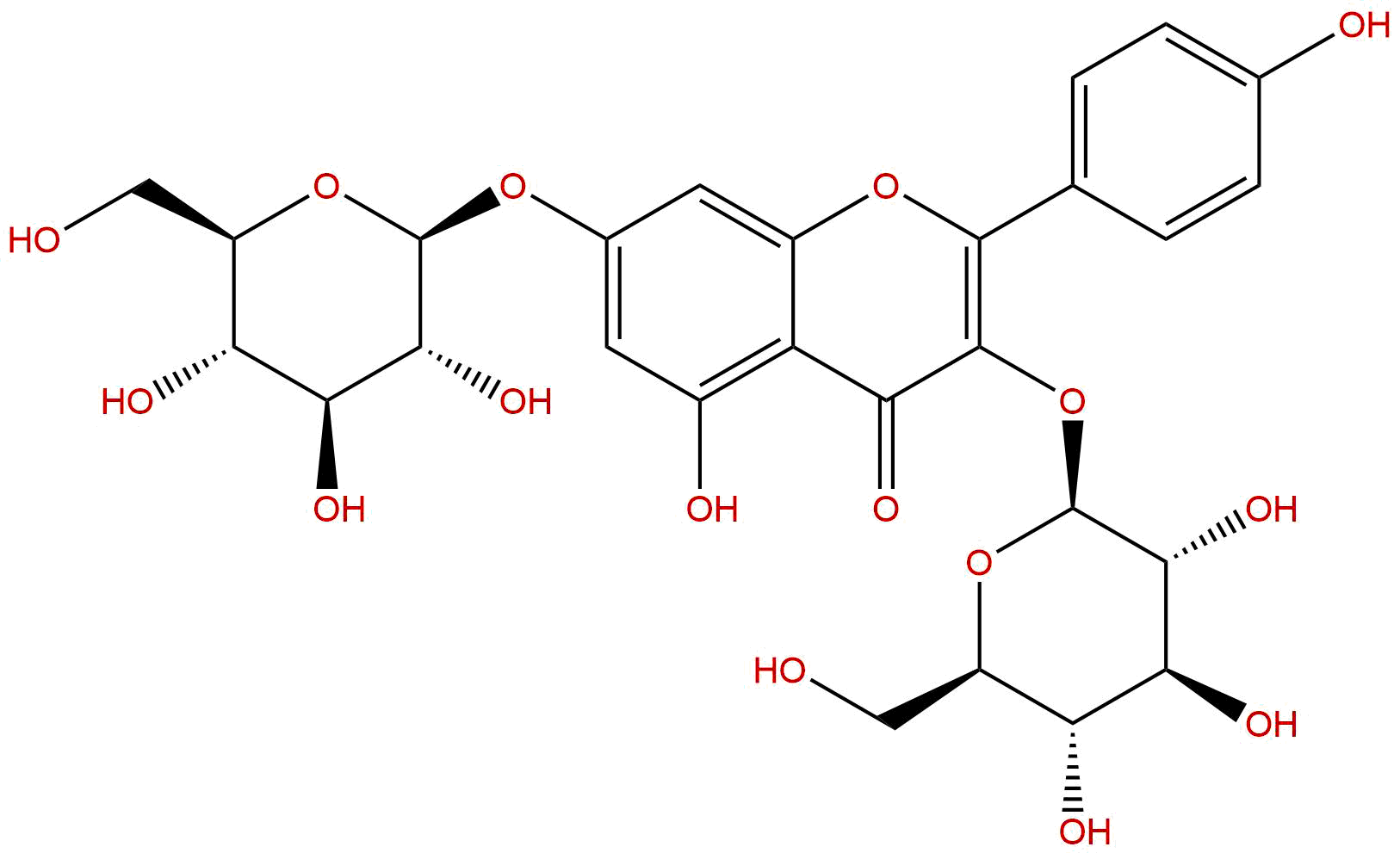


Product name: Kaempferol 3,7-diglucoside
Synonym name: Peonoside;Kaempferol 3,7-di-b-D-glucopyranoside; Kampferol 3,7-diglucoside; Paeonoside
Catalogue No.: BP5017
Cas No.: 25615-14-9
Formula: C27H30O16
Mol Weight: 610.521
Botanical Source:
Type of Compound: Flavonoids
Purity: 95%~99%
Analysis Method: HPLC-DAD or/and HPLC-ELSD
Identification Method: Mass, NMR
Packing: Brown vial or HDPE plastic bottle
Storage: Store in a well closed container, protected from air and light. Put into refrigerate or freeze for long term storage.
Whenever possible, you should prepare and use solutions on the same day. However, if you need to make up stock solutions in advance, we recommend that you store the solution as aliquots in tightly sealed vials at -20℃. Generally, these will be useable for up to two weeks.
The product could be supplied from milligrams to grams
Inquire for bulk scale.
For Reference Standard and R&D, Not for Human Use Directly.
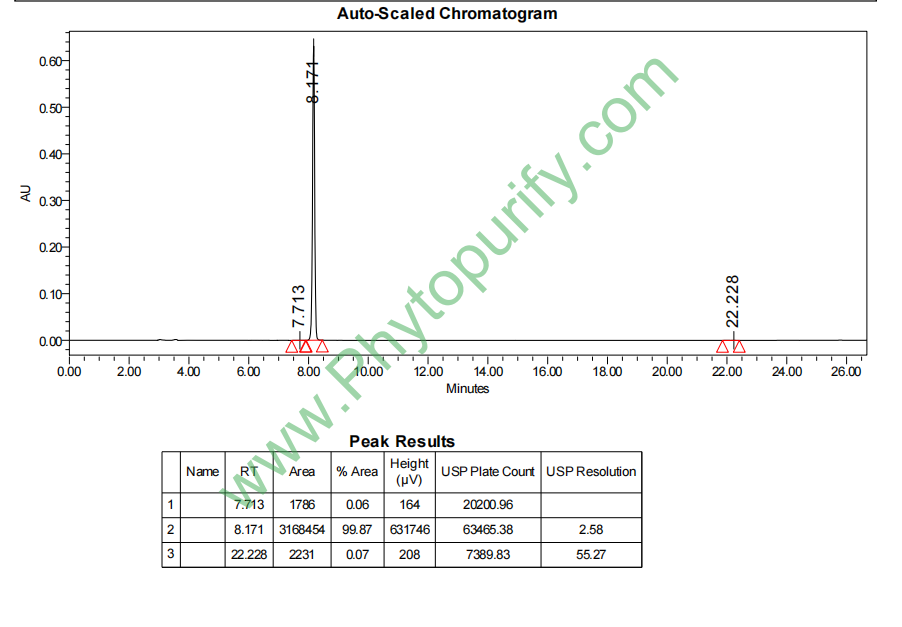
HPLC of Kaempferol 3,7-diglucoside
Storage conditions:Short-term storage at 2~8℃, long-term storage at -20 ~ -80℃
269.4300
-.9401
-.9507
3.2295
.4379
.1231
Low
75.3531
4.6627
Yes
No
No
No
Yes
No
0.6
Yes
Yes
Yes
Yes
Natural products, as an important source of drug discovery, play an irreplaceable role in the long history of human fight against diseases. Flavonoids, as the most widely distributed class of secondary metabolites in nature, have attracted much attention due to their structural diversity and extensive biological activity. Kaempferol 3,7-diglucoside (K3,7DG) is a glycoside derivative of the flavonol compound kaempferol. In its molecular structure, the hydroxyl groups at positions 3 and 7 of the kaempferol nucleus form glycosidic bonds with glucose molecules, respectively. This specific glycosylation modification not only endows the compound with unique physicochemical properties, but also profoundly affects its biological activity and pharmacokinetic characteristics.
K3,7DG is widely present in various medicinal plants and daily edible plants, including legume, Rosaceae, Asteraceae and other plant families. In recent years, with the deepening of natural product chemistry and pharmacology research, the biological activity spectrum of K3,7DG has been continuously expanded. Studies have shown that this compound can significantly inhibit the expression of estrogen receptor α (ER α) in breast cancer cells, suggesting that it may be a potential candidate molecule for endocrine therapy. More notably, in glioblastoma and lung cancer cell models, K3,7DG induces cell apoptosis by activating the MEK-MAPK signaling pathway, demonstrating anti-tumor activity. In addition, its various pharmacological effects such as anti-inflammatory, antioxidant, and neuroprotective effects are gradually being revealed.
However, despite the encouraging multifaceted pharmacological activities exhibited by K3,7DG, its pharmacological characteristics - including extremely low oral bioavailability, poor membrane permeability due to high polarity, and potential metabolic instability - constitute the main obstacles to transitioning from laboratory research to clinical application. This article will provide a systematic review of the research progress of K3,7DG from multiple dimensions, including chemical structure, plant origin, pharmacological activity, mechanism of action, pharmacological evaluation, and clinical application prospects, aiming to provide reference for the in-depth research and development of this natural product.
The chemical structure of K3,7DG is centered around kaempferol, with a molecular formula of C ₂₇ H ∝₀ O ₁₆ and a molecular weight of 610.5210 Da. Kaempferol belongs to the class of flavonols, and its basic skeleton is 2-phenylchromen-4-one, with the B ring attached to the 2-position carbon of the ketone. The structural feature of kaempferol is that it has one hydroxyl substituent at the 5,7 position of the A ring and one hydroxyl substituent at the 4 'position of the B ring. In K3,7DG, the 3rd and 7th hydroxyl groups of the parent nucleus of kaempferol are respectively connected to a molecule of β - D-glucose through O-glycosidic bonds, forming a diglycoside structure. This disaccharideization mode significantly increases the polarity and water solubility of the molecule, while altering its interaction with biomolecules.
From the perspective of stereochemistry, the configuration of glycosidic bonds is β - type, which refers to the formation of β - glycosidic bonds between the anomeric carbon (C1 ') of glucose and the hydroxyl oxygen atom of kaempferol. This configuration feature is of great significance for enzymatic hydrolysis and molecular recognition. The presence of two glucose molecules causes K3,7DG to exhibit a more extended conformation in space, which may affect its binding mode with the target protein.
According to computational chemistry and experimental measurement data, the physicochemical properties of K3,7DG exhibit typical strong polar natural product characteristics. Its lipid water partition coefficient (LogP) is -0.9401, indicating that the compound has a significant tendency towards water solubility and is mainly distributed in aqueous environments under physiological pH conditions. The topological polar surface area (TPSA) is as high as 269.43 Å ², which is much higher than the recommended upper limit of 140 Å ² for oral drugs, indicating that its transmembrane passive diffusion ability is extremely limited.
In terms of water solubility, the calculated water solubility value of K3,7DG is 3.2295 mg/mL, which belongs to the category of moderately water-soluble compounds. However, its high polarity also brings adverse effects: the blood-brain barrier penetration ability is evaluated as "low", which is closely related to its high TPSA and the number of hydrogen bond donors/acceptors. In addition, the hERG channel inhibition risk assessment was negative, indicating a low risk of cardiac toxicity. The Ames test result is 0.6, indicating that the compound did not show significant mutagenicity in the bacterial recovery mutation test, and the preliminary genetic toxicity evaluation is relatively safe.
It is worth noting that K3,7DG is relatively stable in acidic environments, but under alkaline conditions or in the presence of specific glycosidases, glycosidic bonds may undergo hydrolysis, releasing kaempferol glycosides and glucose molecules. This chemical instability has a significant impact on its metabolic fate and biological activity in vivo.
K3,7DG is widely distributed in the plant kingdom, especially abundant in plant families such as Fabaceae, Rosaceae, Asteraceae, and Brassicaceae. Common plants rich in K3,7DG include:
In addition, various medicinal plants such as Scutellaria baicalensis, Taraxacum mongolicum, and Echinacea purpurea have also been reported to contain K3,7DG. It is worth noting that the content of K3,7DG varies significantly among different plant sources, and is influenced by factors such as growth environment, harvesting season, and processing methods.
The extraction of K3,7DG is usually carried out using solvent extraction method, and the appropriate solvent system is selected based on its polarity characteristics. Traditional methods often use ethanol water mixed solvents (usually 50% -80% ethanol) for heating reflux extraction, with the extraction temperature controlled at 60-80 ° C to avoid high temperature induced hydrolysis of glycosidic bonds. In recent years, new extraction techniques such as ultrasound assisted extraction, microwave-assisted extraction, and pressurized solvent extraction have been applied to improve extraction efficiency and shorten extraction time.
The crude extract after extraction needs to undergo multiple purification steps to obtain high-purity K3,7DG. Common purification strategies include:
In terms of quality control, the identification and content determination of K3,7DG mainly rely on high-performance liquid chromatography ultraviolet detection (HPLC-UV) or liquid chromatography-mass spectrometry (LC-MS). The UV detection wavelength is usually set at 265 nm or 350 nm, corresponding to the characteristic absorption peak of flavonoids.
The anti-tumor activity of K3,7DG is currently the most focused area of research. Multiple in vitro experiments have shown that this compound has inhibitory effects on proliferation and induces apoptosis in various cancer cell lines.
breast cancer K3,7DG shows a unique mechanism in breast cancer cells. It was found that this compound can significantly reduce the expression level of estrogen receptor α (ER α), especially in MCF-7 (ER positive) breast cancer cells. By inhibiting the expression of ER α, K3,7DG blocks the estrogen mediated cell proliferation signal pathway, thereby inhibiting the growth of hormone dependent breast cancer cells. It is worth noting that this effect is not achieved through direct competitive binding to estrogen receptors, but through transcriptional regulation of ER α gene expression, suggesting that it may be a novel strategy for endocrine therapy.
Glioblastoma In the glioblastoma (GBM) model, the most malignant brain tumor, K3,7DG induces cell apoptosis by activating the MEK-MAPK signaling pathway. This discovery is significant because the MEK-MAPK pathway is typically associated with cell proliferation and survival, but in specific cellular contexts, its overactivation can actually trigger apoptotic programs. The selective toxic effect of K3,7DG on GBM cells, combined with its low blood-brain barrier penetration ability, suggests that this compound may achieve indirect effects on brain tumors through other mechanisms, such as enhanced tumor vascular permeability.
Lung cancer In non-small cell lung cancer cell lines such as A549 and H1299, K3,7DG also exhibit significant anti proliferative activity. Mechanism studies have shown that this compound activates the MAPK pathway, upregulates the expression of pro apoptotic protein Bax, and downregulates the expression of anti apoptotic protein Bcl-2, ultimately activating the caspase cascade reaction and inducing cell apoptosis. In addition, K3,7DG can also inhibit the migration and invasion ability of lung cancer cells, suggesting that it may have anti metastatic potential.
K3,7DG exhibits anti-inflammatory effects in various inflammatory models. In a macrophage model stimulated by lipopolysaccharide (LPS), this compound can significantly inhibit the production of pro-inflammatory cytokines such as tumor necrosis factor - α (TNF - α), interleukin-6 (IL-6), and interleukin-1 β (IL-1 β). At the mechanistic level, K3,7DG inhibits the nuclear translocation and transcriptional activity of nuclear factor kappa B (NF - κ B), blocking the activation of inflammatory signaling pathways. In addition, the compound can also inhibit the expression of cyclooxygenase-2 (COX-2) and inducible nitric oxide synthase (iNOS), reduce the production of prostaglandin E ₂ and nitric oxide.
As a typical characteristic of flavonoids, K3,7DG has strong free radical scavenging ability. Its antioxidant mechanism includes direct clearance of reactive oxygen species (ROS) and reactive nitrogen species (RNS), chelation of transition metal ions (such as Fe ² ⁺, Cu ² ⁺), and upregulation of endogenous antioxidant enzymes (such as superoxide dismutase (SOD) and glutathione peroxidase (GPx)) expression. In the oxidative stress-induced cell damage model, K3,7DG pretreatment can significantly reduce intracellular ROS levels, protect mitochondrial function, and reduce the production of lipid peroxidation product malondialdehyde (MDA).
In addition to the above main activities, K3,7DG has also been reported to have neuroprotective, cardiovascular protective, anti diabetes and liver protective effects. In terms of neuroprotection, this compound can alleviate the neurotoxicity induced by β - amyloid protein and may have potential therapeutic value for Alzheimer's disease. In the cardiovascular system, K3,7DG plays an anti atherosclerosis role by improving vascular endothelial function and inhibiting the proliferation and migration of vascular smooth muscle cells.
The inhibition of K3,7DG on ER α expression is the core mechanism of its anti breast cancer activity. Research has shown that the compound does not directly compete with the binding domain of ER α ligands, but rather achieves this by affecting the transcriptional regulation of ER α genes. Specifically, K3,7DG can inhibit the activity of the ER α promoter and reduce the transcription level of ER α mRNA. Further research has found that this effect may be related to epigenetic regulation - K3,7DG can alter the histone modification status of the ER α promoter region, increase the enrichment of inhibitory histone markers (such as H3K9me3), and reduce the level of activating markers (such as H3K4me3).
In addition, K3,7DG may also reduce the expression level of ER α protein by interfering with its stability. Research has found that this compound can promote the ubiquitination degradation of ER α protein and shorten its half-life. This dual regulatory mechanism (transcriptional inhibition+protein degradation) enables K3,7DG to effectively reduce the functional level of ER α in breast cancer cells, thereby inhibiting estrogen signaling pathway.
In glioblastoma and lung cancer cells, K3,7DG induces apoptosis by activating the MEK-MAPK pathway, which contrasts sharply with the traditional notion that the MAPK pathway promotes proliferation. Research has shown that K3,7DG can cause sustained, high-intensity phosphorylation of MEK and ERK1/2, a "hyperactivation" state that is different from the transient, mild activation mode under physiological conditions. Continuous activation of ERK can lead to upregulation of downstream pro apoptotic proteins such as Bim and Bax, while inhibiting the expression of anti apoptotic proteins such as Mcl-1 and Bcl-2, ultimately breaking the integrity of the mitochondrial outer membrane, releasing cytochrome c, activating caspase-9 and caspase-3, and executing the apoptotic program.
It is worth noting that K3,7DG has cell type specificity in activating the MEK-MAPK pathway. In normal cells, this compound usually does not cause similar hyperactivation effects, suggesting that it may achieve selective toxicity through the unique signaling network characteristics of cancer cells.
In addition to the main targets mentioned above, K3,7DG also interacts with multiple other molecular targets:
These multi-target action characteristics enable K3,7DG to exhibit a complex pharmacological effect network, while also providing a molecular basis for its potential applications in various diseases.
Based on Lipinski's "Five Rules" and other pharmacological evaluation criteria, the pharmacological characteristics of K3,7DG present significant challenges. Its molecular weight (610.52 Da) exceeds the threshold of 500 Da, the number of hydrogen bond donors (11 hydroxyl groups) and acceptors (16 oxygen atoms) far exceeds the recommended values, and the LogP value (-0.94) is lower than the ideal range (0-3). These parameters collectively indicate that the compound may face malabsorption problems during oral administration.
However, the evaluation of drug properties is not absolute. The high polarity and multi hydroxyl structure of K3,7DG, although not conducive to passive diffusion, may make it a substrate for intestinal transporters such as SGLT1 and GLUTs, thereby achieving absorption through active transport mechanisms. In addition, the development of modern drug delivery systems such as prodrug strategies and nanoformulation technology provides the possibility to improve the bioavailability of such polar natural products.
At present, there is insufficient systematic research on the pharmacokinetics of K3,7DG in vivo. However, based on its structural characteristics and research data on related compounds, it can be inferred that its pharmacokinetic features are:
absorb After oral administration, the absorption of K3,7DG in the gastrointestinal tract is extremely limited. Its high polarity and large molecular weight limit passive diffusion across membranes, while the presence of glycosidic bonds makes it possible to be hydrolyzed by β - glucosidase in the gut microbiota, releasing kaempferol glycosides. Therefore, after oral administration of K3,7DG, the main metabolites detected in the blood may be its metabolites (such as kaempferol, kaempferol-3-glucoside, etc.), rather than the prototype drug.
distribution Due to its high polarity and low fat solubility, the distribution volume of K3,7DG is expected to be relatively small, mainly distributed in the extracellular fluid. The binding rate with plasma proteins is not yet clear, but it is speculated to be relatively low. The assessment of blood-brain barrier penetration ability is' low ', which limits its direct application in central nervous system diseases.
Metabolism The metabolism of K3,7DG mainly involves glycosidic bond hydrolysis and phase II metabolic reactions. In the liver and intestine, glycosidase can hydrolyze it into kaempferol, which further undergoes phase II metabolism such as glucuronidation, sulfation, and methylation. In addition, gut microbiota plays an important role in the metabolism of K3,7DG, which can be converted into various phenolic acid metabolites.
excretion K3,7DG and its metabolites are mainly excreted through bile and urine. Due to high molecular polarity, renal tubular reabsorption is limited, and urinary excretion may be the main clearance pathway.
Preliminary toxicity evaluation shows that K3,7DG has good safety. The Ames test result is negative, indicating no mutagenicity. The hERG channel inhibition risk assessment is negative, indicating a low risk of cardiac toxicity. However, there is still a lack of systematic research on its long-term toxicity, reproductive toxicity, and carcinogenicity, which requires further evaluation.
K3,7DG plays an anti breast cancer role by inhibiting the expression of ER α. This mechanism is different from the existing endocrine therapy drugs (such as tamoxifen, aromatase inhibitor), which provides a new idea for the treatment of ER positive breast cancer. Especially for patients resistant to tamoxifen, K3,7DG may work through non competitive mechanisms to overcome resistance. However, its low oral bioavailability is the main obstacle to clinical translation. Developing targeted delivery systems (such as liposomes, polymer nanoparticles) or structural modification strategies (such as prodrug design) may be feasible approaches to address this issue.
Although the blood-brain barrier penetration ability of K3,7DG is limited, glioblastoma patients often have blood-brain barrier disruption, which may provide opportunities for drugs to enter brain tumor tissue. In addition, effective delivery of the compound in brain tumors may be achieved by bypassing the blood-brain barrier through intranasal administration or using brain tumor targeted nanocarriers. The unique mechanism of K3,7DG inducing apoptosis by activating the MEK-MAPK pathway provides a new targeted strategy for the treatment of glioblastoma.
Given the multi-target nature of K3,7DG, combination therapy may be a reasonable strategy to enhance its therapeutic efficacy. For example, when used in combination with chemotherapy drugs such as cisplatin and paclitaxel, it may enhance anti-tumor efficacy through synergistic effects; Combined with immune checkpoint inhibitors, it may enhance the efficacy of immunotherapy by regulating the tumor microenvironment. In addition, the anti-inflammatory and antioxidant activities of K3,7DG make it potentially valuable for the prevention and treatment of chronic inflammation related diseases such as cardiovascular disease and neurodegenerative diseases.
Structural modification based on K3,7DG natural skeleton is an important direction to improve its medicinal properties. Possible strategies include: selectively protecting some hydroxyl groups to reduce polarity; Introducing specific functional groups to enhance affinity with target proteins; Design prodrugs to improve oral bioavailability; Develop glycosidic bond stable analogues to prolong half-life. In addition, molecular docking studies based on K3,7DG with target proteins such as ER α and MEK can provide a structural basis for rational drug design.
As a natural flavonoid glycoside, kaempferol-3,7-diglucoside exhibits various pharmacological activities, especially in the field of anti-tumor, with a unique mechanism of action. By inhibiting ER α expression and activating MEK-MAPK pathway, this compound provides a new molecular target and therapeutic strategy for the treatment of refractory tumors such as breast cancer and glioblastoma. However, its high polarity, low oral bioavailability, and limited in vivo stability constitute the main bottlenecks for the transition from laboratory research to clinical application.
Future research should focus on the following key directions: firstly, to thoroughly elucidate the pharmacokinetic characteristics and metabolic fate of K3,7DG in vivo, providing a basis for formulation design; Secondly, develop efficient drug delivery systems to improve their bioavailability and targeting; Thirdly, optimize its pharmacological parameters through structural modification and medicinal chemistry strategies; Finally, conduct systematic preclinical toxicology studies and clinical trials to evaluate its safety and efficacy.
Natural products have always been an important source of drug discovery, and the research history of K3,7DG once again confirms this. Despite facing many challenges, through interdisciplinary collaboration and the application of new technological means, this natural flavonoid glycoside is expected to be transformed into clinically available therapeutic drugs in the future, bringing new treatment options for patients.
