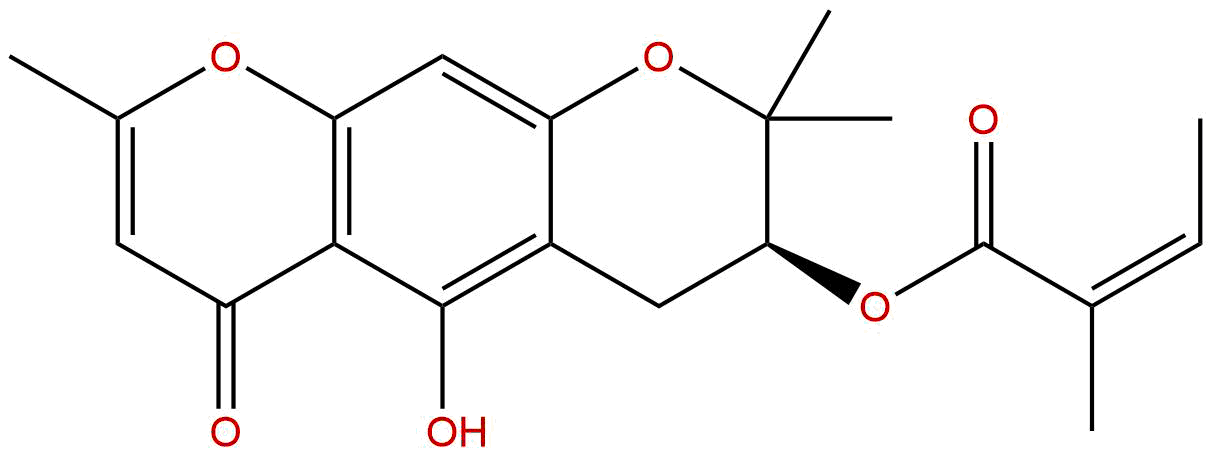


Product name: 3'-O-Angeloylhamaudol
Synonym name: 2-butenoic acid deriv
Catalogue No.: BP4895
Cas No.: 84272-84-4
Formula: C20H22O6
Mol Weight: 358.39
Botanical Source:
Type of Compound: Flavonoids
Purity: 95%~99%
Analysis Method: HPLC-DAD or/and HPLC-ELSD
Identification Method: Mass, NMR
Packing: Brown vial or HDPE plastic bottle
Storage: Store in a well closed container, protected from air and light. Put into refrigerate or freeze for long term storage.
Whenever possible, you should prepare and use solutions on the same day. However, if you need to make up stock solutions in advance, we recommend that you store the solution as aliquots in tightly sealed vials at -20℃. Generally, these will be useable for up to two weeks.
The product could be supplied from milligrams to grams
Inquire for bulk scale.
For Reference Standard and R&D, Not for Human Use Directly.
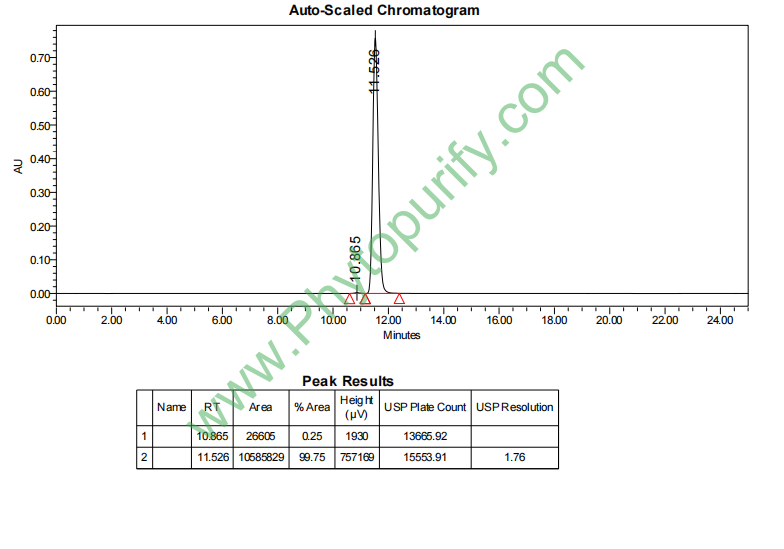
HPLC of 3'-O-Angeloylhamaudol
HNMR of 3'-O-Angeloylhamaudol

Storage conditions:Short-term storage at 2~8℃, long-term storage at -20 ~ -80℃
85.9700
3.4300
3.3955
.0572
2.9725
7.3000
Low
90.5446
3.6585
No
No
Yes
No
Yes
Yes
0.6
No
Yes
Yes
No
Natural products, as an important source of drug discovery, play an irreplaceable role in the long history of human struggle against diseases. From ancient traditional medical practices to modern target based drug screening, the diverse secondary metabolites in nature continue to provide valuable lead compounds for the development of innovative drugs. Among the numerous biologically active natural product families, chromones and their derivatives have attracted much attention due to their broad pharmacological activities. The nuclear structure of chromogen ketone is widely present in various medicinal plants and is one of the key material foundations for the therapeutic effects of many traditional herbs.
3 '- O-Angeloylhamaudol (hereinafter referred to as 3' - O-AH) is a linear dihydrofuran chromone compound isolated from Apiaceae plants. This compound was first derived from the traditional Japanese medicinal plant "Hamakaze"(Glehnia littoralis Isolation and identification of the root and stem of Fr. Schmidt ex Miq., and its name "hamaudol" is derived from the Japanese name of the plant. 3 '- O-AH is the product of the esterification of the 3' hydroxyl group of Hamaudol with Angeloyl acid, which significantly alters its physicochemical properties and biological activity. In recent years, with the deepening of research on the active ingredients of natural products, 3 '- O-AH has shown remarkable potential in multiple fields such as anti-inflammatory, antioxidant, neuroprotective, anti-tumor, and antiviral effects, especially in regulating signaling pathways and targets related to inflammation. Its mechanism of action is gradually being revealed. However, compared to its parent compounds or other more well-known natural products, systematic research on 3 '- O-AH is still relatively limited, and its potential as a drug lead compound needs to be fully evaluated. This article aims to systematically review the research progress on the chemical structure, plant origin, pharmacological activity, mechanism of action, and medicinal properties of 3 '- O-AH, in order to provide comprehensive references for the subsequent research and development of this natural product.
The chemical structure of 3 '- O-Danggui acyl coumarin belongs to linear dihydrofuran chromone. Its core skeleton is chromone (4H-1-benzopyran-4-one), with hydroxyl (- OH) and methoxy (- OCH ∝) substituents attached at positions C-5 and C-7, respectively. Its most prominent structural feature is a 2- (1-hydroxy-1-methylethyl) -2,3-dihydrofuran ring connected at the C-6 position, and the 3 'hydroxyl group of the furan ring is esterified with Angelica acid ((Z) -2-methyl-2-butenoic acid) to form a 3' - O-Angelica acyl substitution. The systematic nomenclature (IUPAC) of this compound is: [(2S) -2- (1-hydroxy-1-methylethyl) -5-methoxy-8-oxo-2,3-dihydrofurano [2,3-h] chromen-7-yl] (Z) -2-methyl-2-butenoate, CAS number 84272-84-4.
From the perspective of physicochemical properties, the molecular formula of 3 '- O-AH is C ₂₀ H ₂₂ O ₇, with a molecular weight of 358.39 Da. Its lipid water partition coefficient (LogP) is 3.43, indicating that the compound has a moderate degree of lipophilicity, which helps it penetrate biofilms but may also affect its solubility in aqueous environments. In fact, its water solubility is only 0.0572 mg/mL, which is a difficult to dissolve compound, posing challenges for its in vivo absorption and formulation development. The topological polar surface area (TPSA) is 85.97 Å ², which is lower than the upper limit of passive diffusion through the cell membrane (approximately 140 Å ²), indicating that it has some oral absorption potential, but may be affected by efflux transporters. In addition, computational predictions show that its blood-brain barrier (BBB) penetration ability is low, which may limit its application in the treatment of central nervous system diseases, but may also imply a lower risk of neurotoxicity. In terms of early safety assessment, hERG inhibition was predicted as' no ', indicating a lower risk of inducing QT interval prolongation in the heart; The predicted value of Ames test is 0.6, indicating a certain genetic toxicity risk, but this value is in the gray zone and needs further confirmation through experiments. Overall, the chemical structure of 3 '- O-AH endows it with unique biological activity, but its poor solubility and potential genetic toxicity are the main obstacles that need to be overcome in its development as an oral drug.
3 '- O-Danggui acyl coumarin is mainly derived from several medicinal plants in the Apiaceae family, among which the most classic source is the genus Apiaceae(Glehnia)Plant Coral Cabbage(Glehnia littoralis)Its dry roots and rhizomes are the traditional Chinese medicine "Beisha Shen". North ginseng is widely used in traditional medicine in East Asia (China, Japan, South Korea) to treat symptoms such as lung heat, dry cough, and insufficient stomach yin. 3 '- O-AH is considered one of its active ingredients that exert anti-inflammatory and cough relieving effects. In addition, the compound is also present in other plants of the Umbelliferae family, such as when classified(Angelica)Some species, such as Japanese Angelica sinensis(Angelica acutiloba)And windproof genus(Saposhnikovia)Plant windproof(Saposhnikovia divaricata)In the roots. There may be significant differences in the content of 3 '- O-AH among samples from different plant sources, origins, and harvest periods. Usually, in the rhizomes of coral vegetables, 3 '- O-AH coexists with furan chromogenic ketone compounds such as coumarin and Phellopterin.
The classic strategy for the extraction of 3 '- O-AH is to utilize its equipolarity and use organic solvent extraction method. Common solvents include methanol, ethanol, or their aqueous solutions. For example, dry plant rhizome powder is soaked or refluxed with 95% ethanol or methanol at room temperature or heating conditions, and the extract is concentrated under reduced pressure to obtain the total extract. Subsequently, liquid-liquid extraction method was used to extract the total extract using solvents of different polarities (such as petroleum ether, ethyl acetate, n-butanol). Due to the LogP of 3 '- O-AH being 3.43, it is typically enriched in the moderately polar ethyl acetate extraction site.
Further separation and purification require the use of modern chromatographic techniques. Silica gel column chromatography is the most commonly used preliminary separation method, usually using mixed solvent systems such as petroleum ether ethyl acetate or chloroform methanol for gradient elution. For chromogenic ketone compounds with similar structures, reverse phase column chromatography (such as ODS-C18) and high performance liquid chromatography (HPLC) can provide higher separation efficiency. Preparation type HPLC, especially using acetonitrile water or methanol water as mobile phases, can obtain high-purity 3 '- O-AH monomers from fractions rich in target components. In addition, high-speed countercurrent chromatography (HSCCC), as a liquid-liquid distribution chromatography technique, has been successfully applied to the efficient separation of natural products including 3 '- O-AH due to its advantages of irreversible adsorption and high sample recovery rate. During the extraction and separation process, attention should be paid to temperature control and avoiding light to prevent hydrolysis or isomerization of Angelica sinensis acyl groups under high temperature or light exposure.
In recent years, significant progress has been made in the pharmacological activity research of 3 '- O-AH, revealing its potential therapeutic effects in multiple disease models.
1. Anti inflammatory activity
Anti inflammation is one of the most core and extensively studied pharmacological activities of 3 '- O-AH. Multiple in vitro and in vivo experiments have confirmed its powerful anti-inflammatory effect. In the lipopolysaccharide (LPS) - stimulated macrophage model (such as RAW264.7 cells), 3 '- O-AH can significantly inhibit the production of pro-inflammatory cytokines such as tumor necrosis factor - α (TNF - α), interleukin-6 (IL-6), and interleukin-1 β (IL-1 β). At the same time, it can effectively reduce the release of inflammatory mediators such as nitric oxide (NO) and prostaglandin E2 (PGE2), which is closely related to its inhibition of the expression of inducible nitric oxide synthase (iNOS) and cyclooxygenase-2 (COX-2). In in vivo models, such as the rat toe swelling model induced by carrageenan and the mouse peritoneal capillary permeability increase model induced by acetic acid, 3 '- O-AH showed significant anti-inflammatory activity, and the effect was dose-dependent.
2. Antioxidant activity
Oxidative stress is a common pathological basis for the occurrence and development of many diseases. Research has shown that 3 '- O-AH has a certain antioxidant capacity. In chemical antioxidant experiments, it can effectively scavenge 1,1-diphenyl-2-trinitrophenylhydrazine (DPPH) free radicals and 2,2 '- diazo-bis-3-ethylbenzothiazoline-6-sulfonic acid (ABTS) cationic free radicals. In cell models, 3 '- O-AH can reduce the levels of reactive oxygen species (ROS) induced by hydrogen peroxide (H ₂ O ₂) or other oxidants, and increase the activity of endogenous antioxidant enzymes such as superoxide dismutase (SOD), catalase (CAT), and glutathione peroxidase (GSH Px) in cells. This antioxidant activity may partially explain its anti-inflammatory and cell protective effects.
3. Neuroprotective activity
Given that oxidative stress and neuroinflammation are key pathological features of neurodegenerative diseases such as Alzheimer's disease (AD) and Parkinson's disease (PD), the neuroprotective potential of 3 '- O-AH has attracted the interest of researchers. In vitro experiments have shown that 3 '- O-AH can protect neuronal cells (such as PC12 cells or primary cortical neurons) from toxic damage induced by β - amyloid (A β) or glutamate. The mechanism may be related to inhibiting intracellular calcium overload, reducing ROS production, and inhibiting the activation of apoptosis related proteins (such as caspase-3). In addition, in the LPS induced neuroinflammation model, 3 '- O-AH can indirectly protect neurons by inhibiting excessive activation of microglia and reducing the release of neurotoxic factors such as TNF - α and IL-6.
4. Antitumor activity
Preliminary studies have shown that 3 '- O-AH exhibits a proliferative inhibitory effect on certain tumor cell lines. For example, in vitro experiments, it can inhibit the proliferation of human liver cancer cells (HepG2), human colon cancer cells (HT-29) and human breast cancer cells (MCF-7). Its mechanism of action may involve inducing cell cycle arrest (such as G0/G1 phase arrest) and promoting cell apoptosis. There are studies suggesting that 3 '- O-AH may exert anti-tumor effects by regulating the PI3K/Akt/mTOR signaling pathway or activating the mitochondrial mediated endogenous apoptosis pathway. However, current research on its anti-tumor activity is still in its preliminary stage and lacks validation through in vivo anti-tumor experiments.
5. Other activities
In addition to the main activities mentioned above, 3 '- O-AH has also been reported to have biological activities such as antiviral (such as inhibiting influenza virus neuraminidase activity), anti allergic (inhibiting histamine release from mast cells), and promoting melanin synthesis (which may have potential value for the treatment of vitiligo). These diverse activities suggest that 3 '- O-AH is a natural product with multi-target action characteristics.
The pharmacological activity of 3 '- O-AH, especially its anti-inflammatory effect, is closely related to its regulation of key intracellular signaling pathways. The most thoroughly studied mechanism currently is its inhibitory effect on the nuclear factor kappa B (NF - κ B) and mitogen activated protein kinase (MAPK) signaling pathways.
1. Inhibit the NF - κ B signaling pathway
NF - κ B is the core transcription factor of inflammatory response. In the resting state, NF - κ B binds to its inhibitory protein I κ B α and exists in an inactive form in the cytoplasm. When cells are stimulated by pro-inflammatory factors such as LPS and TNF - α, the I κ B kinase (IKK) complex is activated, phosphorylating I κ B α and leading to its ubiquitination degradation. The released NF - κ B immediately enters the nucleus, initiating the transcription of various pro-inflammatory genes such as TNF - α, IL-6, iNOS, COX-2. Research has shown that 3 '- O-AH can effectively inhibit LPS induced phosphorylation and degradation of I κ B α, thereby preventing nuclear translocation and DNA binding activity of NF - κ B. This mechanism is the direct reason for its inhibition of the expression of various inflammatory factors.
2. Inhibit the MAPK signaling pathway
The MAPK family mainly includes extracellular signal regulated kinase (ERK), c-Jun N-terminal kinase (JNK), and p38 MAPK. These kinases play important roles in inflammation, stress response, and cell proliferation. LPS and other stimuli can activate the MAPK pathway, which in turn phosphorylates and activates downstream transcription factors (such as AP-1), synergistically regulating inflammatory gene expression with NF - κ B. Research has shown that 3 '- O-AH can inhibit LPS induced phosphorylation of p38 MAPK and JNK, but has little effect on ERK phosphorylation. This indicates that its anti-inflammatory effect is partially achieved through selective inhibition of the p38 and JNK pathways.
3. Regulating the Nrf2/ARE pathway
Nuclear factor E2 related factor 2 (Nrf2) is a key regulatory factor in the cellular antioxidant defense system. Under oxidative stress, Nrf2 dissociates from Keap1 protein and enters the nucleus, binding to antioxidant response elements (ARE) to initiate transcription of a series of antioxidant enzymes and phase II detoxifying enzymes (such as SOD, CAT, HO-1, NQO1). There is evidence to suggest that 3 '- O-AH can activate the Nrf2 signaling pathway, upregulate the expression of antioxidant proteins such as HO-1, and enhance the ability of cells to resist oxidative damage. This mechanism is closely related to its antioxidant and cell protective activities.
4. Potential other targets
In addition to the classic pathways mentioned above, 3 '- O-AH may also exert its effects through other mechanisms. For example, it may directly bind to certain inflammation related enzymes (such as COX-2, 5-lipoxygenase) and inhibit their activity. In addition, given the similarity between its chromogen ketone nucleus structure and certain protein kinase inhibitors, 3 '- O-AH may also act on specific kinase targets. However, these potential direct targets still need to be identified and validated through methods such as Drug Affinity Reaction Target Stability (DARTS), Cell Thermal Transition Analysis (CETSA), or Activity Based Proteomic Analysis (ABPP). Overall, the mechanism of action of 3 '- O-AH exhibits multi-target and multi pathway characteristics, and its anti-inflammatory, antioxidant, and neuroprotective effects are the result of its comprehensive regulation of key signaling pathways such as NF - κ B, MAPK, and Nrf2.
Advancing 3 '- O-AH from a promising natural active molecule to a drug candidate requires a comprehensive evaluation of its pharmacological properties. Based on computational predictions and limited experimental data, its pharmacological characteristics are as follows:
1. Physical and chemical properties and drug like properties
As mentioned earlier, the molecular weight (358.39 Da) and LogP (3.43) of 3 '- O-AH basically comply with Lipinski's Rule of Five, which means that the molecular weight is less than 500 and the LogP is less than 5. The number of hydrogen bond donors (2 from two hydroxyl groups) and hydrogen bond acceptors (7) is also within the allowable range of the rules. However, its extremely low water solubility (0.0572 mg/mL) is a significant drawback, which may lead to low oral bioavailability. In addition, TPSA is 85.97 Å ², indicating its potential for oral absorption, but it may require the use of formulation techniques such as solid dispersions, lipid nanoparticles, cyclodextrin inclusion complexes to improve its solubility and dissolution rate.
2. Pharmacokinetic (ADME) prediction
- absorb The prediction shows that its human intestinal absorption is at a moderate level. But low water solubility is the main limiting step in absorption. The prediction results of P-glycoprotein (P-gp) substrates are inconsistent, and some models predict it as a P-gp substrate, which may lead to reduced efflux and absorption.
- distribution Moderate lipophilicity makes it easy to distribute into tissues. The plasma protein binding rate may be high. The low penetration ability of the blood-brain barrier suggests that its concentration in the central nervous system may be limited.
- Metabolism This compound contains an ester bond (Angelica sinensis acyl group), which is easily hydrolyzed by esterases in plasma or liver to produce coumarin and Angelica sinensis acid. In addition, the hydroxyl and methoxy groups on the chromogen ketone nucleus and furan ring are also potential sites for phase I metabolism (such as oxidation and demethylation) and phase II metabolism (such as glucuronidation and sulfation). The first pass effect may be very significant.
- excretion Metabolites may be mainly excreted through bile and urine.
3. Security assessment
- hERG Predicted as' no ', this is a positive signal indicating a lower risk of inducing tip torsion type ventricular tachycardia (TdP).
- Ames test The predicted value is 0.6, which is a critical value. Although it is generally believed that a value greater than 0.5 indicates potential mutagenicity, this prediction still needs to be validated through a standard bacterial reverse mutation test (Ames test). If genetic toxicity is confirmed, it will pose a significant obstacle to its development.
- Other toxicities Experimental data on its acute toxicity, long-term toxicity, reproductive toxicity, etc. are very scarce and will be the focus of future research.
4. Existing pharmacokinetic studies
At present, there are very few experimental studies on the pharmacokinetics of 3 '- O-AH in vivo. Limited animal experimental data indicate that after oral administration, the exposure of the prototype drug in plasma is very low, which is likely due to its poor water solubility and/or first pass metabolism (especially ester bond hydrolysis). After intravenous administration, its clearance speed may be faster. Therefore, improving its bioavailability is the key challenge in converting it into useful drugs. Precursor strategies (such as protecting phenolic hydroxyl groups to increase stability) or structural modifications (such as replacing Angelica with more stable functional groups) may be directions worth exploring.
Although there is still a long way to go for 3 '- O-AH to become a clinical drug, its unique pharmacological activity spectrum provides scientific basis for its application prospects in multiple therapeutic fields.
1. Inflammatory diseases
Based on its strong anti-inflammatory activity, 3 '- O-AH or its derivatives have the potential to be developed for the treatment of various acute and chronic inflammatory diseases, such as arthritis, dermatitis, colitis, etc. It may have better efficacy and lower side effects than single target anti-inflammatory drugs by simultaneously inhibiting the NF - κ B and MAPK pathways. However, to address the issue of low oral bioavailability, local administration (such as topical application on the skin or rectal administration) may be a more realistic initial application route.
2. Neurodegenerative diseases
Its neuroprotective and anti neuroinflammatory activities make it a potential candidate molecule for treating Alzheimer's disease and Parkinson's disease. However, its low BBB penetration is a major bottleneck. Future research directions may include: designing prodrugs that can penetrate the BBB; Using nanocarriers (such as liposomes or polymer nanoparticles targeting BBB) to achieve brain delivery; Or search for active metabolites with better brain permeability.
3. Cancer adjuvant therapy
Although its direct anti-tumor activity is not strong, the anti-inflammatory and antioxidant properties of 3 '- O-AH make it a potential adjuvant drug for cancer treatment. For example, it can be used in combination with chemotherapy drugs to alleviate inflammation and oxidative damage caused by chemotherapy, or to enhance chemotherapy efficacy by improving the tumor microenvironment. In addition, its inhibitory effect on NF - κ B may also help reverse chemotherapy resistance in certain tumors.
4. Future research directions
In order to promote the clinical translation of 3 '- O-AH, future research should focus on the following aspects:
- In depth pharmacokinetic research Conduct systematic in vivo ADME experiments to clarify its metabolic pathways, metabolites, and biological activities, and identify key factors affecting its oral bioavailability.
- Comprehensive toxicological evaluation Conduct acute and chronic toxicity experiments, especially to confirm the authenticity of its Ames test prediction results, and evaluate its potential toxicity to important organs such as the liver and kidneys.
- Structure Activity Relationship (SAR) Study Synthesize a series of analogues of 3 '- O-AH, systematically study the effects of structural units such as chromogen ketone nucleus, furan ring, and angelica acyl group on activity and pharmacokinetic properties, and search for lead compounds with higher activity and better drug properties.
- Target discovery and validation Utilizing modern chemical biology techniques to identify and validate the direct acting protein targets of 3 '- O-AH will provide crucial information for understanding its mechanism of action and conducting structure based drug design.
- Development of a new drug delivery system To address the issues of poor water solubility and low bioavailability, new drug delivery systems such as liposomes, nanoemulsions, and phospholipid complexes have been developed to improve their in vivo behavior.
As a linear dihydrofuran chromone derived from traditional medicinal plants, 3 '- O-Danggui acyl coumarin has become a noteworthy research object in the field of natural product pharmacology due to its significant activities in anti-inflammatory, antioxidant, and neuroprotective aspects. Its mechanism of action mainly involves the regulation of key signaling pathways such as NF - κ B, MAPK, and Nrf2, reflecting the multi-target and multi pathway characteristics of natural products. However, the compound also faces challenges such as poor water solubility, low oral bioavailability, and potential genetic toxicity in drug development. Future research needs to optimize its structure or develop new delivery systems based on a deep understanding of its mechanism of action and metabolic pathways, combined with modern medicinal chemistry and pharmacology methods, in order to overcome these obstacles. Despite the long road ahead, the unique chemical skeleton and biological activity spectrum of 3 '- O-AH undoubtedly provide valuable lead molecules and important research ideas for the development of new anti-inflammatory and neuroprotective drugs. In depth research on it not only helps to reveal the pharmacological substance basis of the traditional herb "Beisha Shen", but may also bring new hope for humans to cope with complex diseases.
