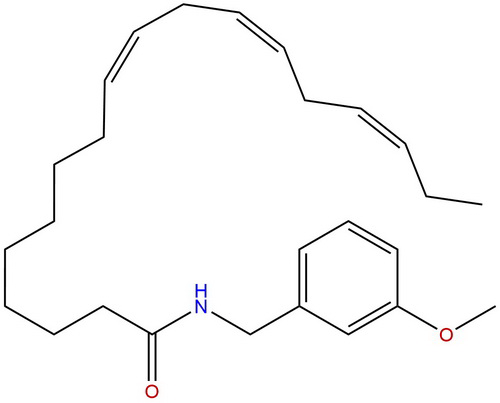


Product name: N-(3-Methoxybenzyl)(9Z,12Z,15Z)-octadeca-9,12,15-trienamide
Synonym name:
Catalogue No.: BP4003
Cas No.: 383715-23-9
Formula: C26H39NO2
Mol Weight: 397.603
Botanical Source:
Physical Description:
Type of Compound: Aliphatics
Purity: 95%~99%
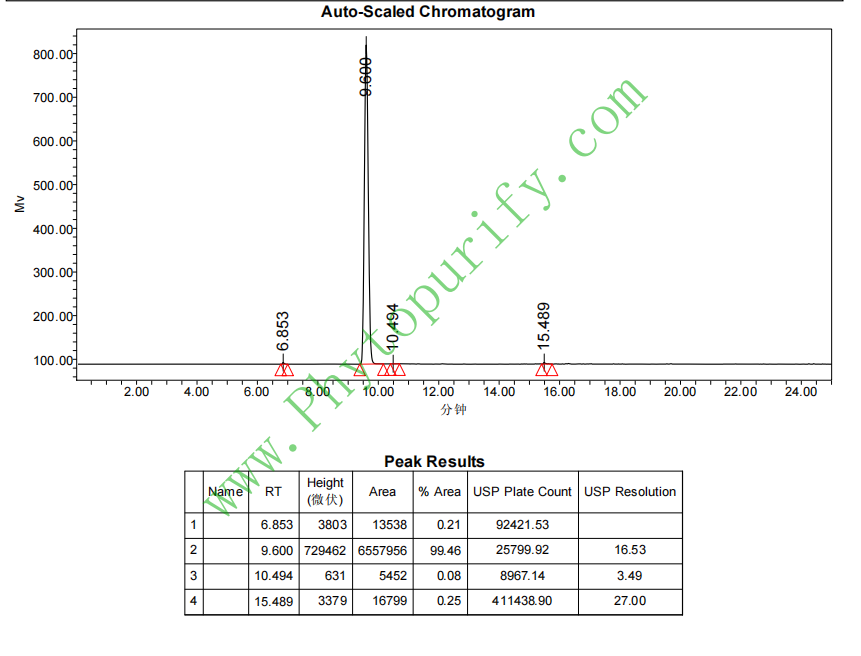
Analysis Method: HPLC-DAD or/and HPLC-ELSD
Identification Method: Mass, NMR
Packing: Brown vial or HDPE plastic bottle
Storage: Store in a well closed container, protected from air and light. Put into refrigerate or freeze for long term storage.
Whenever possible, you should prepare and use solutions on the same day. However, if you need to make up stock solutions in advance, we recommend that you store the solution as aliquots in tightly sealed vials at -20℃. Generally, these will be useable for up to two weeks.
The product could be supplied from milligrams to grams
Inquire for bulk scale.
For Reference Standard and R&D, Not for Human Use Directly.
HPLC of N-(3-Methoxybenzyl)(9Z,12Z,15Z)-octadeca-9,12,15-trienamide
Storage conditions:Short-term storage at 2~8℃, long-term storage at -20 ~ -80℃
38.3300
6.7040
6.7040
.0015
3.6377
7.4439
High
95.0365
2.4961
No
Yes
Yes
No
No
No
0.6
No
Yes
Yes
Yes
Natural products, as an important source of drug discovery, have long played an irreplaceable role in maintaining human health and treating diseases. Amide numerous natural products, amide compounds have attracted much attention due to their unique chemical structures and diverse biological activities. N-Methoxybenzyl-9 cis-12 cis-15-s-trienamide (N - (3-Methoxybenzyl) (9Z, 12Z, 15Z) - octadeca-9,12,15-trienamide) is a natural amide compound isolated from plants. Its structural feature is that a methoxybenzyl group is connected to an octadecanoic acid (α - linolenic acid) containing three cis double bonds through an amide bond.
This compound was first isolated and identified from Piperaceae plants, belonging to the family of long-chain fatty acid amide natural products. These compounds are usually used as secondary metabolites in plants, participating in plant defense mechanisms and signal transduction processes. In recent years, with the deepening of biological activity screening of natural products, N-methoxybenzyl linolenic acid amide has shown significant anti-inflammatory activity, especially in regulating inflammation related signaling pathways and cytokine networks, showing unique advantages.
Inflammation is a defensive response of the body to injury and infection, but chronic inflammation is closely related to the occurrence and development of many diseases, including cardiovascular diseases, diabetes, neurodegenerative diseases and cancer. Although traditional nonsteroidal anti-inflammatory drugs (NSAIDs) are effective, long-term use often accompanies adverse reactions in the gastrointestinal and cardiovascular systems. Therefore, finding anti-inflammatory compounds with novel mechanisms of action and higher safety has become an important direction for drug development. The study of the anti-inflammatory activity and related molecular mechanisms of N-methoxybenzyllinolenic acid amide, a naturally derived amide compound, provides new ideas and candidate molecules for the development of novel anti-inflammatory drugs.
This article will provide a systematic review of the research progress of N-methoxybenzyllinolenic acid amide from the aspects of chemical structure and physicochemical properties, plant sources and extraction methods, pharmacological activity research, mechanism of action and molecular targets, drug evaluation and pharmacokinetics, clinical application prospects and prospects, in order to provide reference for the in-depth research and development of this compound.
The chemical structure of N-methoxybenzyl-9 cis-12 cis-15 cis linolenic acid amide consists of two parts: one is an octadecanoic acid chain containing three cis configuration double bonds (i.e. alpha linolenic acid, C18:3 n-3), The second is the N-substituted meta methoxybenzyl group. Its molecular formula is C26H39NO2, with a molecular weight of 397.6030 g/mol. The IUPAC name for this compound is N - (3-methoxybenzyl) (9Z, 12Z, 15Z) - octadeca-9,12,15-trienamide, with CAS registration number 383715-23-9.
Structurally, the compound has the following characteristics: the long-chain fatty acid moiety contains three non conjugated cis double bonds located on the 9th, 12th, and 15th carbon atoms, respectively. This structural feature endows the molecule with a certain degree of flexibility and conformational diversity. The amide bond (- CONH -) connects the fatty acid chain with the aromatic ring. The presence of amide bonds not only affects the polarity and hydrogen bonding ability of molecules, but may also participate in interactions with target proteins. The meta methoxy (- OCH3) substituent on the aromatic ring further enhances the hydrophobicity and electron density distribution characteristics of the molecule.
The drug properties parameters obtained based on computational chemistry methods show that the lipid water partition coefficient (LogP) of N-methoxybenzyl linolenic acid amide is 6.7040, indicating that the compound has high lipid solubility, which is consistent with its long-chain fatty acid structural characteristics. High lipid solubility is beneficial for compounds to penetrate biological membranes, but it may also lead to poor water solubility. Its topological polar surface area (TPSA) is 38.3300 Å ², which is at a moderate level, indicating that the compound may have some oral bioavailability.
The water solubility parameter shows that the compound has extremely low water solubility, only 0.0015 mg/mL, which is consistent with its high LogP value. Low water solubility is a common feature of many natural lipid soluble compounds, and in practical applications, formulation techniques such as liposomes and nanoemulsions may be needed to improve their solubility and bioavailability.
It is worth noting that the blood-brain barrier penetration assessment of this compound is "high", indicating its potential ability to enter the central nervous system. This characteristic is of great significance for the development of drugs for the treatment of central nervous system inflammation related diseases, such as neuroinflammation, Alzheimer's disease, etc. In addition, the hERG inhibition assessment was negative, indicating that the compound may have advantages in terms of cardiac safety, but this result still needs to be validated through experiments. The Ames test result is 0.6, indicating a low risk of genetic toxicity.
N-methoxybenzyl linolenic acid amide is mainly isolated from Piperaceae plants. The Piperaceae family is a large family consisting of approximately 5 genera and over 3600 plant species, widely distributed in tropical and subtropical regions. This family of plants is known for its rich secondary metabolites and diverse biological activities, especially Piper plants, which have long been used in traditional medicine to treat various diseases such as inflammation, pain, and digestive system disorders.
Specifically, N-methoxybenzyl linolenic acid amide was isolated and identified for the first time from Piper longum L. Piper longum is an important medicinal plant, and its dried and nearly mature fruit ears are used in traditional Chinese medicine for warming the middle and dispelling cold, as well as relieving pain through lower qi. In addition, the compound may also be present in other pepper plants, such as Piper nigrum L. and Piper retrofractum Vahl. These plants are widely used in Ayurvedic medicine in India, traditional medicine in Southeast Asia, and ethnic medicine in China.
The extraction of N-methoxybenzyl linolenic acid amide is usually carried out using organic solvent extraction method. Due to its high lipid solubility, commonly used extraction solvents include ethanol, methanol, ethyl acetate, n-hexane, etc. The typical extraction process is as follows: the dried plant material (such as long pepper ears) is crushed and soaked in 95% ethanol or methanol at room temperature or heating conditions for extraction. The extract is then concentrated under reduced pressure to obtain the crude extract. The crude extract was further subjected to liquid-liquid partitioning extraction using solvents of different polarities, such as petroleum ether, ethyl acetate, and n-butanol, to obtain extraction sites of different polarities.
This compound is mainly enriched in moderately polar to non-polar sites, such as ethyl acetate or n-hexane extraction sites. For further separation and purification, classic methods such as silica gel column chromatography, ODS reverse phase column chromatography, Sephadex LH-20 gel column chromatography, etc., combined with thin layer chromatography (TLC) and high performance liquid chromatography (HPLC), are usually used for monitoring. In recent years, high-speed countercurrent chromatography (HSCCC) and preparative HPLC have also been applied for the efficient separation of such compounds.
In terms of structural identification, nuclear magnetic resonance spectroscopy (NMR, including 1H-NMR, 13C-NMR, DEPT, HMQC, HMBC, etc.) and high-resolution mass spectrometry (HR-ESI-MS) techniques are mainly used. By analyzing the characteristic peaks of amide proton signal (δ H 5.5-6.5 ppm), long-chain fatty acid olefin proton signal (δ H 5.2-5.4 ppm), and aromatic ring proton signal (δ H 6.6-7.2 ppm) in the NMR spectrum, combined with the molecular ion peak information provided by mass spectrometry, the structure of the compound can be determined.
In addition to being extracted from natural plants, N-methoxybenzyl linolenic acid amide can also be obtained through chemical synthesis methods. The synthesis strategy usually adopts amide bond formation reaction, that is, using α - linolenic acid and m-methoxybenzylamine as raw materials, and conducting condensation reaction in the presence of condensing agents (such as EDC/HOBt, DCC/DMAP, etc.). The synthetic route is relatively simple and the yield is high, providing sufficient sample sources for further research on the pharmacological activity of the compound.
The most prominent pharmacological activity of N-methoxybenzyl linolenic acid amide is its anti-inflammatory effect. Multiple in vitro and in vivo studies have confirmed that this compound can effectively inhibit inflammatory responses, regulate the production of inflammation related cytokines, and activate signaling pathways.
At the cellular level, N-methoxybenzyllinolenic acid amide can significantly inhibit the production of nitric oxide (NO) in macrophages (such as RAW264.7 cells) stimulated by lipopolysaccharide (LPS). NO is an important mediator in the inflammatory response, catalyzed by inducible nitric oxide synthase (iNOS, encoded by the NOS2 gene). This compound dose dependently reduces NO levels while inhibiting the expression of iNOS protein and mRNA. In addition, the compound can also inhibit the production of prostaglandin E2 (PGE2), which is related to its regulatory effect on cyclooxygenase-2 (COX-2, encoded by the PTGS2 gene). However, it is worth noting that the compound has a weaker inhibitory effect on COX-1 (encoded by the PTGS1 gene), suggesting that it may have fewer gastrointestinal side effects.
In terms of cytokine regulation, N-methoxybenzyllinolenic acid amide can significantly reduce the levels of pro-inflammatory cytokines such as tumor necrosis factor - α (TNF - α), interleukin-6 (IL-6), and interleukin-1 β (IL-1 β). These cytokines play a crucial role in the inflammatory cascade, and their overproduction is associated with various inflammatory diseases. This compound effectively blocks the amplification and propagation of inflammatory signals by downregulating the expression of these cytokines.
Given the close relationship between inflammation and pain, the analgesic activity of N-methoxybenzyl linolenic acid amide has also received attention. Research has shown that this compound exhibits significant analgesic effects in acetic acid writhing tests and formalin tests, and its efficacy is comparable or superior to positive control drugs such as aspirin and indomethacin. It is worth noting that the analgesic effect of this compound may be partially achieved by regulating transient receptor potential (TRP) channels, particularly TRPV1 and TRPA1 channels, which play critical roles in nociception and pain transmission.
N-methoxybenzyl linolenic acid amide also exhibits certain antioxidant activity. This compound can scavenge free radicals, reduce oxidative stress levels, and protect cells from oxidative damage. Its antioxidant mechanism may be related to the regulation of the nuclear factor E2 related factor 2 (Nrf2) signaling pathway, which is a key regulator of the cellular antioxidant defense system.
Preliminary studies also suggest that N-methoxybenzyl linolenic acid amide may have other biological activities, such as antibacterial and anti-tumor effects, but research in these areas is not yet sufficient and requires further validation and in-depth exploration.
Based on existing research, the anti-inflammatory effects of N-methoxybenzyl linolenic acid amide involve multiple molecular targets and signaling pathways. The following are key targets closely related to the anti-inflammatory activity of the compound:
IL-6 (interleukin-6)IL-6 is a multifunctional cytokine that plays a central role in inflammatory responses. N-methoxybenzyl linolenic acid amide can inhibit the production and release of IL-6, thereby reducing inflammatory response. The excessive production of IL-6 is associated with various autoimmune diseases such as rheumatoid arthritis, inflammatory bowel disease, and systemic lupus erythematosus.
STAT3 (Signal Transduction and Transcription Activating Factor 3)STAT3 is a key downstream transcription factor in the IL-6 signaling pathway. After binding to the receptor, IL-6 activates JAK kinase, which then phosphorylates STAT3. Phosphorylated STAT3 dimerizes and translocates to the nucleus, regulating target gene transcription. N-methoxybenzyl linolenic acid amide may exert anti-inflammatory effects by inhibiting the phosphorylation and nuclear translocation of STAT3, blocking the activation of the IL-6/STAT3 signaling pathway.
CASP1 (cysteine aspartate protease 1, also known as Caspase-1)Caspase-1 is a key effector molecule for inflammasome activation, responsible for processing pro-IL-1 β and pro-IL-18 into mature active forms. N-M-oxybenzyllinolenic acid amide may inhibit inflammasome mediated inflammatory response by suppressing the activation of Caspase-1, reducing the production of IL-1 β and IL-18.
TRPV1 (Transient receptor potential vanillic acid subtype 1)and TRPA1 (Transient Receptor Potential Anchor Protein Subtype 1)TRPV1 and TRPA1 are non selective cation channels expressed on sensory neurons, involved in the transmission of pain, inflammation, and thermal sensation. N-methoxybenzyl linolenic acid amide may exert analgesic and anti-inflammatory effects by antagonizing or regulating the activity of these channels. It is worth noting that the compound's dual regulatory effect on TRPV1 and TRPA1 may provide unique advantages in the treatment of pain and inflammation.
RELA (p65 subunit, member of NF - κ B transcription factor family)NF - κ B is the core transcription factor of inflammatory response, regulating the expression of various pro-inflammatory genes. N-methoxybenzyl linolenic acid amide can inhibit the activation of NF - κ B, specifically by suppressing the phosphorylation and degradation of I κ B α, thereby preventing the nuclear translocation and DNA binding activity of p65 subunit. This mechanism is an important molecular basis for the anti-inflammatory effect of the compound.
PTGS1 (prostaglandin endoperoxide synthase 1, also known as COX-1)and PTGS2(COX-2)COX enzyme is a key enzyme in prostaglandin synthesis. The inhibitory effect of N-methoxybenzyllinolenic acid amide on COX-2 is stronger than COX-1, and this selective inhibition mode is different from traditional nonsteroidal anti-inflammatory drugs, which may have better gastrointestinal safety.
TNF (tumor necrosis factor)TNF - α is a key pro-inflammatory cytokine in the inflammatory response. N-methoxybenzyl linolenic acid amide can inhibit the production and signaling of TNF - α, thereby reducing inflammatory response.
IKBKB (I κ B kinase β, also known as IKK β)IKK β is a key kinase in the NF - κ B activation pathway, responsible for phosphorylating I κ B α, leading to its degradation and release of NF - κ B. N-methoxybenzyl linolenic acid amide may inhibit the activity of IKK β and block the activation of NF - κ B pathway.
NOS2 (inducible nitric oxide synthase, iNOS)INOS is highly expressed under inflammatory stimulation, producing high levels of NO and participating in inflammation and tissue damage. N-methoxybenzyl linolenic acid amide can inhibit the expression and activity of iNOS and reduce the production of NO.
Based on the above targets, the anti-inflammatory mechanism of N-methoxybenzyl linolenic acid amide can be summarized as: inhibiting the activation of inflammatory signaling networks through the synergistic effect of multiple targets and pathways. Specifically, this compound can simultaneously act on the three main inflammatory signaling pathways of NF - κ B, STAT3, and inflammasomes, forming a three-dimensional regulation of the inflammatory response.
At the level of the NF - κ B pathway, this compound inhibits the activity of IKK β and prevents the degradation of I κ B α, thereby suppressing the nuclear translocation and transcriptional activity of NF - κ B and downregulating the expression of downstream target genes such as TNF - α, IL-6, iNOS, COX-2, etc. At the level of the STAT3 pathway, this compound inhibits STAT3 phosphorylation and blocks IL-6/STAT3 signaling. At the inflammasome pathway level, this compound reduces the production of IL-1 β and IL-18 by inhibiting Caspase-1 activation.
In addition, the regulatory effect of this compound on TRPV1 and TRPA1 channels gives it unique advantages in neurogenic inflammation and pain control. This multi-target mode of action not only enhances anti-inflammatory effects, but may also reduce the risk of drug resistance and side effects caused by single target inhibition.
Based on computational pharmacology methods, the pharmacological parameters of N-methoxybenzyl linolenic acid amide have been preliminarily evaluated. Its molecular weight is 397.6030 Da, which meets the requirement of Lipinski's "Five Rules" for molecular weight less than 500. The LogP value is 6.7040, slightly higher than the recommended value of LogP less than 5 in the "Five Rules", indicating that the compound has high lipid solubility and may affect its oral absorption and bioavailability. The TPSA is 38.3300 Å ², below the threshold of 140 Å ², indicating that the compound has good membrane permeability.
Water solubility is the main weakness of this compound, with a water solubility of only 0.0015 mg/mL, making it an extremely low water soluble compound. Low water solubility may lead to incomplete absorption and low bioavailability after oral administration. The blood-brain barrier penetration assessment is' high ', indicating that the compound may have central nervous system activity, but may also increase the risk of central nervous system side effects. The hERG inhibition assessment is' no ', indicating that the compound may have advantages in terms of cardiac safety. The Ames test result is 0.6, indicating a low risk of genetic toxicity.
At present, there is insufficient research on the pharmacokinetics of N-methoxybenzyl linolenic acid amide. However, based on its physicochemical properties and structural characteristics, it can be inferred that its pharmacokinetic features are as follows:
absorb Due to its high lipid solubility and low water solubility, the oral absorption of this compound may be poor, and its bioavailability may be low. Its absorption may depend on the involvement of bile acids and chylomicrons, and may be influenced by the fat content in food. Subcutaneous or intraperitoneal injection may be a more effective route of administration.
distribution The high lipid solubility and blood-brain barrier penetration suggest that this compound is widely distributed in the body and may accumulate in organs such as adipose tissue, liver, and brain. Its apparent distribution volume may be relatively large.
Metabolism The metabolism of this compound may mainly occur in the liver, involving oxidative metabolism of cytochrome P450 enzymes (CYP450) and hydrolysis of amide bonds. Long chain fatty acids may undergo β - oxidation, while the methoxy group on the aromatic ring may undergo O-demethylation reaction. The hydrolysis of amide bonds may produce alpha linolenic acid and m-methoxybenzylamine, which may have their own biological activities.
excretion The compound and its metabolites may be mainly excreted through bile and partially excreted through the kidneys. Due to its high lipid solubility, this compound may have a long half-life and certain accumulation effects in the body.
Given the low water solubility of the compound, developing appropriate formulation techniques is crucial for improving its bioavailability. Possible formulation strategies include liposome encapsulation, nanoemulsion, solid dispersion, cyclodextrin inclusion complex, phospholipid complex, etc. These formulation technologies can improve the solubility, stability, and bioavailability of drugs, while potentially achieving targeted delivery and sustained release effects.
Based on the anti-inflammatory, analgesic, and antioxidant activities of N-methoxybenzyl linolenic acid amide, as well as its multi-target mechanism of action, this compound has potential clinical application prospects in the following disease fields:
Inflammatory diseases Including rheumatoid arthritis, osteoarthritis, inflammatory bowel disease, psoriasis, asthma, etc. This compound may effectively control the inflammatory response of these diseases by inhibiting NF - κ B, STAT3, and inflammasome pathways.
pain management The regulatory effect of this compound on TRPV1 and TRPA1 channels makes it potential for the treatment of neuropathic pain, inflammatory pain, and chronic pain. Its multi-target analgesic mechanism may provide better efficacy and safety than traditional analgesics.
Neurodegenerative diseases Given its high blood-brain barrier penetration and anti-inflammatory, antioxidant activity, this compound may play a role in the treatment of neurodegenerative diseases such as Alzheimer's disease, Parkinson's disease, and multiple sclerosis. Neuroinflammation is an important pathological feature of these diseases, and this compound may delay disease progression by inhibiting the inflammatory response of the central nervous system.
cardiovascular disease Chronic inflammation plays a key role in the occurrence and development of cardiovascular diseases such as atherosclerosis. The anti-inflammatory and antioxidant activities of this compound may have a protective effect on the cardiovascular system.
N-methoxybenzyl linolenic acid amide, as a naturally occurring amide compound, has the following advantages: it is a natural source with relatively high safety; Multi targeted mechanism of action may have better therapeutic efficacy and lower risk of drug resistance; The selective inhibition of COX-1 is relatively weak, which may have better gastrointestinal safety; The dual regulatory effect of TRPV1 and TRPA1 has unique advantages in pain treatment.
However, the development of this compound also faces some challenges: oral bioavailability issues caused by low water solubility; The pharmacokinetic characteristics are not yet clear and require systematic research; Multi targeted effects may lead to off target effects and potential side effects; The yield extracted from natural plants is limited, and chemical synthesis needs to be optimized; There is insufficient preclinical and clinical research data, requiring extensive experimental validation.
In order to promote the clinical translation of N-methoxybenzyl linolenic acid amide, future research should focus on the following directions:
Pharmacokinetic study Systematically study the absorption, distribution, metabolism, and excretion characteristics of the compound in animal bodies, clarify its pharmacokinetic parameters and metabolic pathways.
Formulation development Develop formulation technology suitable for the compound, improve its water solubility and bioavailability, and achieve targeted delivery and sustained release effects.
structural optimization Based on the study of structure-activity relationship, the compound was structurally modified to enhance its activity, selectivity, and pharmacokinetic properties.
toxicological evaluation Systematically evaluate the acute toxicity, chronic toxicity, reproductive toxicity, and carcinogenicity of the compound, and clarify its safety characteristics.
In depth study of the mechanism of action Using molecular biology, chemical biology, and systems biology methods, we aim to elucidate the mechanism of action and target network of this compound in depth.
Preclinical pharmacodynamic studies Validate the efficacy of the compound in various animal models of diseases and evaluate its therapeutic potential.
clinical trial After completing sufficient preclinical studies, conduct clinical trials to evaluate the safety, tolerability, and efficacy of the compound in humans.
N-M-oxybenzyl-9 cis-12 cis-15 cis linolenic acid amide is a natural amide compound with significant anti-inflammatory activity. Its unique chemical structure and multi-target mechanism of action make it promising for the treatment of inflammatory diseases and pain. This compound exerts anti-inflammatory, analgesic, and antioxidant effects by regulating key signaling pathways such as NF - κ B, STAT3, inflammasomes, as well as TRPV1 and TRPA1 plasma channels. Its high blood-brain barrier penetration provides the possibility for treating central nervous system inflammation related diseases.
However, the low water solubility and limited pharmacokinetic data of the compound are the main obstacles to its clinical translation. Future research requires in-depth exploration in formulation development, structural optimization, pharmacokinetics, and toxicological evaluation. With the continuous deepening of research and the advancement of technology, N-methoxybenzyl linolenic acid amide is expected to become a new candidate drug for the treatment of inflammation related diseases, contributing to the cause of human health.
Natural products remain an important source of drug discovery, and the study of N-methoxybenzyl linolenic acid amide once again demonstrates the value of searching for active lead compounds from traditional medicinal plants. I believe that in the near future, with the advancement of interdisciplinary research, this compound and its derivatives will play a greater role in the field of drug development.
