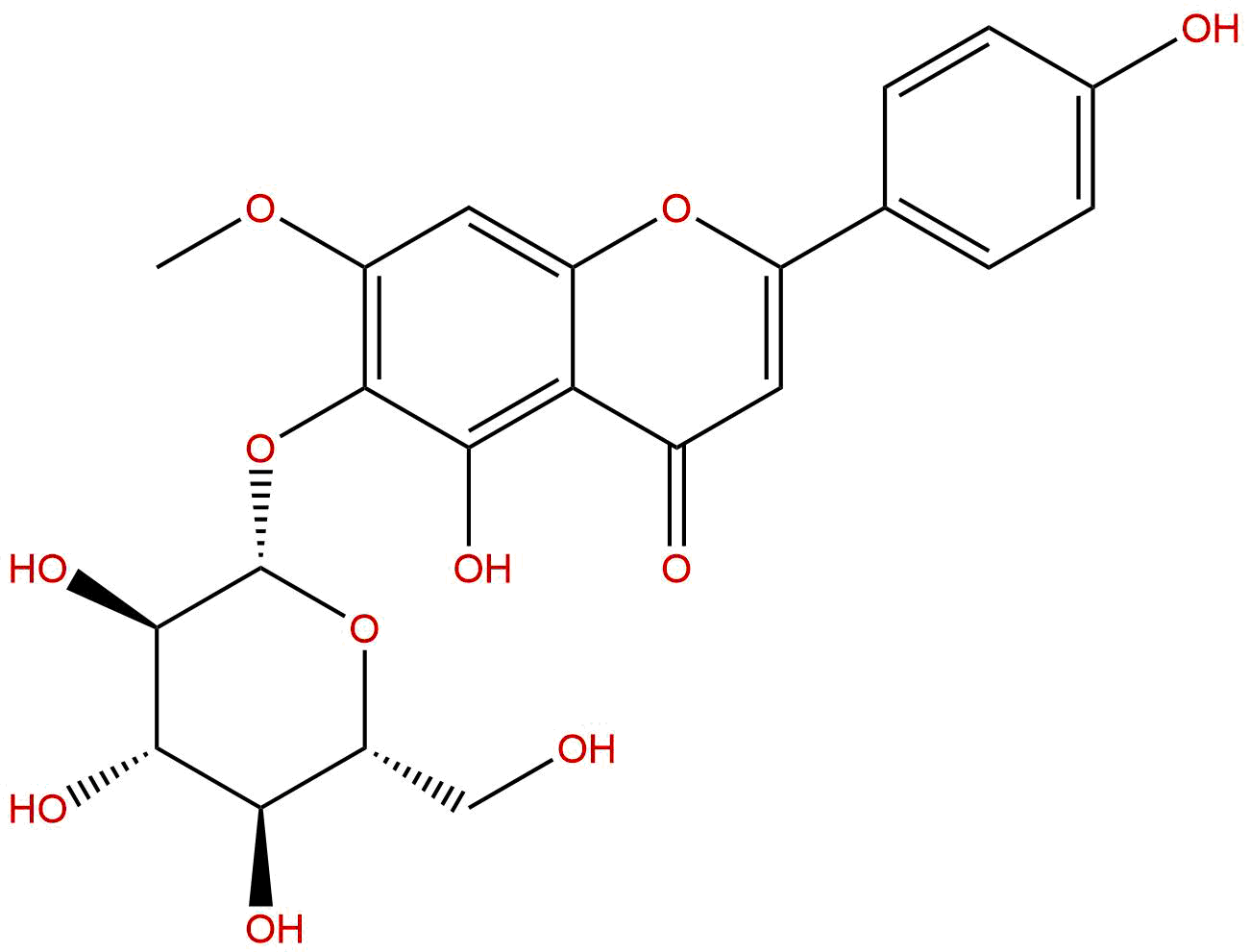


Product name: Ladanetin-6-O-β-D-glucopyranoside
Synonym name: 5,6,4'-Trihydroxy-7-methoxyflavone-6-O -β-D-glucoside
Catalogue No.: BP5415
Cas No.: 89647-63-2
Formula: C22H22O11
Mol Weight: 462.407
Botanical Source:
Type of Compound: Flavonoids
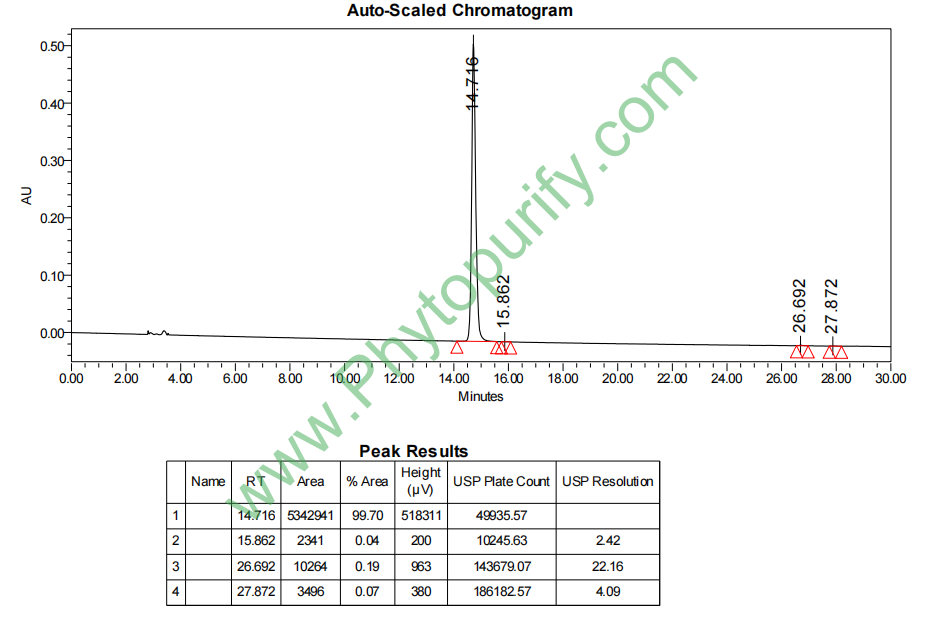
Purity: 95%~99%
Analysis Method: HPLC-DAD or/and HPLC-ELSD
Identification Method: Mass, NMR
Packing: Brown vial or HDPE plastic bottle
Storage: Store in a well closed container, protected from air and light. Put into refrigerate or freeze for long term storage.
Whenever possible, you should prepare and use solutions on the same day. However, if you need to make up stock solutions in advance, we recommend that you store the solution as aliquots in tightly sealed vials at -20℃. Generally, these will be useable for up to two weeks.
The product could be supplied from milligrams to grams
Inquire for bulk scale.
For Reference Standard and R&D, Not for Human Use Directly.
HPLC of Ladanetin-6-O-β-D-glucopyranoside
Storage conditions:Short-term storage at 2~8℃, long-term storage at -20 ~ -80℃
189.6500
-1.5000
-1.5000
Low
Unknown
Unknown
Unknown
Unknown
Unknown
Unknown
Unknown
Natural products, as an important source of drug discovery, play an irreplaceable role in the long history of human fight against diseases. Flavonoids, as the most widely distributed class of secondary metabolites in nature, have attracted much attention due to their structural diversity and extensive biological activity. Among numerous flavonoids, Ladanetin-6-O - β - D-glucoside, as a relatively rare flavonoid glycoside, has gradually entered the field of researchers in recent years. This compound was initially isolated from plants in the family Lamiaceae, and its unique chemical structure and potential biological activity have sparked strong interest among natural product chemists and pharmacologists.
The maternal nuclear structure of Itachi petal flower ting-6-O - β - D-glucoside belongs to the flavonoid class, and its glycosylation modification endows the molecule with unique physicochemical properties and biological activity characteristics. Compared with many common flavonoid glycosides such as rutin and quercetin-3-O-glucoside, this compound exhibits specificity in both the glycosylation site and aglycone structure. This structural uniqueness may be closely related to its specific biological activity spectrum. However, as of now, systematic research on this compound is still relatively limited, and its pharmacological mechanism, in vivo metabolic behavior, and clinical application potential still need to be further explored.
This review aims to comprehensively review the research status of Itachi petal flower ting-6-O - β - D-glucoside, systematically elaborating from multiple dimensions such as chemical structure, plant origin, extraction and isolation, pharmacological activity, mechanism of action, drug evaluation, and clinical application prospects, in order to provide reference for the subsequent research and development of this natural product.
The chemical name of Italantin-6-O - β - D-glucoside is Ladanetin-6-O - β - D-glucoside, with a molecular formula of C ₂ ₂ H ₂ O ₁ ₁ and a molecular weight of 462.4000 g/mol. From a structural classification perspective, this compound belongs to the flavonoid glycoside class, specifically the product formed by the connection of the 6th hydroxyl group of the flavonoid glycoside Ladanetin with β - D-glucopyranose through a glycosidic bond.
The basic parent nucleus of flavonoids is the 2-phenylchromone structure, which is composed of two benzene rings (A and B) connected by an oxygen-containing heterocyclic ring (C ring). In Itachi petal flower ting-6-O - β - D-glucoside, the sugar group is connected to the 6th carbon atom of the A ring, which is relatively rare in flavonoid glycosides. Most natural flavonoid glycosides undergo glycosylation at positions 3, 7, or 4 ', while 6-glycosylation endows the compound with unique spatial configuration and molecular recognition properties.
The sugar moiety is β - D-glucopyranose, which is connected to the aglycone through β - glycosidic bonds. The introduction of glucose not only increases the water solubility of the molecule, but may also affect its interaction mode with biological targets. In addition, the multiple hydroxyl groups on the glucose group provide abundant hydrogen bond donor and acceptor sites for the molecule, which is of great significance for its interaction with biomolecules such as proteins and nucleic acids.
According to the existing pharmacological parameters, Itachi petal flower ting-6-O - β - D-glucoside exhibits the following key physicochemical properties:
Lipid water partition coefficient (LogP)-1.5000. This negative value indicates that the compound has significant water solubility, but poor lipid solubility. A LogP value below 0 usually indicates that the distribution of the compound in the aqueous phase is better than in the organic phase. For flavonoid glycosides, the presence of sugar groups is the main reason for their high water solubility. This high water solubility feature is beneficial for its transportation and distribution in the blood, but may also limit its ability to penetrate biofilms.
Topological Polarity Surface Area (TPSA): 189.6500 Å ². TPSA is an important parameter for evaluating the oral absorption and blood-brain barrier permeability of compounds. It is generally believed that compounds with TPSA greater than 140 Å ² have difficulty crossing the blood-brain barrier, while compounds with TPSA greater than 120 Å ² may have limited oral absorption. The TPSA value of Itachi petal flower ting-6-O - β - D-glucoside is as high as 189.65 Å ², mainly attributed to the large number of hydroxyl and ether oxygen atoms in the molecule. Such a high polar surface area suggests that the membrane permeability of the compound in vivo may be poor, and its oral bioavailability may be low.
Number of hydrogen bond acceptors 11 of them. The abundant hydrogen bond receptor sites (mainly hydroxyl oxygen and ether oxygen) enable the compound to form a wide range of hydrogen bond networks with target proteins, which may be one of the structural foundations for its biological activity. However, excessive hydrogen bond sites may also lead to non-specific binding with plasma proteins, affecting their pharmacokinetic behavior.
Blood-brain barrier permeability:Low。 Combining high TPSA values and low LogP values, this compound is difficult to penetrate the blood-brain barrier, which limits its potential application in the treatment of central nervous system diseases. But from another perspective, low blood-brain barrier permeability also means a lower risk of neurotoxicity.
Toxicity prediction At present, the data on liver toxicity, cardiac toxicity, hERG inhibition, and Ames test are all "unknown", indicating that the toxicity spectrum of this compound has not been systematically evaluated. This is not only a gap in current research, but also a direction that future research needs to focus on.
Itachi petal flower ting-6-O - β - D-glucoside was initially isolated from plants in the Lamiaceae family. Lipstick family is a large family containing numerous medicinal plants, such as mint, perilla, Salvia miltiorrhiza, Scutellaria baicalensis, etc. Specifically, this compound is mainly present in the genus Italophora(Galeopsis)Among plants, this is also the origin of its name "Itachi Petal Flower Pavilion". Plants of the Itachi petal flower genus are often used in traditional medicine to treat respiratory diseases, inflammation, and infections.
This compound may also be present in other plants of the Lamiaceae family, in addition to plants of the Itachi petal flower genus. In recent years, with the deepening of plant chemistry research, some researchers have found that this compound is present in the Scutellaria genus(Scutellaria)Fragrant tea vegetable genus(Rabdosia)There is also distribution in plants. However, due to the generally low content of this compound in plants, its systematic distribution pattern is not fully understood.
It is worth noting that the accumulation of flavonoids in plants is influenced by various factors, including genetic factors, growth environment, harvesting time, processing methods, etc. Therefore, there may be significant differences in the content of this compound within the same plant source. Establishing a stable plant resource supply system is crucial for in-depth research on this compound.
Researchers usually use classical phytochemical extraction strategies combined with modern separation techniques for the extraction of 6-O - β - D-glucoside from Itachi petal flower pavilion.
Solvent extraction method Given the high water solubility of the compound, traditional alcohol water mixed solvent systems are commonly used as extraction solvents. Usually, 70% -80% methanol or ethanol aqueous solution is used as the extraction solvent for leaching or reflux extraction at room temperature or heating conditions. The extraction temperature is generally controlled at 40-60 ° C to avoid hydrolysis of glycosidic bonds caused by high temperatures. The extraction time is usually 2-4 hours, and repeated 2-3 times to improve extraction efficiency.
Assisted Extraction Technology To improve extraction efficiency and shorten extraction time, ultrasound assisted extraction and microwave-assisted extraction techniques have also been applied to the extraction of this compound. The cavitation effect of ultrasound can damage plant cell walls, promote solvent penetration, and facilitate the dissolution of active ingredients. Microwave assisted extraction utilizes the thermal and non thermal effects of microwaves to accelerate the extraction process. These modern extraction techniques can typically shorten the extraction time to less than 30 minutes while maintaining a high extraction rate.
Separation and purification The crude extract contains a large amount of impurities and requires a series of separation and purification steps to obtain high-purity target compounds. Common separation methods include:
Liquid-liquid extraction The crude extract is subjected to graded extraction using solvents of different polarities, usually using solvents such as petroleum ether, ethyl acetate, n-butanol, etc. for sequential extraction, to enrich the target compound in the n-butanol or ethyl acetate extraction site.
Column chromatography separation Silica gel column chromatography is the most commonly used preliminary separation method, using gradient elution systems such as chloroform methanol or ethyl acetate methanol. In addition, polyamide column chromatography has a selective adsorption effect on flavonoids and can effectively remove impurities such as chlorophyll.
High performance liquid chromatography (HPLC)For final purification, preparative HPLC is the preferred method for obtaining high-purity compounds. Usually, C18 reverse phase chromatography column is used, with methanol water or acetonitrile water system as the mobile phase, to achieve the separation of target compounds through gradient elution.
High Speed Counter Current Chromatography (HSCCC)As a liquid-liquid distribution chromatography technique, HSCCC has unique advantages in separating polar flavonoid glycosides, which can avoid irreversible adsorption of samples on the stationary phase and have high recovery rates.
Flavonoids generally have antioxidant activity, and Itachi petal flower ting-6-O - β - D-glucoside is no exception. Research has shown that this compound can effectively scavenge various free radicals, including 1,1-diphenyl-2-trinitrophenylhydrazine (DPPH) free radical, 2,2 '- diazo-bis-3-ethylbenzothiazoline-6-sulfonic acid (ABTS) cationic free radical, and hydroxyl free radical.
Its antioxidant mechanism is mainly attributed to the hydrogen donating ability of phenolic hydroxyl groups in the molecule. The phenolic hydroxyl group on the flavonoid nucleus can react with free radicals to generate relatively stable semiquinone free radicals, thereby interrupting the chain reaction of free radicals. In addition, the hydroxyl group on the glucose group may also enhance the antioxidant capacity of the molecule through hydrogen bonding. At the cellular level, this compound can reduce the levels of reactive oxygen species (ROS) induced by oxidative stress, protecting cells from oxidative damage.
Inflammation is the fundamental pathological process of various diseases, and the discovery of natural anti-inflammatory compounds has always been a hot topic in drug development. Preliminary studies have shown that Itachi petal flower ting-6-O - β - D-glucoside exhibits anti-inflammatory activity both in vitro and in vivo.
In a macrophage model stimulated by lipopolysaccharide (LPS), this compound can significantly inhibit the production of pro-inflammatory cytokines such as tumor necrosis factor - α (TNF - α), interleukin-6 (IL-6), and interleukin-1 β (IL-1 β). Meanwhile, it can also reduce the release of nitric oxide (NO) and prostaglandin E2 (PGE2), which is related to its inhibitory effect on the expression of inducible nitric oxide synthase (iNOS) and cyclooxygenase-2 (COX-2).
In animal models, the compound showed certain inhibitory effects on xylene induced ear swelling in mice and carrageenan induced paw swelling in rats, indicating its potential anti-inflammatory application value.
Flavonoids have inhibitory effects on various microorganisms. Itachi petal flower ting-6-O - β - D-glucoside is effective against certain Gram positive bacteria such as Staphylococcus aureus(Staphylococcus aureus)And Bacillus subtilis(Bacillus subtilis)Shows moderate antibacterial activity. Its minimum inhibitory concentration (MIC) is usually in the range of 50-200 μ g/mL, which is comparable to common natural antibacterial agents.
However, this compound is effective against Gram negative bacteria such as Escherichia coli(Escherichia coli)And Pseudomonas aeruginosa(Pseudomonas aeruginosa)The inhibitory effect is relatively weak, which may be related to the permeability barrier of the outer membrane of Gram negative bacteria. In addition, preliminary studies have also found that the compound has an effect on certain fungi such as Candida albicans(Candida albicans)Has a certain inhibitory effect.
In recent years, the potential of natural products in cancer treatment has received widespread attention. Itachi petal flower ting-6-O - β - D-glucoside exhibits cytotoxic effects on certain tumor cell lines. Research shows that this compound can inhibit the proliferation of human hepatoma cell HepG2, human breast cancer cell MCF-7 and human colon cancer cell HT-29, and its half inhibitory concentration (IC ≮₀) is within 10-50 μ M.
It is worth noting that this compound has relatively low toxicity to normal cells and exhibits a certain degree of selectivity. This selective toxicity is an important characteristic of anti-tumor drugs, suggesting that they may have a good therapeutic window. Further mechanistic studies suggest that the compound may exert anti-tumor effects by inducing cell apoptosis and cell cycle arrest.
In addition to the above-mentioned activities, the compound has also been reported to have the following biological activities:
The antioxidant effect of Itachi petal flower ting-6-O - β - D-glucoside is not limited to directly scavenging free radicals, but also involves regulating the intracellular antioxidant defense system. Research has shown that this compound can activate the nuclear factor E2 related factor 2 (Nrf2)/antioxidant response element (ARE) signaling pathway. Nrf2 is a key transcription factor that regulates the expression of antioxidant enzymes, and its activation can promote the expression of antioxidant enzymes such as heme oxygenase-1 (HO-1), quinone oxidoreductase 1 (NQO1), glutathione S-transferase (GST), etc., thereby enhancing the antioxidant capacity of cells.
Specifically, the compound may promote the dissociation and translocation of Nrf2 from Keap1 protein into the nucleus by modifying cysteine residues on Keap1 protein, and bind to ARE to initiate the transcription of downstream target genes. This mechanism is similar to the way many natural flavonoids act.
In terms of anti-inflammatory effects, the target of this compound mainly involves the nuclear factor kappa B (NF - κ B) and mitogen activated protein kinase (MAPK) signaling pathways. NF - κ B is the core regulatory factor of inflammatory response, and its activation can induce the expression of various pro-inflammatory genes. Research has shown that Itachi petal flower ting-6-O - β - D-glucoside can inhibit the phosphorylation and degradation of I κ B α, thereby preventing the nuclear translocation and transcriptional activity of NF - κ B.
In addition, the compound can also inhibit the phosphorylation of p38, JNK, and ERK in the MAPK pathway. The activation of the MAPK pathway is closely related to the production of inflammatory factors, and inhibiting this pathway can reduce the synthesis of pro-inflammatory factors such as TNF - α and IL-6. It is worth noting that the direct inhibition of COX-2 and iNOS by this compound may also be one of the important mechanisms of its anti-inflammatory effect.
The anti-tumor effect of this compound involves multiple molecular targets and signaling pathways. Preliminary research suggests that it may exert anti-tumor activity through the following mechanisms:
Inducing cell apoptosis This compound can upregulate the expression of pro apoptotic protein Bax and downregulate the expression of anti apoptotic protein Bcl-2, leading to a decrease in mitochondrial membrane potential, release of cytochrome c, and activation of caspase-9 and caspase-3, ultimately inducing cell apoptosis.
cell cycle arrest Research has found that this compound can block tumor cells in the G0/G1 phase or G2/M phase, which is related to changes in the expression of cyclins and cyclin dependent kinases (CDKs). Specifically, this compound may downregulate the expression of cyclin D1, cyclin B1, and CDK4, while upregulating the expression of CDK inhibitors such as p21 and p27.
Inhibit angiogenesis Angiogenesis is a crucial process for tumor growth and metastasis. This compound may exert anti angiogenic effects by inhibiting the expression and secretion of vascular endothelial growth factor (VEGF), as well as suppressing the proliferation and migration of endothelial cells.
Although there is currently insufficient research on the direct molecular targets of this compound, based on its structural characteristics and known activity, the following potential molecular targets can be inferred:
It should be pointed out that most of the above targets are based on indirect evidence or analogies with other flavonoid compounds, and further research is needed to directly verify the interaction between this compound and these targets.
Based on the existing physicochemical property parameters, a preliminary evaluation of the pharmacological properties of Itachi petal flower ting-6-O - β - D-glucoside can be conducted. According to the Lipinski Rule, a compound has good oral efficacy if it meets the following conditions: molecular weight ≤ 500 LogP≤5、 The number of hydrogen bond donors is ≤ 5, and the number of hydrogen bond acceptors is ≤ 10. The molecular weight of this compound is 462.4 (compliant), with a LogP of -1.5 (compliant), but the number of hydrogen bond acceptors is 11 (slightly exceeding), and its TPSA is as high as 189.65 Å ², far higher than the 140 Å ² typically required for orally absorbed compounds.
Therefore, this compound may not meet the traditional criteria for oral drug efficacy. Although its high polarity and high water solubility are beneficial for dissolution and transport in the bloodstream, they may limit its passive diffusion through intestinal epithelial cells. In addition, the compound may become a substrate for intestinal efflux transporters such as P-glycoprotein (P-gp), further reducing its oral absorption.
At present, there is still a lack of systematic research on the pharmacokinetics of Itachi petal flower ting-6-O - β - D-glucoside in vivo. Based on its structural characteristics and research on similar compounds, the following possible pharmacokinetic features can be inferred:
absorb After oral administration, the absorption of this compound in the gastrointestinal tract may be poor. Flavonoid glycosides usually need to undergo deglycosylation under the action of gut microbiota to generate aglycones before they can be effectively absorbed. Therefore, the oral bioavailability of this compound may be low. However, glucose transporters in the intestine, such as SGLT1, may be involved in its absorption, but this requires experimental verification.
distribution Due to its high water solubility and low fat solubility, this compound is mainly distributed in extracellular fluid and blood, making it difficult to enter the interior of cells. Its apparent distribution volume (Vd) may be relatively small. In addition, the compound may bind to plasma proteins such as albumin, affecting its free drug concentration.
Metabolism The metabolism of this compound may involve the following pathways: 1) hydrolysis of glycosidic bonds mediated by gut microbiota to generate the aglycone Ladanetin; 2) Phase II metabolism in the liver, including glucuronic acid binding, sulfate binding, and methylation; 3) Possible Phase I metabolism, such as hydroxylation reactions. The biological activity of metabolites may differ from that of the parent compound, and further research is warranted.
excretion Due to its high molecular polarity, this compound and its metabolites may be primarily excreted through the kidneys in their original form or in the form of conjugates. Bile excretion may also be one of its elimination pathways.
At present, the toxicity data of this compound is incomplete. Based on its structural characteristics, it can be preliminarily inferred that:
It should be emphasized that systematic toxicology research is a prerequisite for drug development, and the safety evaluation of this compound urgently needs to be carried out.
Based on its existing pharmacological activity research, Itachi petal flower ting-6-O - β - D-glucoside has potential clinical application prospects in the following fields:
Inflammatory diseases Its anti-inflammatory activity suggests that it may be used to treat chronic inflammatory diseases such as rheumatoid arthritis, inflammatory bowel disease, dermatitis, etc. However, more in vivo pharmacological studies are needed to validate its efficacy.
Oxidative stress-related diseases Its antioxidant activity may be used to prevent cardiovascular diseases, diabetes complications, neurodegenerative diseases and other diseases related to oxidative stress. But as mentioned earlier, its low blood-brain barrier permeability limits its application in central nervous system diseases.
neoadjuvant therapy Although its anti-tumor activity is relatively weak, as an adjuvant therapy drug, it may enhance the efficacy of conventional chemotherapy drugs or reduce their toxic side effects. In addition, its selective cytotoxicity suggests that it may have good safety.
Liver protective drugs Preliminary liver protection studies suggest that it may be used for the prevention and treatment of liver injury, such as alcoholic liver disease, drug-induced liver injury, etc.
To develop this compound into a clinical drug, the following main challenges are faced:
Low oral bioavailability This is a common issue among flavonoid glycosides. The solution strategy includes: a) structural modification, such as preparing prodrugs or derivatives; b) Develop new drug delivery systems, such as liposomes, nanoparticles, phospholipid complexes, etc; c) Change the route of administration, such as transdermal or injectable administration.
Incomplete pharmacological data At present, research mostly remains at the in vitro level, with insufficient in vivo pharmacological studies. Systematic in vivo pharmacological studies are needed, including dose-response relationships, optimization of dosing regimens, etc.
The mechanism of action is unclear The direct molecular target has not been determined yet, and target identification requires techniques such as drug affinity reaction target stability (DARTS) and cell thermal transition analysis (CETSA).
Lack of toxicological data Comprehensive toxicology research is required, including acute toxicity, long-term toxicity, reproductive toxicity, genetic toxicity, etc.
Resource supply issues The compound has a low content in plants, and chemical or biological synthesis may be an effective way to solve resource problems.
Future research on this compound should focus on the following directions:
Target identification and validation Using chemical biology methods to identify its direct target, and verifying the functional relevance of the target through techniques such as gene knockout/knock in and RNA interference.
Research on Structure Activity Relationship By synthesizing a series of derivatives, studying the effect of structural modifications on biological activity, and searching for lead compounds with stronger activity.
Pharmacokinetic optimization Improve its pharmacokinetic properties and enhance bioavailability through prodrug design, formulation technology, and other means.
Combination therapy research Explore the synergistic effect of this compound with existing drugs and search for the optimal combination therapy.
Preclinical evaluation Conduct systematic preclinical pharmacological, pharmacokinetic, and toxicological studies in accordance with new drug development standards.
Itachi petal flower ting-6-O - β - D-glucoside, as a structurally unique natural flavonoid glycoside, exhibits various biological activities such as antioxidant, anti-inflammatory, antibacterial, and anti-tumor. Its high water solubility and low fat solubility physical and chemical characteristics endow it with unique pharmacokinetic behavior, but at the same time, it also brings the challenge of low oral bioavailability. At present, research on this compound is still in its early stages, and there are significant gaps in its mechanism of action, molecular targets, in vivo efficacy, and safety.
From the perspective of natural product drug development, this compound has the potential to serve as a lead compound for structural optimization. Through rational structural modification and formulation techniques, it is expected to overcome its drug defects and develop drugs with clinical application value. Meanwhile, the study of this compound will also enrich our understanding of the relationship between the structure and activity of flavonoid glycosides, providing new ideas for the development of natural product drugs.
With the continuous development of modern analytical techniques and pharmacological methods, it is believed that in the near future, the mysterious veil of Itachi petal flower ting-6-O - β - D-glucoside will be gradually unveiled, and its value in human health will be more fully reflected.
