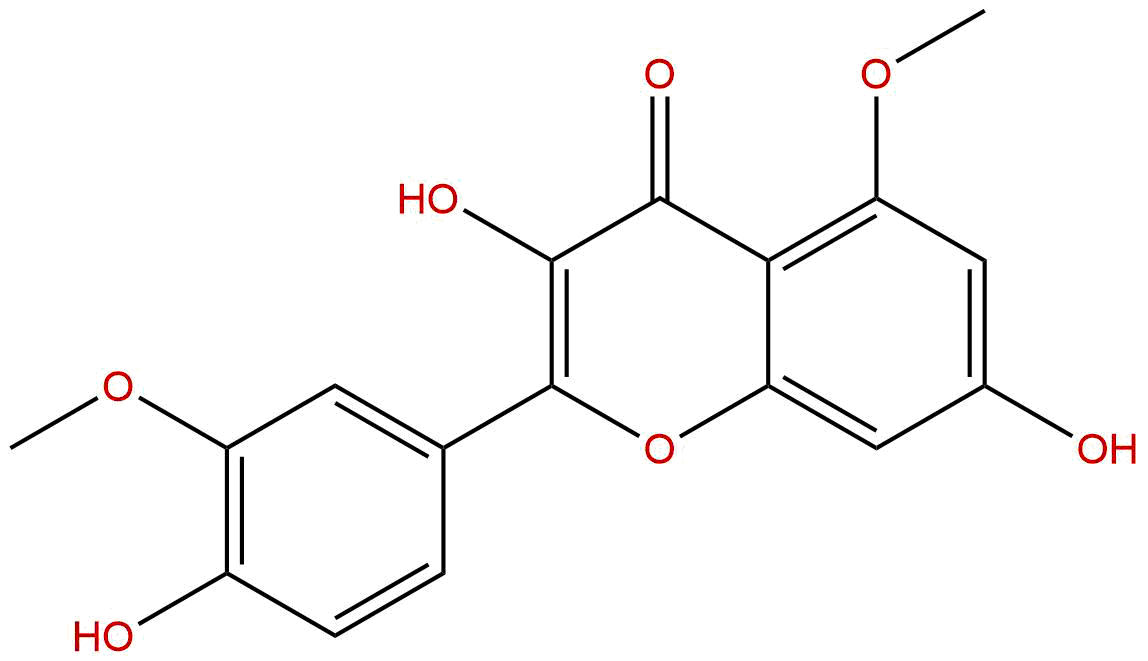


Product name: Quercetin 5,3'-dimethyl ether
Synonym name: 3',5-Di-O-methyl quercetin
Catalogue No.: BP5003
Cas No.: 40554-94-7
Formula: C17H14O7
Mol Weight: 330.292
Botanical Source:
Type of Compound: Flavonoids
Purity: 95%~99%
Analysis Method: HPLC-DAD or/and HPLC-ELSD
Identification Method: Mass, NMR
Packing: Brown vial or HDPE plastic bottle
Storage: Store in a well closed container, protected from air and light. Put into refrigerate or freeze for long term storage.
Whenever possible, you should prepare and use solutions on the same day. However, if you need to make up stock solutions in advance, we recommend that you store the solution as aliquots in tightly sealed vials at -20℃. Generally, these will be useable for up to two weeks.
The product could be supplied from milligrams to grams
Inquire for bulk scale.
For Reference Standard and R&D, Not for Human Use Directly.
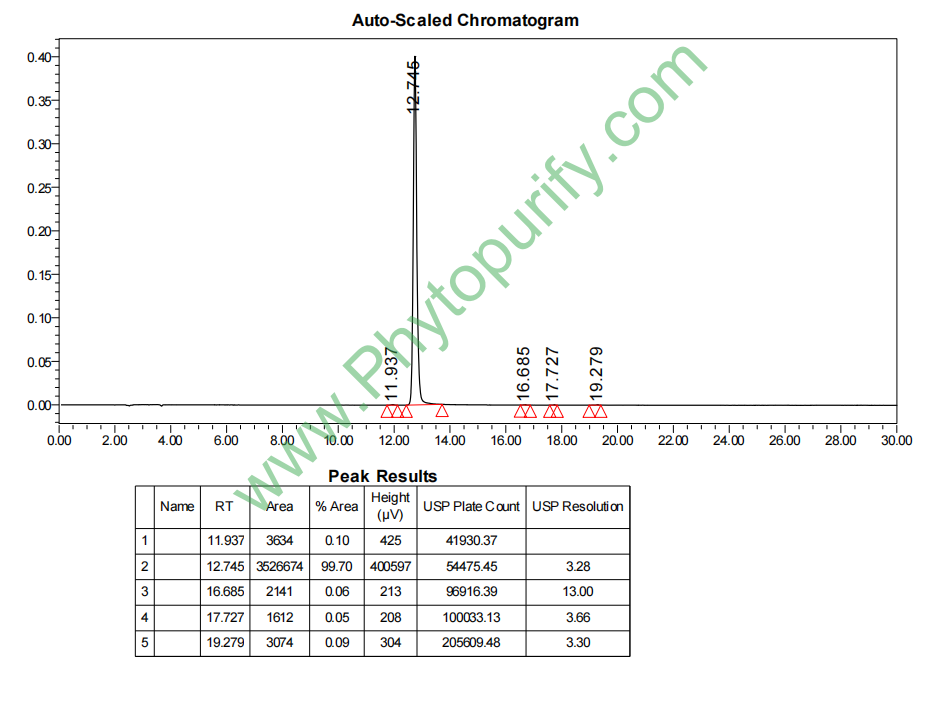
HPLC of Quercetin 5,3'-dimethyl ether
Storage conditions:Short-term storage at 2~8℃, long-term storage at -20 ~ -80℃
109.3600
2.1451
2.0014
.1062
2.7866
15.4274
Low
87.4923
2.4359
Yes
No
Yes
No
Yes
No
0.6
Yes
No
Yes
No
Natural products, as an important source of drug discovery, have long played an indispensable role in the human fight against diseases. Among the diverse natural products, flavonoids have attracted much attention due to their widespread biological activity and relatively low toxicity. Quercetin, as a typical representative of flavonoids, has been extensively studied for its various pharmacological activities such as antioxidant, anti-inflammatory, and anti-tumor effects. However, quercetin itself has defects such as poor water solubility, unstable metabolism, and low bioavailability, which limit its further clinical application. To overcome these limitations, structural modification of quercetin, especially methylation modification, has become an important strategy to improve its pharmacological properties and discover new activities.
Quercetin 5,3 '- dimethyl ether, as a natural methylated derivative of quercetin, has gradually entered the field of researchers in recent years. This compound not only changes the physicochemical properties of the molecule but also endows it with a unique biological activity spectrum by introducing two methyl groups at the 5th and 3rd positions of its parent nucleus. Compared with quercetin, 3 ', 5-dimethylquercetin exhibits stronger metabolic stability and membrane permeability, while its pharmacological mechanisms also show significant differences and diversity. What is particularly noteworthy is that the compound can simultaneously activate the longevity protein SIRT1 (Sirtuin 1) and inhibit members of the phosphatidylinositol 3-kinase (PI3K) family. This dual and seemingly contradictory regulatory pattern suggests that it may play a unique role in complex disease networks, especially in tumor development and progression. In addition, it targets various proteins closely related to tumor proliferation, apoptosis, invasion, and metastasis, such as MCL1、BCL2、STAT3、MMP2、TOP1、HIF1A、TOP2A、MAPK1、ESR1、CYP19A1 The potential regulatory role of such compounds further highlights their enormous potential as multi-target natural lead compounds. This article aims to systematically review the chemical properties, sources, pharmacological activities, mechanisms of action, and pharmacological properties of 3 ', 5-dimethylquercetin, in order to provide comprehensive academic references for the in-depth research and development of this compound.
The chemical structure of 3 ', 5-dimethylquercetin is based on the classical flavonoid nucleus (2-phenylchromenone). Its specific structural features are: on the basis of quercetin (3,5,7,3 ', 4' - pentahydroxyflavone), the 5th hydroxyl group on the A ring and the 3rd hydroxyl group on the B ring are replaced by methoxy (- OCH ∝). Therefore, its system is named 3,5,7-trihydroxy-2- (4-hydroxy-3-methoxyphenyl) -4H-phene-4-one, or more concisely 5,3 '- dimethoxyquercetin. Its molecular formula is C ₁₇ H ₁₄ O ₇, and its CAS registration number is 40554-94-7.
From the perspective of physical and chemical properties, the molecular weight of this compound is 330.2920 Da, belonging to the small molecule flavonoid class. The LogP of its lipid water partition coefficient is 2.1451, indicating that the molecule has a certain lipophilicity, which is beneficial for its penetration into biofilms, but may also affect its dissolution and distribution in aqueous environments. Its polar surface area (TPSA) is 109.3600 Å ², which is at a moderate level. Molecules with TPSA less than 140 Å ² are generally considered to have good oral absorption potential. However, its low water solubility (0.1062 mg/mL) may be a key limiting factor for its low bioavailability in vivo. The predicted blood-brain barrier (BBB) permeability is "low", indicating that the potential of this compound in the treatment of central nervous system diseases may be limited, but it may also mean that its peripheral effects are more prominent and the risk of central nervous system side effects is lower. In addition, the predicted results showed that the compound does not have hERG (human ether - à - go go related gene) potassium channel inhibitory activity, which reduces its risk of causing cardiac toxicity (such as QT interval prolongation). The Ames test result is 0.6, indicating a potential genetic toxicity risk, but this requires more rigorous experimental verification. Overall, 3 ', 5-dimethylquercetin has improved its physicochemical properties compared to its prototype quercetin, but there are still challenges such as poor water solubility that need to be optimized through formulation methods or further structural modifications.
3 ', 5-dimethylquercetin, as a naturally occurring flavonoid compound, is widely distributed in various plants, especially in some plants with medicinal value where its content is relatively abundant. Its main plant sources include but are not limited to: Asteraceae plants such as Artemisia argyi(Artemisia argyi)Artemisia scoparia, Artemisia scoparia(Artemisia capillaris); Leguminous plants such as licorice(Glycyrrhiza uralensis); And some spices and vegetables, such as fennel(Foeniculum vulgare)And chili peppers(Capsicum annuum)Wait. The content of this compound varies significantly among different plants, usually closely related to the plant species, growth environment, harvest season, and location.
For the extraction of 3 ', 5-dimethylquercetin, the classic solvent extraction method is currently mainly used, supplemented by modern separation and purification techniques. Common extraction solvents include methanol, ethanol, ethyl acetate, or their mixed solvents with water. Due to the lipophilicity of the compound, extraction with high concentrations of ethanol or methanol is usually more efficient. The extraction process usually includes steps such as drying, crushing, solvent soaking or reflux extraction, filtration, and concentration of the raw materials. In order to improve extraction efficiency and selectivity, green and efficient technologies such as ultrasound assisted extraction and microwave-assisted extraction have also been introduced in recent years.
The crude extract obtained is complex in composition and requires further separation and purification to obtain high-purity 3 ', 5-dimethylquercetin. Common separation and purification methods include:
1. Column chromatography method This is the most commonly used method. Silica gel column chromatography is the preferred method, usually using solvent systems such as chloroform methanol or petroleum ether ethyl acetate for gradient elution. For flavonoids with similar structures, polyamide column chromatography exhibits excellent separation efficiency due to its special adsorption effect on phenolic hydroxyl groups.
2. High performance liquid chromatography (HPLC)As a high-resolution separation technique, preparative HPLC is widely used to obtain single compounds with high purity (>98%). Usually, a reverse phase C18 chromatography column is used, with methanol water or acetonitrile water system as the mobile phase, and can be monitored by a UV detector at specific wavelengths (such as 254 nm or 360 nm).
3. High Speed Counter Current Chromatography (HSCCC)This is a chromatographic technique based on the liquid-liquid distribution principle, which does not require solid supports and avoids irreversible adsorption of samples on the column. It is particularly suitable for the separation of flavonoids and has a high recovery rate.
The extraction and separation process requires real-time monitoring using thin-layer chromatography (TLC) or HPLC to ensure effective enrichment and purity of the target compound. Finally, the isolated compounds were structurally confirmed using techniques such as nuclear magnetic resonance spectroscopy (NMR) and mass spectrometry (MS).
The pharmacological activity research of 3 ', 5-dimethylquercetin mainly focuses on its anti-tumor effect, while its potential in antioxidant, anti-inflammatory and other aspects is gradually being revealed.
1. Antitumor activity
Antitumor activity is the most highly anticipated pharmacological activity of 3 ', 5-dimethylquercetin. Studies have shown that this compound can inhibit the proliferation of many types of cancer cell lines, including breast cancer, lung cancer, liver cancer, colon cancer, prostate cancer and leukemia. Its mechanism of action is complex, involving multiple signaling pathways and molecular targets.
- Inducing cell apoptosis 3 ', 5-dimethylquercetin can significantly induce apoptosis in tumor cells. The mechanism may include downregulating the expression of anti apoptotic proteins MCL1 and BCL2, while upregulating the expression of pro apoptotic protein Bax, thereby disrupting mitochondrial membrane potential, releasing cytochrome c, and activating the Caspase cascade reaction. In addition, it can inhibit the phosphorylation of the STAT3 signaling pathway, thereby blocking STAT3 mediated transcription of pro survival genes.
- Inhibit cell proliferation and cycle arrest This compound can inhibit the phosphorylation of MAPK1 (ERK2) and block the RAS-RAF-MEK-ERK signaling pathway, thereby suppressing the proliferation of tumor cells. At the same time, it can also block the cell cycle in the G0/G1 phase or G2/M phase, which may be related to regulating the expression of cyclins and cyclin dependent kinases (CDKs).
- Inhibit invasion and metastasis 3 ', 5-dimethylquercetin can significantly inhibit the migration and invasion ability of tumor cells. The mechanism is closely related to the downregulation of the expression and activity of matrix metalloproteinase MMP2, which is a key enzyme in degrading extracellular matrix and promoting tumor metastasis. In addition, it can also inhibit the expression of hypoxia inducible factor HIF1A, thereby weakening the adaptability and angiogenesis ability of tumors in hypoxic environments.
- Inhibition of Topoisomerase Activity This compound exhibits inhibitory effects on both DNA topoisomerases I (TOP1) and II (TOP2A). Topoisomerase is a key enzyme in DNA replication and transcription processes, and inhibiting its activity can lead to DNA damage, thereby exerting anti-tumor effects. This is similar to the mechanism of action of many commonly used chemotherapy drugs in clinical practice, such as camptothecin and etoposide.
- Hormone related tumors For hormone dependent tumors, such as breast cancer, 3 ', 5-dimethylquercetin shows a dual regulatory effect. It can act as a regulator of estrogen receptor alpha (ESR1) and inhibit the activity of aromatase CYP19A1. CYP19A1 is a key enzyme that converts androgen into estrogen and is highly expressed in breast cancer tissue. Therefore, this compound may play an anti breast cancer role by simultaneously blocking estrogen signal and inhibiting estrogen synthesis.
2. Other pharmacological activities
- antioxidant activity Although some phenolic hydroxyl groups of 3 ', 5-dimethylquercetin are methylated, three hydroxyl groups remain at positions 3, 7, and 4', allowing it to still possess a certain degree of free radical scavenging ability. Research has shown that although its antioxidant activity is weaker than quercetin, it can still effectively reduce reactive oxygen species (ROS) levels in certain specific systems, protecting cells from oxidative damage.
- anti-inflammatory activity This compound can inhibit the production of nitric oxide (NO) and prostaglandin E2 (PGE2) in macrophages induced by lipopolysaccharide (LPS), and downregulate the expression of inducible nitric oxide synthase (iNOS) and cyclooxygenase-2 (COX-2). Its anti-inflammatory effect may be related to the inhibition of the activation of the NF - κ B signaling pathway.
- Neuroprotective activity Despite its low blood-brain barrier permeability, studies have reported that 3 ', 5-dimethylquercetin exhibits protective effects in vitro neural cell models and can counteract neurotoxicity induced by β - amyloid protein (A β), which may be related to its antioxidant and anti apoptotic mechanisms.
The pharmacological activity of 3 ', 5-dimethylquercetin stems from its interactions with multiple molecular targets. Its core mechanism of action can be summarized as "dual function regulation", which simultaneously activates and inhibits different signaling pathways.
1. Activation of SIRT1
SIRT1 is an NAD ⁺ - dependent histone deacetylase that plays a critical role in regulating cellular metabolism, stress resistance, aging, and inflammation. 3 ', 5-dimethylquercetin has been reported to directly activate SIRT1. The activation of SIRT1 can:
- Deacetylated p53 Reducing the transcriptional activity of p53, thereby inhibiting cell apoptosis, may play a protective role in certain situations.
- Deacetylation of NF - κ B Inhibit NF - κ B-mediated inflammatory response.
- Deacetylated PGC-1 αPromote mitochondrial biosynthesis and energy metabolism.
2. Inhibition of PI3K
The phosphatidylinositol 3-kinase (PI3K) signaling pathway is one of the most important pro survival and proliferation signaling pathways in cells, and is abnormally activated in various cancers. 3 ', 5-dimethylquercetin is an effective inhibitor of this pathway, and its inhibitory activity on different PI3K subtypes varies. The IC50 values for PI3K γ, PI3K δ, and PI3K β are 2.4 μ M, 3.0 μ M, and 5.4 μ M, respectively. Inhibition of PI3K leads to a decrease in the phosphorylation level of its downstream key effector molecule Akt, resulting in:
- Inhibit cell proliferation By inhibiting the activity of mTORC1, protein synthesis and cell cycle progression are blocked.
- Inducing cell apoptosis By inhibiting the phosphorylation of pro apoptotic proteins such as Bad and Caspase-9 by Akt, the inhibitory effect is released, thereby promoting apoptosis.
- Inhibit angiogenesis By inhibiting the synthesis and activity of HIF1A, the expression of vascular endothelial growth factor (VEGF) is reduced.
3. Multi target synergistic effect
In addition to the two core targets mentioned above, 3 ', 5-dimethylquercetin also exerts its comprehensive pharmacological effects by regulating multiple other targets, forming a complex network of regulation. For example:
- Regulation of apoptosis related proteins Directly or indirectly downregulate the two key anti apoptotic proteins MCL1 and BCL2, while possibly upregulating the pro apoptotic protein Bax, thereby disrupting the survival balance of tumor cells and making them more likely to enter the apoptotic program.
- Regulation of signal transduction proteins Inhibiting the phosphorylation of STAT3 and blocking its function as a transcription factor, thereby downregulating the expression of its target genes (such as Cyclin D1, Survivor, VEGF). At the same time, inhibiting the phosphorylation of MAPK1 (ERK) and blocking the RAS-MAPK proliferation signaling pathway.
- Regulation of transcription factors and enzymes Inhibiting the accumulation of HIF1A and weakening the tumor's ability to adapt to hypoxia; Inhibiting the activity of TOP1 and TOP2A directly causes DNA damage; Regulate the activity of ESR1 and inhibit the enzymatic activity of CYP19A1, exerting anti hormone dependent tumor effects.
This multi-target and multi pathway mode of action enables 3 ', 5-dimethylquercetin to simultaneously intervene in multiple key stages of tumor development, including proliferation, apoptosis, metastasis, angiogenesis, and metabolic reprogramming. This may be one of the reasons why its anti-tumor activity is stronger than that of single target drugs, and also indicates its potential to overcome tumor drug resistance.
To develop 3 ', 5-dimethylquercetin from a natural product into a clinical drug, a systematic evaluation of its pharmacological properties is necessary, with pharmacokinetic (ADME) characteristics being key.
1. Analysis of pharmacological parameters
Based on the aforementioned physicochemical parameters, the compound exhibits "drug like" characteristics, but there are also obvious shortcomings.
- Advantage The molecular weight (330.29 Da) meets the criteria for small molecule drugs (<500 Da); LogP (2.15) is moderate, balancing hydrophilicity and lipophilicity; TPSA (109.36 Å ²) is within a good range for oral absorption; There is no risk of hERG inhibition and low cardiac toxicity.
- disadvantage The water solubility (0.1062 mg/mL) is poor and belongs to low solubility drugs, which may be the main reason for its low oral bioavailability. The positive result of Ames test (0.6) is an important warning signal, indicating the possibility of genetic toxicity and the need for more in-depth in vitro and in vivo genetic toxicity assessment.
2. Pharmacokinetic characteristics (predicted and known)
At present, there are relatively few direct studies on the pharmacokinetics of 3 ', 5-dimethylquercetin in vivo, but its general characteristics can be inferred based on its structural features and studies of similar compounds.
- absorb Due to its moderate LogP, it theoretically has good membrane permeability, but its low water solubility limits its dissolution and absorption in the gastrointestinal tract. After oral administration, its absolute bioavailability may be low. Methylation modification is generally believed to improve the metabolic stability and absorption efficiency of flavonoids, therefore its oral absorption may be superior to quercetin.
- distribution Due to its lipophilicity, this compound may be widely distributed in various tissues within the body. But its low BBB permeability suggests that its concentration in the central nervous system may be lower.
- Metabolism Flavonoids mainly undergo phase II metabolism in the body, such as glucuronidation, sulfation, and methylation. 3 ', 5-dimethylquercetin itself is already a methylated product, and its residual 3,7,4' hydroxyl groups are the main metabolic sites. In addition, cytochrome P450 enzymes (CYPs) in the liver may also demethylate their methoxy groups. Therefore, its metabolism in the body may be more complex, and its metabolites may also have biological activity.
- excretion Metabolites are mainly excreted through bile and urine.
3. Challenges and optimization strategies faced
The main challenges of 3 ', 5-dimethylquercetin as a drug are:Low water solubility、Potential genetic toxicity and Complex internal metabolism。
- Improve water solubility Pharmaceutical methods can be used, such as preparing phospholipid complexes, cyclodextrin inclusion complexes, nanoemulsions, liposomes, or solid dispersions, to significantly improve their solubility and oral bioavailability.
- Genetic toxicity assessment A standard combination of genetic toxicity tests (such as Ames test, in vitro micronucleus test, in vivo bone marrow micronucleus test, etc.) must be conducted to confirm its risk. If genetic toxicity is confirmed, structural modifications (such as blocking potential toxic groups) are needed to reduce the risk.
- Metabolic stability Through prodrug design, such as esterification or etherification protection of easily metabolized hydroxyl groups, the half-life in the body can be extended and the efficacy can be improved.
Based on the unique pharmacological activity spectrum and preliminary pharmacological characteristics of 3 ', 5-dimethylquercetin, it has shown broad application prospects in the treatment of various diseases, especially in the field of tumor therapy.
1. Anti tumor therapy
- As a multi-target anti-tumor candidate drug: It simultaneously inhibits PI3K/Akt/mTOR and STAT3 signaling pathways, and induces multiple mechanisms of apoptosis, inhibition of metastasis and angiogenesis, making it very suitable for the treatment of complex tumors prone to drug resistance to single target drugs, such as triple negative breast cancer, non-small cell lung cancer, liver cancer and pancreatic cancer.
- Combination therapy strategy Given its complementary mechanism of action with multiple chemotherapy drugs and targeted drugs, 3 ', 5-dimethylquercetin is highly likely to become an ideal combination therapy partner. For example, when used in combination with chemotherapy drugs such as cisplatin and paclitaxel, it may reverse chemotherapy resistance and enhance chemotherapy efficacy by inhibiting the PI3K/Akt pathway. Combined use with SIRT1 inhibitors may produce synergistic anti-tumor effects. Combined with immune checkpoint inhibitors (such as PD-1/PD-L1 antibodies), their ability to regulate the tumor microenvironment may enhance the efficacy of immunotherapy.
- Hormone related tumors: Its dual regulatory effect on ESR1 and CYP19A1 makes it have unique advantages in the treatment of estrogen receptor positive (ER+) breast cancer, which may become a new endocrine therapy drug, especially for patients resistant to aromatase inhibitors.
2. Metabolic diseases and aging
SIRT1 is a key factor regulating energy metabolism and lifespan. As an activator of SIRT1, 3 ', 5-dimethylquercetin can theoretically be used to treat metabolic diseases such as type 2 diabetes, obesity, nonalcoholic fatty liver, etc. By activating SIRT1, it can improve insulin sensitivity, promote fatty acid oxidation, and inhibit liver gluconeogenesis. Meanwhile, its anti-inflammatory and antioxidant activities also contribute to delaying age-related degenerative diseases. However, its SIRT1 activation effect and safety in vivo still require extensive research confirmation.
3. Future research directions
- In depth mechanism research It is necessary to use techniques such as gene knockout/knock in animal models, proteomics, and metabolomics to more accurately elucidate the spatiotemporal specificity of its regulation of the SIRT1 and PI3K pathways in vivo, as well as the network relationships of its interactions with other targets.
- Research on Structural Optimization and Structure Performance Relationship Using 3 ', 5-dimethylquercetin as the lead compound, through systematic structural modifications (such as changing methylation positions, introducing other substituents, synthesizing heterocyclic derivatives, etc.), we aim to find derivatives with stronger activity, higher selectivity, better water solubility, and lower toxicity.
- Pharmacokinetic and Toxicological Studies Conduct comprehensive pharmacokinetic studies in vivo to clarify its absorption, distribution, metabolism, and excretion characteristics. Conduct rigorous acute and chronic toxicology evaluations, especially in-depth assessments of genetic toxicity based on positive Ames test results.
- Development of new formulations Develop novel drug delivery systems that can overcome their low water solubility and low bioavailability, such as targeted liposomes, polymer micelles, nanocrystals, etc., to enhance their therapeutic efficacy and clinical application potential.
3 ', 5-dimethylquercetin, as a natural methylated derivative of quercetin, has demonstrated unique research value and application potential in the field of natural product pharmacology due to its unique chemical structure and molecular mechanism of "dual function" regulation (activation of SIRT1 and inhibition of PI3K). It not only exhibits comprehensive advantages in multi-target and multi pathway anti-tumor effects, but also has significant inhibitory, apoptosis inducing, and anti metastatic effects on various cancer cells. It also demonstrates activity in antioxidant, anti-inflammatory, and potential metabolic regulation. Despite facing challenges such as poor water solubility and potential genetic toxicity in drug development, these obstacles are expected to be overcome through modern medicinal chemistry methods and advanced formulation technologies. In the future, in-depth research on 3 ', 5-dimethylquercetin, especially the elucidation of its structure-activity relationship, systematic evaluation of its in vivo efficacy and toxicology, as well as the creation of new drugs based on its structure, will not only help us better understand the pharmacological properties of natural flavonoids, but may also provide new candidate drugs and ideas for the treatment of complex diseases such as tumors and metabolic disorders. Discovering and optimizing active molecules such as 3 ', 5-dimethylquercetin from natural products remains a promising and indispensable path in the field of new drug development.
