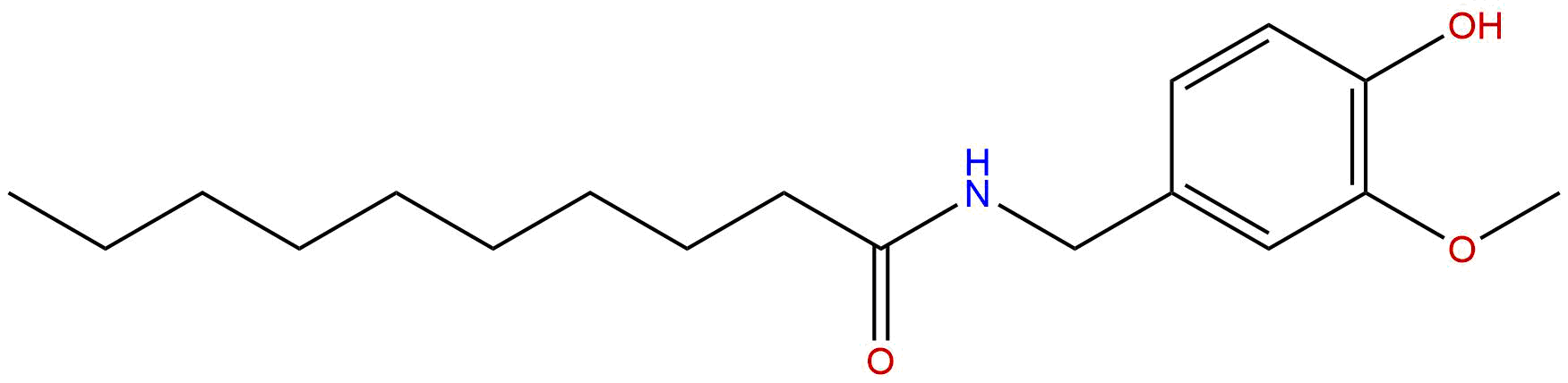


Product name: N-vanillyldecanamide
Synonym name: Vanillyl N-decoylamide;Capric acid vanillylamide
Catalogue No.: BP5004
Cas No.: 31078-36-1
Formula: C18H29NO3
Mol Weight: 307.434
Botanical Source:
Type of Compound: Alkaloids
Purity: 95%~99%
Analysis Method: HPLC-DAD or/and HPLC-ELSD
Identification Method: Mass, NMR
Packing: Brown vial or HDPE plastic bottle
Storage: Store in a well closed container, protected from air and light. Put into refrigerate or freeze for long term storage.
Whenever possible, you should prepare and use solutions on the same day. However, if you need to make up stock solutions in advance, we recommend that you store the solution as aliquots in tightly sealed vials at -20℃. Generally, these will be useable for up to two weeks.
The product could be supplied from milligrams to grams
Inquire for bulk scale.
For Reference Standard and R&D, Not for Human Use Directly.
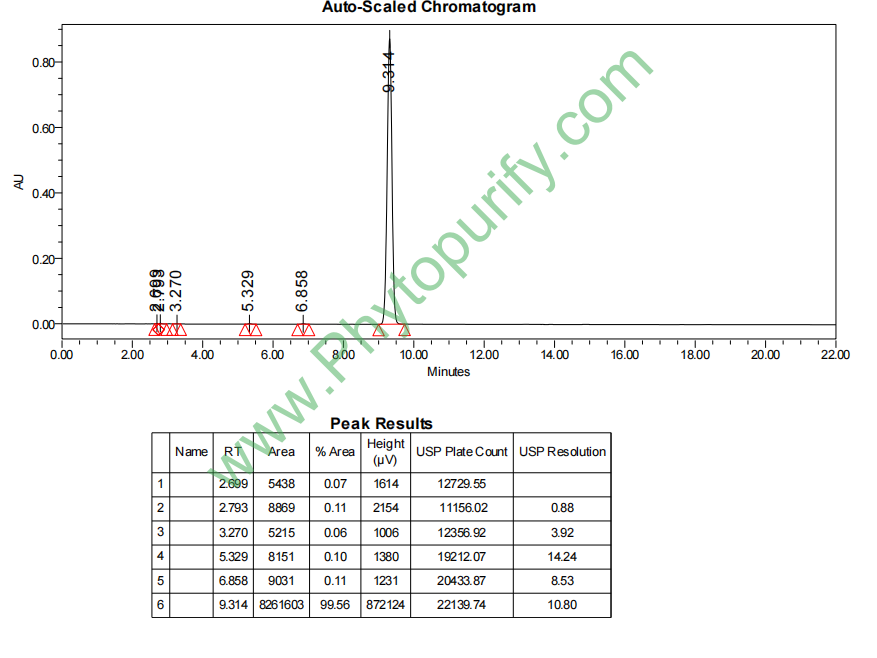
HPLC of N-vanillyldecanamide
Storage conditions:Short-term storage at 2~8℃, long-term storage at -20 ~ -80℃
58.5600
4.2842
4.2829
.0334
2.7979
10.1797
High
93.1837
1.8065
No
No
Yes
No
No
No
0.0
No
No
No
No
Natural products, as an important source of drug discovery, play an irreplaceable role in the long-term struggle between humans and diseases. Chili pepper(Capsicum annuum L. As a widely used seasoning and traditional medicinal herb worldwide, the research on its active ingredients has a history of over a hundred years. The unique spicy component in chili peppers, capsaicin compounds, not only endow chili peppers with unique sensory characteristics, but also become a hot topic in medicinal chemistry and pharmacology research due to their diverse pharmacological activities. Among numerous capsaicin compounds, N-vanillyl decanamide (also known as decanamide or N - (4-hydroxy-3-methoxybenzyl) decanamide), as a naturally occurring homolog, has gradually attracted the attention of researchers in recent years.
The chemical structure of vanillylamine decanoic acid is composed of vanillylamine and decanoic acid connected by amide bonds, and it is a typical representative of capsaicin compounds. Compared with capsaicin, which is the most abundant ingredient in chili peppers, sebacic acid vanillide has a shorter fatty chain. This structural difference results in unique characteristics in its physicochemical properties, biological activity, and mechanism of action. It is worth noting that decanoic acid vanillide does not exist in isolation in plants, but as one of the intermediate or end products in the biosynthesis pathway of capsaicin compounds. Its content shows dynamic changes in different pepper varieties and different maturity stages.
In recent years, significant progress has been made in the pharmacological activity research of vanillin decanoate. Research has shown that this compound not only exhibits typical capsaicin like analgesic activity, but also demonstrates multiple biological functions such as antioxidant, anti-inflammatory, and plant growth regulation. Of particular note is the dose-dependent reduction of free radical length observed in the alfalfa seedling model by decanoic acid vanillide, which provides new insights into its potential applications in agriculture. At the molecular level, vanillic acid decanoate exerts its analgesic and anti-inflammatory effects by acting on multiple targets such as transient receptor potential vanillic acid subtype 1 (TRPV1), cannabinoid receptor 1 (CNR1), delta opioid receptor (OPRD1), μ - opioid receptor (OPRM1), and kappa opioid receptor (OPRK1), exhibiting the characteristics of a multi-target drug.
This article will comprehensively and systematically review the research progress of decanoic acid vanillide from the aspects of chemical structure and physicochemical properties, plant sources and extraction methods, pharmacological activity research, mechanism of action and molecular targets, drug evaluation and pharmacokinetics, clinical application prospects and prospects, aiming to provide reference for the in-depth research and development of this natural product.
The chemical name of vanillic acid decanamide is N - (4-hydroxy-3-methoxybenzyl) decanamide, with a molecular formula of C ₁₈ H ₂₉ NO ∝ and a molecular weight of 307.4340 g/mol. Structurally, the compound consists of three main structural units: the vanillyl moiety (4-hydroxy-3-methoxyphenyl), the amide linking group, and the decanoyl fatty chain (C10 saturated fatty acid chain). The classic structural pattern of "aromatic head amide bond fat tail" is a common feature of capsaicin compounds, in which the vanilloid moiety is considered the key pharmacophore that binds to the target, while the length and saturation of the fat chain significantly affect the lipophilicity, membrane permeability, and receptor binding ability of the compound.
Compared with capsaicin (C18H27NO3, molecular weight 305.41), the fatty chain of decanoic acid vanillide is a saturated ten carbon chain, while the fatty chain of capsaicin is a nine carbon chain (8-methyl-6-nonenyl) containing a trans double bond. This structural difference leads to significant differences in spatial conformation, flexibility, and hydrophobic interactions between the two. In addition, the fatty chain of sebacic acid vanilla amide does not contain branched methyl groups, while capsaicin has a methyl branch at the C8 position. This subtle structural change may affect the matching degree between the compound and the target protein binding pocket.
The physicochemical properties of decanoic acid vanillide provide important reference for its drug development. The lipid water partition coefficient (LogP) of this compound is 4.2842, indicating its strong lipophilicity, which is consistent with its long-chain fatty acid structure. A higher LogP value indicates that the compound is easily able to penetrate biological membranes, including the blood-brain barrier, which is consistent with the predicted results of "blood-brain barrier: high" in the pharmacological parameters. However, high lipophilicity also brings about the problem of poor water solubility. The water solubility of decanoic acid vanillide is only 0.0334 mg/mL, which may limit its absorption and bioavailability in vivo.
The topological polar surface area (TPSA) is 58.5600 Å ², which is below the threshold of 60 Å ², indicating that the compound has good oral absorption potential. According to the "Rule of 5" principle, the molecular weight of decanoic acid vanillide (307.43 Da) is less than 500 Da, and the LogP value (4.28) is slightly higher than 5, but still within an acceptable range. The number of hydrogen bond donors (phenolic hydroxyl and amide NH) and acceptors (amide carbonyl and methoxy) meets the requirements, and overall it exhibits good drug like characteristics.
In terms of safety prediction, the hERG inhibition assessment result was negative, indicating a low risk of the compound causing QT interval prolongation in the heart. The Ames test result is 0.0, indicating that it does not have significant mutagenicity. These preliminary safety data provide favorable conditions for the further development of vanillin decanoate.
Vanillin decanoate was originally isolated and identified as a capsaicin compound from chili fruit. Chili genus(Capsicum)Plants, including annual chili peppers(C. annuum)Chinese chili pepper(C. chinense)Shrubs chili pepper(C. frutescens)Multiple types can be used to synthesize capsaicin compounds. However, there are significant differences in the content of decanoic acid vanillide among different chili varieties. Generally speaking, in the biosynthetic pathway of capsaicin compounds, the content of sebacic acid vanillide is usually lower than that of capsaicin and dihydrocapsaicin, but its content may be relatively high in certain specific varieties or developmental stages.
Research has shown that the accumulation of capsaicin compounds in chili fruits exhibits variety specificity and developmental stage dependence. During fruit ripening, the synthesis of capsaicin compounds mainly occurs in the placental tissue, especially in the septum. As one of the products of the condensation of vanillylamine with acyl CoA of different chain lengths catalyzed by capsaicin synthase, the content of vanillylamine is influenced by various factors such as substrate supply, enzyme activity, and metabolic regulation. In addition, environmental factors such as light, temperature, water stress, and cultivation conditions can also affect the composition and content of capsaicin compounds in chili peppers.
The extraction of decanoic acid vanillide is usually carried out using organic solvent extraction method. Due to its strong lipophilicity, commonly used extraction solvents include ethanol, methanol, acetone, ethyl acetate, and their mixed solvents. Among them, ethanol is widely used due to its good extraction efficiency, low toxicity, and food grade safety. The extraction process usually includes steps such as drying of raw materials, crushing, solvent soaking, ultrasound assisted or heating reflux. In order to improve extraction efficiency, researchers have also developed modern extraction techniques such as microwave-assisted extraction and supercritical fluid extraction.
The separation and purification of decanoic acid vanillide in crude extracts usually require the combination of multiple chromatographic techniques. Silica gel column chromatography is the most commonly used preliminary separation method, which uses different polarity eluents (such as n-hexane ethyl acetate or chloroform methanol gradient) to achieve the fractionation of capsaicin compounds. Further purification can be achieved by preparative high-performance liquid chromatography (pre HPLC) using a reverse phase C18 column with acetonitrile water or methanol water system as the mobile phase, monitored by a UV detector at a wavelength of 280 nm. Due to the similar chemical structures of capsaicin compounds, their separation requires optimization of chromatographic conditions to achieve good resolution.
In recent years, new separation methods such as high-speed countercurrent chromatography (HSCCC) and molecular imprinting technology have also been applied to the separation and purification of capsaicin compounds. These technologies have the advantages of easy operation, high sample recovery rate, and low organic solvent usage, providing a new option for the efficient preparation of decanoic acid vanillide. It is worth noting that due to the usually low content of vanillic acid amide in natural sources, chemical synthesis methods have also become an important way to obtain this compound. The target product can be efficiently prepared through the condensation reaction of vanillic acid amine and decanoyl chloride.
The most notable pharmacological activity of decanoic acid vanillide is its analgesic effect. As a capsaicin compound, decanoic acid vanillide exerts its unique analgesic mechanism by activating TRPV1 receptors. Similar to capsaicin, decanoic acid vanillide can initially activate TRPV1 cation channels, causing calcium influx and neuronal depolarization, resulting in burning sensation or pain signals. However, continuous or repeated exposure can lead to desensitization of TRPV1 receptors, resulting in long-lasting analgesic effects. This "activation followed by desensitization" mode of action is the classic mechanism of analgesic effects of capsaicin compounds.
In various pain models, vanillic acid decanoate exhibits dose-dependent analgesic activity. Research has shown that this compound exhibits significant analgesic effects in formalin induced inflammatory pain models, hot plate tests, and neuropathic pain models. It is worth noting that the analgesic effect of decanoic acid vanillide may be weaker than capsaicin, but its duration of action may be longer and the initial burning sensation may be milder, which provides potential tolerance advantages for its clinical application.
In addition to its analgesic effect, decanoic acid vanillide also exhibits anti-inflammatory and antioxidant activities. In a macrophage model stimulated by lipopolysaccharide (LPS), this compound can inhibit the production of pro-inflammatory cytokines such as tumor necrosis factor - α (TNF - α), interleukin-6 (IL-6), and interleukin-1 β (IL-1 β). Its anti-inflammatory mechanism may be related to the inhibition of the activation of the nuclear factor kappa B (NF - κ B) signaling pathway, by preventing the phosphorylation and degradation of I κ B α and reducing the transcription of inflammation related genes.
In terms of antioxidant properties, the phenolic hydroxyl structure of decanoic acid vanillide endows it with the ability to directly scavenge free radicals. Research has shown that this compound can effectively scavenge 1,1-diphenyl-2-trinitrophenylhydrazine (DPPH) free radicals, 2,2 '- bis (3-ethylbenzothiazole-6-sulfonic acid) (ABTS) cationic free radicals, and hydroxyl free radicals. In addition, vanillic acid decanoate can activate the nuclear factor E2 related factor 2 (Nrf2) signaling pathway, upregulate the expression of antioxidant enzymes such as superoxide dismutase (SOD), glutathione peroxidase (GPx), and heme oxygenase-1 (HO-1), and enhance the antioxidant defense ability of cells.
The activity of decanoic acid vanillide in plant growth regulation is a relatively novel research direction. Research has found that this compound can significantly reduce the dosage of alfalfa in a dose-dependent manner(Medicago sativa L. The length of free radicals in seedlings. This discovery suggests that vanillide decanoate may regulate the growth and development of plant roots by affecting the metabolic balance of reactive oxygen species (ROS) in the plant body. In plants, moderate levels of ROS act as signaling molecules involved in processes such as cell elongation, differentiation, and stress response, while excessive ROS can lead to oxidative damage. Vanillin decanoate may alter the growth pattern of roots by regulating ROS levels, affecting the relaxation and extension of cell walls.
In addition, capsaicin compounds also play an important role in plant defense responses. As secondary metabolites, capsaicin compounds have antibacterial, insect resistant, and allelopathic effects, which can help plants resist the invasion of pathogenic microorganisms and herbivorous animals. Decanoic acid vanillide may enhance plant stress resistance by inducing the expression of plant defense genes.
Transient receptor potential vanillic acid subtype 1 (TRPV1) is a classic target of capsaicin compounds and the core molecular basis for the analgesic effect of decanoic acid vanillic acid amide. TRPV1 is a non selective cation channel mainly expressed on small diameter sensory neurons in the dorsal root ganglion (DRG) and trigeminal ganglion, which can be activated by capsaicin, thermal stimulation (>43 ° C), acidic environment (pH<5.9), and endogenous inflammatory mediators.
The binding mode between decanoic acid vanillide and TRPV1 is closely related to its structural characteristics. The vanilla moiety binds to key amino acid residues (such as Tyr511, Ser512, and Thr550) in the S3-S4 transmembrane domain of TRPV1 through hydrogen bonding and π - π interactions, while the fatty chains are embedded in hydrophobic pockets formed by the S3, S4, and S5 transmembrane helices. Compared with capsaicin, the saturated ten carbon chain of sebacic acid vanillide has greater flexibility, which may cause it to adopt different conformations in the binding pocket, thereby affecting the activation efficiency and desensitization kinetics of receptors.
After activation of TRPV1 by decanoic acid vanillide, it causes influx of calcium and sodium ions, leading to neuronal depolarization and action potential release, resulting in a burning sensation. However, sustained activation can lead to conformational changes in channel proteins, activation of calcium dependent phosphatases (such as calcineurin), and endocytosis of receptors, ultimately causing receptor desensitization. This desensitization state can last for several hours to several days, during which the responsiveness of neurons to various harmful stimuli decreases, thereby achieving analgesic effects.
It is worth noting that the analgesic effect of decanoic acid vanillide may not be limited to the TRPV1 pathway, but also involve the involvement of the opioid receptor system. The targets listed in the pharmacokinetic parameters include μ - opioid receptor (OPRM1), δ - opioid receptor (OPRD1), and κ - opioid receptor (OPRK1), suggesting that this compound may directly or indirectly regulate the opioid receptor signaling pathway.
Research has shown that capsaicin compounds can promote the release of endogenous opioid peptides (such as β - endorphins and enkephalins) by activating TRPV1. These endogenous ligands then act on opioid receptors, producing analgesic effects. In addition, vanillide decanoate may directly bind to opioid receptors, although its binding affinity may be lower than classical opioid drugs. This multi-target mode of action may explain the widespread activity of decanoic acid vanillide in various pain models and may reduce the tolerance and dependency risks associated with single target activation.
Cannabinoid receptor 1 (CNR1) and dopamine receptor D2 (DRD2) are also listed as potential targets of vanillic acid amide. Cannabinoid receptors play important roles in pain regulation, inflammatory response, and neuroprotection, and their activation can produce analgesic effects by inhibiting the cyclic adenosine monophosphate (cAMP) signaling pathway and regulating ion channel activity. Vanilla decanoate may participate in pain regulation by directly binding or indirectly regulating the endogenous cannabinoid system.
Dopamine receptor D2 is mainly expressed in the reward pathway and motor control area of the central nervous system, and its functional abnormalities are closely related to the chronicity of pain, emotional disorders, and drug addiction. The regulatory effect of decanoic acid vanillide on DRD2 may affect the emotional dimension of pain, improving the emotional state and quality of life of chronic pain patients.
Cyclooxygenase-1 (PTGS1/COX-1) and cyclooxygenase-2 (PTGS2/COX-2) are key enzymes involved in prostaglandin synthesis, playing a central role in inflammation and pain. The inhibitory effect of decanoic acid vanillide on COX enzyme may partially explain its anti-inflammatory and analgesic activities. Unlike classical nonsteroidal anti-inflammatory drugs (NSAIDs), capsaicin compounds typically have weaker inhibition of COX enzymes, but their anti-inflammatory effects may be achieved through multiple mechanisms working together.
The 5-hydroxytryptamine transporter (SLC6A4/SERT) is a key protein that regulates serotonin levels in synaptic cleft, and its functional abnormalities are associated with diseases such as pain, depression, and anxiety. The regulation of SERT by sebacic acid vanillide may affect 5-hydroxytryptamine neurotransmission and participate in the dual regulation of pain and emotion.
Based on Lipinski's "Rule of 5" principle, vanillic acid decanoate exhibits good drug like characteristics. Its molecular weight (307.43 Da) is less than 500 Da, and its LogP value (4.28) is slightly higher than 5 but still within an acceptable range. The number of hydrogen bond donors (2) and acceptors (3) meets the requirements. The TPSA value is 58.56 Å ², indicating that the compound has good membrane permeability and oral absorption potential.
However, the water solubility of decanoic acid vanillide is poor (0.0334 mg/mL), which may limit its oral bioavailability. Strategies to improve water solubility include preparing salt forms (such as sodium salt of phenolic hydroxyl groups), using solubilizers (such as cyclodextrin inclusion complexes), designing prodrugs or developing new formulation technologies (such as liposomes, nanoemulsions), etc.
The pharmacological parameters show that vanillide decanoate has high blood-brain barrier (BBB) permeability. This characteristic is of great significance for the treatment of central nervous system diseases, but it may also increase the risk of central nervous system side effects. High BBB permeability means that the compound can effectively enter the brain parenchyma and directly act on targets in the central nervous system, such as TRPV1, opioid receptors, cannabinoid receptors, and dopamine receptors, thereby exerting analgesic and emotion regulating effects.
The preliminary safety assessment results are encouraging. The hERG inhibition test was negative, indicating a low risk of cardiac toxicity (such as QT interval prolongation and apical torsion ventricular tachycardia) caused by vanillide decanoate. The Ames test result is 0.0, indicating that the compound does not exhibit significant mutagenicity. However, these data only come from computer predictions or preliminary experiments, and systematic toxicological studies are still needed, including acute toxicity, chronic toxicity, reproductive toxicity, and carcinogenicity assessments.
At present, there is insufficient systematic research on the pharmacokinetics of decanoic acid vanillide, but preliminary speculation can be made based on its physicochemical properties and studies of similar compounds. After oral administration, vanillide decanoate may be partially absorbed in the gastrointestinal tract, and its degree of absorption is influenced by water solubility and intestinal metabolism. Due to the presence of amide bonds, this compound may be hydrolyzed by amidases in the intestine and liver to produce vanilloamine and decanoic acid, thereby affecting its bioavailability.
In terms of distribution in the body, high lipophilicity and high BBB permeability suggest that vanillide decanoate may be widely distributed in tissues, including the brain, adipose tissue, and muscle. The metabolic pathways may mainly include amide bond hydrolysis, glucuronidation and sulfation of phenolic hydroxyl groups, as well as ω - oxidation and β - oxidation of fatty chains. The main excretion pathways may be urine and bile, and metabolites may be excreted in bound form.
Vanillin amide decanoate has broad application prospects in the field of pain management. Compared with capsaicin, its shorter fat chain may lead to different receptor binding kinetics and desensitization characteristics, which may provide more lasting analgesic effects and better tolerance. Localized preparations (such as creams and patches) are the most commonly used administration method for capsaicin compounds, which can directly act on the painful area and reduce systemic side effects. Topical preparations of vanillin decanoate can be used to treat chronic pain, such as diabetes neuropathy, post herpetic neuralgia, osteoarthritis and musculoskeletal pain.
In addition, the multi-target action characteristics of decanoic acid vanillide make it advantageous in the treatment of complex pain syndrome. By simultaneously regulating TRPV1, opioid receptors, cannabinoid receptors, and dopamine receptors, this compound may be effective in treating neuropathic pain, inflammatory pain, and mixed pain, and may reduce the common risk of tolerance and dependence to single target drugs.
The anti-inflammatory and antioxidant activities of decanoic acid vanillide provide a theoretical basis for its application in inflammatory and neurodegenerative diseases. In terms of neuroinflammation, this compound may protect neurons from inflammatory damage by inhibiting the excessive activation of microglia and astrocytes, reducing the release of pro-inflammatory cytokines. This mechanism of action suggests that vanillide decanoate may have potential therapeutic value for neurodegenerative diseases such as Alzheimer's disease, Parkinson's disease, and multiple sclerosis.
The activity of decanoic acid vanillide in plant growth regulation has opened up new directions for its application in the agricultural field. By regulating the growth and development of plant roots, this compound may be used to improve crop root structure, enhance water and nutrient absorption efficiency, and improve crop stress resistance. In addition, as a natural plant derived compound, decanoic acid vanillide has advantages such as environmental friendliness and good biodegradability in agricultural applications, which is in line with the concept of green agriculture and sustainable development.
Despite the various pharmacological activities and good drug properties exhibited by decanoic acid vanillide, its clinical translation still faces many challenges. Firstly, poor water solubility is the main obstacle limiting the development and bioavailability of its formulations, and effective solubilization strategies need to be developed. Secondly, although high BBB permeability is beneficial for the targeting of central nervous system targets, it may also bring about central nervous system side effects, which need to be weighed carefully. Thirdly, there is currently insufficient systematic pharmacokinetic and toxicological research on vanillic acid decanoate, and a comprehensive preclinical evaluation is needed.
Future research directions should include: (1) in-depth elucidation of the interaction mechanism between decanoic acid vanillide and various targets, especially its binding mode with opioid receptors and cannabinoid receptors; (2) Develop new formulation technologies to improve their water solubility and bioavailability; (3) Conduct systematic pharmacokinetic and toxicological studies to evaluate their safety; (4) Explore its therapeutic potential in pain, inflammation, and neurodegenerative diseases; (5) Study the molecular mechanism of its plant growth regulatory activity and evaluate its application value in agriculture.
Vanillin decanoate, as a naturally occurring capsaicin compound, has attracted widespread attention from researchers due to its unique chemical structure and multi-target pharmacological activity. From a chemical structure perspective, this compound exhibits typical "aromatic head amide bond fatty tail" structural characteristics, with its saturated ten carbon chain endowing it with unique physicochemical properties and biological activity. In terms of pharmacological activity, decanoic acid vanillide exerts multiple biological functions such as analgesia, anti-inflammatory, antioxidant, and plant growth regulation by acting on multiple targets including TRPV1, opioid receptors, cannabinoid receptors, dopamine receptors, cyclooxygenase, and serotonin transporters.
The evaluation of drug properties indicates that vanillide decanoate has good drug like characteristics, including appropriate molecular weight, LogP value, and TPSA, as well as low hERG inhibition risk and mutagenicity. However, its poor water solubility and high BBB permeability are both advantages and challenges that need to be fully considered in formulation development and safety evaluation.
Looking ahead to the future, vanillide decanoate shows broad application prospects in pain management, anti-inflammatory therapy, neuroprotection, and agricultural applications. With the continuous deepening of understanding of its pharmacological mechanism and the continuous innovation of formulation technology, this natural product is expected to become an important candidate molecule for new analgesics or plant growth regulators. However, the road from laboratory research to clinical application is still long and requires collaborative efforts from multidisciplinary researchers to overcome current challenges and fully tap into the potential value of this natural product.
