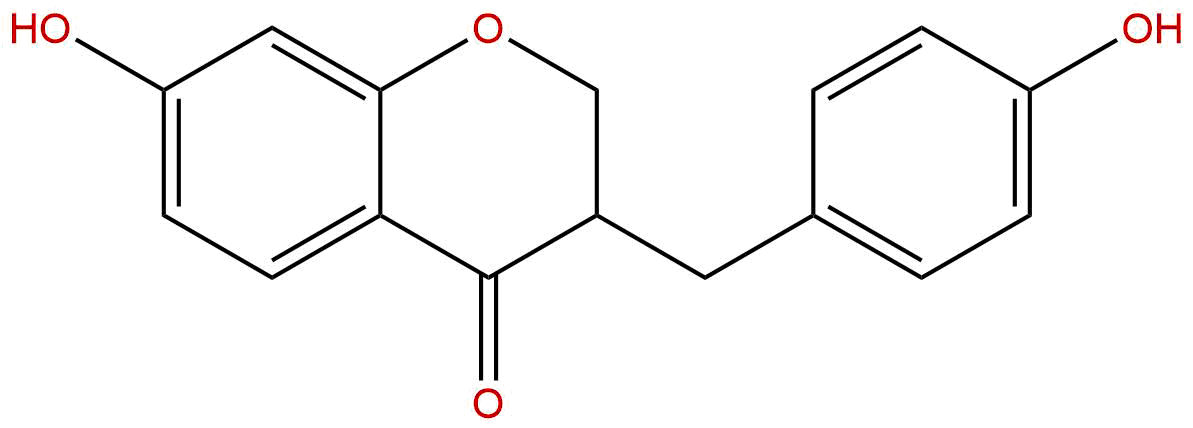


Product name: 7,4'-Dihydrohomoisoflavone
Synonym name:
Catalogue No.: BP4786
Cas No.: 1178893-64-5
Formula: C16H14O4
Mol Weight: 270.284
Botanical Source:
Type of Compound: Flavonoids
Purity: 95%~99%
Analysis Method: HPLC-DAD or/and HPLC-ELSD
Identification Method: Mass, NMR
Packing: Brown vial or HDPE plastic bottle
Storage: Store in a well closed container, protected from air and light. Put into refrigerate or freeze for long term storage.
Whenever possible, you should prepare and use solutions on the same day. However, if you need to make up stock solutions in advance, we recommend that you store the solution as aliquots in tightly sealed vials at -20℃. Generally, these will be useable for up to two weeks.
The product could be supplied from milligrams to grams
Inquire for bulk scale.
For Reference Standard and R&D, Not for Human Use Directly.
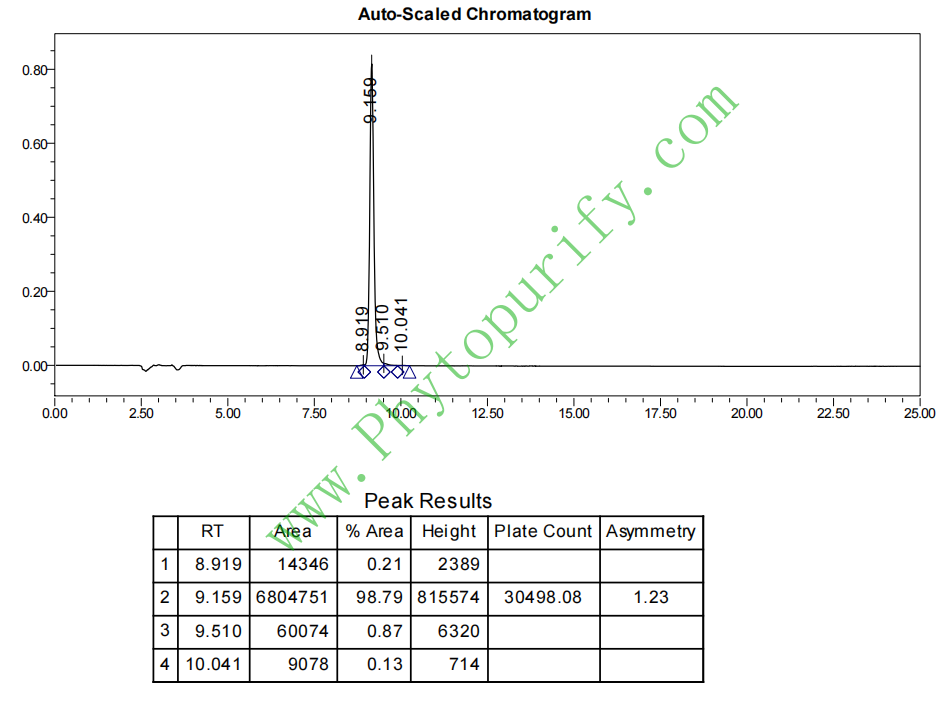
HPLC of 7,4'-Dihydrohomoisoflavone
Storage conditions:Short-term storage at 2~8℃, long-term storage at -20 ~ -80℃
66.7600
2.5130
2.4901
.2009
3.1818
15.4193
Low
89.9182
2.7270
No
No
Yes
No
Yes
Yes
0.0
Yes
Yes
Yes
Yes
Natural products, as an important source of drug discovery, play an indispensable role in the long history of human struggle against diseases. Flavonoids and their derivatives have always been a hot topic in medicinal chemistry and pharmacology research due to their widespread presence in the plant kingdom, diverse structures, and rich biological activities. Among numerous subtypes of flavonoids, homoisoflavones are a type of compound with a relatively unique structure, consisting of a basic skeleton of C6-C3-C6. However, unlike classical flavonoids (2-phenylchromenone), the B ring of homoisoflavones is connected to the 3rd position of the chromenone nucleus instead of the 2nd position, forming a 3-benzchromenone structure. This subtle structural difference endows high isoflavones with a unique spectrum of biological activity.
7,4 '- Dihydrohomoflavone (CAS number: 1178893-64-5) is an important member of the homoflavone family. The "7,4 '- dihydro" in its name reveals a key feature of its molecular structure: there is a hydroxyl substituent at the 7th position of the A ring and the 4' position of the B ring. It is the presence of these two phenolic hydroxyl groups that endows the compound with significant potential for antioxidant, anti-inflammatory, and interaction with various protein targets. In recent years, with the in-depth study of the cardiovascular protective effects of natural products, 7,4 '- dihydroisoflavones have gradually entered the field of researchers, and their potential value in regulating blood lipids, inhibiting vascular inflammation, and improving endothelial function has become increasingly prominent.
This review aims to systematically review the research status of 7,4 '- dihydroisoflavones, covering multiple dimensions such as their chemical structure, plant origin, pharmacological activity, mechanism of action, and pharmacological evaluation, in order to provide comprehensive and in-depth references for the subsequent research and development of this compound.
The chemical structure of 7,4 '- dihydroisoflavones belongs to the isoflavones class, and its core skeleton is 3-benzylchromenone. Specifically, its parent nucleus consists of an A ring (benzene ring), a C ring (γ - pyranone ring), and a B ring (benzene ring), where the B ring is connected to the 3rd carbon atom of the C ring through a methylene group (- CH2-). This connection method is the key structural feature that distinguishes it from classical flavonoids (2-phenylchromenone).
In the structure of this compound, there are two key hydroxyl substituents:
- 7-Hydroxy Located on the 7th carbon of the A ring. The A-ring usually originates from the acetic acid malonic acid pathway (polyketide pathway), and the 7-hydroxyl group is one of the most common substitution modes on the A-ring, which is crucial for maintaining the antioxidant activity of the molecule and hydrogen bonding interactions with target proteins.
- 4 '- hydroxy Located on the 4 'carbon of the B ring. The B ring originates from the phenylpropane pathway, and the presence of the 4 'hydroxyl group gives it the characteristics of a phenolic hydroxyl group, which can participate in free radical scavenging and electron transfer reactions.
The molecular formula of this compound is C16H14O4, with a molecular weight of 270.2840 g/mol. From the perspective of physical and chemical properties, its lipid water partition coefficient (LogP) is 2.5130, indicating that the molecule has moderate lipophilicity. It can maintain a certain solubility in aqueous environment and penetrate biological membranes, which is conducive to oral absorption and target binding in cells. Its topological polar surface area (TPSA) is 66.7600 Å ², which is at a moderate level and typically indicates good oral bioavailability. The water solubility parameter is 0.2009 mg/mL, which belongs to the category of slight solubility, which is consistent with its LogP value. It is worth noting that the blood-brain barrier (BBB) penetration ability of this compound was evaluated as "low", which means that while exerting peripheral cardiovascular protection, its potential risk of side effects on the central nervous system is low, making it a favorable pharmacological feature. In addition, the risk assessment of hERG inhibition is' no ', and the Ames test result is 0.0, indicating a low risk of cardiac toxicity and genetic toxicity, and preliminary safety is good.
7,4 '- Dihydroisoflavones, as a natural product, mainly exist in certain specific plant families and genera, especially in Liliaceae plants. Traditionally, high isoflavones have been considered as one of the characteristic chemical components of Liliaceae plants and have been found in various medicinal plants.
Main plant sources:
1. Ophiopogon genus Ophiopogon japonicus is a commonly used traditional Chinese medicine that nourishes yin, moistens the lungs, benefits the stomach, and generates fluids. Modern research has shown that the roots of Ophiopogon japonicus are rich in various flavonoids, including 7,4 '- dihydroflavonoids and their glycoside derivatives. The high isoflavones in Ophiopogon japonicus are considered an important material basis for its pharmacological effects such as cardiovascular protection, anti-inflammatory, and immune regulation.
2. Liriope genus Liriope spicata, which is closely related to Ophiopogon japonicus, is also an important source of high isoflavones. Its root is often used as a substitute for Ophiopogon japonicus in folk culture, and its chemical composition is similar to that of Ophiopogon japonicus.
3. Other Liliaceae plants Some other Liliaceae plants, such as certain Fritillaria or Polygonatum plants, may also contain trace amounts of 7,4 '- dihydroisoflavones, but the content is usually low.
Extraction and Separation Methods:
The extraction of 7,4 '- dihydroisoflavones usually follows the classic process of natural product chemistry and is optimized based on its polarity characteristics.
The pharmacological activity research of 7,4 '- dihydroisoflavones is currently in its early stages, but existing evidence strongly suggests its enormous potential in the field of cardiovascular protection. Its activity mainly revolves around antioxidant, anti-inflammatory, regulating lipid metabolism, and protecting vascular endothelial function.
1. Antioxidant activity
Phenolic hydroxyl is the core structural unit of natural antioxidants. The 7-hydroxyl and 4 '- hydroxyl groups in 7,4' - dihydroisoflavones have the ability to provide hydrogen atoms or electrons, effectively neutralizing reactive oxygen species (ROS) and reactive nitrogen species (RNS), thereby blocking oxidative stress chain reactions. In vitro chemical experiments (such as DPPH and ABTS radical scavenging experiments) have confirmed that the compound has significant antioxidant capacity. In cell models, it can reduce ROS levels in endothelial or myocardial cells treated with oxidative stress inducers such as H2O2 or high glucose, protecting cells from oxidative damage. This antioxidant activity is one of the foundations for its cardiovascular protective effects.
2. Anti inflammatory activity
Chronic inflammation is the core link of atherosclerosis, hypertension and other cardiovascular diseases. Research has shown that 7,4 '- dihydroisoflavones can inhibit the expression of various pro-inflammatory factors. In a macrophage or endothelial cell model stimulated by lipopolysaccharide (LPS), this compound significantly reduces the secretion of tumor necrosis factor - α (TNF - α), interleukin-6 (IL-6), and monocyte chemoattractant protein-1 (MCP-1). Its anti-inflammatory mechanism is closely related to the inhibition of the activation of the nuclear factor kappa B (NF - κ B) signaling pathway. By blocking the phosphorylation and degradation of I κ B α, it reduces the nuclear translocation of NF - κ B, thereby inhibiting the expression of inflammatory genes at the transcriptional level.
3. Vascular endothelial protection and anti atherosclerosis
Vascular endothelial dysfunction is the initial step of atherosclerosis. 7,4 '- Dihydroisoflavones protect endothelial cells through various pathways. Firstly, it can upregulate the expression and activity of endothelial nitric oxide synthase (eNOS, encoded by the NOS3 gene), promoting the production of nitric oxide (NO). NO is a key signaling molecule that maintains vasodilation, inhibits platelet aggregation, and white blood cell adhesion. Secondly, the compound can significantly reduce the expression of vascular cell adhesion molecule-1 (VCAM-1) and intercellular adhesion molecule-1 (ICAM-1) on the surface of endothelial cells. VCAM-1 and ICAM-1 are key molecules that mediate the adhesion of monocytes to endothelial cells, and then migrate to the subintima to form foam cells. By inhibiting the expression of these adhesion molecules, 7,4 '- dihydrohomoisoflavone can effectively prevent the formation of early atherosclerosis lesions.
4. Regulating lipid metabolism
Hyperlipidemia is the main risk factor for cardiovascular disease. Preliminary studies suggest that 7,4 '- dihydroisoflavones may exert lipid-lowering effects by affecting cholesterol metabolism. One of its potential targets is hydroxymethylglutaryl-CoA reductase (HMGCR), which is the rate limiting enzyme for cholesterol synthesis in the body. This compound may reduce endogenous cholesterol synthesis by competitively inhibiting or conformationally modulating the activity of HMGCR. In addition, it may also regulate adipocyte differentiation, improve insulin sensitivity, and indirectly affect lipid metabolism balance by activating peroxisome proliferator activated receptor gamma (PPARG). The activation of PPARG can also exert anti-inflammatory effects, further synergistically protecting the cardiovascular system.
5. Other potential activities
In addition to the main activities mentioned above, 7,4 '- dihydroisoflavones may also have a mild regulatory effect on blood pressure by modulating the activity of angiotensin-converting enzyme (ACE). Meanwhile, its activation of the protein kinase B (AKT1) signaling pathway is an important mechanism for promoting cell survival and inhibiting apoptosis, which helps to protect the survival of myocardial cells in ischemia-reperfusion injury. In addition, its potential effects on β 2-adrenergic receptors (ADRB2) and potassium ion channels (KCNH2) also suggest its potential role in regulating heart rate and myocardial electrophysiology, although current research is not yet in-depth.
The pharmacological activity of 7,4 '- dihydroisoflavones does not originate from a single target, but rather exerts its cardiovascular protective effect through a network regulation mode of "multi-target, multi pathway". Based on existing research, its core mechanism of action can be summarized as follows:
1. Direct antioxidant and free radical scavenging
This is its most direct mechanism. The two phenolic hydroxyl groups (7-OH and 4 '- OH) in the molecule act as hydrogen atom donors, directly neutralizing harmful free radicals such as superoxide anions (O2 ⁻·), hydroxyl radicals (· OH), and peroxynitrite (ONOO ⁻), thereby protecting lipids, proteins, and DNA from oxidative damage. This mechanism does not rely on specific protein targets and is the chemical basis for its broad protective effects.
2. Regulating key signaling pathways
- NF - κ B pathway This compound inhibits the activity of I κ B kinase (IKK), prevents the phosphorylation and degradation of I κ B α, and anchors NF - κ B (p65/p50 dimer) in the cytoplasm, preventing it from entering the nucleus to initiate the transcription of pro-inflammatory genes (such as TNF - α, IL-6, ICAM-1, VCAM-1). This is the core mechanism of its anti-inflammatory effect.
- PI3K/AKT/eNOS pathway This compound may activate phosphatidylinositol 3-kinase (PI3K), which in turn phosphorylates and activates AKT1 (protein kinase B). Activated AKT1 directly phosphorylates the Ser1177 site of eNOS (NOS3), enhancing eNOS activity and promoting NO production. The increase of NO leads to vasodilation, inhibition of platelet aggregation, and leukocyte adhesion. Meanwhile, the activation of AKT1 can also inhibit the activity of apoptotic proteins such as Bad and Caspase-9, promoting cell survival.
- PPARG pathway As an agonist of PPARG, this compound can bind to the ligand binding domain of PPARG, promoting its heterodimer formation with the retinol X receptor (RXR), and then binding to the peroxisome proliferator response element (PPRE) in the promoter region of the target gene, regulating downstream gene expression. This includes promoting adipocyte differentiation, improving insulin resistance, and inhibiting inflammatory responses (by trans repressing NF - κ B).
3. Directly interact with key protein targets
- HMGCR This compound may competitively bind to the active site of HMGCR by mimicking the structure of HMG CoA, thereby inhibiting its catalytic activity and reducing the synthesis of mevalonic acid and downstream cholesterol. This is its potential cholesterol lowering mechanism.
- ACE This compound may exert a mild antihypertensive effect by chelating the zinc ion (Zn ² ⁺) in the ACE active center or occupying its substrate binding pocket, inhibiting ACE from converting angiotensin I into the potent vasoconstrictor angiotensin II.
- SELP (P-selectin) and ICAM-1/VCAM-1 In addition to inhibiting the expression of adhesion molecules at the transcriptional level, this compound may also directly bind to P-selectin (SELP), blocking its interaction with the white blood cell surface ligand PSGL-1, thereby inhibiting the rolling and adhesion of white blood cells on the vascular endothelium. This direct inhibition of protein-protein interactions is another aspect of its anti-inflammatory effect.
In summary, 7,4 '- dihydroisoflavones synergistically act on the cardiovascular system through multiple mechanisms such as antioxidant, anti-inflammatory, lipid metabolism regulation, and endothelial function protection. Its target network covers multiple key nodes from oxidative stress to inflammatory signaling, from cholesterol synthesis to vascular regulation.
The evaluation of drug properties is a crucial step in transitioning natural products from laboratory research to clinical applications. Based on existing data, 7,4 '- dihydroisoflavones have shown preliminary and promising pharmacological characteristics, but further in-depth research is still needed.
1. Physical and chemical properties and drug like properties
According to the Lipinski Five Rules, the molecular weight of an orally active drug should generally be less than 500, the LogP should be less than 5, the number of hydrogen bond donors should be less than 5, and the number of hydrogen bond acceptors should be less than 10. The molecular weight of 7,4 '- dihydroisoflavones (270.28) is much smaller than 500, with a moderate LogP (2.51). The number of hydrogen bond donors (2 phenolic hydroxyl groups) and acceptors (4 oxygen atoms) conforms to the rules. Its TPSA (66.76 Å ²) is also within the range of good oral absorption (usually<140 Å ²). Therefore, from the perspective of physicochemical properties, this compound has good drug like properties and has the potential to become an oral medication.
2. Security assessment
- cardiotoxicity The risk assessment of hERG inhibition is' no ', which is a very positive signal, indicating that the compound has a lower risk of causing QT interval prolongation and fatal arrhythmias (such as apical torsion ventricular tachycardia) at therapeutic concentrations.
- Genotoxicity The Ames test result was 0.0, indicating that it did not show mutagenicity in the bacterial recovery mutation experiment and had a low risk of genetic toxicity.
- Blood-brain barrier penetration The BBB has low penetration ability, which limits its application in central nervous system diseases. However, for cardiovascular drugs, this is actually an advantage as it can avoid potential neurological and psychiatric side effects.
3. Pharmacokinetic (ADME) prediction
At present, the pharmacokinetic data of 7,4 '- dihydroisoflavones in vivo are very limited and mainly rely on computer simulation prediction.
- absorb Based on its LogP and water solubility, it is predicted that it has good oral absorption, but may be affected by the first pass effect in the intestine.
- distribution Moderate lipophilicity allows it to distribute to tissues throughout the body, but BBB penetration is low.
- Metabolism Phenolic hydroxyl groups are common substrates for phase II metabolic enzymes such as glucuronosyltransferase UGT and sulfotransferase SULT. It is predicted that the compound will rapidly undergo glucuronidation and sulfation binding reactions in the body, generating more water-soluble metabolites that can be quickly cleared. This may lead to lower oral bioavailability, which is a key issue that needs to be addressed in future development.
- excretion Metabolites are mainly excreted through urine and bile.
4. Existing problems and challenges
Although the initial evaluation of drug properties is optimistic, the development of 7,4 '- dihydroisoflavones still faces challenges. The main issue is Metabolic stability The rapid II binding reaction of phenolic hydroxyl groups may lead to a short half-life and low bioavailability in vivo. Future drug chemical modification strategies, such as prodrug design (protecting phenolic hydroxyl groups such as acetylation and phosphorylation) or structural optimization (introducing fluorine atoms to block metabolic sites), may be effective ways to enhance their drug properties. In addition, although its water solubility (0.2 mg/mL) is still acceptable, if it needs to be developed into an injection, it still needs to be improved through salt formation or formulation techniques such as cyclodextrin inclusion and liposome encapsulation.
7,4 '- Dihydroisoflavones, as a natural high isoflavones with multi-target action characteristics, have shown broad application prospects in the field of cardiovascular disease prevention and treatment.
1. Potential indications
- Atherosclerosis Through its multiple effects of anti-oxidation, anti-inflammatory, inhibiting the expression of adhesion molecules and regulating lipid metabolism, this compound is expected to become a candidate drug for anti atherosclerosis, especially for the intervention of early pathological changes.
- Hypertension By inhibiting ACE and promoting NO production through a dual mechanism, it exerts a mild and stable antihypertensive effect and may be used as an adjuvant therapy drug.
- Myocardial ischemia-reperfusion injury By activating the PI3K/AKT pathway, inhibiting myocardial cell apoptosis and reducing oxidative stress damage, it has potential in the treatment of acute myocardial infarction.
- Cardiovascular complications of diabetes: By activating PPARG to improve insulin resistance and protect vascular endothelium, it may have comprehensive therapeutic value for diabetes patients with cardiovascular disease.
2. Value as a lead compound
The natural skeleton of 7,4 '- dihydroisoflavones provides an excellent lead compound template for medicinal chemists. Its structure is simple, its molecular weight is small, and it is easy to synthesize and modify. By derivatizing the hydroxyl groups at positions 7 and 4 '(such as introducing alkyl chains, aromatic rings, or glycosides of different lengths), or modifying the C-ring, it is expected to obtain novel high isoflavones with stronger activity, more stable metabolism, and higher selectivity. For example, developing its glycoside prodrug and utilizing gut microbiota hydrolysis to release the original drug may be a strategy to improve oral bioavailability.
3. Potential as a dietary supplement
Given that it originates from medicinal and edible plants (such as Ophiopogon japonicus) and has a good preliminary safety assessment, 7,4 '- dihydroisoflavones or plant extracts rich in this component have the potential to be developed as functional foods or dietary supplements for daily maintenance of cardiovascular health. This requires more comprehensive toxicological and human clinical research data support.
4. Future research directions
- In depth pharmacokinetic research Conduct oral bioavailability, tissue distribution, metabolic pathways, and excretion studies in animals to clarify their ADME characteristics in vivo.
- Toxicological evaluation of the system Conduct acute toxicity, subchronic toxicity, and reproductive toxicity experiments to comprehensively evaluate its safety.
- Target validation Using gene knockout or RNA interference techniques, verify the exact contribution of key targets such as HMGCR, PPARG, eNOS in their cardiovascular protective effects in cell and animal models.
- Structure Activity Relationship (SAR) Study Systematically synthesize a series of structurally similar compounds, explore the effects of the properties of 7-position and 4 '- position substituents (such as electronic effects and steric hindrance effects) on activity, and search for the optimal structure.
- Pharmacodynamic study in vivo: To verify its efficacy in vivo on atherosclerosis models (such as ApoE -/- mice), hypertension models (such as SHR rats) and myocardial ischemia reperfusion models.
7,4 '- Dihydroisoflavones, as representative compounds in the isoflavones family, have demonstrated multifaceted cardiovascular protective potential due to their unique 3-benzylchromenone structure and two key phenolic hydroxyl substituents. Its mechanism of action involves multiple aspects such as antioxidant, anti-inflammatory, regulation of lipid metabolism, and protection of vascular endothelium. Through interactions with multiple targets such as SELP, HMGCR, PPARG, ACE, AKT1, NOS3, ICAM-1, VCAM-1, a complex network regulatory system is formed. Preliminary pharmacological evaluation shows that the compound has good drug like properties and low risks of cardiac toxicity and genetic toxicity, but its metabolic stability is the main obstacle that needs to be overcome in future development.
Although current research on 7,4 '- dihydroisoflavones mainly relies on in vitro and computer simulations, and in vivo pharmacological and pharmacokinetic data are not yet sufficient, as a natural active molecule derived from traditional Chinese medicine (such as Ophiopogon japonicus), it undoubtedly provides a novel and attractive lead structure for the discovery of cardiovascular drugs. Future research should focus on further elucidating its in vivo efficacy, optimizing its pharmacokinetic properties, and systematically exploring its structure-activity relationship, in order to ultimately transform this natural product into effective drugs or functional health products that can benefit cardiovascular disease patients. The in-depth study of 7,4 '- dihydroisoflavones not only helps to reveal the pharmacological substance basis of traditional Chinese medicine Ophiopogon japonicus, but also opens up new directions for the development of novel and multi-target cardiovascular protective agents.
