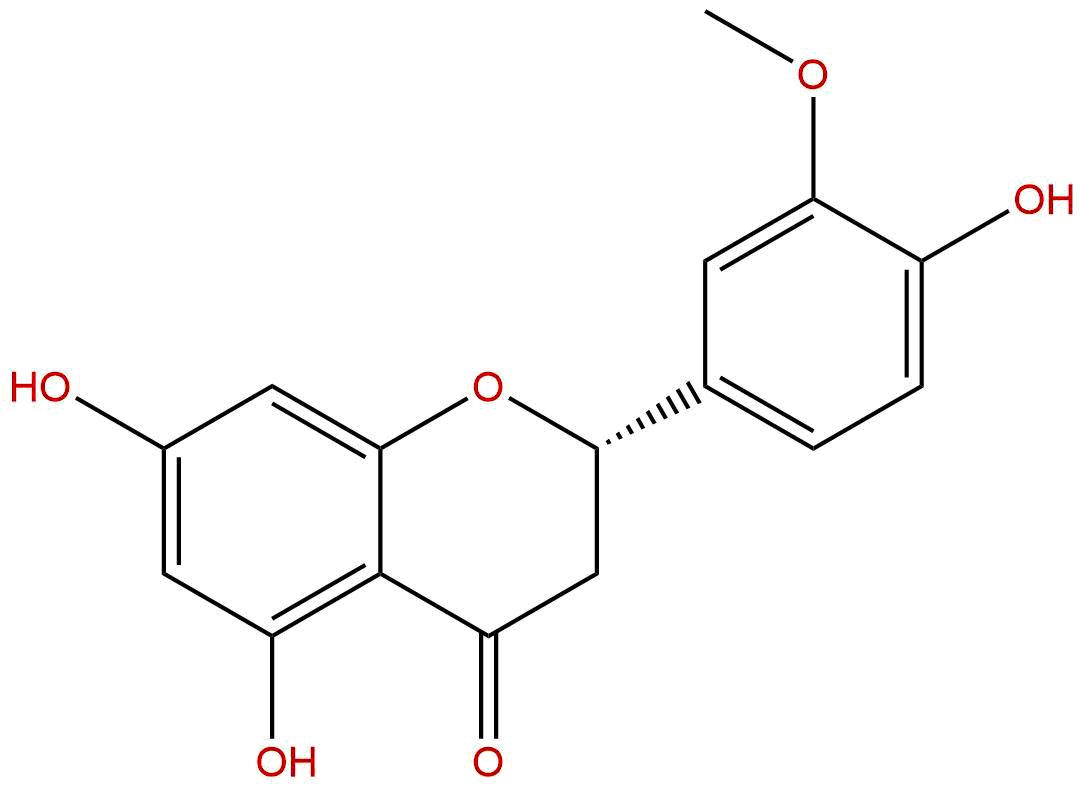


Product name: Homoeriodictyol
Synonym name: Eriodictyol 3'-methyl ether; Eriodictyonone; Hersperetin
Catalogue No.: BP4836
Cas No.: 446-71-9
Formula: C16H14O6
Mol Weight: 302.282
Botanical Source:
Type of Compound: Flavonoids
Purity: 95%~99%
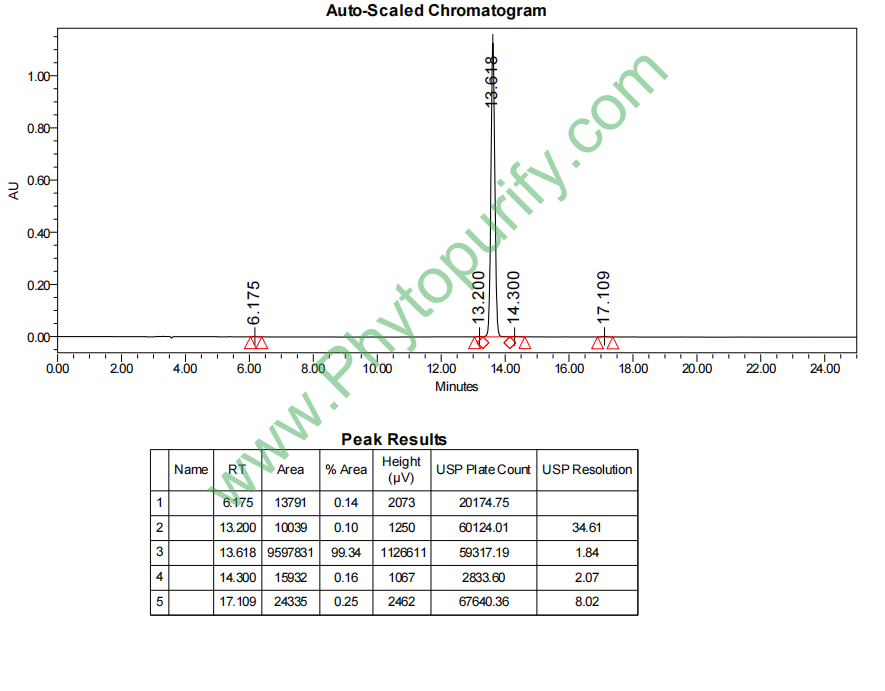
Analysis Method: HPLC-DAD or/and HPLC-ELSD
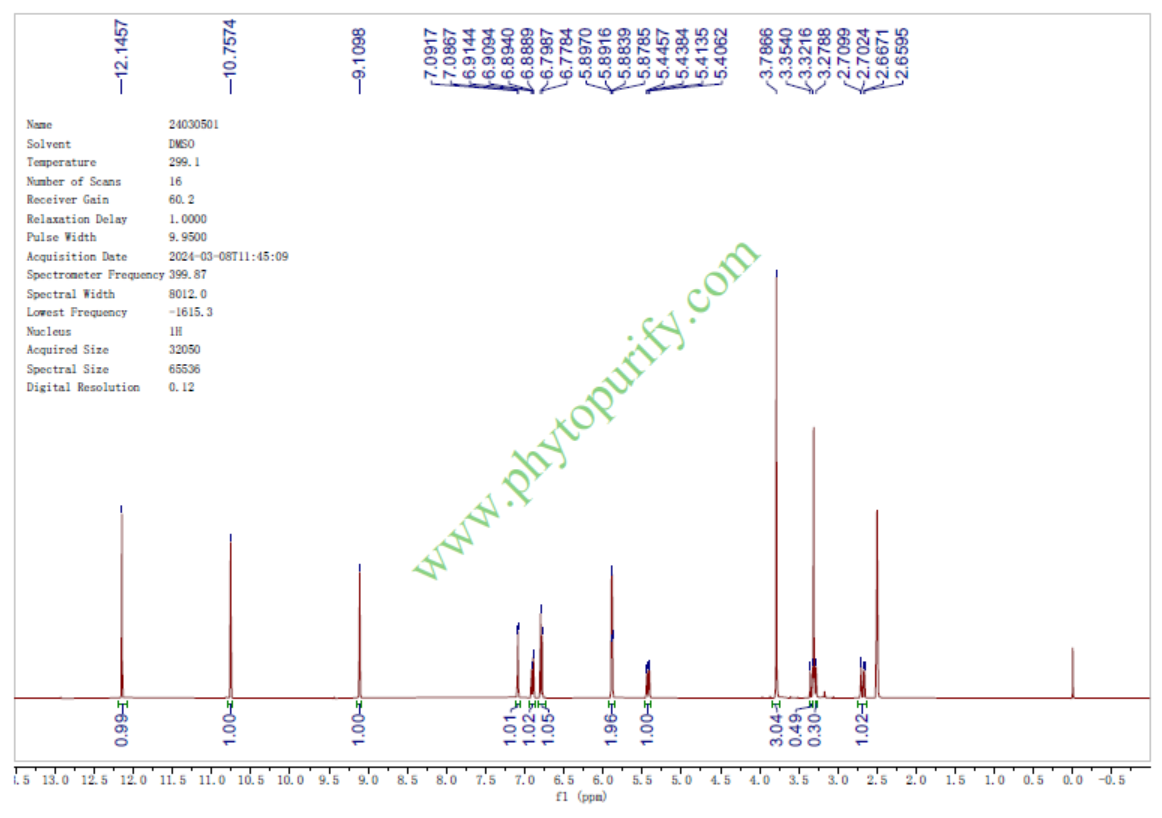
Identification Method: Mass, NMR
Packing: Brown vial or HDPE plastic bottle
Storage: Store in a well closed container, protected from air and light. Put into refrigerate or freeze for long term storage.
Whenever possible, you should prepare and use solutions on the same day. However, if you need to make up stock solutions in advance, we recommend that you store the solution as aliquots in tightly sealed vials at -20℃. Generally, these will be useable for up to two weeks.
The product could be supplied from milligrams to grams
Inquire for bulk scale.
For Reference Standard and R&D, Not for Human Use Directly.
HPLC of Homoeriodictyol
HNMR of Homoeriodictyol
Storage conditions:Short-term storage at 2~8℃, long-term storage at -20 ~ -80℃
Homoeriodictyol (CAS number: 446-71-9) is a natural flavonoid compound widely found in various traditional herbaceous plants, particularly known for its bitter taste masking activity. In recent years, with the deepening development of natural product pharmacology, Gaoshengcao phenol has gradually become a hot topic in neuroprotection, anti-inflammatory, anti-tumor, and cardiovascular disease research due to its unique biological activity and good oral absorption. It can penetrate the blood-brain barrier, regulate the function of nerve cells, and demonstrate the potential to improve cognitive impairment; Simultaneously, it exhibits complex regulatory effects of multiple targets and pathways in antioxidant, anti-inflammatory, and anticancer mechanisms. This article provides a systematic review of the chemical structure, sources, pharmacological activity, mechanism of action, pharmacological properties, and clinical application prospects of Gaoshengcao phenol, aiming to provide theoretical basis and research reference for its further drug development and clinical translation.
Gaoshengcao phenol belongs to the class of flavanone compounds, with a molecular formula of C16H14O6 and a molecular weight of 302.2820. Its structural core is a typical flavanone skeleton, with multiple hydroxyl and methoxy substituents, endowing it with good biological activity. The LogP value of Gaoshengcao phenol is 2.1918, indicating that it has moderate lipid solubility, which is beneficial for cell membrane penetration and in vivo distribution. The topological polar surface area (TPSA) is 96.22 Å ², indicating a good balance in both polar and non-polar environments, which is conducive to oral absorption and blood-brain barrier penetration. The water solubility is 0.3047, indicating low water solubility but sufficient to support bioavailability. In the in vitro safety assessment, Gaoshengcao phenol did not exhibit hERG channel inhibitory activity, and the Ames mutagenicity test value was 0.6, indicating a low risk of genetic toxicity.
Gaoshengcao phenol is mainly found in various bitter tasting herbaceous plants, such as Eriodictyon spp. and flavonoid rich plants. In traditional Chinese medicine and folk herbs, these plants are commonly used to treat inflammation, neurodegenerative diseases, and cardiovascular diseases. The extraction of Gaoshengcao phenol is usually carried out by organic solvent extraction method, commonly using ethanol or methanol as solvents, combined with ultrasound assisted extraction to improve extraction efficiency. Subsequently, it was separated and purified by liquid chromatography (HPLC), and its structure was identified using mass spectrometry and nuclear magnetic resonance (NMR) techniques. In recent years, green extraction techniques such as supercritical CO2 extraction and microwave-assisted extraction have also been applied to the efficient extraction of resveratrol, further improving purity and yield.
Gaoshengcao phenol has good oral activity and blood-brain barrier penetration ability, and can regulate neuronal function. Research has shown that resveratrol enhances the expression of synapse related proteins through the NCOA4 mediated autophagy mechanism, thereby improving neural plasticity and cognitive function. In addition, it significantly improves memory impairment in mouse models by inhibiting NLRP3 inflammasome activity, reducing neuroinflammatory responses. These results indicate that resveratrol has potential application value in the treatment of neurodegenerative diseases such as Alzheimer's disease and Parkinson's disease.
Gaoshengcao phenol can activate the nuclear factor E2 related factor 2 (Nrf2) signaling pathway, enhance the expression of intracellular antioxidant enzymes, and inhibit oxidative stress. Its protective effect on human endothelial cells is particularly significant, which can prevent mitochondrial dysfunction, reduce reactive oxygen species (ROS) levels, alleviate oxidative damage, and maintain the functional stability of vascular endothelium. This characteristic makes it of great significance in the prevention and treatment of cardiovascular diseases.
Gaoshengcao phenol regulates the inflammatory signaling pathway through multiple targets, especially inhibiting the activation of NLRP3 inflammasome, reducing the release of pro-inflammatory cytokines, and exerting significant anti-inflammatory effects. This mechanism is not only prominent in neurological diseases, but also helps alleviate systemic inflammatory reactions and promote tissue repair.
Gaoshengcao phenol induces cancer cell apoptosis by enhancing ROS activity, demonstrating good anti-tumor activity. In vitro experiments have shown that resveratrol can inhibit the survival and migration of androgen resistant prostate cancer cells, indicating its potential in the treatment of prostate cancer. In addition, it has broad prospects for anti-cancer applications by regulating cell cycle and apoptosis related proteins, inhibiting tumor cell proliferation and metastasis.
Gaoshengcao phenol has an inhibitory effect on platelet aggregation, and its related targets include key molecules such as PTGS1, PTGS2, ITGA2B, ITGB3, P2RY12, TBXA2R, PDE3A, etc. This effect helps prevent thrombosis, reduce the risk of cardiovascular and cerebrovascular events, and demonstrates good cardiovascular protection potential.
Animal experiments have shown that Gaoshengcao phenol has anti nociceptive activity in mice and can alleviate pain sensation, indicating its application value in pain management and neuropathic pain treatment.
The multiple pharmacological effects of Gaoshengcao phenol are attributed to its ability to regulate multiple targets and signaling pathways. It promotes iron homeostasis regulation and enhances neuronal synaptic function through NCOA4 mediated ferritin autophagy. Inhibit NLRP3 inflammasome activity, reduce the release of inflammatory mediators, and alleviate neurological and systemic inflammation. Activate the Nrf2 pathway, enhance antioxidant defense, and protect cells from oxidative damage. The anti-cancer mechanism is mainly achieved through ROS induced cell apoptosis and inhibition of tumor cell migration. The anti platelet aggregation effect involves key platelet activation targets such as PTGS1/2 and P2RY12, regulating platelet function and thrombus formation. In addition, the protective effect of resveratrol on mitochondrial function helps maintain cellular energy metabolism and reduce cell apoptosis.
The molecular weight of Gaoshengcao phenol is moderate (302.2820), with a LogP value of 2.1918, which meets the lipid solubility requirements of oral drugs and is beneficial for intestinal absorption. The TPSA is 96.22, indicating a good balance between polar and non-polar environments, supporting its ability to penetrate the blood-brain barrier. Low water solubility (0.3047) may affect its bioavailability, but it can be improved through formulation optimization. Good in vitro safety, no hERG channel inhibition, Ames test results show low genetic toxicity risk and high safety. Pharmacokinetic studies have shown that Gaoshengcao phenol is rapidly absorbed after oral administration and can effectively distribute to brain tissue, with good potential for central nervous system action. Its metabolic pathway mainly involves the liver enzyme system, and the activity and clearance rate of metabolites need further research.
Gaoshengcao phenol, with its multi-target and multi mechanism pharmacological activities, has shown broad clinical application prospects in the fields of neurodegenerative diseases, inflammatory diseases, cancer, and cardiovascular diseases. Especially in cognitive disorders such as Alzheimer's disease and Parkinson's disease, it has potential disease modifying effects by regulating iron homeostasis and inhibiting inflammasomes, improving neurological function. The anti-cancer and antiplatelet aggregation activities provide new ideas for their application in tumor therapy and cardiovascular disease prevention. In the future, it is necessary to strengthen its pharmacokinetics, toxicology, and preclinical evaluation, optimize formulation design, and promote its progress towards clinical trials. In addition, combining modern medicinal chemistry and biotechnology to develop derivatives and compound preparations of high holy grass phenol, improving its efficacy and safety, will be an important research direction.
Gaoshengcao phenol, as a natural flavanone with unique biological activity, has demonstrated extensive pharmacological potential in various fields such as neuroprotection, anti-inflammatory, anti-cancer, and cardiovascular disease due to its excellent oral activity and blood-brain barrier penetration ability. Its multi-target and multi mechanism mode of action provides a valuable example for the development of natural product drugs. In the future, through in-depth mechanism research, pharmacokinetic optimization, and clinical translation studies, Gaoshengcao phenol is expected to become a new generation of multifunctional therapeutic drugs, bringing new breakthroughs to the prevention and treatment of related diseases.
