Introduction/Overview
Osteoporosis is a systemic bone disease characterized by low bone mass, destruction of bone microstructure, increased bone fragility, and susceptibility to fractures. With the acceleration of global population aging, osteoporosis and the resulting fractures have become an increasingly serious public health problem, posing a serious threat to the quality of life of middle-aged and elderly populations. The commonly used anti osteoporosis drugs in clinical practice mainly include bone resorption inhibitors (such as bisphosphonates, estrogen receptor modulators) and bone formation promoters (such as parathyroid hormone analogs). However, long-term use of these drugs is often accompanied by a series of side effects, such as bisphosphonate related mandibular necrosis, atypical femoral fracture, and increased cardiovascular events and breast cancer risk of hormone replacement therapy. Therefore, the search for efficient and low toxicity new anti osteoporosis candidate compounds from natural products has always been a research hotspot in the fields of medicinal chemistry and pharmacology.
Epimedium herb(Epimedium As a representative traditional Chinese medicine for tonifying the kidney and strengthening yang, strengthening tendons and bones, the pharmacological activity of SPP in combating osteoporosis has been extensively confirmed by modern research. The main active ingredients of Epimedium are flavonoids, especially isopentenyl flavonoids such as Icariin and its metabolites. Noricaritin, a type of flavonoid compound with a unique structure, has been isolated and identified from the roots of Epimedium in recent years. Its chemical structure is similar to classical Icaritin, but lacks a methyl group. This subtle structural difference endows hydrated icariin with unique biological activity and pharmacological properties. Early research mainly focused on its role as a plant estrogen in regulating bone metabolism. However, as research deepens, its multiple pharmacological activities such as anti osteoporosis, anti-tumor, and anti-inflammatory effects have gradually been revealed by regulating multiple signaling pathways and acting on multiple targets (including MCL1, BCL2, ESR1, RUNX2, etc.). This article aims to systematically review the chemical structure, plant origin, pharmacological activity, mechanism of action, pharmacological evaluation, and clinical application prospects of hydrated icariin, in order to provide comprehensive references for the in-depth research and development of this natural product.
Chemical structure and physicochemical properties
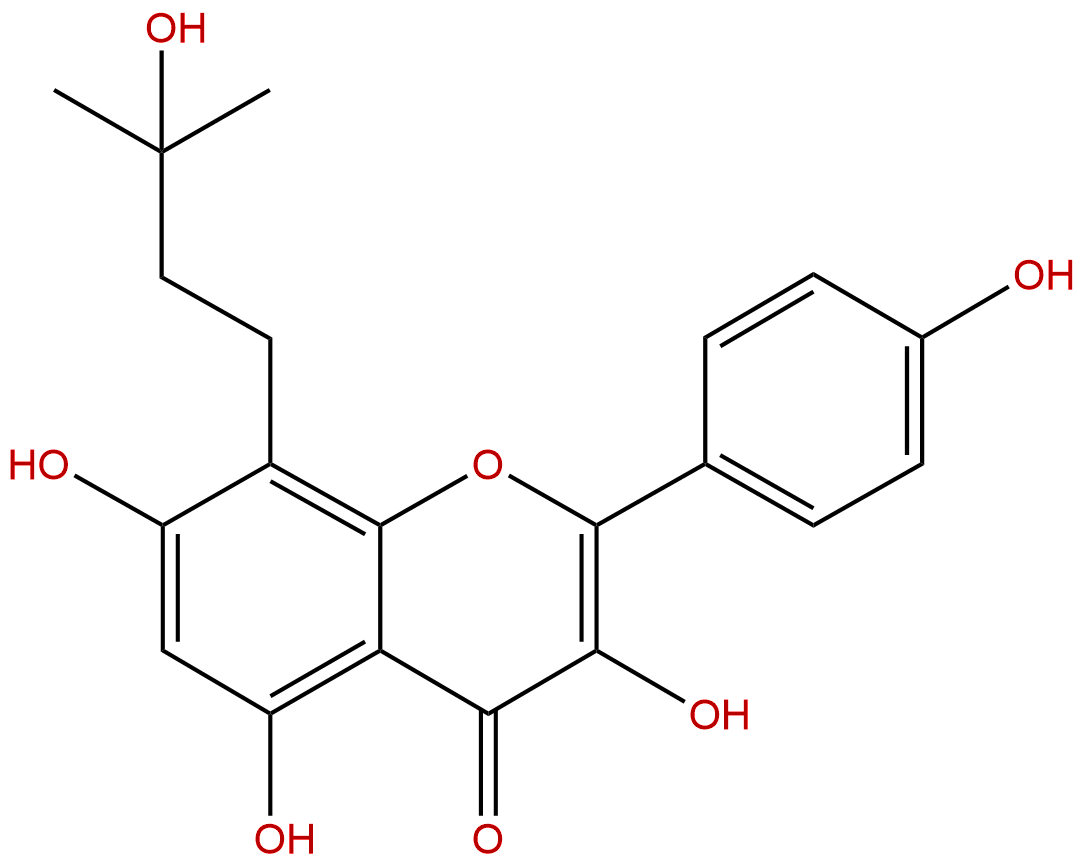
The chemical name of Noricaritin hydrate is usually 3,5,7-trihydroxy-2- (4-hydroxyphenyl) -8- (3-methyl-2-butenyl) -4H-1-benzopyran-4-one, which belongs to the isopentenyl flavonoid subclass of flavonoids. Its parent nucleus is a classic flavonoid structure (2-phenylchromenone), with hydroxyl groups attached to the C-5 and C-7 positions on the A ring, an isopentenyl group (3-methyl-2-butenyl) attached to the C-8 position, and a hydroxyl group attached to the C-4 'position on the B ring. Compared with Icaritin, hydrated demethylated icariin has one less methyl group on the C-4 'hydroxyl group of the B ring, meaning its B ring is a 4' - hydroxyphenyl group instead of a 4 '- methoxyphenyl group. This structural difference leads to changes in molecular polarity, hydrogen bond donor/acceptor ability, and spatial conformation, which in turn affects its binding affinity and selectivity with biological targets such as estrogen receptor ESR1.
The CAS number of this compound is 5240-95-9, the molecular formula is C ₂₀ H ₂₀ O ₇, and the molecular weight is 372.3730 g/mol. From the perspective of pharmacological parameters, its lipid water partition coefficient LogP is 2.3977, indicating that the molecule has moderate lipophilicity, which is conducive to transmembrane transport and binding to the target. Its topological polar surface area (TPSA) is 131.3600 Å ², much higher than the recommended upper limit of 140 Å ² for oral drugs, indicating that it may have lower oral bioavailability. However, its higher polarity also means that it is not easily able to penetrate the blood-brain barrier (BBB permeability is low), which can reduce central nervous system side effects to some extent. The water solubility parameter is 0.1285 mg/mL, belonging to the category of slight solubility, which is consistent with its structural characteristics of containing multiple phenolic hydroxyl groups (which can form hydrogen bonds) but also having hydrophobic isopentenyl side chains. It is worth noting that the Ames test result is 0.6, indicating a potential genetic toxicity risk, which requires rigorous toxicological evaluation in subsequent drug development. In addition, the prediction result of hERG inhibition is' no ', indicating that its risk of causing QT interval prolongation and arrhythmia in the heart is low, which is a favorable safety signal.
Plant sources and extraction methods
Hydrated demethylated icariin mainly comes from the Epimedium genus in the Berberidaceae family(Epimedium)The roots, rhizomes, and entire plant. There are over 50 species of Epimedium plants in the world, with China being its distribution center with about 40 species. Among them, Epimedium is listed as a source plant in the Chinese Pharmacopoeia(E. brevicornu)Arrow leaf Epimedium(E. sagittatum)Soft haired Epimedium(E. pubescens)Korean Epimedium(E. koreanum)Heshan Epimedium(E. wushanense)Wait. Hydrated icariin is distributed in these species, but its content varies depending on the species, place of origin, harvest season, and medicinal site. Usually, the content in roots and rhizomes is higher than that in aboveground parts, and its accumulation may change with the increase of plant growth years.
Traditional extraction methods often use solvent extraction, such as reflux extraction or cold extraction of dried Epimedium root powder using methanol, ethanol, or water ethanol mixed solvents. Due to the presence of multiple phenolic hydroxyl groups and acidity, the extraction efficiency of hydrated icariin may be higher under alkaline conditions (such as adding a small amount of ammonia or sodium hydroxide). However, traditional methods often have disadvantages such as long extraction time, high solvent consumption, and low purity of the target substance. Modern extraction techniques are widely used to improve extraction efficiency and purity. For example, ultrasound assisted extraction (UAE) utilizes the cavitation effect of ultrasound to destroy cell walls, accelerate solvent penetration, and achieve higher extraction rates in a shorter period of time. Microwave assisted extraction (MAE) vaporizes intracellular water through microwave heating, causing cell rupture and rapid release of target compounds. In addition, supercritical fluid extraction (SFE) uses CO ₂ as the extractant and can selectively extract non-polar or moderately polar flavonoids by adjusting pressure and temperature. However, a small amount of polar modifier (such as ethanol) needs to be added to improve the extraction efficiency of hydrated icariin.
The crude extract after extraction needs to undergo a series of separation and purification steps to obtain high-purity hydrated icariin. Common methods include: silica gel column chromatography (elution with gradient of different polar solvents), polyamide column chromatography (separation using the ability of phenolic hydroxyl group of flavonoids to form hydrogen bond with amide group), Sephadex LH-20 gel column chromatography (separation according to molecular size and shape) and high performance liquid chromatography (HPLC) preparation. Among them, high-speed counter current chromatography (HSCCC), as a liquid-liquid distribution chromatography technique, has shown unique advantages in natural product separation due to its lack of solid stationary phase, high sample recovery rate, and difficulty in irreversible adsorption. It has been successfully used for the separation and purification of various flavonoids in Epimedium.
Pharmacological activity research
Anti osteoporosis activity
The most noteworthy pharmacological activity of hydrated icariin is its anti osteoporosis effect. Multiple in vitro and in vivo studies have confirmed that this compound can significantly promote the differentiation and mineralization of osteoblasts, while inhibiting the generation of osteoclasts and bone resorption activity. At the cellular level, hydrated icariin can upregulate the expression of osteoblast specific transcription factors RUNX2 and SP7 (Osterix), and increase the secretion of bone matrix proteins such as type I collagen (COL1A1) and osteoprotegerin (TNFRSF11B/OPG). OPG, as a bait receptor, can competitively bind to RANKL, thereby blocking the binding of RANKL to RANK and inhibiting the differentiation and activation of osteoclasts. In addition, hydrated icariin can downregulate the expression of anti apoptotic proteins MCL1 and BCL2 in osteoclast precursors, promote osteoclast apoptosis, and reduce bone resorption. In a rat model of osteoporosis induced by ovariectomy (OVX), gavage of hydrated icariin can significantly improve bone density, trabecular microstructure parameters (such as bone volume fraction, trabecular thickness and quantity), and reduce serum bone turnover markers (such as TRAP-5b, CTX-I). Its effect is comparable or better than positive control drugs (such as estradiol or alendronate sodium), and no significant estrogen like side effects such as uterine hyperplasia were observed.
Other pharmacological activities
In addition to its anti osteoporosis effect, hydrated icariin also exhibits various other pharmacological activities. In terms of anti-tumor, studies have shown that it can inhibit the proliferation and induce apoptosis of many cancer cell lines (such as breast cancer, prostate cancer, liver cancer, lung cancer). The mechanism involves regulating the expression of BCL2 family proteins (such as BCL2, BCL2L1/Bcl xL), activating the mitochondrial apoptosis pathway, and inhibiting the activity of AKR1B1 (aldose reductase), thereby interfering with the sugar metabolism and redox balance of tumor cells. In addition, hydrated icariin also has anti-inflammatory activity and can inhibit the production of NO, PGE2, and pro-inflammatory cytokines (such as TNF - α, IL-6) in macrophages induced by lipopolysaccharide (LPS), which may be related to its inhibition of the NF - κ B signaling pathway. In terms of neuroprotection, due to its low blood-brain barrier permeability, its direct central role may be limited, but it may still have indirect benefits for neurodegenerative diseases by regulating peripheral inflammatory responses or antioxidant stress. In addition, there are also reports indicating that hydrated icariin has antioxidant, antidepressant, and cognitive function improving effects, but these studies are still in the preliminary stage.
Mechanism of action and molecular targets
The pharmacological effects of hydrated icariin are the result of multi-target and multi pathway synergistic effects. Based on existing research, its core mechanism of action can be summarized as follows:
-
The signaling pathway mediated by estrogen receptor 1 (ESR1)Hydrated icariin, due to its B-ring 4 '- hydroxyl structure, has been proven to be a plant estrogen that can bind to estrogen receptors alpha (ESR1) and beta (ESR2), exerting selective estrogen receptor modulator (SERM) like effects. In bone tissue, it activates ESR1, initiates downstream MAPK/ERK and PI3K/Akt signaling cascades, and upregulates the expression of RUNX2 and SP7, promoting osteoblast differentiation. At the same time, it can upregulate the expression of OPG and downregulate the expression of RANKL, thereby inhibiting osteoclastogenesis. Importantly, unlike estradiol, the stimulating effect of hydrated icariin on the uterus and breast is weaker, which makes it safer in the treatment of osteoporosis.
-
Key transcription factors regulating osteogenic and osteoclast differentiation RUNX2 and SP7 are the main transcription factors controlling osteoblast differentiation. Hydrating icariin directly or indirectly upregulates the expression of RUNX2 and SP7 by activating signaling pathways such as BMP/Smad and Wnt/β - catenin. Meanwhile, it can also inhibit the activity of the key transcription factor NFATc1, which is involved in osteoclast differentiation. The activation of NFATc1 depends on the RANKL-RANK signaling pathway. Hydrated icariin inhibits the expression and nuclear translocation of NFATc1 by upregulating OPG, downregulating RANKL, and directly interfering with the MAPK and NF - κ B pathways downstream of RANKL, ultimately suppressing osteoclast formation.
-
Regulating cell apoptosis and survival The regulation of bone metabolism by hydrated icariin is also reflected in the differential regulation of apoptosis in osteoblasts and osteoclasts. It protects osteoblasts from oxidative stress and inflammatory factor induced apoptosis by upregulating the expression of anti apoptotic proteins BCL2 and BCL2L1 (Bcl xL) in osteoblasts, thereby maintaining bone formation. On the contrary, in osteoclast precursors or mature osteoclasts, hydrated icariin downregulates the expression of MCL1 and BCL2, activates caspase-3, induces osteoclast apoptosis, and thus inhibits bone resorption. This differential regulation of apoptosis in two types of cells is one of the important mechanisms by which it exerts its anti osteoporosis effect.
-
Metabolic regulation and redox balance AKR1B1 (aldose reductase) is a key enzyme in the polyol metabolic pathway, and its over activation is related to the complications and inflammation of diabetes. Hydrated icariin has been found to be an effective inhibitor of AKR1B1. By inhibiting AKR1B1, it can reduce the accumulation of intracellular sorbitol, improve oxidative stress status, and inhibit the activation of the NF - κ B pathway, thereby reducing inflammation and bone loss. In addition, LDHA (lactate dehydrogenase A) is a key enzyme in glycolysis, highly expressed in rapidly proliferating cells such as osteoclast precursors and tumor cells. Hydrated icariin may inhibit LDHA activity, interfere with the energy metabolism of osteoclasts, and thus suppress their differentiation and function.
Evaluation of drug properties and pharmacokinetics
Despite exhibiting good activity in both in vitro and in vivo pharmacological models, the development of its pharmacological properties still faces challenges. As mentioned earlier, its TPSA is high (131.36 Å ²) and its water solubility is poor (0.1285 mg/mL), which usually indicates poor oral absorption and low bioavailability. Pharmacokinetic studies (mostly animal experiments) have shown that after oral administration of hydrous icariin, the peak concentration (Cmax) in plasma is low, the peak time (Tmax) is long, and the absolute bioavailability is usually less than 10%. This is mainly due to the fact that multiple phenolic hydroxyl groups in its molecule are prone to first pass metabolism in the gastrointestinal tract, including glucuronidation and sulfation binding reactions, leading to their rapid metabolic clearance. In addition, its isopentenyl side chain may also be oxidized and metabolized by cytochrome P450 enzymes.
In order to improve its pharmacokinetic properties, researchers have explored various strategies. For example, preparing it as a phospholipid complex (Phytosome) or cyclodextrin inclusion complex can significantly improve its water solubility and oral absorption. Nano drug delivery systems, such as liposomes, polymer nanoparticles, and solid lipid nanoparticles, have also been used to encapsulate hydrated icariin for sustained release, targeted delivery, and improved bioavailability. In addition, prodrug design is also an effective strategy, such as esterification or etherification modification of its phenolic hydroxyl group to release the original drug after enzymatic hydrolysis in vivo.
In terms of safety, the Ames test result is 0.6, indicating that it may have potential genetic toxicity. This requires high vigilance and must be comprehensively evaluated in subsequent in vitro and in vivo genetic toxicity tests (such as micronucleus tests, chromosome aberration tests). At present, there is a lack of research on the long-term toxicity, reproductive toxicity, and carcinogenicity of hydrated icariin. Its low hERG inhibition risk is a favorable signal, but comprehensive cardiac safety evaluation still needs to be conducted. Overall, hydrated icariin has the potential to serve as a lead compound for anti osteoporosis, but its drug optimization and safety evaluation are key bottlenecks in pushing it towards clinical application.
Clinical application prospects and prospects
Hydrated icariin, as a natural flavonoid compound with multi-target regulatory ability, has shown unique advantages in the treatment of osteoporosis. Its SERM like effect promotes bone formation and inhibits bone resorption while avoiding the stimulation of the reproductive system by traditional estrogen therapy, which is particularly important for postmenopausal women with osteoporosis who require long-term medication. In addition, its inhibitory effect on AKR1B1 and LDHA suggests that it may have more extensive application value in complex pathological conditions such as diabetes induced osteoporosis or inflammatory bone loss.
However, from laboratory research to clinical application, hydrated icariin still faces many challenges. The primary issue is its extremely low bioavailability. Future research should focus on developing efficient and safe delivery systems, such as nanocarriers targeting bone tissue, to increase local drug concentrations in the bone microenvironment while reducing potential toxicity from systemic exposure. Secondly, its potential genetic toxicity needs to be thoroughly clarified. If genetic toxicity is confirmed, it must be eliminated through structural modifications (such as removal or replacement of isopentenyl side chains) while retaining its core pharmacological activity. In addition, based on its multi-target characteristics, the combination therapy of hydrated icariin with other anti osteoporosis drugs (such as bisphosphonates and teriparatide) is also worth exploring in order to achieve synergistic effects and reduce side effects.
In addition to osteoporosis, the application of hydrated icariin in areas such as tumor bone metastasis, rheumatoid arthritis related bone erosion, and delayed fracture healing is also worthy of attention. With a deeper understanding of its mechanism of action, especially its role in regulating apoptosis factors such as MCL1 and BCL2, its therapeutic potential in hematological malignancies such as multiple myeloma is also worth exploring. In the future, by combining systems biology and network pharmacology methods, constructing a "compound target disease" network of hydrated icariin will help to comprehensively reveal its pharmacological spectrum and guide the precise localization of its clinical indications.
Conclusion
Hydrated icariin, as an important active flavonoid in Epimedium, has shown significant development potential in the field of anti osteoporosis due to its unique chemical structure and multi-target mechanism of action. It synergistically promotes osteogenesis, inhibits osteoclastogenesis, and has anti-inflammatory and antioxidant activities by regulating a series of key targets such as ESR1, RUNX2, SP7, MCL1, BCL2, AKR1B1, LDHA, etc., demonstrating the advantages of natural products with multi-component and multi-target effects. However, its poor oral bioavailability and potential genetic toxicity risk are key bottlenecks that constrain its development into a drug. Future research should focus on the development of new formulations to improve bioavailability, systematic toxicological evaluation, and the discovery of lead compounds based on structural optimization. With the continuous advancement of modern medicinal chemistry, pharmacy, and pharmacology technologies, hydrated icariin and its derivatives are expected to eventually develop into new drugs for the treatment of osteoporosis and other bone metabolism diseases, contributing to human health.