


Synonym name: Verbenaloside; Cornin
Catalogue No.: BP1435
Cas No.: 548-37-8
Formula: C17H24O10
Mol Weight: 388.369
Botanical Source: Verbena officinalis, Verbena stricta and other Verbena spp., Penstemon nitidus and Cornus florida
Purity: 95%~99%
Analysis Method: HPLC-DAD or/and HPLC-ELSD
Identification Method: Mass, NMR
Packing: Brown vial or HDPE plastic bottle
Can be supplied from milligrams to grams.
For Reference Standard and R&D, Not for Human Use Directly.
Inquire for bulk scale.
HPLC of Verbenalin
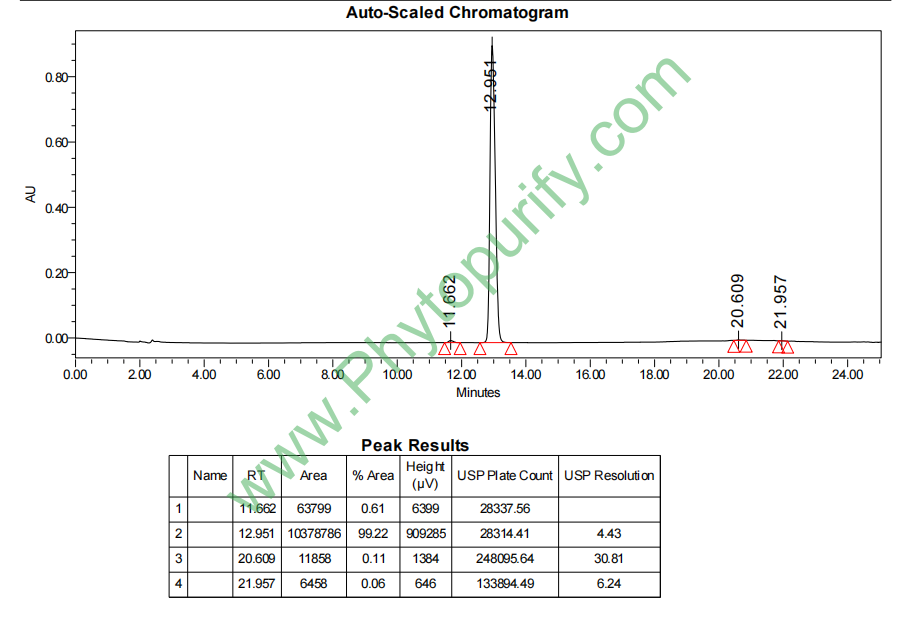
Storage conditions:Short-term storage at 2~8℃, long-term storage at -20 ~ -80℃
151.9800
-.8915
-.8918
42.0672
.5146
1.2268
Low
32.4441
4.6412
Yes
No
No
No
Yes
No
0.0
Yes
Yes
Yes
Yes
Natural products, as an important source of drug discovery and development, have played an irreplaceable role in the long history of human fight against diseases. Among them, terpenoid glycosides have always been a hot topic in medicinal chemistry and pharmacology research due to their structural diversity and wide range of biological activities. Verbenalin (CAS number: 548-37-8), as a typical iridoid glycoside, is mainly isolated from the traditional medicinal plant Verbena officinalis L. Whiplash is commonly used in traditional Chinese medicine and the traditional medical systems of many countries to treat fever, infection, inflammation, and neurological related diseases. Modern pharmacological research has gradually revealed the important value of verbascoside as one of its key active ingredients.
In recent years, with the deepening of modern separation and identification techniques and molecular biology research, the pharmacological activity spectrum of verbascoside has been continuously expanded. Research has shown that it not only exhibits significant anti-inflammatory, antiviral, and neuroprotective effects, but also demonstrates remarkable potential in studies targeting specific molecular targets, such as interactions with key proteins of severe acute respiratory syndrome coronavirus 2 (SARS-CoV-2). Its positive effects in inflammation and neurodegenerative disease models such as hepatitis and Alzheimer's disease further suggest its potential as a novel therapeutic candidate molecule. This article aims to systematically review the chemical properties, plant sources, pharmacological activities, mechanisms of action, medicinal properties, and clinical application prospects of verbascoside, in order to provide comprehensive academic references for the in-depth research and development of this compound.
The chemical name of verbascoside is (1S, 4aS, 7aS) -1- (β - D-glucopyranosyl) -7-hydroxymethyl-1,4-a, 5,6,7,7a - hexahydrocyclopentano [c] pyran-4-carboxylic acid lactone, with a molecular formula of C17H24O10 and a molecular weight of 388.3690. Its structure belongs to the iridoid glycoside class, which is connected to a molecule of β - D-glucose through a glycosidic bond by a cyclopentanopyran ring (iridoid terpene element). The combination of this unique rigid ring system and hydrophilic sugar groups determines its basic physicochemical properties and biological activity characteristics.
From the analysis of parameters related to medicinal properties, verbascoside exhibits typical polar molecular characteristics. The calculated lipid water partition coefficient (LogP) is -0.8915, indicating that it has good hydrophilicity. The topologically polar surface area (TPSA) is as high as 151.98 Å ², mainly attributed to the presence of multiple oxygen atoms (sugar and ester carbonyl) in the molecule. The high TPSA value is consistent with good water solubility (approximately 42.0672 mg/L), indicating that it has good solubility and is beneficial for the development of oral formulations. However, its high polarity and large polar surface area also pose challenges to its transmembrane permeability. Its blood-brain barrier (BBB) permeability is predicted to be "low", which seems contradictory to its neuroprotective activity, suggesting that its role may involve peripheral anti-inflammatory or indirect neuroprotective mechanisms, or that its active metabolites may have better brain entry ability. In early safety screening, verbascoside did not show hERG potassium channel inhibitory activity (hERG inhibition: No), and the Ames test result was negative (0.0), indicating a low risk of cardiac toxicity and genetic toxicity, providing a favorable safety starting point for its further development.
The main source of verbascoside is the whole plant of Verbena officinalis L. in the family Verbenaceae. Whiplash is widely distributed in temperate to tropical regions around the world, and is wild or cultivated in various parts of China. It is a medicinal plant with a long history. In addition to verbena, this compound is also present in small amounts in other plants of the same family and genus, such as the beautiful cherry (Verbena hybrida) and certain Eucommia ulmoides leaves, but verbena is still its main natural source.
The extraction of verbascoside from plant materials is usually carried out using solvent extraction method. Due to the hydrophilicity of its glycoside structure, water, methanol, ethanol, or alcohol water mixed solvents with different ratios are commonly used for leaching or reflux extraction. For example, using a 70% -80% ethanol aqueous solution for extraction under heating conditions can achieve a good balance between extraction efficiency and impurity dissolution. Subsequently, enrichment and purification using macroporous adsorption resin (such as AB-8, D101 type) column chromatography is a common strategy. By utilizing the adsorption characteristics of resins for glycoside compounds and gradient elution with water and different concentrations of ethanol, impurities such as polysaccharides and proteins can be effectively removed, leading to the initial enrichment of verbascoside. Further purification relies on techniques such as silica gel column chromatography, reverse phase silica gel column chromatography (such as ODS-C18), and preparative high-performance liquid chromatography (HPLC). Modern analysis and identification often use high-performance liquid chromatography-mass spectrometry (HPLC-MS) or nuclear magnetic resonance spectroscopy (NMR) for qualitative and quantitative analysis. In recent years, green extraction techniques such as ultrasound assisted extraction and microwave-assisted extraction have also been applied in the extraction process of verbascoside to improve extraction efficiency, shorten time, and reduce solvent consumption.
A large number of pharmacological studies both in vitro and in vivo have confirmed that verbascoside has multiple biological activities, with its core revolving around anti-inflammatory, neuroprotective, and antiviral effects.
1. Anti inflammatory activity: Mabanin has shown significant anti-inflammatory effects in various acute and chronic inflammation models. In the RAW 264.7 macrophage inflammation model induced by lipopolysaccharide (LPS), verbascoside can dose dependently inhibit the production of nitric oxide (NO), prostaglandin E2 (PGE2), and various inflammatory mediators. Oral administration of verbascoside can effectively reduce tissue edema and inflammatory cell infiltration in acute inflammation models such as carrageenan or acetic acid-induced paw swelling in mice and xylene induced ear swelling in mice. In the experimental colitis and other chronic inflammation models induced by dextran sulfate sodium (DSS) in mice, verbascoside can also improve colonic pathological damage and reduce disease activity index.
2. Neuroprotection and improvement of cognitive function activity: This is the active field of verbascoside that has received much attention in recent years. In the Alzheimer's disease (AD) cell model induced by β - amyloid protein (A β), verbascoside can increase neuronal survival rate and reduce cell apoptosis. In animal experiments, verbascoside can improve learning and memory impairment induced by scopolamine or A β in mice, and its mechanism is related to reducing brain inflammation, oxidative stress, and regulating the cholinergic system. In addition, in the model of cerebral ischemia-reperfusion injury, verbascoside has also been shown to reduce cerebral infarction volume and improve neurological deficits.
3. Antiviral activity: Traditionally, verbena has been used to treat colds and fever, but modern research provides evidence for its antiviral effects. Notably, computer simulation (molecular docking) and some biochemical experiments show that verbena can have strong binding affinity with the RNA dependent RNA polymerase (nsp12) protein active pocket of SARS-CoV-2, suggesting that it may interfere with the replication of the virus genome, providing a new lead compound clue for the development of anti COVID-19 drugs. In addition, it also exhibits certain inhibitory activity against influenza virus, herpes virus, etc.
4. Liver protective activity: In acute liver injury mouse models induced by carbon tetrachloride (CCl4), acetaminophen (APAP), or LPS/D-galactosamine, pretreatment with verbascoside can significantly reduce serum transaminase (ALT/AST) levels and alleviate pathological changes in liver tissue. Its hepatoprotective effect is closely related to anti-inflammatory and antioxidant mechanisms.
The multiple pharmacological activities of verbascoside stem from its regulation of multiple intracellular signaling pathways and interactions with multiple key targets. The most in-depth research on its anti-inflammatory mechanism involves a complex network of targets:
In terms of antiviral activity, its binding to SARS-CoV-2 nsp12 protein may interfere with the enzyme's binding or catalytic activity with RNA templates/substrates through steric hindrance or conformational effects, thereby inhibiting virus replication. In neuroprotection, in addition to the anti-inflammatory and antioxidant mechanisms mentioned above, it may also involve inhibiting acetylcholinesterase activity and regulating the expression of neurotrophic factors.
Although verbascoside has shown good activity in vitro and animal models, its pharmacological properties, especially pharmacokinetic properties, are the key factors determining its successful development as a drug.
The existing preliminary pharmacokinetic studies (mainly based on rodents) have revealed some characteristics of verbascoside: after oral administration, its absorption rate is fast, but its absolute bioavailability may be at a moderate or low level due to its high polarity and first pass effect. It is widely distributed in the body, but due to its low blood-brain barrier permeability, the concentration of the original drug in brain tissue is limited. This, combined with the observed central effects, suggests that its activity may be partially attributed to indirect mechanisms mediated by metabolites or peripheral effects. The main metabolic reactions of verbascoside in the body include hydrolysis, oxidation, and binding. As a glycoside, it may hydrolyze under the action of β - glucosidase in gut microbiota and/or tissues to produce aglycones (verbascoside), which have enhanced lipid solubility and may have different biological activities and distribution characteristics. In addition, hydroxylation, sulfation, or glucuronidation are also possible metabolic pathways. The prototype drug and its metabolites are mainly excreted through the kidneys and urine.
Based on its physicochemical properties (good water solubility, low LogP, high TPSA) and preliminary pharmacokinetic behavior, verbascoside belongs to Class III (high solubility, low permeability) compounds in the Biopharmaceutical Classification System (BCS). This points the way for its formulation development: improving oral bioavailability is the primary challenge. The strategy may include: ① Formulation technology Using methods such as solid dispersion, cyclodextrin inclusion, nanocrystals, or liposomes to increase its solubility and dissolution rate, or to promote its absorption through lymphatic transport and other pathways. ② Prodrug strategy Structural modification of its sugar or glycoside moiety to prepare prodrugs with higher lipid solubility, improve membrane permeability, and convert them into active forms in vivo. ③ Combined administration Combined use with P-glycoprotein inhibitors may reduce efflux and improve absorption.
As a natural active molecule with multiple targets and functions, verbascoside has shown broad application prospects in the prevention and treatment of various diseases.
1. Inflammatory related diseases: Given its clear anti-inflammatory mechanism and good animal experimental results, verbascoside is expected to be developed for the treatment of chronic inflammatory diseases such as rheumatoid arthritis, inflammatory bowel disease (such as ulcerative colitis), dermatitis, etc. Its multi-target action characteristics may lead to better therapeutic efficacy and lower risk of drug resistance.
2. Neurological disorders: Alzheimer's disease is one of its most promising application directions. At present, there is a shortage of drugs for the treatment of Alzheimer's disease, and verbascoside exerts neuroprotective effects through multiple mechanisms such as anti-inflammatory, antioxidant, and anti A β toxicity, which is in line with the treatment strategy of the multifactorial pathogenesis of Alzheimer's disease. Although it is difficult for the prototype drug to enter the brain, it is expected to overcome this bottleneck by improving the formulation or utilizing the activity of its metabolites. In addition, it is also worth exploring in the fields of post-stroke neural repair and vascular dementia.
3. Viral infection: In particular, the research on COVID-19 provides a new idea for verbenoside to be used as an antiviral or adjuvant drug. Further rigorous in vitro antiviral experiments and in vivo infection model validation are needed to clarify its efficacy and mechanism.
4. Combination therapy with drugs: Mabanin may be used as an adjuvant drug in combination with existing standard treatment drugs to enhance efficacy and reduce toxicity. For example, combined with anti-inflammatory drugs to treat arthritis, combined with acetylcholinesterase inhibitors to treat AD, or combined with antiviral drugs to treat viral infections.
However, there are still many challenges in pushing it from candidate compounds to clinical drugs: firstly, it is necessary to systematically complete preclinical pharmacological evaluations and validate them in animal models that are closer to human diseases. Secondly, a comprehensive preclinical safety evaluation (GLP toxicology study) must be conducted to clarify the toxic target organs and maximum tolerated dose for long-term use. Furthermore, it is necessary to thoroughly elucidate its main active form in vivo (whether it is the prototype drug or a metabolite) and optimize its pharmacokinetic properties. Finally, stable and controllable large-scale production processes and quality standards for active pharmaceutical ingredients also need to be established simultaneously.
As a key active ingredient of traditional medicinal plant verbena, verbascoside is an excellent example of modern natural product drug research. From a chemical structure perspective, it is a typical iridoid glycoside; From a pharmacological perspective, it constitutes an active spectrum with anti-inflammatory as its core, radiating to multiple fields such as neuroprotection, antiviral, and liver protection; From the perspective of its mechanism of action, it acts on a rich network of molecular targets by regulating key signaling nodes such as NF - κ B, STAT3, and NLRP3. These characteristics give it unique advantages in treating complex multifactorial diseases such as Alzheimer's disease and chronic inflammatory diseases.
Although there are challenges in drug development, especially in oral absorption and blood-brain barrier penetration, modern medicinal chemistry and pharmacy provide multiple solutions for this. Future research should focus on: revealing in depth the metabolic fate and activity attribution within its body; Using structural biology methods to clarify its precise mode of action with key targets such as SARS-CoV-2 nsp12; Improve its pharmacokinetic properties through rational structural modifications or advanced delivery systems; And ultimately promote its standardized preclinical development and move towards clinical research. The research on verbascoside not only contributes to the development of new therapeutic drugs, but also provides important clues for a deeper understanding of the scientific connotation of traditional herbal medicine, reflecting the translational medical value from traditional wisdom to modern innovation.
