| Catalog No | Package | Original Price | Price | Inventory | Quantity | Operating |
|---|---|---|---|---|---|---|
| SBP00429-5mg | 5mg | $250.00 | Sign in |
|


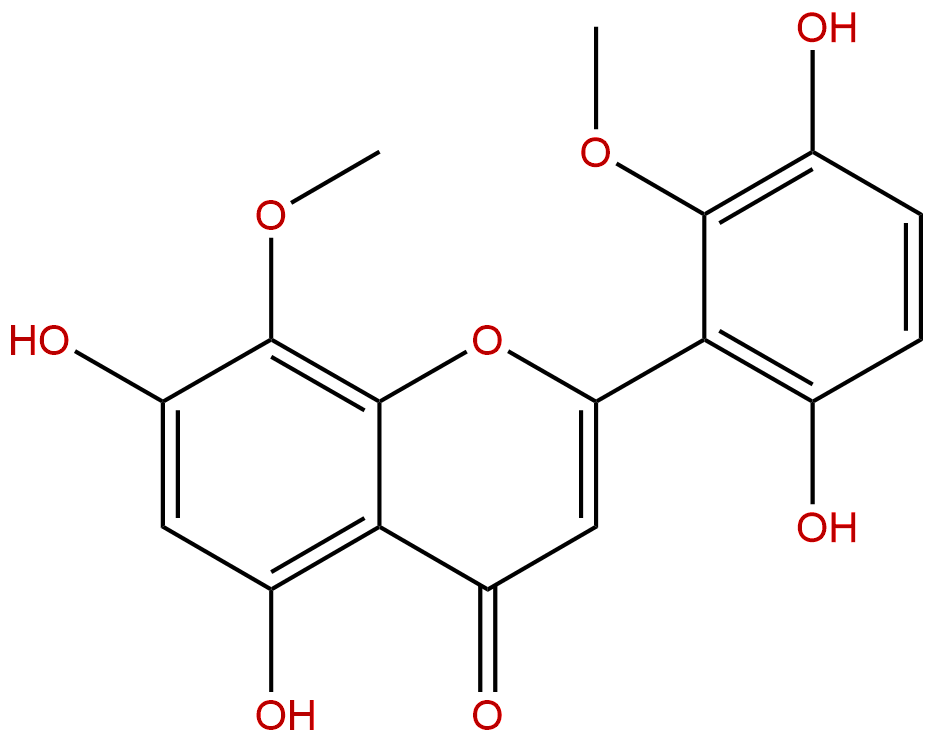
Product name: Viscidulin III
Synonym name:
Catalogue No.: SBP00429
Cas No.: 92519-91-0
Formula: C17H14O8
Mol Weight: 346.291
Botanical Source:
Physical Description: Yellow powder
Type of Compound: Flavonoids
Purity: 95%~99%
Analysis Method: HPLC-DAD or/and HPLC-ELSD
Identification Method: Mass, NMR
Packing: Brown vial or HDPE plastic bottle
The product could be supplied from milligrams to grams. Inquire for bulk scale.
We provide solution to improve the water-solubility of compounds, thereby facilitating the variety of activity tests and clinic uses.
For Reference Standard and R&D, Not for Human Use Directly.
Storage conditions:Short-term storage at 2~8℃, long-term storage at -20 ~ -80℃
129.5900
1.8893
1.6165
.1752
3.9925
14.2158
Low
86.3727
2.8102
Yes
No
Yes
No
Yes
No
0.6
Yes
No
Yes
No
Natural products, as an important source of drug discovery, play an irreplaceable role in the long history of human fight against diseases. Chinese traditional medicinal plant Scutellaria baicalensis(Scutellaria baicalensis Georgi and its closely related plant species have long been widely studied by scholars at home and abroad due to their rich flavonoid compounds and significant pharmacological activities. The root of Scutellaria baicalensis (also known as traditional Chinese medicine Scutellaria baicalensis) has the effects of clearing heat and dampness, purging fire and detoxifying, stopping bleeding and stabilizing pregnancy. Modern pharmacological research has confirmed that it has various biological activities such as anti-inflammatory, antioxidant, anti-tumor, antibacterial, and hepatoprotective. Among these active ingredients, major flavonoids such as baicalein and wogonin have been extensively studied and demonstrated good clinical application potential.
However, there are still a large number of trace components with low content but unique structure and significant activity in Scutellaria baicalensis, and Viscidulin III is one of them. This compound was originally derived from Scutellaria baicalensis, a plant of the genus Scutellaria(Scutellaria viscidula Separated and identified in Bunge, and later also in Scutellaria baicalensis(Scutellaria baicalensis)Found in the roots. Scutellaria baicalensis III belongs to the flavonoid class, and its chemical structure has a typical flavonoid nucleus, but its unique substitution mode endows it with special biological activity. It is worth noting that Scutellaria baicalensis III exhibits significant proliferation inhibition on human promyelocytic leukemia cell line HL-60, with a half maximal inhibitory concentration (IC50) of 17.4 μ M. This discovery positions it as a potential natural tumor inhibitor.
In recent years, with the in-depth exploration of the chemical components of Scutellaria baicalensis and the advancement of activity screening techniques, the research on Scutellaria baicalensis III has gradually expanded from simple activity discovery to mechanism elucidation and pharmacological evaluation. This article aims to systematically review the chemical structure characteristics, plant sources, extraction and separation methods, pharmacological activity, mechanism of action, pharmacological parameters, and clinical application prospects of Scutellaria baicalensis III, in order to provide comprehensive scientific basis for the further development and utilization of this natural product.
The chemical name of Viscidulin III is 5,7,2 ', 5' - tetrahydroxy-6,8-dimethoxyflavone, which belongs to the class of flavonoids substituted with multiple hydroxyl and methoxy groups. Its molecular formula is C17H14O8 and its molecular weight is 346.2910 g/mol. Structurally, the flavonoid core of Scutellaria baicalensis III is composed of A and B rings connected by a central pyranone ring (C ring). The C-5 and C-7 positions of the A ring are substituted with hydroxyl groups, while the C-6 and C-8 positions are substituted with methoxy groups; The C-2 'and C-5' positions of the B ring are substituted with hydroxyl groups. This highly hydroxylated and methoxylated structural feature endows the compound with unique chemical properties and biological activity.
In terms of physicochemical properties, the lipid water partition coefficient (LogP) of Scutellaria baicalensis III is 1.8893, indicating that it has a certain lipophilicity, but overall it is at a moderate level. The topological polar surface area (TPSA) is 129.5900 Å ², which is a relatively high value and reflects the presence of multiple polar groups (hydroxyl and methoxy) in the molecule, which facilitate the formation of hydrogen bonding interactions. The water solubility parameter is 0.1752 mg/mL, indicating that the compound has a low solubility in water, which may affect its bioavailability and formulation development. It is worth noting that the blood-brain barrier penetration ability of Scutellaria baicalensis III has been evaluated as "low", which is of great significance for avoiding central nervous system side effects, but also limits its application in the treatment of brain diseases. In addition, the hERG inhibition risk assessment was negative, indicating a low risk of cardiac toxicity; The Ames test result is 0.6, indicating that the potential genetic toxicity risk is at a critical level and needs further validation.
From the spectral characteristics, Scutellaria baicalensis III exhibits typical absorption peaks of flavonoids in the UV visible region, typically displaying two main absorption bands in the range of 240-280 nm (band II, A-ring benzoyl system) and 300-380 nm (band I, B-ring cinnamoyl system). In its infrared spectrum, the stretching vibration of hydroxyl groups (about 3200-3600 cm ⁻¹), the stretching vibration of carbonyl groups (about 1650 cm ⁻¹), and the skeleton vibration of aromatic rings (about 1600, 1500 cm ⁻¹) are characteristic absorptions. In nuclear magnetic resonance hydrogen and carbon spectra, the chemical shift values of protons and carbons on the A and B rings can clearly reflect their substitution modes, especially the position information of methoxy and hydroxyl groups.
The main source of Scutellaria baicalensis III from the Lamiaceae family is Scutellaria genus(Scutellaria)Plants. This compound was originally derived from Scutellaria baicalensis var. mucilaginosa(Scutellaria viscidula It was isolated from Bunge, which is also the origin of its name "sticky hair baicalein". Sticky haired Scutellaria baicalensis is a perennial herbaceous plant of the Scutellaria genus, mainly distributed in Northeast, North, and Northwest China. Its rhizome is often used as a substitute for Scutellaria baicalensis in folk medicine. Subsequently, the researchers studied authentic Scutellaria baicalensis(Scutellaria baicalensis The presence of baicalein III was also detected in the roots of Georgi, but the content is usually low and belongs to trace components. In addition, other Scutellaria plants such as Scutellaria barbata(Scutellaria barbata D. Don and others may also contain this compound, but the content and distribution pattern still need to be systematically studied.
In terms of distribution in plant tissues, mucilaginous baicalein III mainly accumulates in the roots of Scutellaria baicalensis, which is consistent with the distribution pattern of most flavonoids in Scutellaria baicalensis. The xylem and phloem of the roots both contain this compound, but the content may vary significantly due to factors such as plant growth years, harvest seasons, and production environment. Generally speaking, the content of flavonoids in Scutellaria baicalensis roots grown for 2-3 years is higher, and the accumulation of active ingredients in autumn harvested medicinal materials is more abundant.
The commonly used methods for extracting Scutellaria baicalensis III include solvent extraction, ultrasound assisted extraction, and microwave-assisted extraction. Due to the moderate polarity of the compound, methanol, ethanol, or their aqueous solutions are usually used as extraction solvents. The classic extraction process is to crush the dried Scutellaria baicalensis roots and soak them in a 70% -80% ethanol aqueous solution at room temperature or under heating conditions for extraction. The extract is then concentrated under reduced pressure to obtain the crude extract. In order to improve extraction efficiency and selectivity, ultrasound assisted extraction (usually power of 200-500 W, temperature of 40-60 ° C, time of 30-60 minutes) or microwave-assisted extraction (power of 300-600 W, temperature of 50-70 ° C, time of 10-20 minutes) can be used, which can significantly shorten the extraction time and improve the yield of the target compound.
In terms of separation and purification, due to the low content of Scutellaria baicalensis III in Scutellaria baicalensis roots and its frequent coexistence with structurally similar flavonoids, multi-step chromatographic separation techniques are required. Common separation methods include silica gel column chromatography (chloroform methanol or ethyl acetate methanol as eluent), polyamide column chromatography (ethanol water as eluent), Sephadex LH-20 gel column chromatography (methanol as eluent) and preparative high performance liquid chromatography (Pre HPLC). Among them, preparative HPLC has become the preferred method for obtaining high-purity baicalein III due to its high separation efficiency and reproducibility. The typical HPLC conditions are: C18 reverse phase chromatography column, mobile phase of methanol water or acetonitrile water system, gradient elution, detection wavelength of 254 nm or 280 nm. Through the above method, the monomeric compound of Scutellaria baicalensis III with a purity of over 98% can be obtained, providing a material basis for subsequent pharmacological activity research and mechanism exploration.
The most notable pharmacological activity of Scutellaria baicalensis III is its anti-tumor effect. In vitro cell experiments showed that the compound has a significant inhibitory effect on the proliferation of human promyelocytic leukemia cell line HL-60, with an IC50 value of 17.4 μ M. This activity level is moderate to strong among natural flavonoids, indicating its potential as a lead compound for anti-tumor development. Further studies showed that mucobascutellarin III showed varying degrees of cytotoxicity to a variety of tumor cell lines, including HepG2, MCF-7, A549, and HT-29, respectively. It is worth noting that this compound has relatively low toxicity to normal cells and exhibits certain selectivity, which is of great significance for the development of anti-tumor drugs.
In terms of its mechanism of action, Scutellaria baicalensis III mainly exerts anti-tumor effects by inducing cell apoptosis and cell cycle arrest. Flow cytometry analysis showed that after treatment with baicalein III, HL-60 cells exhibited typical apoptotic features, including cell shrinkage, chromatin condensation, DNA fragmentation, and phosphatidylserine eversion. Meanwhile, cell cycle analysis showed that the compound can block tumor cells in the G0/G1 phase or G2/M phase, and the specific blocking sites may vary depending on the cell type. In addition, Scutellaria baicalensis III can also inhibit the migration and invasion ability of tumor cells, suggesting that it may have anti metastatic activity.
Inflammation is an important driving factor for the occurrence and development of various diseases, including tumors. Scutellaria baicalensis III also exhibits significant anti-inflammatory activity. Research has shown that this compound can inhibit lipopolysaccharide (LPS) - induced macrophage inflammatory response and reduce the production of pro-inflammatory cytokines such as tumor necrosis factor - α (TNF - α), interleukin-6 (IL-6), and interleukin-1 β (IL-1 β). Meanwhile, Scutellaria baicalensis III can also inhibit the expression of nitric oxide synthase (NOS2) and the release of nitric oxide (NO), as well as the activity of cyclooxygenase-2 (COX-2, encoded by the PTGS1 gene), thereby reducing the synthesis of inflammatory mediators such as prostaglandin E2 (PGE2).
It is worth noting that the anti-inflammatory effect of Scutellaria baicalensis III is closely related to its anti-tumor activity. The chronic inflammatory microenvironment can promote the occurrence, development, and metastasis of tumors, while Scutellaria baicalensis III may indirectly exert anti-tumor effects by inhibiting the inflammatory signaling pathway. This dual activity of anti-inflammatory and anti-tumor gives Scutellaria baicalensis III unique advantages in tumor chemoprevention and treatment.
In addition to anti-tumor and anti-inflammatory activities, Scutellaria baicalensis III also exhibits various other pharmacological effects. Preliminary research has found that the compound has certain antioxidant activity, can scavenge free radicals (such as DPPH free radicals and ABTS cationic free radicals), and inhibit lipid peroxidation. In addition, Scutellaria baicalensis III exhibits inhibitory effects on certain bacteria and fungi, suggesting its potential antibacterial activity. However, research in these areas is not yet in-depth and requires more experimental data to confirm and expand.
The pharmacological activity of Scutellaria baicalensis III involves multiple molecular targets and signaling pathways, exhibiting characteristics of multi-target and multi pathway action. Based on existing research, its mechanism of action mainly involves the following aspects:
Signal transducer and activator of transcription factor 3 (STAT3) is a key transcription factor in inflammation and tumor development. Scutellaria baicalensis III can inhibit the phosphorylation activation of STAT3, thereby blocking its nuclear translocation and transcription of downstream target genes. The continuous activation of STAT3 is closely related to the proliferation, survival and drug resistance of many tumors (including leukemia, liver cancer, breast cancer, etc.). Scutellaria baicalensis III can downregulate the expression of anti apoptotic proteins (such as Bcl-2, Bcl xL, and Survivin) and upregulate the expression of pro apoptotic proteins (such as Bax and Bak) by inhibiting the STAT3 signaling pathway, thereby inducing tumor cell apoptosis. In addition, inhibition of the STAT3 signaling pathway can also reduce the expression of matrix metalloproteinases (MMPs) and inhibit the invasion and metastasis of tumor cells.
Nuclear factor kappa B (NF - κ B) is a core transcription factor in inflammatory response and tumorigenesis. Scutellaria baicalensis III can inhibit the activity of I κ B kinase β (IKBKB), prevent the phosphorylation and degradation of I κ B α, and thus inhibit the activation of NF - κ B (composed of RELA and other subunits). Inhibition of NF - κ B leads to downregulation of downstream pro-inflammatory cytokines (TNF - α, IL-6), chemokines, adhesion molecules, and anti apoptotic proteins. This mechanism not only explains the anti-inflammatory activity of Scutellaria baicalensis III, but is also closely related to its anti-tumor effect. It is worth noting that there is a cross-talk between the NF - κ B and STAT3 signaling pathways, and Scutellaria baicalensis III may act on both pathways simultaneously, resulting in a synergistic effect.
Inflammatory bodies are an important component of the innate immune system, with NLRP3 inflammasome being the most extensively studied. Scutellaria baicalensis III can inhibit the assembly and activation of NLRP3 inflammasomes, thereby reducing the activation of cysteine aspartate protease 1 (CASP1). The activation of CASP1 is a crucial step in the maturation and secretion of IL-1 β and IL-18. By inhibiting CASP1, Scutellaria baicalensis III can reduce the production of mature IL-1 β and alleviate inflammatory reactions. In addition, inhibition of CASP1 can also reduce pyroptosis, a pro-inflammatory cell death pathway associated with various inflammatory diseases and tumors.
Transient receptor potential vanillic acid subtype 1 (TRPV1) and transient receptor potential anchor protein subtype 1 (TRPA1) are important ion channels involved in pain transmission and inflammatory response. Scutellaria baicalensis III can regulate the activity of these channels, possibly by directly binding or indirectly affecting their phosphorylation status. The regulation of TRPV1 and TRPA1 is related to the anti-inflammatory and analgesic effects of Scutellaria baicalensis III, but the specific mechanism still needs further research.
Overall, the targets of Scutellaria baicalensis III include IL-6, STAT3, CASP1, TRPV1, RELA, PTGS1, TNF, TRPA1, IKBKB, and NOS2. These targets involve inflammatory signaling pathways (NF - κ B, STAT3), apoptotic pathways (CASP1, Bcl-2 family), ion channels (TRPV1, TRPA1), and oxidative stress pathway (NOS2). Through the synergistic effect of multiple targets, Scutellaria baicalensis III can simultaneously exert anti-inflammatory and anti-tumor activities. The characteristic of this "multi-target drug" is in line with the concept of "one drug, multiple targets" in modern drug discovery, which may help overcome the problem of drug resistance easily caused by single target drugs.
Based on computational predictions and experimental data, the pharmacological parameters of Scutellaria baicalensis III are as follows:
Overall, Scutellaria baicalensis III conforms to most pharmacological rules, but its poor water solubility and potential genetic toxicity are issues that require special attention. By structural modification (such as introducing water-soluble groups) or formulation techniques (such as nanocarriers, cyclodextrin inclusion), its drug properties may be improved.
At present, there is limited direct research data on the pharmacokinetics of Scutellaria baicalensis III in vivo, but based on its structural characteristics and studies of similar compounds, its pharmacokinetic behavior can be inferred
Except for the potential genetic toxicity suggested by Ames test, the acute toxicity, subchronic toxicity, and long-term toxicity of Scutellaria baicalensis III have not been fully studied. Based on the negative results of hERG inhibition, its risk of cardiac toxicity is relatively low. However, as a natural product, its safety evaluation needs to follow the standardized process of drug development, including in vitro toxicity screening, animal toxicity experiments, and preclinical safety evaluation.
Based on the pharmacological activity of Scutellaria baicalensis III, its potential clinical application directions mainly include:
The further development of Scutellaria baicalensis III faces the following challenges and opportunities:
Future research on Scutellaria baicalensis III should focus on the following directions:
As a structurally unique flavonoid compound in the Scutellaria genus, Scutellaria baicalensis III has attracted the attention of researchers for its significant anti-tumor activity and multi-target anti-inflammatory effects. This compound exerts a comprehensive pharmacological effect of inhibiting tumor cell proliferation, inducing apoptosis, and reducing inflammatory response by regulating multiple molecular targets such as STAT3, NF - κ B, CASP1, and TRPV1. Its pharmacological parameters basically meet the requirements of drug development, but poor water solubility and potential genetic toxicity are obstacles that need to be overcome.
The development of Scutellaria baicalensis III from natural products to clinical drugs still faces many challenges, but its unique chemical structure and multi-target mechanism of action endow it with the potential to become a novel anti-tumor and anti-inflammatory drug. With the continuous in-depth research on the chemical composition of Scutellaria baicalensis and the advancement of modern drug development technology, Scutellaria baicalensis III is expected to become a new star in the field of natural medicine research and development in the near future, contributing to human health. Future research should focus on addressing its drug defects, elucidating its in vivo mechanisms of action, and evaluating its feasibility for clinical applications, in order to promote the transition of this natural product from the laboratory to clinical practice.
Batch can search by a CAS number,one per line
