Introduction/Overview
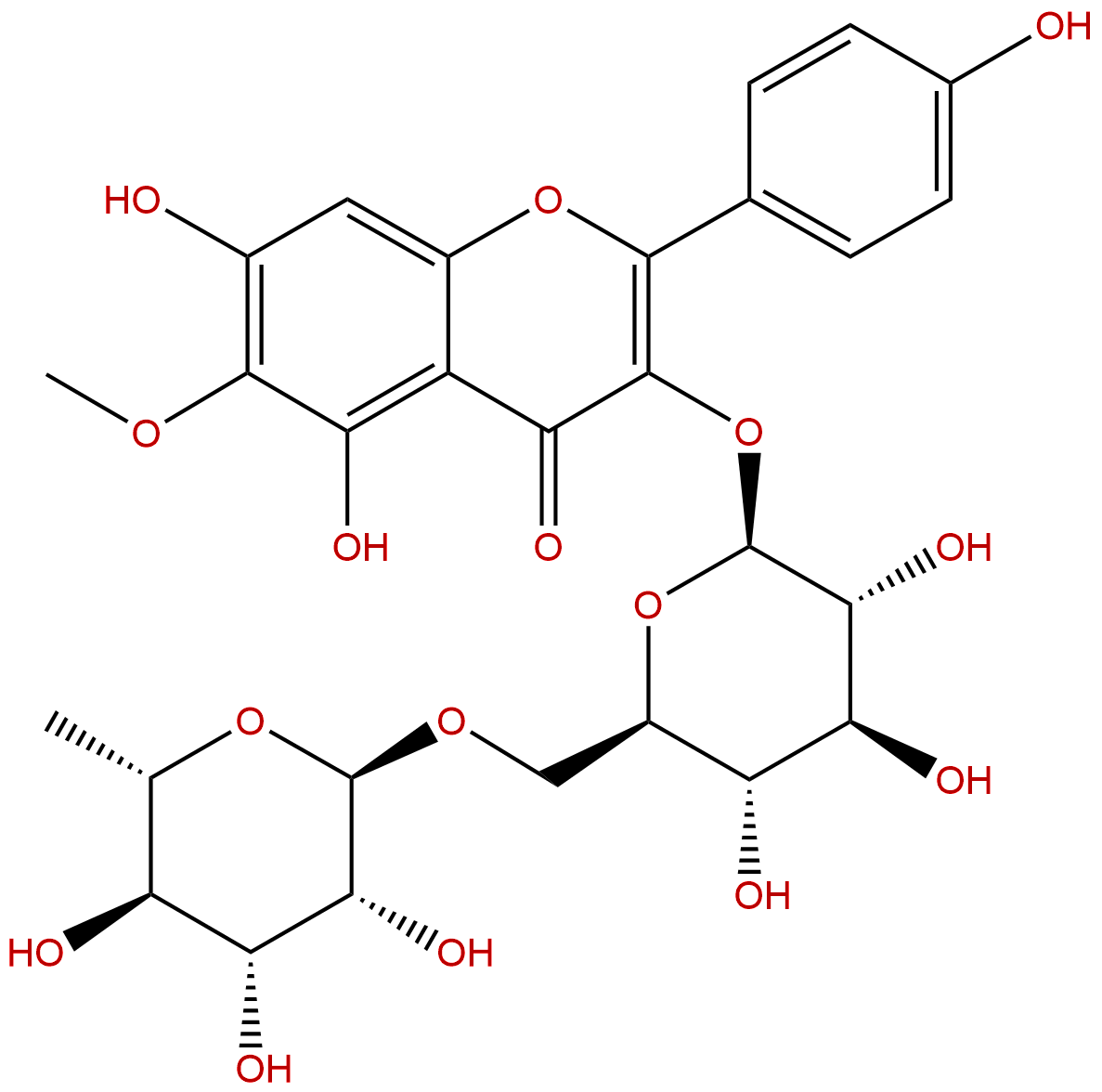
Natural products have always been an important source of innovative drug discovery, among which flavonoids have attracted much attention due to their broad biological activity and relatively low toxicity. 6-methoxykaempferol 3-O-rutinoside (CAS number: 403861-33-6), as a structurally unique methoxylated flavonoid glycoside, has gradually entered the field of pharmacology researchers in recent years. This compound is a derivative of kaempferol, characterized by a methoxy substitution at the 6th position of the A ring and a rutin (α - L-rhamnose - (1 → 6) - β - D-glucose) group connected at the 3rd position of the C ring. This specific glycosylation and methoxylation modification not only affects its physicochemical properties, but may also endow it with unique biological activity that distinguishes it from kaempferol and other flavonoid glycosides.
Preliminary pharmacological studies suggest that 6-methoxykaempferol-3-O-rutinoside has potential value in anti-inflammatory and antioxidant fields, especially in relation to targets related to respiratory inflammatory diseases such as pneumonia. Pneumonia, as a major global health threat, involves complex inflammatory cascades, oxidative stress, and tissue damage in its pathological process. Although antibiotics are currently the main clinical treatment, the development of natural anti-inflammatory drugs with multi-target regulatory effects is of great strategic significance for adjuvant therapy in non infectious inflammation or antibiotic resistant situations. This article aims to systematically review the chemical properties, plant sources, pharmacological activities, especially the mechanism of action against pneumonia related targets of 6-methoxykaempferol-3-O-rutinoside, and provide a preliminary evaluation of its pharmacological properties, in order to provide comprehensive scientific references for the in-depth research and potential applications of this compound.
Chemical structure and physicochemical properties
The molecular formula of 6-methoxykaempferol-3-O-rutinoside is C28H32O16, with a molecular weight of 624.5480. Its core structure is the flavonoid mother nucleus (2-phenylchromenone), and specific modifications include:
1. Mother nucleus substitution On the basis of the structure of kaempferol, a methoxy group (- OCH3) is introduced at position 6 of the A ring. The hydroxyl substitution mode of kaempferol itself is 3,5,7,4 '- tetrahydroxy, while the introduction of 6-methoxy changes the electronic distribution and spatial conformation of the A ring.
2. glycosidation At the 3rd hydroxyl position of the C ring, a disaccharide called Rutinose is attached. Rutin is composed of one molecule of rhamnose and one molecule of glucose connected by an alpha-1,6 glycosidic bond, with the sequence of linkage being kaempferol-3-O - β - D-glucosyl - (1 → 6) - alpha-L-glucoside. This massive hydrophilic sugar chain has a decisive impact on its properties.
Based on the above structure, the key physicochemical property parameters are as follows:
* Lipid water partition coefficient (LogP)The calculated value is approximately -0.2079, indicating that the compound has a high degree of hydrophilicity. This is mainly attributed to the multiple polar hydroxyl groups and the large hydrophilic rutin groups in the molecule, making it more soluble in polar solvents.
* Topological Polarity Surface Area (TPSA)As high as 258.43 Å ², it once again confirms its strong polarity characteristics. High TPSA typically indicates a strong ability of molecules to form hydrogen bonds, but may affect their ability to passively diffuse across membranes.
* Water solubility The predicted value is 1.9526 (usually measured in LogS or mg/mL), theoretically indicating good water solubility, which is advantageous for its application in aqueous formulations.
* spectral characteristics In the UV visible spectrum, typical absorption bands (Band I and Band II) of flavonoids should be present. Nuclear magnetic resonance hydrogen spectrum and carbon spectrum can clearly distinguish the methoxy signal on the parent nucleus of kaempferol, the terminal hydrogen signal on the sugar group, and various proton signals on the sugar group, which is a key means of structural identification.
These physicochemical properties directly affect the extraction and separation methods, in vivo metabolic pathways, and bioavailability of compounds.
Plant sources and extraction methods
6-methoxykaempferol-3-O-rutinoside is relatively limited in distribution in nature and mainly exists in certain specific plant families and genera as a secondary metabolite of these plants.
Main plant sources:
According to literature reports, this compound was mainly isolated from the following plants:
1. Asteraceae plants It is an important source for discovering this compound. For example, in some species of mugwort(Artemisia)Plants and the Golden Button genus(Spilanthes)It has been identified to exist in plants.
2. Leguminous plants Some leguminous plants also contain this component, reflecting the widespread distribution of flavonoids in leguminous plants.
3. Other folk medicinal plants In the research of traditional medicinal plants with anti-inflammatory, heat clearing and detoxifying effects, they are often isolated and identified as trace or major flavonoid glycosides.
Extraction and Separation Methods:
The extraction and separation process follows the general strategy of flavonoid glycosides in plant chemistry, but needs to be adjusted for their high polarity:
1. Extract Extraction is usually carried out using a solvent system with moderate polarity. Due to its good hydrophilicity, 60% -80% ethanol or methanol aqueous solution is commonly used for hot reflux extraction or ultrasound assisted extraction. This method can effectively dissolve polar flavonoid glycosides while reducing the co extraction of lipophilic impurities.
2. Enrichment and Coarse Separation After vacuum concentration of the extract, the resulting paste can be suspended in water and subjected to liquid-liquid extraction using petroleum ether, ethyl acetate, etc. The compound is mainly retained in the aqueous layer or n-butanol layer (if used). Subsequently, macroporous adsorption resin (such as D101, AB-8) column chromatography is commonly used, with a water ethanol gradient elution. The compound is usually enriched in the 30% -50% ethanol elution site.
3. purification Further purification relies on the combination of multiple column chromatography techniques.
* Silica gel column chromatography Preliminary separation can be carried out using systems with high polarity such as chloroform methanol water.
* Reverse phase column chromatography (RP-C18)This is one of the most effective methods for purifying highly polar flavonoid glycosides, commonly used for gradient elution using methanol water or acetonitrile water systems.
* Sephadex gel column chromatography (Sephadex LH-20)Purification using methanol or methanol water as eluent, based on molecular size and adsorption, has a significant effect on removing pigments and polysaccharide impurities.
4. appraisal The purity of the final pure product was detected by high performance liquid chromatography (HPLC), and the structure was confirmed by comprehensive use of techniques such as ultraviolet spectroscopy (UV), mass spectrometry (MS), and nuclear magnetic resonance (NMR, including 1H-NMR, 13C-NMR, 2D-NMR such as HSQC, HMBC).
Pharmacological activity research
Existing research, including activity speculation based on its structural analogues such as kaempferol and rutin, as well as preliminary direct studies, indicate that 6-methoxykaempferol-3-O-rutinoside has multiple pharmacological activities, with a focus on anti-inflammatory and antioxidant effects.
-
anti-inflammatory activity This is the most highly anticipated activity of the compound. In cell models such as lipopolysaccharide (LPS) - induced macrophage RAW264.7 inflammation model, it can significantly inhibit the excessive production of inflammatory mediators such as nitric oxide (NO) and prostaglandin E2 (PGE2). At the same time, it also has a significant inhibitory effect on the mRNA expression and protein secretion of key pro-inflammatory cytokines such as tumor necrosis factor - α (TNF - α), interleukin-6 (IL-6), and interleukin-1 β (IL-1 β). In animal models such as LPS induced mouse acute lung injury/pneumonia models, pre-treatment with this compound can reduce lung inflammatory cell infiltration, decrease lung tissue wet dry weight ratio, alleviate pathological damage such as alveolar septal thickening, and demonstrate good in vivo anti-inflammatory effects.
-
antioxidant activity Flavonoids generally have antioxidant properties. 6-methoxykaempferol-3-O-rutinoside, due to its phenolic hydroxyl structure, can directly scavenge free radicals such as DPPH free radicals, ABTS free radicals, and superoxide anions. More importantly, in an inflammatory environment, it can upregulate the endogenous antioxidant system of cells, such as promoting nuclear translocation of nuclear factor E2 related factor 2 (Nrf2), thereby enhancing the expression of antioxidant enzymes such as heme oxygenase-1 (HO-1) and quinone oxidoreductase 1 (NQO1), and alleviating oxidative stress damage.
-
Antibacterial and antiviral adjuvant potential Although its direct bactericidal effect may not be strong, it may play an adjuvant therapeutic role in bacterial or viral pneumonia (such as influenza virus secondary pneumonia) by regulating immunity and reducing inflammation. Its anti-inflammatory effect helps to control the excessive immune response caused by infection and prevent tissue damage caused by the "inflammatory storm".
-
Other potential activities Based on the activity of its parent compound kaempferol, it is speculated that this compound may also have potential for anti-tumor, cardiovascular protection, neuroprotection, etc., but these need to be further verified by subsequent experiments.
Mechanism of action and molecular targets
The mechanism of the compound's anti pneumonia activity is gradually being studied, and its action exhibits multi-target and multi pathway characteristics. According to the provided target information, its action network can be summarized as follows:
-
Regulating the TLR4/TLR2 signaling pathway for pattern recognition receptors TLR4 is a key receptor for recognizing pathogen associated molecular patterns such as LPS. Research has shown that this compound can inhibit the expression of TLR4 and its downstream myeloid differentiation factor 88 (MyD88) induced by LPS, thereby blocking the overactivation of nuclear factor kappa B (NF - κ B) and mitogen activated protein kinase (MAPKs) pathways. Inhibition of TLR2 may expand its spectrum against pathogen associated inflammation. This is the upstream mechanism by which it inhibits the production of inflammatory factors such as TNF - α, IL-6, IL-1 β, etc.
-
Inhibition of NF - κ B (RELA) and inflammasome activation (CASP1)The nuclear translocation of NF - κ B p65 subunit (RELA) is a core event in the transcription of inflammatory genes. This compound can inhibit the degradation of I κ B α and the phosphorylation and nuclear translocation of p65. Meanwhile, it can also inhibit the assembly of NOD like receptor protein 3 (NLRP3) inflammasome, reduce the activation of caspase-1 (CASP1), and thus decrease the release of mature IL-1 β, which is a key link in controlling pyroptosis and severe inflammation in pneumonia.
-
Regulating protein tyrosine phosphatase (PTPN1) and metabolic enzyme (IDH1)PTPN1 (PTP1B) is a negative regulator of the insulin and leptin signaling pathways, and is also associated with inflammation. Inhibiting PTP1B may improve insulin resistance and metabolic disorders under inflammatory conditions. Isocitrate dehydrogenase 1 (IDH1) is a metabolic enzyme in the tricarboxylic acid cycle, and its mutations are associated with certain cancers. Its role in inflammation is not yet clear. This compound may regulate immune cell function by affecting cellular metabolic reprogramming, such as transitioning from oxidative phosphorylation to glycolysis, and IDH1 may be one of its potential sites of action.
-
Affects transcriptional regulation and cell fate (SIRT1, SMAD3)Silencing information regulatory factor 1 (SIRT1) is an NAD+- dependent deacetylase with anti-inflammatory, antioxidant, and anti-aging effects. This compound may activate SIRT1, thereby deacetylating and inhibiting the activity of transcription factors such as NF - κ B p65. SMAD3 is a key mediator of the transforming growth factor - β (TGF - β) signaling pathway and is involved in the fibrosis process. Moderate regulation of SMAD3 may help inhibit excessive tissue repair and pulmonary fibrosis in the late stage of pneumonia.
-
Inhibition of inducible nitric oxide synthase (NOS2)NOS2 catalyzes the production of a large amount of NO, which has cytotoxic effects in inflammation. This compound can significantly downregulate LPS induced NOS2 expression and reduce excessive NO production, which is an important manifestation of its direct anti-inflammatory effect.
In summary, 6-methoxykaempferol-3-O-rutinoside acts on multiple membrane receptors, enzymes, and transcription factors such as TLR4/2, PTPN1, and SIRT1, synergistically inhibiting the two core inflammatory pathways of NF - κ B and NLRP3 inflammasome, while enhancing the Nrf2 antioxidant pathway, thereby exerting anti-inflammatory, antioxidant, and tissue protective effects in pneumonia models.
Evaluation of drug properties and pharmacokinetics
Based on computational predictions and analog data, a preliminary evaluation of the pharmacological properties of the compound is conducted
-
absorb A high TPSA (258.43 Å ²) and negative LogP value (-0.2079) indicate extremely low lipid solubility and poor passive transmembrane absorption ability. After oral administration, its hydrophilic sugar chains may be partially hydrolyzed by gut microbiota or glycosidases on the intestinal mucosa, producing aglycones (6-methoxykaempferol) or monoglycosides. These products have increased lipid solubility and may be absorbed. Therefore, oral bioavailability is expected to be low. As an injection or inhalation form, it may be more advantageous for it to exert systemic or local (pulmonary) effects.
-
distribution Predict low blood-brain barrier (BBB) permeability, which is consistent with the characteristics of highly polar macromolecular compounds. Not beneficial for treating central nervous system diseases, but can reduce the risk of central side effects for peripheral diseases such as pneumonia. The distribution in the body may be concentrated in tissues with abundant blood and large endothelial gaps, such as the lungs, liver, kidneys, etc.
-
Metabolism As a flavonoid glycoside, its metabolism mainly undergoes phase I metabolism: hydrolysis (deglycosylation) of glycosidic bonds is the main step, which may occur in the intestine or liver to generate aglycones. Glycosides undergo further II binding reactions such as hydroxylation, methylation, glucuronidation, and sulfation. Rutin glycosides may be gradually hydrolyzed. Its metabolites may have different activities from their original form.
-
excretion The prototype drugs with high polarity and their glucuronic acid/sulfuric acid complexes are mainly excreted from urine through the kidneys. Some may also be excreted through bile.
-
Preliminary Safety Prediction:
- HERG inhibition Predicted as' no ', indicating a low potential risk of causing QT interval prolongation in the heart and good cardiovascular safety.
- Genotoxicity (Ames test)The predicted value is 0.6 (usually a simulated test result, which may indicate a mutation rate ratio), close to 1, indicating a low risk of mutagenicity in this prediction model, but actual experimental verification is needed.
- Overall, as a natural flavonoid derivative, its expected toxicity is low, but the specific safe dose range needs to be determined through systematic acute toxicity and subchronic toxicity experiments.
Main challenges in drug development:Low oral bioavailability It is the biggest bottleneck that limits its development as an oral medication. Strategies include developing prodrugs (such as esterification modifications), using absorption enhancers, or switching to non oral routes of administration (such as pulmonary inhalation therapy for pneumonia, which can directly reach the lesion and avoid first pass effects).
Clinical application prospects and prospects
6-methoxykaempferol-3-O-rutinoside has shown clear potential for application in the prevention and treatment of pneumonia and related respiratory inflammatory diseases.
-
As an adjuvant therapy for pneumonia In the antibiotic treatment of bacterial pneumonia, it can be used as an adjuvant medication to inhibit excessive inflammatory response, reduce lung tissue damage, and improve clinical symptoms, especially for patients with severe or systemic inflammatory response syndrome. For viral pneumonia (such as influenza virus, respiratory syncytial virus, etc.), its anti-inflammatory and immune regulatory effects may help control the immunopathological damage caused by the virus.
-
Treatment of Acute Lung Injury/Acute Respiratory Distress Syndrome (ALI/ARDS)ALI/ARDS is a common and serious complication of diseases such as pneumonia. The compound has multi-target anti-inflammatory and antioxidant properties, which meet the therapeutic needs of ALI/ARDS complex pathological mechanisms and have the potential to be developed as a novel ALI/ARDS therapeutic drug.
-
Chronic inflammatory lung disease Inflammation persists in diseases such as chronic obstructive pulmonary disease (COPD) and asthma. The potential low toxicity advantages of its long-term application are worth exploring, but its long-term efficacy and safety need to be evaluated.
-
Drug development strategy:
- Formulation innovation Developing pulmonary inhalation formulations (dry powder inhalers, nebulized solutions) is a highly attractive direction that can achieve local high concentration administration, improve efficacy, and reduce systemic exposure and side effects.
- structural optimization On the premise of retaining its core pharmacophore, chemical modifications can be made to its sugar moiety or parent nucleus to improve its lipid solubility and pharmacokinetic properties, such as synthesizing prodrugs of its glycosides or developing more stable glycoside analogues.
- combination therapy Combined use with existing anti-inflammatory drugs (such as low-dose glucocorticoids) or antibiotics may produce synergistic effects, reducing their respective dosages and side effects.
-
Future research directions:
- In depth mechanism research By utilizing techniques such as gene knockout, molecular docking, and surface plasmon resonance, we aim to accurately verify its direct interactions with targets such as TLR4, PTPN1, and SIRT1, and elucidate its mechanism of regulating cellular metabolism (such as through IDH1) and cross dialogue with immune inflammation.
- Systematic pharmacokinetic study Comprehensively study the absorption, distribution, metabolism, and excretion processes under different administration routes in animal models, and clarify the main active metabolites.
- Preclinical safety and efficacy evaluation Complete standardized GLP toxicology studies and validate their efficacy in disease models closer to clinical settings, such as aging animal models and drug-resistant bacterial infection models.
- Expand activity screening Explore its potential value in other respiratory diseases such as pulmonary fibrosis, pulmonary arterial hypertension, as well as metabolic and neurodegenerative diseases.
Conclusion
6-methoxykaempferol-3-O-rutinoside, as a naturally occurring flavonoid glycoside, exhibits significant multi-target pharmacological activity in the treatment of pneumonia and related pulmonary inflammation due to its unique chemical structure. Its mechanism of action involves inhibition of key inflammatory pathways such as TLR4/NF - κ B and NLRP3 inflammasome, as well as activation of the Nrf2 antioxidant pathway, forming a synergistic network. Although it currently faces the challenge of low oral bioavailability as a drug, it is expected to overcome this bottleneck through dosage form innovation (such as inhalation administration) and structural optimization. With a deeper analysis of its molecular mechanism and the development of systematic preclinical research, this compound is expected to evolve from a promising lead molecule into a novel anti-inflammatory drug for treating diseases such as pneumonia and acute lung injury, providing a new natural drug option for the treatment of respiratory inflammatory diseases. The treasure trove of natural products still needs to be continuously excavated, and the research process of 6-methoxykaempferol-3-O-rutinoside is a vivid manifestation of the innovative vitality in this field.