| Catalog No | Package | Original Price | Price | Inventory | Quantity | Operating |
|---|---|---|---|---|---|---|
| BP4665-5mg | 5mg | $420.00 | Sign in |
|


Storage conditions:Short-term storage at 2~8℃, long-term storage at -20 ~ -80℃
Licorice (Glycyrrhiza spp.), as a traditional Chinese medicinal herb, has long received scientific research and clinical attention due to its diverse pharmacological activities and abundant natural product components. Glicoricone (CAS number: 161099-37-2) is a phenolic natural product isolated from licorice roots, which has gradually become a hot topic in pharmacological research in recent years due to its unique biological activity. Glycyrrhizin not only exhibits monoamine oxidase (MAO) inhibitory activity, but also has estrogen receptor (ER) antagonistic effects, demonstrating potential multi-target pharmacological effects. Especially in the field of anti ulcer treatment, glycyrrhetine exerts significant protective effects by regulating multiple related targets, indicating its potential application in the treatment of gastrointestinal diseases.
This article aims to systematically review the chemical structure and physicochemical properties, plant sources, and extraction methods of glycyrrhetinic acid ketone, analyze its pharmacological activity and mechanism of action in depth, evaluate its pharmacological parameters and pharmacokinetic characteristics, and explore its clinical application prospects and future research directions, providing theoretical basis and reference for the drug development and clinical translation of glycyrrhetinic acid ketone.
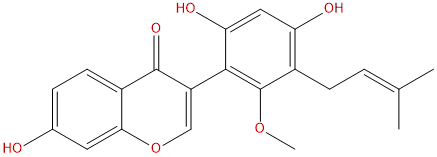
Glycyrrhetinic acid ketone is a phenolic compound with a molecular formula of C21H20O6 and a molecular weight of 368.3850. Its chemical structure contains multiple hydroxyl and phenolic hydroxyl groups, giving it strong polarity and biological activity. The LogP value of glycyrrhetinic acid ketone is 3.4405, indicating that it has moderate lipid solubility, which is beneficial for cell membrane penetration and in vivo distribution. The polar surface area (TPSA) is 100.1300, indicating that the molecule has certain polarity characteristics that facilitate binding with biomolecules such as enzymes and receptors.
Low water solubility (0.0892 mg/mL) limits its solubility in aqueous phase, which may affect oral bioavailability. The low permeability of the blood-brain barrier suggests limited distribution in the central nervous system, which may reduce central side effects. The hERG channel inhibition experiment result was negative, indicating a lower risk of cardiac toxicity from glycyrrhetinic acid. The Ames mutagenicity test score is 0.6, indicating a low risk of genetic toxicity and meeting the preliminary requirements for safe drug use.
Overall, the physicochemical properties of glycyrrhetine are moderate and have certain potential for drug development, but its water solubility and bioavailability still need to be optimized.
Glycyrrhizin mainly comes from the roots of licorice plants, and licorice plants are widely distributed in Asia, Europe, and North America. Licorice root contains various active ingredients, including glycyrrhetinic acid, licorice flavonoids, and various phenolic compounds, among which glycyrrhetine is one of them.
The common methods for extracting glycyrrhetine include solvent extraction, column chromatography separation, and high-performance liquid chromatography (HPLC) purification. Firstly, ethanol or methanol is used for reflux extraction of dried licorice roots, and the extract is concentrated and separated by silica gel column chromatography. Combined with gradient elution technology, glycyrrhetine can be effectively separated. Further utilize reverse phase HPLC for purification and quantitative analysis to ensure the purity and quality of the extract.
In recent years, ultrasound assisted extraction and microwave-assisted extraction techniques have also been applied to the extraction of glycyrrhetine, significantly improving extraction efficiency and yield. In addition, the application of green solvents such as ethyl acetate and ethanol conforms to the environmental protection concept of modern natural product extraction.
Glycyrrhetinic acid exhibits inhibitory effects on monoamine oxidase, with an IC50 of approximately 140 μ M. Monoamine oxidase, as a key enzyme in neurotransmitter metabolism, is involved in the pathological processes of various neurological and psychiatric disorders. Glycyrrhetinic acid may regulate the levels of monoamine neurotransmitters in the brain by inhibiting MAO activity, and has potential antidepressant and neuroprotective effects. Although its MAO inhibitory activity is moderate, combined with its low blood-brain barrier permeability, it suggests that its effect may be more manifested in peripheral or local tissues.
Glycyrrhetinic acid can bind to estrogen receptors and exhibit estrogen antagonist activity. This characteristic makes it have potential application value in hormone related diseases such as breast cancer, endometriosis and so on. By blocking the ER signaling pathway, glycyrrhetine may inhibit the proliferation of estrogen dependent cells and exert anti-tumor effects.
Glycyrrhetinic acid has shown significant protective effects in anti ulcer research. Its targets include various gastrointestinal related molecules, including:
Through multi-target synergistic regulation, glycyrrhetinic acid effectively alleviates the pathological progression of gastric ulcers and related gastrointestinal diseases.
The pharmacological effects of glycyrrhetinic acid involve multiple signaling pathways and molecular targets, reflecting its multi-target and multi mechanism characteristics.
Glycyrrhetinic acid inhibits the catalytic activity of MAO enzyme by binding to its active site, prolonging the action time of neurotransmitters in synaptic cleft and regulating nervous system function. Although its inhibitory effect is not as strong as classical MAO inhibitors, combined with low blood-brain barrier permeability, it may exert regulatory effects in the peripheral nervous system or other tissues.
After binding with ER, glycyrrhetinic acid inhibits the transcriptional activity activated by estrogen, suppresses the expression of estrogen dependent genes, thereby inhibiting cell proliferation and promoting apoptosis. This mechanism provides a theoretical basis for the potential application of glycyrrhetinic acid in the treatment of hormone related tumors.
Glycyrrhetinic acid regulates the gastrointestinal environment through multiple targets:
These functions work together to maintain the integrity of the gastric mucosa, prevent and repair ulcer lesions.
The pharmacological parameters of glycyrrhetinic acid ketone show that it has certain potential for drug development:
At present, the pharmacokinetic studies of glycyrrhetinic acid ketone are relatively limited. Preliminary data indicate that its oral absorption rate is moderate, and its metabolism in vivo is mainly through the liver enzyme system, with a moderate half-life. Further systematic pharmacokinetic and toxicological studies are needed in the future to clarify its in vivo behavior and safety.
Glycyrrhetinic acid has good clinical application prospects due to its multi-target pharmacological activity, especially its potential in anti ulcer and hormone related diseases.
Future research should focus on:
Licorice ketone, as an important phenolic active ingredient in licorice, exhibits unique multi-target pharmacological activity, especially in the fields of anti ulcer and hormone related diseases, with significant potential. Its reasonable physicochemical properties and good safety have laid the foundation for drug development. In the future, through in-depth mechanism research, drug design optimization, and clinical validation, glycyrrhetinic acid ketone is expected to become an innovative natural product drug, providing a new option for the treatment of related diseases. The continuous development of pharmacology of natural products will push the application of glycyrrhetinic acid and its derivatives to a new level in modern medicine.
