| Catalog No | Package | Original Price | Price | Inventory | Quantity | Operating |
|---|---|---|---|---|---|---|
| BP5268-5mg | 5mg | $390.00 | Sign in |
|


Storage conditions:Short-term storage at 2~8℃, long-term storage at -20 ~ -80℃
239.9700
-.5202
-.5481
1.9209
.6820
.2014
Low
76.0195
4.7741
Yes
No
No
No
Yes
No
1.2
Yes
No
Yes
No
Natural products, as an important source of drug discovery, play an irreplaceable role in maintaining human health and treating diseases. Flavonoids, as the most abundant type of secondary metabolites in plants, have attracted much attention due to their diverse biological activities and relatively low toxicity. Among many flavonoids, puerarin and its derivatives have become a research hotspot because of their significant activities in cardiovascular protection, neuroprotection, anti diabetes and other aspects. 3 '- Hydroxymirificin (CAS number: 168035-02-7), as a special flavonoid carbon glycoside, is an important member of the puerarin family. Its unique chemical structure and biological activity make it occupy a special position in natural product pharmacology research.
3 '- Hydroxypuerarin apigenin glycoside was first isolated and identified from the leguminous plant Pueraria lobata, belonging to the class of isoflavone carbon glycosides. Unlike common oxygen glycosides, carbon glycosides have C-C bond connections, which give them higher chemical and metabolic stability. They are not easily hydrolyzed by glycosidases in the body, allowing them to maintain a longer action time. This compound has a typical isoflavone core in structure and introduces a hydroxyl group at the C-3 'position, while being modified with apigenin groups to form a unique molecular configuration. This structural feature endows it with a pharmacological activity spectrum distinct from other puerarin derivatives.
In recent years, with the advancement of separation and purification technology and the improvement of biological activity screening methods, significant progress has been made in the research of 3 '- hydroxypuerarin apigenin glycoside. Research has found that this compound exhibits potential pharmacological activities in multiple fields such as antioxidant, anti-inflammatory, neuroprotective, cardiovascular protective, and anti-tumor effects. Its mechanism of action involves the regulation of multiple signaling pathways, including key pathways such as NF - κ B, Nrf2, PI3K/Akt, etc. In addition, the compound's excellent water solubility and low toxicity make it a promising candidate molecule for drug development. This article will provide a systematic review of the research progress of 3 '- hydroxypuerarin apigenin glycoside from the aspects of chemical structure, plant origin, pharmacological activity, mechanism of action, and medicinal properties, in order to provide reference for the in-depth research and development of this compound.
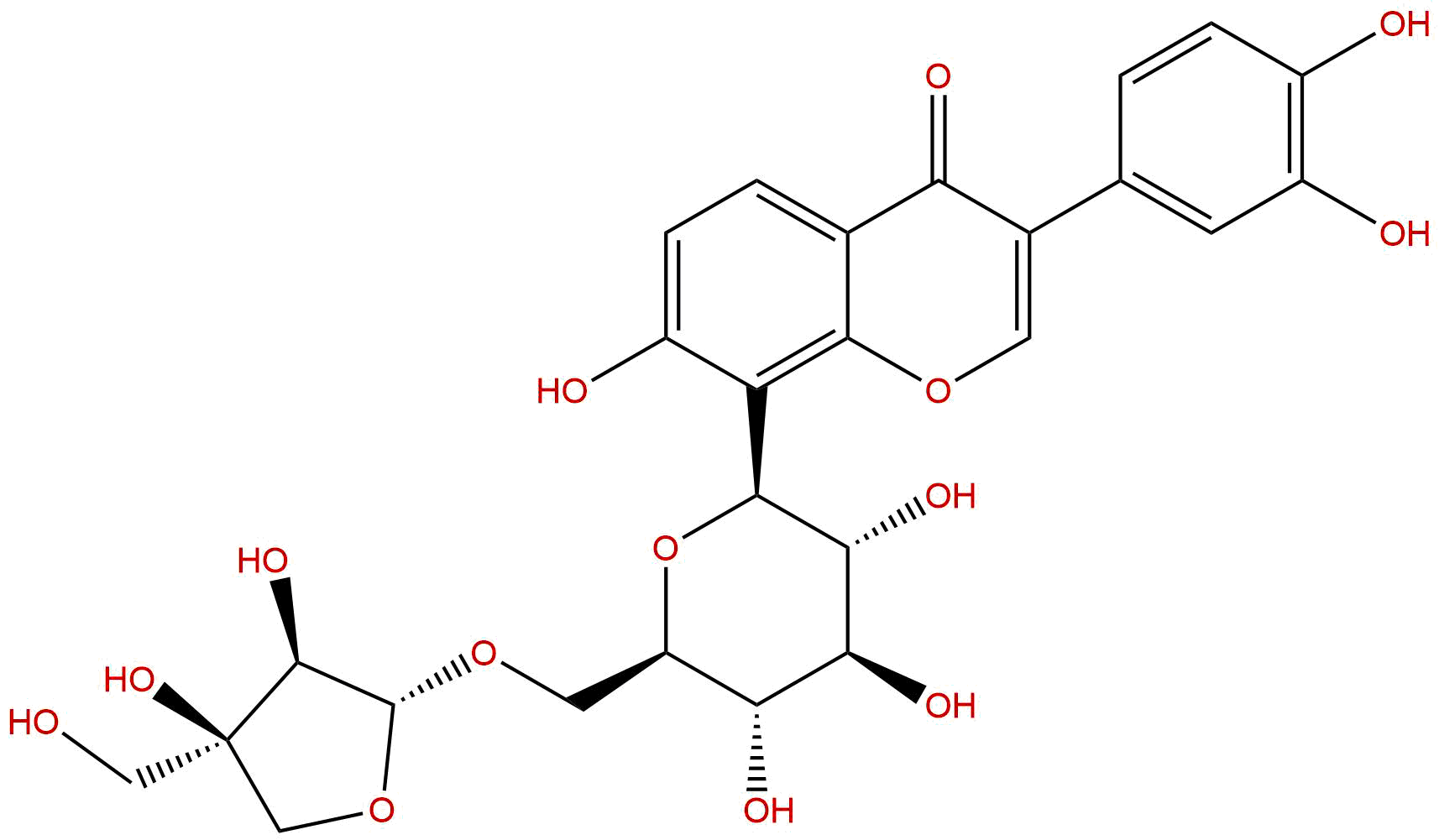
The chemical name of 3 '- hydroxypuerarin apigenin glycoside is 3' - hydroxypuerarin apigenin glycoside, and its systematic name is 8- β - D-glucopyranosyl-3 '- hydroxy-4', 7-dihydroxyflavone-8-C - β - D-apigenin glycoside. From a structural classification perspective, this compound belongs to the class of isoflavone carbon glycosides, with its core skeleton being the isoflavone mother nucleus (3-phenylchromenone), which is connected to a glucose group at the C-8 position through a carbon carbon bond, and further connected to a celery sugar group at a specific position of the glucose group.
The molecular formula of this compound is C ₂₆ H ₂₈ O ₁₄, with a molecular weight of 564.4960. The key features of its structure include: (1) one hydroxyl group at the C-7 position of the A ring and one hydroxyl group at the C-4 'position of the B ring in the isoflavone mother nucleus; (2) There is an additional hydroxyl group at the C-3 'position of the B ring, which is an important structural feature that distinguishes it from puerarin; (3) The C-8 position is connected to the glucose group through a C-C bond, forming a stable carbon glycoside structure; (4) The specific position of the glucose group is connected to the celery sugar group, forming a disaccharide chain structure. This complex glycosylation pattern significantly increases the polarity and water solubility of the molecule.
The pharmacological parameters obtained based on computational chemistry methods show that 3 '- hydroxypuerarin apigenin glycoside has the following physicochemical properties:
Lipid water partition coefficient (LogP)-0.5202. This negative value indicates that the compound has high hydrophilicity, which is consistent with its structural characteristics of containing multiple hydroxyl and sugar groups in its molecule. High hydrophilicity is beneficial for dissolution and distribution in aqueous environments, but may also limit its ability to pass through biofilms.
Topological Polarity Surface Area (TPSA)239.9700 Å ². This value is much higher than the recommended upper limit of 140 Å ² for oral medications, indicating that the compound has extremely high polarity. High TPSA values are typically associated with low oral absorption rates, as polar molecules have difficulty penetrating the lipid bilayer of the cell membrane.
Water solubility: 1.9209 (logS value). This value indicates that the compound has good water solubility, which is consistent with LogP and TPSA data. Good water solubility is an important advantage in drug development, which is beneficial for formulation development and in vivo administration.
Blood-brain barrier penetrability: Low. The prediction based on molecular features shows that the compound is difficult to penetrate the blood-brain barrier. This is mainly due to its high polarity and large molecular weight. Low blood-brain barrier penetration is a disadvantageous factor for drugs that require central nervous system action, but it can reduce central side effects for peripheral target drugs.
HERG inhibition: No. This compound does not inhibit hERG potassium channels, indicating a low risk of cardiac toxicity. HERG channel inhibition is an important cause of drug-induced QT interval prolongation and arrhythmia, and negative results increase the safety advantage of this compound.
Ames test 1.2 (weakly positive). The Ames test is used to detect the mutagenicity of compounds, and the results show weak positivity, indicating a possible genetic toxicity risk at higher concentrations. This result needs to be further validated and evaluated in subsequent research.
3 '- Hydroxypuerarin apigenin glycoside is mainly derived from Fabaceae plants in the Pueraria genus, with Pueraria lobata (Willd. Ohwi) and Pueraria thomsonii Benth. being the main sources. As a traditional Chinese medicine, Pueraria lobata has a long medicinal history in China, Japan, South Korea and other East Asian countries, and is often used to treat cardiovascular diseases, diabetes, fever, diarrhea and other diseases.
In addition to Pueraria plants, this compound has also been found in other leguminous plants, such as Pueraria montana var. lobata and Pueraria mirifica. It is worth noting that Vietnamese kudzu (also known as white kudzu root) is one of the important sources of this compound, and its name "mirificin" comes from the addition of words to this plant species. The content of this compound varies greatly among different plant sources, and is usually closely related to factors such as plant variety, growth environment, harvest season, and processing methods.
The extraction of 3 '- hydroxypuerarin apigenin glycoside is usually carried out using solvent extraction method, and an appropriate solvent system is selected based on its polarity characteristics. Traditional extraction methods include:
Ethanol water extraction method Using different concentrations of ethanol (usually 50% -80%) as the extraction solvent, leaching is carried out at room temperature or under heating conditions. This method is easy to operate and cost-effective, but the extraction efficiency is affected by factors such as temperature, time, and solid-liquid ratio. Research has shown that extracting 70% ethanol at 60 ℃ for 2 hours can achieve a good extraction rate.
Methanol extraction method Methanol has good solubility for isoflavone compounds and its extraction efficiency is usually higher than ethanol. However, the toxicity of methanol limits its application in food and pharmaceutical production. In recent years, the development of green extraction technology has promoted the widespread application of ethanol water systems in industrial production.
Ultrasound assisted extraction Utilizing the cavitation effect of ultrasound to destroy plant cell walls and promote the release of target compounds. This method can significantly shorten the extraction time, improve extraction efficiency, and reduce solvent dosage and temperature, which is beneficial for protecting thermosensitive components.
Microwave assisted extraction Microwave radiation causes polar molecules to vibrate rapidly, generating internal heating effects and accelerating the dissolution of target compounds. This method has the advantages of short extraction time and high efficiency, but the equipment cost is relatively high.
The crude extract after extraction needs to undergo a series of purification steps to obtain high-purity 3 '- hydroxypuerarin apigenin glycoside. Common purification methods include:
Macroporous resin adsorption chromatography Selective adsorption and desorption of target compounds using resins of different polarities, such as HPD-100, D101, etc. This method is easy to operate, suitable for large-scale production, and can effectively remove impurities such as sugars and proteins.
Silica gel column chromatography Gradient elution is performed using chloroform methanol water systems with different ratios, and separation is achieved based on the polarity differences of the compounds. This method has a good separation effect, but the operation is cumbersome and the solvent consumption is high.
High performance liquid chromatography (HPLC)Using a reverse phase C18 column and acetonitrile water or methanol water system as the mobile phase, high-purity preparation of the target compound can be achieved. This method is suitable for laboratory scale preparation of high-purity samples, but the cost is high and not suitable for large-scale production.
High Speed Counter Current Chromatography (HSCCC)Utilizing the liquid-liquid distribution principle to achieve efficient separation of target compounds in a two-phase solvent system. This method has the advantages of high sample recovery rate and irreversible adsorption, and has shown unique advantages in natural product separation.
3 '- Hydroxypuerarin apigenin glycoside exhibits significant antioxidant activity, which is closely related to the presence of multiple phenolic hydroxyl groups in its molecular structure. In vitro studies have shown that the compound can effectively scavenge various free radicals, including DPPH free radicals, ABTS cationic free radicals, superoxide anion free radicals, and hydroxyl free radicals. Its antioxidant capacity is positively correlated with concentration, showing a dose-dependent effect in the concentration range of 10-100 μ M.
In cell models, 3 '- hydroxypuerarin apigenin glycoside can significantly reduce oxidative stress-induced cell damage. For example, in PC12 nerve cells treated with H ₂ O ₂, pre-treatment with this compound can significantly improve cell survival rate, reduce intracellular reactive oxygen species (ROS) levels, decrease the production of lipid peroxidation product malondialdehyde (MDA), and enhance the activity of superoxide dismutase (SOD) and glutathione peroxidase (GSH Px). These results indicate that the compound not only directly scavenges free radicals, but also exerts indirect antioxidant effects by regulating the endogenous antioxidant enzyme system.
Inflammatory response is a common pathological basis for the occurrence and development of various diseases. 3 '- Hydroxypuerarin apigenin glycoside has shown good anti-inflammatory activity in various inflammatory models. In the RAW264.7 macrophage model stimulated by lipopolysaccharide (LPS), this compound can significantly inhibit the production of pro-inflammatory mediators such as nitric oxide (NO) and prostaglandin E ₂ (PGE ₂), while reducing the expression levels of inflammatory factors such as tumor necrosis factor - α (TNF - α), interleukin-1 β (IL-1 β), and interleukin-6 (IL-6).
Further mechanistic studies have shown that the anti-inflammatory effect of this compound is closely related to the inhibition of the nuclear factor kappa B (NF - κ B) signaling pathway. Under LPS stimulation, 3 '- hydroxypuerarin apigenin glycoside can inhibit the phosphorylation and degradation of I κ B α, thereby preventing the translocation of NF - κ B p65 subunit to the nucleus and reducing the transcriptional activation of inflammation related genes. In addition, the compound can also inhibit the phosphorylation of ERK, JNK, and p38 in the mitogen activated protein kinase (MAPK) pathway, further weakening the cascade amplification effect of inflammatory signals.
Given the critical roles of oxidative stress and neuroinflammation in neurodegenerative diseases, the neuroprotective activity of 3 '- hydroxypuerarin apigenin glycoside has received widespread attention. In the Alzheimer's disease cell model induced by β - amyloid protein (A β), this compound can significantly reduce the neurotoxicity of A β and protect neurons from damage. Specifically, it manifests as reducing cell apoptosis rate, decreasing the loss of mitochondrial membrane potential, inhibiting caspase-3 activation, and reducing intracellular calcium overload.
In the glutamate induced excitotoxicity model, 3 '- hydroxypuerarin apigenin glycoside also showed protective effects. Overactivation of NMDA receptors by glutamate leads to a large influx of calcium ions, causing neuronal damage. This compound can partially counteract the toxic effects of glutamate, and its mechanism may be related to regulating calcium homeostasis and inhibiting oxidative stress. It is worth noting that the low blood-brain barrier penetration of this compound may limit its application in the central nervous system, but strategies such as nasal administration or nanocarrier delivery may overcome this barrier.
Puerarin compounds have a long history of application in cardiovascular protection, and 3 '- hydroxypuerarin apigenin glycosides have also shown similar cardiovascular protective effects. In the myocardial ischemia-reperfusion injury model, this compound can significantly reduce the myocardial infarction area and improve cardiac function indicators. Its protective mechanism involves multiple aspects: firstly, reducing oxidative stress damage during ischemia-reperfusion through antioxidant effects; Secondly, inhibiting myocardial cell apoptosis and reducing myocardial cell loss; Thirdly, improve mitochondrial function and maintain energy metabolism balance.
In endothelial cells, 3 '- hydroxypuerarin apigenin glycoside can protect endothelial cells from oxidative low-density lipoprotein (ox LDL) damage and maintain endothelial barrier function. In addition, the compound can also inhibit the abnormal proliferation and migration of vascular smooth muscle cells, which is of great significance for preventing atherosclerosis and vascular restenosis. In animal models of hypertension, long-term administration of this compound can significantly reduce blood pressure and improve vascular function. Its antihypertensive effect may be related to promoting nitric oxide (NO) production and improving endothelial function.
In recent years, the anti-tumor activity of 3 '- hydroxypuerarin apigenin glycoside has gradually attracted the interest of researchers. In vitro experiments showed that the compound had a proliferation inhibitory effect on a variety of tumor cell lines, including breast cancer cells (MCF-7, MDA-MB-231), liver cancer cells (HepG2), colon cancer cells (HT-29) and lung cancer cells (A549). Its anti-tumor mechanism involves inducing cell cycle arrest and apoptosis.
In MCF-7 breast cancer cells, 3 '- hydroxypuerarin apigenin can block the cell cycle in G0/G1 phase and induce caspase dependent apoptosis. Further molecular mechanism studies have shown that this compound can inhibit the growth and proliferation of tumor cells by downregulating the PI3K/Akt signaling pathway, suppressing mTOR phosphorylation. In addition, the compound can also inhibit the migration and invasion ability of tumor cells, which may be related to its regulation of the expression of epithelial mesenchymal transition (EMT) - related proteins.
It is worth noting that the compound has low toxicity to normal cells and exhibits certain selective anti-tumor activity. This selectivity may be related to its targeted effect on abnormally activated signaling pathways in tumor cells. However, current research on the anti-tumor activity of this compound is still in the in vitro stage, and the anti-tumor effect and safety in vivo still need further validation.
The pharmacological activity of 3 '- hydroxypuerarin apigenin glycoside involves the regulation of multiple signaling pathways, among which the most important are the NF - κ B, Nrf2, and PI3K/Akt pathways.
NF - κ B signaling pathway NF - κ B is the core transcription factor of inflammatory response, regulating the expression of various pro-inflammatory genes. 3 '- Hydroxypuerarin apigenin glycoside maintains the inactive state of NF - κ B in the cytoplasm by inhibiting the activity of I κ B kinase (IKK), preventing the phosphorylation and degradation of I κ B α. This mechanism explains the anti-inflammatory effect of the compound and is also related to its anti-tumor activity, as abnormal activation of NF - κ B is closely related to the occurrence and development of tumors.
Nrf2/ARE signaling pathway Nrf2 is a key transcription factor in the cellular antioxidant defense system, regulating the expression of various antioxidant and detoxifying enzymes. 3 '- Hydroxypuerarin apigenin glycoside can activate the Nrf2 signaling pathway, promote the dissociation of Nrf2 from Keap1 and its translocation to the nucleus, bind to antioxidant response elements (ARE), and upregulate the expression of antioxidant enzymes such as HO-1, NQO1, SOD, GSH Px, etc. This mechanism is an important basis for the compound to exert antioxidant and cell protective effects.
PI3K/Akt signaling pathway The PI3K/Akt pathway plays a central role in cell survival, proliferation, and metabolism. The regulation of PI3K/Akt pathway by 3 '- hydroxypuerarin apigenin glycoside is cell type dependent. In normal cells such as cardiomyocytes and neurons, this compound can activate the PI3K/Akt pathway, promote cell survival, and exert a protective effect; In tumor cells, it is manifested by inhibiting the PI3K/Akt pathway and inducing cell apoptosis. This differential regulation mechanism deserves further research.
Although the pharmacological activity of 3 '- hydroxypuerarin apigenin glycoside has been widely reported, its direct molecular targets have not been fully elucidated. Based on structural activity relationship analysis and molecular docking studies, it is speculated that its possible molecular targets include:
Estrogen receptor (ER)As an isoflavone compound, 3 '- hydroxypuerarin apigenin glycoside has structural characteristics similar to estrogen and may exert phytoestrogenic activity by interacting with estrogen receptors. Molecular docking studies have shown that the compound can bind to the ligand binding domains of ER α and ER β, but its binding affinity is lower than that of classical estrogen.
Tyrosine kinase receptor This compound may competitively bind to the ATP binding sites of certain tyrosine kinase receptors, inhibiting their kinase activity. For example, inhibition of epidermal growth factor receptor (EGFR) and vascular endothelial growth factor receptor (VEGFR) may be associated with their anti-tumor activity.
Phosphodiesterase (PDE)Puerarin compounds are known to inhibit phosphodiesterase activity and increase intracellular cAMP and cGMP levels. 3 '- Hydroxypuerarin apigenin glycoside may have similar PDE inhibitory activity, which is closely related to its cardiovascular protective effect.
Mitochondrial targets This compound may directly act on mitochondria, regulating mitochondrial membrane potential and the opening of permeability transition pores (mPTP), thereby affecting cell apoptosis and energy metabolism. Mitochondrial targeting may be an important mechanism for its neuroprotective and cardioprotective activity.
Comparing the structure-activity relationship between 3 '- hydroxypuerarin apigenin glycoside and other puerarin compounds can reveal the structural basis of its unique activity characteristics
C-3 'hydroxyl group Compared with puerarin, 3 '- hydroxypuerarin apioside has one more hydroxyl group at the C-3' position of the B ring. This structural modification significantly enhances the antioxidant activity of the compound, as the adjacent catechol structure (catechol structure) can more effectively chelate metal ions and scavenge free radicals. At the same time, the C-3 'hydroxyl group also increases the ability of the molecule to form hydrogen bonds with the target protein, which may affect its binding mode with the receptor.
Celery sugar group Compared with puerarin, this compound has a celery sugar group attached to the glucose group. This glycosylation modification increases the polarity and water solubility of the molecule, while potentially affecting its interaction with transport proteins and in vivo distribution. The presence of celery sugar groups may reduce the binding affinity of compounds with certain target proteins, but it may also increase their metabolic stability.
C-8 carbon glycosidic bond Compared with glycosides, carbon glycosides have higher chemical and enzymatic stability, making the compound less susceptible to hydrolysis by glycosidases in vivo, thus maintaining a longer half-life and sustained pharmacological effects. This is an important advantage of puerarin based carbon glycosides over other isoflavone glycosides.
Based on computational predictions and experimental data, a comprehensive evaluation of the pharmacological properties of 3 '- hydroxypuerarin apigenin glycoside was conducted
Drug Evaluation According to Lipinski's five rules, the molecular weight (564.5) of this compound exceeds 500, LogP (-0.52) is less than 5, the number of hydrogen bond donors (about 10) exceeds 5, and the number of hydrogen bond acceptors (about 14) exceeds 10, which does not comply with Lipinski's rules. However, many successful drugs in natural products do not fully comply with these rules, especially for drugs that require injection administration, where molecular weight and polarity restrictions can be appropriately relaxed.
Drug metabolic properties This compound contains multiple phenolic hydroxyl groups and is prone to undergo phase II metabolic reactions such as glucuronidation and sulfation. The stability of carbon glycosides makes them less susceptible to hydrolysis by gut microbiota, which is beneficial for maintaining the activity of the parent compound. However, extensive phase II metabolism may lead to lower oral bioavailability.
safety evaluation HERG inhibition reduces the risk of cardiac toxicity with negative results; A weak positive Ames test suggests the need for further assessment of genetic toxicity risk. Overall, the safety profile of this compound is favorable, but it requires systematic toxicological studies for verification.
At present, there is relatively little systematic research on the pharmacokinetics of 3 '- hydroxypuerarin apigenin glycoside. However, based on the pharmacokinetic characteristics of its structurally similar compound puerarin, it can be inferred that:
absorb Due to its high polarity and high molecular weight, the oral absorption of this compound may be poor. The oral bioavailability of puerarin is only 3-7%, and 3 '- hydroxypuerarin apigenin glycoside may have similar low oral absorption characteristics. Strategies to improve oral bioavailability include the use of absorption enhancers, preparation of phospholipid complexes, nano formulations, etc.
distribution The compound is mainly distributed in plasma and extracellular fluid, and its tissue distribution may be limited. The low blood-brain barrier penetration limits the distribution of the central nervous system. The plasma protein binding rate may be high, affecting the concentration of free drugs.
Metabolism The main metabolic pathways include II binding reactions (glucuronidation, sulfation) and possible oxidative metabolism. The stability of the carbon glycosidic bond makes it difficult to be hydrolyzed and metabolized. The gut microbiota may be involved in some metabolic transformations, but the impact is relatively small.
excretion Mainly excreted in the form of metabolites through bile and urine. Due to its high molecular weight, bile excretion may be the main pathway, leading to enterohepatic circulation and longer in vivo retention time.
The following formulation strategies can be adopted to improve the pharmacokinetic characteristics of the compound in response to its pharmacological defects:
nano-formulation Preparation of nanocarriers such as liposomes, nanoparticles, or nanoemulsions can enhance drug solubility and bioavailability, improve tissue distribution, and achieve targeted delivery.
Phospholipid complex Forming a complex with phospholipids can improve lipid solubility, enhance transmembrane transport capacity, and improve oral absorption.
Prodrug design Introducing hydrolysable groups such as phosphate esters and amino acid esters onto phenolic hydroxyl groups can improve oral absorption and release active parent drugs after enzymatic hydrolysis in vivo.
Injection administration Due to poor oral absorption, intravenous injection may be the preferred choice for clinical application, especially for the treatment of acute cardiovascular events.
Based on existing pharmacological activity research, 3 '- hydroxypuerarin apigenin glycoside has potential application prospects in the following disease areas:
cardiovascular disease As a puerarin compound, its application in cardiovascular diseases such as coronary heart disease, myocardial ischemia, and hypertension has a traditional basis. Its antioxidant, anti-inflammatory, and vascular protective effects make it a candidate drug for the treatment of cardiovascular diseases.
Neurodegenerative diseases Although the blood-brain barrier penetration is low, the application of this compound in neurodegenerative diseases such as Alzheimer's disease and Parkinson's disease through nasal administration or nanocarrier delivery is worth exploring. Its antioxidant and anti-inflammatory activities may delay disease progression.
Metabolic diseases: This compound may play a role in metabolic diseases such as type 2 diabetes and non-alcoholic fatty liver disease by improving insulin resistance, regulating lipid metabolism and other mechanisms.
Inflammatory diseases Its anti-inflammatory activity makes it potentially applicable in chronic inflammatory diseases such as rheumatoid arthritis and inflammatory bowel disease.
Although 3 '- hydroxypuerarin apigenin glycoside exhibits various pharmacological activities, its research and development still face many challenges:
Low oral bioavailability This is a common issue with puerarin compounds. New formulation technologies or prodrug strategies need to be developed to improve oral absorption.
The target is unclear Currently, there is limited understanding of its direct molecular targets, which limits the design and optimization of drugs based on targets. Chemical biological methods such as affinity chromatography and drug affinity reaction target stability need to be used for target identification.
Insufficient validation of in vivo drug efficacy Most studies remain at the in vitro level, and there is a relative lack of in vivo pharmacological research. A suitable animal model needs to be established to systematically evaluate its in vivo efficacy and safety.
The study of structure-activity relationship is not systematic Lack of systematic structural modification and structure-activity relationship research limits the optimization of lead compounds. We need to synthesize a series of derivatives and explore the contribution of key structural groups to activity.
Future research on 3 '- hydroxypuerarin apigenin glycoside can be further explored in the following directions:
Target discovery and validation Using a combination of chemical biology, proteomics, and computational chemistry methods, systematically identify its direct target and elucidate its molecular mechanism.
structural optimization Based on structure-activity relationship research, prepare structurally similar compounds through semi synthetic or total synthetic methods to optimize drug efficacy and pharmacokinetic properties.
Formulation development Develop new delivery systems to improve bioavailability and targeting, especially for brain targeted delivery of central nervous system diseases.
Combination therapy research Explore synergistic effects with other drugs, especially in combination with commonly used cardiovascular and neuroprotective drugs in clinical practice.
Clinical translational research After completing preclinical studies of the system, advance clinical trials to validate its efficacy and safety in specific diseases.
3 '- Hydroxypuerarin apigenin glycoside, as a natural isoflavone carbon glycoside with a unique chemical structure, exhibits significant pharmacological activities in multiple fields such as antioxidant, anti-inflammatory, neuroprotective, cardiovascular protection, and anti-tumor. Its mechanism of action involves the regulation of multiple signaling pathways such as NF - κ B, Nrf2, and PI3K/Akt, reflecting the multi-target and multi pathway characteristics of natural products. Although the compound has shortcomings in oral bioavailability and target specificity, its good water solubility, low cardiac toxicity, and diverse biological activities make it a promising candidate molecule for drug development.
With the advancement of separation and purification technology, the improvement of pharmacological research methods, and the innovation of formulation technology, the research on 3 '- hydroxypuerarin apigenin glycoside will continue to deepen. In the future, through systematic research such as target identification, structural optimization, formulation development, and clinical translation, it is expected that this natural product will be developed into a novel drug for treating cardiovascular diseases, neurodegenerative diseases, and inflammatory diseases. At the same time, in-depth research on this compound will provide important scientific basis for understanding the pharmacological substance basis of traditional Chinese medicine such as Pueraria lobata, and promote the modernization and internationalization process of traditional Chinese medicine.
Batch can search by a CAS number,one per line
