

Storage conditions:Short-term storage at 2~8℃, long-term storage at -20 ~ -80℃
Octyl acetate (CAS number: 112-14-1) is a naturally occurring fatty ester compound widely present in the volatile components of various fruits and plants. As an oral active aliphatic ester, octyl acetate has not only been widely used in the preparation of spices and essence in the food industry due to its unique fruit flavor, but also attracted the attention of pharmacology due to its potential biological activity. In recent years, with the in-depth pharmacological research of natural products, the pharmacological effects of octyl acetate in many aspects, such as anti-oxidation, anti-bacterial and anti-tumor, have been gradually revealed, especially in the research of malignant melanoma, colon cancer and breast cancer.
The purpose of this review is to systematically summarize the chemical structure and physicochemical properties, plant sources, and extraction methods of octyl acetate, with a focus on its pharmacological activity and mechanism of action. The pharmacokinetic characteristics of octyl acetate are analyzed based on its pharmacological parameters. Finally, the clinical application prospects and future research directions are explored, providing reference and inspiration for researchers in the field of natural product pharmacology.
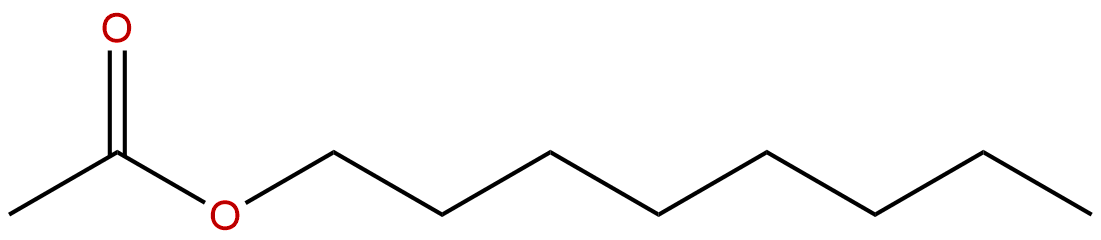
The molecular formula of octyl acetate is C10H20O2, with a molecular weight of 172.2680. Its chemical structure is composed of an octyl (C8H17) fatty chain connected to an acetic acid group through an ester bond, with the structural formula CH3COO (CH2) 7CH3. This structure endows octyl acetate with high hydrophobicity, with a LogP value of 4.6046, indicating its strong lipophilicity, which facilitates penetration of cell membranes and the blood-brain barrier (BBB). Its polar surface area (TPSA) is 26.3 Å ², indicating low molecular polarity, further supporting its good membrane permeability.
The water solubility of octyl acetate is relatively low, about 0.1833 mg/mL, and it is a poorly soluble lipid substance in water. Its physical and chemical properties are stable, without hERG channel inhibition, and the Ames mutagenicity test result is 0, indicating a low risk of genetic toxicity and good safety. These characteristics lay a solid foundation for its potential as a drug molecule.
Ethyl acetate is widely present in the volatile oils of various fruits and plants, especially abundant in strawberries, apples, grapes, and citrus fruits. As an important component of fruit aroma, it participates in the formation of unique fruity flavors and affects consumers' sensory experience.
Common extraction methods include steam distillation, solvent extraction, and supercritical CO2 extraction. Steam distillation is widely used due to its simple operation and mature equipment, but it may cause certain losses to thermosensitive components. The solvent extraction method utilizes organic solvents such as ether, hexane, etc., which can effectively extract lipid soluble volatile compounds. Supercritical CO2 extraction technology has gradually gained popularity in natural product extraction in recent years due to its mild and solvent-free advantages.
The extracted octyl acetate is usually qualitatively and quantitatively analyzed by gas chromatography-mass spectrometry (GC-MS) to ensure its purity and content meet the needs of subsequent pharmacological research.
Octyl acetate exhibits certain antioxidant activity, which can clear free radicals and alleviate cellular damage caused by oxidative stress. In vitro studies have shown that octyl acetate can inhibit lipid peroxidation, protect the integrity of cell membrane structure, and delay the process of cell aging. This characteristic makes it potentially valuable for the prevention and treatment of oxidative stress-related diseases such as cardiovascular disease and neurodegenerative diseases.
Ethyl acetate exhibits certain inhibitory effects on various bacteria and fungi, especially on Gram positive bacteria and some fungi. Its targets involve multiple key enzymes and proteins, including DNA gyrase (GYRA), cell membrane protein (GYPB), cell division protein (FTSZ), fatty acid synthase (FABI), dihydrofolate reductase (DHFR), cell wall synthesis related proteins (MECA, PENA), as well as fungal specific targets such as ERG11 and CYP51A1. In addition, octyl acetate can also affect the drug efflux pump CDR1 of fungi, enhancing the efficacy of antifungal drugs.
In recent years, the research of octyl acetate in malignant melanoma, colon cancer, breast cancer and other tumor models has gradually increased. Related in vitro cell experiments have shown that octyl acetate can induce apoptosis of tumor cells, inhibit cell proliferation and migration. Its anti-tumor mechanism may be related to regulating cell cycle related proteins, inhibiting oxidative stress response of tumor cells, and regulating immune cell activity in the tumor microenvironment. Although still in the early stages of research, octyl acetate, as a natural product, has low toxicity and multi-target properties, making it a potential candidate molecule for tumor adjuvant therapy.
The pharmacological effects of octyl acetate involve multiple signaling pathways and molecular targets, and the specific mechanisms are as follows:
antibacterial mechanism Octyl acetate binds to bacterial and fungal cell membrane lipids, disrupting membrane structure and causing leakage of cellular contents. Meanwhile, octyl acetate inhibits key enzymes such as DNA gyrase (GYRA), fatty acid synthase (FABI), and dihydrofolate reductase (DHFR), interfering with cellular DNA replication and lipid synthesis processes, ultimately leading to cell death. For fungi, octyl acetate inhibits ERG11 and CYP51A1, blocks ergosterol synthesis, and disrupts cell membrane stability.
Antioxidant mechanism Octyl acetate has the ability to scavenge reactive oxygen species (ROS) and free radicals, reducing oxidative damage. It may protect cells from oxidative stress by activating the intracellular antioxidant enzyme system (such as superoxide dismutase (SOD), glutathione peroxidase (GPx)) and inhibiting lipid peroxidation.
Antitumor mechanism The mechanism by which octyl acetate induces apoptosis in tumor cells may involve the mitochondrial pathway, promoting cytochrome C release, activating the caspases family, and triggering programmed cell death. In addition, octyl acetate may regulate tumor related signaling pathways such as PI3K/Akt, MAPK, etc., inhibiting cell proliferation and migration. Its regulatory effect on the tumor microenvironment also provides a new perspective for its anti-tumor activity.
The pharmacological parameters of octyl acetate show good drug potential. Its molecular weight is 172.2680, which meets the Lipinski rule's molecular weight requirement (<500). The LogP value is 4.6046, which is slightly higher but still within an acceptable range, indicating that it has good lipid solubility and is conducive to cell membrane penetration and oral absorption. The TPSA is 26.3 Å ², and its lower polar surface area contributes to its oral bioavailability and blood-brain barrier penetration ability, which is consistent with experimental data on its high blood-brain barrier permeability.
The low water solubility (0.1833 mg/mL) may limit the dissolution rate of its oral formulation, but it can be improved through formulation technologies such as nanoemulsions and liposomes. The hERG channel inhibition experiment showed a negative result, indicating a low risk of cardiac toxicity. A negative Ames test indicates a low risk of genetic toxicity and good safety.
At present, there is relatively little research on the pharmacokinetics of octyl acetate in vivo. It is preliminarily speculated that it has high lipid solubility, is easily absorbed through the intestine, and may be metabolized by liver metabolic enzymes. Further pharmacokinetic and toxicological studies are needed in the future to clarify its absorption, distribution, metabolism, and excretion (ADME) characteristics.
As a natural product, octyl acetate has multiple pharmacological activities and good safety, and has broad clinical application potential. Its application in the fields of antioxidant and antibacterial can provide new auxiliary solutions for anti infection and anti-inflammatory treatment, especially in the context of increasingly severe drug-resistant bacterial and fungal infections. Octyl acetate may become a candidate molecule for natural antibacterial agents.
In terms of tumor treatment, octyl acetate has shown the potential to induce tumor cell apoptosis and inhibit tumor growth, and can be used as a candidate for adjuvant chemotherapy or targeted therapy in the future. Combined with its excellent blood-brain barrier permeability, octyl acetate also has exploratory value in the treatment of central nervous system diseases such as brain tumors.
However, the clinical research on octyl acetate is still in its infancy, and there is an urgent need for systematic pharmacological, pharmacokinetic, and safety evaluations, especially in terms of in vivo effective dosage, administration routes, and long-term toxicity studies. In addition, the structural modification of octyl acetate and the development of nanocarrier delivery systems may further enhance its bioavailability and targeting, promoting its clinical translation.
As a naturally occurring fatty ester, octyl acetate exhibits various pharmacological activities due to its unique chemical structure and physicochemical properties, especially in the fields of antioxidant, antibacterial, and anti-tumor applications. Its low toxicity, high blood-brain barrier permeability, and multi-target mechanism of action provide a solid foundation for it as a new natural drug candidate molecule.
Future research should focus on in-depth analysis of the molecular mechanism of action of octyl acetate, improving its pharmacokinetics and safety data, optimizing its formulation technology, and promoting its clinical application. With the continuous advancement of natural product pharmacology and molecular pharmacology techniques, octyl acetate is expected to become an important member in the development of natural product drugs, providing new strategies and means for the prevention and treatment of related diseases.
