Introduction/Overview
Tenaxin I (CAS number: 86926-52-5) is a natural product extracted from the traditional Chinese medicine Scutellaria baicalensis Georgi, which has received widespread attention in recent years due to its unique pharmacological activity. Scutellaria baicalensis, as a traditional Chinese medicine, has always been used for clearing heat, detoxifying, anti-inflammatory, and treating liver diseases. Its active ingredients mainly include flavonoids. As one of the important active ingredients, Scutellaria baicalensis extract I exhibits significant neuraminidase inhibitory activity and anti liver fibrosis potential, making it a hot topic in natural product pharmacology research.
Liver fibrosis is a common pathological process in the progression of various chronic liver diseases. If not intervened in a timely manner, it can eventually develop into cirrhosis or even hepatocellular carcinoma. The current treatment options for liver fibrosis are limited, and finding safe and effective anti fibrotic drugs has become an urgent problem to be solved. Scutellaria baicalensis I exhibits excellent anti fibrotic activity and broad clinical application prospects by regulating various molecular targets related to liver fibrosis, such as matrix metalloproteinase 2 (MMP2), transforming growth factor beta 1 (TGFB1), alpha smooth muscle actin (ACTA2), type I collagen protein (COL1A1), and tissue inhibitory metalloproteinase 1 (TIMP1).
This article provides a systematic review of the chemical structure and physicochemical properties, plant sources and extraction methods, pharmacological activity and mechanism of action, pharmacological evaluation and pharmacokinetic characteristics of Scutellaria baicalensis I, and prospects its clinical application prospects, in order to provide theoretical basis and reference for further research and development of this natural product.
Chemical structure and physicochemical properties
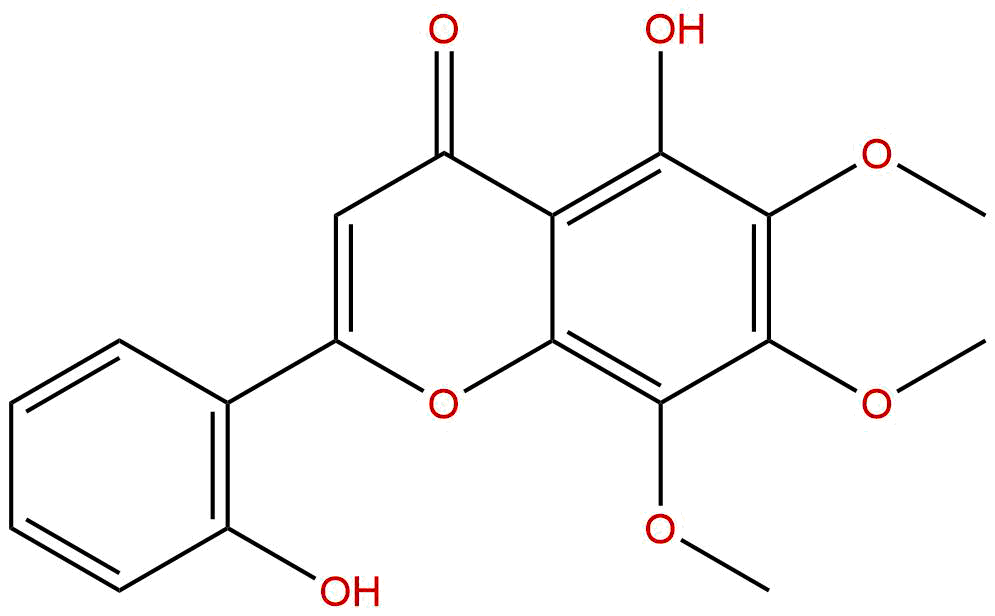
The molecular formula of Scutellaria baicalensis I is C2H_16O6, with a molecular weight of 344.3190. Its chemical structure belongs to flavonoids, with a typical flavonoid skeleton containing multiple hydroxyl and methoxy substituents. These functional groups endow it with strong biological activity and a certain degree of polarity. The topological polar surface area (TPSA) of Scutellaria baicalensis I is 98.36 Å ², indicating that its molecule has moderate polarity, which is conducive to binding with biomolecules.
In terms of physical and chemical properties, the lipophilicity (LogP) of Scutellaria baicalensis I is 2.3427, indicating its moderate lipophilicity and ability to penetrate cell membranes well. However, its water solubility is relatively low (0.0745 mg/mL), which may pose certain limitations on its bioavailability. The evaluation of blood-brain barrier permeability shows that its permeability is low, indicating that the distribution of baicalein I in the central nervous system is limited. The negative result of hERG channel inhibition experiment indicates a low risk of cardiac toxicity. The Ames mutagenicity test score is 1.2, indicating a low risk of genotoxicity and high safety.
In summary, the chemical structure and physicochemical properties of Scutellaria baicalensis I provide a solid foundation for its potential as a drug candidate molecule, especially in the field of anti liver fibrosis, which deserves further exploration.
Plant sources and extraction methods
Scutellaria baicalensis I is mainly extracted from the roots of Scutellaria baicalensis Georgi. Scutellaria baicalensis, a plant in the family Lamiaceae, is a commonly used traditional Chinese medicine herb for clearing heat and detoxifying. The root of Scutellaria baicalensis contains abundant flavonoids, among which baicalein I, as a secondary metabolite, is not as abundant as major flavonoids such as baicalin and baicalein, but its unique biological activity makes it a research focus.
The extraction process usually uses organic solvent extraction method. The specific steps include:
- Ingredient Preparation Select dried Scutellaria baicalensis roots and grind them to the appropriate particle size.
- Solvent extraction Using ethanol or methanol as the main solvent, perform reflux extraction or ultrasound assisted extraction. The ethanol concentration is generally controlled between 70% and 95% to improve the dissolution rate of flavonoids.
- Crude extract concentration The extract is concentrated under reduced pressure, and the solvent is removed to obtain a concentrated extract.
- Separation and purification Using column chromatography techniques such as silica gel columns and reverse phase C18 columns for separation, combined with high-performance liquid chromatography (HPLC) for purity detection and component identification.
- Structural Identification Confirm the structure of baicalein I using modern analytical methods such as mass spectrometry (MS) and nuclear magnetic resonance (NMR).
In recent years, the introduction of supercritical fluid extraction and membrane separation technology has improved the extraction efficiency and purity of baicalein I, laying the foundation for large-scale production.
Pharmacological activity research
The pharmacological activity research of Scutellaria baicalensis I mainly focuses on two aspects: neuraminidase inhibition and anti liver fibrosis.
Neuraminidase inhibitory activity
Neuraminidase is a key enzyme involved in the replication and release of various viruses, such as influenza virus, and inhibiting its activity is an important strategy for antiviral therapy. Scutellaria baicalensis I significantly reduces the activity of the enzyme by competitively binding to the active site of neuraminidase, thereby inhibiting the spread of the virus. In vitro enzyme activity assays showed that baicalein I has a strong inhibitory effect on neuraminidase, with an IC50 value at a low micromolar level, demonstrating good antiviral potential.
Anti hepatic fibrosis activity
The occurrence of liver fibrosis is closely related to the activation of hepatic stellate cells (HSCs) and excessive deposition of extracellular matrix (ECM). Scutellaria baicalensis I inhibits the activation and proliferation of HSCs, reduces collagen synthesis and deposition, and alleviates liver fibrosis through multi-target regulation.
In vivo models (such as CCl4 induced liver fibrosis mouse models) have shown that baicalein I can significantly reduce liver fibrosis indicators, including serum transaminase levels, liver tissue collagen content, and fibrosis scores. In vitro cell experiments further confirmed that it inhibits the expression of ACTA2 and COL1A1 in HSCs, blocking the fibrotic signaling pathway.
In addition, Scutellaria baicalensis I also exhibits anti-inflammatory and antioxidant activities, reducing liver inflammation and promoting liver tissue repair.
Mechanism of action and molecular targets
The anti fibrotic effect of Scutellaria baicalensis I involves multiple molecular targets and signaling pathways, mainly including:
-
MMP2 (Matrix Metalloproteinase 2)MMP2 plays a crucial role in ECM degradation. Scutellaria baicalensis I promotes the remodeling and balance of fibrotic tissues by regulating the expression and activity of MMP2.
-
TGFB1 (Transforming Growth Factor β 1)TGFB1 is a core pro fibrotic factor in liver fibrosis, inducing HSC activation and collagen synthesis. Scutellaria baicalensis I inhibits TGFB1 signaling, blocks downstream Smad pathway, and alleviates fibrosis process.
-
ACTA2 (alpha smooth muscle actin)ACTA2 is a marker protein for HSC activation. Scutellaria baicalensis I reduces the expression of ACTA2, inhibits the myofibroblast like phenotype of HSCs, and blocks the formation of fibrotic cells.
-
COL1A1 (type I collagen)COL1A1 is the main component of fibrotic ECM. Scutellaria baicalensis extract I inhibits the transcription and protein expression of COL1A1 gene, reducing collagen deposition.
-
TIMP1 (Tissue Inhibiting Metalloproteinase 1)TIMP1 inhibits the activity of MMPs and promotes fibrosis. Scutellaria baicalensis I regulates the balance of TIMP1/MMP2 and promotes ECM degradation.
Through the synergistic regulation of the above targets, baicalein I effectively inhibits the occurrence and development of liver fibrosis. In addition, its neuraminidase inhibitory effect provides another therapeutic pathway for antiviral infections, demonstrating multiple pharmacological effects.
Evaluation of drug properties and pharmacokinetics
The pharmacological evaluation of Scutellaria baicalensis I shows that it has certain potential for drug development:
- Molecular Weight and Lipinski Rule Molecular weight 344.3190, in accordance with Lipinski's five rules, beneficial for oral absorption.
- Fat solubility (LogP)2.3427, moderate, conducive to cell membrane penetration and in vivo distribution.
- Polarity (TPSA)98.36 Å ², suitable for effective binding with target proteins.
- Water solubility:0.0745 mg/mL, Low, indicating that bioavailability may be limited and needs to be improved through formulation optimization.
- Blood-brain barrier permeability Low, suitable for targeting peripheral diseases and reducing central nervous system side effects.
- Cardiotoxicity (hERG inhibition)Negative, with good safety.
- Genotoxicity (Ames test)1.2, Low risk of mutagenicity.
In terms of pharmacokinetics, existing studies have shown that baicalein I is absorbed quickly after oral administration, but its bioavailability is limited and mainly metabolized through the liver. The metabolites still need further identification. Moderate half-life in the body, suitable for daily administration. Renal excretion is the main clearance pathway and has low toxicity.
In the future, further systematic pharmacokinetic and toxicological studies are needed to optimize administration methods and dosage forms, and enhance clinical application value.
Clinical application prospects and prospects
Scutellaria baicalensis extract I, as a natural flavonoid compound with multiple pharmacological activities, exhibits excellent anti liver fibrosis potential. Given the lack of effective and specific therapeutic drugs for liver fibrosis, the development of baicalein I has significant clinical implications. It regulates fibrosis related signaling pathways through multiple targets, with anti-inflammatory and antioxidant effects, and can intervene in the pathological process of liver fibrosis from multiple aspects.
In addition, the neuraminidase inhibitory activity of Scutellaria baicalensis I provides new ideas for antiviral therapy, especially in the adjuvant treatment of viral infections such as influenza, which has potential application value.
Future research directions include:
- In depth analysis of pharmacological mechanisms Using modern technologies such as genomics and proteomics, comprehensively reveal the network of action of baicalein I.
- Pharmacokinetic and Toxicological System Evaluation Improve its safety and internal behavioral characteristics to provide a basis for clinical trials.
- Innovation in dosage form and administration route Improve bioavailability and targeting through novel drug delivery systems such as nanocarriers and liposomes.
- Preclinical and clinical trial design Conduct animal models and human clinical trials to verify its efficacy and safety.
- Exploration of Combination Medication Strategy: Used in combination with existing anti fibrotic or antiviral drugs to achieve synergistic effects.
In summary, Scutellaria baicalensis I, as a strong candidate for natural product drug development, has broad application prospects and development potential.
Conclusion
As an important active ingredient in Scutellaria baicalensis, Scutellaria baicalensis extract I has shown significant potential in the fields of anti liver fibrosis and neuraminidase inhibition due to its unique chemical structure and multi-target pharmacological effects. Its good pharmacological parameters and safety have laid a solid foundation for subsequent drug development. In the future, through in-depth mechanism research, pharmacokinetic optimization, and clinical validation, it is expected to promote the development of Scutellaria baicalensis I as a new natural drug for the treatment of liver fibrosis and related diseases, providing effective treatment options for clinical practice and benefiting patients.