| Catalog No | Package | Original Price | Price | Inventory | Quantity | Operating |
|---|---|---|---|---|---|---|
| BP4953-5mg | 5mg | $630.00 | Sign in |
|


Storage conditions:Short-term storage at 2~8℃, long-term storage at -20 ~ -80℃
148.0500
.6624
.6625
.3397
.5688
.7448
Low
80.7479
3.6612
Yes
No
No
No
Yes
No
1.5
Yes
Yes
No
Yes
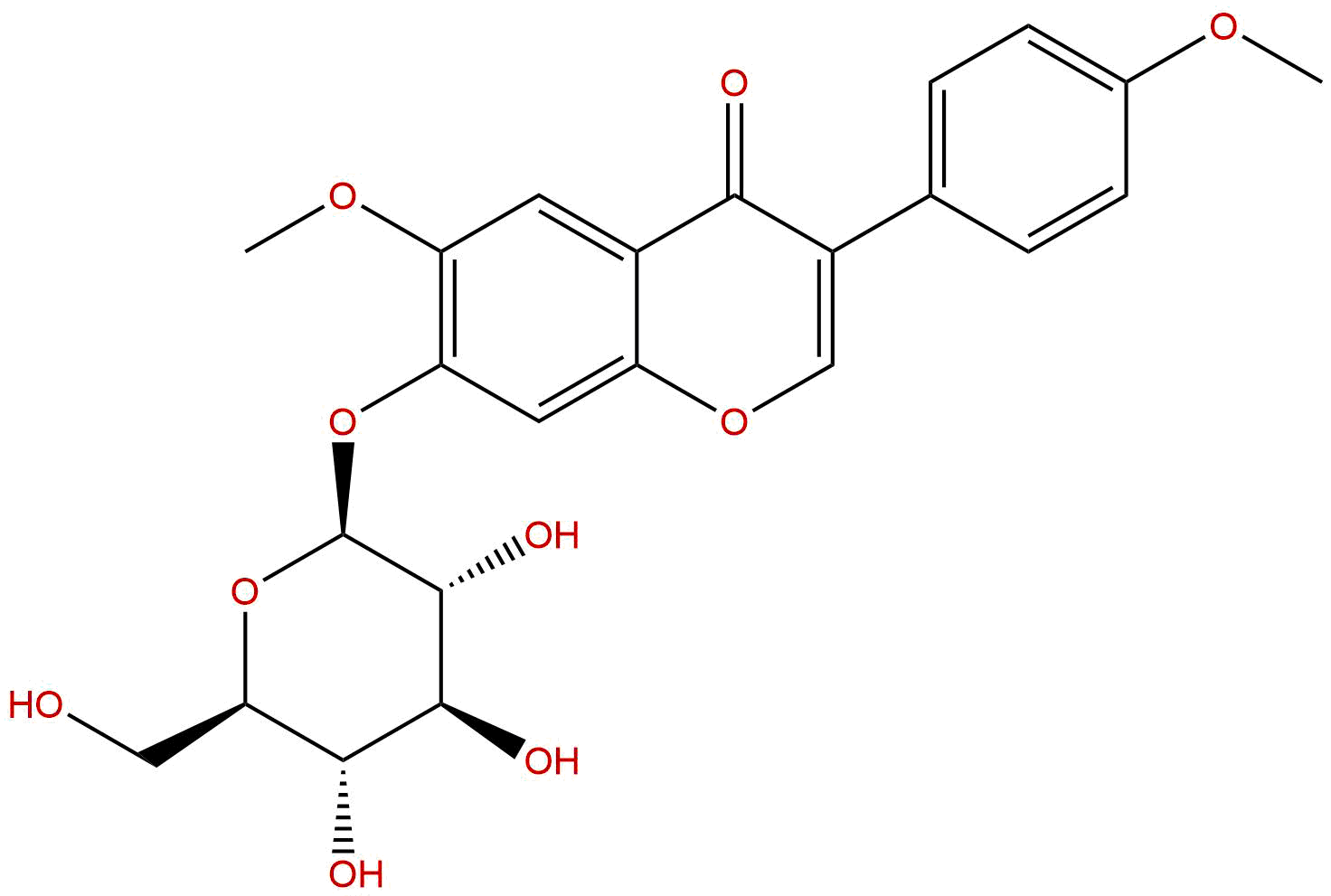
Natural products, as an important source of drug discovery, play an irreplaceable role in the long-term struggle between humans and diseases. Flavonoids, as important members of plant secondary metabolites, have attracted much attention due to their structural diversity and wide range of biological activities. Among numerous flavonoid glycosides, Afromosin-7-O - β - D-glucopyranoside, commonly known as Wistin, is a natural flavonoid glycoside with unique pharmacological activity. This compound was first derived from the legume plant Jinjia(Caragana sinica)The root is isolated and its chemical structure is composed of an afromosin mother nucleus connected to a β - D-glucopyranose group through a 7-hydroxyglycosidic bond.
In recent years, as the incidence rate of metabolic diseases such as metabolic syndrome, type 2 diabetes and nonalcoholic fatty liver disease continues to rise, peroxisome proliferator activated receptors (PPARs) as important drug targets have attracted extensive attention. PPAR α and PPAR γ are involved in lipid metabolism regulation and insulin sensitivity regulation, respectively, and are key targets for treating metabolic disorders. Wistin, as a dual agonist of PPAR alpha and PPAR gamma, exhibits unique therapeutic potential. In addition, the compound exhibits multiple biological activities related to estrogen regulation, involving the regulation of multiple targets such as estrogen receptor (ESR1/ESR2), sex hormone binding globulin (SHBG), aromatase (CYP19A1), etc., suggesting its potential application value in hormone related diseases.
This article will provide a systematic review of the research progress of Wistin from the aspects of chemical structure, plant origin, pharmacological activity, mechanism of action, medicinal evaluation, and clinical application prospects, in order to provide reference for the in-depth development and utilization of this natural product.
The chemical name of Wistin is Afromosin-7-O - β - D-glucopyranoside, with a molecular formula of C ₂∝ H ₂₄₁₀ and a molecular weight of 460.4350. From a structural classification perspective, this compound belongs to the isoflavone glycoside class, with its parent nucleus being the isoflavone skeleton (3-phenylchromenone), specifically afromosin, which is 5,7-dihydroxy-4 '- methoxyflavone. On the 7th hydroxyl group of Afromoxin, a D-glucopyranose group is connected through a β - glycosidic bond to form a complete glycosidic structure.
The A ring of the isoflavone skeleton contains two hydroxyl groups at positions 5 and 7, with the hydroxyl group at position 7 being glycosylated; There is a methoxy substitution at the 4 'position of the B ring; The C-ring is a gamma pyranone structure with typical isoflavone characteristics. The introduction of the sugar moiety not only increases the water solubility of the compound, but may also affect its interaction mode with biological targets and pharmacokinetic behavior.
Based on computational chemistry predictions and experimental measurements, the physicochemical properties of Wistin are as follows:
Overall, the physicochemical properties of Wistin conform to the basic characteristics of natural product drugs, with good water solubility and safety, but the risk of genetic toxicity needs to be considered.
Wistin was originally derived from the legume plant Jinjia(Caragana sinica)The roots are separated. Jinjier genus(Caragana)Plants are widely distributed in temperate regions of Asia, including China, Mongolia, Russia, and other places, with more than 80 species. In China, Jinjier(C. sinica)As a traditional medicinal plant, its roots, root bark, and whole plant are used in folk medicine to treat diseases such as rheumatism, rheumatism, bruises, and menstrual disorders.
Besides Jinjia, Wistin has also been found in other leguminous plants. Research has shown that plants of the Wisteria genus(Wisteria The compound is also present in spp., which may be the origin of its common name "Wistin". In addition, some Astragalus species(Astragalus)Plants, licorice genus(Glycyrrhiza)Wistin has also been detected in plants and certain tropical leguminous trees, but the levels are usually low.
As an isoflavone glycoside compound, the extraction and separation of Wistin usually follow the classic process of natural product chemistry, which mainly includes the following steps:
1. Raw material pretreatment Collect the roots of Golden Rooster, wash, slice, dry (usually dried at 40-60 ℃), and grind to an appropriate particle size (40-60 mesh). The drying method is crucial for the retention of active ingredients, as high temperatures may lead to hydrolysis of glycosidic bonds.
2. Solvent extraction Use ethanol water mixed solvent (usually 60% -80% ethanol) for reflux extraction or cold soaking extraction. The ethanol concentration needs to be optimized to balance polarity and selectivity. Excessive concentration may reduce the dissolution rate of glycosides, while insufficient concentration may increase the co dissolution of impurities such as polysaccharides and proteins. The extraction temperature is usually controlled at 60-80 ℃ for 2-4 hours, and the extraction is repeated 2-3 times.
3. Preliminary purification Combine the extraction solutions, concentrate under reduced pressure until there is no alcohol odor, and perform liquid-liquid extraction with petroleum ether, ethyl acetate, and n-butanol in sequence. Wistin is mainly enriched in the n-butanol extraction layer, which can remove a large amount of lipid soluble impurities and water-soluble impurities.
4. Chromatographic separation The n-butanol extract was preliminarily separated by silica gel column chromatography, ODS reverse phase column chromatography, or macroporous adsorption resin column chromatography. The commonly used elution systems are chloroform methanol water or acetonitrile water gradient elution. Further purification can be achieved by preparative high-performance liquid chromatography (Prep HPLC) using a C18 reverse phase column as the stationary phase and methanol water or acetonitrile water as the mobile phase. The target peak is collected by UV detection (usually 254 nm or 280 nm).
5. Structural identification The purified compound was structurally confirmed by nuclear magnetic resonance spectroscopy (¹ H-NMR, ¹ ³ C-NMR, HMBC, HSQC, etc.), high-resolution mass spectrometry (HR-ESI-MS), and ultraviolet spectroscopy (UV). The configuration of glycosidic bonds (β - type) can be determined by the coupling constant of the sugar terminal hydrogen (J value of approximately 7-8 Hz).
Extraction efficiency optimization In recent years, new technologies such as ultrasound assisted extraction, microwave-assisted extraction, and enzyme assisted extraction have been applied to the extraction of Wistin, which can significantly shorten the extraction time and improve the yield. For example, cellulase pretreatment can disrupt cell wall structure and promote the release of glycoside compounds.
The most notable pharmacological activity of Wistin is its dual agonist effect on peroxisome proliferator activated receptors (PPARs). PPAR α is mainly expressed in tissues such as the liver, heart, and skeletal muscle, and is involved in fatty acid oxidation, lipoprotein metabolism, and inflammation regulation; PPAR γ is mainly expressed in adipose tissue, regulating adipocyte differentiation, insulin sensitivity, and glucose metabolism. PPAR α/γ dual agonists are considered to have synergistic advantages in the treatment of type 2 diabetes with dyslipidemia.
In vitro luciferase reporter gene experiments showed that Wistin can activate the transcriptional activity of PPAR α and PPAR γ in a concentration dependent manner. Compared with the classic PPAR γ agonist, Rosiglitazone, Wistin has a relatively weaker activation effect on PPAR γ, but a more significant activation effect on PPAR α, exhibiting a pro PPAR α activation characteristic. This selectivity may help to reduce the common side effects of complete PPAR γ agonists, such as weight gain, water and sodium retention.
In the 3T3-L1 preadipocyte differentiation model, Wistin can promote adipocyte differentiation and upregulate the expression of PPAR γ target genes (such as aP2 and LPL), but its effect is weaker than that of Rosiglitazone. Meanwhile, in HepG2 liver cells, Wistin can increase the expression of PPAR α target genes (such as CPT1A and ACOX1), promote fatty acid β oxidation, and reduce intracellular lipid accumulation.
As an isoflavone compound, Wistin has the potential to interact with estrogen receptors (ER). Molecular docking studies have shown that Wistin can bind to the ligand binding domains of ER α and ER β, but the binding mode is different from that of endogenous estrogen 17 β - estradiol. Wistin has a higher selectivity for ER β than ER α, which is consistent with the characteristics of most plant estrogens such as daidzein and genistein.
In the MCF-7 breast cancer cell proliferation experiment, Wistin showed weak estrogen like activity, which could slightly promote cell proliferation, but its effect was far weaker than that of estradiol. It is worth noting that no proliferative effect was observed in estrogen receptor negative cells, confirming its dependence on ER mediated signaling pathways. In addition, Wistin can upregulate the expression of SHBG (sex hormone binding globulin) and reduce free hormone levels, which may have positive implications for the prevention of hormone dependent diseases.
antioxidant activity The flavonoid skeleton of Wistin contains phenolic hydroxyl groups, which endow it with certain free radical scavenging ability. The DPPH radical scavenging experiment and ABTS cation radical scavenging experiment showed that Wistin has moderate antioxidant activity, weaker than potent antioxidants such as quercetin, but better than most monoglycoside flavonoids.
anti-inflammatory activity In the RAW264.7 macrophage model stimulated by lipopolysaccharide (LPS), Wistin can inhibit the production of nitric oxide (NO) and prostaglandin E ₂ (PGE ₂), downregulate the expression of inducible nitric oxide synthase (iNOS) and cyclooxygenase-2 (COX-2). This anti-inflammatory effect may be partially achieved through the inhibition of the NF - κ B pathway mediated by PPAR α.
Liver protective effect In a mouse model of acute liver injury induced by carbon tetrachloride (CCl ₄), Wistin pretreatment significantly reduced serum transaminase (ALT, AST) levels, alleviated liver tissue necrosis and inflammatory infiltration. Its liver protective mechanism may be related to PPAR α activation promoting fatty acid oxidation and reducing lipid peroxidation.
As a dual agonist of PPAR α/γ, Wistin's mechanism of action involves direct interaction with the PPAR ligand binding domain (LBD). Molecular simulation studies have shown that the flavonoid core of Wistin can embed into the ligand binding pocket of PPAR γ, forming hydrogen bonds and hydrophobic interactions with key amino acid residues such as Ser289, His323, Tyr473, etc. The glycosyl portion extends towards the pocket entrance area and interacts with the amino acid residues exposed to the solvent, which may explain the difference in activation efficacy between Wistin and complete agonists.
After PPAR activation, it forms a heterodimer with retinoic acid X receptor (RXR) and binds to the PPAR response element (PPRE) in the promoter region of the target gene, regulating downstream gene transcription. Wistin activation of PPAR α can upregulate gene expression of fatty acid transporter protein (FATP), carnitine palmitoyltransferase 1A (CPT1A), acyl CoA oxidase (ACOX), and promote fatty acid uptake and β - oxidation; Activation of PPAR γ upregulates genes such as lipoprotein lipase (LPL), fatty acid binding protein (aP2), and glucose transporter 4 (GLUT4), improving insulin sensitivity.
The interaction between Wistin and estrogen receptors exhibits characteristics of selective estrogen receptor modulators (SERMs). The high affinity binding with ER β may mediate some of its anti-inflammatory and neuroprotective effects, while the weak ER α activation reduces the risk of endometrial hyperplasia and breast cancer. It is worth noting that there is extensive cross-talk between the PPAR and ER signaling pathways. PPAR γ activation can inhibit ER α - mediated transcriptional activity, while ER β may enhance the transcriptional function of PPAR γ. The dual regulation of these two systems by Wistin may result in synergistic or antagonistic effects, depending on the cellular environment and target gene background.
In addition to PPARs and ERs, Wistin may also exert pharmacological effects through the following mechanisms:
This multi-target mode of action gives Wistin unique advantages in the treatment of complex diseases such as metabolic syndrome and polycystic ovary syndrome, but it also increases the difficulty of analyzing the mechanism of action.
Based on Lipinski's Five Rules and Veber's Rules, evaluate the pharmacological properties of Wistin:
Overall, Wistin generally conforms to synthetic drug rules, but its high TPSA and number of hydrogen bond donors/acceptors suggest that its oral bioavailability may be limited. The glycoside structure may be enzymatically hydrolyzed in the gastrointestinal tract, releasing the aglycone Afromoxin, which may have different pharmacokinetic characteristics.
At present, there is insufficient research on the pharmacokinetics of Wistin in vivo, but based on literature data of similar isoflavone glycosides, reasonable speculation can be made:
absorb After oral administration, Wistin may be hydrolyzed by β - glucosidase in the intestine to form the aglycone Afromoxin, which is absorbed through passive diffusion or transporter mediated pathways. Partially unhydrolyzed glycosides may be absorbed through paracellular pathways or transporters (such as SGLT1), but the absorption rate is usually low.
distribution Wistin and its glycosides are mainly distributed in tissues such as plasma, liver, and kidney. Due to its binding with plasma proteins, especially albumin, the concentration of free drugs is relatively low. The low blood-brain barrier penetration limits its central distribution.
Metabolism The liver is the main site of Wistin metabolism. The metabolic pathways include: hydrolysis of glycosidic bonds (to produce aflatoxin), glucuronic acid binding, sulfuric acid binding, methylation, and hydroxylation. The CYP450 enzyme system (especially CYP1A2, CYP3A4) may be involved in the oxidative metabolism of glycosides.
excretion Wistin and its metabolites are mainly excreted through bile and urine. After excretion through bile, glucuronic acid conjugates and sulfate conjugates can be hydrolyzed by gut microbiota, forming enterohepatic circulation and prolonging the retention time of drugs in the body.
As mentioned earlier, the Ames test results suggest that Wistin may have weak genetic toxicity, but this result needs to be comprehensively judged in combination with in vivo experiments. In the acute toxicity experiment, the LD ₅₀ value of Wistin was relatively high (>2000 mg/kg, orally administered to mice), indicating its low acute toxicity. Subchronic toxicity studies have shown that long-term high-dose administration may lead to mild elevation of liver enzyme indicators, but no significant histopathological changes have been observed.
It is worth noting that the known cardiovascular risks (such as heart failure and increased risk of fractures) of PPAR γ agonists (such as thiazolidinedione drugs) in Wistin still need to be validated through long-term toxicological studies. Wistin's tendency towards PPAR α activation features may to some extent reduce these risks.
Based on its dual activation activity of PPAR α/γ, Wistin has potential application value in the treatment of the following metabolic diseases:
Type 2 diabetes: By activating PPAR γ to improve insulin sensitivity, and activating PPAR α to regulate lipid metabolism, Wistin is expected to become a new candidate drug for the treatment of type 2 diabetes with dyslipidemia. Compared with existing thiazolidinedione drugs, its weaker PPAR γ agonist activity may reduce side effects such as weight gain and edema.
Non alcoholic fatty liver disease (NAFLD)PPAR α agonists can promote hepatic fatty acid oxidation and reduce lipid deposition, while PPAR γ agonists can improve hepatic insulin resistance. The dual effects of Wistin give it unique advantages in the treatment of NAFLD. Preclinical studies have preliminarily confirmed its liver protective effect, but further animal model validation is needed.
Atherosclerosis Wistin may delay the progression of atherosclerosis by regulating lipoprotein metabolism (reducing triglyceride and increasing HDL-C) and anti-inflammatory effect. Its low blood-brain barrier penetration also reduces the risk of central nervous system side effects.
The estrogenic regulatory activity of Wistin suggests its potential applications in the following diseases:
Menopausal syndrome As a selective estrogen receptor modulator, Wistin may alleviate menopausal symptoms (such as hot flashes, osteoporosis), and reduce the risk of breast cancer and endometrial cancer. Its phytoestrogenic properties also meet the current demand for natural alternative therapies.
Polycystic ovary syndrome (PCOS)PCOS patients often have insulin resistance, hyperandrogenism, and ovulation disorders. Wistin may have a comprehensive improvement effect on the multi link pathological mechanism of PCOS by improving insulin sensitivity (PPAR γ), regulating hormone levels (ERs, CYP19A1), and gonadotropin secretion (FSHR, LHB).
Hormone dependent tumors Wistin's selective activation of ER β and inhibition of aromatase may have chemopreventive potential for hormone dependent tumors such as breast cancer and prostate cancer. However, it should be noted that its weak ER α agonist activity poses a risk of promoting proliferation under specific conditions.
Although Wistin exhibits various pharmacological activities and a good pharmacological basis, its clinical translation still faces many challenges:
1. Pharmacokinetic optimization Low oral bioavailability is a common problem among most flavonoid glycosides. Strategies such as prodrug design, nano formulations, and phospholipid complexes may improve its absorption. In addition, the combination of glycosidase inhibitors or structural modifications (such as methylation and acetylation) can also improve metabolic stability.
2. Selective regulation The ideal equilibrium point for PPAR alpha/gamma dual agonists is not yet clear. By studying the structure-activity relationship, the development of Wistin derivatives with better selectivity spectra may improve the therapeutic index.
3. Security verification The weak positive results of Ames test need to be clarified by in vivo genotoxicity tests (such as micronucleus test, comet assay). Long term carcinogenicity and reproductive toxicity studies are also necessary steps before clinical development.
4. In depth analysis of the mechanism The multi-target action network of Wistin has not been fully elucidated. Systems biology methods, such as omics techniques and network pharmacology, can help reveal the full picture of its mechanism of action and predict potential off target effects.
5. Resource sustainability Due to limited plant resources such as Jinjier, chemical or biological synthesis (such as engineering yeast production) may be a feasible approach for large-scale preparation of Wistin. There have been reports on the chemical synthesis of isoflavone glycosides, but stereoselective glycosylation remains a technical challenge.
Afromosin-7-O - β - D-glucopyranoside (Wistin), as a natural flavonoid glycoside derived from traditional medicinal plants, has shown remarkable potential in the treatment of metabolic and hormone related diseases due to its unique PPAR α/γ dual agonist activity and estrogen regulatory function. Its chemical structure combines isoflavone core and glucose modification, endowing it with moderate physicochemical properties and good safety characteristics. Although current research mainly focuses on in vitro and animal experiments, existing pharmacological evidence has fully demonstrated that Wistin is a natural lead compound worthy of further development.
In the future, with the advancement of pharmacokinetic optimization, safety system evaluation, and in-depth mechanism research, Wistin is expected to move from natural product research to clinical development, providing new options for the treatment of complex diseases such as metabolic syndrome, non-alcoholic fatty liver disease, and menopausal syndrome. Meanwhile, the study of Wistin will also enrich our understanding of the biological activity of isoflavone compounds and provide valuable examples for natural product based drug discovery. Under the trend of "returning to nature" in the development of medicine, natural products that combine traditional medicinal backgrounds with modern pharmacological foundations will undoubtedly occupy a more important position in future drug research and development.
Batch can search by a CAS number,one per line
