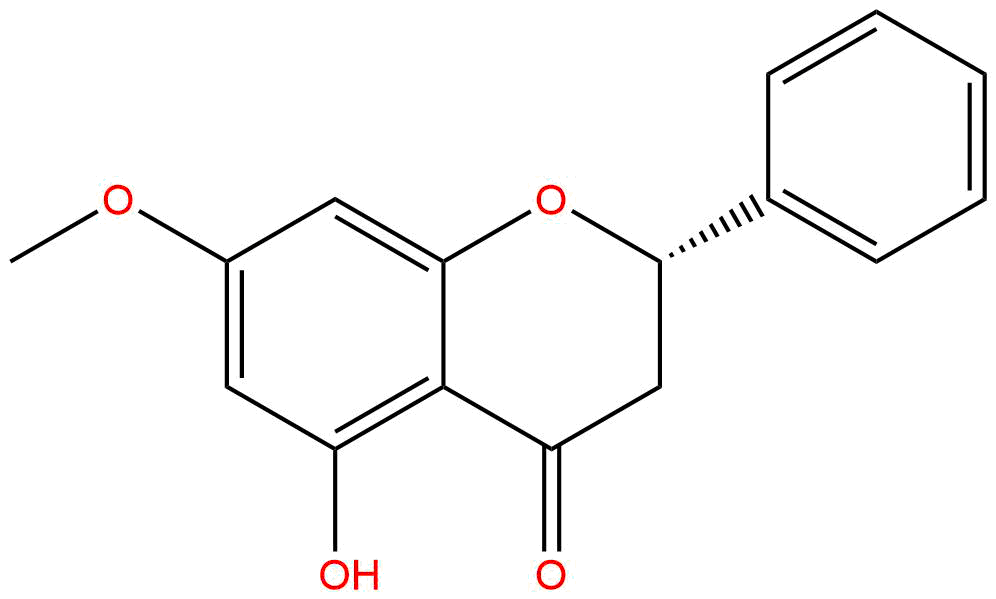


Product name: Pinostrobin
Synonym name:
Catalogue No.: SBP00113
Cas No.: 480-37-5
Formula: C16H14O4
Mol Weight: 270.28
Botanical Source:
Physical Description:
Type of Compound:
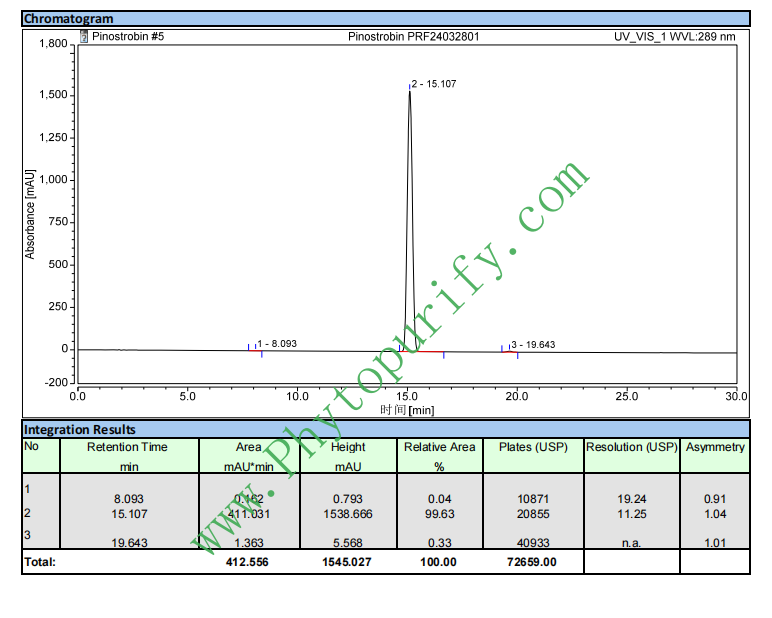
Purity: 95%~99%
Analysis Method: HPLC-DAD or/and HPLC-ELSD
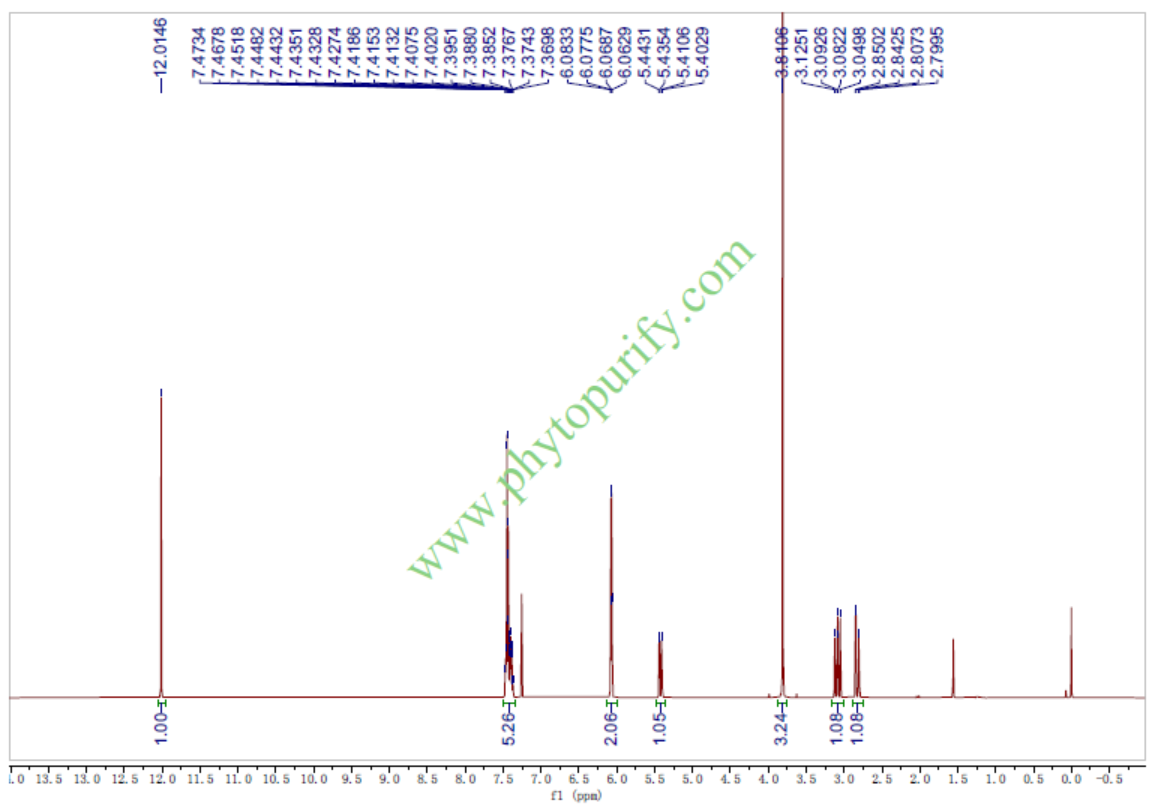
Identification Method: Mass, NMR
Packing: Brown vial or HDPE plastic bottle
Storage: Store in a well closed container, protected from air and light. Put into refrigerate or freeze for long term storage.
Whenever possible, you should prepare and use solutions on the same day. However, if you need to make up stock solutions in advance, we recommend that you store the solution as aliquots in tightly sealed vials at -20℃. Generally, these will be useable for up to two weeks.
The product could be supplied from milligrams to grams
Inquire for bulk scale.
For Reference Standard and R&D, Not for Human Use Directly.
HPLC of Pinostrobin
HNMR of Pinostrobin
Storage conditions:Short-term storage at 2~8℃, long-term storage at -20 ~ -80℃
55.7600
3.0696
3.0082
.1208
6.2087
35.3773
High
90.1714
2.5904
No
No
Yes
No
Yes
No
0.6
Yes
No
Yes
No
Pinostrobin, also known as benzophenone, is a natural flavonoid compound with the molecular formula C16H14O4 and CAS number 480-37-5. As an important member of flavonoids, puerarin has attracted much attention due to its diverse biological activities, especially in the fields of anti-cancer, antioxidant, antiviral, and neuroprotective effects. In recent years, with the in-depth study of the pharmacological mechanisms of natural products, puerarin has become a hot topic in drug development and disease treatment research due to its oral activity and good safety characteristics. Of particular note is that puerarin, as an effective PCSK9 inhibitor, can regulate lipid metabolism, indicating its potential application value in the prevention and treatment of cardiovascular and cerebrovascular diseases. In addition, puerarin has shown promising therapeutic prospects in various pathological states such as viral infections, leukemia, cirrhosis, and neurological diseases. This article will provide a systematic review of the chemical structure and physicochemical properties, plant sources and extraction methods, pharmacological activity and mechanism of action, pharmacological evaluation and pharmacokinetic characteristics of puerarin, and finally explore its clinical application prospects and future development directions.
Globulin belongs to the flavanone subclass of flavonoids, characterized by a typical C6-C3-C6 skeleton with two benzene rings (A and B) and a central tricyclic structure (C). The molecular weight of puerarin is 270.2840, and its molecular structure contains hydroxyl and methoxy substituents, which endow it with certain polarity and biological activity. Its LogP value is 3.0696, indicating that puerarin has moderate lipid solubility, which is beneficial for its cell membrane permeability and oral absorption. The polar surface area (TPSA) is 55.76 Å ², indicating that its molecular polarity is moderate and can support its interactions with multiple biological targets.
The low water solubility of puerarin (0.1208 mg/mL) limits its bioavailability to some extent, but its high blood-brain barrier permeability (BBB) gives it a unique advantage in the treatment of neurological diseases. Importantly, puerarin did not exhibit hERG channel inhibitory activity, indicating a low risk of cardiac toxicity. The Ames test result is 0.6, indicating a low risk of genotoxicity and a good safety foundation.
Globulin is widely present in various plants, especially in Pinaceae and certain leguminous plants where it is abundant. Typical plant sources include Pinus spp. and Dalbergia spp. Its distribution in plants is not limited to wood, but also exists in bark, leaves, and roots.
Traditional extraction methods mainly use organic solvents such as methanol, ethanol, ethyl acetate, etc., combined with ultrasound assisted extraction or reflux extraction techniques to improve extraction efficiency. In recent years, supercritical CO2 extraction and microwave-assisted extraction techniques have also been applied to the efficient extraction of puerarin, significantly improving yield and purity. The crude extract after extraction is usually purified by methods such as silica gel column chromatography and reverse phase high performance liquid chromatography (RP-HPLC) to ensure the acquisition of high-purity puerarin samples for pharmacological research.
Globulin exhibits significant anti-tumor activity in various cancer models. In vitro studies have shown that spheroidin can inhibit the proliferation of many cancer cell lines, including breast cancer, lung cancer, liver cancer and leukemia cells. Its anti-cancer mechanism mainly involves inducing cell cycle arrest, promoting cell apoptosis, and inhibiting tumor cell migration and invasion. Globulin exerts its anti-cancer effects by regulating multiple signaling pathways, such as PI3K/Akt, MAPK, and NF - κ B pathways. In addition, puerarin can enhance the sensitivity of chemotherapy drugs and demonstrate potential adjuvant therapeutic value.
As a natural flavonoid compound, puerarin has strong antioxidant capacity. Its antioxidant effect is mainly achieved by clearing free radicals, inhibiting lipid peroxidation, and regulating the endogenous antioxidant enzyme system. Globulin can activate the NFE2L2/NRF2 signaling pathway, promote the expression of downstream antioxidant enzymes such as SOD1, SOD2, CAT, GPX1, and HMOX1, and enhance the ability of cells to resist oxidative stress. In addition, the regulation of MMP1 and MMP3 by puerarin helps to slow down tissue damage and inflammatory response.
Globulin exhibits activity in inhibiting virus replication and transmission in various viral infection models. Research has shown that puerarin can interfere with the lifecycle of viruses, including virus invasion, replication, and assembly processes. Its antiviral mechanism may involve regulating the immune response of host cells and directly acting on the activity of virus related enzymes. Globulin has shown certain inhibitory effects on influenza virus, hepatitis B virus, and certain coronavirus strains, indicating its potential as a broad-spectrum antiviral drug.
Globulin has good neuroprotective functions, mainly manifested as reducing oxidative stress and inflammatory response of nerve cells, and inhibiting neuronal apoptosis. Its high blood-brain barrier permeability enables it to effectively act on the central nervous system. Globulin activates the NRF2 signaling pathway, enhances antioxidant defense, reduces neuroinflammation, and improves cognitive function. In neurodegenerative disease models such as Parkinson's disease and Alzheimer's disease, puerarin shows the potential to delay pathological progression.
As an effective inhibitor of PCSK9, puerarin can reduce plasma low-density lipoprotein cholesterol (LDL-C) levels and has potential cardiovascular and cerebrovascular protective effects. In addition, puerarin has shown promising therapeutic prospects in liver cirrhosis and inflammatory diseases by regulating immune responses and inhibiting the release of inflammatory mediators.
The multiple biological activities of puerarin are attributed to its regulatory effects on multiple molecular targets. Its main mechanism of action includes:
PCSK9 inhibition
PCSK9 (preprotein converting enzyme subtilisin 9) is a key enzyme regulating cholesterol metabolism, and overexpression is closely related to atherosclerosis and cardiovascular disease. Globulin directly inhibits the catalytic activity of PCSK9, reduces the degradation of LDL receptors, promotes the clearance of LDL-C, and exerts lipid-lowering and cardiovascular protective effects.
Activation of antioxidant signaling pathway
Globulin activates NFE2L2/NRF2 transcription factors, promotes the expression of downstream antioxidant enzymes (SOD1, SOD2, CAT, GPX1, HMOX1), enhances cellular antioxidant defense, and reduces oxidative stress damage.
Matrix metalloproteinases (MMP) regulation
Globulin regulates the expression of MMP1 and MMP3, affects extracellular matrix remodeling, and inhibits tumor cell invasion and inflammatory response.
Cell apoptosis and proliferation regulation
By regulating signaling pathways such as PI3K/Akt, MAPK, and NF - κ B, puerarin promotes cancer cell apoptosis, inhibits proliferation and migration.
Antiviral mechanism
Globulin may inhibit virus replication and transmission by interfering with virus related enzyme activity and enhancing host immune response.
Neuroprotective mechanism
In addition to antioxidant properties, puerarin also protects neurons from damage by inhibiting the release of inflammatory factors and regulating neurotransmitter balance.
Qiusongsu has good medicinal properties. Its molecular weight of 270.2840 and LogP 3.0696 comply with Lipinski's rules, indicating that it has good oral bioavailability. The TPSA is 55.76 Å ², which is beneficial for its cell membrane penetration and blood-brain barrier penetration, supporting its application in the treatment of central nervous system diseases. Although its water solubility is low, its dissolution and absorption can be improved through formulation technology.
In terms of safety, puerarin did not exhibit hERG channel inhibition, reducing the risk of cardiac toxicity. The Ames test results showed low genotoxicity and good safety. Pharmacokinetic studies have shown that puerarin is rapidly absorbed after oral administration, with a short peak time in plasma concentration and a wide distribution, especially in brain tissue where the concentration is high, which meets the requirements of its neuroprotective effect. Metabolism mainly occurs through the liver enzyme system, and the safety of metabolites needs further evaluation. The main excretion pathways are the kidneys and bile.
Qiusongsu, with its multi-target and multi mechanism pharmacological activities, has demonstrated extensive clinical application potential. Its research in anti-cancer, antiviral, neuroprotective, and prevention and treatment of cardiovascular and cerebrovascular diseases continues to deepen, and it is expected to become a new natural medicine or drug lead compound in the future.
In the field of anti-cancer, puerarin can be used as an adjuvant chemotherapy drug to enhance efficacy and reduce side effects. In antiviral therapy, puerarin is expected to be developed as a broad-spectrum antiviral drug, especially providing a new treatment strategy for emerging viral infections. In the treatment of neurological diseases such as Alzheimer's disease and Parkinson's disease, the high brain penetration and neuroprotective effects of puerarin provide strong support for their clinical translation. In terms of cardiovascular and cerebrovascular diseases, it has a good application prospect to inhibit and reduce blood lipids and prevent atherosclerosis through PCSK9.
Future research should focus on preclinical safety evaluation, pharmacokinetic optimization, and formulation development of puerarin, combined with modern drug design techniques, to carry out structural modification and derivative studies to improve its bioavailability and targeting. At the same time, in-depth analysis of its molecular mechanism and conducting clinical trials to verify its efficacy and safety are key to promoting the clinical application of puerarin.
As a natural flavonoid compound, puerarin has become a hot topic in natural product pharmacology research due to its diverse pharmacological activities and good medicinal properties. Its multiple mechanisms of action, including anti-cancer, antioxidant, antiviral, and neuroprotective effects, provide new ideas and strategies for the treatment of various major diseases. In the future, with the advancement of drug development technology and the deepening of clinical research, puerarin is expected to become an important natural drug resource, contributing greater value to human health.
