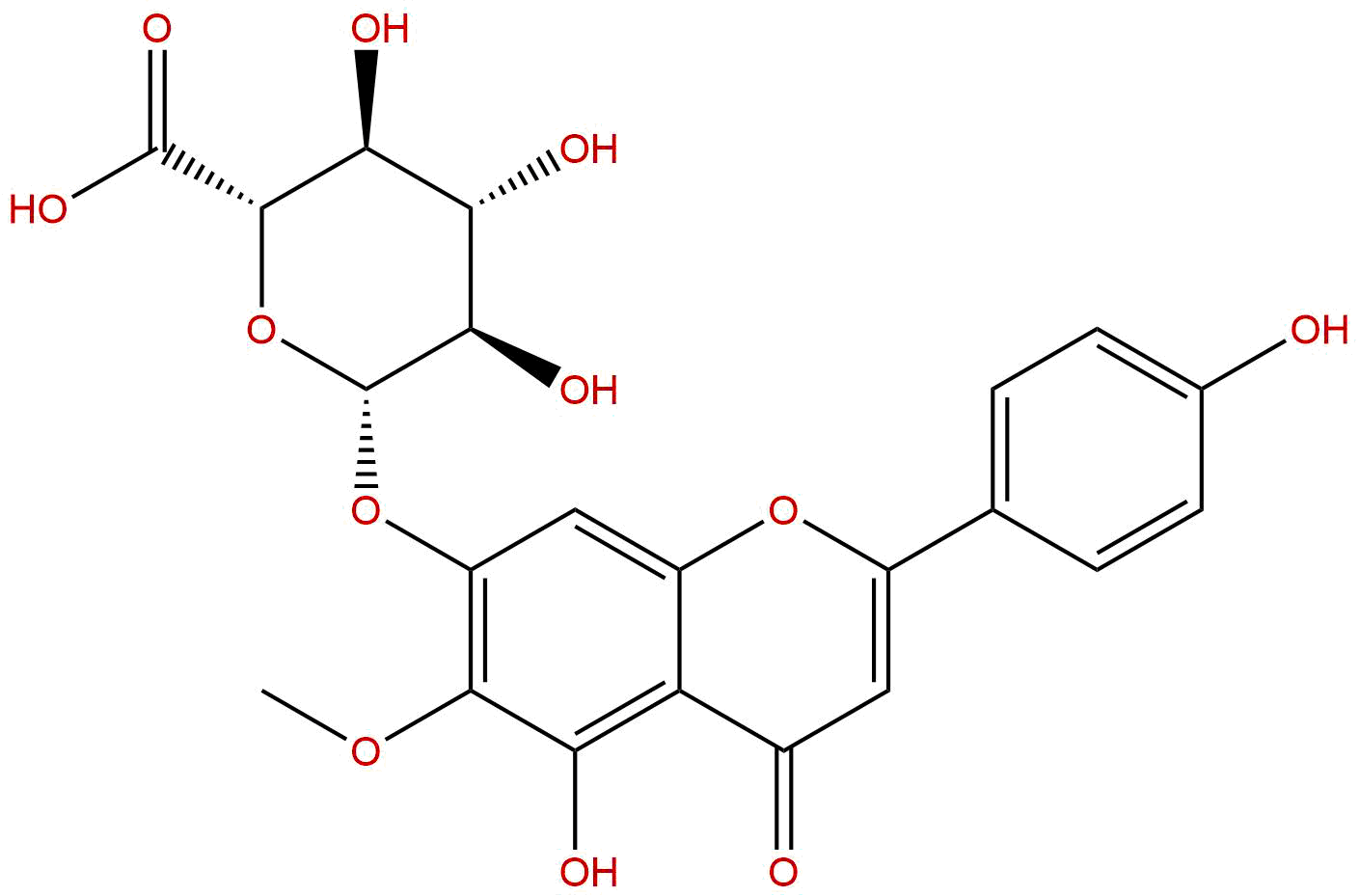


Product name: Hispidulin 7-O-glucuronide
Synonym name: 6-O-Methylscutellarin; Dinatin 7-glucuronide
Catalogue No.: BP2385
Cas No.: 31105-76-7
Formula: C22H20O12
Mol Weight: 476.39
Botanical Source:
Type of Compound: Flavonoids
Purity: 95%~99%
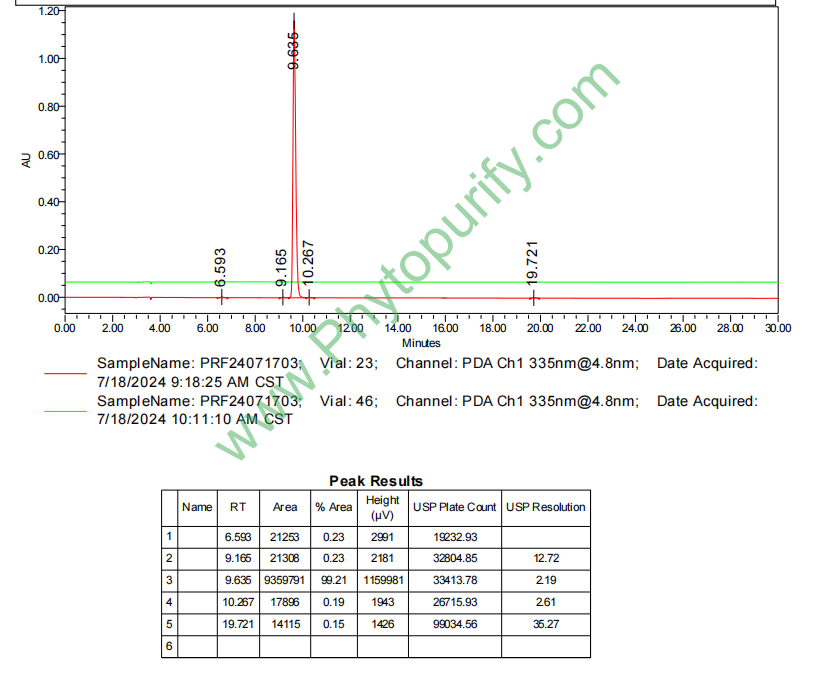
Analysis Method: HPLC-DAD or/and HPLC-ELSD
Identification Method: Mass, NMR
Packing: Brown vial or HDPE plastic bottle
Storage: Store in a well closed container, protected from air and light. Put into refrigerate or freeze for long term storage.
Whenever possible, you should prepare and use solutions on the same day. However, if you need to make up stock solutions in advance, we recommend that you store the solution as aliquots in tightly sealed vials at -20℃. Generally, these will be useable for up to two weeks.
The product could be supplied from milligrams to grams
Inquire for bulk scale.
For Reference Standard and R&D, Not for Human Use Directly.
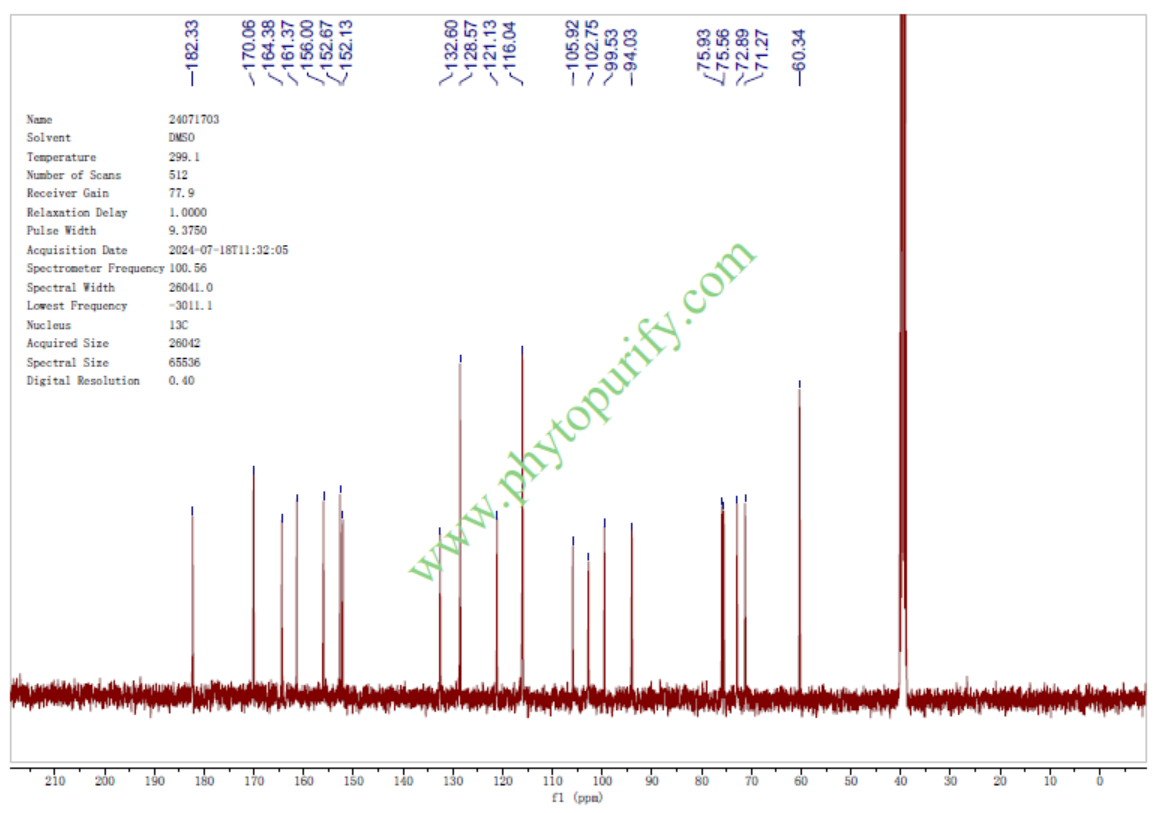
NMR of Hispidulin 7-O-glucuronide
HPLC of Hispidulin 7-O-glucuronide
Storage conditions:Short-term storage at 2~8℃, long-term storage at -20 ~ -80℃
196.3500
.2937
-1.9231
1.1426
.4977
.1977
Low
85.6529
3.9788
Yes
No
Yes
No
Yes
No
0.6
Yes
No
Yes
No
Natural products, as an important source of drug discovery, play an irreplaceable role in the long history of human disease prevention and treatment. Flavonoids, as one of the most widely distributed polyphenolic secondary metabolites in nature, have attracted much attention due to their structural diversity and extensive biological activity. In recent years, with the rapid development of modern separation and analysis techniques and pharmacological screening methods, an increasing number of flavonoid monomers have been isolated and identified, exhibiting multiple pharmacological activities such as anti-inflammatory, antioxidant, anti-tumor, and neuroprotective effects. Among these compounds, Hispidulin 7-O-glucuronide, as a structurally unique flavonoid glycoside, is gradually becoming a research hotspot in the field of natural product pharmacology.
High Plantago asiatica 7-O-glucuronide, CAS number 31105-76-7, is a flavonoid glycoside formed by the glycosidic bond between the 7th hydroxyl group of high Plantago asiatica (Hispidulin, i.e. 4 ', 5,7-trihydroxy-6-methoxyflavone) and glucuronic acid. This compound was first isolated from various medicinal plants and has been found to have significant Pim-1 kinase inhibitory activity (IC50 value of 2.71 μ M) in recent years. This discovery provides an important molecular basis for its application in the field of tumor therapy. Pim-1 (Provincial Integration site for Moloney murine leukemia virus-1) is a serine/threonine kinase that is overexpressed in various malignant tumors and participates in regulating key processes such as cell cycle, apoptosis, and metabolism. It has become an important target for the development of anti-tumor drugs.
This article will provide a systematic review of the research progress of high plantain 7-O-glucuronide from the aspects of chemical structure and physicochemical properties, plant sources and extraction methods, pharmacological activity research, mechanism of action and molecular targets, drug evaluation and pharmacokinetics, and clinical application prospects, in order to provide reference for the in-depth research and development of this natural product.
The chemical structure of kaempferol 7-O-glucuronide is composed of two parts: the aglycone (kaempferol) and the glycosyl group (glucuronic acid). Its aglycone, plantain, belongs to the flavonoid subclass of flavonoids, with a basic skeleton of 2-phenylchromone. It has hydroxyl groups attached to the C-5 and C-7 positions of the A ring and the C-4 'position of the B ring, respectively, and methoxy substitution at the C-6 position. This substitution mode endows high plantain with unique chemical properties and biological activity.
The sugar moiety is β - D-glucuronic acid, which is connected to the aglycone through the oxygen atom at position C-7, forming an O-glycosidic bond. Glucuronic acid is a type of uronic acid with a carboxyl group (- COOH) at the C-6 position, which gives the compound acidity and significantly increases its polarity and water solubility. Compared with common glucosides, glucuronides have unique metabolic and pharmacokinetic behaviors in vivo, such as being more easily involved in enterohepatic circulation and renal excretion.
According to the results of computational chemistry and experimental measurements, the main physicochemical properties of 7-O-glucuronide in Plantago asiatica are as follows:
From the above parameters, it can be seen that the 7-O-glucuronide of Plantago asiatica has typical physicochemical characteristics of flavonoid glycosides: high polarity and water solubility, low lipid solubility, and poor membrane permeability. These properties have significant impacts on its oral absorption, in vivo distribution, and bioavailability. It is worth noting that the hERG inhibition and Ames test results of this compound are both negative or low-risk, which provides a positive signal for its safety evaluation.
Plantago asiatica 7-O-glucuronide is widely distributed in nature, mainly found in plant families and genera such as Asteraceae, Lamiaceae, Fabaceae, etc. The plant species currently reported to contain this compound include:
Asteraceae plants Like Ai Ye(Artemisia argyi)Artemisia scoparia, Artemisia scoparia(Artemisia capillaris)Chrysanthemums(Chrysanthemum morifolium)Wait. Among them, Artemisia argyi, as a traditional Chinese medicine, contains abundant flavonoids, and high plantain 7-O-glucuronide is one of its important active ingredients.
Lamiaceae plants Like Scutellaria baicalensis(Scutellaria baicalensis)Danshen (Salvia miltiorrhiza)(Salvia miltiorrhiza)Wait. The most famous flavonoids in Scutellaria baicalensis are baicalin and wogonoside, but recent studies have found that they also contain small amounts of high plantain 7-O-glucuronide.
Leguminous plants Like licorice(Glycyrrhiza uralensis)Wait.
Other families and genera Such as certain plants in the Rosaceae family and plants in the Apiaceae family.
It is worth noting that the content of high plantain 7-O-glucuronide varies greatly among different plant sources, and often coexists with its aglycone high plantain and other flavonoid glycosides. Therefore, selecting appropriate plant materials is crucial for the extraction and separation of this compound.
The extraction method of 7-O-glucuronide from Plantago asiatica is mainly based on its polarity characteristics, and commonly used extraction techniques include:
Taking advantage of the high solubility of this compound in polar solvents, ethanol water mixed solvents (such as 50% -80% ethanol) or methanol are usually used for extraction. The extraction conditions are generally as follows: material to liquid ratio of 1:10-1:20 (w/v), temperature of 60-80 ℃, extraction time of 1-3 hours, and repeated extraction 2-3 times. To improve extraction efficiency, ultrasound assisted extraction (UAE) or microwave-assisted extraction (MAE) techniques can be combined.
After concentration, the crude extract is usually purified using macroporous adsorption resins such as D101 and HPD100 to remove impurities such as sugars and proteins. Subsequently, further separation was performed using silica gel column chromatography, polyamide column chromatography, or ODS reverse phase column chromatography. The elution system often uses chloroform methanol water or methanol water gradient systems.
For obtaining high-purity samples, semi preparative or preparative HPLC is a commonly used method. Separation and purification were performed using a C18 reverse phase chromatography column with acetonitrile water (containing 0.1% formic acid or acetic acid) as the mobile phase and monitored by a UV detector (typically at 254 nm or 280 nm).
As a liquid-liquid distribution chromatography technique, HSCCC exhibits unique advantages in the separation of flavonoid glycosides, avoiding irreversible adsorption of samples on the stationary phase, with high recovery rates, and suitable for large-scale preparation.
The structural identification of kaempferol 7-O-glucuronide mainly relies on spectroscopic methods, including:
- Ultraviolet spectroscopy (UV)In methanol solution, the compound exhibits characteristic absorption of flavonoids in the 240-280 nm (with II and A rings) and 300-380 nm (with I and B rings) regions.
- Infrared spectroscopy (IR)Characteristic absorption peaks can be observed for hydroxyl groups (~3400 cm ⁻¹), carbonyl groups (~1650 cm ⁻¹), and glycosidic bonds (~1070 cm ⁻¹).
- Mass spectrometry (MS): Electrospray ionization mass spectrometry (ESI-MS) usually gives [M-H] ⁻ excimer ion peak (m/z 475) in negative ion mode, and aglycone fragment ions (m/z 299, corresponding to galastin) can be observed in secondary mass spectrometry.
- Nuclear Magnetic Resonance (NMR)The H NMR and C NMR spectra can provide detailed structural information of glycosides and glycans, especially through heteronuclear multi bond correlation spectroscopy (HMBC), which can confirm the connection position of glycosidic bonds (C-7 position).
In recent years, significant progress has been made in the pharmacological activity research of kaempferol 7-O-glucuronide, which has shown potential application value in multiple fields such as anti-tumor, anti-inflammatory, antioxidant, and neuroprotective effects.
The pharmacological activity that has received the most attention for the 7-O-glucuronide glycoside of Plantago asiatica is its anti-tumor effect. Research has found that this compound has inhibitory effects on proliferation and induces apoptosis in various tumor cell lines.
Pim-1 kinase inhibition Gaoqiansu 7-O-glucuronide is an effective inhibitor of Pim-1, with an IC50 value of 2.71 μ M. Pim-1 kinase is highly expressed in a variety of hematological malignancies (such as acute myeloid leukemia, multiple myeloma) and solid tumors (such as prostate cancer, pancreatic cancer), and is involved in regulating cell cycle, apoptosis and metabolism. By inhibiting Pim-1 activity, this compound can block downstream signaling pathways, inhibit tumor cell proliferation, and induce apoptosis.
cell cycle arrest Research has shown that berberine 7-O-glucuronide can induce tumor cell cycle arrest in G0/G1 or G2/M phases, with specific effects varying depending on cell type. The mechanism may be related to the downregulation of the expression of cell cycle proteins (cyclin D1, cyclin B1) and cyclin dependent kinases (CDK4, CDK2).
Inducing apoptosis This compound can induce tumor cell apoptosis through mitochondrial pathway (endogenous pathway) and death receptor pathway (exogenous pathway). Specifically, it manifests as: reducing mitochondrial membrane potential, promoting cytochrome c release, activating caspase-9 and caspase-3; Simultaneously upregulate the Bax/Bcl-2 ratio and enhance pro apoptotic signaling.
Plantago asiatica 7-O-glucuronide has shown significant anti-inflammatory effects in various inflammatory models:
Inhibit the production of inflammatory mediators In a macrophage model stimulated by lipopolysaccharide (LPS), this compound significantly reduces the production of inflammatory mediators such as nitric oxide (NO), prostaglandin E2 (PGE2), tumor necrosis factor - α (TNF - α), interleukin-6 (IL-6), and interleukin-1 β (IL-1 β).
Regulating the inflammatory signaling pathway Its anti-inflammatory mechanism is closely related to the inhibition of nuclear factor kappa B (NF - κ B) and mitogen activated protein kinase (MAPK) signaling pathways. This compound can inhibit the phosphorylation and degradation of I κ B α, thereby preventing the nuclear translocation of NF - κ B; Simultaneously inhibit the phosphorylation of p38, JNK, and ERK.
Anti inflammatory effect in the body In both the carrageenan induced toe swelling model and the acetic acid-induced increased vascular permeability model, high levels of plantain 7-O-glucuronide significantly reduced inflammatory response in a dose-dependent manner.
Flavonoids usually have strong antioxidant activity, and high plantain 7-O-glucuronide is no exception:
Free radical scavenging ability This compound can effectively scavenge 1,1-diphenyl-2-trinitrophenylhydrazine (DPPH) radicals, 2,2 '- bis (3-ethylbenzothiazoline-6-sulfonic acid) diammonium salt (ABTS) radicals, and hydroxyl radicals. Its activity is closely related to the number and position of phenolic hydroxyl groups in the molecule.
Inhibit lipid peroxidation In the iron ion/ascorbic acid induced lipid peroxidation model, berberine 7-O-glucuronide can significantly reduce the production of malondialdehyde (MDA) and protect the cell membrane from oxidative damage.
Activate antioxidant enzymes This compound can upregulate the activities of superoxide dismutase (SOD), glutathione peroxidase (GPx), and catalase (CAT), enhancing the endogenous antioxidant defense system of cells.
In recent years, the neuroprotective effects of berberine 7-O-glucuronide have gradually received attention
Anti neuroinflammation In the activation model of microglia, this compound can inhibit LPS induced neuroinflammatory response, reduce the production of TNF - α, IL-6, and NO, and protect neurons from inflammatory damage.
Anti apoptotic effect In the neuronal damage model induced by glutamate or hydrogen peroxide, high plantain 7-O-glucuronide can reduce the apoptosis rate, and its mechanism is related to inhibiting oxidative stress and regulating the expression of apoptosis related proteins.
Improve cognitive function In animal models, this compound can improve cognitive dysfunction induced by scopolamine or D-galactose, indicating its potential application value in neurodegenerative diseases such as Alzheimer's disease.
In addition to the aforementioned activities, high plantain 7-O-glucuronide also exhibits:
- Hepatoprotective activity Has a protective effect on liver injury induced by carbon tetrachloride and acetaminophen.
- Antibacterial activity Has a certain inhibitory effect on bacteria such as Staphylococcus aureus and Escherichia coli.
- Hypoglycemic activity: It can reduce blood sugar level and improve insulin resistance in diabetes model.
The pharmacological activity of kaempferol 7-O-glucuronide derived from its interaction with multiple molecular targets, exhibiting multi-target and multi pathway action characteristics.
Pim-1 kinase As mentioned earlier, berberine 7-O-glucuronide is a selective inhibitor of Pim-1 (IC50=2.71 μ M). Molecular docking studies have shown that this compound can form hydrogen bonds and hydrophobic interactions with key amino acid residues (such as Lys67, Asp186, Glu89, etc.) in the ATP binding pocket of Pim-1, competitively inhibiting ATP binding and blocking Pim-1 kinase activity. The inhibition of Pim-1 leads to a decrease in the phosphorylation levels of its downstream substrates (such as Bad, p21, p27, Cdc25A, etc.), which in turn affects processes such as cell cycle, apoptosis, and metabolism.
NF - κ B signaling pathway This compound can inhibit the activity of I κ B kinase (IKK), reduce the phosphorylation and degradation of I κ B α, thereby preventing nuclear translocation and transcriptional activation of NF - κ B (p65/p50). NF - κ B is a key transcription factor in inflammation and tumor development, and its inhibition can downregulate the expression of various pro-inflammatory factors and anti apoptotic proteins (such as Bcl xL, survivor, c-FLIP).
MAPK signaling pathway High plantain 7-O-glucuronide can inhibit the phosphorylation of p38, JNK, and ERK, thereby blocking the transmission of the MAPK signaling pathway. The MAPK pathway plays an important role in cell proliferation, differentiation, apoptosis, and inflammatory response.
PI3K/Akt/mTOR pathway Some studies suggest that this compound may inhibit the PI3K/Akt signaling pathway, reduce Akt phosphorylation levels, and thereby inhibit mTOR activity, inducing autophagy and apoptosis in cells.
Antioxidant related targets This compound can directly scavenge free radicals and upregulate the expression of antioxidant enzymes (such as HO-1, NQO1, SOD, GPx) by activating the Nrf2/ARE signaling pathway, enhancing the antioxidant defense ability of cells.
The pharmacological activity of berberine 7-O-glucuronide cannot be explained by a single target, but by acting on multiple targets and signaling pathways, forming a complex regulatory network. For example, in its anti-tumor effect, the compound simultaneously inhibits the Pim-1 and PI3K/Akt pathways, and there is a cross-talk between the two, synergistically inhibiting the survival signals of tumor cells; Meanwhile, by inhibiting the NF - κ B pathway and reducing the expression of anti apoptotic proteins, the induction of apoptosis is enhanced. This multi-target action characteristic makes the compound potentially advantageous in the treatment of complex diseases such as cancer and inflammatory diseases, but it also increases the complexity of its mechanism of action research.
Based on the principles of medicinal chemistry and drug design, a systematic evaluation of the pharmacological properties of berberine 7-O-glucuronide is conducted
Drug similarity According to Lipinski's "Rule of Five", the molecular weight of the compound (476.39 Da) slightly exceeds the threshold of 500 Da, and LogP (0.29) meets the requirements. The number of hydrogen bond donors (phenolic hydroxyl and carboxyl groups) and hydrogen bond acceptors (carbonyl, ether oxygen, etc.) are both high. Overall, the compound does not fully comply with the "five rules" and belongs to the "marginal drug molecule" category.
Water solubility and fat solubility Moderate water solubility (1.14 mg/mL), but low LogP (0.29), indicating strong hydrophilicity and weak lipophilicity. This property is beneficial for dissolution and distribution in the aqueous phase, but not conducive to transmembrane transport and oral absorption.
Membrane permeability The TPSA is as high as 196.35 Å ², far exceeding the upper limit of 140 Å ² typically required for oral medications, indicating poor membrane permeability of the compound. The Caco-2 cell monolayer model or parallel artificial membrane permeability (PAMPA) experiment may confirm its low permeability characteristics.
Metabolic stability As a glucuronide, this compound may be hydrolyzed by β - glucuronidase in the body, releasing the aglycone plantain. This metabolic transformation may affect its pharmacological and pharmacokinetic behavior.
safety HERG inhibition negative (low risk of cardiac toxicity), Ames test negative (low risk of genetic toxicity), preliminary safety evaluation results are good. But further in vivo toxicology studies (such as acute toxicity, subchronic toxicity, reproductive toxicity, etc.) are needed to comprehensively evaluate its safety.
At present, there is insufficient pharmacokinetic research on the 7-O-glucuronide of Plantago asiatica. However, based on its structural characteristics and studies of similar compounds, the following pharmacokinetic features can be inferred:
absorb After oral administration, due to its high molecular weight, strong polarity, and poor membrane permeability, the oral absorption of this compound may be poor and its bioavailability may be low. Its absorption may depend on the mediation of intestinal transporters, such as monocarboxylic acid transporters MCTs or organic anion transporters OATPs.
distribution This compound is mainly distributed in extracellular fluid and blood, and its tissue distribution may be limited. Due to the low permeability of the blood-brain barrier, the distribution of the central nervous system is relatively small.
Metabolism The main metabolic pathways include: (1) hydrolysis by β - glucuronidase in the intestine and liver, releasing the aglycone genistein; (2) Glycosides undergo further methylation, sulfation, or glucuronidation binding reactions; (3) The glucuronic acid portion may be further oxidized or reduced.
excretion The compound and its metabolites are mainly excreted through bile and urine. Due to the presence of glucuronide, it may participate in the enterohepatic circulation and prolong the retention time in the body.
The following strategies can be adopted to optimize the pharmacological properties of high plantain 7-O-glucuronide:
Prodrug design Carboxylation or amidation of glucuronic acid to improve lipid solubility and membrane permeability, and release the original drug through enzymatic interpretation in vivo.
nano-formulation By utilizing carrier systems such as liposomes, polymer nanoparticles, and solid lipid nanoparticles, the solubility and bioavailability of drugs can be improved.
Structural modification On the premise of maintaining the core pharmacophore group, structural modifications are made to the sugar moiety or aglycone to optimize physicochemical properties and pharmacokinetic characteristics.
combination therapy Combined with P-glycoprotein (P-gp) inhibitors or metabolic enzyme inhibitors to improve oral absorption and bioavailability of drugs.
Based on the pharmacological activity spectrum of berberine 7-O-glucuronide, it has potential application prospects in the treatment of the following diseases:
malignant tumor In particular, tumors related to overexpression of Pim-1, such as acute myeloid leukemia, multiple myeloma, prostate cancer, pancreatic cancer, etc. This compound can be used as a Pim-1 inhibitor alone or in combination with traditional chemotherapy drugs and targeted drugs.
Inflammatory diseases Such as rheumatoid arthritis, inflammatory bowel disease, asthma, etc. Its anti-inflammatory activity is related to the inhibition of NF - κ B and MAPK pathways, which may provide new options for the treatment of inflammatory diseases.
Neurodegenerative diseases Such as Alzheimer's disease, Parkinson's disease, etc. Its neuroprotective and anti neuroinflammatory effects suggest its potential application value in neurodegenerative diseases.
Metabolic diseases: such as type 2 diabetes, non-alcoholic fatty liver disease, etc. Its hypoglycemic and hepatoprotective activities deserve further research.
Despite the various pharmacological activities exhibited by the 7-O-glucuronide glycoside of Plantago asiatica, there are still many challenges from basic research to clinical application. Future research should focus on the following directions:
In depth pharmacological research Using gene knockout animal models and conditional knockout techniques, clarify the specific roles of Pim-1 and other targets in mediating the pharmacological activity of the compound; Using systems pharmacology and network pharmacology methods, construct its multi-target action network.
Pharmacokinetic and Metabolomic Studies Establish sensitive and specific biological sample analysis methods (such as LC-MS/MS) to systematically study the absorption, distribution, metabolism, and excretion processes of the compound in vivo; Using metabolomics techniques to reveal its regulatory effects on endogenous metabolites.
Pharmaceutical research Develop new drug delivery systems (such as nanoemulsions, liposomes, phospholipid complexes, etc.) to improve the oral bioavailability and targeting of the compound; Explore non oral delivery routes such as transdermal and nasal administration.
toxicological evaluation According to the Good Laboratory Practice (GLP) requirements for non clinical drug research, conduct systematic toxicology studies, including acute toxicity, long-term toxicity, reproductive toxicity, genetic toxicity, etc., to provide safety basis for clinical trials.
Research on Structural Optimization and Structure Performance Relationship Based on the crystal structure of Pim-1, derivatives with higher activity and better drug properties were designed and synthesized through computer-aided drug design (CADD) and structure-activity relationship (SAR) studies.
Preclinical and clinical research After completing sufficient preclinical research, advance the compound or its derivatives into clinical trials to verify their safety and efficacy in humans.
Gaoqiansu 7-O-glucuronide, as a natural flavonoid glycoside, has multiple pharmacological activities such as Pim-1 inhibition, anti-tumor, anti-inflammatory, antioxidant, and neuroprotective effects. Its mechanism of action involves multiple signaling pathways and molecular targets, exhibiting multi-target and multi pathway characteristics. The pharmacological evaluation of this compound shows that although it has good safety (hERG inhibition negative, Ames test negative), its clinical application is limited by issues such as low oral bioavailability and poor membrane permeability. In the future, through strategies such as structural modification, formulation optimization, and combination therapy, it is expected to improve its pharmacokinetic characteristics and enhance therapeutic efficacy.
From natural products to innovative drugs, it is a challenging but promising path. The discovery of kaempferol 7-O-glucuronide as a Pim-1 inhibitor provides a new lead compound for the development of anti-tumor drugs. With the deepening of research, especially the elucidation of its mechanism of action and optimization of drug properties, this compound is expected to play an important role in the treatment of tumors, inflammation, and neurodegenerative diseases. We look forward to more research teams paying attention to this natural product, promoting its transition from laboratory to clinical applications, and making contributions to human health.
