Introduction/Overview
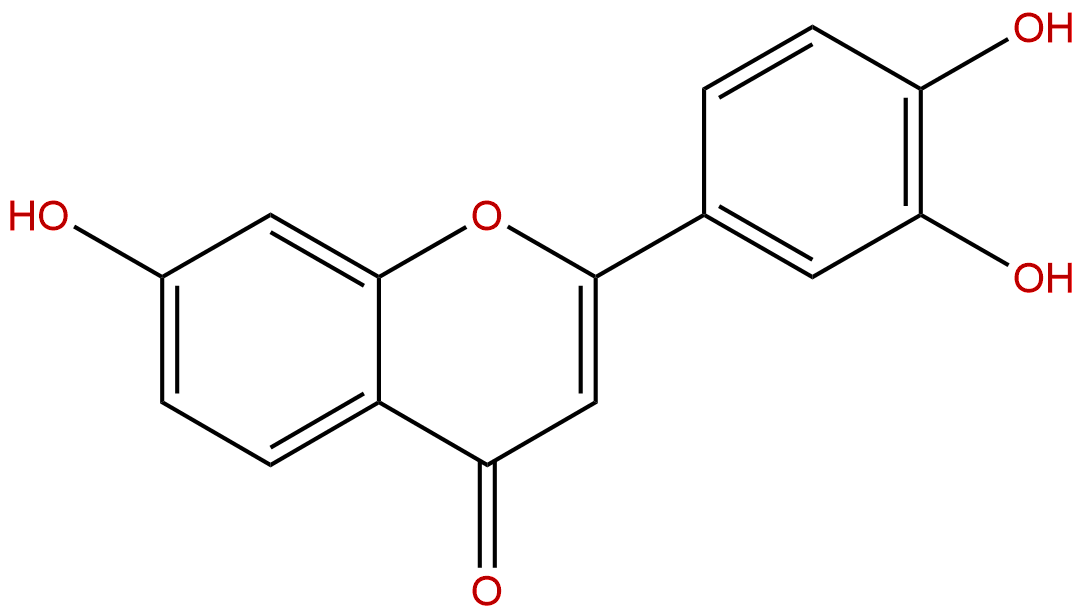
Flavonoids are a class of secondary metabolites widely present in the plant kingdom, attracting attention for their diverse chemical structures and extensive biological activities. As a key area of research in plant chemistry and pharmacology, flavonoids have shown great potential in antioxidant, anti-inflammatory, anti-tumor, and neuroprotective properties. 7,3 ', 4' - Trihydroxyflavone (CAS: 2150-11-0) is a member of the flavonoid family, characterized by three hydroxyl groups attached to the 7th position of the A ring and the 3 'and 4' positions of the B ring. This specific hydroxyl substitution pattern endows it with significant electron supply capability, making it a classic molecular model for studying natural antioxidants. In recent years, with the development of molecular biology and systems pharmacology, research on this compound has progressed from early in vitro activity screening to the analysis of its multi-target action network and complex signaling pathways. This article aims to systematically review the chemical properties, plant sources, pharmacological activities, molecular mechanisms of action, and medicinal properties of 7,3 ', 4' - trihydroxyflavonoids, in order to provide comprehensive scientific references for the deep development and clinical application of this natural product.
Chemical structure and physicochemical properties
The molecular formula of 7,3 ', 4' - trihydroxyflavone is C15H10O5, with a molecular weight of 270.24 g/mol. Its basic skeleton is 2-phenylchromenone, which is composed of two benzene rings (A ring and B ring) connected by an oxygen-containing heterocyclic ring (C ring). Its structural specificity lies in the fact that the 7th position (C7) of the A ring and the 3rd and 4th positions (C3 and C4) of the B ring are each connected to a phenolic hydroxyl group. This catechol structure (B-ring 3 ', 4' - dihydroxy) is a common feature of many highly active flavonoids (such as quercetin and luteolin), making them easy to participate in redox reactions and a key pharmacophore for exerting antioxidant effects.
From the analysis of physical and chemical properties, the calculated lipid water partition coefficient (LogP) is 2.11, indicating that the compound has moderate lipophilicity. The theoretical polar surface area (TPSA) is 90.9 Å ², reflecting the strong polarity brought by the three phenolic hydroxyl groups. Its water solubility is relatively low (about 0.0224 mg/mL), which to some extent limits its bioavailability. From the perspective of medicinal chemistry, this characteristic of "moderate LogP, high TPSA, and low water solubility" suggests that it may pose challenges for oral absorption, but also provides a clear direction for structural modification to improve drug efficacy. In addition, the compound showed a negative result in the Ames test (0.6, which is generally considered non mutagenic if it is less than 2), indicating a low risk of genetic toxicity and providing basic data for its safety evaluation.
Plant sources and extraction methods
7,3 ', 4' - trihydroxyflavone is not a widely abundant flavonoid, but as a glycoside or glycoside form, it can be found in various medicinal plants. Common sources include legumes, labiaceae, Asteraceae, and other plants. For example, in some species of licorice(Glycyrrhiza)Plants, Scutellaria baicalensis(Scutellaria baicalensis)And there have been reports of detection or isolation in some folk herbs. It often coexists with other hydroxy flavonoids or flavonoid glycosides and is an important intermediate or metabolite in its biosynthetic pathway.
Its extraction and separation usually follow the conventional process of natural product chemistry. Firstly, dry plant materials are extracted or refluxed using methanol, ethanol, or acetone water mixed solvents to fully obtain flavonoids within the polarity range. Subsequently, preliminary enrichment and decolorization were carried out using macroporous adsorption resin column chromatography, followed by subdivision using normal phase or reverse phase silica gel column chromatography. High performance liquid chromatography (HPLC), especially preparative HPLC, is the key technology for obtaining high-purity 7,3 ', 4' - trihydroxyflavonoids. Modern extraction techniques such as ultrasound assisted extraction, microwave-assisted extraction, and supercritical fluid extraction also have potential applications, aimed at improving extraction efficiency, reducing solvent consumption, and protecting thermally unstable components. Structural identification mainly relies on nuclear magnetic resonance (NMR, including 1H-NMR and 13C-NMR), mass spectrometry (MS), and chromatographic behavior compared with standard samples.
Pharmacological activity research
A large number of in vitro and partially in vivo studies have confirmed that 7,3 ', 4' - trihydroxyflavonoids have various pharmacological activities, among which antioxidant activity is the most prominent and fundamental.
-
antioxidant activity This compound is a potent free radical scavenger and metal ion chelating agent. The catechol structure of its B ring can effectively stabilize free radical intermediates and quench various reactive oxygen/nitrogen species such as DPPH, ABTS ⁺, superoxide anion (O ₂⁻), and peroxy radical (ROO ·) through hydrogen atom transfer or single electron transfer mechanisms. Research has shown that its antioxidant efficacy is superior to some common single hydroxy flavonoids.
-
anti-inflammatory activity Oxidative stress is closely linked to inflammatory response. Research has shown that 7,3 ', 4' - trihydroxyflavonoids can inhibit the excessive production of nitric oxide (NO) and prostaglandin E2 (PGE2) induced by lipopolysaccharide (LPS) in cell models, and downregulate the expression of inducible nitric oxide synthase (iNOS) and cyclooxygenase-2 (COX-2), suggesting their anti-inflammatory potential.
-
Skin protection and anti photoaging Based on its ability to resist oxidation and inhibit specific enzymes, this compound has attracted attention in dermatopharmacology. It has been confirmed to be an effective inhibitor of tyrosinase (TYR), which may be related to the B-ring ortho phenol structure, suggesting its potential application value in whitening cosmetics. More importantly, it can inhibit the expression of matrix metalloproteinase-1 and MMP-3 (MMP-1, MMP-3). MMPs are key enzymes that degrade skin collagen and elastin, and their overactivation is the core link in UV induced skin photoaging. Therefore, this compound exhibits anti photoaging and skin protective effects through a dual pathway of antioxidant and MMPs inhibition.
-
Neuroprotective potential Preliminary research suggests that its strong antioxidant capacity may extend to the nervous system, exhibiting protective effects on certain neurodegenerative disease models (such as Parkinson's disease and Alzheimer's disease related cell models) by reducing oxidative damage. However, further in vivo pharmacological validation is still needed.
Mechanism of action and molecular targets
The pharmacological effects of 7,3 ', 4' - trihydroxyflavonoids are not achieved through a single target, but rather through a complex molecular network, with its core mechanism revolving around anti-oxidative stress and Regulating related signaling pathways open.
-
Activate Nrf2/ARE antioxidant defense pathway This is the key mechanism by which it exerts systemic antioxidant effects. Nuclear factor E2 related factor 2 (Nrf2, encoded by the NFE2L2 gene) is a central regulator of cellular antioxidant response. Under oxidative stress, 7,3 ', 4' - trihydroxyflavonoids can promote the dissociation and translocation of Nrf2 from the cytoplasm to the nucleus, where it binds to antioxidant response elements (ARE) and initiates the transcriptional expression of a series of downstream phase II detoxifying enzymes and antioxidant proteins. This includes:
- Endogenous antioxidant enzymes Superoxide dismutase (SOD1, SOD2), catalase (CAT), glutathione peroxidase (GPX1). These enzymes work together to convert superoxide anions into hydrogen peroxide, which is further broken down into harmless water and oxygen.
- Heme oxygenase-1 (HMOX1)The induction of HMOX1 not only has antioxidant effects, but also produces metabolites with anti-inflammatory and cell protective effects (such as carbon monoxide, biliverdin/bilirubin).
-
Directly inhibit specific enzyme targets:
- Tyrosinase (TYR)As the rate limiting enzyme in melanin synthesis, its activity is directly inhibited, providing a molecular basis for whitening efficacy.
- Matrix metalloproteinases (MMP-1, MMP-3)This compound can inhibit the overexpression of MMP-1 and MMP-3 induced by ultraviolet radiation or inflammatory factors. The mechanism may involve inhibiting the activation of transcription factors such as activator protein-1 (AP-1) and nuclear factor kappa B (NF - κ B), which are upstream signals regulating MMPs gene expression.
-
Regulating the inflammatory signaling pathway In addition to indirectly anti-inflammatory effects through antioxidant, it can also intervene in classic pro-inflammatory signaling pathways such as NF - κ B and MAPK, reducing the release of pro-inflammatory cytokines such as TNF - α, IL-6, and IL-1 β.
In summary, 7,3 ', 4' - trihydroxyflavonoids form a multi-level and multi-target action network by directly scavenging free radicals, activating the Nrf2 dominated endogenous antioxidant system, and inhibiting key enzymes such as TYR and MMPs, collectively explaining their broad pharmacological activities.
Evaluation of drug properties and pharmacokinetics
Although 7,3 ', 4' - trihydroxyflavones exhibit good biological activity, their drug likeness still faces challenges and requires systematic pharmacokinetic (ADME) evaluation and optimization.
-
Absorption and distribution As mentioned earlier, its low water solubility and moderate fat solubility may affect its dissolution and passive diffusion absorption in the gastrointestinal tract. The phenolic hydroxyl groups in the structure may dissociate at physiological pH, further affecting its transmembrane permeability. The predictive model shows that its blood-brain barrier (BBB) permeability is low, which is an unfavorable factor for the treatment of central nervous system diseases, but may be beneficial for reducing central nervous system side effects. Improving its oral bioavailability is the key to future development, and strategies may include making formulations such as nanocrystals, liposomes, cyclodextrin inclusion complexes, or modifying prodrugs (such as esterifying hydroxyl groups to increase lipid solubility and membrane permeability, and then hydrolyzing them into the original drug in vivo).
-
Metabolism and excretion Flavonoids typically undergo extensive phase II metabolism in the body, particularly glucuronidation, sulfation, and methylation. The three phenolic hydroxyl groups of 7,3 ', 4' - trihydroxyflavonoids are potential metabolic sites, especially the ortho dihydroxy structure of the B ring, which is a preferred substrate for the action of catechol-O-methyltransferase (COMT). Rapid metabolism may lead to low systemic exposure and short half-life. Thoroughly studying its main metabolites and metabolic enzyme phenotypes in different species of liver microsomes or in vivo is crucial for understanding its duration of efficacy and potential drug interactions.
-
Preliminary evaluation of safety HERG channel inhibition is a common risk of drug-induced cardiac toxicity (long QT syndrome). Preliminary predictions indicate that the compound has no significant risk of hERG inhibition, which is a favorable safety signal. The negative Ames test also provides preliminary support for its genetic toxicity safety. However, comprehensive preclinical safety evaluation, including acute toxicity, long-term toxicity, reproductive toxicity, etc., is still an indispensable step in its conversion to drugs.
Clinical application prospects and prospects
Based on its unique pharmacological properties, 7,3 ', 4' - trihydroxyflavone has potential application value in multiple fields:
-
Dermatology and cosmetics field This is currently the most promising direction for direct conversion. As a natural TYR inhibitor and MMPs inhibitor, it can be developed as a functional cosmetic or topical drug for whitening, anti wrinkle, and anti-aging purposes. Its antioxidant properties help repair sun damage and maintain skin health. It can be added to essence, lotion, sunscreen and other formulas, or combined with vitamin C, vitamin E and other antioxidants to play a synergistic effect.
-
Developing new drugs as lead compounds To address its shortcomings such as poor water solubility and fast metabolism, a systematic structural modification and structure-activity relationship study will be conducted. For example, by alkylation and glycosylation of hydroxyl groups or esterification/amide with amino acids, it is possible to improve its solubility, metabolic stability and targeting, so as to develop innovative drug candidate molecules for the treatment of oxidative stress related diseases (such as metabolic syndrome, atherosclerosis, and specific inflammatory diseases).
-
Nutritional supplements or functional food additives If its oral safety is fully confirmed, it can be used as a high-value antioxidant ingredient in the development of health foods to assist in improving the body's redox status.
-
Sensitizer for combination therapy Given its ability to activate the Nrf2 pathway and enhance cellular self-defense, it is worth exploring whether its combination with certain chemotherapy drugs or radiotherapy can protect normal tissues without weakening or even enhancing anti-tumor effects.
Future research should focus on: ① conducting standardized in vivo pharmacological experiments, especially verifying their efficacy in animal models of diseases; ② Conduct systematic preclinical pharmacokinetic and toxicological studies to clarify their ADME characteristics and safety window; ③ Utilizing network pharmacology and molecular docking technology to further explore its potential new targets and applications; ④ Develop efficient and environmentally friendly green extraction and synthesis processes to meet the needs of large-scale production.
Conclusion
7,3 ', 4' - trihydroxyflavone, as a structurally clear natural flavonoid compound, exhibits various pharmacological activities centered around strong antioxidant capacity due to its unique catechol structure and multi hydroxyl characteristics. The study of its mechanism of action has deepened to the molecular level of enhancing intracellular defense by activating the Nrf2 pathway and directly inhibiting key targets such as TYR and MMPs. Despite facing challenges such as solubility and metabolic stability in drug development, these challenges also indicate the direction for structural optimization and dosage form innovation. In the field of skin protection and anti-aging, its application prospects are particularly bright. With the continuous deepening of research on natural products and the advancement of drug development technology, 7,3 ', 4' - trihydroxyflavone is expected to gradually move from an excellent pharmacological active molecule to practical applications, providing important scientific basis and material basis for the development of new therapeutic agents and functional products based on natural products.