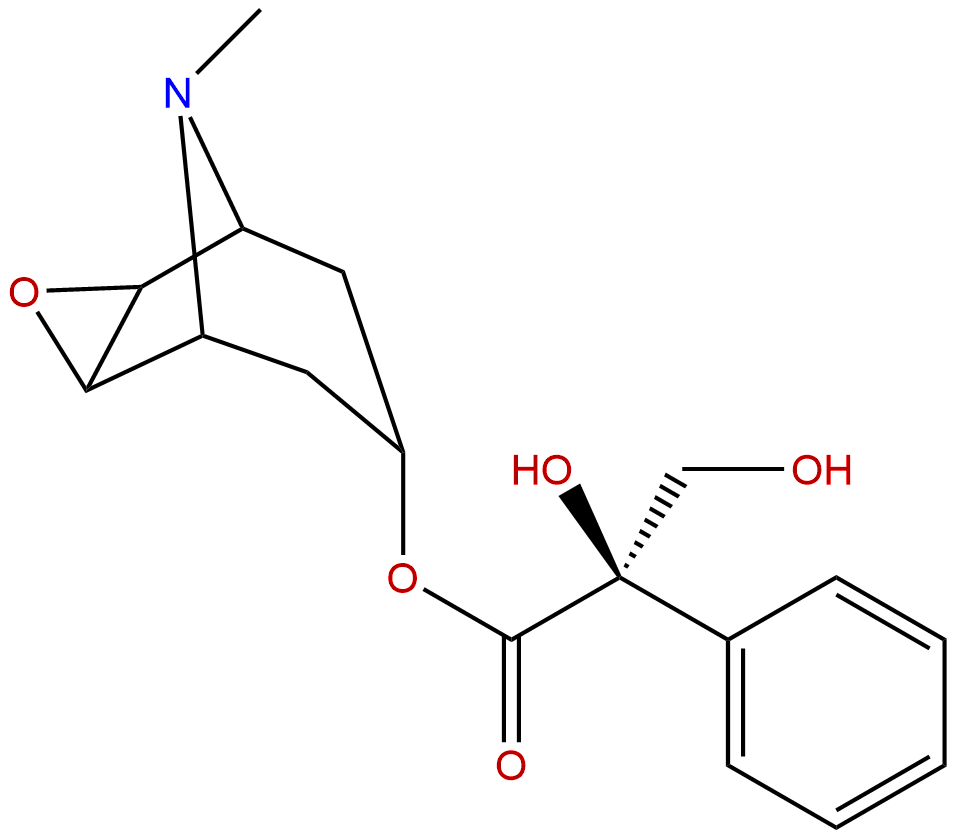


Product name: Anisodine
Synonym name:
Catalogue No.: BPC0148
Cas No.: 52646-92-1
Formula: C17H21NO5
Mol Weight: 319.357
Botanical Source:
Physical Description: Powder
Type of Compound: Alkaloids
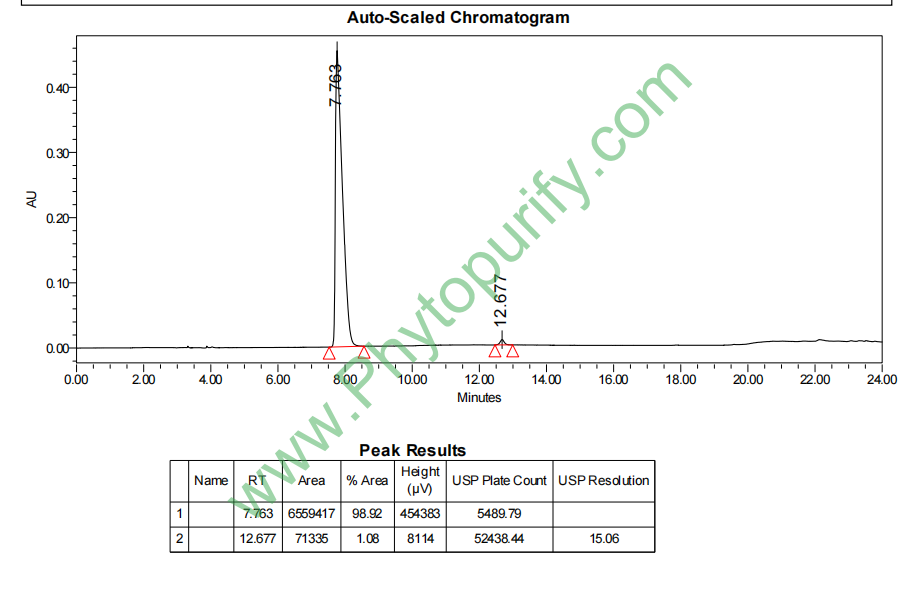
Purity: 95%~99%
Analysis Method: HPLC-DAD or/and HPLC-ELSD
Identification Method: Mass, NMR
Packing: Brown vial or HDPE plastic bottle
The product could be supplied from milligrams to grams. Inquire for bulk scale.
We provide solution to improve the water-solubility of compounds, thereby facilitating the variety of activity tests and clinic uses.
For Reference Standard and R&D, Not for Human Use Directly.
HPLC of Anisodine
Storage conditions:Short-term storage at 2~8℃, long-term storage at -20 ~ -80℃
82.5300
.6535
.5470
6.9542
.9810
6.5975
High
43.2938
4.8851
No
No
No
No
No
No
1.5
Yes
No
No
No
Natural products, as an important source of drug discovery, play an irreplaceable role in the long history of human struggle against diseases. From ancient Egyptian papyrus records to modern high-throughput screening techniques, phytochemicals have always provided a constant source of inspiration and lead compounds for the development of innovative drugs. Among numerous natural products with biological activity, tropane alkaloids have long been a hot topic in medicinal chemistry and pharmacology research due to their unique chemical structure and significant pharmacological activity, especially their effects on the nervous system. The widespread use of classic drugs such as atropine, scopolamine, and scopolamine in clinical practice fully demonstrates the important value of these compounds.
Anisodine, also known as Daturamine, is a plant derived from the Solanaceae family, such as the Tanggute Scopola Anisodus tanguticus Alkaloids of the tropane class. Its discovery is closely related to the systematic research on ethnic medicine resources in China. In the mid-20th century, Chinese scientists conducted in-depth research on herbs used to treat diseases such as "fever" and "convulsions" in the Qinghai Tibet Plateau region. They isolated and identified this new alkaloid from the Tanggute Mountain Scopola. The discovery of camptothecin not only enriched the chemical diversity of tropane alkaloids, but also attracted widespread attention from scholars at home and abroad due to its unique pharmacological properties, especially its potential in neuroprotection.
In recent years, with the increasing aging of the global population, cerebrovascular diseases, neurodegenerative diseases (such as Alzheimer's disease and Parkinson's disease), and nerve damage caused by ischemic stroke have become major public health issues that seriously threaten human health. The pathological and physiological processes of these diseases are complex, often involving multiple links such as excitotoxicity, oxidative stress, calcium overload, neuroinflammation, and cell apoptosis. The existing therapeutic drugs, such as thrombolytic drugs, neuroprotective agents, etc., are far from meeting clinical needs due to narrow treatment time windows, limited efficacy, and significant side effects. Therefore, finding new neuroprotective agents with multi-target and multi pathway effects is an urgent task in current drug development. In this context, camptothecin has re entered the field of researchers with its clear neuroprotective activity, especially its significant effect in improving cerebral ischemia/reperfusion injury, demonstrating enormous potential for development. This article aims to comprehensively review the chemical structure, plant origin, pharmacological activity, mechanism of action, medicinal properties, and clinical application prospects of camphoratine, in order to provide reference for the in-depth research and development of this natural product.
The chemical name of camptothecin is 9-methyl-3-oxa-9-azacyclo [3.3.1.0 ², ⁴] non-7-yl α - hydroxy - α - phenylphenylacetate, and its chemical structure belongs to the typical tropane alkaloids. Structurally, camptothecin consists of two core components: one is the alcohol moiety derived from the tropane skeleton (i.e. tropane), and the other is the acid moiety derived from tropic acid. Compared with atropine (hyoscyamine) and scopolamine (scopolamine), camptothecin has its unique structure. Scopolamine has an epoxy structure between positions 6 and 7 of tropane, while camptothecin forms an oxygen bridge (- O -) between positions 6 and 7 of hyoscyamine, forming a structural unit of 3-oxabicyclo [3.1.0] hexane. This structural feature makes it significantly different from scopolamine in terms of stereochemistry and physicochemical properties. Specifically, the molecular formula of camptothecin is C ₁₇ H ₂₁ NO ₅, with a molecular weight of 319.3570 g/mol. Its system name (IUPAC) is (1R, 2R, 4S, 5S, 7S) -9-methyl-3-oxa-9-azaticyclo [3.3.1.0 ², ⁴] nonan-7-yl 2-hydroxy-2-phenylacetate.
In terms of physical and chemical properties, camptothecin exhibits a certain degree of lipophilicity, with an oil-water partition coefficient (LogP) of 0.6535, indicating its ability to partition in both aqueous and lipid phases, which provides a basis for its permeation through biological membranes such as the blood-brain barrier. Its topological polar surface area (TPSA) is 82.53 Å ², which is at a moderate level. Molecules with TPSA less than 90 Å ² are generally considered to have good oral absorption and blood-brain barrier permeability potential. The water solubility (LogS) of camptothecin is 6.9542, indicating its good solubility in water, which is beneficial for the development of its formulations and in vivo administration. Of particular importance, computer simulations predict that camptothecin has high blood-brain barrier (BBB) permeability. This characteristic is crucial for drugs targeting the central nervous system, meaning that camptothecin can effectively enter brain tissue from the bloodstream and directly act on its targets, exerting neuroprotective effects. In addition, preliminary pharmacological evaluations have shown that camptothecin has a low risk of inhibiting hERG potassium channels (hERG inhibition: no), and the Ames test result is 1.5, indicating a low potential genotoxicity risk. This provides favorable early evidence for its safety as a candidate drug. Overall, the chemical structure of camptothecin determines its unique physicochemical properties, especially its high BBB permeability and good water solubility, making it an ideal lead compound for the development of central nervous system drugs.
Camphor alkaloids mainly come from the Solanaceae family and the Scotropha genus(Anisodus)The Heavenly Fairy genus(Hyoscyamus)Waiting for various plants. Among them, Tanggute Mountain Scopolatus(Anisodus tanguticus (Maxim.) Pascher), Also known as camphor ginseng, it is the main plant source for obtaining camphor alkaloids. This plant is mainly distributed in the Qinghai Tibet Plateau and surrounding areas, such as Qinghai, Xizang, Sichuan, Yunnan and other places, and grows on hillsides, grasslands or forest margins at an altitude of 2800-4200 meters. In addition, the Himalayan scopolamine(Anisodus luridus)Three thirds three(Anisodus acutangulus)And Sai Fen(Scopolia carniolicoides)Camphor alkaloids are also present in plants, but their levels are usually lower than those in Tanggute Mountain Scopolatus. These plants, as traditional ethnic medicines, have a long history of application in Tibetan medicine and folk medicine, mainly used to treat pain, spasms, inflammation, and some neurological diseases.
The content of camptothecin in plants is influenced by various factors, including plant species, growth environment, harvest season, plant parts, etc. Generally speaking, the roots and rhizomes are the parts with the highest content of camptothecin, followed by the stems and leaves. In order to obtain high-purity camptothecin, researchers have developed various extraction and purification methods. The traditional extraction method is mainly based on the acid-base properties of alkaloids, using solvent extraction. The basic process is as follows: first, dry plant materials (usually roots or whole plants) are crushed and soaked in acidic aqueous solutions (such as 0.5-1% hydrochloric acid or sulfuric acid) to dissolve alkaloids in salt form. Then, the acidic water extract is alkalized (usually adjusted to pH 9-10 with ammonia or sodium hydroxide) to allow free alkaloids to precipitate from the aqueous phase, and then extracted with organic solvents such as chloroform, ether, ethyl acetate, etc. Finally, the organic phase is concentrated to obtain a total alkaloid extract.
In order to isolate and purify camptothecin from total alkaloids, further chromatographic techniques are required. Classic separation methods include silica gel column chromatography and alumina column chromatography. Due to the similarity in structure and small polarity differences between camptothecin and other tropane alkaloids of the same genus (such as scopolamine, scopolamine, and scopolamine), a single column chromatography often fails to achieve ideal separation results. Therefore, multiple methods are often used in combination. For example, first use silica gel column chromatography and gradient elution with solvent systems such as chloroform methanol ammonia water to obtain a fraction rich in camptothecin; Combined with preparative thin-layer chromatography or high-performance liquid chromatography (HPLC) for purification. In recent years, with the development of separation science, some more efficient and environmentally friendly extraction techniques have also been applied to the preparation of camptothecin, such as high-speed countercurrent chromatography (HSCCC), supercritical fluid extraction (SFE), etc. HSCCC utilizes the difference in distribution coefficients of solutes in two-phase solvent systems for separation, which has the advantages of high sample recovery and irreversible adsorption, making it particularly suitable for the separation of natural products. SFE utilizes supercritical CO ₂ as an extractant, which has green chemical advantages such as high extraction efficiency, good selectivity, and no solvent residue. The application of these modern technologies not only improves the extraction efficiency and purity of camptothecin, but also provides strong support for its large-scale preparation and subsequent research.
The pharmacological activity research of camptothecin mainly focuses on its effects on the central nervous system, especially in terms of neuroprotection and anticholinergic effects. Early studies revealed its basic pharmacological properties as an M-cholinergic receptor antagonist, while recent research has greatly expanded our understanding of its neuroprotective mechanisms.
1. Neuroprotective effect:
This is the pharmacological activity of camptothecin that has received the most attention. A large number of in vitro and in vivo experiments have confirmed that camptothecin has a significant protective effect on nerve cell damage caused by various reasons.
- Anti cerebral ischemia/reperfusion injury: In animal models, camptothecin can significantly reduce the volume of cerebral infarction caused by cerebral ischemia/reperfusion (I/R) in rats and improve neurological deficit scores. Its protective mechanism is multifaceted, including inhibiting the release of excitatory amino acids such as aspartic acid, reducing intracellular calcium overload, clearing reactive oxygen species (ROS), and inhibiting cell apoptosis. Research has shown that under hypoxic/reoxygenation conditions, camptothecin can significantly reduce the expression of M1, M2, M4, and M5 muscarinic acetylcholine receptors in brain tissue, which may be one of the key links in its neuroprotective effect. By downregulating the overactivation of these receptors, camptothecin can block downstream calcium influx and ROS generation, thereby reducing neuronal damage.
- Anti Alzheimer's disease (AD) effect: Given that dysfunction of the cholinergic system is an important pathological feature of AD, the potential of camptothecin as an M receptor antagonist in the treatment of AD has also received attention. Although classical acetylcholinesterase inhibitors improve cognitive function by increasing synaptic acetylcholine levels, M receptor antagonists may exert different therapeutic effects by regulating abnormal cholinergic signaling pathways. Some studies have shown that camptothecin can improve the learning and memory abilities of AD model mice, and its mechanism may be related to the inhibition of neuroinflammation, reduction of β - amyloid (A β) deposition, and excessive phosphorylation of Tau protein.
- Anti Parkinson's disease (PD) effects: In the PD model, camptothecin also showed a certain protective effect. It can alleviate dopaminergic neuron damage induced by neurotoxins such as MPTP or 6-OHDA, increase striatal dopamine levels, and improve motor dysfunction. Its mechanism of action may involve antioxidant stress and anti apoptotic pathways.
2. Anticholinergic effect:
As a tropane alkaloid, camphoratine exhibits typical anticholinergic activity by competitively antagonizing the binding of acetylcholine to M-cholinergic receptors. Compared with atropine, camptothecin has a stronger effect on central M receptors and a relatively weaker effect on peripheral M receptors, exhibiting a certain degree of central selectivity. This may result in fewer peripheral anticholinergic side effects in clinical practice, such as dry mouth, blurred vision, tachycardia, constipation, etc. Its anticholinergic effect is mainly reflected in:
- Spasmodic effect: It can relax smooth muscles and relieve spasms in smooth muscles such as the gastrointestinal tract, biliary tract, and ureter.
- Inhibit glandular secretion: Reduce the secretion of saliva, sweat, respiratory secretions, etc.
- Dilation of pupils and modulation paralysis: Acting on the pupillary sphincter and ciliary muscle of the eye, causing pupil dilation and visual impairment.
3. Improving microcirculation and anti shock effects:
Camphor alkaloids can improve microcirculation disorders and increase tissue blood perfusion. In septic shock or hemorrhagic shock models, camptothecin can stabilize blood pressure, improve blood supply to important organs, and increase survival rates. This effect may be related to its anticholinergic effect (relieving vascular spasm) and direct cell protection.
4. Other pharmacological effects:
In addition, the study also found that camptothecin has anti-inflammatory, antioxidant, and anti apoptotic effects. It can inhibit the release of inflammatory factors such as tumor necrosis factor - α (TNF - α), interleukin-1 β (IL-1 β), and upregulate the activity of antioxidant enzymes such as superoxide dismutase (SOD), thereby reducing oxidative stress damage. These multifaceted pharmacological activities together form the network foundation of its neuroprotective effect.
The pharmacological mechanism of camptothecin is complex, involving multiple molecular targets and signaling pathways. Its core mechanism is to act as an antagonist of muscarinic acetylcholine receptors (mAChRs, also known as M receptors), but recent studies have revealed that its effects extend far beyond this.
1. Core target: M-cholinergic receptor subtype
Camptothecin is a non selective M receptor antagonist, but there are differences in affinity between different subtypes. There are five subtypes of M receptors (M1-M5), widely distributed in the central and peripheral nervous systems. Camphor alkaloids can bind to these receptors and block the action of endogenous acetylcholine.
- The effect on M1 receptor: M1 receptors are mainly distributed in the cerebral cortex and hippocampus, and are closely related to learning, memory, and cognitive functions. Under pathological conditions such as cerebral ischemia, excessive activation of M1 receptors can lead to excitotoxicity and calcium overload. Camphor alkaloids inhibit the activation of downstream phospholipase C (PLC) by antagonizing M1 receptors, reducing the production of inositol triphosphate (IP3) and diacylglycerol (DAG), thereby inhibiting the release of calcium ions from endoplasmic reticulum calcium stores and alleviating calcium overload.
- Effects on M2 and M4 receptors: M2 and M4 receptors mainly act as presynaptic self receptors, regulating the release of acetylcholine through negative feedback. Under certain pathological conditions, their abnormal expression may also be involved in nerve damage. Camphor alkaloids downregulate the expression of M2 and M4 receptors, which may help restore normal cholinergic neurotransmission.
- Effects on M3 and M5 receptors: M3 receptors are mainly distributed in smooth muscles and glands, mediating smooth muscle contraction and glandular secretion. M5 receptors are mainly distributed in midbrain dopaminergic neurons and participate in the regulation of dopamine release. The antagonistic effect of camptothecin on M3 receptors is the basis for its spasmolytic and secretory inhibitory effects. The antagonism of M5 receptor may be related to its protective effect in Parkinson's disease model.
2. Key signaling pathways:
- Inhibition of calcium ion influx: Camphor alkaloids inhibit the opening of voltage-gated calcium channels and receptor gated calcium channels by antagonizing M1, M3 and other receptors, reducing the influx of extracellular calcium ions. At the same time, it also inhibits calcium release mediated by endoplasmic reticulum IP3 receptors. This inhibitory effect on calcium overload is one of the core components of its neuroprotective function.
- Antioxidant stress: Camphor alkaloids can directly scavenge reactive oxygen species (ROS) and upregulate the activity of antioxidant enzymes such as SOD and glutathione peroxidase GPx, while inhibiting the activity of pro oxidant enzymes such as NADPH oxidase, thereby reducing oxidative stress damage. Research has shown that treatment with camptothecin can significantly reduce ROS levels in brain tissue under hypoxic/reoxygenation conditions.
- Inhibition of excitotoxicity: During cerebral ischemia, excitatory amino acids such as glutamate and aspartic acid are released in large quantities, leading to neuronal overexcitation and death. Camphor alkaloids can reduce the level of aspartic acid during hypoxia, thereby alleviating excitotoxicity. The mechanism may be related to inhibiting presynaptic glutamate release or enhancing astrocyte uptake of glutamate.
- Anti apoptotic effect: Camphor alkaloids can regulate the expression of apoptosis related proteins, such as upregulating the anti apoptotic protein Bcl-2, downregulating the pro apoptotic protein Bax, and inhibiting the activation of Caspase-3, thereby blocking the mitochondrial mediated cell apoptosis pathway.
- Anti inflammatory effect: Camphor alkaloids can inhibit the excessive activation of microglia and astrocytes, reduce the release of pro-inflammatory factors (such as TNF - α, IL-1 β, IL-6) and chemokines, thereby alleviating neuroinflammatory responses. This may be related to the inhibition of nuclear factor kappa B (NF - κ B) and mitogen activated protein kinase (MAPK) signaling pathways.
3. Interactions with other targets:
In addition to the M receptor, camptothecin may also interact with other targets. For example, studies have shown that it may have a certain regulatory effect on serotonin receptors or dopamine receptors, but its specific affinity and functional significance still need further research. In addition, the direct effect of camptothecin on ion channels such as sodium and potassium channels may also be involved in its pharmacological effects.
In summary, the mechanism of action of camptothecin is not a single target, but rather a synergistic network formed by antagonizing M receptor subtypes, inhibiting calcium overload, antioxidant stress, anti excitotoxicity, anti apoptosis, and anti-inflammatory pathways, ultimately achieving a protective effect on neurons. This multi-target and multi pathway mode of action gives it unique advantages in treating complex central nervous system diseases.
Developing camptothecin from a natural product into a clinical drug requires a comprehensive evaluation of its pharmacological properties, including pharmacokinetic (ADME) characteristics and safety. Early research has provided some key information.
1. Analysis of pharmacological parameters:
According to the provided pharmacological parameters, camptothecin exhibits good drug like properties.
- Molecular weight (319.36 Da) and LogP (0.65): Meets the requirements of Lipinski's Rule of Five for molecular weight<500 and LogP<5, indicating good oral absorption and membrane permeability potential.
- TPSA (82.53 Ų): Below 140 Å ², it indicates good oral bioavailability. More importantly, this value is associated with high blood-brain barrier permeability, supporting its development as a central nervous system drug.
- Water solubility (LogS 6.95): Good water solubility, conducive to formulation development, can be prepared into injections or oral preparations.
- HERG inhibition (No): This is a very favorable safety signal. HERG channel inhibition is the main cause of drug-induced QT interval prolongation and fatal arrhythmias (apical twisted ventricular tachycardia) in the heart. Camphor alkaloids have no hERG inhibition risk, greatly reducing their potential cardiac toxicity hazards.
- Ames test (1.5): This result usually indicates no significant mutagenicity in the Ames test, suggesting a low risk of genetic toxicity.
2. Pharmacokinetic characteristics:
At present, detailed pharmacokinetic data on camptothecin in the human body are not yet complete, but based on animal experiments and its physicochemical properties, some basic characteristics can be inferred:
- Absorption: Camphor alkaloids are rapidly absorbed in the gastrointestinal tract. Due to its small molecular weight and moderate lipophilicity, its bioavailability may be higher after oral administration. Injection administration (such as intramuscular or intravenous injection) is a commonly used route of administration in clinical practice, which can quickly achieve effective blood drug concentration.
- Distribution: Due to its high BBB permeability, camptothecin can rapidly enter the central nervous system and reach high concentrations in brain tissue. This is the pharmacological basis for its neuroprotective effect. In addition, it may also be widely distributed in other organizations.
- Metabolism: Camphor alkaloids are mainly metabolized in the liver. The metabolic pathways of tropane alkaloids usually include ester hydrolysis, hydroxylation, N-demethylation, etc. Esterases and cytochrome P450 enzyme systems in the liver may be involved in its metabolism. Metabolites may lose or retain some pharmacological activity.
- Excretion: Camphor alkaloids and their metabolites are mainly excreted through the kidneys and urine. Part of it may also be excreted into the intestine through bile and excreted with feces. Its half-life (t ₁/₂) may be short and requires multiple administrations to maintain effective blood drug concentration.
3. Safety evaluation:
In addition to the hERG and Ames test results mentioned above, the safety of camptothecin still needs to be validated in broader toxicological studies.
- Acute toxicity: The LD50 (median lethal dose) of camptothecin is higher than that of atropine and scopolamine, indicating relatively low acute toxicity.
- Central nervous system toxicity: As an M receptor antagonist, high-dose camptothecin may cause central nervous system side effects such as excitement, delirium, hallucinations, and even coma. But the pivot selectivity may result in milder side effects compared to other similar drugs at therapeutic doses.
- Peripheral anticholinergic side effects: Although camptothecin has high central selectivity, it may still cause peripheral anticholinergic side effects such as dry mouth, blurred vision, increased heart rate, constipation, and difficulty urinating, especially at higher doses. These side effects are usually reversible and can disappear after discontinuation of the medication.
Overall, the pharmacological evaluation results of camptothecin are encouraging. Its excellent physicochemical properties, high BBB permeability, low hERG inhibition risk, and low genetic toxicity have laid a solid foundation for it as a candidate drug. However, in order to successfully launch it into the market, systematic and comprehensive preclinical pharmacokinetic and toxicological studies are still needed, and ultimately its effectiveness and safety in humans need to be verified through rigorous clinical trials.
Based on its unique pharmacological activity and good medicinal properties, camptothecin has shown broad clinical application prospects in multiple therapeutic fields.
1. Cerebrovascular diseases:
This is the most promising application area of camptothecin. Its strong anti cerebral ischemia/reperfusion injury effect makes it a promising new neuroprotective agent for the treatment of acute ischemic stroke. Unlike existing thrombolytic drugs such as alteplase, the treatment window of camptothecin may be longer and does not increase the risk of bleeding. It can be used in combination with thrombolytic therapy or endovascular therapy to reduce reperfusion injury and improve patient prognosis. In addition, for chronic cerebrovascular diseases such as cerebral small vessel disease and vascular dementia, camptothecin may also delay disease progression by improving microcirculation, antioxidant stress, and anti-inflammatory effects.
2. Neurodegenerative diseases:
- Alzheimer's disease (AD): Although the role of M receptor antagonists in AD treatment is still controversial, camptothecin may provide a new strategy for AD treatment by regulating abnormal cholinergic signaling, inhibiting neuroinflammation, and A β toxicity. Especially, it may be effective for AD subtypes accompanied by significant cholinergic hyperfunction or neuroinflammation. In the future, more precise clinical trials need to be designed to verify its efficacy.
- Parkinson's disease (PD): The protective effect of camptothecin in PD models, especially on dopaminergic neurons, suggests its potential for disease modifying. It may serve as an adjuvant medication for standard treatments such as levodopa, delaying disease progression, or improving exercise complications.
3. Other neurological disorders:
- Anesthesia and analgesia: The anticholinergic effect of camptothecin can be used for pre anesthesia administration to reduce respiratory secretions and inhibit vagus nerve reflex. Its antispasmodic effect can be used to relieve visceral colic.
- Motion sickness: Similar to scopolamine, camptothecin may also have anti motion sickness effects, but its central selectivity may bring fewer side effects.
- Organophosphorus poisoning: As an M receptor antagonist, camptothecin can be used for detoxification treatment of organophosphate pesticide or nerve agent poisoning, in combination with acetylcholinesterase activators (such as dephosphorylate).
4. Future research directions and challenges:
Despite its broad prospects, the clinical translation of camptothecin still faces many challenges.
- In depth elucidation of the mechanism of action: It is necessary to use modern molecular biology techniques such as gene knockout, optogenetics, and chemical proteomics to further clarify the precise molecular targets of camptothecin in vivo, especially its selectivity on different M receptor subtypes and the regulatory mechanism of its downstream signaling network.
- Structural optimization and derivative development: Using camptothecin as the lead compound, structural modifications were carried out through medicinal chemical methods to enhance its selectivity towards specific M receptor subtypes (such as selective M1 or M5 receptor antagonists), enhance therapeutic efficacy, and reduce side effects. For example, developing derivatives with higher pivot selectivity or longer lasting effects.
- Formulation development: Develop dosage forms suitable for clinical application, such as long-acting injections, sustained-release oral formulations, or nasal administration formulations, to improve patient compliance and optimize the spatiotemporal distribution of drugs in the body.
- Systematic preclinical and clinical studies: Standardized GLP (Good Laboratory Practice) toxicology studies are required, including long-term toxicity, reproductive toxicity, and carcinogenicity studies. On this basis, rigorously designed Phase I, II, and III clinical trials will be conducted to confirm its effectiveness and safety in target indications such as acute ischemic stroke.
- Research on bioavailability and metabolism: Further pharmacokinetic studies are needed to clarify the entire process of absorption, distribution, metabolism, and excretion in the human body, especially the identification of active metabolites, as well as the impact of food and concomitant medications on pharmacokinetics.
Camphor alkaloids, derived from rare plants on the Qinghai Tibet Plateau, have become a remarkable new star in the field of natural product drug development due to their unique chemical structure and various pharmacological activities, especially their significant neuroprotective effects. From the early understanding of anticholinergic effects to the in-depth revelation of its anti cerebral ischemia and anti neurodegenerative disease mechanisms in recent years, the research process of camphoratine fully reflects the transformation of modern pharmacology from a single target to a network regulatory mode. Its good pharmacological parameters, especially high blood-brain barrier permeability and low risk of cardiac toxicity, provide important guarantees for its clinical translation.
Although the road from laboratory to clinical translation is still long and challenging, camptothecin undoubtedly provides a highly promising candidate drug molecule for the treatment of major neurological diseases such as ischemic stroke, Alzheimer's disease, Parkinson's disease, etc. Future research should focus on the precise analysis of its mechanism of action, structure based drug optimization, and rigorous clinical evaluation. We have reason to believe that with the continuous deepening of research, camptothecin and its derivatives have the potential to bring new therapeutic hope to billions of neurological disease patients worldwide in the future, continuing the glorious chapter of natural products in human health.
