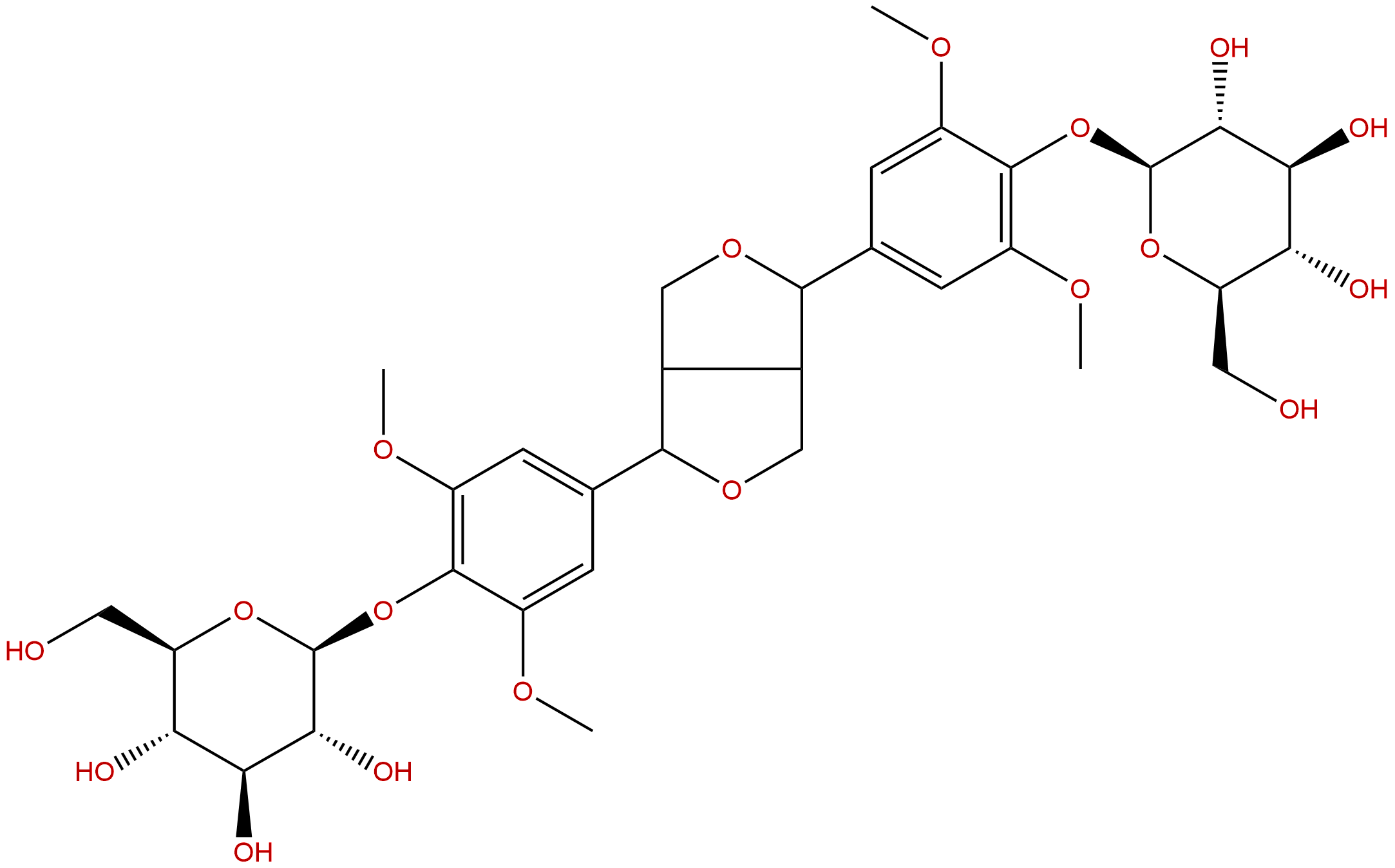


Product name: (-)-Syringaresinol di-O-glucoside
Synonym name:
Catalogue No.: BP3001
Cas No.: 66791-77-3
Formula: C34H46O18
Mol Weight: 742.724
Botanical Source:
Physical Description: Powder
Type of Compound: Lignans
Purity: 95%~99%
Analysis Method: HPLC-DAD or/and HPLC-ELSD
Identification Method: Mass, NMR
Packing: Brown vial or HDPE plastic bottle
The product could be supplied from milligrams to grams. Inquire for bulk scale.
We provide solution to improve the water-solubility of compounds, thereby facilitating the variety of activity tests and clinic uses.
For Reference Standard and R&D, Not for Human Use Directly.
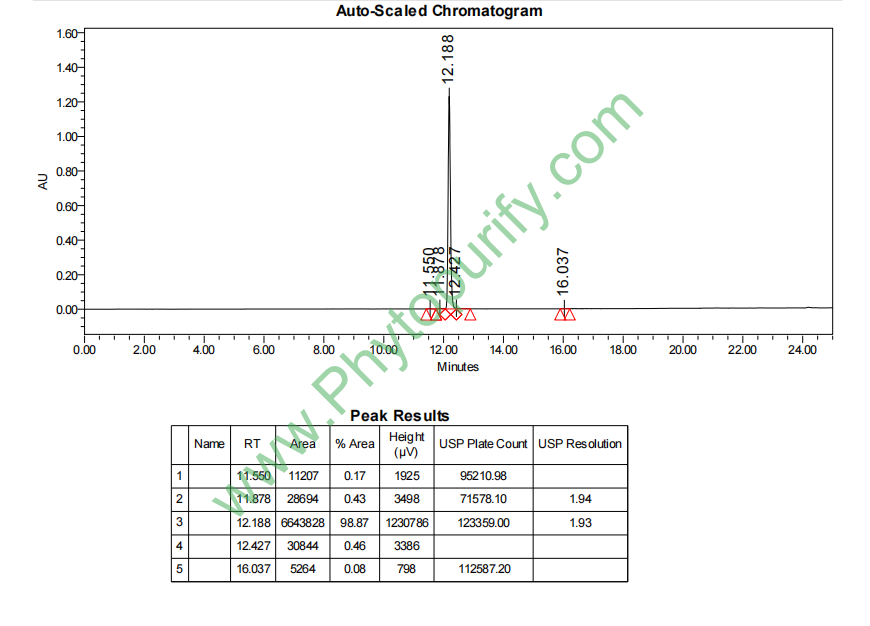
HPLC of (-)-Syringaresinol di-O-glucoside
Storage conditions:Short-term storage at 2~8℃, long-term storage at -20 ~ -80℃
254.1400
-.4502
-.4505
5.3743
.5615
.2323
Low
64.7933
5.1393
Yes
No
No
No
No
No
0.0
Yes
No
Yes
Yes
Natural products, as an important treasure trove for drug discovery and development, play an irreplaceable role in the history of human disease prevention and treatment. Lignin compounds are a class of secondary metabolites widely present in the plant kingdom, formed by the oxidative coupling of phenylpropanoid units. They have attracted much attention due to their structural diversity and wide range of biological activities. Among them, syringaresinol and its derivatives, as important members of the lignans family, exhibit multifaceted pharmacological potential. (-) - Syringinol di-O-glucoside (SDG), CAS number 66791-77-3, is a diglycoside compound formed by the 4,4 '- hydroxyl group of (-) - Syringinol and β - D-glucose. Compared to its aglycone, glycosylation modification can significantly improve its water solubility and bioavailability, and may endow it with new biological activities.
In recent years, with the deepening of research on plant estrogens and neuroendocrine regulators, SDGs have shown unique research value in the field of women's health, especially in the intervention of menopausal syndrome, due to their potential estrogen like activity and multi-target effects. Menopausal syndrome is a collection of physiological and psychological symptoms caused by ovarian dysfunction, fluctuations in estrogen levels, and eventual decline, involving multiple system disorders such as hot flashes, night sweats, emotional fluctuations, sleep disorders, osteoporosis, and increased cardiovascular risk. Although traditional hormone replacement therapy (HRT) is effective, long-term use may increase the risk of breast cancer, endometrial cancer and thrombosis, prompting researchers to seek safer alternatives or supplements. SDGs, as a naturally occurring compound, provide new molecular candidates for alleviating menopausal symptoms due to their antioxidant, anti-inflammatory, and potential estrogen receptor regulatory effects. This article aims to systematically review the chemical characteristics, plant sources, pharmacological activities, mechanisms of action, medicinal properties, and application prospects of SDGs in the field of menopausal syndrome.
The chemical name of (-) - syringaresinol diglucoside is (-) - syringaresinol-4,4 '- bis-O - β - D-glucopyranoside. Its molecular formula is C34H46O18, with a molecular weight of 742.7240 g/mol. Its core structure is the classic furan type lignin skeleton - (-) - eugenol, which is composed of two phenylpropanoid units (C6-C3) connected by a β - β 'bond (8.8' position) to form a tetrahydrofuran ring (7-O-9 'and 7' - O-9). Each benzene ring is connected to two methoxy groups (3,5- position) and one hydroxyl group (4- position) substituted by a glucose group. Two β - D-glucopyranosyl groups are connected to the phenolic hydroxyl groups at positions 4 and 4 'of the glycoside nucleus through glycosidic bonds, respectively.
The formation of glycosidic bonds profoundly affects their physicochemical properties. The calculated logarithm of the lipid water partition coefficient (LogP) is -0.4502, indicating that the compound has hydrophilicity, which is mainly attributed to the introduction of two hydrophilic glucose groups. Its topological polar surface area (TPSA) is as high as 254.140 Å ², further confirming its strong polarity characteristics. The predicted water solubility value is 5.3743 (usually measured in mg/mL or log mol/L, indicating moderate to high solubility), suggesting good solubility in aqueous media, which is beneficial for oral absorption and formulation development. However, the large molecular weight and extremely high polarity also pose challenges: predictions show that its blood-brain barrier (BBB) permeability is "low," meaning it may be difficult to directly enter the central nervous system to exert central target effects. In terms of early safety indicators, it is predicted that there is no hERG potassium channel inhibitory activity (low risk of arrhythmia), and the Ames test result is 0.0 (indicating no mutagenicity), providing preliminary positive signals for its safety.
SDGs are widely distributed in various medicinal and edible plants, and are one of the main storage and transportation forms of their glycoside (-) - syringaresinol in the plant body. Common plant sources include:
1. Araliaceae plants Like the five thorns(Eleutherococcus senticosus)Ginseng(Panax ginseng)SDGs are considered one of the important active ingredients in these "adaptogen" herbs, involved in regulating the body's stress response and energy metabolism.
2. Eucommia ulmoides Oliv: Eucommia ulmoides(Eucommia ulmoides)The bark and leaves of Eucommia ulmoides are rich in various lignans, among which SDG is one of the iconic components, related to its blood pressure lowering and bone strengthening effects.
3. Leguminous plants Like Astragalus membranaceus(Astragalus membranaceus)The existence of SDGs may be related to their immune regulation and antioxidant effects.
4. Other sources Trace amounts have also been detected in some grains (such as wheat bran), fruits, and vegetables.
The extraction of SDGs from plant materials usually uses solvent extraction method. Due to its high polarity, water, methanol, ethanol, or water alcohol mixed solutions of different proportions are commonly used as extraction solvents. For example, using a 70% -80% ethanol aqueous solution for hot reflux or ultrasound assisted extraction can effectively dissolve SDGs from plant tissues. Subsequently, enrichment and purification were carried out by column chromatography using macroporous adsorption resins (such as AB-8, D101, etc.). By utilizing the adsorption characteristics of the resin for glycoside compounds, gradient elution was performed with water and different concentrations of ethanol. SDGs are usually obtained in the elution fraction of low to medium concentrations of ethanol (such as 30% -50%). Further purification can be achieved through silica gel column chromatography, reverse phase silica gel (such as ODS) column chromatography, or high-performance liquid chromatography (HPLC) preparation techniques. Modern analysis and identification mainly rely on high-performance liquid chromatography-mass spectrometry (HPLC-MS/MS) and nuclear magnetic resonance (NMR) techniques, which confirm the glycosidic bond configuration by comparing or analyzing its NMR characteristic signals (such as aromatic ring methoxy proton signal, coupling constant of sugar end matrix to determine glycosidic bond configuration, etc.) with standard samples.
Numerous in vitro and in vivo pharmacological studies have shown that SDGs have multifaceted biological activities, laying a scientific foundation for their application in complex diseases such as menopausal syndrome.
Estrogen like activity and bone protective effect One of the core pharmacological activities of SDGs is their selective estrogen receptor modulator (SERM) like properties. Research has shown that SDGs can bind to estrogen receptors alpha (ER alpha) and beta (ER beta), but their binding affinity or activation effect may have tissue selectivity or receptor subtype preference. In the ovariectomy (OVX) rat model, SDG administration can partially alleviate the decrease in bone density caused by estrogen deficiency and inhibit the increase of bone turnover markers (such as urinary deoxypyridinoline). The mechanism may be related to activating the ER signaling pathway in osteoblasts and inhibiting osteoclast differentiation. This protective effect on bones, while avoiding the potential for excessive stimulation of the breast and endometrium by traditional estrogen, is the advantage of its application in preventing osteoporosis after menopause.
Antioxidant and anti-inflammatory effects SDGs and their glycosides exhibit significant antioxidant capacity, capable of clearing free radicals such as DPPH and ABTS, and enhancing the activity of intracellular antioxidant enzymes such as superoxide dismutase (SOD) and glutathione peroxidase (GSH Px). In inflammatory models, SDGs can effectively inhibit the production of inflammatory mediators induced by lipopolysaccharides (LPS) or cytokines. For example, it can downregulate the expression of nitric oxide (NO), prostaglandin E2 (PGE2), as well as pro-inflammatory factors such as tumor necrosis factor - α (TNF - α) and interleukin-6 (IL-6) in RAW 264.7 macrophages. This powerful antioxidant and anti-inflammatory ability helps alleviate chronic low-grade inflammation and oxidative stress damage associated with menopause, and is of great significance for cardiovascular and neuroprotection.
The regulatory role of the nervous and psychiatric system The common emotional disorders, anxiety, and sleep problems during menopause are closely related to dysfunction of the central monoamine neurotransmitter system (such as the serotonin system). Although SDGs have low BBB permeability, their metabolites may have an impact through peripheral central linkage mechanisms. Research has shown that SDGs or their glycosides can regulate emotion related targets, such as serotonin transporter (SLC6A4) and serotonin receptor (HTR1A, HTR2A). In animal behavior experiments, SDG extracts showed certain antidepressant and anti anxiety like effects. In addition, its antioxidant and anti-inflammatory effects also help protect neurons from oxidative damage and neuroinflammation, indirectly supporting neural function.
Cardiovascular protective effect The antioxidant and anti-inflammatory properties of SDGs directly benefit the cardiovascular system. It can improve endothelial function, inhibit the abnormal proliferation of vascular smooth muscle cells, and may play an anti atherosclerosis role by regulating lipid metabolism. These effects have positive implications for reducing the risk of cardiovascular disease in menopausal women.
Other activities The study also suggests that SDGs may have the potential to regulate aromatase (CYP19A1) activity, which is a key enzyme in estrogen synthesis and its regulation may affect local estrogen levels. In addition, its regulatory effect on the MAPK signaling pathway (such as MAPK1/ERK2) is also involved in the regulation of cell proliferation, differentiation, and apoptosis.
The multi system improvement effect of SDGs on menopausal syndrome stems from their networked regulation of multiple key molecular targets. Based on the provided target information, its mechanism of action can be summarized as follows:
Nuclear receptor targets: estrogen receptors (ESR1 and ESR2)SDGs, as a type of plant estrogen, can competitively bind to ER α (ESR1) and ER β (ESR2). ER β is more widely expressed in the cardiovascular system, bones, and brain, and its activation is often associated with anti proliferative and anti-inflammatory effects. SDGs may exhibit partial selective activation of ER β, simulating the beneficial effects of estrogen in the skeletal and cardiovascular systems, while producing weaker stimulating effects in tissues such as the breast and uterus, achieving SERM like effects. After binding with ER, SDGs can regulate downstream gene transcription, affecting cell cycle, apoptosis, and differentiation.
Core targets of inflammation and stress signaling pathways:
Neurotransmitter system targets:
Hormone metabolism and synthesis related targets:
In summary, SDGs form an intervention system for the complex pathological network of menopausal syndrome through multi-target and multi pathway synergistic effects: regulating endocrine homeostasis and protecting bones through ERs; By inhibiting NF - κ B, COX-2, and MAPK, it exerts anti-inflammatory and antioxidant effects, protecting the cardiovascular and nervous systems; Improving mood and sleep by regulating the 5-HT system.
Although SDGs exhibit excellent pharmacological activity, their pharmacological properties still require comprehensive evaluation.
Absorption, distribution, metabolism, excretion (ADME):
* absorb As a highly polar glycoside compound, the oral absorption of SDGs may be limited. It may be partially absorbed through sodium dependent glucose transporter 1 (SGLT1) or passive diffusion in small intestinal epithelial cells. However, the more important way may be hydrolysis by β - glucosidase secreted by gut microbiota, producing its aglycone (-) - syringol, which is more lipophilic and easily absorbed through passive diffusion. Therefore, the bioavailability of SDGs may depend on the metabolic conversion efficiency of gut microbiota.
* distribution The predicted BBB permeability is low, which limits its direct central distribution. But the distribution characteristics of its aglycones or other metabolites may be different. SDGs and their metabolites may be mainly distributed in tissues and organs with abundant blood supply, such as the liver and kidneys.
* Metabolism The metabolism of SDGs mainly includes: 1) deglycosylation reactions in the intestine and liver, generating glycosides; 2) Phase I metabolism (such as demethylation and hydroxylation) and phase II metabolism (glucuronidation and sulfation) of aglycones. The CYP450 enzyme system may be involved in its phase I metabolism.
* excretion Metabolites are mainly excreted through the kidneys with urine, and some prototype drugs and metabolites may also enter the intestine through bile and be excreted with feces.
Challenges and Strategies in Drug Development:
1. bioavailability The main challenge is the poor absorption of SDGs in the prototype. The strategy includes: developing delivery systems based on gut microbiota activation (such as probiotic compatibility); Prepare its liposomes, nanoemulsions, or phospholipid complexes to enhance permeability; Or directly study the preparation of its active metabolites (aglycones).
2. Targeted Low BBB permeability makes it difficult to directly target central targets such as 5-HT receptors. It is necessary to develop targeted delivery systems (such as brain targeted nanoparticles based on exosomes or receptor-mediated), or explore their feasibility of indirectly affecting central function through peripheral effects (such as anti-inflammatory and HPA axis regulation).
3. Stability Glycoside bonds may be unstable in acidic and enzymatic environments. The formulation process needs to consider coating or the use of stabilizers.
At present, there is still a relative lack of pharmacokinetic research data on the SDG system, and further in vivo and in vitro studies are needed to clarify its ADME characteristics and provide a basis for dosage form design and clinical administration regimens.
SDGs have broad application prospects in the comprehensive management of menopausal syndrome:
Future research directions should focus on:
* In depth mechanism research Using gene knockout animals, molecular docking, and reporter gene systems, accurately elucidate the interaction patterns and downstream signaling networks between SDGs, ER subtypes, and other targets.
* Systematic pharmacokinetic study Conduct animal and human ADME research to clarify its active forms, absolute bioavailability, major metabolic pathways, and tissue distribution.
* Innovation in formulation technology Develop new delivery systems to improve their bioavailability and targeting.
* High quality clinical research Design and implement randomized, double-blind, placebo-controlled clinical trials to rigorously evaluate the efficacy and long-term safety of SDGs for core symptoms of menopausal syndrome.
(-) - Lilac resin alcohol diglucoside, as a natural lignan glycoside compound, has shown great potential in alleviating the complex health problem of menopausal syndrome due to its unique chemical structure and multi-target pharmacological activity. It has beneficial effects on multiple systems such as bone, cardiovascular, neuropsychiatric, etc. by regulating estrogen receptors, inhibiting inflammation and oxidative stress, and affecting the neurotransmitter system. Despite facing challenges in terms of bioavailability and central targeting in drug development, these obstacles are expected to be gradually overcome with the in-depth analysis of its mechanism of action, the improvement of pharmacokinetic research, and the application of modern formulation technology. SDGs represent a successful example of discovering modern natural drug candidate molecules with "multi-component, multi-target" synergistic therapeutic properties from traditional medicinal plants. Its future development and application may not only provide a safe and effective natural therapy option for menopausal women, but also provide new ideas and scientific basis for complex disease intervention strategies based on natural products.
