Introduction/Overview
Natural products have always been an important source of drug discovery and development, and their diverse chemical structures and unique biological activities provide endless treasures for modern pharmacological research. Among numerous biologically active natural products, anthrone compounds have attracted much attention due to their significant pharmacological effects. Isobellidifolin, as a typical anthrone natural product, has gradually entered the field of researchers in recent years. This compound was initially isolated from certain specific plants, and its unique chemical skeleton endows it with diverse biological activities, particularly demonstrating remarkable potential in antioxidant and antifungal activities. With the deepening of research, the potential value of isodaidzein in the field of antiviral activity has also begun to be revealed. Its targets cover key proteins in the lifecycle of various viruses, indicating that it may become a lead compound with broad-spectrum antiviral activity. This article aims to systematically review the chemical structure, plant origin, pharmacological activity, mechanism of action, pharmacological characteristics, and clinical application prospects of daisies leaf gentian ketone, in order to provide comprehensive scientific basis for the in-depth research and development of this compound.
Chemical structure and physicochemical properties
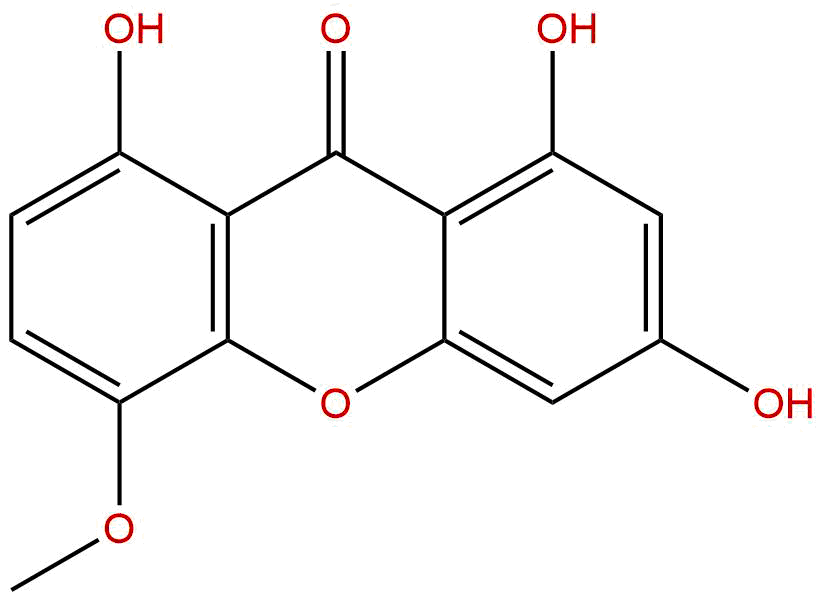
The chemical structure of Isobellidifolin belongs to the anthrone class compounds, and its core skeleton is composed of three benzene rings connected by a carbonyl group and a methylene group, forming a highly conjugated planar structure. This structural feature endows it with unique physicochemical properties and biological activity. Specifically, its molecular formula is C ₁₅ H ₁₄ O ₅, and its molecular weight is 274.2280 g/mol. Structurally speaking, the anthrone nucleus of isodaisies typically carries multiple hydroxyl substituents, which not only increase the polarity of the molecule but also provide hydrogen bonding sites for its interactions with biomolecules such as proteins and nucleic acids. Its LogP value is 1.9205, indicating that the compound has moderate lipid solubility, which helps it cross biofilms without being excessively lipophilic and resulting in poor water solubility. Its water solubility parameter is 0.1649 mg/mL, belonging to the category of slight solubility, which to some extent limits its bioavailability, but also suggests that its solubility can be improved through structural modification or formulation technology. The topological polar surface area (TPSA) is 100.1300 Å ², and it is generally believed that molecules with TPSA greater than 140 Å ² are difficult to penetrate the blood-brain barrier. The TPSA value of isodaidzein is lower than this threshold, but its blood-brain barrier penetration is evaluated as "low", which may be related to factors such as its molecular weight, the number of hydrogen bond donors/acceptors, and molecular flexibility. In addition, the inhibitory risk of this compound on hERG potassium ion channels is' no ', indicating a low risk of cardiac toxicity; The Ames test result is 1.2, indicating a low potential genetic toxicity risk, which lays a good safety foundation for it as a candidate drug.
Plant sources and extraction methods
Isodaidzein was originally derived from the Asteraceae plant daisy(Bellis perennis)It was separated from the middle, which is also the origin of its name. However, subsequent studies have found that this compound is not unique to daisies, but is widely present in various plants of the Gentianaceae and Asteraceae families. For example, in the genus Gentiana(Gentiana)Plants, such as Gentiana scabra(Gentiana lutea)And some Swertia species(Swertia)In plants, the presence of isodaidzein has also been detected. These plants usually grow at high altitudes or in specific geographical areas, and the accumulation of secondary metabolites in their bodies is closely related to environmental stress (such as ultraviolet radiation, low temperature, drought). As a part of the antioxidant defense system, isodaisies play an important role in these plants.
The traditional method for extracting gentian from daisies mainly relies on organic solvent extraction. Due to the moderate polarity of the compound, commonly used extraction solvents include methanol, ethanol, ethyl acetate, etc. Usually, dry plant materials are crushed and soaked or refluxed with methanol or ethanol at room temperature or heating conditions to obtain crude extracts. Subsequently, preliminary separation is carried out through liquid-liquid partitioning extraction (such as extraction with petroleum ether, chloroform, ethyl acetate, and n-butanol in sequence), and the components rich in isodaisies leaf gentian ketone are usually enriched in the ethyl acetate or n-butanol extraction layer. Further purification requires the help of modern chromatographic technologies, such as silica gel column chromatography, Sephadex LH-20 gel column chromatography, preparative high-performance liquid chromatography (Prep HPLC), etc. In silica gel column chromatography, gradient elution systems such as chloroform methanol or ethyl acetate methanol are commonly used; Sephadex LH-20 can effectively separate molecules based on their size and polarity. In recent years, with the promotion of green chemistry concepts, some new extraction techniques, such as ultrasound assisted extraction, microwave-assisted extraction, and supercritical fluid extraction, have also been attempted for the extraction of gentian from daisies. These methods have the advantages of high extraction efficiency, low solvent dosage, and short time, showing good application prospects.
Pharmacological activity research
antioxidant activity
One of the most notable pharmacological activities of daisies leaf gentian ketone is its strong antioxidant capacity. As a free radical scavenger, it can effectively neutralize various reactive oxygen species (ROS) and reactive nitrogen species (RNS), such as hydroxyl radicals (· OH), superoxide anions (O ₂⁻·), hydrogen peroxide (H ₂ O ₂), and peroxynitrite (ONOO ⁻). Its antioxidant mechanism is mainly attributed to the phenolic hydroxyl group in its molecular structure. These phenolic hydroxyl groups can provide hydrogen atoms to free radicals, thereby reducing them to stable molecules and converting themselves into relatively stable phenolic oxygen free radicals, thereby interrupting the chain reaction of free radicals. In vitro experiments have shown that isodaidzein exhibits significant activity in various antioxidant models such as DPPH, ABTS, FRAP, and even outperforms some classic antioxidants such as vitamin C and vitamin E. This powerful antioxidant activity makes it potentially valuable for the prevention and treatment of diseases related to oxidative stress, such as cardiovascular disease, neurodegenerative diseases, inflammation, and aging.
Antifungal activity
Isodaidzein also exhibits effective antifungal effects. Research has shown that it is effective against various pathogenic fungi, including Candida species(Candida spp.)、 Aspergillus genus(Aspergillus Spp.) and dermatophytes(Dermatophytes)All of them have inhibitory activity. Its antifungal mechanism may involve multiple aspects: firstly, it can disrupt the integrity of fungal cell membranes by inserting lipid bilayers into the cell membrane, altering membrane permeability and leading to the leakage of important substances (such as potassium ions and ATP) inside the cell, thereby killing fungal cells. Secondly, it may inhibit the synthesis of fungal cell walls, particularly interfering with the activity of chitin or β - glucan synthase, leading to structural defects in the cell wall and cell rupture. In addition, isodaidzein may induce the accumulation of ROS in fungal cells, triggering oxidative stress and leading to cell apoptosis or necrosis. Given the increasingly severe problem of fungal drug resistance in clinical practice, it is particularly important to develop natural antifungal drugs with new mechanisms of action. Isodaidzein is undoubtedly a candidate molecule worthy of further research.
Antiviral activity
In recent years, the antiviral activity of daisies leaf gentian ketone has attracted widespread attention. Research has shown that this compound has broad-spectrum antiviral potential, targeting key proteins in various viral replication cycles. For example, in the field of anti human cytomegalovirus (HCMV), it may target UL42 (DNA polymerase co protein) and UL54 (DNA polymerase), thereby inhibiting the replication of viral DNA. In the fight against herpes simplex virus (HSV), it may act on ICP27 (immediate early protein), TK (thymidine kinase), and gD (glycoprotein D), respectively, affecting virus gene expression, nucleotide metabolism, and virus adsorption/invasion processes. What is even more exciting is that isodaisies have shown potential in combating human immunodeficiency virus (HIV), with targets including CCR5 and CXCR4 (co receptors), HIV1-PR (protease), and INT (integrase). This means that it may exert anti HIV effects by blocking the entry of viruses into host cells, inhibiting the maturation of viral proteins, and preventing the integration of viral DNA into the host genome. In addition, it may also regulate the inflammatory response by inhibiting the activity of myeloperoxidase (MPO), thereby reducing tissue damage caused by viral infection. This multi-target mode of action not only endows it with broad-spectrum antiviral activity, but also reduces the risk of the virus developing drug resistance.
Mechanism of action and molecular targets
The pharmacological mechanism of daisies leaf gentian ketone is multi-layered and multi-target, with its core being the chemical properties of its anthrone nucleus and multiple phenolic hydroxyl groups. In terms of antioxidant activity, its mechanism is direct chemical clearance. Phenolic hydroxyl (- OH) serves as a hydrogen atom donor and reacts with free radicals (R ·) to generate stable semiquinone free radicals (ArO ·) and reducing products (RH). Semiquinone radicals are relatively stable and can undergo further dimerization or react with other antioxidants (such as glutathione) to be regenerated. This process effectively terminates the free radical chain reaction, protecting lipids, proteins, and DNA inside the cell from oxidative damage.
In terms of antifungal activity, its mechanism is more complex. Firstly, the planar aromatic ring structure of isodaidzein allows it to insert into the lipid bilayer of fungal cell membranes, interacting with the polar head and fatty acid tail of membrane phospholipids, disrupting membrane fluidity and integrity, leading to increased membrane permeability and leakage of intracellular substances. Secondly, it may interfere with cell wall assembly by inhibiting fungal cell wall synthases such as chitin synthase and β - (1,3) - glucan synthase. In addition, it can cause a sharp increase in ROS levels in fungal cells, leading to oxidative stress and cell apoptosis, by inhibiting mitochondrial respiratory chain complexes or inducing the release of metal ions such as iron ions.
In terms of antiviral effects, the mechanism of action of isodaidzein reflects its characteristics as a "multi-target" drug. Regarding the lifecycle of viruses, it can act on multiple critical nodes:
1. Virus adsorption and invasion By binding to the co receptors CCR5 or CXCR4 on the surface of host cells, the fusion of HIV virus with host cells is blocked; Or it can bind to the gD glycoprotein of HSV to prevent virus adsorption.
2. Virus gene expression and replication Inhibiting UL42 and UL54 of HCMV and interfering with the function of viral DNA polymerase complex; Inhibit the ICP27 of HSV and hinder the expression of early viral genes immediately; Inhibit HSV TK, interfere with viral nucleotide metabolism, and thus inhibit viral DNA synthesis.
3. Virus protein maturation and assembly Inhibit HIV1-PR, prevent the cleavage of viral Gag and Gag Pol oligomers, thereby producing immature, non infectious viral particles.
4. Viral genome integration Inhibiting the INT of HIV and preventing the integration of viral DNA into the host cell genome are key steps in establishing latent infection.
5. Host immune regulation Inhibit the activity of MPO, reduce the production of strong oxidants such as hypochlorous acid, thereby alleviating the excessive inflammatory response and tissue damage caused by viral infection.
This multi-target mode of action gives isodaidzein a unique advantage in antiviral therapy, as it can simultaneously inhibit multiple stages of virus replication and reduce the risk of drug resistance caused by single target mutations.
Evaluation of drug properties and pharmacokinetics
The evaluation of drug properties is a crucial step in determining whether natural products can be transported from the laboratory to clinical practice. The pharmacological parameters of isodaisies leaf gentian ketone show that it has some favorable characteristics, but there are also some challenges. Its molecular weight (274.23 Da) meets the requirement of Lipinski's Rule of Five for molecular weight less than 500. The LogP value (1.92) is moderate, indicating a relatively balanced lipid water partition coefficient, which is beneficial for oral absorption and transmembrane transport. Although TPSA (100.13 Å ²) is lower than 140 Å ², its blood-brain barrier penetration is evaluated as "low", which may mean that it is difficult to enter the central nervous system, which is an advantage for treating peripheral diseases but a disadvantage for central nervous system diseases. The inhibition risk of hERG is "no" and the Ames test result is 1.2, indicating a low risk of cardiac and genetic toxicity, which is a significant advantage of it as a candidate drug.
However, its water solubility (0.1649 mg/mL) is poor and belongs to the category of slight solubility, which may lead to low oral bioavailability. Pharmacokinetic studies (if available) may reveal its absorption, distribution, metabolism, and excretion (ADME) characteristics. Usually, anthrone compounds may undergo extensive phase II metabolism in the body, such as glucuronidation or sulfation, and are quickly cleared. In addition, further research is needed to determine whether its metabolites are active or toxic. To overcome the problems of poor water solubility and low bioavailability, various formulation strategies can be adopted, such as preparing cyclodextrin inclusion complexes, liposomes, nanoparticles, or solid dispersions. In addition, by introducing hydrophilic groups such as phosphate or amino acids into the molecule through prodrug design, its water solubility and oral absorption can also be improved. Overall, isodaidzein has a good safety profile, but its pharmacokinetic properties need to be thoroughly evaluated through systematic in vitro and in vivo experiments, supplemented by reasonable formulation methods, in order to fully unleash its therapeutic potential.
Clinical application prospects and prospects
Based on the various pharmacological activities of daisies leaf gentian ketone, its clinical application prospects are very broad. In the field of antioxidation, it can be developed as a dietary supplement or functional food ingredient for the prevention and auxiliary treatment of chronic diseases related to oxidative stress, such as atherosclerosis, diabetes complications, Alzheimer's disease, etc. In the field of antifungal therapy, given its unique mechanism of action and low risk of drug resistance, it is expected to be developed as a novel antifungal drug, especially for the treatment of invasive fungal infections caused by drug-resistant Candida or Aspergillus. It can be made into topical preparations (such as cream, ointment) to treat skin fungal infections, or administered intravenously for systemic fungal infections.
In the field of antiviral therapy, its broad-spectrum antiviral activity and multi-target mode of action make it an ideal lead compound for developing novel antiviral drugs. Especially for viruses such as HIV and herpes virus that are difficult to cure, developing antiviral drugs with new mechanisms is an urgent task. Isodaidzein can be used as a "multi-target" antiviral drug, either alone or in combination with existing antiviral drugs such as nucleoside reverse transcriptase inhibitors and protease inhibitors, to enhance efficacy, reduce dosage, and minimize the development of drug resistance. In addition, its anti-inflammatory activity (by inhibiting MPO) also makes it potentially valuable in the treatment of inflammatory diseases caused by viral infections such as viral pneumonia and myocarditis.
However, from laboratory discovery to clinical application, isodaidzein still faces many challenges. Firstly, it is necessary to establish efficient and economical extraction or synthesis processes to meet the demands of large-scale production. Secondly, systematic pharmacokinetic, toxicological, and pharmacodynamic studies are needed, especially to validate its in vivo efficacy and safety in animal models. Finally, preclinical and clinical studies need to be conducted to determine the optimal route of administration, dosage, and indications. In the future, by combining computer-aided drug design, structural modification, and modern formulation technology, it is expected to develop derivatives or analogues based on isodaidzein with higher activity and better pharmacokinetic properties.
Conclusion
As a natural anthraquinone compound, isodaidzein has gained a place in the field of natural product pharmacology due to its unique chemical structure and multifaceted pharmacological activities. It is not only an effective free radical scavenger and antioxidant, but also exhibits significant antifungal and broad-spectrum antiviral activity. Its targets cover multiple key stages of the virus replication cycle and the host's immune regulatory pathway. Its good safety features (low hERG inhibition risk, low genetic toxicity) provide favorable conditions for its drug development. Although there are still challenges in drug formulation, such as water solubility and bioavailability, these issues are expected to be resolved through structural modification and modern formulation techniques. In the future, with the continuous deepening of research, isodaisies and their derivatives are expected to play an important role in the fields of antioxidant, antifungal, and antiviral therapy, and contribute to human health. The study of it not only enriches our understanding of the chemical diversity and biological activity of natural products, but also provides valuable lead compounds for the development of new, efficient, and low toxicity drugs.