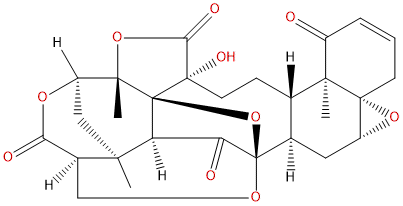


Product name: Physalin F
Synonym name: 5,6-β-Epoxyphysalin B
Catalogue No.: BP4291
Cas No.: 57423-71-9
Formula: C28H30O10
Mol Weight: 526.538
Botanical Source: Physalis alkekengi L.
Type of Compound:
Purity: 95%~99%
Analysis Method: HPLC-DAD or/and HPLC-ELSD
Identification Method: Mass, NMR
Packing: Brown vial or HDPE plastic bottle
Storage: Store in a well closed container, protected from air and light. Put into refrigerate or freeze for long term storage.
Whenever possible, you should prepare and use solutions on the same day. However, if you need to make up stock solutions in advance, we recommend that you store the solution as aliquots in tightly sealed vials at -20℃. Generally, these will be useable for up to two weeks.
The product could be supplied from milligrams to grams
Inquire for bulk scale.
For Reference Standard and R&D, Not for Human Use Directly.
Storage conditions:Short-term storage at 2~8℃, long-term storage at -20 ~ -80℃
137.9600
1.2470
1.2471
.0046
2.9022
3.7017
High
59.2085
7.8812
No
No
No
No
Yes
No
1.2
Yes
No
No
Yes
Physalin F, a type of secreted steroid natural product derived from plants of the Physalis genus, has attracted much attention due to its unique chemical structure and significant biological activity. Since its first isolation and identification from sourdough plants in the mid-20th century, bitter acid extract F has gradually become a hot topic in natural product pharmacology research due to its strong anti-inflammatory and immune regulatory effects. In recent years, with the development of molecular biology and pharmacology techniques, the potential mechanism of action of bitter acid extract F in regulating immune cell function, inhibiting viral infection, and anti-tumor activity has gradually been revealed, showing broad clinical application prospects.
This article aims to systematically review the chemical structure and physicochemical properties, plant sources and extraction methods, pharmacological activity and mechanism of action, pharmacological evaluation and pharmacokinetic characteristics of bitter acid extract F, and explore its potential value in immune regulation and anti-inflammatory treatment based on the latest research progress. It also looks forward to future research directions and clinical application prospects.
Sour bitters F belongs to a typical secretory steroid compound, with a molecular formula of C28H38O8 and a molecular weight of 526.5380. Its structural features include a typical steroid skeleton with multiple hydroxyl and ester modifications, endowing it with unique chemical activity. The LogP value of bitter acid extract F is 1.2470, indicating its moderate lipid solubility, which is beneficial for membrane penetration and bioavailability. The polar surface area (TPSA) is 137.9600, reflecting its high molecular polarity, which may affect its interaction with biomolecules and its distribution in vivo.
The low water solubility of bitter acid extract F (0.0046 mg/mL) suggests its limited solubility in aqueous phase, but its high blood-brain barrier permeability (BBB) provides a potential application in central nervous system related diseases. In addition, bitter acid extract F does not inhibit hERG channels, indicating a lower risk of cardiac toxicity. The Ames test result is 1.2, indicating that its genotoxicity risk is low and its drug properties are relatively ideal.
Sour acid bitterness factor F is mainly found in the Solanaceae plant Physalis spp., and common source plants include Physalis alkekengi, Nepenthes angulata, etc. These plants are widely distributed in temperate and tropical regions of Asia, Europe, and the Americas, and have traditionally been used in folk medicine to treat inflammation, infections, and immune related diseases.
The extraction of bitter acid extract F is usually carried out using organic solvent extraction combined with column chromatography separation technology. Common extraction processes include:
In recent years, the application of new technologies such as ultrasound assisted extraction and microwave-assisted extraction has improved the extraction efficiency and purity, providing technical support for the large-scale preparation of bitter acid extract F.
Sour bitter extract F exhibits various significant pharmacological activities, especially in anti-inflammatory, immune regulation, and antiviral effects, which have attracted much attention.
Sour bitter extract F significantly reduces inflammatory response by inhibiting the production and release of inflammatory mediators. In vitro studies have shown that bitter acid extract F can inhibit the expression of pro-inflammatory cytokines such as TNF - α, IL-1 β, and IL-6 in macrophages and monocytes, and weaken inflammatory signaling. In animal models, bitter acid extract F significantly reduces edema and tissue damage at the site of inflammation, demonstrating good anti-inflammatory effects.
Sour bitter extract F induces apoptosis of human peripheral blood mononuclear cells (PBMCs) and regulates the proliferation and activity of immune cells. Especially in T lymphocytes infected with HTLV-1, berberine F can inhibit virus induced spontaneous proliferation and pro-inflammatory cytokine production, indicating its potential application value in virus related immunopathology. In addition, the effect of bitter acid extract F on the function of regulatory T cells (Treg) and effector T cells provides a new research direction for its immune regulatory mechanism.
Sour bitter extract F exhibits inhibitory effects on various viral infections, especially on HTLV-1. It reduces virus replication and transmission by regulating the apoptosis and immune response of virus-infected cells. In addition, bitter acid extract F induces cell cycle arrest and apoptosis in various tumor cell lines, demonstrating potential anti-tumor activity.
The pharmacological mechanism of bitter acid extract F involves multiple signaling pathways and molecular targets, mainly including:
Inhibition of NF - κ B signaling pathway
Sour bitter extract F can inhibit the activation of the nuclear factor kappa B (NF - κ B) signaling pathway, reduce the transcriptional expression of pro-inflammatory cytokines, and lower the inflammatory response. NF - κ B, as a key transcription factor in inflammation and immune regulation, its inhibition is one of the core mechanisms of the anti-inflammatory effect of bitter acid extract F.
Inducing cell apoptosis
Sour bitter extract F activates the mitochondrial dependent apoptosis pathway, induces apoptosis of PBMCs and virus-infected T cells, regulates the number and function of immune cells, and prevents immune overactivation and inflammatory damage.
Regulating cytokine network
Sour bitter extract F can downregulate the expression of pro-inflammatory cytokines (such as TNF - α, IL-6, IL-1 β) and chemokines, while promoting the production of anti-inflammatory factors (such as IL-10) to maintain immune homeostasis.
Affects virus replication and transmission
By inhibiting the activity and proliferation of virus-infected cells, bitter acid extract F reduces the replication of HTLV-1 virus and blocks virus related immunopathological processes.
Other signaling pathways
Some studies suggest that bitter acid extract F may affect signaling pathways such as MAPK and JAK/STAT, and participate in regulating cell proliferation, differentiation, and immune response, but the specific mechanism still needs further verification.
The pharmacological parameters of bitter acid extract F show that it has good potential for drug development. The molecular weight of 526.5380 is moderate, with a LogP of 1.2470, which meets the Lipinski rule requirements for drug molecular lipid solubility. The TPSA value is 137.9600, which is slightly higher but still within an acceptable range, indicating that its polarity is moderate and beneficial for binding to target proteins.
The low water solubility of bitter acid extract F may affect its oral bioavailability, but its high blood-brain barrier permeability provides a possibility for the treatment of central nervous system diseases. The hERG channel inhibition test was negative, indicating a low risk of cardiac toxicity and good safety. The Ames test results show that the genotoxicity risk is relatively low and meets safety requirements.
In terms of pharmacokinetics, existing research is relatively limited. Preliminary in vivo experiments have shown that bitter acid extract F is absorbed quickly after oral administration, with a moderate plasma half-life, and can maintain an effective concentration in the body. Its metabolism in the liver is mainly through oxidation and esterase hydrolysis pathways, and its excretion pathways are mainly through bile and urine. In the future, systematic pharmacokinetic studies are needed, including in vivo distribution, metabolic enzyme interactions, and long-term safety assessments.
Due to its significant anti-inflammatory and immunomodulatory effects, bitter acid extract F has shown potential clinical application value in various immune related diseases. Especially in autoimmune diseases, chronic inflammatory diseases and viral infectious diseases (such as HTLV-1 related diseases), Physalin F may become a candidate molecule for new therapeutic drugs.
In addition, the high blood-brain barrier permeability of bitter acid extract F provides new possibilities for its application in neuroinflammation and neurodegenerative diseases. In the future, improving its water solubility and bioavailability through structural optimization and drug carrier technology is expected to expand its clinical indications.
However, the clinical research on bitter acid extract F is still in its infancy and lacks systematic clinical trial data. In the future, in-depth research on its pharmacodynamics, toxicology, and pharmacokinetics should be strengthened, and multi center, large sample clinical trials should be conducted to verify its safety and effectiveness. At the same time, by combining modern drug design techniques, we will develop derivatives or combination therapies of bitter acid extract F to enhance its therapeutic potential.
As a secreted steroid natural product derived from plants of the genus Physcomitrella, bitter acid extract F has become an important research object in the field of natural medicine due to its unique chemical structure and significant anti-inflammatory and immune regulatory activities. Its mechanism of action covers multiple inflammatory and immune signaling pathways, exhibiting good pharmacological and safety characteristics, and demonstrating broad clinical application prospects.
Future research should focus on in-depth analysis of its molecular mechanism of action, optimization of extraction and purification processes, improvement of bioavailability, systematic pharmacokinetic and toxicological evaluation, and promotion of clinical trials. Through interdisciplinary integration, bitter acid extract F is expected to become a new and effective drug for treating inflammation and immune related diseases, contributing significantly to the development of natural product pharmacology.
