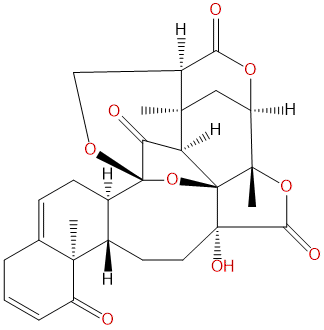


Product name: Physalin B
Synonym name:
Catalogue No.: BP4290
Cas No.: 23133-56-4
Formula: C28H30O9
Mol Weight: 510.539
Botanical Source: Physalis alkekengi L.
Type of Compound:
Purity: 95%~99%
Analysis Method: HPLC-DAD or/and HPLC-ELSD
Identification Method: Mass, NMR
Packing: Brown vial or HDPE plastic bottle
Storage: Store in a well closed container, protected from air and light. Put into refrigerate or freeze for long term storage.
Whenever possible, you should prepare and use solutions on the same day. However, if you need to make up stock solutions in advance, we recommend that you store the solution as aliquots in tightly sealed vials at -20℃. Generally, these will be useable for up to two weeks.
The product could be supplied from milligrams to grams
Inquire for bulk scale.
For Reference Standard and R&D, Not for Human Use Directly.
Storage conditions:Short-term storage at 2~8℃, long-term storage at -20 ~ -80℃
125.4300
1.5556
1.5556
.0049
2.3304
6.8585
High
66.9492
7.5090
No
No
No
No
Yes
No
0.9
Yes
No
Yes
Yes
Physalin B, as an important natural steroidal active ingredient, mainly exists in the genus Cape goodberry. In recent years, with the continuous advancement of natural product pharmacology, bitter acid extract B has received widespread attention due to its unique biological activity and potential anti-tumor effects. Its mechanism of action in regulating the cell cycle, inducing cancer cell apoptosis, and affecting proteasome pathways and autophagy provides important theoretical and experimental basis for the development of new anti-cancer drugs. This article aims to systematically review the latest research progress on the chemical structure and physicochemical properties, plant sources and extraction methods, pharmacological activity and mechanism of action, pharmacological evaluation, and clinical application prospects of bitter acid extract B, providing reference for scientific research and drug development in related fields.
The molecular formula of bitter acid extract B is C28H38O7, with a molecular weight of 510.5390 and a CAS number of 23133-56-4. Its structure belongs to steroid compounds, with a typical steroid skeleton connected to multiple hydroxyl and oxygen bridges, endowing it with unique biological activity. The LogP value of bitter acid extract B is 1.5556, indicating that it has moderate lipid solubility and is beneficial for membrane penetration. Its topological polar surface area (TPSA) is 125.43 Å ², reflecting that the molecule has certain polar groups that affect its binding ability to biological targets and pharmacokinetic characteristics. Low water solubility (0.0049 mg/mL) suggests limited solubility in water environment, which may affect oral bioavailability. It is worth noting that bitter acid extract B has a high blood-brain barrier penetration ability and does not exhibit hERG channel inhibitory activity. The Ames test result is 0.9, indicating a low risk of genotoxicity and good safety potential.
Sour acid bitterness extract B is mainly found in plants of the sour acid genus, especially in the fruit and stem and leaf parts of Cape goodberry (Physalis peruviana). This plant is widely distributed in South America and some parts of Asia, and has been extensively studied for its rich bioactive components and medicinal value. The extraction of bitter acid extract B is usually carried out by organic solvent extraction, and commonly used solvents include ethanol, methanol, and ethyl acetate. The extraction process generally includes drying and crushing plant materials, solvent extraction, filtrate concentration, and multi-stage chromatographic separation and purification. High performance liquid chromatography (HPLC) and mass spectrometry (MS) techniques are widely used for the qualitative and quantitative analysis of bitter acid extract B. In addition, the application of ultrasound assisted extraction and supercritical fluid extraction technologies in recent years has significantly improved extraction efficiency and purity, providing technical support for large-scale production.
The pharmacological activities of Physalin B mainly focus on the anti-tumor field, especially on breast cancer and colon cancer cells. In vitro cell experiments showed that Physalin B could induce cell cycle arrest and apoptosis of breast cancer cells by regulating p53 dependent pathway. This process involves changes in the expression of various cell cycle regulatory proteins, such as p21, Cyclin D1, etc., ultimately leading to cell cycle arrest in the G0/G1 phase or G2/M phase. In addition, bitter acid extract B has an inhibitory effect on the ubiquitin proteasome system in human colon cancer cells, interferes with protein degradation processes, induces incomplete autophagy reactions, and promotes cancer cell death. In addition to its anti-tumor activity, some studies have also reported that bitter acid extract B has biological activities such as anti-inflammatory and antioxidant effects, demonstrating its multi-target and multi pathway pharmacological properties.
The anticancer mechanism of bitter acid extract B is complex and diverse, mainly involving the following aspects:
P53 dependent cell cycle regulation and apoptosis induction
Bitter acid extract B can activate tumor suppressor protein p53, promote its transcriptional activity, regulate the expression of downstream target genes such as p21 and Bax, inhibit cell cycle related proteins, induce cell cycle arrest and mitochondrial pathway mediated apoptosis. This mechanism is particularly significant in breast cancer cells.
Inhibition of the ubiquitin proteasome pathway
Bitter acid extract B inhibits the ubiquitin proteasome system, blocking the degradation of abnormal proteins in cells, leading to an imbalance in protein homeostasis and promoting stress response and death in cancer cells. This mechanism has been validated in colon cancer cells.
Autophagy regulation
The autophagy response induced by bitter acid extract B is incomplete, manifested by the formation of autophagosomes but obstruction of autophagy flow, leading to the accumulation of toxic substances in cells and enhancing cell death signals. The regulation of autophagy interacts with the inhibition of the ubiquitin proteasome pathway, jointly promoting cell apoptosis.
Other signaling pathways
Although there is currently limited research, bitter acid extract B may also affect signaling pathways such as NF - κ B and MAPK, participating in the regulation of inflammatory response and cell survival. Future studies are expected to further reveal its multi-target mechanism of action.
The pharmacological parameters of bitter acid extract B show that it has good potential for drug development. Moderate LogP values and high blood-brain barrier permeability suggest that it may have advantages in the treatment of central nervous system diseases. Low hERG inhibitory activity reduces the risk of cardiac toxicity, and Ames test results indicate low genotoxicity and good safety. Although its low water solubility may affect oral absorption, its bioavailability can be improved through drug formulation optimization, such as nanocarriers, liposome encapsulation, etc.
At present, the pharmacokinetic study of bitter acid extract B is still in its preliminary stage. In vivo experiments have shown that it is widely distributed, with metabolism mainly carried out through the liver enzyme system, and excretion mainly through bile and urine. Moderate half-life, able to maintain effective blood drug concentration. Further systematic pharmacokinetic and toxicological studies are needed in the future to clarify its in vivo behavior and safe dosage range, laying the foundation for clinical application.
As a natural steroid anti-tumor active ingredient, Physalin B shows good anti-tumor potential, especially in the treatment of breast cancer and colon cancer. It overcomes the limitations of traditional single target drugs through synergistic effects of multiple targets and mechanisms. In the future, bitter acid extract B is expected to serve as a candidate molecule for novel anti-tumor drugs or be used in combination with existing chemotherapy drugs to improve treatment efficacy and reduce side effects.
In addition, the blood-brain barrier penetration ability of bitter acid extract B suggests its potential application value in neurological tumors or neurodegenerative diseases. Combining modern drug delivery technology, innovative treatment plans targeting the central nervous system are expected to be developed.
However, the clinical research on bitter acid extract B is still in its infancy and lacks systematic clinical trial data. In the future, it is necessary to strengthen its pharmacokinetics, toxicology, and clinical safety evaluation, optimize dosage form design, conduct multi center and multi-stage clinical trials, and verify its efficacy and safety.
As an important steroidal active ingredient in plants of the Suaeda genus, bitter acid extract B has become a hot topic in natural product pharmacology research due to its unique chemical structure and significant anti-tumor activity. It exhibits a multi-level and multi-target anti-cancer mechanism by regulating p53 dependent cell cycle arrest and apoptosis, inhibiting the ubiquitin proteasome pathway, and inducing incomplete autophagy. The drug efficacy evaluation shows that it has good safety and potential for drug development. In the future, with the deepening of pharmacokinetics and clinical research, bitter acid extract B is expected to become an important candidate molecule for the development of anti-tumor drugs, providing new strategies and ideas for cancer treatment. Continuous basic and applied research will drive it from the laboratory to clinical practice, benefiting a wide range of patients.
