

Storage conditions:Short-term storage at 2~8℃, long-term storage at -20 ~ -80℃
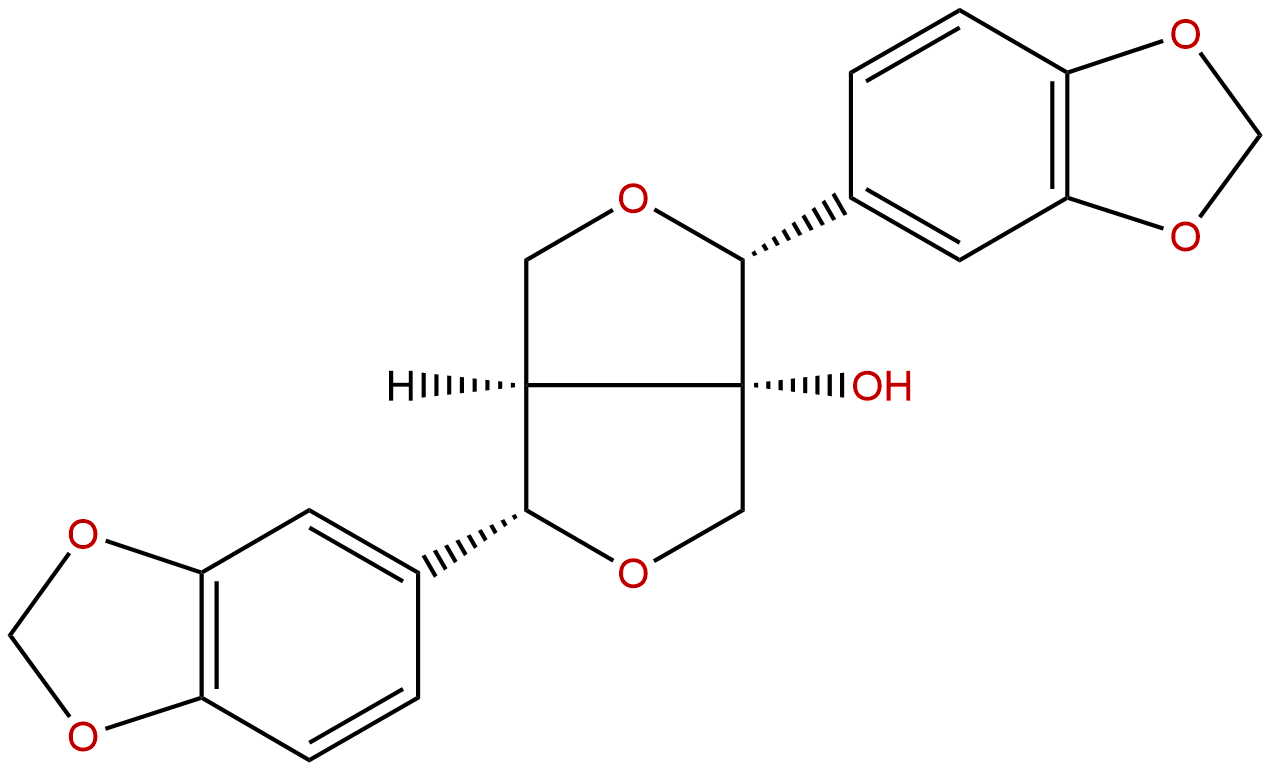
Paulownin, CAS number 13040-46-5, is an important natural product isolated from plants of the Paulownia genus. Paulownia plants have attracted much attention due to their rapid growth, excellent material quality, and medicinal value. Paulownin, as one of the main active ingredients in this genus of plants, has attracted extensive research in the field of pharmacology in recent years, especially showing significant potential in anti-inflammatory effects. Inflammatory response, as the core pathological process of various diseases, has a complex regulatory mechanism involving multiple cytokines and signaling pathways. Paulownin exhibits excellent anti-inflammatory activity by regulating various inflammation related targets, providing new ideas for the development of natural anti-inflammatory drugs.
This article will provide a systematic review of the chemical structure and physicochemical properties, plant sources, and extraction methods of paulownin, with a focus on analyzing its pharmacological activity and mechanism of action. Combined with pharmacological parameters, a comprehensive evaluation will be conducted to explore its clinical application prospects and future research directions, aiming to provide theoretical basis and reference for the deep development and application of paulownin.
The molecular formula of paulownin is C2H26O6, with a molecular weight of 370.3570, and it belongs to the terpenoid class. Its structural features mainly include terpenoid skeletons substituted with multiple hydroxyl groups, possessing certain polar functional groups that endow it with unique biological activity. The LogP value of paulownin is 1.8517, indicating that it has moderate lipid solubility and is conducive to cell membrane permeability. The topological polar surface area (TPSA) is 75.6100, indicating its strong ability to interact with polar molecules and its influence on drug absorption and distribution.
Low water solubility (0.0065 mg/mL) suggests limited solubility of paulownin in aqueous phase, which may affect its bioavailability. It is worth noting that paulownin has a high blood-brain barrier penetration ability, which provides the possibility for its potential application in central nervous system related diseases. In addition, paulownin did not exhibit hERG channel inhibition, reducing the risk of cardiac toxicity. The Ames test result was 0.9, indicating that its genotoxicity risk is low and has a certain safety basis.
Paulownia extract is mainly found in Paulownia spp., especially in the bark, leaves, and wood of Paulownia tomantosa and related species. Paulownia plants are widely distributed in East Asia and are widely planted due to their fast growth rate and medicinal value.
The extraction of paulownia extract usually adopts the method of organic solvent extraction combined with column chromatography separation. Common extraction solvents include ethanol, methanol, and ethyl acetate. The specific process is generally as follows: first, dry plant materials are crushed, repeatedly extracted with ethanol or methanol, and the extracted solution is concentrated and purified by silica gel column chromatography or high-performance liquid chromatography (HPLC) to obtain high-purity paulownin. In recent years, the application of ultrasound assisted extraction and microwave-assisted extraction technologies has improved extraction efficiency, reduced solvent usage, and promoted the industrial production of paulownin.
The pharmacological activity research of paulownia extract mainly focuses on its anti-inflammatory effect. Numerous in vitro and in vivo experiments have shown that paulownin can significantly inhibit the expression and release of various inflammatory mediators, reducing inflammatory responses.
Paulownin exhibits good anti-inflammatory effects by downregulating the expression of pro-inflammatory cytokines such as tumor necrosis factor alpha (TNF - α) and interleukin-6 (IL-6), inhibiting the activation of inflammatory signaling pathways. Animal model studies have shown that paulownin can alleviate symptoms of inflammatory diseases such as arthritis and inflammatory bowel disease, and reduce tissue damage.
In addition to anti-inflammatory effects, some studies have reported that paulownin has antioxidant, antibacterial, and neuroprotective effects. Its antioxidant activity is achieved by clearing free radicals and enhancing antioxidant enzyme activity, which helps alleviate cell damage caused by oxidative stress. The neuroprotective effect may be related to its good blood-brain barrier penetration, indicating its potential application value in neuroinflammation and neurodegenerative diseases.
The anti-inflammatory effect of paulownin involves multiple signaling pathways and molecular targets, mainly including:
In summary, paulownin exhibits broad-spectrum anti-inflammatory potential by synergistically regulating inflammatory responses through multiple targets and pathways.
The pharmacological parameters of paulownia extract indicate that it has certain potential for drug development. The moderate molecular weight (370.3570) and LogP (1.8517) comply with Lipinski's rule, indicating its good oral absorption capacity. The TPSA value of 75.6100 indicates a balance between cell membrane penetration and targeted binding of paulownin.
Low water solubility may limit its oral bioavailability, which needs to be improved through pharmaceutical formulation technologies such as nanocarriers and solid dispersions. The high blood-brain barrier permeability of paulownia provides advantages for its application in central nervous system diseases.
In terms of safety, paulownin did not exhibit hERG channel inhibition, reducing the risk of cardiac toxicity. The Ames test result is 0.9, indicating a low risk of genotoxicity and supporting its safety.
Pharmacokinetic studies are still in the preliminary stage, and the metabolic pathways and biotransformation mechanisms in vivo need further clarification. In the future, systematic ADME (absorption, distribution, metabolism, excretion) research and toxicological evaluation are needed to lay the foundation for clinical development.
Paulownin, as a natural anti-inflammatory active ingredient, has broad clinical application potential. Its multi-target anti-inflammatory mechanism is suitable for treating various inflammation related diseases, such as rheumatoid arthritis, inflammatory bowel disease, neuroinflammation, and chronic pain.
Future research should focus on the following aspects:
With the development of natural product pharmacology, paulownin is expected to become a new generation of safe and effective anti-inflammatory drugs, bringing good news to patients with inflammatory diseases.
Paulownin, as an important active ingredient in Paulownia plants, has shown broad prospects for drug development due to its unique chemical structure and multi-target anti-inflammatory mechanism. Its good pharmacokinetic parameters and low toxicity risk lay the foundation for further research and clinical application. In the future, through in-depth pharmacological mechanism interpretation, pharmacokinetic research, and clinical verification, paulownin is expected to become an important member of the field of natural anti-inflammatory drugs, promoting innovative development in the treatment of inflammatory diseases.
