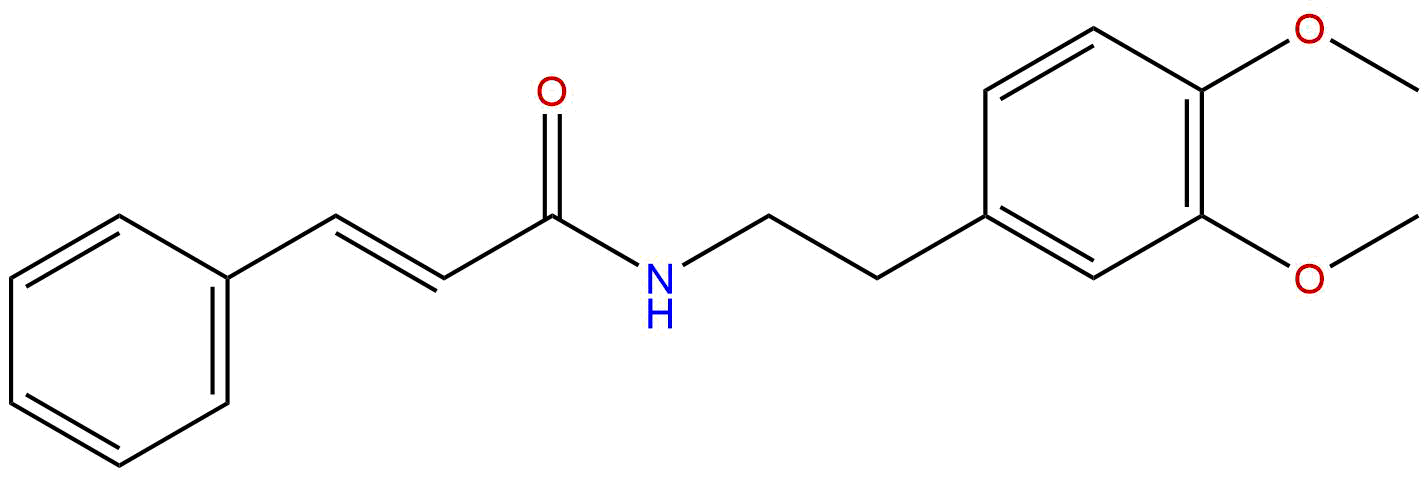


Product name: Lemairamin
Synonym name: (2E)-N-[2-(3,4-Dimethoxyphenyl)ethyl]-3-phenyl-2-propenamide
Catalogue No.: BP5403
Cas No.: 29946-61-0
Formula: C19H21NO3
Mol Weight: 311.381
Botanical Source:
Type of Compound: Alkaloids
Purity: 95%~99%
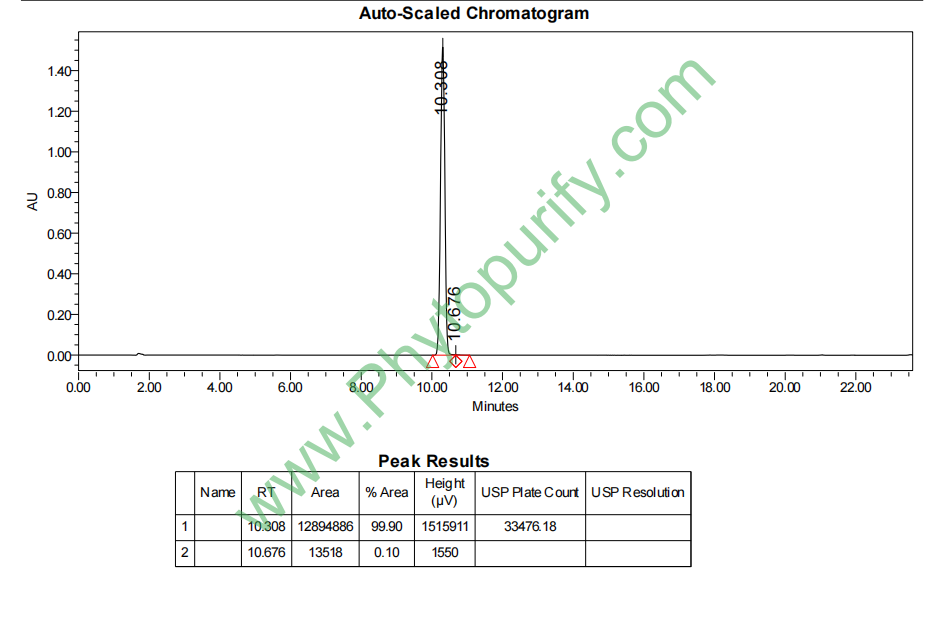
Analysis Method: HPLC-DAD or/and HPLC-ELSD
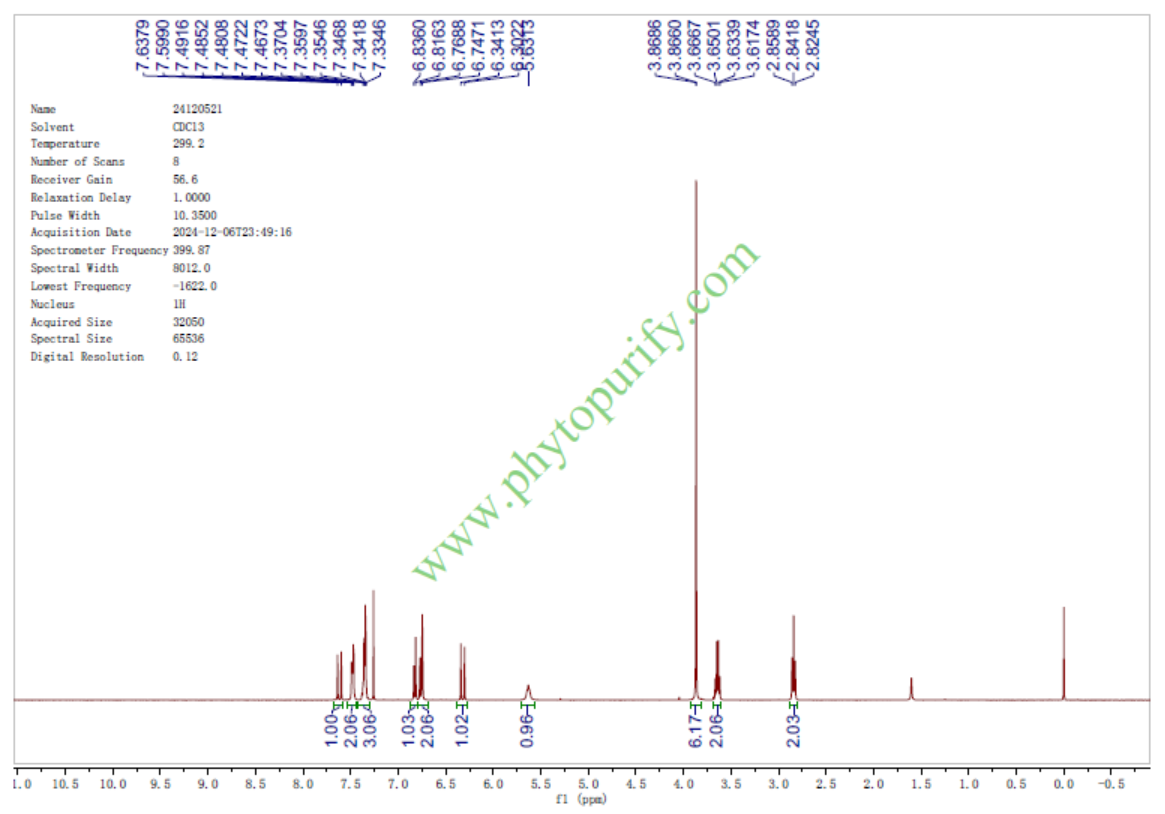
Identification Method: Mass, NMR
Packing: Brown vial or HDPE plastic bottle
Storage: Store in a well closed container, protected from air and light. Put into refrigerate or freeze for long term storage.
Whenever possible, you should prepare and use solutions on the same day. However, if you need to make up stock solutions in advance, we recommend that you store the solution as aliquots in tightly sealed vials at -20℃. Generally, these will be useable for up to two weeks.
The product could be supplied from milligrams to grams
Inquire for bulk scale.
For Reference Standard and R&D, Not for Human Use Directly.
HPLC of Lemairamin
HNMR of Lemairamin
Storage conditions:Short-term storage at 2~8℃, long-term storage at -20 ~ -80℃
47.5600
3.4436
3.4436
.0244
4.2107
37.3206
High
93.2637
1.7747
No
No
Yes
No
No
No
0.0
No
Yes
No
Yes
Natural products, as an important source of drug discovery, have played an indispensable role in the long history of human fight against diseases. One of the core tasks of modern medicinal chemistry and pharmacology research is to isolate, identify, and elucidate the active ingredients from traditional herbs. Lemairamin, derived from the Rutaceae plant genus Zanthoxylum(Zanthoxylum)In recent years, natural alkaloid compounds have attracted widespread attention from scholars at home and abroad due to their unique chemical structure and significant biological activity, especially their broad-spectrum antibacterial potential. Its CAS registration number is 29946-61-0, and its molecular formula is C ₁₈ H ₂₅ NO ₄, belonging to the quinolone alkaloid family.
Sichuan pepper extract originated from Sichuan pepper(Zanthoxylum bungeanum)It can be isolated from the roots, stems, and leaves of plants belonging to the same genus, and is one of the important active secondary metabolites in Sichuan pepper. Traditional Chinese medicine theory holds that Sichuan peppercorns have the effects of warming and relieving pain, killing insects and itching, while modern pharmacological research has confirmed that their extracts have various effects such as antibacterial, anti-inflammatory, analgesic, and anti-tumor. As a key active monomer, the study of Sichuan pepper extract not only helps to clarify the pharmacological substance basis of traditional Chinese medicine Sichuan pepper, but also provides new lead compounds for the development of new antibacterial drugs, especially in response to the increasingly severe problem of bacterial resistance.
At present, the incidence rate of infectious diseases caused by multi drug resistant bacteria (such as methicillin-resistant Staphylococcus aureus, MRSA) worldwide continues to rise, while the R&D pipeline of new antibiotics is relatively exhausted. Sichuan pepper extract exhibits inhibitory activity against various pathogenic microorganisms, including Staphylococcus aureus, Escherichia coli, and Candida albicans. Its targets involve key nodes such as bacterial DNA gyrase (GYRA/GYPB), cell division protein FtsZ, fatty acid synthase FabI, dihydrofolate reductase (DHFR), as well as fungal ergosterol synthase (ERG11) and resistance associated transporter protein (CDR1). This multi-target mode of action demonstrates unique advantages in overcoming the problem of resistance to traditional antibiotics with a single target. This article aims to systematically review the chemical structure, plant sources, extraction processes, pharmacological activities, mechanisms of action, pharmacological evaluation, and clinical application prospects of Sichuan pepper extract, in order to provide comprehensive academic references for the in-depth research and development of this natural product.
The chemical structure of Lemairamin belongs to tetrahydroquinolone alkaloids, and its core skeleton consists of a hydrogenated quinoline ring, a ketone group, and a long-chain alkyl side chain. Specifically, its structural features include a methyl or hydrogen atom attached to the nitrogen atom at position 1 of the quinoline ring, a carbonyl group at position 2, saturated carbon atoms at positions 3 and 4, and a hydroxyl group often attached to position 4. The most critical structural unit is an alkyl side chain containing ten carbon atoms (C ₁₀) attached to the 3rd or 4th position of the quinoline ring. This side chain is typically a trans configured alkene or saturated alkane and may have hydroxyl or carbonyl modifications. This "amphiphilic" structure composed of a polar quinolone core and a long-chain hydrophobic alkyl side chain is the structural basis for its ability to penetrate biological membranes and interact with various target proteins.
From the perspective of physicochemical properties, the molecular weight of Sichuan pepper extract is 311.3810 Da, which belongs to the category of small molecule compounds and meets the requirement of Lipinski's "Five Rules" for molecular weight less than 500. It has good potential for oral drug development. Its lipid water partition coefficient (LogP) is 3.4436, indicating that the compound has moderate lipid solubility, which is beneficial for its transmembrane transport and distribution in organisms. The topological polar surface area (TPSA) is 47.56 Å ², far below the threshold of 140 Å ², indicating good intestinal absorption and cell membrane permeability. However, the water solubility of Sichuan pepper extract is poor, only 0.0244 mg/mL, which to some extent limits its bioavailability and formulation development. It is worth noting that the blood-brain barrier penetration ability of this compound has been evaluated as "high", suggesting that it may have central nervous system activity, but at the same time, it may also pose potential neurotoxic risks that need to be addressed in subsequent research.
In terms of safety prediction, the risk assessment of hERG (human ether - à - go related gene) inhibition is "no", indicating that the risk of Sichuan pepper extract induced QT interval prolongation and apical torsion type ventricular tachycardia is low, which is an important safety advantage. In addition, the Ames test result was 0.0, indicating that it did not show significant mutagenicity in the bacterial recovery mutation test and had a low risk of genetic toxicity. Overall, Sichuan pepper extract has good drug like properties and preliminary safety characteristics, but its low water solubility and high blood-brain barrier penetration are key issues that need to be addressed through structural modification or formulation technology.
Zanthoxylum bungeanum mainly comes from the Rutaceae family and the genus Zanthoxylum(Zanthoxylum)Plants. There are approximately 250 species of this genus of plants worldwide, widely distributed in tropical and subtropical regions of Asia, Africa, America, and Oceania. In China, common species include Sichuan pepper(Z. bungeanum)Bamboo leaf Sichuan pepper(Z. armatum)Two sided needle(Z. nitidum)Wild Sichuan peppercorns(Z. simulans)Wait. Zanthoxylum bungeanum is distributed in the root bark, stem bark, fruit, and leaves of these plants, with higher levels typically found in the roots and stem bark. For example, the alkaloid components isolated from the roots of Zanthoxylum bungeanum contain Sichuan peppercorns. In addition, there are also reports of blood from the dragon's paw(Toddalia asiatica)The compound was isolated from closely related plants.
Traditional extraction methods often use solvent extraction. Given that Sichuan pepper extract belongs to alkaloids, its extraction is usually based on the principle of "acid extraction and alkali precipitation". The specific process is to soak or percolate the dried and crushed plant materials in an acidic aqueous solution (such as 0.5% -2% hydrochloric acid or sulfuric acid) to make the alkaloids salt and dissolve in water. After filtration, adjust the acidic extract with alkaline solution (such as ammonia or sodium hydroxide) to alkaline (pH 9-10) to allow the alkaloids to precipitate freely, and then extract with organic solvents (such as chloroform, ethyl acetate, or ether). After concentration, the crude extract of total alkaloids was obtained from the extraction solution.
In order to obtain high-purity Sichuan pepper extract monomers, modern chromatographic separation techniques need to be combined. Common methods include silica gel column chromatography, alumina column chromatography, preparative thin-layer chromatography, and high-performance liquid chromatography (HPLC). In silica gel column chromatography, gradient elution systems such as chloroform methanol or petroleum ether acetone are commonly used. Due to the coexistence of Zanthoxylum bungeanum with other structurally similar quinolone alkaloids (such as γ - Zanthoxylum bungeanum alkaloids, icariin alkaloids, etc.), the separation difficulty is relatively high. In recent years, new separation methods such as high-speed countercurrent chromatography (HSCCC) and molecular imprinting technology have also been applied to the purification of Sichuan pepper extract, significantly improving separation efficiency and purity. In addition, supercritical fluid extraction (SFE) technology, especially the use of carbon dioxide as a solvent, has also been attempted for efficient extraction of Sichuan peppercorns due to its advantages of green environmental protection, low extraction temperature, and no solvent residue, but the cost is relatively high.
Antibacterial activity is the core pharmacological effect of Sichuan pepper extract that has received the most attention and in-depth research. Numerous in vitro experiments have confirmed that Sichuan pepper extract exhibits inhibitory activity against various Gram positive bacteria, Gram negative bacteria, and fungi.
Antibacterial effect Sichuan pepper extract has a significant inhibitory effect on Staphylococcus aureus (including methicillin-resistant MRSA), with a minimum inhibitory concentration (MIC) typically ranging from 4-32 μ g/mL. It is equally effective against Gram positive bacteria such as Staphylococcus epidermidis and Bacillus subtilis. For Gram negative bacteria such as Escherichia coli, Pseudomonas aeruginosa, Salmonella, etc., Sichuan pepper extract also exhibits certain inhibitory activity, but usually has a higher MIC value than for Gram positive bacteria, which may be related to the complex outer membrane structure and lower permeability of Gram negative bacteria. Research has shown that Sichuan pepper extract can damage the integrity of bacterial cell membranes, leading to the leakage of intracellular substances and inhibiting the activity of key bacterial enzymes.
Antifungal effect Sichuan pepper extract also has inhibitory activity against pathogenic fungi such as Candida albicans, Cryptococcus neoformans, and Aspergillus fumigatus. Especially for fluconazole resistant Candida albicans strains, Sichuan pepper extract can still maintain activity, demonstrating its potential to overcome fungal resistance. Its antifungal mechanism is related to the inhibition of ergosterol synthesis and the destruction of fungal cell walls.
Sichuan peppercorn extract is commonly used in traditional Chinese medicine to treat inflammation and pain. Modern pharmacological research has confirmed that Sichuan pepper extract can significantly inhibit the release of nitric oxide (NO), prostaglandin E2 (PGE2), as well as pro-inflammatory factors such as tumor necrosis factor - α (TNF - α) and interleukin-6 (IL-6) in macrophages induced by lipopolysaccharide (LPS). The mechanism may be related to the inhibition of the activation of nuclear factor kappa B (NF - κ B) and mitogen activated protein kinase (MAPK) signaling pathways. In animal models, Sichuan peppercorn extract can effectively alleviate carrageenan induced toe swelling in rats and acetic acid-induced writhing response in mice, demonstrating clear anti-inflammatory and analgesic effects.
In recent years, research has also revealed the anti-tumor potential of Sichuan pepper extract. In vitro experiments showed that zanthoxylin had a proliferation inhibitory effect on many tumor cell lines, such as human liver cancer cell (HepG2), human lung cancer cell (A549), and human breast cancer cell (MCF-7). Its mechanism involves inducing cell cycle arrest (such as G0/G1 phase arrest), activating mitochondrial pathway for apoptosis (Caspase-3/9 activation, upregulation of Bax/Bcl-2 ratio), and inhibiting tumor cell migration and invasion. In addition, Sichuan pepper extract has been found to reverse multidrug resistance (MDR) in tumor cells, which may be related to its ability to inhibit the function of efflux transporters such as P-glycoprotein (P-gp).
In addition to the aforementioned activities, Sichuan pepper extract has also been reported to have antioxidant, antiplatelet aggregation, local anesthetic, and insecticidal effects. These diverse pharmacological activities make it a highly valuable natural product multi-target drug candidate molecule for development.
The pleiotropic pharmacological activity of Sichuan pepper extract originates from its ability to interact with multiple biomolecule targets. According to existing research, its antibacterial mechanism is particularly complex, involving multiple key targets, which is highly consistent with its characteristic of "multi-target" action as a natural product.
Target 1: DNA gyrase (GYRA/GYPB) and topoisomerase IV DNA gyrase (composed of GyrA and GyrB subunits) is a key enzyme in bacterial DNA replication, responsible for introducing negative supercoils. Zanthoxylum bungeanum has been found to bind to the GyrA subunit, inhibiting its cleavage recombination activity and thus hindering DNA replication. This is similar to the mechanism of action of fluoroquinolone antibiotics, but Sichuan pepper extract may have different binding sites, making it still effective against certain fluoroquinolone resistant strains. Meanwhile, there may also be an inhibitory effect on the ATPase activity of GyrB subunit (GYPB).
Target 2: Cell division protein FtsZ FtsZ is a key protein that forms the Z-ring during bacterial cell division and is a popular target for the development of new antibacterial drugs. Research has shown that Sichuan pepper extract can bind to FtsZ, interfere with its polymerization and GTPase activity, thereby disrupting the formation of the Z ring and ultimately inhibiting bacterial cell division. This mechanism enables it to have a killing effect on bacteria in a quiescent state, which is an advantage that many traditional antibiotics do not possess.
Target 3: Acyl Acyl Carrier Protein Reductase (FabI)FabI is a key rate limiting enzyme in the bacterial fatty acid synthesis pathway (FAS II). Sichuan pepper extract can inhibit the activity of FabI, block the synthesis of bacterial cell membrane phospholipids, and lead to the destruction and dysfunction of cell membrane structure. This has the same target as Triclosan, but the structural differences of Sichuan pepper extract may allow it to evade resistance caused by certain FabI mutations.
Target 4: Dihydrofolate reductase (DHFR)DHFR is a key enzyme in the folate metabolism pathway, crucial for the synthesis of nucleotides and amino acids. Sichuan pepper extract has an inhibitory effect on bacterial DHFR, thereby interfering with bacterial nucleic acid synthesis. This is similar to the mechanism of action of trimethoprim.
Antifungal target For fungi, the main targets of Sichuan peppercorn include: 1)ERG11/CYP51A1 Encoding lanosterol 14 α - demethylase, it is a key enzyme in ergosterol synthesis. Zanthoxylum bungeanum inhibits the activity of this enzyme, leading to a decrease in ergosterol content on fungal cell membranes and the accumulation of toxic intermediates, thereby disrupting cell membrane function. 2)CDR1 Encode the multidrug resistant efflux pump of Candida albicans. Sichuan pepper extract can inhibit the function of CDR1, thereby increasing the drug concentration in fungal cells and reversing their resistance to azole drugs.
In summary, Sichuan pepper extract forms a synergistic antibacterial network with multiple targets and pathways by simultaneously acting on multiple key pathways such as DNA replication, cell division, fatty acid synthesis, folate metabolism, and cell membrane synthesis. This mode of action not only enhances its antibacterial efficacy, but more importantly, greatly reduces the probability of pathogenic bacteria developing drug resistance, as mutations in a single target are difficult to completely counteract the simultaneous inhibition of multiple targets.
Based on the aforementioned physical and chemical properties and preliminary safety data, Sichuan pepper extract shows certain potential for medicinal use, but there are also obvious shortcomings.
Advantage:
1. Moderate molecular weight:311 Da, Meets the requirements for oral medication.
2. Good fat solubility:LogP 3.44, Beneficial for transmembrane absorption.
3. Low hERG risk Low risk of cardiac toxicity.
4. Low genetic toxicity Ames test negative.
5. Multi-target effect Beneficial for overcoming drug resistance and may have a synergistic effect.
Disadvantages and challenges:
1. Very poor water solubility:0.0244 mg/mL, This severely limits its oral bioavailability and the possibility of intravenous administration. This is the biggest obstacle facing the development of its medicinal properties.
2. High blood-brain barrier penetrability Although beneficial for treating central nervous system infections, it also increases the risk of central neurotoxicity, such as dizziness, drowsiness, and even nerve excitement.
3. Metabolic stability unknown At present, there is insufficient research on the specific metabolic pathways, enzymes (such as CYP450), and metabolites of Sichuan pepper extract in the body. Whether it has key pharmacokinetic parameters such as first pass effect and half-life remains to be clarified.
4. Protein binding rate The binding rate between it and plasma proteins has not been reported in detail, which directly affects its free drug concentration and efficacy.
Prospects of pharmacokinetics (ADME):
Based on its physicochemical properties, it can be inferred that Sichuan peppercorn extract may be absorbed through passive diffusion in the gastrointestinal tract, but low water solubility can lead to incomplete absorption and significant individual differences. After entering the bloodstream, due to its high lipid solubility, it may be widely distributed in tissues and easily accumulate in adipose tissue. Its metabolism may mainly be mediated by the CYP450 enzyme system in the liver through oxidation or reduction reactions, and metabolites may be excreted through bile or kidneys. To improve its pharmacokinetic properties, future research directions should include:
- Prodrug design Introducing hydrophilic groups such as phosphate, amino acid, or sugar groups onto the hydroxyl or nitrogen atoms of Sichuan pepper extract to make prodrugs, improving water solubility, and releasing the original drug after enzymatic hydrolysis in vivo.
- Formulation technology Modern formulation technologies such as nanocrystals, liposomes, cyclodextrin inclusion complexes, and solid dispersions are used to improve their solubility and dissolution rate, thereby enhancing oral bioavailability.
- Structural modification On the basis of retaining its core pharmacophore, modify the side chains or mother nucleus to reduce blood-brain barrier penetration or improve metabolic stability.
As a natural product with multi-target antibacterial activity, Sichuan pepper extract has broad clinical application prospects, especially in addressing the current crisis of antibiotic resistance, and has unique value.
1. Development of new antibacterial drugs:
The most direct application prospect of Sichuan pepper extract is as a lead compound to develop new antibacterial drugs against multidrug-resistant bacteria such as MRSA, vancomycin resistant Enterococcus VRE, and carbapenem resistant Escherichia coli CRE. Its multi-target mechanism of action makes it less likely to induce drug resistance and has no cross resistance with traditional antibiotics. In the future, we can focus on the development of topical agents (ointment, cream, gel) for local infection (such as skin and soft tissue infection, burn wound infection) to avoid its low oral bioavailability. Meanwhile, through structural optimization and formulation methods, it is expected to develop oral or injectable formulations for the treatment of systemic infections.
2. Supplement of antifungal drugs:
Given the activity of Sichuan pepper extract against Candida albicans, especially drug-resistant strains, and its ability to inhibit the function of efflux pump CDR1, it can be developed as a synergistic agent for azole antifungal drugs such as fluconazole, and developed into a compound formulation for the treatment of refractory fungal infections such as invasive Candida albicans.
3. Anti inflammatory and analgesic applications:
Based on its clear anti-inflammatory and analgesic activities, Sichuan pepper extract or its derivatives can be developed as drugs for the treatment of chronic inflammatory diseases (such as arthritis, colitis) or pain management. Its local anesthetic effect also suggests that it can be used to develop products such as oral ulcer masks and hemorrhoid creams.
4. Applications in the field of agriculture:
Sichuan pepper extract also has potential as a plant-based pesticide. Its antibacterial and insecticidal activities can be used to develop low toxicity and environmentally friendly natural pesticides for the prevention and control of crop diseases and pests, which is in line with the development trend of green agriculture.
Future research directions:
- In depth mechanism research Using structural biology, chemical biology and other methods, accurately analyze the binding modes of Sichuan pepper extract with various targets (such as GyrA, FtsZ, FabI), providing a basis for structure based drug design.
- Pharmacokinetic study of the system Conduct research on absorption, distribution, metabolism, and excretion (ADME) in animals, clarify their metabolic pathways and metabolites, and evaluate their in vivo exposure and toxicity.
- toxicological evaluation Conduct systematic acute, subchronic, and chronic toxicity experiments, particularly to evaluate central nervous system toxicity and liver toxicity, and determine safe dose ranges.
- Structure Activity Relationship (SAR) Study Synthesize a series of Sichuan pepper extract analogues, systematically study the relationship between their chemical structure, antibacterial activity, selectivity, and pharmacokinetic properties, and search for candidate compounds with stronger activity, lower toxicity, and better pharmacokinetic properties.
- clinical trial After completing sufficient preclinical research, promote the clinical trials of Sichuan pepper extract or its derivatives to verify their safety and efficacy in humans.
Lemairamin, as a natural quinolone alkaloid derived from traditional Chinese medicine Sichuan pepper, has shown significant academic value and application potential in the field of natural product medicine research due to its unique chemical structure and multi-target pharmacological mechanism of action. This article systematically reviews the research progress in chemistry, botany, pharmacology, mechanisms, and drug properties. The synergistic inhibitory effect of Sichuan pepper extract on multiple key targets such as bacterial DNA gyrase, FtsZ, FabI, DHFR, and fungal ERG11, CDR1 is the structural basis for its broad-spectrum antibacterial activity and low resistance tendency, providing new ideas for addressing the global antibiotic resistance crisis.
However, the development of Sichuan peppercorn extract also faces severe challenges, especially its extremely low water solubility and potential high blood-brain barrier penetration, which seriously restrict its medicinal properties. Future research should focus on overcoming these bottlenecks through prodrug design, novel formulation technologies, and structural modifications of systems. At the same time, in-depth toxicological evaluation and pharmacokinetic studies are the necessary steps to promote its clinical application.
In summary, Sichuan pepper extract is a highly promising natural product lead compound. The transformation from the active ingredients of traditional Chinese medicine to modern innovative drugs requires collaborative efforts from multiple disciplines such as chemistry, biology, pharmacology, and pharmacy. With the continuous deepening of research, Sichuan pepper extract and its derivatives are expected to become new drugs for combating drug-resistant bacterial infections, inflammatory diseases, and even tumors in the future, contributing to human health. The continuous and systematic research on it is not only the inheritance and promotion of the wisdom of traditional Chinese medicine, but also a vivid practice of "new use of old drugs" and "innovation of natural products" in the field of modern drug discovery.
