| Catalog No | Package | Original Price | Price | Inventory | Quantity | Operating |
|---|---|---|---|---|---|---|
| SBP00954-5mg | 5mg | $420.00 | Sign in |
|


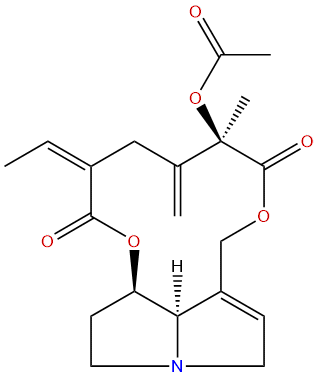
Product name: Seneciphyllinine
Synonym name: Acetylseneciphylline
Catalogue No.: SBP00954
Cas No.: 90341-45-0
Formula: C20H25NO6
Mol Weight: 375.421
Botanical Source: Gynura segetum (Lour.)Merr.
Physical Description:
Type of Compound: Alkaloids
Purity: 95%~99%
Analysis Method: HPLC-DAD or/and HPLC-ELSD
Identification Method: Mass, NMR
Packing: Brown vial or HDPE plastic bottle
Storage: Store in a well closed container, protected from air and light. Put into refrigerate or freeze for long term storage.
Whenever possible, you should prepare and use solutions on the same day. However, if you need to make up stock solutions in advance, we recommend that you store the solution as aliquots in tightly sealed vials at -20℃. Generally, these will be useable for up to two weeks.
The product could be supplied from milligrams to grams
Inquire for bulk scale.
For Reference Standard and R&D, Not for Human Use Directly.
Storage conditions:Short-term storage at 2~8℃, long-term storage at -20 ~ -80℃
82.1400
1.0887
1.0114
.8211
3.8680
10.8407
High
41.8010
5.0731
Yes
Yes
No
No
Yes
No
0.6
Yes
Yes
Yes
Yes
Natural products, as an important source of drug discovery, play an indispensable role in the history of human struggle against diseases. However, while nature endows certain compounds with significant pharmacological activity, it often comes with significant toxicity that cannot be ignored. Pyrrolizidine alkaloids (PAs) are a type of natural product that combines biological activity and potential harm. They are widely distributed in the genus Senecio(Senecio)The genus Ligustrum(Ligularia)Chrysanthemum and Panax notoginseng genus(Gynura)Among various plants, it is known for its significant hepatotoxicity and is one of the main environmental factors leading to irreversible liver damage in humans and livestock, such as hepatic sinus obstruction syndrome (HSOS). However, the complex chemical structure and diverse biological activities of PAs, especially their potential anti-tumor effects, have long attracted the attention of medicinal chemists and pharmacologists.
Acetylated Seneciphylline is a prominent member of the pyrrolizidine alkaloid family. Its CAS number is 90341-45-0, and it is a traditional medicinal plant derived from chrysanthemum and Panax notoginseng(Gynura japonica Natural compounds isolated from the roots of Panax notoginseng (also known as "Tu San Qi" or "Jin Bu Huan"). Jusanqi is often used in folk medicine to treat traumatic injuries, stop bleeding and remove blood stasis, but its liver toxicity risk has also been frequently reported, which is closely related to the PAs components it contains. Acetylated camptothecin, as a representative component, is characterized by its chemical structure with acetylated side chains attached to its core pyrrolizidine nucleus. This structural modification may have a profound impact on its biological activity, toxicity, and pharmacokinetic properties.
In recent years, with the deepening of research on the anti-tumor activity of natural products, the potential medicinal value of acetylated camptothecin has gradually emerged. Preliminary studies have shown that the compound exhibits certain cytotoxicity towards multiple tumor cell lines, and its mechanism of action may involve the regulation of multiple key signaling pathways and molecular targets, including anti apoptotic proteins MCL1 and BCL2, transcription factor STAT3, matrix metalloproteinase MMP2, topoisomerase TOP1/TOP2A, hypoxia inducible factor HIF1A, mitogen activated protein kinase MAPK1, estrogen receptor ESR1, and aromatase CYP19A1. These targets are widely involved in key biological processes such as tumor cell proliferation, apoptosis, invasion, metastasis, angiogenesis, and hormone metabolism, suggesting that acetylated camptothecin may have a multi-target and multi pathway anti-tumor mode of action.
However, like all PAs, the hepatotoxicity of acetylated camptothecin is the biggest obstacle it faces from laboratory to clinical application. The double bonds and ester groups in its molecular structure are key pharmacophores that produce toxicity. After being metabolized and activated by the cytochrome P450 enzyme system in vivo, pyrrole metabolites with strong electrophilicity can be generated, which can then covalently bind with biomolecules such as proteins and DNA, leading to liver cell damage, necrosis, and even inducing liver cancer. Therefore, while exploring its anti-tumor potential, it is necessary to conduct in-depth and cautious research on its toxicity mechanism, structure-activity relationship, and possible attenuation strategies.
This article aims to provide a systematic review of the current research status of acetylated camptothecin. The article will first introduce its chemical structure and physicochemical properties, followed by an explanation of its plant origin and extraction methods. The focus will be on sorting out its pharmacological activities in anti-tumor and other aspects, and exploring its potential mechanisms of action and molecular targets in depth. On this basis, the pharmacological parameters and pharmacokinetic characteristics of this natural product will be evaluated, and finally, the clinical application prospects and challenges faced will be discussed, in order to provide comprehensive reference for the subsequent research of this natural product with "double-edged sword" characteristics.
Acetylated camptothecin belongs to the macrocyclic diester pyrrolizidine alkaloid family, and its chemical structure is the basis for understanding its biological activity and toxicity. Its core skeleton is composed of a saturated or slightly unsaturated pyrrolizidine bicyclic ring (i.e. two pyrrolidine rings fused together), which is a common feature of all PAs. In acetylated camptothecin, there is a double bond between the 1st and 2nd positions of this double ring, forming an important toxic structural unit - the necine base (camptothecin type). The C7 and C9 hydroxyl groups of this base are bridged by an eleven membered macrocyclic lactone formed by a dicarboxylic acid (usually gibberellic acid or its derivatives), forming its macrocyclic diester structure. Its uniqueness lies in the fact that a hydroxyl group on the side chain of the macrocyclic lactone is replaced by an acetyl group (- COOCH3), and this acetylation modification is a key structural feature that distinguishes it from other analogues such as camptothecin.
From the perspective of physical and chemical properties, the molecular formula of acetylated camptothecin is C ₂₀ H ₂₅ NO ₇, with a molecular weight of 375.4210 g/mol. Its lipid water partition coefficient LogP is 1.0887, indicating that the compound has a certain degree of lipophilicity, but also moderate hydrophilicity, which allows it to cross biofilms to a certain extent and maintain a certain solubility in aqueous environments. Its water solubility parameter is 0.8211 mg/mL, which belongs to the slightly soluble level. The polar surface area (TPSA) is 82.1400 Å ², which is relatively high and usually indicates that the molecule has good oral bioavailability potential, but it may also affect its transmembrane transport. It is worth noting that its blood-brain barrier (BBB) penetration is predicted to be "high", indicating that the compound may enter the central nervous system, which may bring potential for treating central nervous system diseases and increase the risk of neurotoxicity. In addition, the predicted result of hERG inhibition is' no ', indicating a lower risk of inducing QT interval prolongation and arrhythmia in the heart. The Ames test result is 0.6, which is a critical value between negative and positive, indicating that it may have potential genetic toxicity and requires further experimental verification. These physicochemical parameters and predicted drug properties provide important references for subsequent pharmacological research and drug design.
The main plant source of acetylated camptothecin is the chrysanthemum and Panax notoginseng plants in the Asteraceae family - Chrysanthemum and Panax notoginseng(Gynura japonica (Thunb.) Juel.)。 This plant is widely distributed in China, Japan, and Southeast Asia. Its rhizome is known as "Tu Sanqi" or "Ju Ye Sanqi" in traditional medicine and is commonly used to treat bleeding, bruising, and pain. However, the hepatotoxicity of Jusanqi has been widely confirmed, and its toxic components mainly consist of various pyrrolizidine alkaloids contained in it, among which acetylated camptothecin is one of the components with high content and strong activity. In addition, in some other species of the Qianli genus(Senecio)The genus of Ligustrum(Ligularia)This compound may also exist in plants, but Chrysanthemum morifolium is its most recognized and primary source.
The extraction of acetylated camptothecin from the roots of Chrysanthemum morifolium usually follows the classic process of natural product chemistry, which mainly includes the following steps:
Raw material preparation and extraction Crush the dried chrysanthemum and Panax notoginseng roots and extract them using polar solvents. Common solvents include methanol, ethanol, or their aqueous solutions. In order to improve extraction efficiency, methods such as cold soaking, percolation, or heating reflux are usually used. Due to the higher stability of PAs under acidic conditions, a small amount of acid (such as 0.1% hydrochloric acid or tartaric acid) is sometimes added to the extraction solvent to promote their dissolution in salt form.
Preliminary purification After concentrating the crude extract, liquid-liquid extraction is usually used for preliminary separation. For example, first use non-polar solvents such as petroleum ether or n-hexane to remove lipophilic impurities, and then extract the target alkaloids with medium polarity solvents such as ethyl acetate or n-butanol. Due to the alkalinity of PAs, acid-base extraction can be used for enrichment: the crude extract is dissolved in a dilute acidic aqueous solution to make the alkaloids salt and dissolve in the aqueous phase, then washed with organic solvents to remove neutral impurities, and finally the aqueous phase is adjusted to alkalinity with alkali (such as ammonia water), and then back extracted with organic solvents (such as chloroform, dichloromethane) to obtain the total alkaloid extract.
Chromatographic Separation and Purification Total alkaloid extract is a complex mixture that requires modern chromatographic techniques for separation and purification. The most commonly used method is silica gel column chromatography, which separates PAs of different polarities by optimizing the eluent system (such as chloroform methanol ammonia gradient elution). In addition, alumina column chromatography, preparative thin-layer chromatography (PTLC), and high-performance liquid chromatography (HPLC) were also used for further purification. For PAs with similar structures, such as acetylated camptothecin and its non acetylated precursor, more efficient separation techniques may be required, such as medium pressure liquid chromatography (MPLC) or high-speed countercurrent chromatography (HSCCC). Finally, the structure of the purified compound was identified by spectroscopic methods such as nuclear magnetic resonance spectroscopy (NMR) and mass spectrometry (MS), confirming that it was acetylated camptothecin.
The pharmacological activity research of acetylated camptothecin is still in its early stages, but existing evidence suggests that it has multiple biological activities, among which anti-tumor activity is the most remarkable.
1. Antitumor activity
This is the most core direction in the research of acetylated camptothecin. Multiple in vitro cell experiments have shown that the compound exhibits significant proliferation inhibition and cytotoxicity against various human tumor cell lines. Its spectrum of action is wide, involving tumor types including:
It is worth noting that its anti-tumor activity is often closely related to its cytotoxicity, and its sensitivity varies in different cell lines. Its IC ₅₀ value is usually in the micromolar range, showing moderate activity.
2. Other pharmacological activities
Apart from its anti-tumor effect, there are relatively few reports on the other pharmacological activities of acetylated camptothecin. Given the commonality of their PAs, they may also have certain anti-inflammatory, antibacterial, or antiviral activities, but these aspects still lack systematic research. Its most significant "activity" is actually its liver toxicity, which is both an obstacle to its medicinal development and a research focus as a toxic substance.
The pharmacological effects of acetylated camptothecin, especially its anti-tumor activity, are achieved through multi-target and multi pathway synergistic effects. According to existing research, its mechanism of action mainly involves the following aspects:
1. Inducing cell apoptosis and regulating apoptosis related proteins
This is one of the core mechanisms of its anti-tumor effect. Acetylated camptothecin can induce tumor cell apoptosis through endogenous (mitochondrial) and exogenous (death receptor) pathways.
2. Inhibit tumor invasion and metastasis
3. Interference with DNA topology and replication
4. Inhibit tumor angiogenesis
5. Affects cell proliferation and signal transduction
6. Liver toxicity mechanism
It must be emphasized that the hepatotoxicity of acetylated camptothecin is its most significant "side effect", and its mechanism overlaps with the anti-tumor mechanism mentioned above in some aspects, but more importantly, it is caused by its metabolic activation. This compound is metabolized by cytochrome P450 enzymes (mainly CYP3A4) in the liver. After hydrolysis of its diester structure, the double bonds at positions 1 and 2 of the necine base are oxidized to form highly reactive pyrrolic ester metabolites. These metabolites are strong electrophilic reagents that can covalently bind with nucleophilic substances such as proteins, DNA, and glutathione (GSH) in liver cells to form adducts. This will lead to:
- Protein functional damage Binding to key enzymes and structural proteins leads to metabolic disorders and structural damage in liver cells.
- DNA damage Forming DNA adducts may lead to gene mutations and cancer.
- Glutathione depletion Consuming important antioxidants within cells leads to oxidative stress and mitochondrial dysfunction.
- Injury of hepatic sinusoidal endothelial cells This is the pathological basis of hepatic sinus obstruction syndrome (HSOS).
Therefore, the anti-tumor activity of acetylated camptothecin is closely related to its liver toxicity, and its selectivity is the key to future research.
Based on the provided pharmacological parameters, a preliminary evaluation of the pharmacological potential of acetylated selegiline can be conducted.
The clinical application prospects of acetylated camptothecin are both opportunities and challenges at present, and the challenges far outweigh the opportunities.
Main challenges:
Future research directions and potential opportunities:
Acetylated camptothecin, as a typical pyrrolizidine alkaloid isolated from traditional Chinese medicine chrysanthemum and Panax notoginseng, vividly illustrates the dual properties of natural products as both poison and medicine. The macrocyclic diesters and 1,2-double bonds in its chemical structure are not only the structural basis for its multi-target anti-tumor activity, but also the root cause of its severe liver toxicity. Existing research has revealed its complex pharmacological mechanism of inhibiting tumor cell proliferation, inducing apoptosis, and inhibiting invasion and metastasis by regulating multiple key targets such as MCL1, BCL2, STAT3, MMP2, TOP1, etc., demonstrating its potential as an anti-tumor lead compound.
However, its significant hepatotoxicity, potential genetic toxicity, and narrow treatment window constitute an insurmountable gap in its clinical development. It is unrealistic to directly develop it as a drug candidate. The future research focus should shift towards "highlighting strengths and avoiding weaknesses": on the one hand, through advanced medicinal chemistry methods (such as structural modification, prodrug design) and nano drug delivery technology, efforts should be made to reduce its toxicity and improve its therapeutic selectivity; On the other hand, by using it as a unique molecular probe, we can further explore its regulatory network in tumor occurrence and development, providing insights for discovering new drug targets and treatment strategies. The research path of acetylated camptothecin is destined to be an exploratory journey that seeks a balance between risk and hope. Its ultimate value may not lie in becoming a new drug, but in providing a unique key for humans to understand life processes and overcome diseases.
Batch can search by a CAS number,one per line
