| Catalog No | Package | Original Price | Price | Inventory | Quantity | Operating |
|---|---|---|---|---|---|---|
| BP5036-5mg | 5mg | $450.00 | Sign in |
|


Storage conditions:Short-term storage at 2~8℃, long-term storage at -20 ~ -80℃
255.9100
-.5288
-.5288
3.5773
.5680
.2318
Low
68.3454
5.2185
Yes
No
No
No
No
No
0.0
Yes
No
No
Yes
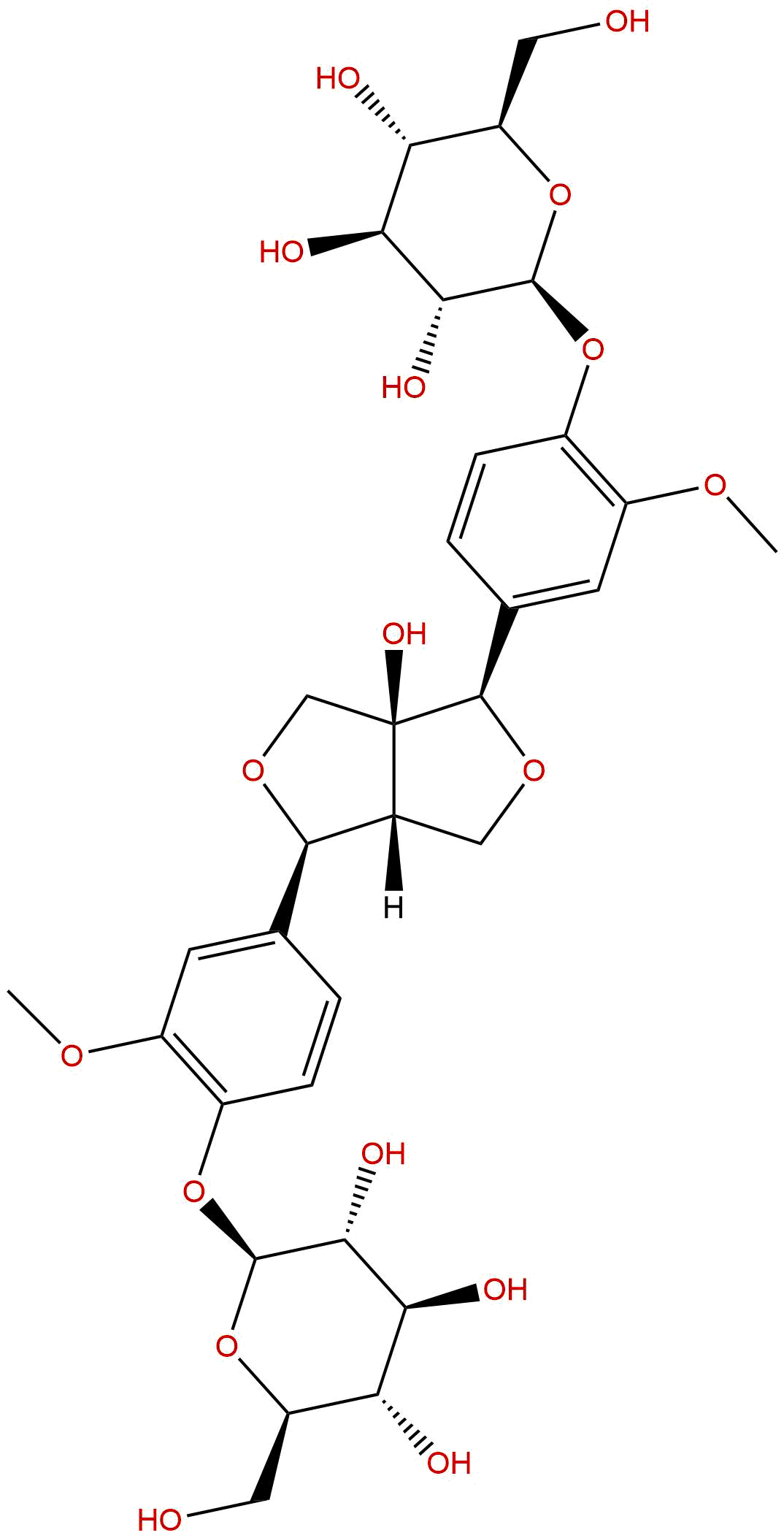
Natural products, as an important source of drug discovery, play an irreplaceable role in the long history of human struggle against diseases. Among numerous natural compounds with biological activity, lignans have attracted much attention due to their structural diversity and extensive pharmacological activities. 8-Hydroxypinoeosinol diglucoside (8-HPDG), as a typical bicyclic lignan glycoside compound, has shown remarkable potential in the field of neuroprotection in recent years. Its unique chemical structure, consisting of two phenylpropanoid units connected at the 8,8 'position to form a bicyclic oxygen skeleton, and introducing a hydroxyl group at the 8 position, which then forms a glycoside with two molecules of glucose, endows it with special biological activity distinct from other lignans.
The CAS number of 8-HPDG is 112747-99-6, with the molecular formula C ∝₂ H ₄₂ O ₁₇ and a molecular weight of 698.6710. This compound mainly exists in Eucommia ulmoides(Eucommia ulmoides Oliv.)、 Forsythia suspensa(Forsythia suspensa In traditional medicinal plants such as Thunb. Vahl, it is one of the important material foundations for the efficacy of these traditional Chinese medicines. Traditional Chinese medicine theory holds that Eucommia ulmoides has the effects of nourishing the liver and kidneys, strengthening muscles and bones, and stabilizing the fetus, while modern pharmacological research has revealed the effects of its extracts in lowering blood pressure, anti osteoporosis, antioxidation, and neuroprotection. 8-HPDG, as one of the main active ingredients in Eucommia ulmoides, has increasingly highlighted its research value.
With the acceleration of the aging process of the global population, the incidence of neurodegenerative diseases such as Alzheimer's disease (AD), Parkinson's disease (PD) and other incidence rate continues to rise, which has brought a heavy burden to the social medical system. The pathogenesis of these diseases is complex, involving the disruption of multiple signaling pathways such as β - amyloid (A β) deposition, tau protein hyperphosphorylation, oxidative stress, mitochondrial dysfunction, neuroinflammation, and cell apoptosis. Currently, most of the drugs used in clinical practice can only alleviate symptoms, but cannot effectively delay the progression of the disease. Therefore, the search for natural compounds that can intervene in disease progression through multiple targets and pathways has become a research hotspot. 8-HPDG exhibits great potential as a multi-target neuroprotective agent due to its regulatory effects on multiple targets closely related to neurodegenerative diseases, such as BCL2, APP, BACE1, MAPT, NFE2L2, SIRT1, MAPK1, CASP9, GSK3B, etc. This article will provide a systematic review of the research progress of 8-HPDG from the aspects of chemical structure and physicochemical properties, plant sources and extraction methods, pharmacological activity, mechanism of action, drug evaluation, and clinical application prospects, in order to provide reference for the in-depth development and utilization of this compound.
8-Hydroxysitol diglucoside belongs to the class of bicyclic lignans, and its core skeleton is 8,8 '- dioxo-3,3' - dimethoxy-4,4 '- dihydroxy-1,1' - binaphthalene, which is a typical structure of sitol. Unlike turpentine alcohol, 8-HPDG has a hydroxyl group attached to the C-8 position (one of the bridging carbons connecting two phenylpropanoid units), forming an 8-Hydroxypinoresinol glycoside. This aglycone is linked to a molecule of β - D-glucose via glycosidic bonds through its two phenolic hydroxyl groups, forming a diglucoside structure. This structural feature makes 8-HPDG highly polar and water-soluble.
From the perspective of physical and chemical properties, the molecular weight of 8-HPDG is 698.6710 Da, which is a medium-sized natural product. Its lipophilic water partition coefficient (LogP) is -0.5288, indicating that the compound has strong hydrophilicity and better solubility in the aqueous phase than in the lipid phase. The calculated topological polar surface area (TPSA) is as high as 255.9100 Å ², mainly due to the presence of a large number of hydroxyl groups (including multiple hydroxyl groups on the sugar group and phenolic hydroxyl groups on the glycoside) and ether oxygen atoms in its molecule. A high TPSA value usually means that compounds are difficult to passively diffuse through cell membranes, especially the blood-brain barrier (BBB). In fact, the blood-brain barrier permeability of 8-HPDG has been evaluated as' low ', which poses a key challenge for its therapeutic application in central nervous system (CNS) diseases. However, this does not completely negate its neuroprotective effect, as it may exert its effects through the following ways: 1) metabolize into more active aglycones or metabolites in the body, the latter of which may have better BBB penetration; 2) Indirectly affecting central nervous system function by acting on peripheral targets; 3) Passive entry into brain tissue in pathological states of BBB damage, such as cerebral ischemia and neuroinflammation.
The solubility parameter of 8-HPDG is 3.5773 (mg/mL or logS), indicating moderate solubility in water, which is beneficial for its dissolution and absorption in the gastrointestinal tract. In addition, the compound showed negative (No) results in the hERG potassium channel inhibition assay, indicating a low risk of cardiac toxicity. The Ames test result is 0.0, indicating that it did not show mutagenicity in the standard bacterial recovery mutation test, and the preliminary safety is good. These pharmacological parameters provide favorable conditions for the further development of 8-HPDG.
The distribution of 8-hydroxyturpentine glucoside in nature is relatively limited, mainly found in a few families of plants, among which Eucommia ulmoides in the Eucommiaceae family is one of them(Eucommia ulmoides Oliv. and Oleaceae Forsythia suspensa(Forsythia suspensa)The most typical. In addition, in the case of virgins(Ligustrum lucidum)Lilac(Syringa It has also been found in plants such as spp. Eucommia ulmoides, as a precious medicinal herb unique to China, its bark (Eucommia ulmoides bark) is a traditional medicine for tonifying the kidneys and strengthening bones. 8-HPDG is recognized as one of the main active ingredients of Eucommia ulmoides, and its content can be used as an important indicator for evaluating the quality of Eucommia ulmoides medicinal herbs. There are significant differences in the content of 8-HPDG in Eucommia ulmoides from different origins, harvesting seasons, and tree ages, with the bark typically having a higher content than the leaves.
The extraction method of 8-HPDG is mainly based on its high polarity. Traditional methods often use solvent extraction, with commonly used solvents including methanol, ethanol, water, or their mixed systems. Due to the good solubility of 8-HPDG in hot water and considering green chemistry and cost factors, hot water extraction or low concentration ethanol (such as 50% -70% ethanol) reflux extraction are commonly used. During the extraction process, factors such as temperature, time, and solid-liquid ratio can all affect the extraction efficiency. Usually, higher temperatures (such as 60-80 ℃) and longer extraction times are beneficial for improving yield, but excessively high temperatures may lead to compound degradation.
In order to improve extraction efficiency and purity, modern extraction techniques are widely used in the preparation of 8-HPDG. Ultrasound assisted extraction (UAE) utilizes the cavitation effect of ultrasound to destroy plant cell walls, accelerate solvent permeation and solute diffusion, and achieve high extraction rates in a short period of time. Microwave assisted extraction (MAE) utilizes the body heating effect of microwaves to rapidly increase the temperature and pressure inside cells, leading to cell wall rupture and promoting the dissolution of target components. Enzyme assisted extraction (EAE) degrades cellulose and pectin in plant cell walls through cellulase, pectinase, and other enzymes, reducing mass transfer resistance and improving extraction efficiency. It is particularly suitable for polar glycoside compounds such as 8-HPDG.
The crude extract after extraction usually requires a series of separation and purification steps to obtain high-purity 8-HPDG. The commonly used separation methods include macroporous adsorption resin column chromatography, silica gel column chromatography, polyamide column chromatography, and preparative high-performance liquid chromatography (Prep HPLC). Macroporous adsorption resins (such as D101, AB-8, etc.) can be used for preliminary separation based on differences in compound polarity. They are eluted using a water ethanol gradient, and 8-HPDG is typically enriched at the 30% -50% ethanol elution site. Subsequently, further purification can be achieved by combining silica gel column chromatography (chloroform methanol water system) or polyamide column chromatography. Finally, 8-HPDG monomer with a purity of over 98% can be obtained by preparative HPLC (reverse phase C18 column, methanol water or acetonitrile water mobile phase). In recent years, high-speed countercurrent chromatography (HSCCC) has been successfully applied as a liquid-liquid distribution chromatography technique for the separation and purification of 8-HPDG due to its advantages of irreversible adsorption and high sample recovery rate.
The pharmacological activity research of 8-hydroxyturpentine alcohol diglucoside mainly focuses on the field of neuroprotection. In addition, it has also shown certain effects in antioxidant, anti-inflammatory, anti-tumor, and cardiovascular protection.
Neuroprotective effect It is the pharmacological activity of 8-HPDG that has received the most attention. Multiple in vitro and in vivo studies have shown that 8-HPDG can effectively protect neurons from various damaging factors. In the A β 25-35-induced PC12 cell injury model, 8-HPDG pretreatment significantly increased cell survival rate, reduced lactate dehydrogenase (LDH) release, and inhibited cell apoptosis. In the glutamate induced excitotoxicity model, 8-HPDG also exhibits a protective effect by reducing intracellular calcium ion concentration and inhibiting the production of reactive oxygen species (ROS). In addition, in the cerebral ischemia-reperfusion injury model simulated by oxygen glucose deprivation/reoxygenation (OGD/R), 8-HPDG can alleviate neuronal damage, reduce cerebral infarction volume, and improve neurological function scores. These studies suggest that 8-HPDG may have therapeutic potential for various neurological diseases such as Alzheimer's disease, Parkinson's disease, and stroke.
antioxidant activity It is one of the important foundations for 8-HPDG to exert neuroprotective effects. The phenolic hydroxyl groups in its molecular structure can directly scavenge free radicals, such as DPPH radicals, ABTS cationic radicals, and hydroxyl radicals. 8-HPDG can also activate the endogenous antioxidant defense system of cells, upregulate the activities of superoxide dismutase (SOD), glutathione peroxidase (GSH Px), and catalase (CAT), and reduce the level of malondialdehyde (MDA), thereby alleviating oxidative stress damage.
anti-inflammatory activity It is also an important pharmacological effect of 8-HPDG. In BV-2 microglia stimulated by lipopolysaccharide (LPS), 8-HPDG can inhibit the production of nitric oxide (NO) and prostaglandin E2 (PGE2), downregulate the expression of inducible nitric oxide synthase (iNOS) and cyclooxygenase-2 (COX-2). Meanwhile, it can also reduce the release of pro-inflammatory factors such as tumor necrosis factor - α (TNF - α), interleukin-1 β (IL-1 β), and interleukin-6 (IL-6). This anti-inflammatory effect helps alleviate neuroinflammation and delay the progression of neurodegenerative diseases.
Antitumor activity On the other hand, preliminary studies have found that 8-HPDG can inhibit the proliferation of some tumor cell lines (such as HepG2 and MCF-7), and its mechanism may be related to the induction of cell cycle arrest and apoptosis. However, research in this area is not yet in-depth and requires more evidence to support it.
Cardiovascular protective effect In terms of aspect, 8-HPDG has been reported to have vasodilatory and blood pressure lowering effects. In a spontaneously hypertensive rat model, long-term administration of 8-HPDG can significantly reduce systolic and diastolic blood pressure, which may be related to the inhibition of angiotensin-converting enzyme (ACE) activity and promotion of nitric oxide (NO) release.
The neuroprotective effect of 8-hydroxy-2-glucoside involves the regulation of multiple molecular targets and signaling pathways, reflecting its multi-target and multi pathway characteristics. According to existing research, its main mechanism of action can be summarized as follows:
1. Regulating the amyloid metabolism pathway: One of the core pathological features of Alzheimer's disease is the abnormal deposition of A β. 8-HPDG can downregulate the expression and activity of β - secretase 1 (BACE1), which is a key enzyme catalyzing the production of A β from amyloid precursor protein (APP). By inhibiting BACE1, 8-HPDG reduced the production of A β. At the same time, it can also upregulate the non amyloid metabolic pathways of APP, promoting the generation of soluble APP alpha (sAPP alpha) with neurotrophic effects. In addition, 8-HPDG can inhibit the excessive phosphorylation of tau protein, which is related to its regulation of glycogen synthase kinase-3 β (GSK3B). GSK3B is a key kinase for tau protein phosphorylation, and 8-HPDG can inactivate the Ser9 site of GSK3B by activating the protein kinase B (Akt) signaling pathway, thereby reducing abnormal phosphorylation of tau protein and maintaining microtubule stability.
2. Inhibit cell apoptosis: Neuronal apoptosis is an important cause of neuronal loss in neurodegenerative diseases. 8-HPDG can inhibit apoptosis by regulating the expression of B-cell lymphoma 2 (BCL2) family proteins. Specifically, it can upregulate the expression of anti apoptotic protein BCL2 and downregulate the expression of pro apoptotic protein Bax, thereby increasing the BCL2/Bax ratio. This helps to maintain mitochondrial membrane potential, inhibit the release of cytochrome c from mitochondria to cytoplasm, thereby reducing the activation of caspase-9 (CASP9) and ultimately inhibiting downstream CASP3 mediated apoptotic cascade reactions. In addition, 8-HPDG can activate the mitogen activated protein kinase 1 (MAPK1, ERK2) signaling pathway, which is usually associated with cell survival and proliferation and can antagonize apoptotic signals.
3. Activate the antioxidant defense system: Oxidative stress is a common pathological mechanism in various neurodegenerative diseases. 8-HPDG is an effective activator of nuclear factor E2 related factor 2 (NFE2L2, also known as NRF2). NRF2 is the main transcription factor for intracellular antioxidant defense, which binds to Keap1 and is anchored in the cytoplasm under normal physiological conditions. Under oxidative stress or drug induction, NRF2 dissociates from Keap1, translocates into the nucleus, binds to antioxidant response elements (ARE), and initiates the expression of a series of downstream antioxidant enzyme genes, including SOD, CAT, GSH Px, heme oxygenase-1 (HO-1), and quinone oxidoreductase 1 (NQO1). By activating the NRF2/ARE pathway, 8-HPDG significantly enhanced the antioxidant capacity of cells, cleared excess ROS, and protected neurons from oxidative damage.
4. Regulating energy metabolism and mitochondrial function: Silencing information regulatory factor 1 (SIRT1) is an NAD ⁺ - dependent histone deacetylase that plays a critical role in regulating energy metabolism, stress resistance, and cell survival. 8-HPDG has been found to upregulate the expression and activity of SIRT1. The activation of SIRT1 can improve mitochondrial biosynthesis, enhance mitochondrial function, reduce mitochondrial oxidative stress, and protect neurons by deacetylating various substrates such as PGC-1 α, p53, FOXO, etc. In addition, SIRT1 can exert anti-inflammatory effects by deacetylating and inhibiting the activity of NF - κ B.
5. Anti inflammatory mechanism: The anti-inflammatory effect of 8-HPDG is related to its inhibition of the MAPK and NF - κ B signaling pathways. In activated microglia, 8-HPDG can inhibit the phosphorylation of p38 MAPK and c-Jun N-terminal kinase (JNK), while blocking the nuclear translocation of NF - κ B, thereby reducing the transcription and release of pro-inflammatory cytokines. This inhibition of neuroinflammation helps alleviate neuronal damage mediated by inflammation.
In summary, 8-HPDG forms a synergistic network regulatory mechanism by simultaneously acting on multiple targets such as BCL2, APP, BACE1, MAPT, NFE2L2, SIRT1, MAPK1, CASP9, GSK3B, etc., exerting neuroprotective effects in multiple dimensions including reducing A β production, inhibiting tau phosphorylation, anti apoptotic, antioxidant, and anti-inflammatory effects. This multi-target characteristic gives it unique advantages in treating complex diseases such as Alzheimer's disease.
The evaluation of drug properties is a crucial step in determining whether natural products can be transported from the laboratory to clinical applications. The pharmacological parameters of 8-HPDG indicate that it has certain development potential, but also faces some challenges.
Physical and chemical properties and drug like properties: As mentioned earlier, the molecular weight of 8-HPDG (698.67 Da) exceeds the threshold of molecular weight less than 500 in Lipinski's Rule of Five, and the LogP (-0.5288) is also lower than the rule requirement of ≤ 5. However, the TPSA (255.91 Å ²) is much higher than the usual upper limit of 140 Å ². These parameters indicate that 8-HPDG does not meet the drug class standards of traditional oral medications, and its high polarity and high molecular weight may lead to lower oral bioavailability. However, for natural products, especially glycosides, they often exert their effects through prodrug mechanisms or gut microbiota metabolism, so their medicinal properties cannot be denied solely based on the rules of drug likeness.
Absorption and metabolism: 8-HPDG, as a diglucoside, is difficult to directly absorb through small intestinal epithelial cells after oral administration. The absorption process may depend on the action of gut microbiota. β - glucosidase in the intestine can hydrolyze the glycosidic bond of 8-HPDG, releasing the aglycone 8-hydroxyturpentine alcohol. The molecular weight of aglycones is relatively small (about 376 Da), with a higher LogP value and enhanced lipophilicity, making them easier to passively diffuse through intestinal epithelial cells into the bloodstream. Therefore, 8-HPDG is likely a natural prodrug, and its in vivo efficacy is mainly mediated by its metabolites (aglycones or further metabolites). In addition, some 8-HPDGs may also be directly absorbed through glucose transporters (such as SGLT1) on intestinal epithelial cells, but the efficiency may be lower.
Distribution and blood-brain barrier penetration: The blood-brain barrier permeability of 8-HPDG was evaluated as' low ', which is consistent with its high polarity and high molecular weight. However, the BBB penetration of its aglycone 8-hydroxyturpentine alcohol may be significantly improved. In the body, the aglycones generated by 8-HPDG through intestinal microbiota metabolism may penetrate the BBB and enter the brain parenchyma, thereby exerting a direct neuroprotective effect. In addition, in pathological states such as cerebral ischemia, traumatic brain injury, or neuroinflammation, the integrity of the BBB is disrupted and permeability increases, at which point even 8-HPDG itself may partially enter brain tissue. Therefore, the brain distribution of 8-HPDG may be disease state dependent.
Safety evaluation: The preliminary safety evaluation results are encouraging. A negative hERG inhibition test indicates a low risk of cardiac toxicity. A negative Ames test indicates no mutagenicity. In addition, no significant acute toxicity reactions were observed within the therapeutic dose range of 8-HPDG in commonly used animal models. However, more comprehensive safety evaluations such as long-term toxicity and reproductive toxicity still need to be conducted.
Pharmacokinetic challenges and strategies: The main pharmacokinetic challenges faced by 8-HPDG are low oral bioavailability and poor BBB penetration. To address these issues, the following strategies can be taken to improve: 1)Structural modification Through prodrug design, such as esterification or etherification of hydroxyl groups on sugar groups, to improve their lipid solubility and promote absorption; Alternatively, the development of aglycone 8-hydroxyturpentine alcohol as a candidate drug can be carried out directly. 2)New drug delivery system Using nanotechnology, such as liposomes, polymer nanoparticles, solid lipid nanoparticles, etc., to encapsulate 8-HPDG or its aglycone, to improve its oral absorption rate and BBB penetration ability. 3)nasal delivery Nasal administration can bypass the BBB and directly deliver drugs to the brain, making it a promising route for treating CNS diseases. 4)combination therapy When used in combination with P-glycoprotein (P-gp) inhibitors, it may reduce drug efflux and increase drug concentration in the brain.
Due to its multi-target neuroprotective mechanism and preliminary safety data, 8-hydroxyturpentine diglucoside has shown broad clinical application prospects in the prevention and treatment of neurodegenerative diseases.
Alzheimer's disease: 8-HPDG comprehensively combats the pathological process of Alzheimer's disease by inhibiting BACE1 to reduce A β production, inhibiting GSK3B to reduce tau phosphorylation, activating NRF2 antioxidant, activating SIRT1 to improve energy metabolism, and inhibiting neuroinflammation through multiple mechanisms. This multi-target mode of action makes it a promising disease modifying drug (DMD) for treating AD, rather than just improving symptoms. In the future, more animal model studies are needed, especially transgenic AD mouse models (such as APP/PS1 mice, 3xTg AD mice), to verify their long-term efficacy and improvement of cognitive function.
Cerebral ischemia-reperfusion injury: The anti apoptotic, antioxidant, and anti-inflammatory effects of 8-HPDG make it potentially applicable in the treatment of stroke. In the focal cerebral ischemia model, 8-HPDG has shown the effect of reducing infarct volume and improving neurological function. It protects neurons from ischemic damage by inhibiting CASP9 activation, upregulating BCL2, and other mechanisms. In addition, it can alleviate oxidative stress after ischemia by activating the NRF2 pathway. In the future, further research is needed on its treatment time window, optimal dosage, and effectiveness when used in combination with other thrombolytic drugs such as tPA.
Parkinson's disease: Although there is relatively little research on 8-HPDG in PD models, its antioxidant and anti apoptotic effects suggest that it may have a protective effect on dopaminergic neurons. In MPTP or 6-OHDA induced PD models, 8-HPDG may protect substantia nigra dopaminergic neurons by activating the NRF2 pathway, inhibiting oxidative stress, and mitochondrial dysfunction. In addition, its anti-inflammatory effect also helps to alleviate neuroinflammatory reactions in PD.
Other neurological disorders: The neuroprotective effect of 8-HPDG may also extend to other diseases, such as amyotrophic lateral sclerosis (ALS), Huntington's disease (HD), multiple sclerosis (MS) and diabetes neuropathy. These diseases all involve common pathological mechanisms such as oxidative stress, mitochondrial dysfunction, inflammation, and cell apoptosis, and the multi-target effect of 8-HPDG may also play a protective role in these diseases.
Challenges and Future Directions Faced: Despite its broad prospects, the clinical translation of 8-HPDG still faces many challenges. The primary issue is its poor pharmacokinetic properties, low oral bioavailability, and poor BBB penetration, which are the main bottlenecks limiting its clinical application. Future research directions should focus on: 1) developing efficient and safe drug delivery systems, such as nanomaterials, liposomes, etc., to improve their bioavailability and brain targeting. 2) Thoroughly study its metabolic pathways in vivo, identify the active metabolites that truly exert pharmacological effects, and use them as lead compounds for structural optimization. 3) Conduct systematic pharmacological and toxicological studies, including long-term toxicity, reproductive toxicity, carcinogenicity, etc., to comprehensively evaluate their safety. 4) Conduct high-quality preclinical studies, including validating its efficacy on multiple animal models and determining the optimal dosing regimen. 5) Explore its synergistic effects with other neuroprotective agents or existing anti AD drugs, and develop combination therapy plans.
8-Hydroxysitol diglucoside, a natural bicyclic lignan glycoside derived from traditional Chinese medicine Eucommia ulmoides and Forsythia suspensa, has shown significant research value and development potential in the field of neuroprotection due to its unique chemical structure and multi-target pharmacological activity. Its mechanism of action involves regulating amyloid metabolism (BACE1, APP), inhibiting tau protein phosphorylation (GSK3B), anti apoptosis (BCL2, CASP9), activating antioxidant defense (NFE2L2), and regulating energy metabolism (SIRT1), among other key pathways, reflecting the characteristic of multi-target and multi pathway synergistic effects of natural products. Although pharmacokinetic issues such as low oral bioavailability and poor blood-brain barrier penetration have hindered its direct development as an oral drug, these problems are expected to be resolved through strategies such as prodrug design, novel delivery systems, or nasal administration. The preliminary safety evaluation results have also laid the foundation for its further development. In the future, with a deeper understanding of its metabolic processes and mechanisms of action in the body, as well as advances in drug delivery technology, 8-hydroxyturpentine diglucoside and its derivatives are expected to become new candidate drugs for the treatment of neurodegenerative diseases such as Alzheimer's disease and stroke, providing natural product solutions for the increasingly severe challenges of neurological disease prevention and treatment worldwide. The study of 8-HPDG not only helps to reveal the scientific connotation of traditional Chinese medicine, but also provides valuable lead compounds for the discovery of modern innovative drugs.
Batch can search by a CAS number,one per line
