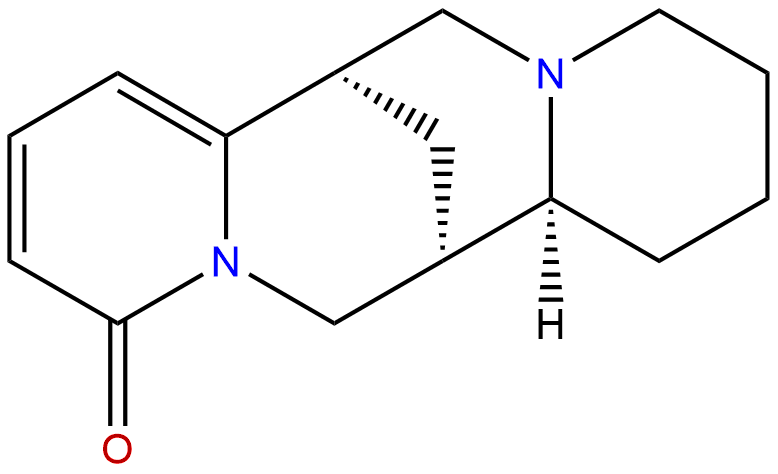


Synonym name:
Catalogue No.: BP1391
Cas No.: 486-90-8
Formula: C15H20N2O
Mol Weight: 244.338
Botanical Source: Alkaloid from Thermopsis lanceolata, Thermopsis rhombifolia and Sophora secundiflora seeds (Leguminosae)
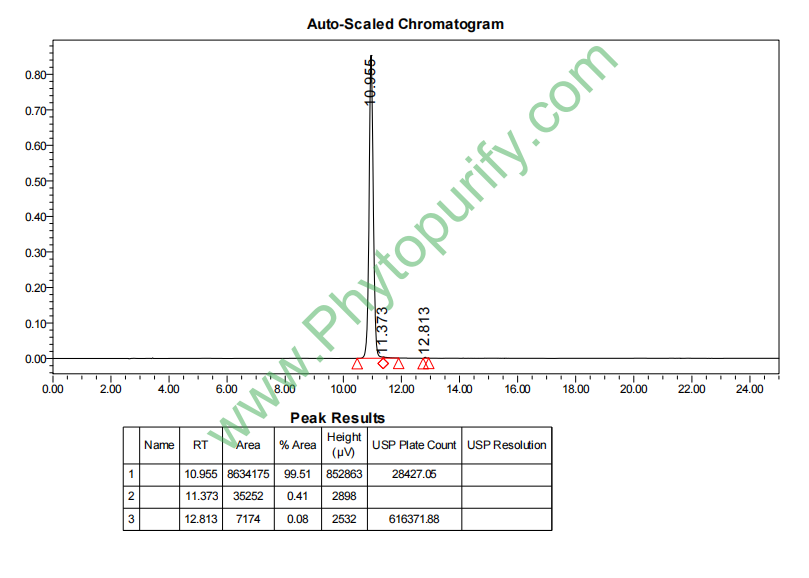
Purity: 95%~99%
Analysis Method: HPLC-DAD or/and HPLC-ELSD
Identification Method: Mass, NMR
Packing: Brown vial or HDPE plastic bottle
Can be supplied from milligrams to grams.
For Reference Standard and R&D, Not for Human Use Directly.
Inquire for bulk scale.
HPLC of Thermopsine
Storage conditions:Short-term storage at 2~8℃, long-term storage at -20 ~ -80℃
25.2400
1.0793
-.4103
13.9972
3.0517
11.3943
High
37.2691
4.1471
Yes
Yes
Yes
Yes
Yes
Yes
0.0
Yes
No
Yes
Yes
Natural products, as an important source of drug discovery, play an irreplaceable role in the history of human medicine. Among them, alkaloid compounds have always been a focus of medicinal chemistry and pharmacology research due to their structural diversity and significant biological activity. Thermopsin (CAS number: 486-90-8), as a typical quinolone alkaloid, has attracted attention since its discovery due to its unique chemical structure and potential pharmacological activity. Early studies have revealed that it has low to moderate activity against Escherichia coli, suggesting its potential value in the field of anti infection. However, what is more remarkable is its multi-target action characteristics related to anticholinergic syndrome, involving key targets such as acetylcholinesterase (ACHE) and various muscarinic acetylcholine receptors (CHRM1-5), which opens up new horizons for its potential application in the treatment of neurological and psychiatric diseases such as Alzheimer's disease, Parkinson's disease, chronic obstructive pulmonary disease, overactive bladder, etc. Although its pharmacological parameters (such as hERG inhibition risk) pose development challenges, a deeper understanding of its structure-activity relationship and mechanism of action is expected to provide key clues for designing safer and more efficient derivatives. This article aims to provide a systematic review of the chemical properties, plant sources, pharmacological activities, mechanisms of action, pharmacological evaluation, and clinical application prospects of Huanghua alkaloid, in order to provide comprehensive scientific references for the in-depth research and potential drug development of this natural product.
The chemical name of Huanghua alkaloid is (13aS) -2,3,5,6,13,13a-hexahydro-8-methoxy-1H-quinolino [2,1-b] quinazolin-1-one, which belongs to the tetracyclic quinolone alkaloids. Its molecular formula is C15H20N2O2 and its molecular weight is 244.3380. Its core structure is composed of quinolone and tetrahydroquinazoline rings, forming a rigid four ring skeleton, with the C-13a position as the chiral center. Naturally occurring berberine is usually in the S configuration. This complex condensed ring structure is the basis for its specific interactions with biomolecules such as enzymes and receptors.
In terms of physicochemical properties, the calculated lipid water partition coefficient (LogP) of Huanghua alkaloid is 1.0793, indicating that it has moderate lipophilicity, which is beneficial for its penetration into cell membranes. Its topological polar surface area (TPSA) is 25.2400 Å ², which is relatively small and further supports its good membrane permeability. The calculated value of water solubility is about 13.9972mg/L, which belongs to the category of slightly soluble to poorly soluble. This may be a limiting factor for its in vivo bioavailability, and solubilization strategies need to be considered in formulation development. Based on its low TPSA and moderate LogP, it is predicted that it has a high blood-brain barrier permeability, which is consistent with its potential target properties on the central nervous system. These basic physicochemical parameters provide a preliminary framework for its subsequent pharmacokinetic behavior and drug efficacy evaluation.
Huanghuajian mainly exists in Fabaceae plants of the Thermopsis genus, which have a history of application in traditional medicine. Among them, Thermopsis lanceolata R. Br. is the most famous and main plant source of berberine. In addition, there have been reports of detection in certain plants such as Oxytropis ochrocephala. The content of berberine in plants varies significantly depending on species, place of origin, harvest season, and plant parts such as seeds and aboveground parts.
Extracting berberine from plant materials usually follows the general extraction and separation process for alkaloids. Classic methods include:
1. Solvent extraction method Methanol, ethanol, or acidified water/alcohol mixed solvents are commonly used for leaching or reflux extraction of dried and crushed plant materials to dissolve alkaloids in the form of salts.
2. Alkalization and extraction After concentrating the extract, adjust it to alkaline (pH 9-10) with alkali (such as ammonia water, sodium carbonate) to free the alkaloids. Then, repeatedly extract with organic solvents such as chloroform, dichloromethane, or ethyl acetate to enrich the total alkaloids.
3. Separation and Purification The crude total alkali obtained needs to be further purified by chromatographic separation technology. Traditionally, silica gel column chromatography is commonly used, with gradient elution using systems such as chloroform methanol or dichloromethane methanol in different ratios. In modern separation, high-performance liquid chromatography (HPLC) and preparative thin layer chromatography (PTLC) have become key methods for obtaining high-purity berberine monomers. Structural confirmation and purity identification were performed through nuclear magnetic resonance (NMR), mass spectrometry (MS), and chromatographic behavior compared to standard samples (such as TLC, HPLC).
In recent years, some green extraction techniques such as ultrasound assisted extraction and microwave-assisted extraction have also been attempted to improve extraction efficiency. However, considering the sustainability of plant resources, obtaining berberine and its analogues through chemical synthesis or biosynthetic pathways has become an important research direction, which helps to solve the problem of limited natural sources and facilitates systematic structural modification.
The pharmacological activity research of Huanghua alkaloid reveals its various biological effects, among which the most prominent are its anticholinergic and antibacterial activities.
Anticholinergic activity This is the most essential pharmacological characteristic of Huanghua alkaloid. In vitro and in vivo studies have shown that berberine can antagonize the effects of acetylcholine on smooth muscles (such as intestines and bronchi) and glands, producing effects similar to atropine, such as inhibiting saliva secretion, dilating pupils, and relaxing gastrointestinal smooth muscles. This widespread anticholinergic effect is the pathophysiological basis for its association with anticholinergic syndrome, and also suggests its therapeutic potential in diseases that require inhibition of cholinergic neurotransmission.
Antibacterial activity Early literature reported that Huanghua alkaloid has low to moderate inhibitory activity against Enterococcus faecalis. Although its activity intensity is not outstanding, its unique quinolone alkaloid structure provides a reference template for the development of new antibacterial lead compounds in the context of increasingly severe multi drug resistance problems. Its antibacterial mechanism may be related to interference with bacterial nucleic acid metabolism or cell membrane function, but the specific mechanism remains to be elucidated.
Other potential activities Based on its core anticholinergic function, Huanghuajian theoretically may have potential activities such as analgesia, spasmolysis, anti asthma (through bronchiectasis), and anti Parkinson's disease (by regulating the cholinergic/Dopaminergic balance of the basal ganglia). However, most of these activities are based on speculation of their mechanism of action, or there are only scattered early reports, lacking systematic and in-depth modern pharmacological research data to confirm. Especially its effect on the central nervous system is worth further exploration due to its excellent blood-brain barrier permeability.
The pharmacological effects of Huanghua alkaloid, especially its anticholinergic effect, are mainly achieved by interfering with the cholinergic neurotransmission pathway, involving multiple key molecular targets:
Acetylcholinesterase (ACHE)ACHE is a key enzyme that terminates the action of the cholinergic neurotransmitter acetylcholine (ACh). Huanghua alkaloid has been proven to inhibit the activity of ACHE, reduce the hydrolysis of ACh, and lead to an abnormal increase in ACh concentration in synaptic cleft. This is similar to the action of classic acetylcholinesterase drugs such as berberine. However, in terms of overall effect, Huanghuajian mainly manifests as anticholinergic symptoms, which may be due to its dominant antagonistic effect on receptors, or the accumulation of ACh caused by it leading to receptor desensitization.
Muscarinic acetylcholine receptors (mAChRs, CHRM1-5)This is the most direct target family for Huanghua alkaloids to exert anticholinergic effects. Research has shown that berberine can act as a competitive antagonist to block the binding of ACh to M receptors. Its affinity for different subtypes (M1-M5) may vary, and this subtype selectivity determines the tissue specificity and potential side effect profile of its effects. For example, the antagonism of M3 receptors is related to the inhibition of glandular secretion and relaxation of smooth muscles; The impact on central M1 receptors may be related to changes in cognitive function. Systematic evaluation of its selectivity towards various subtypes is key to understanding its pharmacology and toxicology.
Vesicular acetylcholine transporter (SLC18A3/VChT)VAChT is responsible for transporting ACh from the cytoplasm to synaptic vesicles for storage. There are studies suggesting that certain biphasic alkaloids may affect this transport process. Whether Huanghua alkaloid affects the storage and quantum release of ACh by inhibiting VAChT, and indirectly regulates cholinergic signaling, is a potential mechanism that needs to be verified.
Overall, the mechanism of action of Huanghua alkaloid is "multi-target": it inhibits the decomposition of ACh (via ACHE), blocks the signal transmission of ACh (via CHRMs), and may also interfere with the storage of ACh (via SLC18A3). This synergistic interference on multiple links of the cholinergic system collectively leads to significant anticholinergic syndrome like effects. Clarifying the intensity, kinetics, and subtype selectivity of its effects on various targets is an important direction for future research.
Based on the provided parameters and existing knowledge, a preliminary evaluation of the pharmacological properties of Huanghuajian is conducted
Absorption, distribution, metabolism, excretion (ADME) prediction:
Security risk warning:
Current status of pharmacokinetic research There is very limited publicly available data on preclinical pharmacokinetic studies of the Huanghuajian system, such as drug time curves, absolute bioavailability, tissue distribution, plasma protein binding rate, and metabolite identification in animals such as rats and dogs. This is the gap that must be filled as it moves towards drug development.
In summary, as a lead compound, the pharmacological characteristics of Huanghua alkaloid are mixed. Good brain permeability and clear pharmacological targets are its advantages; However, poor water solubility, potential severe cardiac toxicity (hERG inhibition), and possibly narrow therapeutic window are the main obstacles to its development as a drug. Future structural optimization should focus on eliminating the risk of hERG inhibition, improving solubility, and possibly reducing central side effects by introducing polar groups to moderately decrease brain permeability while retaining or enhancing activity.
The clinical application prospects of Huanghuajian mainly revolve around its anticholinergic activity, but its efficacy and risks must be carefully balanced.
Potential therapeutic areas:
Future research directions:
Huanghua alkaloid, as a natural quinolone alkaloid, occupies a place in natural product chemistry and pharmacology research due to its unique four ring structure and clear multi-target anticholinergic mechanism. It is not only an active substance discovered from traditional medicinal plants, but also an interesting chemical probe for studying cholinergic neurotransmission mechanisms. Although its direct development as a drug faces significant challenges such as poor water solubility, potential severe cardiac toxicity (hERG inhibition), and a wide spectrum of anticholinergic side effects, these challenges precisely point to the direction of modern pharmaceutical chemical modification. The focus of future research should not be limited to a simple evaluation of its natural form, but should delve into the details of its molecular action, and use it as a lead structure to develop new cholinergic system modulators with stronger activity, higher selectivity, and better safety through rational drug design. The story of Huanghuajian once again confirms the eternal value of natural products as a source of innovative drugs: their significance lies not only in providing "finished products", but also in providing a "blueprint" that inspires wisdom and guides direction.
