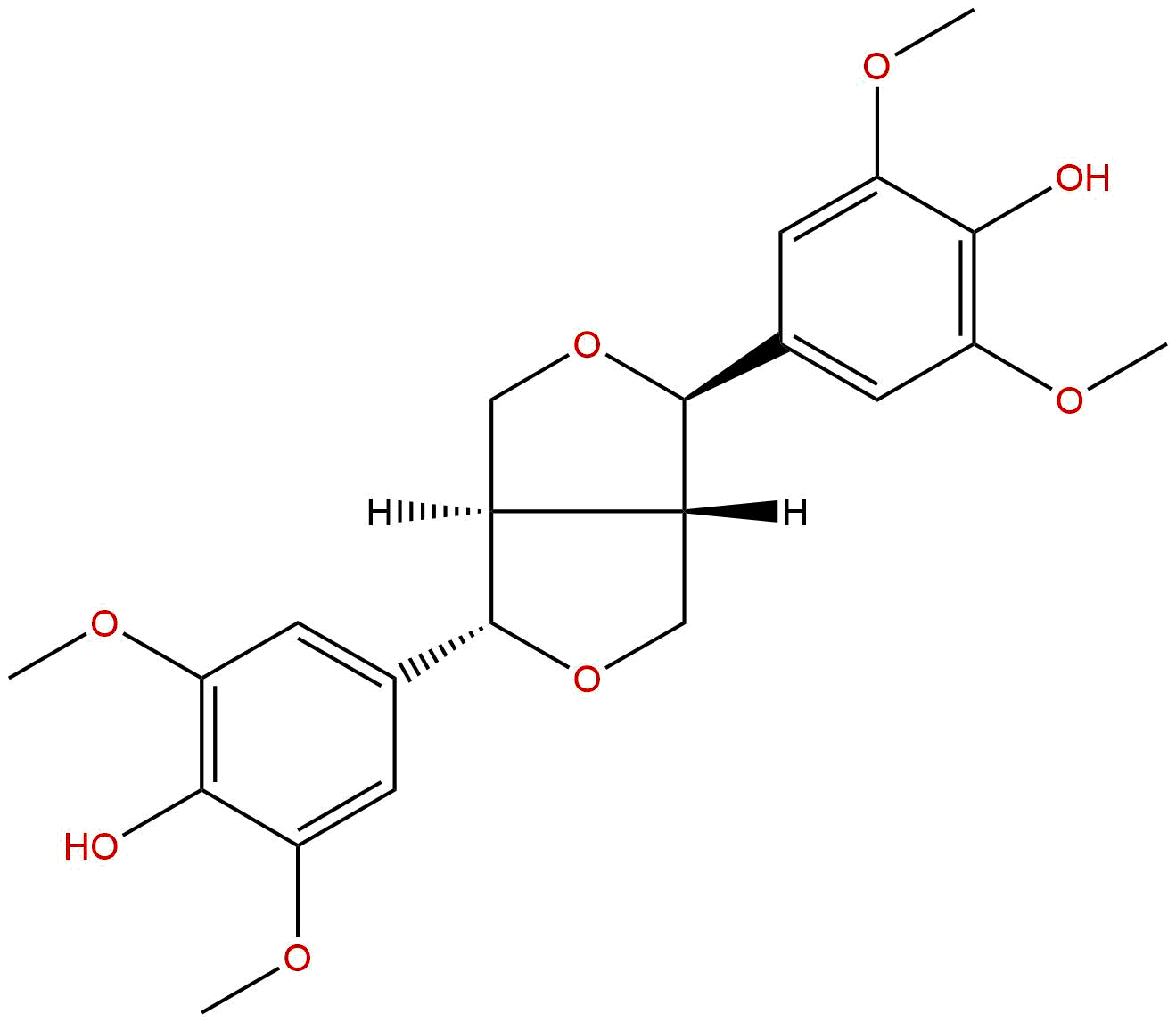


Product name: Syringaresinol
Synonym name:
Catalogue No.: BP4760
Cas No.: 487-35-4
Formula: C22H26O8
Mol Weight: 418.442
Botanical Source:
Type of Compound: Lignans
Purity: 95%~99%
Analysis Method: HPLC-DAD or/and HPLC-ELSD
Identification Method: Mass, NMR
Packing: Brown vial or HDPE plastic bottle
Storage: Store in a well closed container, protected from air and light. Put into refrigerate or freeze for long term storage.
Whenever possible, you should prepare and use solutions on the same day. However, if you need to make up stock solutions in advance, we recommend that you store the solution as aliquots in tightly sealed vials at -20℃. Generally, these will be useable for up to two weeks.
The product could be supplied from milligrams to grams
Inquire for bulk scale.
For Reference Standard and R&D, Not for Human Use Directly.
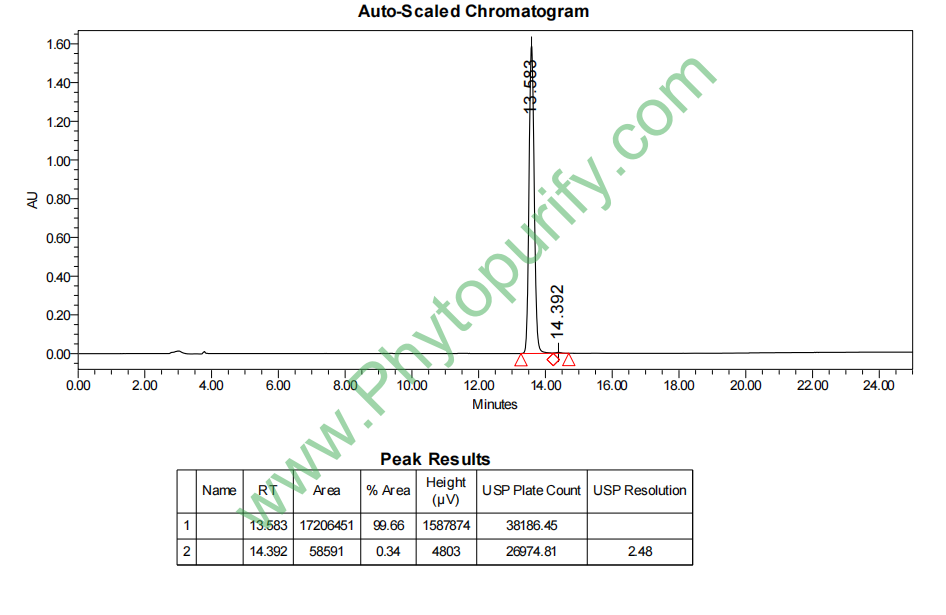
HPLC of Syringaresinol
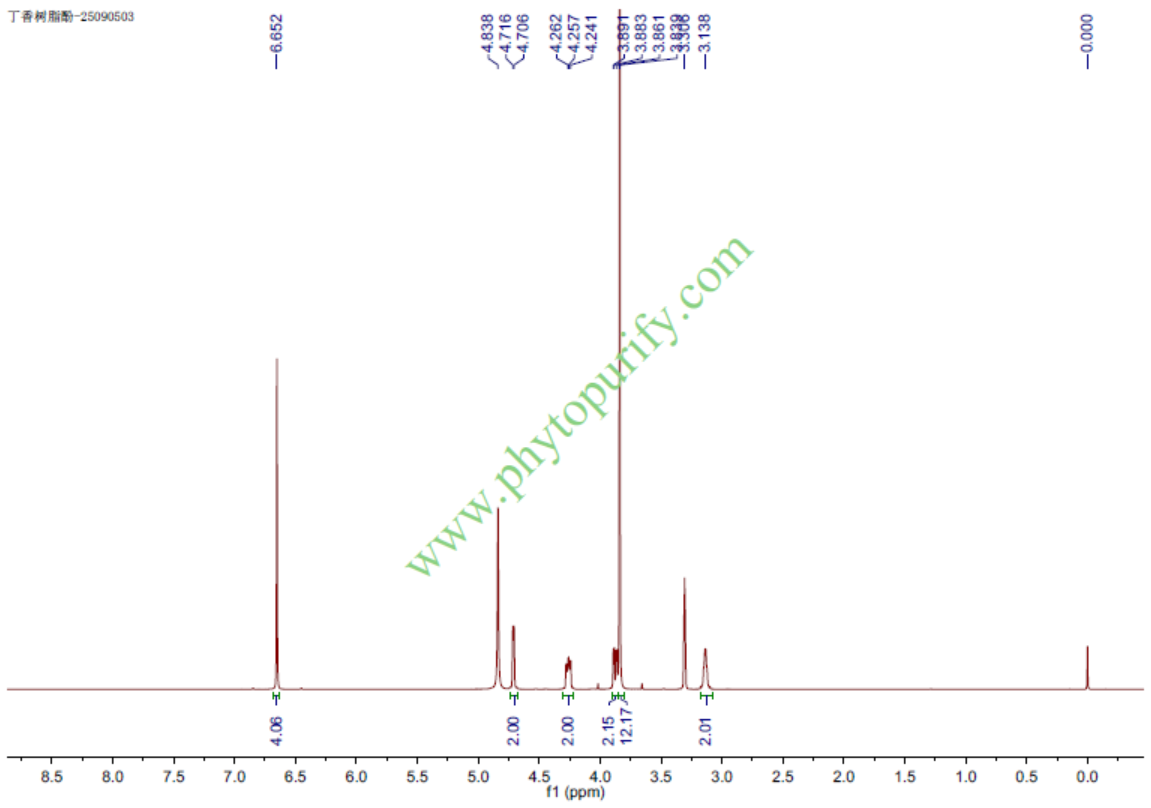
HNMR of Syringaresinol
Storage conditions:Short-term storage at 2~8℃, long-term storage at -20 ~ -80℃
95.8400
2.5598
2.5532
.0993
7.3144
4.2893
High
89.5183
3.7578
Yes
Yes
No
No
Yes
No
0.0
Yes
No
No
No
Osteoarthritis (OA), as a chronic degenerative joint disease characterized by cartilage degeneration, synovitis, and osteophyte formation, is one of the main causes of disability worldwide. The pathological process is complex, involving multiple factors such as mechanical stress, aging, metabolic abnormalities, and persistent chronic low-grade inflammation. At present, the clinical treatment strategies for OA mainly focus on relieving pain and improving function, such as using nonsteroidal anti-inflammatory drugs (NSAIDs) and injecting corticosteroids or hyaluronic acid into the joint cavity. However, these methods often treat the symptoms rather than the root cause, and long-term use is accompanied by adverse reactions in the gastrointestinal, cardiovascular, and renal tracts. Therefore, exploring active molecules with multiple targets, high safety, and the ability to delay or even reverse the course of OA from natural products has become an important direction for drug development.
Lignin compounds are a class of phenylpropanoid dimers widely present in the plant kingdom, which have attracted much attention due to their diverse chemical structures and extensive biological activities. Syringarescinol, as a typical furan type lignan, has entered the research field in recent years due to its significant protective effects in various inflammation related disease models. Especially its outstanding performance in OA models, which can inhibit key inflammatory signaling pathways, protect chondrocytes, and slow down the progression of OA in animal models, makes it a highly promising candidate drug molecule. This article aims to systematically review the chemical properties, plant sources, pharmacological activities, molecular mechanisms of action, pharmacological characteristics, and application prospects of syringaresinol in diseases such as OA, in order to provide comprehensive scientific references for the in-depth research and development of this compound.
Lilac resin phenol (CAS number: 487-35-4), chemical name (7R, 8S, 7'R, 8'S) -4,4 '- bis (1,2,3-trimethoxyphenyl) -7,7' - epoxy-8,8 '- biphenyl, molecular formula C22H26O8, molecular weight 418.4420. Its core structure consists of two phenylpropanoid units (C6-C3) connected by a β - β 'bond (8-8' position) to form a biphenyl skeleton, and an oxygen bridge at the 7-7 'position to form a tetrahydrofuran ring, forming a typical basic skeleton of furan type lignin. Its structural feature is that the 4 and 4 'positions on both benzene rings are replaced by methoxy groups, while the 3, 3', 5, and 5 'positions are each connected to a methoxy group, forming a highly symmetrical molecular structure.
Based on its chemical structure, eugenol resin exhibits specific physicochemical properties. The calculated value of its lipid water partition coefficient (LogP) is about 2.56, indicating that the compound has moderate lipophilicity, which is conducive to transmembrane transport and absorption. The topologically polar surface area (TPSA) is 95.84 Å ², which is relatively moderate, indicating a certain degree of membrane permeability. The predicted value of water solubility is relatively low (about 0.0993 mg/mL), indicating that it is a poorly soluble compound, which is a key factor to consider in its formulation development. It is worth noting that the predictive model shows that eugenol has a high blood-brain barrier (BBB) permeability, which suggests its potential application value in central nervous system related diseases. In the early safety evaluation, the hERG inhibition risk prediction was negative, and the Ames test prediction result was negative (0.0), indicating a low risk of cardiac toxicity and genetic toxicity, providing a favorable safety starting point for its further development.
Clove resin phenol is widely distributed in various medicinal and edible plants, reflecting its universality as a secondary metabolite in plants. Its main plant sources include:
1. Araliaceae plants Like the five thorns(Eleutherococcus senticosus)The roots, stems, and leaves of Syringa are one of the important sources of syringaresinol, which may be related to its traditional anti fatigue and immune enhancing effects.
2. Eucommia ulmoides Oliv: Eucommia ulmoides(Eucommia ulmoides)The bark and leaves of Eucommia ulmoides are rich in various lignans, and syringaresinol is one of its main active ingredients, which is consistent with its effects on nourishing the liver and kidneys, strengthening muscles and bones.
3. Poaceae plants Grains such as wheat, barley, and corn also contain syringaresinol and its glycosidic forms in their bran and germ, which reflect their use as a dietary source.
4. Other plants It has also been reported in Schisandra chinensis, sesame, Forsythia suspensa, nutmeg, and some pine and cypress plants.
Organic solvent extraction is commonly used to extract syringic resin phenols from plant materials. Methanol, ethanol, or acetone water mixed solvents are widely used due to their good solubility in lignin components. The extraction process is usually assisted by ultrasound or heating reflux to improve efficiency. The crude extract needs to undergo a series of separation and purification steps, such as preliminary enrichment using macroporous adsorption resins (such as D101, AB-8), followed by fine separation using techniques such as silica gel column chromatography, reverse phase silica gel column chromatography (such as ODS), and preparative high-performance liquid chromatography (HPLC), ultimately obtaining high-purity eugenol monomers. In recent years, green technologies such as supercritical CO2 extraction have also been explored for the extraction of this compound to reduce the use of organic solvents and improve selectivity.
Numerous in vitro and in vivo studies have confirmed that syringaresinol has a wide range of pharmacological activities, with its core being its powerful anti-inflammatory effect, which extends to protective effects on multiple systems such as cartilage, blood vessels, and nerves.
anti-inflammatory activity This is the core biological activity of syringaresinol. In various inflammatory cell models, such as macrophages stimulated by lipopolysaccharide (LPS), syringaresinol can dose dependently inhibit the production of key pro-inflammatory mediators such as nitric oxide (NO), prostaglandin E2 (PGE2), and cytokines such as tumor necrosis factor - α (TNF - α), interleukin-6 (IL-6), and interleukin-1 β (IL-1 β). This broad inhibitory effect suggests that it acts on upstream key nodes of the inflammatory signaling pathway.
Cartilage protection and anti osteoarthritis activity This is the most promising research direction for eugenol resin. At the cellular level, studies have shown that eugenol can effectively counteract the damaging effects of IL-1 β on mouse chondrocytes, inhibit the degradation of extracellular matrix (such as collagen II and proteoglycans), and reduce the expression of matrix metalloproteinases (MMPs, such as MMP-3, MMP-13). At the animal model level, the strongest evidence comes from the mouse OA model induced by medial meniscus instability surgery (DMM). Oral administration of eugenol can significantly slow down the progressive destruction of articular cartilage, reduce subchondral bone sclerosis and osteophyte formation, improve joint function, and structurally and functionally delay the progression of osteoarthritis.
Endothelial protection and vasodilation activity Research has shown that eugenol can increase the phosphorylation levels of adenosine monophosphate activated protein kinase (AMPK) and endothelial nitric oxide synthase (eNOS) in human umbilical vein endothelial cells (HUVECs), and enhance the intracellular calcium ion (Ca2+) concentration. These effects together promote the production of NO with vasodilation and protection, suggesting that eugenol may have an improvement effect on vascular endothelial dysfunction related diseases (such as atherosclerosis, hypertension).
Other activities In addition, studies have reported that syringaresinol has potential activities such as antioxidant, anti fatigue, neuroprotective, and improvement of insulin resistance. These activities are closely related to its anti-inflammatory core effects and together constitute its pharmacological characteristics of pleiotropy.
The pharmacological effects of syringaresinol, especially its excellent anti-inflammatory and cartilage protective effects, are achieved by regulating multiple key inflammatory and cell survival signaling pathways, and its target network is clear.
Inhibition of NF - κ B signaling pathway Nuclear factor kappa B (NF - κ B) is the core transcription factor in inflammatory response. Under the stimulation of IL-1 β and other factors, the inhibitory protein I κ B is phosphorylated and degraded by IKK complexes (such as IKBKB), leading to NF - κ B (such as p65/RELA subunit) entering the nucleus and initiating the transcription of inflammatory genes. Research has shown that eugenol can inhibit the phosphorylation of IKK/I κ B, prevent p65 nuclear translocation, and downregulate the expression of downstream inflammatory mediators such as IL-6, TNF, NOS2 (inducible nitric oxide synthase, iNOS), and COX-2/PTGS1 (cyclooxygenase-2). This is the main molecular basis of its anti-inflammatory effect.
Regulating the PI3K/AKT signaling pathway The phosphatidylinositol 3-kinase (PI3K)/protein kinase B (AKT) pathway is involved in cell proliferation, survival, and inflammation regulation. In OA chondrocytes, excessive activation of this pathway is associated with resistance to apoptosis and persistent inflammation. Lilac resin phenol has been shown to inhibit IL-1 β - induced AKT phosphorylation, thereby blocking its downstream pro-inflammatory and anti apoptotic effects, and promoting the restoration of chondrocyte homeostasis.
Activate AMPK signaling pathway AMPK is an energy receptor in cells, and its activation has anti-inflammatory, metabolic improving, and endothelial protective effects. Clove resin phenol can increase the phosphorylation of AMPK in HUVECs and possibly other cells. Activated AMPK can phosphorylate and activate eNOS, promote NO production, and exert vascular protective effects; On the other hand, AMPK activation can negatively regulate inflammatory pathways such as NF - κ B, forming a cross-talk and enhancing its overall anti-inflammatory effect.
Affects other inflammation related targets Research suggests that eugenol may also exert anti-inflammatory effects by inhibiting NLRP3 inflammasome activation (involving CASP1, i.e. caspase-1 activation) and downregulating STAT3 activation (blocking signal amplification of cytokines such as IL-6). In addition, its potential regulatory effect on pain related ion channels such as TRPV1 and TRPA1 may be related to its ability to alleviate OA pain symptoms, which requires further research to confirm.
In summary, syringaresinol has formed a network mechanism through multi-target action, with inhibition of NF - κ B and AKT and activation of AMPK as the core, synergistically combating inflammation, protecting cartilage and vascular endothelium.
Although eugenol has shown great potential in preclinical studies, its pharmacological properties still require systematic evaluation.
Absorption, distribution, metabolism, excretion (ADME)At present, research on the pharmacokinetics of syringaresinol system is relatively limited. Based on its physicochemical properties (moderate LogP, low water solubility), its absorption after oral administration may be affected by solubility and first pass effects. Its higher BBB permeability prediction has been indirectly confirmed in some studies, indicating that it can be distributed to the central system. Lignin compounds typically undergo extensive metabolism in the body, including II binding reactions such as demethylation, glucuronidation, and sulfation. Its prototype and metabolites may be mainly excreted through urine and bile. In the future, LC-MS/MS and other technologies will be needed to conduct in-depth research on its absolute bioavailability, tissue distribution, major metabolites, and excretion pathways in different species of animals.
Formulation Challenge Low water solubility is the primary challenge in the development of eugenol resin formulations. To improve its oral bioavailability, advanced formulation strategies such as making nanocrystals, solid dispersions, liposomes, or cyclodextrin inclusion complexes may be required to increase solubility and dissolution rate.
Preliminary evaluation of safety The existing computer prediction data (without hERG inhibition and Ames toxicity risk) provides positive early signals. However, a comprehensive preclinical safety evaluation is essential, including acute toxicity, long-term repeated administration toxicity (28 day, 90 day toxicity tests), reproductive toxicity, and more in-depth toxicokinetics studies to clarify its safe dose window.
Lilac resin phenol has shown clear application prospects in the prevention and treatment of osteoarthritis. Based on its multi-target intervention in the core pathological processes of OA (inflammation, cartilage degradation, pain), it is expected to be developed into a new type of disease modifying anti osteoarthritis drug (DMOAD), rather than just a symptom reliever. Its possible application forms include oral formulations, joint cavity injection sustained-release formulations, or local transdermal formulations.
In addition, its anti-inflammatory and endothelial protective effects also indicate the potential application value in other chronic inflammatory diseases, such as atherosclerosis, metabolic syndrome, neurodegenerative diseases, etc. Its ability to penetrate the blood-brain barrier provides the possibility for treating central nervous system inflammation related diseases such as Alzheimer's disease and Parkinson's disease.
Future research should focus on the following directions:
1. In depth mechanism exploration Using techniques such as gene knockout and proteomics to more accurately elucidate its direct molecular targets and signaling networks.
2. Optimization of drug properties in the system Conduct systematic pharmacokinetic studies and develop efficient formulations targeting its solubility defects.
3. Preclinical and clinical translation Complete standardized GLP toxicology evaluation and design a reasonable clinical trial plan to verify its safety and effectiveness in OA patients.
4. Structural modification and development of analogues Using it as a lead compound, structural optimization is carried out in order to obtain derivatives with stronger activity and better drug properties.
Lilac resin phenol, as a natural lignan compound, has become a highlight molecule in the pharmacological research of natural products due to its significant anti-inflammatory, cartilage protective, and multi system regulatory activities. It has achieved encouraging results in experimental models of diseases such as osteoarthritis by precisely intervening in key signaling pathways such as NF - κ B, AKT, and AMPK. Despite facing challenges such as optimizing pharmacokinetic properties, evaluating system safety, and developing formulations on the path towards clinical application, existing scientific data has laid a solid foundation for its subsequent development. With the continuous deepening of research and the advancement of translational medicine, syringaresinol and its derivatives are expected to bring new treatment options for patients with chronic inflammatory diseases such as osteoarthritis, demonstrating the sustained vitality of natural products in modern drug development.
