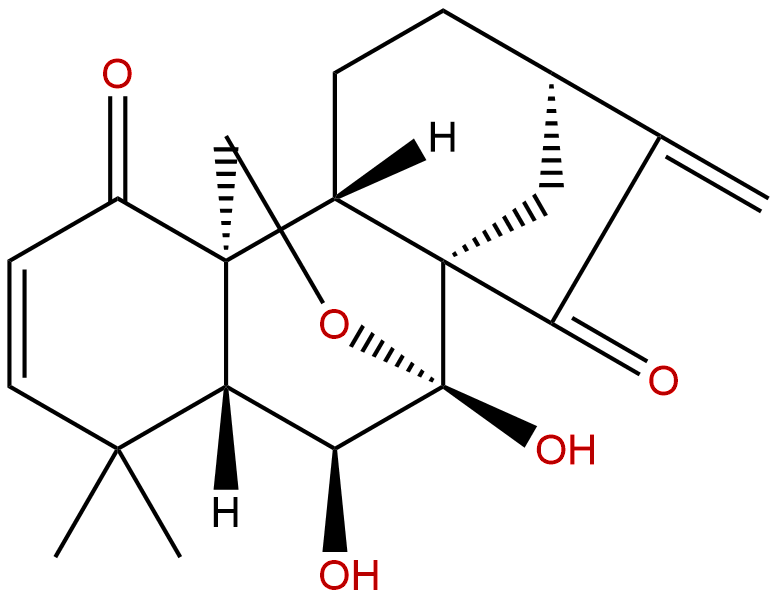


Product name: Eriocalyxin B
Synonym name:
Catalogue No.: SBP00090
Cas No.: 84745-95-9
Formula: C20H24O5
Mol Weight: 344.407
Botanical Source:
Type of Compound:
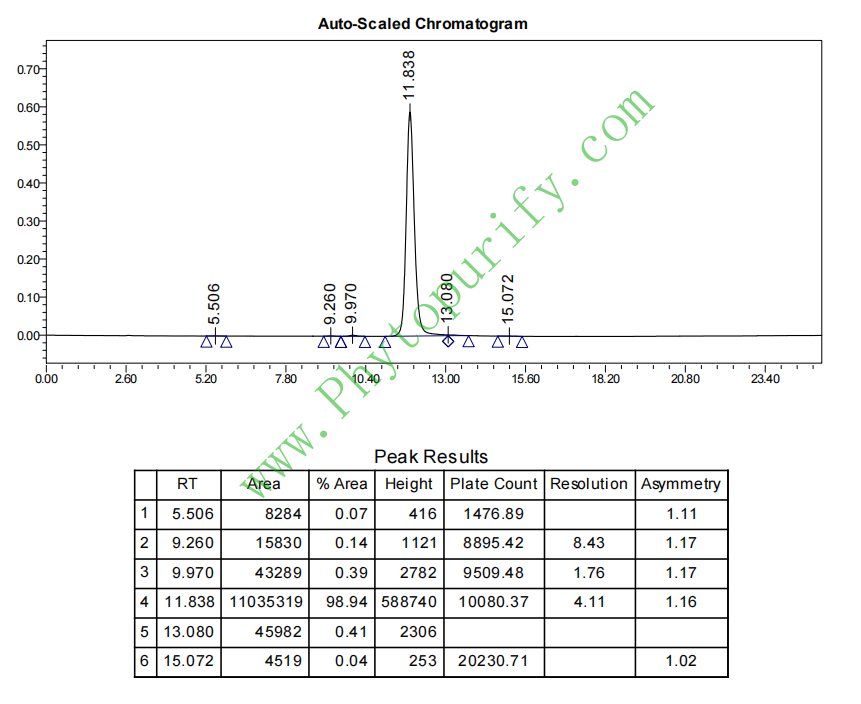
Purity: 95%~99%
Analysis Method: HPLC-DAD or/and HPLC-ELSD
Identification Method: Mass, NMR
Packing: Brown vial or HDPE plastic bottle
Storage: Store in a well closed container, protected from air and light. Put into refrigerate or freeze for long term storage.
Whenever possible, you should prepare and use solutions on the same day. However, if you need to make up stock solutions in advance, we recommend that you store the solution as aliquots in tightly sealed vials at -20℃. Generally, these will be useable for up to two weeks.
The product could be supplied from milligrams to grams
Inquire for bulk scale.
For Reference Standard and R&D, Not for Human Use Directly.
HPLC of Eriocalyxin B
Storage conditions:Short-term storage at 2~8℃, long-term storage at -20 ~ -80℃
83.8300
1.2962
1.2961
.0985
2.4086
11.2695
High
65.8696
6.8384
No
No
No
No
Yes
No
0.0
Yes
Yes
Yes
Yes
Eriocalyxin B (CAS number: 84745-95-9) is a diterpenoid natural product isolated from the traditional Chinese medicine Isodon eriocalyx. As a natural compound with multiple biological activities, berberine has shown extensive research value in the fields of anti-tumor, anti-inflammatory, and metabolic regulation. In recent years, with the in-depth analysis of its molecular mechanism, berberine has become one of the hotspots in natural product pharmacology research due to its ability to induce apoptosis and autophagy in tumor cells, as well as regulate multiple signaling pathways. This article will systematically review the chemical structure and physicochemical properties, plant sources and extraction methods, pharmacological activity, mechanism of action and molecular targets, pharmacological evaluation and pharmacokinetic characteristics of berberine, and explore its clinical application prospects and future development directions.
Mao E E Su belongs to the terpenoid class, with a molecular formula of C20H24O5 and a molecular weight of 344.4070. Its structural features include a typical four ring skeleton and multiple oxidative functional groups, endowing it with high biological activity. The LogP value of berberine is 1.2962, indicating that it has moderate lipid solubility and is beneficial for cell membrane penetration. The polarization surface area (TPSA) is 83.83 Å ², indicating a good balance between membrane permeability and targeted binding. Low water solubility (0.0985 mg/mL) may have an impact on its bioavailability. It is worth noting that berberine has a high blood-brain barrier penetration ability, indicating its potential application value in central nervous system diseases. The negative result of hERG channel inhibition experiment indicates a low risk of cardiac toxicity. The Ames mutagenicity test result is 0.0, indicating a low risk of genotoxicity and meeting safety requirements.
Mao'e B is mainly derived from Isodon eriocalyx, a plant in the family Lamiaceae. This plant is widely used in traditional Chinese medicine for anti-inflammatory, anti-tumor, and immune regulation purposes. Mao E Xiang Cha Cai is distributed in multiple provinces in southern China, with Yunnan, Sichuan and other regions being the main production areas.
The extraction of berberine is usually carried out using solvent extraction combined with chromatographic separation technology. Common extraction solvents include ethanol, methanol, and ethyl acetate. The extraction process is generally as follows: dry plant whole grass or stems and leaves are crushed and extracted with organic solvents, and the extracted solution is concentrated and purified by methods such as silica gel column chromatography and reverse phase high performance liquid chromatography (RP-HPLC). In recent years, the application of new technologies such as ultrasound assisted extraction and microwave-assisted extraction has improved the extraction efficiency and purity of berberine. In addition, the structural identification of berberine mainly relies on modern analytical methods such as nuclear magnetic resonance (NMR), mass spectrometry (MS), and infrared spectroscopy (IR).
Physalin B has significant inhibitory effects on many tumor cell lines, including breast cancer, lung cancer, liver cancer, colorectal cancer and leukemia. In vitro experiments have shown that berberine can significantly reduce the proliferation ability of tumor cells, induce cell cycle arrest, promote cell apoptosis and autophagy. Animal model studies have also confirmed its anti-tumor effect, manifested as reduced tumor volume and prolonged survival.
Mao E E Su exerts anti-inflammatory activity by regulating the expression of various inflammatory mediators. It can inhibit the secretion of pro-inflammatory cytokines such as TNF - α, IL-6, and IL-1 β, and alleviate the inflammatory response. Related studies have shown that berberine exerts anti-inflammatory effects by inhibiting the NF - κ B and MAPK signaling pathways, reducing the transcriptional activity of inflammatory genes.
The research on the regulation of fat metabolism by berberine is relatively novel. It can inhibit the differentiation of adipocytes and lipid accumulation, reduce the expression of genes related to adipogenesis, indicating its potential application value in the prevention and treatment of diseases such as obesity and metabolic syndrome.
In addition, berberine also exhibits certain immune regulatory effects, which can regulate T cell function and improve the pathological status of autoimmune diseases. Its protective effect on the nervous system and antioxidant activity are gradually receiving attention.
The multi-target mechanism of action of berberine is the basis for its various pharmacological activities. It mainly involves the following key targets and signaling pathways:
MCL1 and BCL2 As anti apoptotic proteins, the downregulation of MCL1 and BCL2 is an important mechanism by which berberine induces apoptosis in tumor cells. Mao E E Su regulates the expression of these proteins, disrupts the anti apoptotic balance within cells, and promotes cell apoptosis.
STAT3 Signal transducer and activator of transcription factor 3 (STAT3) is a key regulatory factor for the proliferation and immune escape of various tumor cells. Mao E E Su can inhibit the phosphorylation and nuclear translocation of STAT3, block its transcriptional activity, and inhibit the growth and survival of tumor cells.
MMP2 Matrix metalloproteinase-2 (MMP2) is involved in the invasion and metastasis of tumor cells. Mao E E Su reduces the migration and invasion ability of tumor cells by inhibiting the expression and activity of MMP2.
TOP1 and TOP2A DNA topoisomerases I and II α (TOP1, TOP2A) are key enzymes involved in DNA replication and transcription processes. Mao E E Su inhibits the activity of these two enzymes, interferes with the DNA metabolism of tumor cells, and induces cell death.
HIF1A Hypoxia inducible factor 1 alpha (HIF1A) promotes angiogenesis and metabolic reprogramming in tumor hypoxic environments. Mao E E Su inhibits the expression of HIF1A and blocks the adaptive response of tumors.
MAPK1 The MAPK signaling pathway regulated by berberine is involved in cell proliferation, differentiation, and stress response, and its inhibitory effect contributes to anti-inflammatory and anti-tumor effects.
ESR1 and CYP19A1 Estrogen receptor α (ESR1) and aromatase (CYP19A1) are important targets of hormone dependent tumors such as breast cancer. The regulation of both by berberine suggests its potential in the treatment of hormone related tumors.
Overall, berberine achieves multiple biological effects of anti-tumor, anti-inflammatory, and metabolic regulation through multi-target and multi pathway synergistic effects.
The pharmacological parameters of berberine indicate that it has good potential for drug development. Medium molecular weight and moderate LogP value are beneficial for the in vivo distribution and membrane penetration of drugs. A higher polarization surface area (TPSA) contributes to its binding affinity with target proteins. Although its water solubility is low, its bioavailability can be improved through drug formulation techniques such as nanocarriers and solid dispersions.
The high penetration of the blood-brain barrier provides a possibility for its application in neurological related diseases. The non inhibitory nature of hERG channels reduces the risk of cardiac toxicity, while a negative Ames test indicates a lower risk of genotoxicity and better safety.
At present, pharmacokinetic studies on berberine are relatively limited, and preliminary data indicate that it has good stability and distribution characteristics in vivo. Further systematic research on metabolic pathways, half-life, bioavailability, and excretion mechanisms in vivo is needed in the future to guide preclinical and clinical development.
The potential of berberine in the field of anti-tumor is particularly prominent. Its multi-target mechanism of action enables it to overcome the resistance problem of single target drugs, making it suitable for development as combination therapy or multi-target anticancer drugs. Especially in the fields of breast cancer, lung cancer and blood tumors, calycosin B shows a good therapeutic prospect.
In addition, the anti-inflammatory and immunomodulatory effects of berberine provide new ideas for the treatment of autoimmune diseases. Its inhibitory effect on fat production also suggests its potential application in metabolic diseases such as obesity and fatty liver.
Future research should focus on the following aspects:
Pharmacokinetic and safety evaluation The in vivo metabolism, toxicology, and safety studies of the system lay the foundation for clinical trials.
Formulation development Optimize the administration route and formulation form to improve the bioavailability and targeting of berberine.
mechanism research Thoroughly analyze its multi-target action network and explore new targets and signaling pathways.
clinical research Conduct early clinical trials to evaluate its therapeutic efficacy and safety.
Combination therapy strategy Explore synergistic effects with existing anti-cancer drugs and immune modulators to enhance therapeutic efficacy.
As a natural diterpenoid product with multiple biological activities, berberine has shown broad application prospects in the fields of anti-tumor, anti-inflammatory, and metabolic regulation due to its unique chemical structure and multi-target mechanism of action. Although it is still in the preclinical research stage, its good pharmacokinetic parameters and safety features provide a solid foundation for future drug development. With the continuous deepening of pharmacokinetics, mechanism research, and clinical evaluation, berberine is expected to become an important candidate molecule in the development of natural product drugs, bringing new breakthroughs to the treatment of tumors and related diseases.
