Introduction/Overview
Natural products, as an important source of drug discovery, play an irreplaceable role in the long history of human struggle against diseases. China has a long tradition of medicinal plant applications, and the active ingredients of many traditional Chinese herbs have been proven by modern science to have significant pharmacological activities. Thunder God Vine(Tripterygium wilfordii Hook. f.), As a traditional Chinese medicine used in clinical practice to treat autoimmune and inflammatory diseases such as rheumatoid arthritis and systemic lupus erythematosus, the study of its active ingredients has always been a hot topic in the fields of natural product chemistry and pharmacology. Thunder God Vine is rich in various structurally unique diterpenoid lactones, triterpenes, and alkaloids. Among them, components such as Triptolide have attracted much attention due to their strong immunosuppressive and anti-inflammatory activities, but their significant toxicity also limits their clinical applications.
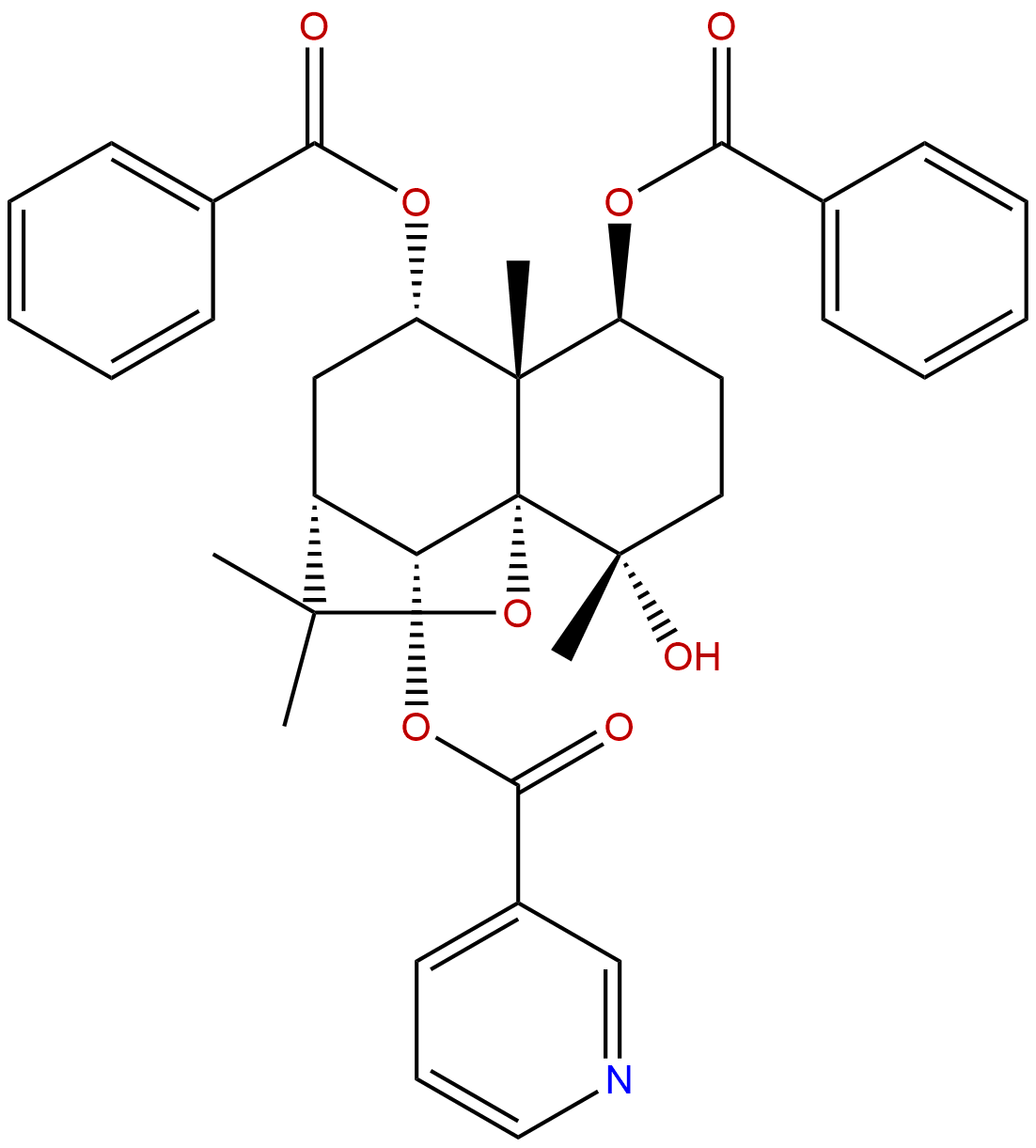
During the exploration of secondary metabolites with novel structures and unique pharmacological activities in Tripterygium wilfordii, Regelidine was isolated and identified as a structurally unique natural product. Black vine alkaloid, CAS number 114542-54-0, originally derived from plants in the genus Tripterygium(Tripterygium regelii)Or Thunder God Vine(Tripterygium wilfordii)Separated from the stem. Its chemical structure belongs to the abietane type diterpenoid alkaloid, which has a complex polycyclic skeleton and may contain functional groups such as epoxy and hydroxyl. Compared with other well-known active ingredients in Tripterygium wilfordii, such as Triptolide, there has been relatively little research on black vine alkaloids. However, its unique structure suggests potential biological activities that are different from those of known ingredients.
In recent years, with the deepening of research on pain physiology and the reflection on the side effects of existing analgesic drugs (such as opioid drugs), the development of new, low addictive, efficient and safe analgesic drugs has become an urgent need. The emergence of black vine alkaloids provides a new candidate molecule for the development of analgesic drugs. Preliminary pharmacological studies have shown that berberine exhibits significant analgesic activity, and its mechanism of action may involve multiple targets closely related to pain signal transduction, including transient receptor potential vanillic acid subtype 1 (TRPV1), cannabinoid receptor 1 (CNR1), delta opioid receptor (OPRD1), μ - opioid receptor (OPRM1), kappa opioid receptor (OPRK1), cyclooxygenase-1/2 (PTGS1/PTGS2), transient receptor potential anchor protein 1 (TRPA1), serotonin transporter (SLC6A4), and dopamine receptor D2 (DRD2). This multi-target mode of action may have unique advantages in terms of analgesic efficacy and reducing side effects.
This review aims to systematically review the current research status of black vine alkaloids, exploring their chemical structure and physicochemical properties, plant sources and extraction methods, pharmacological activity, mechanism of action, drug evaluation, and pharmacokinetic characteristics. It also looks forward to their clinical application prospects and challenges as a novel analgesic precursor compound, in order to provide comprehensive references for the subsequent research and development of this natural product.
Chemical structure and physicochemical properties
Black vine alkaloids belong to the class of diterpenoid alkaloids, specifically classified as rosin type diterpenoid alkaloids. The basic skeleton of these compounds consists of four rings (A, B, C, D), where A, B, and C rings form a typical abietane tricyclic diterpene core, while D ring is a nitrogen-containing heterocyclic ring, usually a pyridine or pyrrole ring, fused with C ring through a carbon nitrogen bond. The precise structural analysis of black vine alkaloids relies on modern spectroscopic techniques such as nuclear magnetic resonance (NMR), mass spectrometry (MS), and X-ray single crystal diffraction. Its molecular formula is C ∝③ H ₄₅ NO ₉, with a molecular weight of 599.6800 g/mol, indicating the presence of multiple oxygen-containing functional groups in its structure, such as hydroxyl, ester, or ether bonds, which are crucial for its biological activity.
From the perspective of physical and chemical properties, black vine alkaloids exhibit typical natural product characteristics. The LogP of the compound is 4.5466, indicating strong lipophilicity. A higher LogP value is beneficial for its penetration of the cell membrane and binding to intracellular targets, but it may also lead to poor water solubility. Its solubility is only 0.0010 mg/mL, making it a poorly soluble compound. This characteristic is one of the main obstacles to oral administration, which may lead to low bioavailability. The topological polar surface area (TPSA) is 121.2500 Å ², which is relatively high. TPSA is an important parameter for evaluating the ability of drug molecules to penetrate cell membranes, especially the blood-brain barrier. It is generally believed that molecules with TPSA greater than 140 Å ² are difficult to passively diffuse through the blood-brain barrier. The TPSA value of black vine alkaloids is close to but below 140 Å ², indicating that they may have some potential for central nervous system penetration, but mainly through limited active transport or passive diffusion into the central nervous system. Its blood-brain barrier (BBB) penetration was evaluated as' low ', which is consistent with higher TPSA and molecular weight. In addition, the risk assessment of hERG inhibition is' no ', indicating that its risk of causing cardiac QT interval prolongation and arrhythmia is low at therapeutic concentrations, which is a favorable safety signal. The Ames test result is 0.0, indicating that it did not show significant genetic toxicity in the standard bacterial recovery mutation test, and preliminary evidence suggests that it is non mutagenic. These physicochemical properties and preliminary safety data provide an important foundation for further drug development of black vine alkaloids.
Plant sources and extraction methods
Black vine alkaloids mainly come from plants in the Celastraceae family, including the Thunder God Vine genus(Tripterygium wilfordii)And Black Vine(Tripterygium regelii Also known as Northeast Thunder God Vine. This genus of plants is widely distributed in the southern and northeastern regions of the Yangtze River Basin in China. Its roots, stems, and leaves are all used in traditional medicine, but the toxicity and efficacy of the roots are the strongest. The content of black vine alkaloids in plants is usually low and belongs to trace components, which poses challenges for their large-scale acquisition.
The extraction of black vine alkaloids usually follows the classic process of natural product chemistry, which mainly includes the following steps:
-
Raw material pretreatment and extraction Collect dried stems of Thunder God Vine or Black Vine and grind them to the appropriate particle size. The selection of extraction solvent is crucial. Due to the lipophilicity of black vine alkaloids, gradient extraction is usually carried out using solvents with low to high polarity, such as petroleum ether, chloroform, ethyl acetate, methanol, or ethanol. The most commonly used method is to use methanol or ethanol for cold soaking or hot reflux extraction to obtain the total extract. In order to improve extraction efficiency, modern technologies such as ultrasound assisted extraction (UAE) or microwave-assisted extraction (MAE) have also been attempted to be applied, which can shorten extraction time and increase yield.
-
Preliminary separation and enrichment Suspend the total extract in water and perform liquid-liquid extraction using organic solvents of different polarities (such as petroleum ether, chloroform, ethyl acetate, n-butanol) to obtain extraction sites of different polarities. Black vine alkaloids are mainly enriched in the extraction sites of medium polarity chloroform or ethyl acetate. In addition, by utilizing the properties of its alkaloids, acid-base extraction can be used for enrichment: the total extract is treated with dilute acid (such as hydrochloric acid) to dissolve the alkaloids into salts in the aqueous phase, and then extracted with organic solvents to remove non alkaloid impurities, followed by alkalization of the aqueous phase (such as ammonia water), and then extracted with organic solvents (such as chloroform) to obtain the total alkaloid fraction.
-
Chromatographic Separation and Purification This is a key step in obtaining high-purity black vine alkaloids. The strategy of combining multiple chromatographic techniques is usually adopted.
- Silica gel column chromatography: is the most commonly used method. Perform gradient elution using solvent systems such as chloroform methanol or petroleum ether acetone, and combine the fractions containing berberine based on the results of thin-layer chromatography (TLC) detection.
- Gel column chromatography Like Sephadex LH-20, it is commonly used for removing pigments and further separation based on molecular size.
- Preparation type high-performance liquid chromatography (Pre HPLC)For structurally similar and difficult to separate components, Pre HPLC is the ultimate means of obtaining high-purity monomeric compounds. Typically, a reverse phase C18 chromatographic column is used, with acetonitrile water or methanol water as the mobile phase, to achieve baseline separation of the target compound through optimized gradient programs.
The entire extraction and separation process needs to be guided by biological activity tracking (such as analgesic activity screening) to ensure that the isolated compounds have the target activity. Due to the low content of black vine alkaloids in plants, their overall yield is usually very low, and large-scale production faces huge challenges. In recent years, research on obtaining black vine alkaloids or their analogues through plant tissue culture, chemical total synthesis or semi synthesis methods is also being explored in order to solve the bottleneck problem of natural sources.
Pharmacological activity research
The pharmacological activity research of black vine alkaloids is still in its early stages, but existing research results have shown its great potential in the field of analgesia.
Analgesic activity This is the core pharmacological activity of black vine alkaloids. Early research mainly used classic animal pain models to evaluate their effectiveness. In models such as hot plate method (thermal stimulation), acetic acid writhing method (chemical stimulation), and formalin test (inflammatory pain), black vine alkaloids exhibit dose-dependent analgesic effects. Compared with positive control drugs such as morphine and aspirin, berberine may exhibit lower tolerance and dependency risks while producing equivalent analgesic effects. For example, in the acetic acid writhing model, berberine can significantly reduce the number of writhing movements in mice, indicating its effectiveness in treating chemical visceral pain. In the formalin test, it not only inhibited the first phase (neuropathic pain), but also significantly inhibited the second phase (inflammatory pain), suggesting that it may act on both central and peripheral mechanisms simultaneously. More importantly, studies have shown that long-term administration of berberine does not produce opioid like physical dependence and tolerance, providing important evidence for its development as a non addictive analgesic.
anti-inflammatory activity Given the close relationship between pain and inflammation, the analgesic effect of berberine may be partially attributed to its anti-inflammatory activity. Preliminary in vitro experiments have shown that berberine can inhibit the release of nitric oxide (NO), prostaglandin E2 (PGE2), as well as pro-inflammatory cytokines such as tumor necrosis factor - α (TNF - α) and interleukin-6 (IL-6) by macrophages (such as RAW264.7 cells) stimulated by lipopolysaccharide (LPS). These effects may be related to their inhibition of inflammatory signaling pathways such as nuclear factor kappa B (NF - κ B) or mitogen activated protein kinase (MAPK). In the rat foot swelling model induced by carrageenan, berberine also showed significant anti-inflammatory and anti-inflammatory effects.
Other potential activities Based on its multi-target properties, black vine alkaloids may also have other pharmacological activities. For example, its potential effects on dopamine receptor D2 (DRD2) and 5-hydroxytryptamine transporter (SLC6A4) may endow it with antidepressant or anti anxiety adjunctive effects, which have positive implications for the emotional disorders often associated with chronic pain patients. In addition, some preliminary studies suggest that it may have immunomodulatory activity, but there are few relevant reports and further confirmation is needed.
Mechanism of action and molecular targets
The analgesic effect of Hei Man Ding alkali is not achieved through a single target, but presents a synergistic mode of action of "multiple targets and pathways", which may be the molecular basis for its high efficiency and low side effects. According to existing research, its mechanism of action mainly involves the following aspects:
-
Opioid receptor system Black vine alkaloids exhibit certain affinity or excitatory activity towards the μ - opioid receptor (OPRM1), δ - opioid receptor (OPRD1), and κ - opioid receptor (OPRK1). Opioid receptors are classic analgesic targets, mainly distributed in the central nervous system and peripheral nerve endings. Exciting these receptors can inhibit adenylate cyclase activity, reduce cAMP levels, thereby closing voltage-gated calcium ion channels, inhibiting the release of neurotransmitters such as substance P and glutamate, and activating inward rectifying potassium channels, causing neuronal hyperpolarization and blocking the transmission of pain signals. Unlike classical mu receptor agonists such as morphine, the effects of berberine on the three subtypes of opioid receptors may be more balanced, which may be one of the reasons for its lower addictive and respiratory inhibitory side effects. Especially the excitatory effect on kappa receptors is believed to be related to the production of spinal level analgesia without significant reward effects.
-
Cannabinoid receptor system Black vine alkaloids can act on cannabinoid receptor 1 (CNR1). CB1 receptors are mainly distributed in the central nervous system and are an important component of the endocannabinoid system. Activating CB1 receptors can also inhibit neurotransmitter release, producing analgesic, anti anxiety, and anti-inflammatory effects. Black vine alkaloids may enhance analgesic effects by activating CB1 receptors and synergizing with the opioid receptor system.
-
Transient receptor potential (TRP) channel Black vine alkaloids have regulatory effects on TRPV1 and TRPA1 channels. TRPV1 and TRPA1 are non selective cation channels expressed on nociceptive sensory neurons, which can be activated by capsaicin, heat, acid, inflammatory mediators, and various chemical stimuli. They are key molecules for transmitting pain signals. Black vine alkaloids may act as antagonists of TRPV1 and TRPA1, blocking the opening of these channels and inhibiting the generation and transmission of nociceptive signals, resulting in peripheral analgesic effects. This explains its significant inhibitory effect on the second phase (inflammatory pain) in the formalin test.
-
Cyclooxygenase (COX) system Black vine alkaloids have inhibitory effects on cyclooxygenase-1 (PTGS1/COX-1) and cyclooxygenase-2 (PTGS2/COX-2). COX is a key enzyme that catalyzes the conversion of arachidonic acid into prostaglandins (PGs), among which COX-2 is highly expressed under inflammatory stimulation, producing prostaglandins (such as PGE2) that cause pain, heat, and inflammation. Black vine alkaloids exert anti-inflammatory and analgesic effects by inhibiting COX activity and reducing the synthesis of peripheral and central prostaglandins. The selective inhibition ratio of COX-1 and COX-2 by it still needs to be clarified, but preliminary data suggests that it may have balanced inhibitory activity, which can help reduce gastrointestinal side effects while anti-inflammatory.
-
Monoamine nervous system The regulatory effect of black vine alkaloids on serotonin transporter (SLC6A4) and dopamine receptor D2 (DRD2) may be involved in its analgesic mechanism. Inhibition of SLC6A4 can increase the concentration of serotonin (5-HT) in the synaptic cleft, activate the downregulation pathway, and produce analgesic effects. Meanwhile, regulating DRD2 may affect the central reward pathway and help alleviate pain related emotional abnormalities.
In summary, black vine alkaloids form a complex and networked mechanism of action by simultaneously acting on multiple targets closely related to pain occurrence, transmission, and regulation, such as opioids, cannabinoids, TRP channels, COX, and monoamine systems. This multi-target synergistic mode not only produces powerful analgesic effects, but also may reduce the side effects caused by excessive activation of a single target (such as opioid addiction and gastrointestinal damage caused by COX inhibitors) through functional complementarity between different targets, reflecting the unique advantages of natural products in drug discovery.
Evaluation of drug properties and pharmacokinetics
To promote the clinical application of black vine alkaloids from the laboratory, a comprehensive evaluation of their drug like and pharmacokinetic (ADME) properties is necessary.
Drugability assessment Based on the aforementioned physicochemical parameters, the pharmacological properties of black vine alkaloids present a situation of "advantages and challenges coexisting".
* Advantage The molecular weight (599.68) is slightly higher than the limit of molecular weight less than 500 in Lipinski's Rule of Five, but still within an acceptable range. LogP (4.55) complies with the rules. The low hERG inhibition risk and negative Ames test results are important highlights of its safety, indicating a low risk of cardiac and genetic toxicity. The multi-target mode of action is a huge advantage in its pharmacodynamics.
* challenge The biggest challenge lies in its extremely low water solubility (0.0010 mg/mL). This directly leads to difficulties in oral absorption and extremely low bioavailability. In addition, higher TPSA and molecular weight result in lower blood-brain barrier penetration. Although "low" penetration may reduce central side effects, it may limit the full potential of its efficacy for indications requiring central analgesia. Therefore, berberine itself may not be an ideal direct oral drug, but an excellent lead compound.
Pharmacokinetic characteristics At present, there are few detailed research reports on the ADME process of black vine alkaloids in vivo, but reasonable speculation can be made based on their physicochemical properties, combined with limited experimental data for analysis.
* Absorption Due to extremely poor water solubility, the oral absorption of black vine alkaloids will be very limited, and their bioavailability may be extremely low. Its high lipophilicity may lead to precipitation or binding with food components in the gastrointestinal tract. Therefore, developing suitable drug delivery systems (such as liposomes, nanoparticles, cyclodextrin inclusion complexes, solid dispersions) is a key strategy to improve their oral bioavailability. Non oral routes of administration, such as injection (intravenous, subcutaneous, intramuscular), transdermal or nasal administration, may be more feasible choices.
* Distribution A high LogP value means that berberine is easily bound to plasma proteins (especially albumin and alpha 1-acid glycoprotein), and the free drug concentration is low. Its distribution volume may be large, tending to distribute to tissues with abundant blood flow (such as liver, lungs, kidneys) and adipose tissue. Its low BBB penetration limits its distribution in the central nervous system.
* Metabolism The complex polycyclic structure and multiple oxygen-containing functional groups (hydroxyl, ester) of black vine alkaloid make it a good substrate for liver metabolic enzymes, mainly cytochrome P450 enzymes such as CYP3A4, CYP2D6, etc. Metabolic reactions may include hydroxylation, demethylation, hydrolysis, glucuronic acid or sulfuric acid binding, etc. The first pass effect will be another important factor leading to low bioavailability after oral administration. Further research is needed to determine whether its metabolites are active or toxic.
* Excretion Due to its molecular weight and lipophilicity, berberine and its metabolites may be mainly excreted through bile into the intestine and ultimately excreted with feces. Glomerular filtration and tubular secretion and excretion through the kidneys may not be the main pathways.
Optimization strategy for drug properties Given the above challenges, structural modification of black vine alkaloids is the core direction to enhance their pharmacological properties. The main strategies include:
1. Improve water solubility Introducing polar groups such as phosphate groups, amino acid esters, sugar groups, etc. into molecules to make prodrugs. For example, phosphorylating hydroxyl groups and utilizing in vivo phosphatase hydrolysis to release the original drug.
2. Optimize metabolic stability Replacing easily metabolized sites (such as benzene rings and hydroxyl groups) with fluorine atoms or introducing steric hindrance groups to reduce metabolic rate and prolong half-life.
3. Adjust target selectivity By studying the structure-activity relationship (SAR), the pharmacophores corresponding to each target are identified, and derivatives with higher selectivity for specific targets (such as opioid receptors or TRPV1) and weaker effects on other unrelated targets are designed to reduce potential off target side effects.
Clinical application prospects and prospects
Black vine alkaloids, as a natural product with unique multi-target analgesic mechanisms and good preliminary safety, have shown promising prospects in clinical translation, but also face severe challenges.
Clinical application prospects:
1. New non addictive analgesics This is the most core potential application direction of black vine alkaloids. Given the severe situation of the current opioid abuse crisis, the development of drugs with potent analgesic effects but without addiction, respiratory depression, or tolerance is an urgent clinical need. Black vine alkaloids have the potential to achieve this goal by simultaneously acting on multiple targets such as opioids, cannabinoids, and TRP channels. It may be particularly suitable for the treatment of chronic pain, such as neuropathic pain, inflammatory pain, and cancer pain, for which there is currently a lack of ideal therapeutic drugs.
2. Adjuvants for combination therapy The multi-target mechanism of black vine alkaloids makes them an ideal combination drug component. For example, when used in combination with low-dose opioid drugs, it may enhance the analgesic effect through synergistic effects, thereby reducing the dosage of opioid drugs and minimizing their side effects. Combined with COX-2 selective inhibitors, it may enhance anti-inflammatory and analgesic effects without increasing gastrointestinal risks.
3. Treating pain related comorbidities Its regulatory effect on the monoaminergic system may improve comorbidities such as depression, anxiety, and sleep disorders that are often associated with chronic pain, achieving a "one drug, multiple effects" approach.
Challenges faced and future research directions:
1. Pharmacokinetic defects The extremely low water solubility and oral bioavailability are the biggest obstacles to its clinical translation. The future research focus should be on developing efficient drug delivery systems (such as nanotechnology, liposomes) and structural modifications based on prodrug strategies. For example, designing an injectable sustained-release formulation for postoperative analgesia or cancer pain management.
2. toxicological evaluation Although Ames test and hERG inhibition test results are good, comprehensive toxicological evaluation (including acute toxicity, long-term toxicity, reproductive toxicity, immunotoxicity, etc.) is essential. In particular, many components in plants of the Thunder God Vine genus have hepatotoxicity, nephrotoxicity, and reproductive toxicity. Whether black vine alkaloids also have similar toxicity needs to be systematically evaluated in large animal models.
3. In depth analysis of the mechanism of action Although multiple potential targets have been identified, the contribution of each target to the overall analgesic effect, the interaction between targets (crosstalk), and whether there are other more critical targets still need to be further validated through tools such as gene knockout animals and selective antagonists/agonists. In addition, the specific interaction modes with the endogenous cannabinoid system and opioid peptide system also need to be elucidated.
4. Structure Activity Relationship (SAR) Study Conduct SAR research on black vine alkaloids in the system, clarify which functional groups in its molecular skeleton are crucial for activity, and which functional groups can be modified to improve physicochemical properties. By synthesizing a series of derivatives, candidate compounds with higher activity, lower toxicity, and better pharmacokinetic properties are screened.
5. Large scale preparation Addressing the issue of scarce natural sources. Developing efficient chemical synthesis or semi synthesis routes, or utilizing synthetic biology techniques to reconstruct their biosynthetic pathways in heterologous hosts such as yeast and Escherichia coli, is the fundamental way to achieve their industrialization.
Conclusion
As a diterpenoid alkaloid discovered from the traditional Chinese medicine Tripterygium wilfordii, Hei Man Ding alkaloid has opened up new directions for the development of new analgesic drugs due to its unique chemical structure and multi-target, multi pathway synergistic analgesic mechanism. It exhibits strong analgesic potential by simultaneously acting on opioid receptors, cannabinoid receptors, TRP channels, COX enzymes, and monoaminergic systems. At the same time, its preliminary safety evaluation (low hERG inhibition risk, no genetic toxicity) and low addictive tendency distinguish it from traditional opioid drugs and NSAIDs, making it a great potential as the next generation of non addictive and highly effective analgesic lead compounds.
However, the path from natural products to clinical drugs is full of challenges. The low oral bioavailability caused by the extremely poor water solubility of black vine alkaloids is the core bottleneck for their drug development. Future research must focus on overcoming this deficiency by means of drug chemical modification, development of novel delivery systems, and combining in-depth pharmacological, toxicological, and pharmacokinetic studies to systematically evaluate its potential as a drug. Meanwhile, a detailed analysis of its mechanism of action and clarification of its structure-activity relationship will provide theoretical guidance for rational design of better derivatives.
In summary, black vine alkaloids are a new star in the interdisciplinary field of natural product chemistry and pharmacology. Despite the long road ahead, its unique value makes it worth investing more research resources in. We have reason to believe that with the continuous deepening of research, berberine or its derivatives have the potential to bring new treatment options to billions of pain patients worldwide in the future, and contribute to alleviating the suffering of human pain.