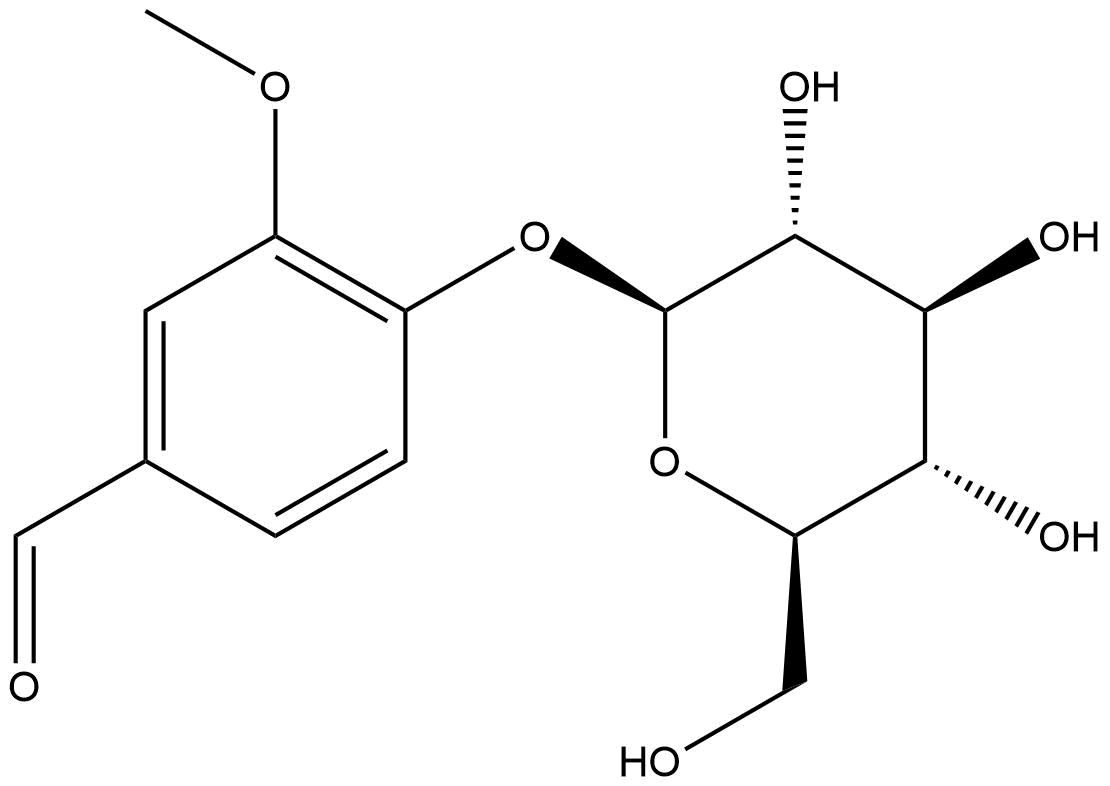


Product name: Glucovanillin
Synonym name:
Catalogue No.: BP4118
Cas No.: 494-08-6
Formula: C14H18O8
Mol Weight: 314.29
Botanical Source:
Type of Compound:
Purity: 95%~99%
Analysis Method: HPLC-DAD or/and HPLC-ELSD
Identification Method: Mass, NMR
Packing: Brown vial or HDPE plastic bottle
Storage: Store in a well closed container, protected from air and light. Put into refrigerate or freeze for long term storage.
Whenever possible, you should prepare and use solutions on the same day. However, if you need to make up stock solutions in advance, we recommend that you store the solution as aliquots in tightly sealed vials at -20℃. Generally, these will be useable for up to two weeks.
The product could be supplied from milligrams to grams
Inquire for bulk scale.
Chengdu Biopurify Phytochemicals Ltd. is a leading company in the research, development, manufacture and marketing of High Quality Phytochemicals and Extracts(especially Active Ingredients from Traditional Chinese Medicine,TCM), Natural Active Pharmaceutical Ingredients worldwide.
The main services:
A. Supply active ingredients and reference standards of TCM, from mgs to kgs scale
B. Custom extraction and purification, target Herb Active Ingredients
C. Custom synthesis and semi-synthesis for Natural Active Ingredients
D. CR(contract research), CM(contract manufacture) and PD(process development) services from lab scale, pilot scale to commercial scale(GMP is also available)
E. TCM compounds library for drug screen,more than 3000 compounds available, many of them are rare and unique.
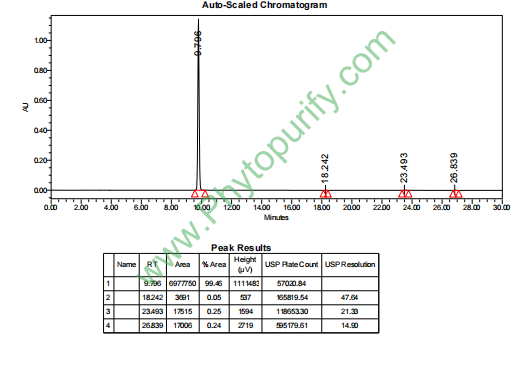
HPLC of Glucovanillin
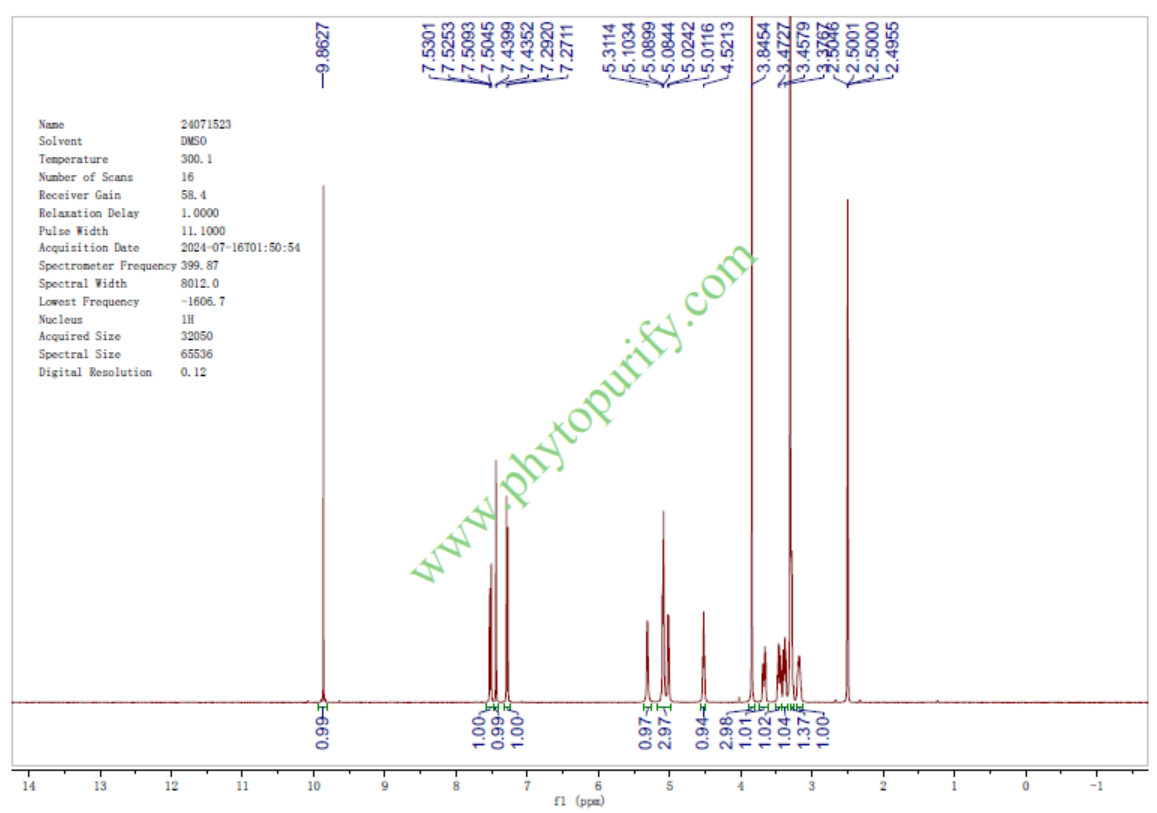
HNMR of Glucovanillin
Storage conditions:Short-term storage at 2~8℃, long-term storage at -20 ~ -80℃
125.6800
-.5439
-.5441
27.2663
.7547
.2428
Low
30.8446
3.4766
Yes
No
No
No
Yes
No
0.0
Yes
Yes
Yes
Yes
Glucovanlin (CAS number: 494-08-6) is a naturally occurring glycoside compound in Vanilla planifolia, which has attracted widespread attention due to its unique structure and biological activity. As a precursor of vanillin, vanillin glucoside is converted into active vanillin through the synergistic effect of cell wall degradation and glucosidase hydrolysis. In recent years, with the in-depth study of the pharmacological effects of natural products, vanillin glucoside has been found to have potential lipase inhibitory activity and significant antioxidant capacity, demonstrating its potential application in metabolic diseases and oxidative stress-related diseases.
This article aims to systematically review the chemical structure and physicochemical properties, plant sources, and extraction methods of vanillin glucoside. Combined with the latest pharmacological activity research, it explores its mechanism of action and molecular targets, evaluates its pharmacological properties and pharmacokinetic characteristics, and looks forward to its clinical application prospects, providing theoretical basis and research direction for the further development and application of this compound.
The molecular formula of vanillin glucoside is C14H18O8, with a molecular weight of 314.2900. Its chemical structure is composed of vanillin groups connected to the glucoside moiety through β - glycosidic bonds. Its structural characteristics combine the aromatic aldehyde activity of vanillin with the water solubility of glucoside, exhibiting good hydrophilicity and biocompatibility.
In terms of physical and chemical properties, the LogP value of vanillin glucoside is -0.5439, indicating its strong hydrophilicity and water solubility of 27.2663 mg/mL. It has good water solubility, which is conducive to absorption and distribution in vivo. Its topological polar surface area (TPSA) is 125.68 Å ², indicating that the molecule has high polarity, which may affect its cell membrane permeability. The low permeability of the blood-brain barrier suggests limited penetration in the central nervous system. The hERG channel inhibition test was negative, indicating a low risk of cardiac toxicity. The Ames mutagenicity test result was 0.0, indicating no significant risk of genotoxicity.
Overall, the physicochemical properties of vanillin glucoside are suitable for development as a water-soluble and safe drug molecule, especially for therapeutic strategies targeting peripheral tissues.
Vanillin glucoside is mainly present in the fruit pods of vanilla and is one of the precursor substances of vanilla aroma. Vanilla, as an important economic crop, undergoes fermentation and drying of its fruit pods. Under the action of enzymes, vanillin glucoside is hydrolyzed to produce vanillin, giving vanilla a unique aroma.
The methods for extracting vanillin glucoside mainly include water extraction, alcohol extraction, and enzymatic hydrolysis. The traditional water extraction method utilizes its good water solubility, combined with hot water soaking and ultrasound assisted extraction, to effectively recover vanillin glucoside. The alcohol extraction method often uses methanol or ethanol as solvents and is suitable for simultaneous extraction of other glycoside compounds. Enzymatic hydrolysis promotes the hydrolysis of vanillin glucoside and enhances the release efficiency of vanillin by adding β - glucosidase.
In recent years, supercritical CO2 extraction and membrane separation technologies have gradually been applied in the extraction and purification of vanillin glucoside, significantly improving extraction efficiency and purity, reducing the use of organic solvents, and in line with the trend of green extraction.
Lipase is a key enzyme in lipid metabolism, regulating the hydrolysis and absorption of fats. Vanillin glucoside, as a potential lipase inhibitor, can have a positive impact on obesity and related metabolic diseases by inhibiting lipase activity, reducing fat breakdown and absorption. In vitro experiments have shown that vanillin glucoside can significantly inhibit pancreatic lipase activity, exhibiting a dose-dependent inhibitory effect.
Oxidative stress is the pathological basis of various chronic diseases, and antioxidants play a protective role by clearing free radicals and regulating the antioxidant enzyme system. Vanillin glucoside exhibits excellent free radical scavenging ability and the potential to regulate intracellular antioxidant enzyme expression. Cell and animal model studies have confirmed that it can activate the NFE2L2/NRF2 signaling pathway, induce the expression of downstream antioxidant enzymes such as SOD1, SOD2, CAT, GPX1, and HMOX1, enhance cellular antioxidant defense capabilities, and alleviate oxidative damage.
In addition, the regulatory effect of vanillin glucoside on matrix metalloproteinases (MMP1, MMP3) and tyrosinase (TYR) suggests its potential application value in tissue remodeling and melanin production regulation.
Preliminary studies have also found that vanillin glucoside may have anti-inflammatory, antibacterial, and neuroprotective effects, but the relevant mechanisms are still unclear and require further systematic research.
The biological activity of vanillin glucoside is mainly achieved through its metabolite vanillin and its interactions with various molecular targets.
Vanillin glucoside activates the nuclear factor E2 related factor 2 (NFE2L2/NRF2) signaling pathway, promotes transcriptional expression of antioxidant enzyme genes, and enhances intracellular antioxidant enzyme activity, including superoxide dismutase (SOD1, SOD2), catalase (CAT), glutathione peroxidase (GPX1), and heme oxygenase 1 (HMOX1). These enzymes work together to clear reactive oxygen species (ROS), maintain cellular redox homeostasis, and alleviate cellular damage caused by oxidative stress.
Vanillin glucoside binds to the active site of pancreatic lipase, blocking the binding and hydrolysis process of fatty substrates, reducing the release of fatty acids and glycerol, and decreasing lipid absorption. Molecular docking and dynamic simulations show that the glycoside portion of vanillin glucoside forms a stable hydrogen bond network with the hydrophilic pocket of the enzyme, enhancing binding affinity.
The regulation of matrix metalloproteinases (MMP1, MMP3) and tyrosinase (TYR) by vanillin glucoside may be achieved through direct enzyme inhibition or modulation of related signaling pathways, affecting extracellular matrix degradation and melanin synthesis, and has potential anti-aging and whitening effects.
Vanillin glucoside has a low LogP value and high water solubility, which facilitates dissolution and absorption after oral administration. However, its high TPSA and polarity may limit its cell membrane permeability and affect bioavailability. The low permeability of the blood-brain barrier suggests that it mainly acts on peripheral tissues, reducing the risk of central nervous system side effects.
In terms of safety, vanillin glucoside does not inhibit hERG channels and reduces the risk of arrhythmia. The Ames test is negative, indicating no significant genetic toxicity and good safety.
Pharmacokinetic studies have shown that vanillin glucoside can be hydrolyzed by β - glucosidase in vivo to produce vanillin, which has high biological activity and good membrane permeability. The synergistic effect of the two may be the key to the pharmacological effects of vanillin glucoside.
However, the metabolic stability and in vivo half-life of vanillin glucoside still need further systematic evaluation to guide formulation design and optimization of dosing regimens.
Based on the lipase inhibition and antioxidant activity of vanillin glucoside, its therapeutic potential in obesity, metabolic syndrome, diabetes and oxidative stress related diseases (such as cardiovascular diseases, neurodegenerative diseases) deserves attention. Its good safety and natural source advantages provide the possibility for the development of functional food additives or adjuvant therapeutic drugs.
Future research should focus on:
In addition, the antioxidant and whitening potential of vanillin glucoside in the cosmetics industry also deserves further development.
Vanillin glucoside, as a widely sourced and structurally unique natural glycoside compound, has shown broad pharmacological application prospects due to its lipase inhibition and multi-target antioxidant activity. Its good safety and pharmacological properties have laid the foundation for clinical translation. In the future, through interdisciplinary research and modern drug development technology, it is expected to promote the transition of vanillin glucoside from laboratory to clinical use, becoming an important research object and application resource in the field of natural product pharmacology.
