| Catalog No | Package | Original Price | Price | Inventory | Quantity | Operating |
|---|---|---|---|---|---|---|
| BP4959-5mg | 5mg | $750.00 | Sign in |
|


Storage conditions:Short-term storage at 2~8℃, long-term storage at -20 ~ -80℃
63.9300
1.9642
1.4857
.4676
3.0275
14.2382
High
48.1722
7.4602
No
No
No
No
Yes
No
0.0
Yes
No
Yes
No
Natural products, as an important source of drug discovery, play an irreplaceable role in the long struggle between humans and diseases. Among numerous natural products with biological activity, they originate from the Aconitum genus(Aconitum)Plant diterpenoid alkaloids have long been a hot topic in natural product chemistry and pharmacology research due to their unique chemical structure and significant and complex pharmacological activities. Aconitum plants, commonly known as Caowu or Fuzi, have a long history of application in traditional Chinese medicine, especially in the treatment of pain, rheumatism, inflammation, and cardiovascular diseases. However, its treatment window is narrow and its toxicity is severe, especially in terms of cardiac toxicity and neurotoxicity, which greatly limits its clinical application. Therefore, in-depth analysis of the pharmacological activities, mechanisms of action, and toxicity characteristics of different alkaloids in Aconitum plants is crucial for achieving modern development of "reducing toxicity and increasing efficiency".
Napelline, as a diterpenoid alkaloid isolated from Aconitum plants, has gradually attracted the attention of researchers in recent years. Its CAS number is 5008-52-6, mainly derived from Baikal Aconitum(Aconitum baikalensis)Waiting for plants. Compared with some famous toxic components in the Aconitum genus, such as Aconitine, aconitine has relatively low toxicity, but exhibits a unique pharmacological activity spectrum, especially in terms of analgesic, anti-inflammatory, and anti osmotic potential. Preliminary studies suggest that aconitine may exert its multi-target and multi pathway pharmacological effects by acting on multiple molecular targets associated with pain and inflammation, such as transient receptor potential vanillic acid subtype 1 (TRPV1), cannabinoid receptor 1 (CNR1), opioid receptors (OPRD1, OPRM1, OPRK1), cyclooxygenase (PTGS1, PTGS2), and dopamine receptor D2 (DRD2). This multi-target mode of action gives it unique advantages in treating complex pain such as neuropathic pain and inflammatory pain, and may overcome the limitations of limited efficacy or significant side effects of single target drugs.
This review aims to comprehensively and systematically review the research status of aconitine. Starting from its chemical structure and physicochemical properties, this article will explore its plant origin and extraction process, focusing on its pharmacological activities in pain relief, anti-inflammatory, and other aspects, and deeply analyze its interaction mechanism with multiple potential targets. In addition, its pharmacokinetic characteristics and development potential will be preliminarily evaluated based on its pharmacological parameters, and finally its prospects and challenges in clinical applications will be discussed. Through in-depth analysis of aconitine, it is expected to provide valuable scientific basis and ideas for the modern drug development of this ancient plant component.
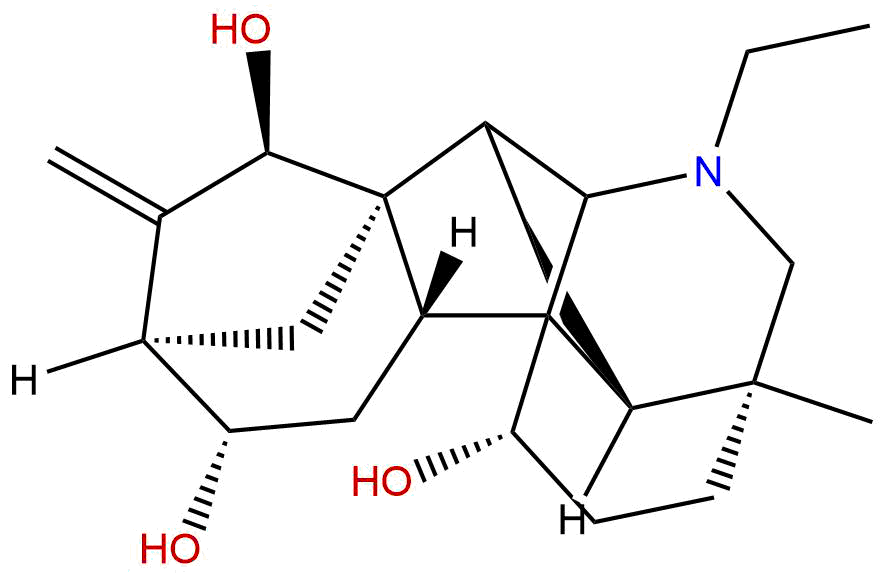
Euaconitine belongs to the atisine type or napelline type skeleton of C20 diterpenoid alkaloids. Its core structure is a diterpenoid nucleus composed of four rings (A, B, C, D), with the D ring being a seven membered ring, which is a typical feature of the alteson alkaloids. Compared with C19 diterpenoid alkaloids such as aconitine, the skeleton of aconitine is more complex and usually contains a nitrogen-containing heterocyclic ring fused with the D ring. Specifically, in the chemical structure of aconitine, hydroxyl (- OH) substituents may be present at positions C-1, C-6, C-16, etc., while a methoxy (- OCH ∝) or hydroxyl group may be attached at position C-8. The presence of these functional groups not only determines their chemical reactivity, but also has a significant impact on their biological activity. The molecular formula of aconitine is C ₂₂ H ∝③ NO ∝, with a molecular weight of 359.5100 Da.
From the perspective of physicochemical properties, aconitine exhibits typical alkaloid characteristics. Its lipid water partition coefficient (LogP) is 1.9642, indicating that it has a certain lipophilicity, which is beneficial for its penetration of biological membranes, including the blood-brain barrier. In fact, its pharmacological parameters clearly indicate that it has high blood-brain barrier penetration, which provides a structural basis for its pharmacological effects related to the central nervous system, such as analgesia. Its topological polar surface area (TPSA) is 63.9300 Å ², which is within the acceptable range for oral medication (usually<140 Å ²), indicating its good oral absorption potential. In terms of water solubility, the water solubility value of aconitine is 0.4676 mg/mL, which belongs to the category of slight solubility, which is consistent with its moderate LogP value. In drug development, a moderate balance between water solubility and lipid solubility is key to achieving good oral bioavailability. In addition, key toxicity prediction parameters show that aconitine does not have hERG (human ether - à - go related gene) potassium channel inhibitory activity, which means its risk of inducing QT interval prolongation and apical torsion type ventricular tachycardia is low, which is an important safety advantage. At the same time, the Ames test result was 0.0, indicating that it did not exhibit mutagenicity in the bacterial recovery mutation test, suggesting a low risk of genetic toxicity. These physicochemical properties and preliminary safety assessment results provide positive signals for the further development of aconitine as a lead compound or candidate drug.
Euaconitine was initially isolated and identified from plants of the Aconitum genus, and one of its main sources is Aconitum baicalensis(Aconitum baikalensis). In addition, in various other plants of the Aconitum genus, such as the North Aconitum(Aconitum kusnezoffii)Ganqing Aconitum(Aconitum tanguticum)It has also been found, but the content is usually low. Aconitum plants are widely distributed worldwide, mainly in the northern temperate regions. China is one of the main distribution centers of Aconitum plants and has abundant germplasm resources. The composition and content of diterpenoid alkaloids vary significantly among Aconitum plants of different species, origins, and harvesting periods, which directly affects the difficulty and cost of obtaining aconitine.
The traditional extraction method is mainly based on the acid-base properties of alkaloids. The solvent extraction method is usually used to soak or percolate the dried Aconitum plant powder in an acidic solvent (such as ethanol or water containing 0.5-1% hydrochloric acid or sulfuric acid) to extract alkaloids in the form of salts. After concentrating the extraction solution, adjust the pH to alkaline with alkaline solution (such as ammonia water, sodium hydroxide) to free the alkaloids, and then extract with organic solvents (such as chloroform, ether, ethyl acetate). The crude extract of total alkaloids is obtained by drying and concentrating the extraction solution. Subsequently, utilizing the differences in polarity and acidity between aconitine and other alkaloids, separation and purification were carried out through repeated methods such as silica gel column chromatography, alumina column chromatography, preparative thin-layer chromatography, or high-performance liquid chromatography (HPLC). The commonly used elution systems include gradient systems such as chloroform methanol, petroleum ether acetone diethylamine, etc. Due to the low content of aconitine in plants and the difficulty in separating it from structurally similar alkaloids such as Songorine, traditional column chromatography methods often have cumbersome steps, low efficiency, and high solvent consumption.
In recent years, some modern extraction and separation techniques have been introduced to obtain aconitine more efficiently and environmentally friendly. For example, ultrasound assisted extraction (UAE) and microwave-assisted extraction (MAE) can significantly shorten extraction time and improve extraction efficiency. High speed counter current chromatography (HSCCC), as a liquid-liquid distribution chromatography technique, has shown great potential in the separation of diterpenoid alkaloids due to its advantages of irreversible adsorption, high sample recovery rate, and easy amplification. Previous studies have successfully used HSCCC to isolate multiple high-purity monomers, including aconitine, from the total alkaloids of Aconitum in one go. In addition, supercritical fluid extraction (SFE) technology, especially using carbon dioxide as a solvent, has also been explored for the extraction of aconite alkaloids due to its green, safe, and selectively adjustable characteristics. The application of these modern technologies not only improves the efficiency of obtaining aconitine, but also provides material support for subsequent pharmacological research and drug development.
The pharmacological activity research of aconitine mainly focuses on its effects on the nervous system and inflammatory response, among which analgesic and anti-inflammatory activities are the two most concerned aspects.
Analgesic activity Traditionally, Aconitum plants have been widely used to relieve various types of pain. Modern pharmacological research has confirmed that aconitine has significant analgesic effects. In classic animal pain models such as hot plate method, acetic acid writhing test, and formalin test, aconitine exhibits dose-dependent analgesic effects. It is worth noting that its analgesic mechanism seems to be different from classical opioid drugs. For example, in the hot plate test, the analgesic effect of aconitine cannot be completely reversed by the opioid receptor antagonist naloxone, suggesting that it may exert its analgesic effect through non opioid pathways. However, subsequent molecular target studies have found interactions with multiple opioid receptors (OPRM1, OPRD1, OPRK1), suggesting that its analgesic mechanism may involve complex coordination between the opioid system and other systems. In addition, aconitine has shown certain therapeutic effects in neuropathic pain models such as chronic sciatic nerve compression injury models, which provides the possibility for its use in the treatment of clinically challenging chronic pain.
Anti inflammatory and anti osmotic activity Inflammation is one of the important causes of pain. Aconitine has shown anti-inflammatory activity in various acute and chronic inflammation models. For example, in the carrageenan induced rat paw swelling model, aconitine can significantly inhibit the degree of swelling and exhibit anti edema effects. Its anti-inflammatory mechanism may be related to the inhibition of the production and release of inflammatory mediators. Research has shown that aconitine can reduce the levels of prostaglandin E2 (PGE2) in inflammatory tissues, which is consistent with its inhibitory effect on cyclooxygenase (PTGS1/COX-1 and PTGS2/COX-2). In addition, it may also inhibit the expression of pro-inflammatory cytokines such as tumor necrosis factor alpha (TNF - α) and interleukin-1 β (IL-1 β) by affecting other inflammatory pathways, such as the nuclear factor kappa B (NF - κ B) signaling pathway. This multi pathway anti-inflammatory effect gives it a unique advantage in treating inflammatory pain.
Other activities In addition to analgesic and anti-inflammatory effects, aconitine has also been reported to have other pharmacological activities. For example, some studies have found that it has a certain anti arrhythmic effect, which may be related to its regulation of ion channels in myocardial cells, but the specific mechanism is still unclear. In addition, preliminary in vitro experiments suggest that it may have local anesthetic and sedative effects. However, research in these areas is relatively scarce and requires further in-depth exploration.
The pharmacological activity of aconitine, especially its analgesic and anti-inflammatory effects, stems from its complex interactions with multiple molecular targets. This multi-target mode of action is a significant feature that distinguishes it from traditional single target drugs.
The role of targets related to pain transmission:
1. Transient receptor potential (TRP) channel TRPV1 and TRPA1 are non selective cation channels located on sensory neurons, and are key molecules for sensing thermal, chemical, and mechanical stimuli. They play a central role in inflammatory pain and neuropathic pain. Euaconitine has been shown to regulate the activity of TRPV1 and TRPA1. Research has shown that it may inhibit the transmission of nociceptive signals and produce analgesic effects by antagonizing or desensitizing these channels. This direct effect on TRP channels may be one of the important mechanisms of its analgesic effect.
2. Opioid receptor Although early studies suggested that the analgesic effect of aconitine does not depend on opioid receptors, subsequent molecular docking and functional experiments have found that it can bind to μ - opioid receptor (OPRM1), δ - opioid receptor (OPRD1), and κ - opioid receptor (OPRK1). Although its affinity may not be as good as classical opioid drugs, the weak or partial activation of this multi subtype opioid receptor may enhance analgesic effects through synergistic effects, while reducing the side effects caused by excessive activation of a single opioid receptor (such as addiction and respiratory depression).
3. Cannabinoid receptor CNR1 (CB1 receptor) is mainly distributed in the central nervous system and is an important component of the endocannabinoid system, involved in the regulation of pain, emotion, and appetite. The interaction between aconitine and CNR1 suggests that its analgesic effect may be partially achieved by activating the cannabinoid system. This provides new ideas for developing non addictive analgesics.
4. Dopamine receptor DRD2 also plays a role in pain regulation, particularly in the reward and motivation pathways in chronic pain states. The interaction between aconitine and DRD2 may affect the emotional dimension of pain, thereby improving patients' perception and tolerance of pain.
The role of targets related to inflammatory response:
1. Cyclooxygenase (COX)PTGS1 (COX-1) and PTGS2 (COX-2) are key enzymes involved in prostaglandin synthesis. Aconitine can inhibit the activity of these two enzymes, thereby reducing the production of inflammatory substances such as PGE2. This directly explains its anti-inflammatory and anti osmotic effects. Compared with selective COX-2 inhibitors, aconitine simultaneously inhibits COX-1, which may cause gastrointestinal side effects, but it may also affect platelet function by inhibiting thromboxane A2 derived from COX-1. The pros and cons need to be comprehensively evaluated.
2. 5-hydroxytryptamine transporter (SERT)The SERT encoded by SLC6A4 is responsible for the reuptake of serotonin (5-HT) in the synaptic cleft. The interaction between aconitine and SERT may increase the concentration of 5-HT in the synaptic cleft. 5-HT is not only a key neurotransmitter that regulates emotions, but also participates in pain regulation in the descending inhibitory pathway. Therefore, the effect of aconitine on SERT may exert dual effects of antidepressant and adjuvant analgesia by enhancing 5-HT neurotransmission.
In summary, aconitine forms a complex network regulatory mechanism by simultaneously acting on multiple targets such as TRPV1, TRPA1, opioid receptors, cannabinoid receptors, dopamine receptors, COX enzymes, and SERT. This mechanism enables it to synergistically exert analgesic and anti-inflammatory effects from both peripheral (inhibiting inflammatory mediators, regulating TRP channels) and central (regulating opioid, cannabinoid, dopamine, 5-HT systems) levels, demonstrating the unique charm of multi-target drugs.
Based on the aforementioned physicochemical properties and preliminary pharmacological activity, evaluating the pharmacological properties of aconitine is a crucial step in promoting its clinical application.
Analysis of drug properties parameters As mentioned earlier, the molecular weight (359.5 Da), LogP (1.96), and TPSA (63.9 Å ²) of aconitine all comply with the Lipinski's Rule of Five, indicating its good oral drug potential. Although its water solubility (0.47 mg/mL) is not high, it is still within an acceptable range and can be improved through formulation methods such as salt formation, solid dispersion, liposomes, etc. The most critical safety parameters - hERG inhibition negative (no) and Ames test negative (0.0) - provide initial assurance for its safety, reducing the risk of early elimination due to cardiac toxicity and genetic toxicity. The high blood-brain barrier penetration is its advantage as a central analgesic, but it may also increase the risk of central nervous system side effects, which needs to be carefully evaluated in subsequent studies.
Pharmacokinetic characteristics At present, there are few systematic research reports on the absorption, distribution, metabolism, and excretion (ADME) of aconitine in the body. Based on its physicochemical properties and research on similar compounds, its pharmacokinetic characteristics can be inferred as follows:
1. absorb After oral administration, aconitine may be absorbed in the gastrointestinal tract. Its moderate lipid solubility facilitates passive diffusion through the intestinal mucosa. However, as an alkaloid, it may be affected by efflux transporters such as P-glycoprotein (P-gp), resulting in low oral bioavailability. This is a common challenge faced by many natural alkaloids.
2. distribution Due to its high blood-brain barrier penetration, aconitine can rapidly distribute to the central nervous system, which is the basis for its analgesic effect. Meanwhile, it may also be widely distributed in other tissues and organs, such as the liver, kidneys, etc.
3. Metabolism The metabolism of aconitine mainly occurs in the liver, which may undergo phase I metabolic reactions such as oxidation, demethylation, and hydroxylation through the cytochrome P450 (CYP450) enzyme system, as well as phase II metabolic reactions such as glucuronic acid or sulfate binding. Further research is needed to determine whether its metabolites are active or toxic.
4. excretion Aconitine and its metabolites are mainly excreted through the kidneys (urine) and/or bile (feces).
Overall, the preliminary evaluation of the pharmacological properties of aconitine is positive, but its pharmacokinetic properties, especially oral bioavailability, metabolic stability, and potential drug interactions, are areas that need to be studied and optimized in future development. Modern medicinal chemistry methods, such as structural modification (searching for derivatives with higher activity, lower toxicity, and more stable metabolism) and advanced drug delivery systems, will be effective strategies to overcome their potential shortcomings and improve drug efficacy.
The unique pharmacological activity spectrum and relatively low toxicity of aconitine make it an attractive clinical application prospect in multiple therapeutic fields.
pain management This is the most direct and promising application field of aconitine. Given its multi-target mechanism of action, it is expected to be developed as a novel drug for the treatment of chronic pain, particularly neuropathic pain and inflammatory pain. Compared with existing drugs, its potential advantages include: ① possibly avoiding the addiction and serious side effects such as respiratory depression of opioid drugs; ② May overcome the cardiovascular and gastrointestinal risks associated with nonsteroidal anti-inflammatory drugs (NSAIDs); ③ For refractory pain that is ineffective with single target drugs, it may provide new treatment options. In the future, pre clinical and clinical research on different pain types (such as cancer pain, postoperative pain, diabetes peripheral neuropathy, etc.) will be the focus of its development.
Inflammatory diseases The anti-inflammatory and anti osmotic activities of aconitine make it promising for the treatment of inflammatory diseases such as rheumatoid arthritis, osteoarthritis, and dermatitis. Its multi-target anti-inflammatory mechanism may be more effective than single target anti-inflammatory drugs, and the spectrum of side effects may be different. The development of topical preparations, such as gel and patches, can maximize their local anti-inflammatory and analgesic effects, while reducing systemic exposure and side effects, which is a direction worth exploring.
Neurological disorders Given its regulatory effects on multiple targets in the central nervous system, such as CNR1, DRD2, and SERT, aconitine may also have therapeutic potential for certain mental or neurological disorders, such as depression, anxiety, and drug addiction. However, research in this area is still in its very early stages and requires extensive basic research to confirm its effectiveness and safety.
Challenges and Future Directions Faced:
Despite its broad prospects, the clinical translation of aconitine still faces many challenges:
1. Toxicity issue Although its toxicity is lower than that of aconitine, as an alkaloid of the Aconitum genus, it still has certain toxicity, especially its potential effects on the central nervous system and cardiovascular system. A comprehensive and systematic toxicological evaluation is required to determine its safe dose range and treatment window.
2. Pharmacokinetic optimization As mentioned earlier, its oral bioavailability may not be high and metabolism may be unstable. It is necessary to improve its ADME properties through structural modifications or novel formulation technologies.
3. Target selectivity and side effects Multi targeted action is both an advantage and a challenge. How to ensure that it does not cause side effects due to excessive activation or inhibition of a target while exerting therapeutic effects is the key to drug design. For example, excessive inhibition of DRD2 may lead to extrapyramidal symptoms.
4. Resources and Synthesis Aconitine has a low content in plants and is difficult to extract. Developing efficient chemical synthesis or semi synthesis routes, as well as utilizing biotechnology such as genetic engineering and cell culture for production, are key to ensuring the supply of raw materials for future drug development.
Euaconitine, a diterpenoid alkaloid derived from the traditional medicinal plant Aconitum, has demonstrated unique charm and potential on the stage of modern drug development due to its unique chemical structure and multi-target pharmacological action mode. It achieves peripheral and central synergistic analgesic and anti-inflammatory effects by simultaneously acting on multiple molecular targets closely related to pain and inflammation, such as TRPV1, opioid receptors, cannabinoid receptors, COX enzymes, SERT, etc., providing valuable lead compounds for the development of novel, efficient, and low side effect analgesic and anti-inflammatory drugs. Its preliminary pharmacological evaluation, such as good physicochemical properties, low hERG inhibition risk, and negative Ames test results, also laid a favorable foundation for its further development.
However, the road from laboratory discovery to clinical application is still long and challenging. The toxicity spectrum, pharmacokinetic properties, and potential side effects caused by multi-target effects of aconitine require in-depth and systematic research. Future work should focus on: ① conducting comprehensive pharmacological, pharmacokinetic, and toxicological studies to clarify their mechanisms of action and safety characteristics; ② Using modern medicinal chemistry methods to optimize the structure and search for derivatives with higher activity, lower toxicity, and more stable metabolism; ③ Explore efficient synthesis or biological preparation methods to solve the problem of raw material sources; ④ Design rigorous preclinical and clinical trial protocols for specific indications, such as neuropathic pain.
In short, aconitine is a precious gem in the treasure trove of natural products that needs to be carefully crafted. Through in-depth research and rational development, it is not only expected to bring new treatment options for patients suffering from pain and inflammation, but also provide important examples and inspirations for discovering innovative drugs from traditional Chinese medicine. With the continuous integration and development of multi omics technology, computer-aided drug design, and advanced formulation technology, we have reason to believe that aconitine and its derivatives will eventually find their own place in the field of modern medicine.
Batch can search by a CAS number,one per line
