Storage conditions:Short-term storage at 2~8℃, long-term storage at -20 ~ -80℃
115.0600
2.4189
.8808
.1399
3.5003
3.3994
Low
89.3450
2.5789
Yes
No
No
No
Yes
Yes
1.2
Yes
No
Yes
No
Natural products have always been an important source of drug discovery and development, among which anthraquinone compounds have attracted much attention due to their structural diversity and wide range of biological activities. Emodin, as a typical anthraquinone compound, is widely present in traditional Chinese medicinal herbs such as Rheum palmatum and Polygonum cuspidatum, as well as various fungal metabolites. It has long been used to treat various diseases such as constipation, inflammation, and infections. However, as research on drug metabolism deepens, scientists gradually realize that the in vivo pharmacological effects of many natural products are actually mediated by their metabolites. 2-Hydroxyemodin (CAS number: 641-90-7) is the main active metabolite of emodin in liver microsomes, providing a new perspective for understanding the pharmacological mechanism of emodin.
The chemical structure of 2-hydroxyemodin is based on the parent nucleus of emodin, with the introduction of a hydroxyl group at position C-2. This structural modification significantly alters its physicochemical properties and biological activity. It is worth noting that 2-hydroxyemodin itself has unique biological characteristics: it can exhibit mutagenic effects on the Salmonella typhimurium TA1537 strain without relying on metabolic activation systems, which gives it a special position in toxicology research. Meanwhile, as a metabolite of emodin, 2-hydroxyemodin exhibits pharmacological activity similar to but different from the parent compound in terms of its laxative effect. Its targets involve multiple proteins related to intestinal water and electrolyte transport, including SLC5A1, CFTR, AQP3, KCNJ13, SLC12A2, KCNMA1, and SCNN1B.
In recent years, with the in-depth research on the metabolism of natural products, 2-hydroxyemodin has gradually changed from the supporting role of "metabolites" to an active molecule with independent research value. This article will provide a systematic review of the research progress of 2-hydroxyemodin from multiple dimensions, including chemical structure, plant origin, pharmacological activity, mechanism of action, pharmacological evaluation, and clinical application prospects, in order to provide reference for the further development of this compound.
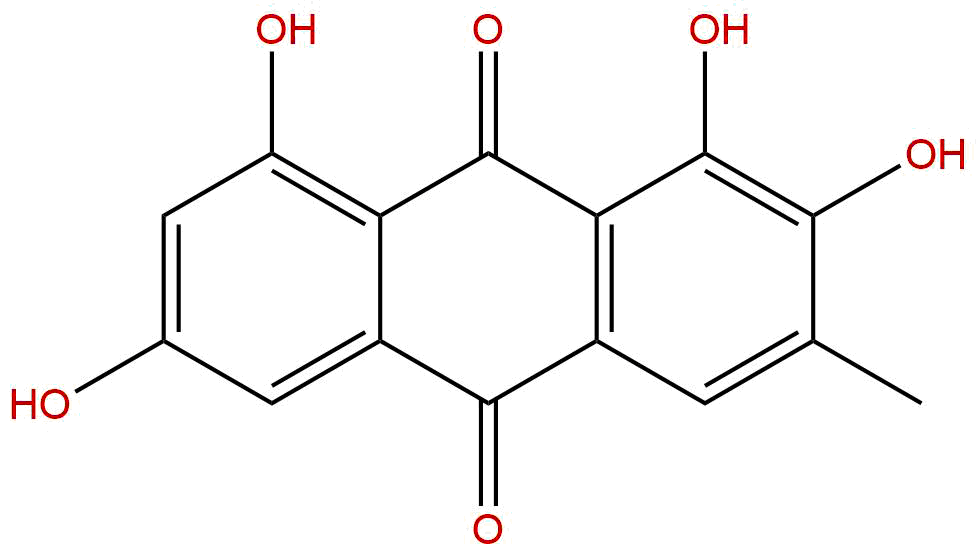
The chemical name of 2-hydroxyemodin is 1,2,3,8-tetrahydroxy-6-methylanthraquinone, which belongs to the class of polyhydroxyanthraquinone compounds. Its molecular formula is C ₁₅ H ₁₀ O ₆, and its molecular weight is 286.2390 g/mol. Structurally, 2-hydroxyemodin has anthraquinone (9,10-anthraquinone) as its parent nucleus, with one hydroxyl group attached to each of the C-1, C-2, C-3 positions of the A ring and the C-8 position of the C ring, and one methyl group attached to the C-6 position of the C ring. Compared with the parent compound emodin (1,3,8-trihydroxy-6-methylanthraquinone), 2-hydroxyemodin has an additional hydroxyl substituent at the C-2 position, which has a profound impact on its physicochemical properties and biological activity.
In terms of physicochemical properties, the lipid water partition coefficient (LogP) of 2-hydroxyemodin is 2.4189, indicating that it has a certain degree of lipophilicity, but also contains sufficient hydrophilic groups (four phenolic hydroxyl groups). Its topological polar surface area (TPSA) is 115.0600 Å ², which is higher than the recommended range for most oral medications (usually<140 Å ²), suggesting that it may have lower intestinal permeability. The water solubility parameter is 0.1399 mg/mL, belonging to the category of slight solubility, which is related to the hydroxyl structure of its polyphenols - hydroxyl groups can form hydrogen bonds with water molecules, but the rigid planar structure of anthraquinone mother nucleus limits its solubility in water.
It is worth noting that the blood-brain barrier penetration ability of 2-hydroxyemodin has been evaluated as "low", which is of great significance for reducing adverse reactions in the central nervous system. In addition, the predicted result of hERG inhibition is' no ', indicating a low risk of cardiac toxicity. However, the Ames test result was 1.2, combined with its mutagenic activity against the TA1537 strain in the absence of a metabolic activation system, indicating that the compound has potential genetic toxicity risks, which is a key concern in its drug development process.
From the spectral characteristics, 2-hydroxyemodin exhibits typical absorption features of anthraquinone compounds in the UV visible region, with three main absorption bands typically appearing around 220-230 nm, 250-270 nm, and 400-450 nm, corresponding to the π→π of the anthraquinone parent nucleus Transition and hydroxyl substituent n →πJumping. In the infrared spectrum, the broad peak at approximately 3400 cm ⁻¹ corresponds to the stretching vibration of phenolic hydroxyl groups, while the absorption peaks at approximately 1670 cm ⁻¹ and 1630 cm ⁻¹ correspond to the stretching vibration of C-9 and C-10 carbonyl groups, respectively. In nuclear magnetic resonance hydrogen spectra, aromatic proton signals typically appear in the range of δ 6.5-8.0 ppm, while methyl proton signals appear around δ 2.2-2.5 ppm.
The distribution of 2-hydroxyemodin in nature is relatively limited. Currently, it is known that it mainly comes from two sources: firstly, as a metabolic product of emodin in organisms, and secondly, it exists in small amounts in certain plants and fungi. In the plant kingdom, 2-hydroxyemodin has been reported to exist in certain varieties of Rheum spp. in the Polygonaceae family, but the content is usually low. In addition, certain fungi such as Penicillium spp. and Aspergillus spp. also contain this compound in their metabolites. It is worth noting that the content of 2-hydroxyemodin in plants is often much lower than its parent compound emodin, which may be due to the fact that hydroxylation modification of emodin is not the main metabolic pathway in plants.
Given the limited content of 2-hydroxyemodin in natural resources, the main ways to obtain this compound currently include chemical synthesis and biotransformation. In terms of chemical synthesis, using emodin as the starting material and introducing hydroxyl groups at the C-2 position through selective hydroxylation reaction is a commonly used strategy. Common hydroxylation reagents include hydrogen peroxide/metal catalyst systems, dimethyl diepoxyethane (DMDO), etc. However, due to the presence of multiple hydroxyl groups on the anthraquinone nucleus, selective control of the C-2 hydroxylation reaction is challenging and requires careful design of protective strategies and reaction conditions.
The biotransformation method utilizes microorganisms or enzyme systems to convert emodin into 2-hydroxyemodin, which is closer to natural metabolic processes and has the advantages of environmental friendliness and high selectivity. Research has shown that the cytochrome P450 enzyme system (especially CYP1A2 and CYP3A4 subtypes) in rat liver microsomes can effectively convert emodin into 2-hydroxyemodin. In addition, the peroxidase system of certain fungi such as Phanerochaete chrysosporium can also catalyze this conversion reaction.
In terms of extraction and separation, obtaining 2-hydroxyemodin from natural resources usually involves the following steps: first, dry plant materials (such as rhubarb rhizomes) are crushed and soaked or refluxed with organic solvents (such as methanol, ethanol, or ethyl acetate) for extraction; Secondly, the extraction solution is concentrated and preliminarily separated through liquid-liquid extraction using different polar solvents such as petroleum ether, chloroform, ethyl acetate, n-butanol, etc; Then, it was further purified by silica gel column chromatography, Sephadex LH-20 gel column chromatography, reverse phase C18 column chromatography and other classical methods; Finally, high-purity compounds were obtained through preparative high-performance liquid chromatography (HPLC). During the entire separation process, thin-layer chromatography (TLC) and HPLC are commonly used for monitoring, utilizing the fluorescence properties of anthraquinone compounds under ultraviolet light or their color reaction with boric acid oxalic acid reagents for detection.
It is worth noting that due to the usually low content of 2-hydroxyemodin in plants (often less than 0.01% of dry weight), it is not economical to obtain this compound in large quantities from natural resources. Therefore, for in-depth research that requires a large number of samples, chemical synthesis or biotransformation methods may be more feasible choices.
The pharmacological activity research of 2-hydroxyemodin mainly focuses on the following aspects: laxative effect, mutagenic activity, antioxidant effect, and potential anti-tumor activity.
Diarrhea effect It is one of the most widely studied pharmacological activities of 2-hydroxyemodin. As an active metabolite of emodin, the mechanism by which 2-hydroxyemodin exerts its laxative effect in the intestine shares both similarities and uniqueness with the parent compound. Research has shown that 2-hydroxyemodin can promote intestinal water and electrolyte secretion and intestinal peristalsis through various pathways. Specifically, it can reduce intestinal reabsorption of sodium ions and water by inhibiting the activity of sodium glucose cotransporter 1 (SLC5A1); At the same time, activating the cystic fibrosis transmembrane conductance regulator (CFTR) chloride ion channel promotes the secretion of chloride ions and water into the intestinal lumen. In addition, 2-hydroxyemodin can downregulate the expression of aquaporin 3 (AQP3), further reducing intestinal water reabsorption. The combined effect of these actions is to increase the moisture content of intestinal contents, soften feces, and promote bowel movements.
Compared to emodin, the strength of the laxative effect of 2-hydroxyemodin may differ. Due to the introduction of the C-2 hydroxyl group, the polarity and water solubility of the molecule are increased. Theoretically, the solubility and bioavailability of 2-hydroxyemodin in the intestine may be better than that of emodin, which may result in stronger laxative activity. However, there is currently a lack of systematic research that directly compares the strength of their laxative effects.
Mutagenic activity It is an important aspect in the research of 2-hydroxyemodin that cannot be ignored. The Ames test results showed that in the absence of a metabolic activation system (S9 mixture), 2-hydroxyemodin exhibited a positive mutagenic reaction against Salmonella typhimurium TA1537 strain (detecting frameshift mutations). This characteristic sets it in stark contrast to the parent compound, emodin, which typically requires metabolic activation to exhibit mutagenic activity in Ames assays. This discovery suggests that the hydroxylation at C-2 may be a key structural modification for the genotoxicity of emodin, and 2-hydroxyemodin may cause gene mutations through mechanisms such as direct interaction with DNA or production of reactive oxygen species (ROS).
It is worth noting that the mutagenic activity of 2-hydroxyemodin is strain specific, with a particularly significant mutagenic effect on the TA1537 strain (hisC3076 mutation, detectable -1 frameshift mutation), while its effect on TA98 (detectable frameshift mutation) and TA100 (detectable base substitution mutation) is relatively weak. This selectivity suggests that its mutagenic mechanism may be related to interactions with specific DNA sequences.
antioxidant activity In terms of free radical scavenging ability, the four phenolic hydroxyl groups in the molecule of 2-hydroxyemodin endow it with strong free radical scavenging ability. Research has shown that 2-hydroxyemodin can effectively scavenge DPPH free radicals, ABTS cationic free radicals, and superoxide anion free radicals, and its antioxidant activity is closely related to the number and location of hydroxyl groups. Compared to emodin (which has three hydroxyl groups), the additional hydroxyl group of 2-hydroxyemodin may enhance its antioxidant capacity. However, it is worth noting that there is a subtle balance between the antioxidant activity and pro oxidative activity of anthraquinone compounds. Under certain conditions (such as the presence of transition metal ions), 2-hydroxyemodin may also exhibit pro oxidative effects, which may be related to its mutagenic activity.
Antitumor activity This is a new direction in the research of 2-hydroxyemodin in recent years. Preliminary studies have shown that 2-hydroxyemodin has a certain inhibitory effect on the proliferation of many tumor cell lines (such as HepG2, MCF-7, HT-29, etc.). Its anti-tumor mechanism may involve multiple aspects: inducing cell cycle arrest (such as G2/M phase arrest), activating apoptotic signaling pathways (such as mitochondrial pathway), inhibiting topoisomerase activity, and regulating the activity of transcription factors such as NF - κ B. However, current research on the anti-tumor activity of 2-hydroxyemodin is still in its early stages and lacks in vivo experimental data support.
The pharmacological effects of 2-hydroxyemodin involve multiple molecular targets and signaling pathways, among which the research on targets related to diarrhea is the most in-depth. According to existing research, 2-hydroxyemodin exerts its laxative effect by regulating the expression and activity of intestinal water and electrolyte transport related proteins, with specific targets including:
SLC5A1 (Sodium Glucose Co Transporter 1)SLC5A1 is the main glucose transporter located on the brush border membrane of small intestinal epithelial cells, responsible for active transport of sodium dependent glucose. The transport of glucose is accompanied by the influx of sodium ions, which drives passive reabsorption of water. 2-Hydroxyemodin can inhibit the activity of SLC5A1, reduce the absorption of glucose and sodium ions, thereby reducing intestinal reabsorption of water and increasing the water content in the intestinal lumen.
CFTR (cystic fibrosis transmembrane conductance regulator)CFTR is a cAMP regulated chloride ion channel expressed on the apical membrane of intestinal epithelial cells, responsible for the secretion of chloride ions. The secretion of chloride ions drives the passive transport of sodium ions and water into the intestinal lumen. 2-Hydroxyemodin can activate CFTR channels, increase chloride ion secretion, and promote intestinal water secretion. This mechanism of action is similar to certain secretagogue laxatives, such as rubiprorelin.
AQP3 (aquaporin 3)AQP3 is one of the main aquaporins expressed in the intestine, responsible for the transmembrane transport of water. Research has shown that 2-hydroxyemodin can downregulate the expression of AQP3, reduce the reabsorption capacity of intestinal epithelial cells for water, and thus increase the water content in feces. This mechanism is consistent with the laxative action mechanism of emodin.
KCNJ13 (inward rectifying potassium channel Kir7.1)KCNJ13 is expressed in intestinal epithelial cells and participates in maintaining cell membrane potential and ion homeostasis. 2-Hydroxyemodin may affect the electrophysiological state of the intestine by regulating the activity of KCNJ13, thereby indirectly affecting the transport of water and electrolytes.
SLC12A2 (Na-K-2Cl cotransporter 1, NKCC1)NKCC1 is an ion transport protein located on the basement membrane of intestinal epithelial cells, responsible for transporting sodium, potassium, and chloride ions into cells and providing substrates for chloride ion secretion in the apical membrane. 2-Hydroxyemodin may affect the secretion of chloride ions by regulating the activity of NKCC1.
KCNMA1 (Large Conductivity Calcium Activated Potassium Channel, BK Channel)BK channels are expressed in intestinal smooth muscle cells and participate in regulating intestinal peristalsis. 2-Hydroxyemodin may activate BK channels, promote potassium ion efflux, cause smooth muscle cell hyperpolarization, and regulate intestinal peristalsis rhythm.
SCNN1B (epithelial sodium channel beta subunit, ENaCβ)ENaC is a sodium ion channel located on the apical membrane of intestinal epithelial cells, responsible for the reabsorption of sodium ions. 2-Hydroxyemodin may reduce the reabsorption of sodium ions and subsequently decrease the reabsorption of water by inhibiting the activity of ENaC.
From the perspective of signaling pathways, the regulation of these targets by 2-hydroxyemodin may involve multiple intracellular signaling mechanisms. For example, the activation of CFTR usually depends on the cAMP/PKA signaling pathway, while the expression regulation of AQP3 may be related to the MAPK/ERK pathway. In addition, 2-hydroxyemodin may exert its pharmacological effects by regulating intracellular calcium ion concentration and activating protein kinase C (PKC).
It is worth noting that the mechanism of mutagenic activity of 2-hydroxyemodin is completely different from its mechanism of laxative action. Research has shown that the mutagenic activity of 2-hydroxyemodin may be related to its anthraquinone nucleus and multiple hydroxyl groups in its molecular structure. Anthraquinone compounds can embed into the double helix structure of DNA, interfering with DNA replication and transcription processes. In addition, 2-hydroxyemodin may generate ROS through the redox cycle in cells, causing DNA oxidative damage. The hydroxyl group at position C-2 may enhance its ability to interact with DNA or promote the production of ROS, which explains why it exhibits mutagenic activity without the need for metabolic activation.
The evaluation of drug properties is a crucial step in the transformation of natural products from active molecules to drug phase selectors. The pharmacological parameters of 2-hydroxyemodin indicate that the compound has certain potential for drug development, but also faces some challenges.
In terms of physical and chemical properties, the molecular weight of 2-hydroxyemodin is 286.24 Da, which meets the requirement of molecular weight<500 Da in the "Lipinski Rule". The LogP value is 2.4189, which falls within the ideal lipophilicity range (1-3) and is beneficial for balancing membrane permeability and water solubility. The TPSA is 115.06 Å ², which is slightly higher than the ideal range for oral medication (<140 Å ²), but still within an acceptable range. The water solubility is 0.1399 mg/mL, which belongs to the slightly soluble level. It may require formulation techniques such as solid dispersion and liposome encapsulation to improve its solubility and dissolution rate.
In terms of safety, the blood-brain barrier penetration ability of 2-hydroxyemodin has been evaluated as "low", which is beneficial for reducing adverse reactions in the central nervous system. The prediction result of hERG inhibition is' no ', indicating a low risk of cardiac toxicity. However, a positive Ames test result is an important safety warning signal, indicating that the compound has potential genotoxicity. This characteristic may be related to its anthraquinone core structure - many anthraquinone compounds (such as emodin, alizarin, etc.) exhibit varying degrees of genetic toxicity. Therefore, in the process of drug development, it is necessary to conduct in-depth evaluations of the genetic toxicity of 2-hydroxyemodin, including in vivo micronucleus tests, chromosome aberration tests, etc., to comprehensively assess its safety risks.
The available information on the pharmacokinetics of 2-hydroxyemodin is relatively limited at present. As a metabolite of emodin, the production and elimination process of 2-hydroxyemodin in the body is closely related to the metabolism of emodin. Research has shown that emodin is mainly converted to 2-hydroxyemodin in the liver through hydroxylation by the cytochrome P450 enzyme system (especially CYP1A2 and CYP3A4), and may also undergo phase II metabolic reactions such as glucuronidation and sulfation. 2-Hydroxyemodin itself may also undergo further metabolism, such as methylation and glucuronic acid binding reactions.
In terms of absorption, the oral bioavailability of 2-hydroxyemodin may be limited by its solubility and intestinal permeability. Its slight solubility and high polarity (larger TPSA) may lead to incomplete oral absorption. However, as a metabolite of emodin, 2-hydroxyemodin may reach high concentrations locally in the intestine, which is consistent with the site of its laxative effect (intestine). For locally effective laxatives, limited systemic absorption may actually be an advantage in reducing systemic adverse reactions.
In terms of distribution, the binding rate of 2-hydroxyemodin to plasma proteins is not yet clear, but based on its structural characteristics (polyphenolic hydroxyl), it is speculated that it may have a high binding rate with albumin. Its apparent distribution volume may be small, mainly distributed in extracellular fluid and blood.
In terms of metabolism and excretion, 2-hydroxyemodin may undergo further phase II metabolic reactions in the body, forming glucuronic acid or sulfate complexes, which are mainly excreted through bile and urine. Some 2-hydroxyemodin may also be excreted in its original form through feces.
Overall, the pharmacological evaluation of 2-hydroxyemodin presents a complex picture: on the one hand, its physical and chemical properties basically meet the requirements of drug likeness, and it has clear pharmacological activity and targets of action; On the other hand, genetic toxicity risk is the main obstacle to its drug development. Future research needs to focus on how to reduce its genetic toxicity through structural modification or formulation techniques, while preserving or enhancing its therapeutic activity.
2-Hydroxyemodin, as an active metabolite of emodin, has unique advantages and challenges in clinical applications. Based on its pharmacological activity and mechanism of action, this compound has potential application prospects in the following fields:
Treatment of functional constipation The laxative mechanism of 2-hydroxyemodin through multi-target regulation of intestinal water and electrolyte transport makes it a potential candidate drug for the treatment of functional constipation. Compared with traditional stimulant laxatives such as senoside and bisaconitine, the mechanism of action of 2-hydroxyemodin is more clear, the target is more specific, and theoretically it may have better safety. However, its genetic toxicity risk is the main obstacle to clinical application. Future research directions may include reducing genetic toxicity through structural modifications (such as hydroxymethylation or acetylation), developing intestinal local drug delivery formulations to reduce systemic exposure, and combining with other drugs to reduce effective doses.
bowel preparation In medical procedures such as colonoscopy, it is necessary to quickly and thoroughly clean the intestines. The rapidly acting laxative effect of 2-hydroxyemodin may make it a candidate ingredient for intestinal preparation drugs. However, the risk benefit ratio of its mutagenic activity in this short-term application scenario needs to be carefully evaluated.
Antitumor adjuvant therapy Although the anti-tumor activity of 2-hydroxyemodin is still in the early stages of research, its inhibitory effect on various tumor cells suggests that it may be developed as an anti-tumor adjuvant drug. Especially, as a metabolite of emodin, it may exert selective anti-tumor effects through local metabolic activation in tumor tissues. However, the risk of genetic toxicity also limits this application direction.
Antioxidant related diseases The antioxidant activity of 2-hydroxyemodin makes it potentially applicable in oxidative stress-related diseases such as inflammatory bowel disease, cardiovascular disease, etc. However, its pro oxidative activity and genotoxic risk need to be balanced in specific disease contexts.
Looking ahead to the future, the research and development of 2-hydroxyemodin face the following key scientific issues:
Mechanisms and reversibility of genetic toxicity It is necessary to conduct in-depth research on the specific mechanism of DNA damage caused by 2-hydroxyemodin, determine whether it has a threshold effect, and whether genetic toxicity can be reduced or eliminated through structural modification or combination therapy.
Study on Structure Activity Relationship Systematically study the laxative activity, genetic toxicity, and other pharmacological activities of 2-hydroxyemodin and its structural analogues, clarify the contributions of various hydroxyl and methyl substituents to activity and toxicity, and provide guidance for structural optimization.
In vivo efficacy and safety evaluation Conduct systematic in vivo pharmacological and toxicological studies, especially long-term toxicity and carcinogenicity tests, to comprehensively evaluate the safety of its clinical application.
Formulation development Develop appropriate formulation technologies, such as enteric coated formulations, nano formulations, prodrug design, etc., to address the solubility and genotoxicity issues of 2-hydroxyemodin, in order to improve its therapeutic index.
Metabolomics research Using metabolomics techniques to study the overall effects of 2-hydroxyemodin on gut microbiota and host metabolism, revealing potential pharmacological effects beyond its laxative effects.
2-Hydroxyemodin, as the main active metabolite of emodin in the body, represents an important class of natural anthraquinone compounds. From a chemical structure perspective, the introduction of the C-2 hydroxyl group resulted in significant differences in physicochemical properties and biological activity between it and the parent compound emodin; From the perspective of pharmacological activity, its multi-target laxative mechanism and unique mutagenic activity make it an ideal model molecule for studying the relationship between natural product metabolism and activity; From the perspective of drug development, 2-hydroxyemodin not only exhibits clear pharmacological activity and acceptable physicochemical properties, but also faces the major safety challenge of genetic toxicity.
In the long history of natural product drug development, many active molecules have gone through a long process from "discovery research development market", and there are also many molecules that have been stalled in preclinical or clinical stages due to safety issues. The research on 2-hydroxyemodin is still in its early stages, and its future development depends on whether we can effectively avoid its genetic toxicity risk through structural optimization and formulation technology based on understanding its mechanism of action, while retaining or enhancing its therapeutic activity.
From a broader perspective, the study of 2-hydroxyemodin also provides us with a typical case for thinking about the development of natural product drugs: the in vivo metabolites of natural products often have different or even opposite biological activities to the parent compound. In depth research on these metabolites not only helps to clarify the pharmacological mechanisms of traditional Chinese medicine, but may also discover new drug lead compounds. With the interdisciplinary integration of metabolomics, chemical biology, and medicinal chemistry, it is believed that the research on 2-hydroxyemodin and its analogues will provide new ideas and directions for the discovery of natural product drugs.
Batch can search by a CAS number,one per line